
Note: This article contains affiliate links. If you click on these links and make a purchase, we may earn a small commission at no extra cost to you. This helps support our research and content. Read our full affiliate disclosure here.
Living in a small apartment means making the most of every square foot, and the right refrigerator can free up kitchen space while keeping food fresh and bills low. A refrigerator for small apartments must balance usable capacity, footprint, noise, and energy draw so it meets daily needs without overwhelming a compact kitchen. This guide shortlists seven top refrigerators optimized for small-living spaces. We evaluated options for storage layout, energy efficiency, footprint, and features that matter in tight kitchens. Read on to see which designs and tradeoffs matter most before you buy.
Top Picks at a Glance
| Best Overall The best all-around choice for most situations | Midea 3.1 Cu Ft Mini Fridge |  |
| Best Quality Built to a higher standard if you want something more solid | Frigidaire EFR751 7.5 cu ft Refrigerator |  |
| Best Value The sweet spot between price and what you get | Frostorm BC-90 3.2 Cu Ft Mini Fridge |  |
| Best Budget The cheapest option that still gets the job done reliably | Frestec 1.7 Cu Ft Mini Fridge |  |
| Top Rated A top-rated pick with lots of positive feedback | EUHOMY 3.2 Cu Ft Mini Fridge |  |
| Most Popular A crowd favorite that many people choose with confidence | Frigidaire Retro 3.2 Cu Ft Fridge |  |
| Best Seller A high-volume bestseller chosen again and again | Upstreman BR321 3.2 Cu.Ft Mini Fridge |  |
Midea 3.1 Cu Ft Mini Fridge

| Capacity | 3.1 cubic feet |
|---|---|
| Configuration | Freezer-on-top |
| Defrost System Type | Manual |
| Cooling Method | Compressor |
| Specification Met | Energy Star |
The Midea 3.1 cu ft mini fridge provides a practical, space-conscious solution for small apartments and dorm rooms by combining a dedicated freezer compartment with a refrigerated section. It uses a compressor with R600A refrigerant and meets Energy Star efficiency, which keeps running costs lower than many basic compact models. The unit includes removable shelves, a crisper drawer, an internal LED light, a reversible door and adjustable legs for flexible placement. Temperature is controlled by a simple mechanical thermostat and the freezer and fridge ranges cover typical household needs. Manual defrost means occasional maintenance to prevent ice buildup in the freezer, and noise is moderate rather than whisper-quiet. The design focuses on functionality rather than premium finishes, but the stainless steel door gives it a cleaner look. If you need a reliable, efficient small refrigerator with a usable freezer for everyday food and drink storage, this model covers those needs without extra smart features or complex controls.
Best for: Buyers who want an efficient, no-frills compact refrigerator with a usable freezer for everyday food and beverage storage in a small apartment or dorm.
Less Ideal for: People who want a fully frost-free, maintenance-free compact fridge or integrated smart features should look at higher-end models.
- Separate freezer and fridge sections for more versatile storage
- Energy Star certified with a high-efficiency compressor for lower energy use
- Removable shelves and a crisper drawer allow flexible organization
- Reversible door and adjustable legs make placement in small spaces easier
- Manual defrost freezer requires periodic thawing
- Mechanical thermostat lacks precise digital temperature control
Verdict: A compact, energy-efficient mini fridge with a real freezer that fits small apartments while keeping operating costs low.
Frigidaire EFR751 7.5 cu ft Refrigerator
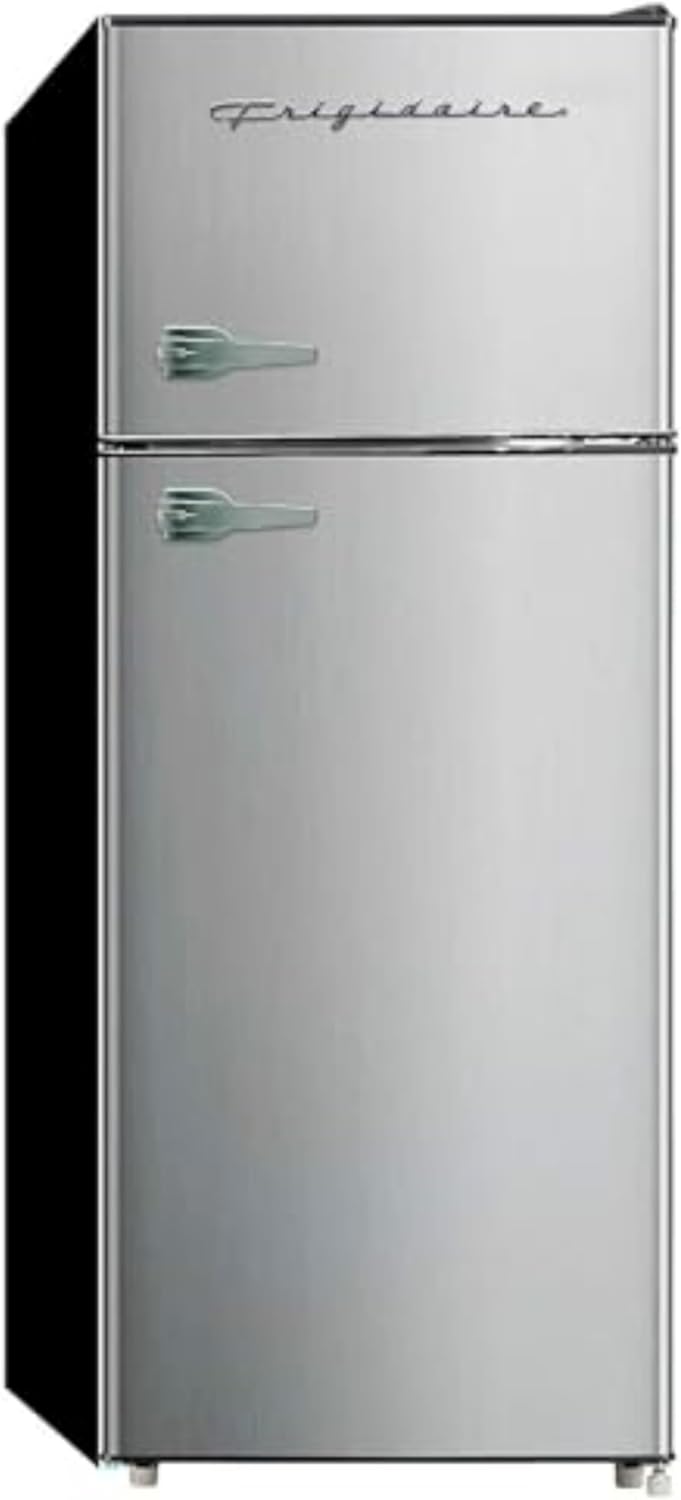
| Capacity | 7.5 cubic feet |
|---|---|
| Freezer Capacity | 2 cubic feet |
| Defrost System Type | Manual |
| Voltage | 120 volts |
| Refrigerant | R600a or R290 |
The Frigidaire EFR751 is a compact upright refrigerator designed for small kitchens, dorms, or studio apartments where space is at a premium. It pairs a 2 cu ft freezer above a 6 cu ft fresh-food section and offers three adjustable slide-out glass shelves, a transparent crisper, and clear door shelves for straightforward organization. Mechanical controls and an adjustable thermostat make temperature changes simple, and the unit ships with front leveling legs and rear castors to ease placement and minor repositioning. The freezer has a removable wire shelf for added flexibility but uses a manual defrost system, so occasional thawing is required. The compressor-driven cooling uses R600a/R290 refrigerant and the reversible door hinge lets you set left or right swing depending on your layout. Energy consumption is moderate at the listed annual kWh, so expect typical operating costs for this size class. Overall this model delivers solid, no-frills cooling and usable interior storage in a compact footprint, though buyers should plan for manual defrost maintenance and standard efficiency rather than top-tier energy savings.
Best for: Buyers who need a practical, performance-focused compact refrigerator that maximizes usable interior space and offers straightforward temperature control for everyday food storage in small apartments.
Less Ideal for: People seeking the lowest possible energy use, hands-off frost-free operation, or larger-capacity refrigerators for family kitchens should look elsewhere.
- Compact 7.5 cu ft capacity that fits small spaces
- Adjustable slide-out glass shelves and clear door bins for flexible organization
- Reversible door and castors/front leveling legs simplify placement in tight layouts
- Separate top freezer with removable shelf increases storage versatility
- Manual defrost freezer requires periodic thawing to prevent ice buildup
- Annual energy consumption is average for the class, not optimized for lowest running cost
Verdict: A solid, space-efficient apartment refrigerator that delivers reliable cooling and flexible storage for buyers who prioritize usable interior layout and straightforward performance.
Frostorm BC-90 3.2 Cu Ft Mini Fridge

| Capacity | 3.2 cubic feet |
|---|---|
| Freezer Capacity | 0.35 cubic feet |
| Defrost System Type | Automatic |
| Voltage | 115 |
The Frostorm BC-90 is a straightforward small refrigerator built for tight spaces that still need usable storage. It combines a 3.2 cu ft chilled compartment with a 0.35 cu ft upright freezer for ice and short-term frozen items, and uses a simple mechanical 1–5 thermostat for temperature control. The cabinet includes two adjustable glass shelves and door bins so you can rearrange bottles and groceries, and the reversible door adds placement flexibility in small apartments. It is ETL certified and reports modest energy use (about 0.6 kWh/day), which helps keep running costs low. Manual defrost is supported by an automatic defrost system for typical maintenance, and the unit runs on standard 115V power. The design is practical rather than premium: you get useful capacity and configurable shelving but not advanced features like digital controls, fast-freeze, or large freezer space. For renters or apartment dwellers who need a reliable secondary fridge, this model delivers sensible capacity and energy efficiency without extra frills.
Best for: Buyers who need a practical, space-conscious refrigerator for a small apartment or dorm and prioritize usable internal layout and low operating cost over advanced features.
Less Ideal for: Anyone who needs a large freezer, precise digital temperature control, or high-end styling should consider a larger or feature-rich refrigerator instead.
- Compact 3.2 cu ft capacity provides usable storage for drinks and groceries in small spaces
- Includes a dedicated upright freezer compartment for ice and short-term frozen items
- Reversible door and adjustable shelves make placement and organization flexible
- Energy efficient with low daily consumption and ETL safety certification
- Freezer is small and suited only for ice or brief frozen storage
- Controls are a basic mechanical thermostat rather than precise digital settings
Verdict: A practical, energy-efficient mini fridge that maximizes usable storage and placement flexibility for small apartments.
Frestec 1.7 Cu Ft Mini Fridge

| Capacity | 1.7 cubic feet |
|---|---|
| Freezer Capacity | 0.2 cubic feet |
| Cooling Method | Compressor |
| Defrost System Type | Manual |
| Voltage | 115 volts |
This Frestec mini fridge is a basic, space-saving refrigerator designed for dorms, small apartments, offices, or bedrooms. It uses a compressor cooling system with a 0.2 cu ft top freezer and one removable glass shelf, plus three door bins for cans and condiments. Temperature is set with a simple 0–6 thermostat knob and a one-touch defrost control for the freezer, and the reversible door and adjustable feet make placement flexible in cramped rooms. The unit emphasizes low noise operation and modest energy use, so it fits where quiet and small power draw matter. Expect straightforward, no-frills performance: it will chill drinks, keep snacks fresh, and make small ice trays, but capacity is limited and defrosting is manual. The fridge is freestanding and intended for light daily use rather than heavy kitchen workloads, and its uncomplicated controls keep operation intuitive for renters or first-time buyers.
Best for: Buyers furnishing a small apartment, dorm room, or office who prioritize a quiet, compact refrigerator that fits under counters and offers simple, dependable cooling on a budget.
Less Ideal for: People who need full-size refrigeration, large meal prep storage, or automatic defrost and heavy-duty kitchen use should look at larger models with greater capacity and features.
- Very compact footprint fits under desks or in tight apartment spaces
- Low noise operation suitable for bedrooms and offices
- Reversible door and adjustable feet for flexible placement
- Simple thermostat and one-touch defrost make it easy to use
- Removable glass shelf and door bins help organize small items
- Manual defrost freezer requires occasional maintenance
- Small overall capacity limits storage to beverages and light food items
Verdict: A compact, quiet, and budget-friendly mini fridge that fits small apartments and dorms when you need reliable basic cooling without extra features.
EUHOMY 3.2 Cu Ft Mini Fridge
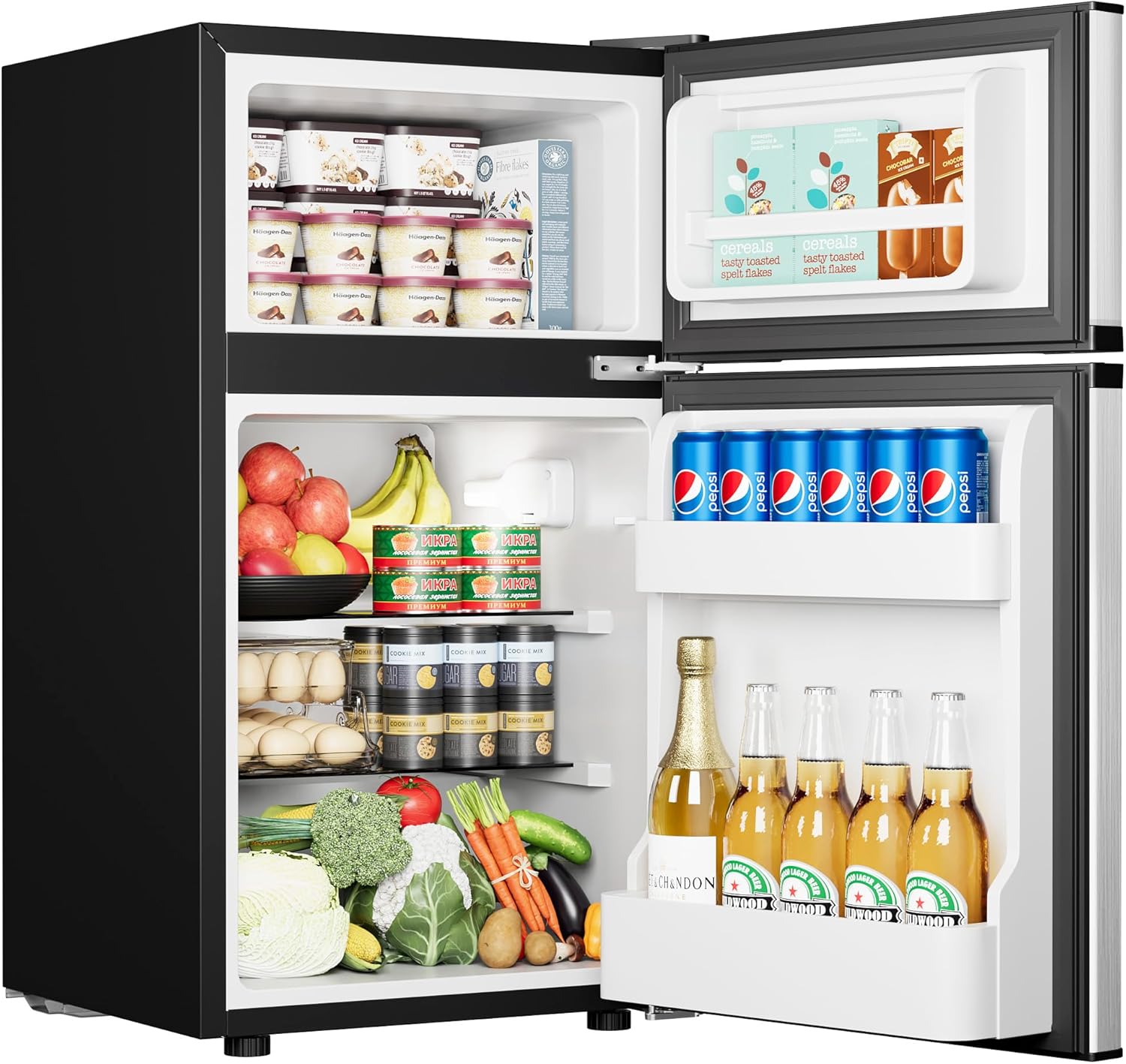
| Capacity | 3.2 cubic feet |
|---|---|
| Freezer Capacity | 0.96 cubic feet |
| Cooling Method | Compressor |
| Defrost System Type | Automatic |
| Voltage | 115 volts |
The EUHOMY 3.2 Cu Ft Mini Fridge pairs a small refrigerator compartment with a 0.96 cu ft top freezer to provide basic refrigeration and light freezing for a studio or small apartment. It uses a rotary scroll compressor with inverter support for steady cooling and three-level temperature adjustment, so it can keep drinks, produce, and a few frozen items at stable temperatures while running relatively quietly. The unit includes adjustable glass shelves, a crisper drawer, door shelves, interior LED lighting, and electronic lock control for simple everyday organization and access. Practical features like a reversible door and adjustable feet make placement flexible in tight layouts, and the automatic defrost system reduces maintenance. Expect limited capacity compared with full-size models and modest annual energy use, so it is best where space and compact cooling are the priority rather than large storage or heavy freezer loads.
Best for: Buyers who prioritize a reliable, straightforward fridge-plus-freezer that fits a studio or small apartment and wants quiet, consistent cooling with flexible placement options.
Less Ideal for: Not a good fit for households that need large-capacity refrigeration or heavy long-term freezer storage.
- Combined fridge and freezer zones for separate cold and frozen storage
- Compressor with inverter provides consistent cooling and relatively low noise
- Adjustable glass shelves and crisper drawer for flexible organization
- Reversible door and adjustable feet allow flexible placement in small spaces
- Interior LED light and electronic lock add convenience and security
- 3.2 cu ft total capacity is small for users who need extensive refrigerated storage
- Annual energy consumption listed is on the higher side for compact units
Verdict: A compact, dependable two-door mini fridge with a freezer that delivers quiet, consistent cooling for small apartments where space and reliability matter.
Frigidaire Retro 3.2 Cu Ft Fridge

| Capacity | 3.2 cubic feet |
|---|---|
| Freezer Capacity | 0.2 cubic feet |
| Cooling Method | Compressor |
| Defrost System Type | auto_cycle_defrost |
| Annual Energy Consumption | 200 kilowatt hours per year |
The Frigidaire Retro 3.2 cu ft fridge is a compact, style-forward refrigerator intended for small apartments, dorms, or offices. It uses a compressor cooling system with a 0.2 cu ft chiller compartment and includes three glass shelves, a 2L door basket for tall bottles, and a built-in can dispenser for organized storage. The reversible door and flush-back design make placement against walls easy, and the included ice cube tray and side bottle opener add convenience for entertaining. Practical features like auto-cycle defrost and electronic lock add daily usability, while the rotary scroll compressor provides consistent cooling without inverter complexity. Trade-offs are its limited overall capacity—suitable for singles or couples but not for families—and the energy use listed at about 200 kWh per year, which is moderate for a compact unit. The matte finish and retro styling are visually distinctive but prioritize look over the maximized interior space of more utilitarian mini fridges.
Best for: Buyers who value a balance of vintage styling and usable storage in a compact footprint and want a dependable, everyday small refrigerator for a studio or one-bedroom apartment.
Less Ideal for: Those needing large-capacity refrigeration for families, bulk grocery storage, or the lowest possible energy draw should consider larger units or higher-efficiency models.
- Retro styling that fits decorative small-apartment interiors
- Reversible door and flush-back form factor for flexible placement
- Multiple glass shelves, a 2L door basket, and can dispenser for organized storage
- Compressor cooling with a dedicated chiller compartment and ice tray for basic freezing needs
- Limited total capacity not suited for large grocery loads
- Annual energy consumption (~200 kWh) is moderate compared with the most efficient mini fridges
Verdict: Choose this Frigidaire if you want a stylish, reliable compact fridge that fits tight apartment spaces while offering organized storage and a small freezer.
Upstreman BR321 3.2 Cu.Ft Mini Fridge

| Capacity | 3.2 cubic feet |
|---|---|
| Freezer Capacity | 0.3 cubic feet |
| Cooling Method | Compressor |
| Defrost System Type | Manual Defrost |
| Voltage | 115 volts |
The Upstreman BR321 is a compact freestanding fridge aimed at bedrooms, dorms, and small apartments where footprint and quiet operation matter. It provides a 3.2 cu.ft refrigeration compartment with a small 0.3 cu.ft freezer and two adjustable glass shelves so you can fit bottles, snacks, and a few meal containers. Temperature is handled by a five-step adjustable thermostat (32°F to 50°F) and a rotary scroll compressor that balances cooling performance with energy efficiency, and the unit is ETL listed and energy conscious. Useful touches include a crisper drawer, three door shelves, reversible door hinges for flexible placement, and leveling feet for uneven floors. Expect manual defrosting and modest annual energy draw rather than advanced frost-free convenience, and the freezer is too small for solid blocks of ice or large frozen items. Noise is low enough for a bedroom setting but performance is typical for a small compressor fridge rather than a full-size model.
Best for: Buyers who want a reliable, low-noise refrigerator that fits small apartments or dorm rooms and prioritizes predictable, energy-conscious operation over advanced features.
Less Ideal for: Anyone who needs large freezer storage, automatic defrosting, or the performance of a full-size kitchen refrigerator.
- Compact 3.2 cu.ft capacity fits tight spaces while offering usable shelving and door storage
- Five-step adjustable thermostat for tailored cooling between 32°F and 50°F
- Quiet operation suitable for bedrooms and offices (rated around 38 dB in product copy)
- Reversible door and adjustable leveling feet allow flexible placement
- Energy-efficient design with ETL listing and modest annual energy consumption
- Manual defrost freezer requires occasional maintenance
- Freezer is very small and not suitable for ice cubes or large frozen items
- Not as feature-rich as larger refrigerators (no frost-free or advanced temperature controls)
Verdict: A compact, quiet, and energy-conscious mini fridge that reliably fits small apartments and dorms when you want a low-risk, simple refrigeration solution.
Choosing the Right Refrigerator for Small Apartments: Key Factors to Consider
Usable Capacity Versus Advertised Volume
Advertised liters or cubic feet do not always translate into usable space. Shelves, door bins, and compressor housings can reduce practical storage. Look at shelf width and depth, interior door bin sizes, and whether shelves are removable or adjustable.
For small apartments, choosing a layout that fits the items you use most matters more than raw volume. Tall narrow bottles, meal-prep containers, and frozen grocery bags require different shelf heights and drawer space. Consider how you store groceries and select an interior layout that minimizes wasted space.
Footprint and Door Swing
The fridge footprint determines whether the unit will actually fit through doorways, into kitchen alcoves, and beside counters. Measure entry hallways, closet openings, and the final placement area before buying. Depth is often the limiting factor in compact kitchens where counters and walkways are tight.
Also check door swing and hinge options. Some compact refrigerators offer reversible doors or right-angle hinges to reduce required clearance. A unit that fits when closed but cannot open fully will be frustrating in daily use, so prioritize models that accommodate your room layout.
Energy Use and Operating Cost
In small apartments, the refrigerator often represents a significant portion of monthly electrical use. Energy-efficient compressors, improved insulation, and smart defrost controls lower consumption. Look for published energy consumption numbers or energy rating labels to estimate yearly running costs.
Lower draw models can offset a slightly higher upfront purchase through reduced utility bills over time. If you live in a building with metered utilities or tight budgets, prioritize efficiency even if it means a modestly smaller usable interior.
Noise Level and Compressor Cycling
Noise is more noticeable in compact homes where the kitchen is near living and sleeping areas. Consider compressor type, insulation, and reported decibel levels. Models with variable-speed compressors or better vibration isolation tend to run quieter and cycle less frequently.
If you are sensitive to background noise or work from home, choose a refrigerator with verified low noise output and smooth cycling behavior to avoid disruptive hums or rattles.
Organization Features and Flexibility
Shelving adjustability, crisper drawers, removable door bins, and deli drawers increase the effective capacity of a small refrigerator. Look for flexible shelving that lets you create tall or wide spaces as needed and drawers that keep fruits and vegetables fresher longer.
Features like convertible compartments or reversible shelves add adaptability for changing needs such as entertaining or weekly grocery runs. In a small apartment, flexible storage often matters more than a single large compartment.
Maintenance, Cleaning, and Accessibility
Compact refrigerators should be easy to clean and maintain since spills and condensation can quickly impact usable space. Removable shelves, accessible drain channels, and straightforward defrost procedures reduce upkeep time. Check whether the condenser or coils are accessible for periodic cleaning.
Also consider serviceability in tight spaces. Units with front-accessible components or simple panels are easier to maintain when the fridge is installed against a wall or in a nook, reducing hassle and potential service calls.
Sizing Tips for Studio and One-Bedroom Layouts
Start by measuring the intended location including clearance for ventilation and door swing. Allow a few centimeters of space at the back and sides for airflow, and ensure the door can open at least 90 degrees without hitting counters or adjacent walls.
In studio apartments, consider a shallower unit that aligns with the countertop depth to preserve walkway space. For one-bedroom layouts, a slightly taller narrow refrigerator can provide extra capacity while still fitting standard kitchen alcoves.
- Measure hallway and doorway dimensions before purchase to ensure delivery and installation fit.
- Account for ventilation gaps specified by the manufacturer to avoid overheating.
- Factor in door swing and consider reversible hinges if space is constrained.
Optimizing Interior Layout for Weekly Grocery Runs
Organize shelves by frequency of use: daily items at eye level, bulk or overflow on lower shelves, and condiments in the door. Use stackable containers and clear bins to maximize visual space and reduce time spent searching.
Adjust shelf heights to accommodate tall bottles or meal-prep containers. Removing one shelf to create a taller compartment can prevent wasted vertical space and reduce the need for multiple small containers.
- Keep dairy and frequently used snacks within easy reach.
- Use slim, tiered organizers for cans and small jars.
- Label containers or use transparent storage to speed meal prep.
Placement and Installation Considerations
Place the refrigerator away from heat sources such as ovens, radiators, or direct sunlight to keep it running efficiently. In compact apartments, even a small increase in ambient temperature can raise compressor run time and energy use.
If possible, allow a narrow service gap at the rear to make future maintenance or moving easier. For stacked or built-in installations, verify clearances for ventilation and any required trim kit specifications.
- Avoid placing the unit in direct sunlight or beside a heating appliance.
- Ensure the floor is level to prevent vibration and door misalignment.
- Leave a small rear gap for airflow and easier access to the power cord.
Reducing Energy Use in Compact Refrigerators
Maintain recommended temperature settings rather than overcooling. Setting the fridge a degree or two warmer while keeping the freezer at an appropriate level can save energy without compromising food safety.
Keep the door closed as much as possible and avoid storing warm food directly in the fridge. Regularly defrost manual-defrost units and clean condenser coils to maintain efficiency.
- Set fridge temperature between 1 to 4 degrees Celsius and freezer at around -18 degrees Celsius as a guideline.
- Organize items to minimize door-open time.
- Clean door seals and coils periodically for best performance.
When to Choose a Counter-Depth or Slim-Depth Unit
Counter-depth or slim-depth refrigerators align with counters and improve kitchen flow in narrow galley kitchens. They reduce visual bulk and help maintain a consistent work surface height, which is useful in compact layouts.
Be aware that counter-depth units often have slightly less interior capacity than full-depth models of the same external height. If counter continuity and circulation are priorities, the tradeoff in capacity may be worthwhile.
- Measure counter depth and compare to unit depth including handle projection.
- Consider whether shallow depth or extra interior volume better serves your cooking habits.
- Check for design features that compensate for reduced depth, like adjustable shelving or slide-out bins.
How We Chose the Best Refrigerator for Small Apartments
We focused on refrigerators designed for compact living and prioritized features that directly affect usability in small apartments. Selection began with models sized and spec'd for narrow kitchens and studio layouts. We excluded full-size, built-in, and commercial units that do not fit typical small-apartment footprints. Key evaluation criteria included usable interior capacity and shelving flexibility, because efficient organization determines how much you can store in limited space. We measured footprint and door clearance needs to ensure units fit typical apartment kitchens and entryways. Energy efficiency and operating cost were assessed using published energy ratings and power draw estimates, since higher efficiency matters for long-term utility budgets. Noise level and compressor cycling were considered to avoid disruptive units in quiet, compact homes. Finally, build quality and maintenance factors such as ease of cleaning and accessible components were weighed for longevity in rental or owner-occupied apartments. We filtered out models lacking clear efficiency ratings or with impractical door swing or depth for compact kitchens. The included units represent a balance of capacity, footprint, efficiency, noise, and practical features that matter most to small-apartment residents.
Our full evaluation process is outlined in our review methodology.
FAQ
What size refrigerator is best for a studio apartment?
For a studio, a compact refrigerator in the 3.0 to 10.0 cubic foot range is common depending on how much fresh and frozen food you store. Focus on usable shelving and door clearance rather than just total volume, and measure entryways to ensure the unit can be delivered.
How much space should I leave around a refrigerator?
Leave a few centimeters on the sides and top and a small gap at the rear for ventilation as recommended by the manufacturer. Adequate airflow prevents overheating and helps the unit run efficiently, which matters more in tight kitchen spaces.
Are compact refrigerators noisy in small apartments?
Noise varies by compressor design and insulation. Many modern compact refrigerators are engineered for quiet operation, but models with older or budget compressors may produce noticeable hums. Check reported noise levels or user feedback if quiet operation is important.
Can a refrigerator be installed in a closet or pantry space?
Installation in enclosed spaces requires proper ventilation and clearance to avoid overheating. Some compact refrigerators can work in a ventilated closet if the space allows airflow around the unit and there is a way to route heat away from the enclosure.
How do I maximize storage in a small refrigerator?
Use adjustable shelves, clear stackable containers, and slim organizers for cans and condiments. Group similar items together and store frequently used foods at eye level to reduce door-open time and make the most of limited space.
Final Verdict
Choosing a refrigerator for a small apartment means balancing usable capacity, physical footprint, and energy use. Prioritize units that fit your kitchen layout and offer flexible shelving so the space inside can adapt to how you shop and cook. Weigh tradeoffs between counter-depth designs and maximum interior volume, and pay attention to noise and energy ratings if you live in a compact, multiuse space. Focus on the dimensions and features that match your routine to make a confident, practical choice.