
Note: This article contains affiliate links. If you click on these links and make a purchase, we may earn a small commission at no extra cost to you. This helps support our research and content. Read our full affiliate disclosure here.
Picking the right refrigerator with freezer compartment shapes how well your kitchen stores fresh food and frozen items. The wrong layout or inadequate capacity can mean repeated trips to the store, cramped shelves, and uneven cooling. This guide covers seven shortlisted refrigerators with freezer compartments that fit common household needs. We evaluated how usable each layout is, how much usable capacity you actually get, and how operating efficiency affects your electricity bill. Read on for the practical criteria we used and a straightforward way to match a refrigerator to your household routine.
Top Picks at a Glance
| Best Overall The best all-around choice for most situations | Midea WHD-113FB1 Mini Fridge |  |
| Best Quality Built to a higher standard if you want something more solid | Frigidaire Retro Refrigerator EFR751 |  |
| Best Value The sweet spot between price and what you get | Frostorm BC-90 Mini Fridge |  |
| Best Budget The cheapest option that still gets the job done reliably | KRIB BLING 3.5 cu.ft Mini Fridge |  |
| Top Rated A top-rated pick with lots of positive feedback | EUHOMY 3.2 cu ft Mini Fridge |  |
| Most Popular A crowd favorite that many people choose with confidence | Upstreman BR321 3.2 Cu.Ft Mini Fridge |  |
| Best Seller A high-volume bestseller chosen again and again | Upstreman 7.7 Cu.Ft. Refrigerator BD75 |  |
Midea WHD-113FB1 Mini Fridge

| Capacity | 3.1 cubic feet |
|---|---|
| Freezer Capacity | 0.92 cubic feet |
| Annual Energy Consumption | 270 kilowatt hours per year |
| Defrost System Type | Manual Defrost |
| Voltage | 120 volts |
The Midea WHD-113FB1 is a compact two-door refrigerator that pairs a 0.92 cu ft freezer with a 2.18 cu ft fridge compartment for basic food and beverage storage in tight spaces. It uses an inverter compressor with R600A refrigerant and is Energy Star certified, so it runs relatively quietly and uses modest electricity compared with non-certified mini fridges. The interior has removable glass shelves, a crisper drawer, a 2L bottle rack and an LED light, while a manual defrost system and simple mechanical thermostat let you set temperatures within a practical range for both fridge and freezer. The reversible door and electronic lock add installation flexibility and security. Expect straightforward, utilitarian performance: it cools reliably for dorms, offices, or small apartments but lacks advanced features like automatic defrost or a large freezer for heavy frozen storage. Assembly is minimal since it is freestanding, but the manual defrost and modest freezer capacity are the main limits for buyers who need heavy-duty or no-maintenance refrigeration.
Best for: Buyers who want an energy-efficient, space-saving refrigerator with a separate freezer for everyday chilled foods and beverages in dorms, offices, or small apartments.
Less Ideal for: Households that need large freezer capacity, advanced no-maintenance features, or heavy-duty long-term frozen storage should consider larger or full-size models instead.
- Energy Star certified with an inverter compressor for lower annual energy use.
- Compact double-door layout separates a usable freezer from the fridge compartment.
- Removable shelves, crisper drawer and a 2L bottle rack allow flexible organization.
- Reversible door and internal LED light improve installation options and visibility.
- Electronic lock provides added security for shared spaces.
- Freezer space is limited, so it is not suitable for bulk frozen storage.
- Manual defrost requires occasional maintenance to prevent frost build-up.
Verdict: A compact, energy-efficient mini fridge with a usable separate freezer that suits dorms and small spaces where low energy use and basic freezing are priorities.
Frigidaire Retro Refrigerator EFR751
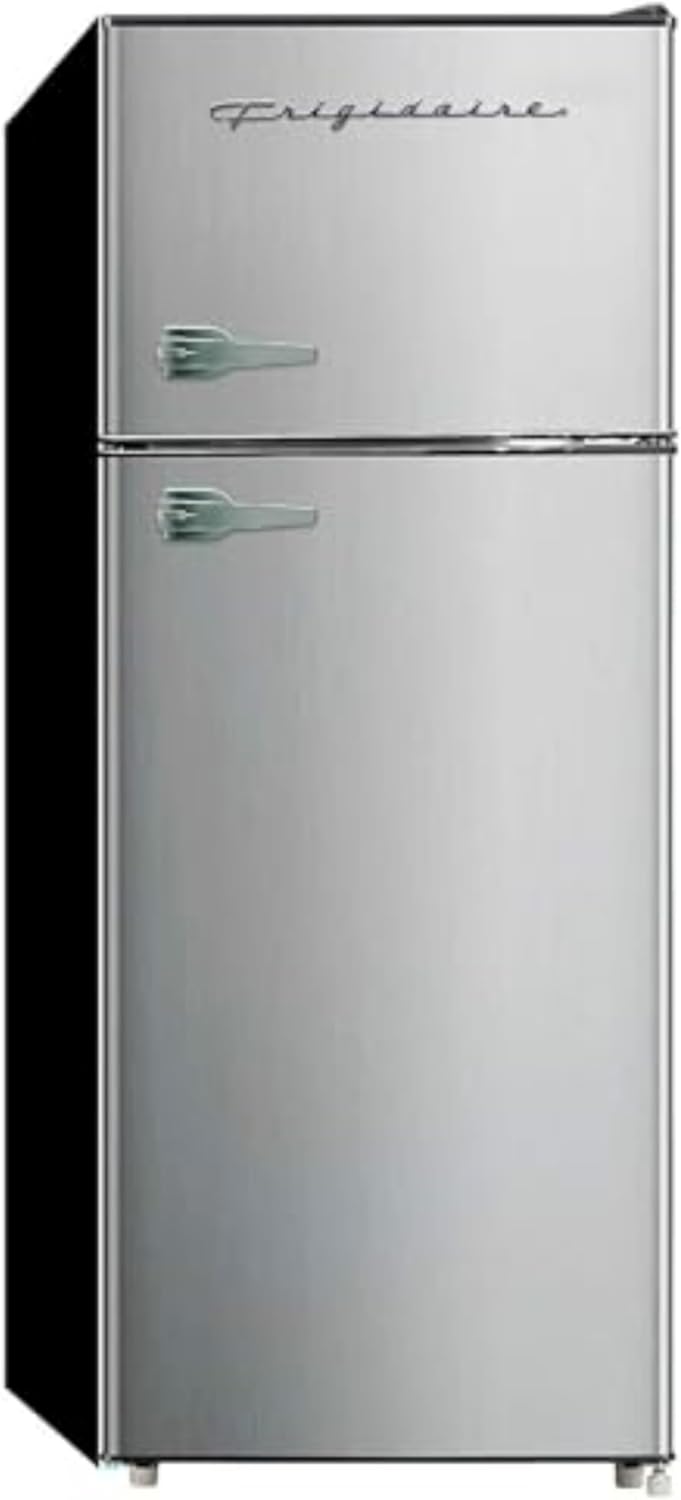
| Capacity | 7.5 cubic feet |
|---|---|
| Freezer Capacity | 2 cubic feet |
| Defrost System Type | Manual |
| Cooling Method | Compressor |
| Voltage | 120 volts |
This Frigidaire Retro EFR751 is a compact upright refrigerator with a dedicated top freezer designed for small kitchens, dorms, or garages. It provides 7.5 cubic feet of total capacity with a 2 cu ft freezer and three adjustable glass shelves that make it easy to organize bottles, produce, and larger items. The unit uses a compressor cooling method with mechanical controls and a manual defrost freezer, which keeps operation simple and reliable while offering straightforward temperature adjustment. Practical touches include a transparent crisper, clear door shelves, reversible door hinge for left or right opening, and two rear castors plus front leveling legs for easier placement. Expect quiet, conventional performance rather than advanced temperature management features, and the manual defrost freezer requires occasional maintenance. Energy consumption is specified, so buyers mindful of efficiency should compare usage with alternatives. For someone who wants a compact, no-frills fridge with a separate freezer and classic styling, this hits the mark; buyers needing precise temperature control or frost-free convenience should look elsewhere.
Best for: Buyers who prioritize straightforward, reliable cooling and a separate freezer in a compact footprint and who value easy organization and flexible placement over advanced controls.
Less Ideal for: Anyone who needs frost-free operation, precise temperature tuning for sensitive foods, or the lowest possible annual energy use should consider other models.
- Separate top freezer provides dedicated frozen storage and an adjustable wire shelf
- Three adjustable slide-out glass shelves and clear door bins for flexible organization
- Reversible door hinge and rear castors plus front leveling legs make placement flexible
- Compressor cooling with simple mechanical controls offers reliable everyday performance
- Freezer uses manual defrost, so it needs periodic thawing and maintenance
- No advanced temperature features like frost-free operation or digital controls
Verdict: A compact, dependable two-door fridge with a dedicated top freezer that delivers simple, practical cooling and flexible organization for small spaces.
Frostorm BC-90 Mini Fridge

| Capacity | 3.2 cubic feet |
|---|---|
| Freezer Capacity | 0.3 cubic feet |
| Defrost System Type | Automatic |
| Voltage | 115 |
The Frostorm BC-90 is a compact 3.2 cubic foot mini fridge with a dedicated 0.35 cu ft upright freezer compartment designed for small spaces. It uses a simple mechanical thermostat (1–5) and an automatic defrost system to keep beverages, snacks, and meal-prep items cold while the freezer handles ice and short-term frozen storage. The unit includes adjustable glass shelves, door bins, and an ice cube tray for flexible organization, and the reversible door lets you install it to open left or right to fit tight layouts. ETL certification and a reported low daily energy draw (about 0.6 kWh/day) make it energy conscious for continuous use. Expect basic temperature control rather than precise digital settings, and the freezer is best for small items rather than long-term frozen storage. Construction appears straightforward and easy to clean, but this is a compact, no-frills refrigerator built for convenience and footprint savings rather than high-end performance or large-capacity freezing.
Best for: Buyers who prioritize a compact, energy-conscious secondary refrigerator for dorms, bedrooms, or offices and want flexible shelving and door orientation to maximize limited space.
Less Ideal for: Those needing precise temperature control, large refrigeration capacity, or substantial long-term freezer storage should choose a larger or more advanced model.
- Dedicated upright freezer compartment for ice and short-term frozen items
- Reversible door for flexible placement in tight spaces
- Adjustable glass shelves and door bins for organized storage
- Automatic defrost and ETL certification for low-maintenance, safe operation
- Mechanical dial thermostat lacks precise digital temperature control
- Freezer capacity is small and not suited for long-term frozen storage
Verdict: Choose the Frostorm BC-90 when you need a compact, energy-efficient mini fridge with a usable freezer and flexible placement for small living or work spaces.
KRIB BLING 3.5 cu.ft Mini Fridge

| Capacity | 3.5 cubic feet |
|---|---|
| Freezer Capacity | 1.2 cubic feet |
| Cooling Method | Thermoelectric |
| Defrost System Type | Manual Defrost |
| Voltage | 120 volts |
This compact refrigerator pairs a small top freezer with a 3.5 cu ft fresh-food compartment to give renters, dorm residents, and office users basic cold storage without a large footprint. It uses a compressor cooling system with a manual defrost freezer and a seven-level adjustable thermostat so you can tune temperatures for a mix of fresh and frozen items. Two removable glass shelves and door shelves let you reorganize shelves for bottles or taller items, and the interior LED light helps when loading at night. The unit is freestanding, runs on standard 120V, and includes ice cube trays and an electronic lock. Expect straightforward performance for everyday use, but note it is a basic model with manual defrost and higher reported annual energy consumption compared with high-efficiency units, so it will be less efficient over time. Setup is simple — unpack and plug in — but dense or overpacked loads will reduce cooling efficiency.
Best for: Buyers looking for an affordable, no-frills refrigerator with a small freezer for a dorm, studio apartment, or office where space and upfront cost matter most.
Less Ideal for: Those who need large capacity, the lowest operating energy costs, or feature-rich frost-free models should consider larger or higher-efficiency alternatives.
- Compact two-door layout with a dedicated top freezer for frozen items
- Seven-level adjustable thermostat lets you fine-tune refrigerator and freezer temperatures
- Removable glass shelves and door storage allow flexible organization
- LED interior light and freestanding design make placement and use simple
- Manual defrost freezer requires occasional maintenance to remove frost
- Annual energy consumption is relatively high compared with energy-efficient models
Verdict: A budget-friendly compact fridge with a dedicated top freezer and adjustable thermostat that fits small spaces and basic cold-storage needs.
EUHOMY 3.2 cu ft Mini Fridge

| Capacity | 3.2 cubic feet |
|---|---|
| Freezer Capacity | 0.96 cubic feet |
| Cooling Method | Compressor |
| Defrost System Type | Manual |
| Door Orientation | Reversible |
The EUHOMY 3.2 cu ft mini fridge pairs a small freezer compartment with a refrigerated section to give you both chilled and frozen storage in a compact footprint. It uses a compressor cooling system with three temperature settings and an adjustable thermostat so you can tune cold levels for drinks, produce, or frozen items, and the 0.96 cu ft freezer can hold ice cream or small frozen packages. Interior LED lighting, adjustable glass shelves and a crisper drawer make organization straightforward, and the reversible door and adjustable feet give flexibility for placement in bedrooms, dorms, or offices. Noise is kept low by the compressor design, and the unit meets UL specification and includes a one-year support period. Expect manual defrosting and a modest annual energy use figure compared with full-size refrigerators, so it is not optimized for heavy frozen storage or long-term bulk freezing. For buyers prioritizing a reliable, purpose-built small fridge with a dedicated freezer, this model delivers sensible features in a space-saving package.
Best for: Buyers who need a compact, dependable fridge with an actual freezer compartment for dorms, bedrooms, offices, or small apartments and who prioritize quiet, consistent cooling over maximum capacity.
Less Ideal for: Those who need extensive frozen storage, want a frost-free freezer, or prioritize the absolute lowest energy consumption should look at larger or specialty freezers instead.
- Two-door layout with a dedicated top freezer for separate frozen storage
- Compressor cooling with adjustable 3-level thermostat for stable temperatures
- Adjustable glass shelves, crisper drawer, and interior LED for organized visibility
- Reversible door and adjustable feet for flexible placement
- Meets UL specification and includes 1 year of product support
- Manual defrost freezer requires occasional maintenance
- Not intended for large-volume or long-term frozen storage due to small freezer capacity
- Annual energy consumption is higher than some more efficient compact models
Verdict: A compact, reliable two-door mini fridge with a real freezer compartment that fits small spaces while providing stable, user-adjustable cooling.
Upstreman BR321 3.2 Cu.Ft Mini Fridge

| Capacity | 3.2 cubic feet |
|---|---|
| Freezer Capacity | 0.3 cubic feet |
| Defrost System Type | Manual Defrost |
| Cooling Method | Compressor |
| Voltage | 115 volts |
The Upstreman BR321 is a small freestanding fridge that pairs a 0.3 cu ft freezer with 2.9 cu ft of refrigerator space, making it a practical secondary fridge for a dorm, bedroom, office, or small apartment. It uses a rotary scroll compressor for reliable cooling and offers five adjustable thermostat settings so you can dial in temperatures for drinks, produce, or dairy; the manual defrost freezer is not designed for long-term ice storage. Interior flexibility comes from two adjustable glass shelves, a crisper drawer, and door shelves for bottles and condiments, while the reversible door and leveling feet help it fit varied layouts. Rated for low noise at about 38 dB and ETL listed, it is positioned as energy conscious with an annual consumption figure provided. Expect basic, functional performance rather than precise commercial cooling controls, and plan to defrost the freezer by hand. For buyers prioritizing quiet, compact refrigeration with a small freezer compartment, this unit delivers sensible features in a modest footprint.
Best for: Buyers who want a compact, quiet secondary refrigerator with a small freezer for daily drinks, snacks, and light food storage and who value social proof and reliable, energy-conscious performance.
Less Ideal for: Those needing a primary kitchen refrigerator, heavy freezer use, or precise temperature control for sensitive items should consider a larger or specialty model.
- Includes a dedicated 0.3 cu ft freezer compartment for frozen items and ice packs
- Five-position adjustable thermostat for simple temperature control
- Reversible door and adjustable leveling feet for flexible placement
- Two adjustable glass shelves plus door storage and a crisper drawer for organized storage
- ETL listed and designed for quiet operation suitable for bedrooms or offices
- Freezer uses manual defrost and is not suitable for long-term ice cream or solid ice storage
- Basic temperature control lacks digital precision or advanced modes
Verdict: A quiet, energy-conscious compact fridge with a small freezer that fits dorms, offices, and bedrooms when you want a dependable secondary refrigerator.
Upstreman 7.7 Cu.Ft. Refrigerator BD75

| Capacity | 7.7 cubic feet |
|---|---|
| Freezer Capacity | 1.5 cubic feet |
| Defrost System Type | Manual Defrost |
| Cooling Method | Compressor |
| Door Orientation | Reversible |
The Upstreman BD75 is a compact freestanding refrigerator with a 7.7 cubic foot capacity and a 1.5 cu.ft. top freezer, designed for apartments, dorms, and offices where floor space is limited. It uses a rotary scroll compressor for conventional cooling, offers five adjustable thermostat settings for both fresh and freezer zones, and has two tempered glass removable shelves plus a crisper drawer to organize produce. Practical touches include an automatic interior light, five door shelves for bottles and condiments, and a reversible door hinge so it can fit different room layouts. The unit is rated as quiet and lists an annual energy consumption figure, which suggests reasonable running costs for continuous use. Expect manual defrost maintenance for the freezer rather than an auto-defrost cycle, and the simpler control set means no digital precision or advanced features. For buyers who want a straightforward, space-efficient refrigerator with a deeper freezer than most mini-fridges, the BD75 delivers useful capacity and configurable storage, though it lacks high-end temperature controls and frost-free convenience.
Best for: Buyers who want a simple, reliable refrigerator with above-mini freezer capacity that fits tight spaces and prioritizes straightforward operation and predictable running costs.
Less Ideal for: Shoppers seeking hands-off frost-free operation, precise digital controls, or smart features should consider other models with automatic defrost and advanced temperature management.
- Relatively large 7.7 cu.ft. capacity with a 1.5 cu.ft. top freezer for compact footprints
- Two removable tempered glass shelves and a crisper drawer allow flexible interior organization
- Reversible door and five door shelves improve placement and storage options
- Quiet operation and stated annual energy consumption for predictable running costs
- Manual defrost freezer requires periodic thawing and maintenance
- Basic mechanical thermostat lacks precise digital temperature control
- No advanced features like frost-free technology or smart connectivity
Verdict: A practical compact refrigerator with a deeper top freezer and simple, reliable controls that suits risk-averse buyers who want predictable, no-frills cooling for small spaces.
Choosing the Right Refrigerator with Freezer Compartment: Key Factors to Consider
Usable Capacity Versus Rated Volume
Advertised liters or cubic feet tell part of the story but not everything. Usable capacity depends on shelf thickness, door bin size, and interior obstructions such as large evaporator housings. Measure the items you use most often, like gallon jugs, pizza boxes, or meal-prep containers, and compare those dimensions to shelf clearances rather than relying solely on headline volume.
Different shelf arrangements and removable components can increase practical storage even with the same rated volume. If you plan to store bulk purchases or tall bottles, prioritize models with adjustable shelves and deep door bins to convert rated volume into usable space.
Freezer Compartment Layout
The freezer layout determines how easily you can use frozen goods. A top or bottom compartment with wide shelves and full-width drawers simplifies storing flat items and frozen meals, while small stacked compartments or awkwardly placed door bins can waste space and make inventory management harder.
Consider whether you want a single drawer-style freezer for wide, shallow storage or multiple shelves for organized stacking. Drawer-style freezers tend to make access easier for frequently used items, whereas shelf-based freezers can be better for long-term bulk storage.
Energy Use And Long-Term Cost
Energy efficiency directly affects running cost and sometimes cooling performance. Look beyond the label and think about how frequently the compressor cycles based on capacity and household door openings. More efficient compressors and better insulation reduce electricity consumption and temperature fluctuation.
If your kitchen is warm or the refrigerator will be placed near a heat source, choose a model with higher insulation and an efficient compressor to avoid higher energy use. Over a refrigerator's life, small differences in efficiency add up to meaningful operational savings.
Temperature Stability And Food Safety
Consistent temperatures are essential to prevent spoilage in both the refrigerator and the freezer compartment. Models that maintain steady internal temperatures avoid partial thawing in the freezer and slow bacterial growth in chilled areas. Pay attention to stated temperature ranges, defrost method, and whether the unit uses multi-zone cooling to isolate the freezer from the fresh-food compartment.
Faster recovery after door openings and a reliable thermostat help preserve perishable items. If you store sensitive items like dairy or defrost-prone frozen goods, prioritize models that emphasize temperature consistency in specifications and user feedback.
Interior Organization And Flexibility
How the interior is arranged affects daily convenience. Adjustable shelves, split-level door bins, and removable drawers allow you to adapt the interior to occasional large items or changing grocery patterns. Door layout matters for frequently used condiments, while deep drawers are useful for produce or deli items.
Also consider whether the freezer includes dividers or trays to separate meal types. Easy-to-remove elements make cleaning and temporary reconfiguration simple, which matters if your storage needs change seasonally or for entertaining.
Noise, Serviceability, And Installation Footprint
Noise level affects kitchen comfort, especially in open-plan homes. Look for compressor designs and documented dB ranges if you are sensitive to background noise. Serviceability matters too: accessible condenser coils, common replacement parts, and clear service documentation reduce repair time and cost.
Finally, verify the installation footprint including door clearance and ventilation requirements. A refrigerator that fits the space but leaves inadequate clearance will perform poorly and may have higher long-term maintenance needs.
Matching Capacity To Household Habits
Start by listing how often you shop, how much fresh versus frozen food you keep, and whether you store bulk items. A household that shops weekly and cooks from scratch will need different shelving flexibility than someone who relies on frozen prepared meals.
Use simple measurements: note heights of common items and measure shelf clearances when comparing models. Pay attention to door bin depth for items you access daily and the freezer drawer depth if you frequently store stacked packages.
- Measure tall items before committing to a model.
- Prioritize adjustable shelves for changing needs.
- Choose deep door bins if you use large bottles often.
Arranging The Freezer For Easy Access
Organize frozen goods by use frequency and type. Frequently used items should be at the front or in the top drawer to reduce time the door is open. Use bins or dividers to separate meat, vegetables, and prepared meals so you can pull whole sections without disturbing other items.
Consider labeling packages and using uniform containers to improve stackability. If you cook in batches, allocate a dedicated drawer or shelf so meal portions are easy to find.
- Keep daily-use items within the top third of the freezer.
- Use clear, stackable containers for uniform storage.
- Reserve one area for long-term frozen inventory.
Placement And Ventilation Considerations
Proper installation affects efficiency and longevity. Leave the recommended clearance around the appliance for airflow and avoid placing the refrigerator next to heat sources such as ovens or direct sunlight. Adequate ventilation reduces compressor workload and helps maintain consistent temperatures.
Level the unit and check door swing in the intended location before purchase. A refrigerator that fits tight between cabinets may need reversed doors or a different hinge configuration to open fully.
- Follow manufacturer clearance specifications for airflow.
- Avoid placing the refrigerator beside heat-producing appliances.
- Test door swing and hinge clearance in the actual space.
Maintenance, Cleaning, And Defrosting
Routine maintenance keeps a refrigerator performing well. Clean door gaskets, vacuum condenser coils periodically, and check drain paths to prevent odors and icing. Easy-access components make these tasks quick and more likely to be completed.
Understand the defrost method used. Automatic defrost systems reduce manual work but can slightly affect interior humidity. Manual-defrost freezers may be more energy efficient in some settings but require occasional defrosting to maintain capacity.
- Vacuum condenser coils every 6 to 12 months if accessible.
- Wipe door gaskets regularly to maintain an airtight seal.
- Know the defrost cycle and plan for occasional manual maintenance if needed.
Optimizing Energy Use In Everyday Operation
Set temperatures to recommended ranges rather than the coldest setting. Over-cooling increases energy use without much practical benefit and can accelerate freezer burn in stored foods. Keep the refrigerator organized so items can be located quickly and doors are not left open.
If the model includes vacation or economy modes, use them when you will be away for extended periods. Regularly check door seals and avoid blocking ventilation paths inside the unit to maintain efficient operation.
- Maintain recommended temperature settings for fridge and freezer.
- Use economy modes when appropriate for long absences.
- Keep air vents inside the unit clear for proper circulation.
How We Chose the Best Refrigerator with Freezer Compartment
We prioritized real-world factors that affect daily use and long-term ownership of refrigerators with freezer compartments. Selection started with models that offer clearly specified usable capacity and freezer layout options. We then filtered for temperature stability metrics, energy efficiency ratings, and interior organization features that influence how easily items are stored and retrieved. Noise level and compressor technology were included because they affect daily comfort and durability. Packaging, installation footprint, and available shelf configurations were considered to ensure a good fit in a variety of kitchens. We excluded units that lack clear capacity or efficiency data, temporary or novelty coolers, and any models with atypical or proprietary service requirements that complicate repairs. The final picks balance usable storage, consistent cooling, efficient operation, and practical interior organization. Our evaluation favored products that make everyday food management simpler, not those with marginal or cosmetic feature additions.
Our full evaluation process is outlined in our review methodology.
FAQ
What is the best temperature setting for a refrigerator with a freezer compartment?
Set the fresh-food compartment between 35 and 38 degrees Fahrenheit and the freezer at 0 degrees Fahrenheit for safe storage. Many models provide numeric settings that approximate these targets; allow 24 hours after adjustment for temperatures to stabilize.
How much clearance does a refrigerator typically need for ventilation?
Most refrigerators need a few inches of clearance at the sides and back for airflow, and a small gap above for heat dissipation. Check the installation recommendations for the specific unit, but plan for at least two inches behind and the manufacturer-specified side and top clearances.
How often should I defrost the freezer compartment?
If the freezer is frost-free, routine manual defrosting is not necessary. For manual-defrost freezers, defrost when ice buildup reaches about a quarter-inch thickness to maintain capacity and efficiency. Frequency depends on usage and humidity but typically ranges from a few months to once per season.
Can a refrigerator with a freezer compartment be used in a heated garage or unconditioned space?
Using a refrigerator in unconditioned spaces depends on the unit's ambient temperature rating. Some models are designed to operate within a limited temperature range and may cycle excessively or fail to maintain temperature outside that range. Consult the unit's operating temperature specifications before placing it in a garage or similar environment.
How do I reduce noise from my refrigerator?
Ensure the refrigerator is level and sitting on a stable surface, and check that nothing is vibrating against it. Vacuum condenser coils if accessible, and leave adequate clearance for airflow. If noise persists, the compressor or fan may need inspection by a technician.
Final Verdict
When choosing a refrigerator with freezer compartment, prioritize usable capacity and a freezer layout that matches how you store frozen goods. Energy efficiency and temperature stability are practical concerns that influence running costs and food preservation. Also account for interior organization, noise, and serviceability to ensure the unit fits your kitchen and lifestyle. Balance your must-have features against available space and operating efficiency. By focusing on usable storage, freezer access, and consistent cooling, you can select a refrigerator that meets daily needs without unnecessary complexity.