
Note: This article contains affiliate links. If you click on these links and make a purchase, we may earn a small commission at no extra cost to you. This helps support our research and content. Read our full affiliate disclosure here.
Living in a tiny house changes how you use appliances because every cubic inch matters. A well-chosen refrigerator for a tiny house keeps food fresh, minimizes energy draw, and fits your kitchen layout without dominating the room. In this guide we shortlist the best compact refrigerators that address common tiny-house constraints such as limited counter or floor space, modest electrical supply, and multipurpose living areas. Below are top picks selected for real-world tiny-house use, followed by clear buying factors and practical tips to help you match a compact fridge to your space and habits.
Top Picks at a Glance
| Best Overall The best all-around choice for most situations | Avanti 4.4 Cu. Ft. Compact Refrigerator |  |
| Best Quality Built to a higher standard if you want something more solid | Frigidaire Retro Refrigerator EFR751 |  |
| Best Value The sweet spot between price and what you get | Frostorm BC-90 3.2 Cu Ft Mini Fridge |  |
| Best Budget The cheapest option that still gets the job done reliably | Frestec 1.7 Cu Ft Mini Fridge FTC16RE |  |
| Top Rated A top-rated pick with lots of positive feedback | Midea 3.1 Cu Ft Mini Fridge |  |
| Most Popular A crowd favorite that many people choose with confidence | Upstreman BR321 3.2 Cu.Ft Mini Fridge |  |
| Best Seller A high-volume bestseller chosen again and again | EUHOMY WC-6B Mini Fridge | 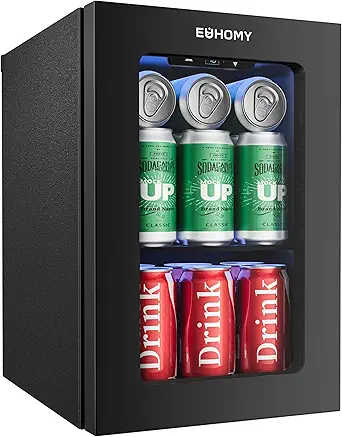 |
Avanti 4.4 Cu. Ft. Compact Refrigerator

| Capacity | 4.4 cubic feet |
|---|---|
| Defrost System Type | Automatic |
| Voltage | 120 volts |
| Cooling Method | Compressor |
| Refrigerant | R-600A |
The Avanti 4.4 cu. ft. compact refrigerator is a small freestanding fridge designed for tight spaces like tiny houses, dorms, or offices. It uses a compressor cooling system and includes adjustable slide-out glass shelves, three in-door storage bins, a full-width chiller compartment, interior lighting, and an adjustable thermostat with a manual defrost option. The reversible door and flush-back design make placement flexible in narrow layouts, and the Energy Star rating helps reduce power draw compared with older mini-fridges. Practical benefits include useful organization for beverages and snacks thanks to the in-door can dispenser and chiller drawer, plus a lock for security. Important limitations are the modest 4.4 cu. ft. capacity—suitable for singles or couples but not for full household food storage—and the lack of a freezer compartment if you need frozen storage. Noise and exact temperature performance will depend on placement and ventilation since it requires freestanding installation.
Best for: Buyers who need a balanced, space-efficient refrigerator for a tiny house or small living area and value energy efficiency and flexible placement.
Less Ideal for: Those who require freezer storage or larger weekly grocery capacity should consider a unit with a freezer or a larger full-size refrigerator.
- Compressor cooling for reliable temperature control in small spaces
- Adjustable slide-out glass shelves and full-width chiller for organized storage
- Reversible door and flush-back design for flexible placement
- ENERGY STAR rated for better energy efficiency than non-rated mini-fridges
- Interior light and electronic lock add convenience and security
- No freezer compartment for frozen food storage
- Capacity is limited to short-term or single-person use
Verdict: A compact, energy-efficient freestanding fridge that balances size, storage organization, and placement flexibility for tiny house living.
Frigidaire Retro Refrigerator EFR751
| Capacity | 7.5 cubic feet |
|---|---|
| Freezer Capacity | 2 cubic feet |
| Defrost System Type | Manual |
| Cooling Method | Compressor |
| Power | 120 volts |
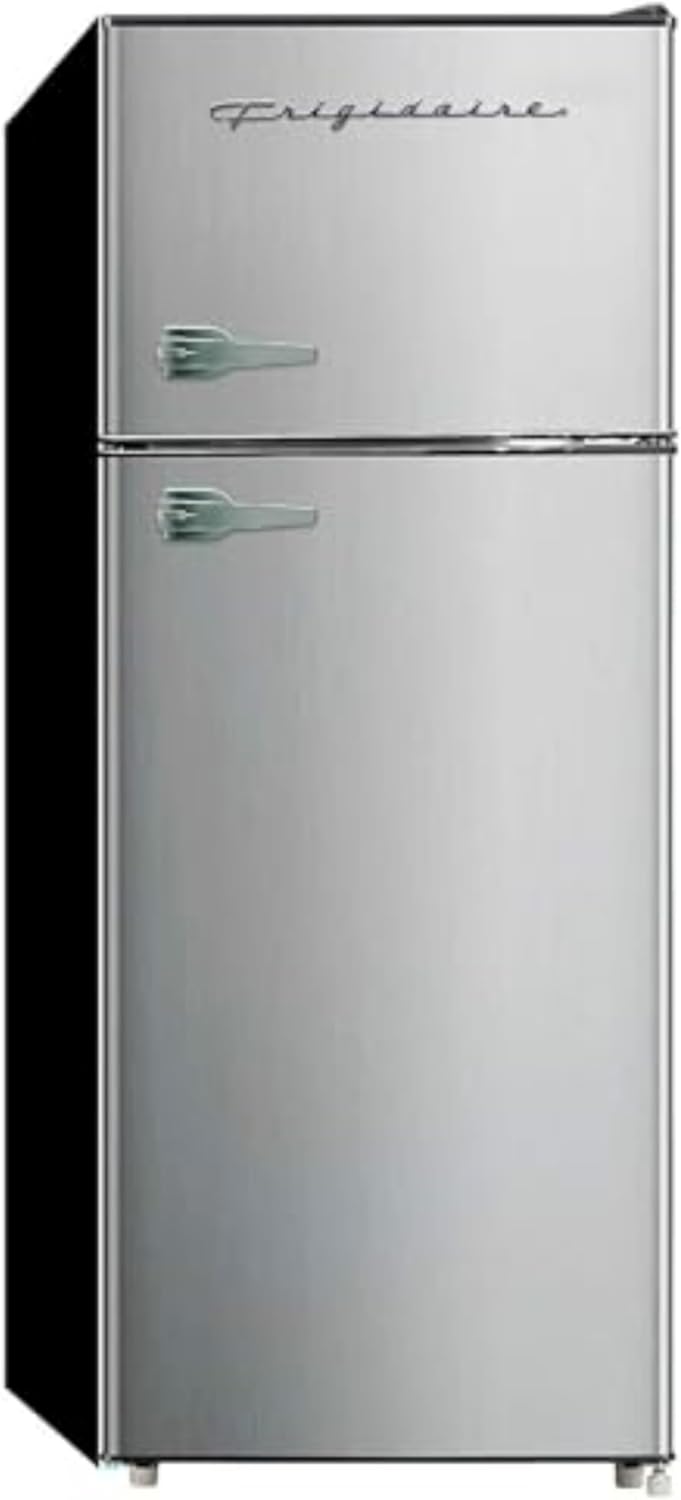
The Frigidaire Retro Refrigerator EFR751 is a compact two-door fridge with a separate top freezer and about 7.5 cubic feet of total capacity, designed for small kitchens, tiny houses, dorms, or offices. It uses a compressor cooling system with mechanical controls and offers three adjustable glass refrigerator shelves, a removable freezer shelf, a transparent crisper, and clear door shelves for organized storage. The unit is freestanding, has front leveling legs and rear castors for easier positioning, and a reversible door hinge so you can fit it into tight layouts. Practical benefits include sturdy glass shelving that slides for access, a dedicated freezer compartment for frozen storage, and reasonably quiet operation for living spaces. Limitations are the manual defrost freezer which needs occasional maintenance and the annual energy consumption figure that may be higher than ultra-efficient compact models, so buyers focused on top-tier efficiency or automatic defrost should compare alternatives.
Best for: Buyers who need a reliable, compressor-cooled compact fridge with a dedicated freezer and flexible interior for a tiny house or similarly small space and who prioritize usable storage and placement flexibility.
Less Ideal for: People whose highest priority is maximum energy efficiency or fully maintenance-free frost management should consider other compact models with auto-defrost and lower annual kWh ratings.
- Separate top freezer keeps frozen items contained and accessible.
- Adjustable glass shelves and removable freezer shelf allow flexible interior layouts.
- Reversible door and rear castors make placement easier in small or awkward spaces.
- Transparent crisper and clear door bins help keep produce and bottles organized.
- Freezer uses manual defrost which requires periodic maintenance.
- Annual energy consumption is relatively high compared with some modern energy-efficient compact refrigerators.
Verdict: Choose this compact Frigidaire when you want a vintage-styled, compressor-cooled fridge with a separate freezer and flexible storage that fits tight tiny-house layouts.
Frostorm BC-90 3.2 Cu Ft Mini Fridge

| Capacity | 3.2 cubic feet |
|---|---|
| Freezer Capacity | 0.3 cubic feet |
| Defrost System Type | Automatic |
| Voltage | 115 |
| Annual Energy Consumption | 210 kilowatt hours per year |
The Frostorm BC-90 is a small upright refrigerator that combines a 3.2 cu ft chilled compartment with a 0.35 cu ft upright freezer, making it useful where space is limited. It cools using a simple mechanical thermostat with settings 1–5 and a dedicated freezer section that can make ice and hold short-term frozen items. The interior includes two adjustable shelves and door bins so you can configure storage for bottles, meal prep containers, and perishables, and the reversible door helps fit the unit into tight layouts. Its automatic defrost system and removable components make cleaning straightforward, and ETL certification plus standard 115V operation simplify installation. Expect modest energy use—about 0.6 kWh per day—so running costs are low. The freezer is compact and not suited for long-term frozen storage or deep-freeze needs, and the fridge's small footprint limits bulk grocery storage, so plan shelf layout for highest-value items rather than large hauls.
Best for: Buyers optimizing limited living space who need a reliable, low-energy fridge with a small freezer for everyday items and occasional frozen goods in tiny houses, dorms, or offices.
Less Ideal for: People who require long-term freezer storage, large-volume food preservation, or frequent entertaining should choose a larger refrigerator or a dedicated deep freezer instead.
- Combined refrigerator and small upright freezer in one compact cabinet for two-zone storage
- Reversible door offers flexible placement in tight floorplans
- Adjustable glass shelves and door bins let you customize storage for bottles and containers
- Automatic defrost and removable components simplify cleaning and maintenance
- Low daily energy use around 0.6 kWh for economical operation
- Freezer compartment is very small and intended for ice and short-term frozen items only
- Limited overall capacity restricts bulk grocery storage and large platters
Verdict: A compact, energy-efficient mini fridge with a small freezer and reversible door that fits tiny-house layouts while keeping daily running costs low.
Frestec 1.7 Cu Ft Mini Fridge FTC16RE

| Capacity | 1.7 cubic feet |
|---|---|
| Freezer Capacity | 0.2 cubic feet |
| Defrost System Type | Manual |
| Cooling Method | Compressor |
| Voltage | 115 volts |
The Frestec 1.7 cu ft mini fridge is a basic, space-saving refrigerator built around a compressor cooling system with a 0.2 cu ft internal freezer. It is intended for tucked-under-desk placement or tiny-house corners and includes a reversible door, one removable glass shelf, an adjustable foot for leveling, and a manual defrost control that simplifies clearing frost. The thermostat offers six temperature settings so you can dial colder or warmer as needed, and the unit is relatively quiet at about 37 dB while claiming modest daily energy use. Practical benefits include easy cleaning thanks to a detachable door seal and the ability to store a few drinks, snacks, and small frozen items without taking much floor space. Important limitations are its small capacity that only fits essentials and the manual defrost requirement, which means occasional maintenance to keep the freezer working well; the fridge also lacks advanced features like automatic defrost or digital temperature readouts.
Best for: Buyers on a tight budget who need a no-frills, space-saving fridge for a tiny house, dorm, or office and prioritize low noise and straightforward operation.
Less Ideal for: Not a good choice for households that need to store family-sized groceries, large frozen items, or want a feature-rich fridge with auto-defrost and digital controls.
- Very compact footprint fits under desks or in tiny-house nooks
- Compressor cooling with internal freezer offers reliable chilling and simple ice storage
- Reversible door and adjustable foot allow flexible placement
- Removable glass shelf and detachable door seal make cleaning and loading taller items easier
- Low operating noise suitable for bedrooms or office use
- Small overall capacity limits food storage to basics
- Manual defrost requires occasional user maintenance
Verdict: A budget-friendly, ultra-compact compressor mini fridge that delivers quiet, reliable cooling for tiny-house living when you only need minimal refrigeration.
Midea 3.1 Cu Ft Mini Fridge

| Capacity | 3.1 cubic feet |
|---|---|
| Configuration | Compact Freezer-on-Top |
| Defrost System Type | Manual |
| Cooling Method | Compressor |
| Specification Met | Energy Star |
The Midea 3.1 cu.ft. mini fridge is a freestanding compact refrigerator with a top freezer section, mechanical temperature control, and a reversible door that fits tight layouts. It cools with a compressor and uses R600A refrigerant, which supports the unit's Energy Star certification and lower annual energy use. Inside you'll find removable glass shelves, a crisper drawer, a 2L bottle rack and an interior LED light for easy organization and visibility. Typical uses include tiny-house kitchens, dorms, and offices where space is limited but you still want a separate freezer compartment. The manual defrost freezer and simple mechanical thermostat keep operation straightforward, though you will need to defrost periodically and the controls are basic compared with digital models. Build quality is practical rather than premium; adjustable legs and a reversible door help placement, while the advertised low noise makes it suitable for living spaces. For buyers who prioritize steady, efficient cooling in a compact footprint, this model delivers dependable everyday performance with minimal complexity.
Best for: Buyers who want a simple, dependable compact refrigerator for a tiny-house or small living space and prefer energy-efficient, fuss-free operation.
Less Ideal for: People who need a frost-free freezer, precise digital controls, or higher-capacity refrigeration for frequent meal prep should consider larger or more feature-rich models.
- Separate freezer and fridge sections for more versatile storage
- Energy Star certified compressor for lower annual energy consumption
- Removable shelves and crisper drawer simplify organization and cleaning
- Reversible door and adjustable legs for flexible placement
- Manual defrost freezer requires occasional user maintenance
- Mechanical thermostat lacks precise digital temperature control
Verdict: A reliable, energy-efficient compact fridge with a separate freezer that fits tiny-house layouts and keeps operating simple and economical.
Upstreman BR321 3.2 Cu.Ft Mini Fridge

| Capacity | 3.2 cubic feet |
|---|---|
| Freezer Capacity | 0.3 cubic feet |
| Cooling Method | Compressor |
| Defrost System Type | Manual Defrost |
| Voltage | 115 volts |
The Upstreman BR321 is a compact compressor-driven mini fridge designed for dorms, offices, bedrooms, and tiny homes where space is limited. It offers a 3.2 cubic foot interior with a small 0.3 cu ft freezer, two adjustable glass shelves, a crisper drawer, and three door shelves so you can store bottles, snacks, and small frozen items in an organized way. Temperature is set with a five-position adjustable thermostat that ranges roughly from 32°F to 50°F, and the reversible door and leveling feet make placement flexible. The compressor cooling and rotary scroll compressor type deliver steady cooling and an Energy Star level of efficiency, while a listed 38 dB operating noise makes it suitable for sleeping or working environments. Maintenance requires occasional manual defrosting and it is not suited for long-term ice or ice cream storage. For tiny house use it balances usable capacity with a small footprint, though buyers should confirm the exterior dimensions fit their intended cabinet or alcove.
Best for: Buyers who want a compact, energy-efficient refrigerator that provides usable chilled and frozen space for a tiny home, dorm, or office and who value quiet operation and flexible placement.
Less Ideal for: Households needing large-capacity refrigeration, prolonged frozen storage, or a built-in cabinet-depth installation should look at larger or built-in models instead.
- Compact 3.2 cu ft interior with dedicated 0.3 cu ft freezer for small-space storage
- Adjustable thermostat with five temperature levels for different food types
- Reversible door and leveling feet let you fit it into tight or asymmetrical spaces
- Energy-efficient compressor cooling with quiet operation around 38 dB
- Two adjustable glass shelves and multiple door bins for flexible organization
- Manual defrost freezer requires periodic maintenance
- Not designed to keep ice cubes solid or store ice cream long term
Verdict: A quiet, energy-efficient compact fridge that delivers practical chilled and small-freezer storage for tiny houses and small living spaces.
EUHOMY WC-6B Mini Fridge

| Capacity | 18 liters |
|---|---|
| Temperature range | 40°F to 61°F |
| Cooling method | Compressor |
| Voltage | 115 volts |
| Defrost system | Manual |
The EUHOMY WC-6B is a countertop beverage refrigerator aimed at keeping drinks cold in very small spaces. It uses a compressor cooling system with digital controls to set temperatures between 40°F and 61°F, and a removable wire shelf lets you fit cans or a couple of bottles as needed. The unit is freestanding and lightweight, so it is easy to move into a tiny house kitchen, dorm room, or office bar. It runs quietly (advertised under 40 dB) and includes an LED interior light plus a UV-protected door to reduce sunlight exposure. Because it is compressor-based rather than thermoelectric, it maintains stable temperatures better when room temperatures vary. Expect limited capacity—about 18 liters—so it is best as a supplemental fridge rather than a primary food storage solution, and the door is right-hinged only. The unit is ETL listed and comes with a one-year warranty, which should reassure buyers looking for a low-risk, compact cooling option for tight living spaces.
Best for: Buyers who want a reliable, space-saving beverage cooler for a tiny house or small kitchenette and value steady compressor cooling and a simple, low-risk appliance.
Less Ideal for: People seeking a primary refrigerator for full meal storage, large families, or anyone needing a reversible-door layout should consider larger or different models.
- Compressor cooling for stable, consistent temperatures
- Digital temperature control with 40°F–61°F range
- Very compact and lightweight for tiny spaces
- Removable shelf allows flexible storage layout
- LED interior light and UV-protected door protect beverages
- Small 18L capacity limits how much you can store
- Right-hand door orientation cannot be reversed
Verdict: A compact, compressor-cooled mini fridge that reliably keeps drinks at set temperatures and fits tiny house counters where a small, low-risk cooler is needed.
Choosing the Right Refrigerator for Tiny House: Key Factors to Consider
Footprint Versus Usable Capacity
In a tiny house the external footprint of a refrigerator is often the most important factor because floor and counter space are limited. Measure the available width, depth, and height where the fridge will sit, and compare those dimensions against doorway and pathway clearances to ensure the unit can be moved into position. Pay attention to how much of the listed capacity is actually usable. Deep crisper drawers or thick door bins can reduce the flat shelf space even when cubic feet look adequate.
Choosing a fridge with efficient interior layout can allow you to store more per cubic foot. Look for adjustable shelves, removable drawers, and narrow but tall storage options that match the kinds of items you store most often. For some tiny-house kitchens a slightly taller, narrower unit provides better real-world capacity than a short wide model occupying the same floor area.
Energy Consumption and Electrical Compatibility
Tiny houses often rely on limited electrical service or off-grid power, so a refrigerator's energy draw is critical to preventing overloads and keeping running costs low. Compare annual kWh estimates or energy rating labels rather than just compressor size. Models with variable-speed compressors or improved insulation will typically demand less power during steady-state operation.
Also verify the appliance's voltage and startup current requirements against your tiny-house electrical system. Some compact units have lower startup surges and are more suitable for smaller inverters or shared circuits. If you plan seasonal off-grid use, pay extra attention to standby losses and whether the unit has energy-saving modes or adaptive defrost settings.
Cooling Reliability and Temperature Stability
A refrigerator that holds temperature consistently prevents food spoilage and reduces energy waste from excessive cycling. In a tiny house the compressor may run more frequently if ambient temperatures vary because the appliance is closer to living areas or external walls. Look for evidence of stable cooling performance across different loading conditions and room temperatures.
Features that improve stability include thicker insulation, better-sealed doors, and a compressor designed for small loads. Consider how the fridge will be loaded each day; many compact models maintain set temperatures better when not packed tightly or when airflow inside the cabinet is unobstructed.
Installation and Placement Flexibility
Tiny-house kitchens come in many shapes so installation flexibility is a major buying consideration. Measure for door swing clearance, and check whether the unit supports reversible doors or right/left hinge options. Undercounter or built-in capable refrigerators are useful when you want a continuous countertop, while freestanding units offer more straightforward replacement and relocation.
Also consider ventilation requirements. Some models need clearance on the back or sides to dissipate heat, while others are designed for flush installation. If you plan to mount the fridge in a slide-out cabinet, verify weight and anchoring points so the unit remains secure during travel.
Interior Organization and Usability
How you organize food in a tiny-house fridge affects daily convenience more than raw capacity. Look for adjustable shelves that accept tall bottles, crispers sized for fresh produce, and door bins that hold frequently used items. A flat, low-shelf layout makes it easier to store leftover containers and meal-prep trays.
Consider features like clear drawers that let you see contents at a glance and small freezer compartments that prevent frozen items from dominating the space. Easy-to-clean surfaces and removable components also matter in a compact kitchen where spills can spread quickly.
Noise and Vibration
In a tiny house the refrigerator is often near sleeping or living areas, so noise and vibration level are important comfort factors. Compressors that run smoothly with lower vibration reduce nighttime disturbance and prevent items on nearby counters from rattling. Check manufacturer noise ratings and look for design features such as vibration-damping feet or quieter compressor types.
Keep in mind that a noisy unit can be more noticeable in a small space. If you are sensitive to sound, prioritize models with lower reported decibel levels and those designed with quieter operation modes.
Choosing Size by Lifestyle
Estimate how often you cook versus eat out and how much fresh versus frozen food you store. A single person or occasional occupant can usually manage with a smaller undercounter or compact upright model, while couples or people who meal-prep weekly may need a bit more shelving and a small freezer compartment.
When deciding between undercounter and freestanding formats, think about how you use counter space. An undercounter fridge preserves continuous counter area but often has more constrained vertical space, which can limit tall-item storage.
- If you shop weekly, prioritize shelving layout and freezer size.
- If you mostly keep fresh produce, choose larger crisper drawers and adjustable shelves.
- For mixed storage needs pick a model with a flexible interior rather than maximum raw cubic feet.
Placement and Ventilation Tips
Plan for ventilation clearance and avoid placing a refrigerator directly against an exterior wall that sees strong temperature swings. Proper airflow around the compressor and condenser is essential for efficient operation and long life.
In tiny houses you may be tempted to tuck a unit into a tight alcove; if so, verify manufacturer recommendations for rear and side clearance. If the unit is installed under a countertop ensure cabinet ventilation or use a model rated for built-in installation.
- Leave recommended clearance for heat dissipation to avoid higher energy use.
- Position away from direct sunlight and cooktop heat sources to reduce compressor runtime.
- Consider venting options if you need to enclose the unit in cabinetry.
Off-Grid and Low-Power Considerations
If your tiny house runs off-grid or relies on limited electrical service, prioritize models with low steady-state energy use and modest startup surges. Look for energy-efficient compressors and good insulation to minimize the load on batteries or generators.
Adaptive defrost and eco modes help reduce unnecessary cycles. Also plan for power management strategies such as dedicated circuits, battery capacity checks, and whether the fridge can be paired with a small inverter without excessive startup currents.
- Check the fridge's listed kWh/year and startup current specifications.
- Aim for models with energy-saving features like adaptive defrost.
- If using solar, size battery and inverter to handle both steady draw and occasional compressor starts.
Maintaining Freshness in a Small Space
Small refrigerators can lose freshness faster if airflow is blocked or if overpacking restricts cold circulation. Organize items so air can move across shelves and avoid crowding door bins with heavy jars that compress seals.
Regular defrosting on models without automatic frost control keeps the interior efficient. Clean door gaskets and check seals periodically to prevent warm air leakage that forces the compressor to run longer.
- Use clear containers to maximize visibility and reduce door-open time.
- Avoid storing hot leftovers directly; cool them first to reduce compressor workload.
- Keep frequently used items at eye level to shorten door-open duration.
Transport and Installation for Mobile Tiny Houses
If your tiny house is mobile, secure anchoring and vibration damping are crucial during travel. Choose refrigerators that are designed to withstand movement or can be easily braced inside a cabinet or framed opening.
Consider how the unit will be moved during replacement or service. Lightweight models with accessible mounting points simplify swaps and reduce the risk of damage during transit.
- Use braces or straps to secure the fridge in place when the house is on the road.
- Inspect hinges and seals after travel to ensure they remain tight.
- Plan for service access so you do not have to uninstall cabinetry for routine maintenance.
How We Chose the Best Refrigerator for Tiny House
We focused on practical filters that matter for tiny-house living and excluded full-size units or specialty commercial fridges that are incompatible with small-space setups. Selection prioritized usable interior capacity relative to external footprint, measured energy consumption and efficiency ratings, cooling reliability and temperature stability for varied small loads, and installation flexibility including countertop, undercounter, and freestanding formats. We also considered layout features that matter in tight kitchens such as door swing options, reversible doors, and adjustable shelving that increase usable storage density. We excluded units that require dedicated 240V circuits or commercial ventilation because those installations are rare in tiny-house systems. For the remaining candidates we evaluated insulation and compressor technology as proxies for how well a fridge holds temperature with intermittent power, plus basic durability indicators like build materials and hinge quality. Finally, we checked how easily the unit can be serviced or moved during typical tiny-house maintenance and transport scenarios.
Our full evaluation process is outlined in our review methodology.
FAQ
What size refrigerator is best for a tiny house kitchen?
It depends on household size and cooking habits. Singles or occasional occupants often manage with compact undercounter units, while couples or those who meal-prep weekly should consider slightly larger uprights with adjustable shelving and a small freezer.
Can a standard compact refrigerator run on solar or small inverters?
Often yes, if the unit has low steady-state energy use and modest startup current. Check kWh/year figures and startup surge ratings and size your battery and inverter accordingly. Models with energy-saving modes are preferable for off-grid setups.
How much clearance does a refrigerator need in a tiny house?
Clearance requirements vary by model, but you should allow the manufacturer-specified space for rear and side ventilation. Inadequate clearance increases energy use and shortens the compressor life, so plan cabinet and alcove installations around those requirements.
Are drawer-style or upright compact refrigerators better for small spaces?
Drawer-style units save floor space and can integrate under counters, making them useful where vertical access is limited. Upright compacts often offer better shelf flexibility and taller storage for bottles. Choose based on which items you store most frequently.
How can I reduce noise from a refrigerator in close quarters?
Place the unit on a level, solid surface and use vibration-damping feet if available. Check that it is not touching cabinetry and that internal shelves and bins are secure. If noise persists, models with quieter compressors or sound-dampening designs are worth prioritizing.
Final Verdict
For tiny-house living prioritize a refrigerator that balances usable interior layout with a minimal footprint and low energy consumption. Measure your space carefully, choose a model with flexible shelving and the right door configuration, and confirm electrical and ventilation compatibility with your system. Tradeoffs are inevitable: you may sacrifice some freezer volume to gain counter space or choose a slightly taller unit to preserve width. Focus on capacity that matches your shopping and cooking routines, low steady-state energy draw if you have limited power, and installation features that support secure placement. With those priorities in mind you can confidently pick a compact fridge that fits both your tiny-house space and daily habits.