
Note: This article contains affiliate links. If you click on these links and make a purchase, we may earn a small commission at no extra cost to you. This helps support our research and content. Read our full affiliate disclosure here.
Picking the right refrigerator with ice maker changes daily convenience more than you might expect. You want steady ice production, smart storage, and minimal maintenance so your kitchen runs smoothly and you do not constantly troubleshoot icemaker issues. This guide shortlists the top options currently available and explains how they perform on real priorities like ice reliability, usable storage, and long-term upkeep. Use the evaluation criteria below to match a model to your kitchen layout and household ice habits, then read on for our shortlist of the leading choices and why they made the list.
Top Picks at a Glance
| Best Overall The best all-around choice for most situations | Samsung 26 cu ft French Door Refrigerator |  |
| Best Quality Built to a higher standard if you want something more solid | GE GYE22GYNFS 22.1 cu ft French Door |  |
| Best Value The sweet spot between price and what you get | Commercial Cool 20 Cu. Ft. Top Mount Refrigerator |  |
| Best Budget The cheapest option that still gets the job done reliably | Chiny 20 Cu.Ft French Door Refrigerator |  |
| Top Rated A top-rated pick with lots of positive feedback | Antarctic Star 17.5 Cu Ft French Door Refrigerator |  |
| Most Popular A crowd favorite that many people choose with confidence | BLACK+DECKER 16 Cu. Ft. French Door Refrigerator |  |
Samsung 26 cu ft French Door Refrigerator

| Capacity | 26 cubic feet |
|---|---|
| Freezer Capacity | 7.5 cubic feet |
| Configuration | French Door |
| Cooling Method | Compressor |
| Installation Type | Freestanding |
This Samsung 26 cu ft counter-depth French door refrigerator combines large, organized storage with flexible ice options and modern styling. It is built around a three-door layout with a roomy fresh-food section, a freezer drawer, and a dual auto ice maker that produces cubed or Ice Bites inside the freezer while the external dispenser offers curved and crushed ice. Metal Cooling helps stabilize temperatures across shelves and the slide-in shelf and multiple door bins make it easy to store tall or bulky items. The unit is Energy Star rated and connects to SmartThings for remote monitoring and energy alerts. Practical limitations include its counter-depth sizing, which reduces internal depth compared with full-depth models, and an annual energy consumption figure that buyers should factor into operating cost expectations. The refrigerator is freestanding and designed for straightforward household use where organized capacity and versatile ice choices are priorities.
Best for: Buyers who want a roomy, organized refrigerator with modern styling and the convenience of multiple ice types for everyday family use and entertaining.
Less Ideal for: People who need maximum internal depth or the absolute lowest operating energy use should consider deeper or smaller capacity alternatives.
- Large 26 cu ft net capacity for organized grocery storage
- Four ice options via internal dual auto ice maker and external dispenser
- Metal Cooling paneling to help maintain consistent temperature
- Slide-in shelf and multiple door bins for flexible organization
- SmartThings connectivity for remote monitoring and energy alerts
- Counter-depth design limits internal depth compared with full-depth refrigerators
- Annual energy consumption may be higher than smaller models
Verdict: Choose this refrigerator if you want roomy, organized storage plus versatile ice options in a modern counter-depth French door design.
GE GYE22GYNFS 22.1 cu ft French Door

| Capacity | 22.1 cubic feet |
|---|---|
| Freezer Capacity | 7.16 cubic feet |
| Refrigerator Net Capacity | 14.9 cubic feet |
| Configuration | French Door |
| Installation Type | Built-In |
The GE GYE22GYNFS is a counter-depth 36-inch French door refrigerator designed to blend with cabinetry while providing built-in-style features. It supplies filtered water and ice from an integrated dispenser and uses TwinChill cooling to maintain separate fresh-food and freezer climates, plus Showcase LED lighting for visibility. The layout includes multiple shelves and door bins that make everyday organization straightforward and the anti-bacterial filter helps keep water and ice cleaner. As a performance-focused option it delivers steady compressor cooling and a rotary scroll compressor intended for reliable temperature control, though its usable capacity is modest at 22.1 cu ft compared with larger full-depth models. Energy consumption is relatively high on paper at 665 kWh/year, so expect higher operating costs than the most efficient competitors. The counter-depth fit and electronic lock add convenience for tight kitchen spaces, while the matte stainless finish resists fingerprints. If you want an integrated ice maker in a built-in-look fridge without a massive footprint, this GE balances features and practical everyday performance.
Best for: Buyers who prioritize an integrated ice maker and a built-in, counter-depth appearance while wanting reliable day-to-day cooling performance in a mid-size French door layout.
Less Ideal for: Households that need maximum interior volume or the lowest possible energy use should consider larger or more efficient full-depth models instead.
- Integrated ice and filtered water dispenser for on-demand cold water and ice
- Counter-depth French door design fits flush with cabinetry for a built-in look
- TwinChill cooling with separate zones helps preserve freshness in fridge and freezer
- Showcase LED lighting improves visibility throughout the fresh-food compartment
- Annual energy consumption listed at 665 kWh/year is relatively high
- Total capacity (22.1 cu ft) is smaller than many full-depth 36-inch models
Verdict: Choose this GE if you want a counter-depth French door refrigerator with a built-in look and a reliable integrated ice and water dispenser.
Commercial Cool 20 Cu. Ft. Top Mount Refrigerator

| Capacity | 20 cubic feet |
|---|---|
| Fresh Food Capacity | 15.1 cubic feet |
| Freezer Capacity | 4.9 cubic feet |
| Refrigerant | R-600A |
| Annual Energy Consumption | 467 kilowatt hours per year |
This Commercial Cool top-mount refrigerator is a full-size 20 cu ft fridge designed for everyday household use and includes a freezer-mounted ice maker that produces up to 3.5 pounds of ice per day. It separates 15.1 cu ft of fresh food space from a 4.9 cu ft frost-free freezer and uses a compressor with R-600A refrigerant to meet ENERGY STAR efficiency targets. Practical touches include two full-width glass shelves in the fridge, an adjustable glass shelf in the freezer, independent push-button temperature controls for each compartment, reversible doors, and adjustable leveling feet to fit uneven floors. The ice maker requires a cold water line connection and stops automatically when the tray is full, which keeps maintenance simple but does add an installation step. At 467 kWh per year and with a one-year manufacturer warranty, it balances efficiency and basic reliability, though buyers should measure delivery paths because it is a standard-depth, full-height unit. The design focuses on usable storage and straightforward controls rather than premium features, making it a sensible choice for those who want utility and energy savings with an integrated ice maker.
Best for: Buyers seeking a practical, energy-efficient full-size refrigerator with an integrated ice maker and straightforward controls for everyday home or apartment use.
Less Ideal for: Shoppers who need advanced smart features, commercial-grade durability, or higher daily ice production should consider other models built for heavy-duty or feature-rich performance.
- Built-in freezer ice maker with auto-stop sensor produces up to 3.5 lbs of ice daily
- ENERGY STAR certified compressor and R-600A refrigerant for improved efficiency
- Generous storage split with 15.1 cu ft fresh food and 4.9 cu ft freezer capacity
- Frost-free freezer and removable glass shelves for easier organization and cleaning
- Reversible doors and adjustable leveling feet simplify installation in tight spaces
- Ice maker requires a household cold water line connection for operation
- Basic one-year manufacturer warranty and limited premium feature set
Verdict: A straightforward, energy-efficient 20 cu ft refrigerator with a built-in ice maker that delivers reliable daily use and good storage organization for practical home buyers.
Chiny 20 Cu.Ft French Door Refrigerator

| Configuration | French Door |
|---|---|
| Capacity | 20 cubic feet |
| Additional Features | Automatic Defrost, Digital Temperature Control, Water Dispenser |
| Installation Type | Freestanding |
This Chiny 20 Cu.Ft French Door Refrigerator combines a French door layout with a left-side freezer and integrated nugget and cube ice maker to deliver basic cold storage and convenient iced beverages. It uses microcomputer controls and an LED display to let you set fridge and freezer temperatures independently, and a multi-airflow cooling system to help maintain even temperatures across compartments. Practical touches include an automatic defrost program, removable door seals for easier cleaning, a one-minute door-open alarm, and a front water dispenser for quick access. For buyers prioritizing core features on a budget, the unit offers reasonable capacity and functional ice-making without premium extras like smart connectivity or advanced temperature zones. Expect typical compromises for an entry-level model: limited engineering detail on cooling performance, no listed energy rating, and fewer luxury finishes or accessory options compared with higher-end brands.
Best for: Value-minded buyers who need a straightforward, mid-size French door fridge with an integrated ice maker and essential convenience features for everyday home use.
Less Ideal for: Buyers seeking high-end temperature management, smart home integration, or the highest energy efficiency should consider more premium models.
- Built-in nugget and cube ice maker for on-demand ice
- Independent microcomputer temperature controls with LED display
- Multi-airflow cooling to help maintain even temperatures
- Automatic defrost and removable door seals for lower maintenance
- No listed energy efficiency rating or advanced preservation features
- Basic feature set without smart connectivity or premium finishes
Verdict: A budget-friendly French door refrigerator with a built-in ice maker that delivers essential cooling and convenience without premium bells and whistles.
Antarctic Star 17.5 Cu Ft French Door Refrigerator

| Capacity | 17.5 cubic feet |
|---|---|
| Freezer Capacity | 5.1 cubic feet |
| Defrost System Type | Automatic |
| Voltage | 115 volts |
| Number Of Shelves | 4 |
This Antarctic Star French door refrigerator combines a mid-size 17.5 cubic foot capacity with a bottom freezer and an integrated automatic ice maker for everyday convenience and small-party use. The inverter compressor and advertised fast-cooling capability make it suited for quickly chilling groceries, while the multi-air flow design helps maintain consistent temperatures on every shelf so items do not develop warm spots. A touch LED display and door-open alarm provide simple control and protection against accidental energy waste. The bottom freezer hides the ice maker and offers 5.1 cu ft of storage with easy access to frozen goods. Practical details like a stainless steel VCM finish that resists fingerprints and a 90 degree door swing for tight placements make this unit kitchen-friendly. Expect typical limitations of value-brand fridges such as modest annual energy consumption and a one-year warranty, so factor in potential servicing costs over long ownership. For buyers seeking straightforward cooling plus an always-ready ice supply, this model is a competent option.
Best for: Buyers who prioritize reliable everyday cooling and an integrated ice supply for household use and occasional entertaining, and who value straightforward controls and a compact French-door layout.
Less Ideal for: Shoppers seeking the highest energy efficiency or extended factory-backed warranty coverage should consider other models with lower consumption or longer warranties.
- Built-in automatic ice maker keeps ice available without countertop units
- Inverter compressor for more consistent cooling and improved efficiency during heavy use
- Multi-air flow system promotes even temperatures across shelves and drawers
- 90° door opening and reversible door orientation allow installation in tighter kitchen layouts
- Stainless steel VCM finish resists fingerprints for easier upkeep
- Warranty coverage is limited to one year which may be short for long-term ownership
- Annual energy consumption is relatively high compared with energy-efficient models
Verdict: Choose this refrigerator if you want a compact French-door unit with a built-in ice maker and reliable cooling performance for everyday household use.
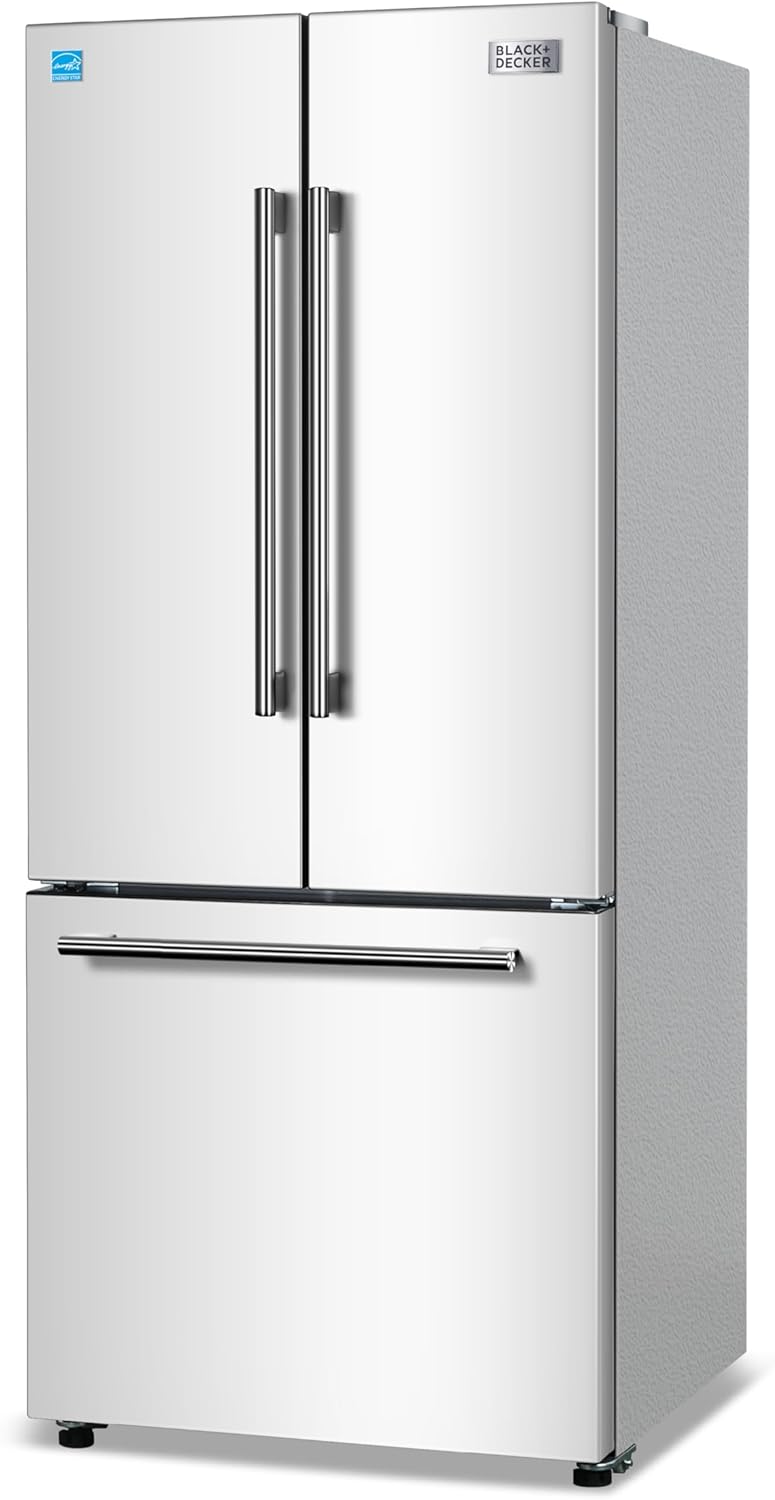
BLACK+DECKER 16 Cu. Ft. French Door Refrigerator
| Capacity | 16 cubic feet |
|---|---|
| Wattage | 470 watts |
| Door Orientation | Reversible |
| Voltage | 120 volts |
| Number Of Shelves | 3 |
This BLACK+DECKER French-door refrigerator is a compact full-size fridge with a bottom freezer drawer and a built-in ice maker that produces up to about 3.5 lb of ice per day when connected to a household water line. Typical use centers on everyday kitchen storage: the fridge provides full-width shelving, interior LED light, digital thermostat controls for fridge and freezer, and two freezer drawers for organized access to frozen goods. The ENERGY STAR-rated compressor and R600a refrigerant aim to keep running costs and environmental impact lower than older units. Practical benefits include reversible doors for flexible placement, adjustable leveling legs, and the ability to remove doors and drawers to fit standard 30” to 36” doorways. Limitations to consider are the modest 16 cu ft total capacity—about 11.1 cu ft for the fridge compartment—which may be small for large families, and the need to hard-plumb the ice maker to get full functionality. The unit is freestanding and intended for kitchens where a modern French-door look and built-in ice are priorities without stepping up to larger commercial-style refrigerators.
Best for: Buyers who prioritize a modern French-door look with a factory-quality ice maker and want a compact full-size refrigerator that is energy efficient and easy to install in standard homes.
Less Ideal for: Large households or people who need maximum refrigerated storage or large-capacity freezer space should consider larger models instead.
- Built-in ice maker with automatic shutoff when tray is full
- ENERGY STAR certified for lower energy use
- Digital temperature controls for separate fridge and freezer settings
- Reversible doors and removable panels for easier installation through doorways
- Total capacity is relatively small compared with larger full-size refrigerators
- Ice maker requires a direct water connection to operate fully
Verdict: Choose this fridge if you want an ENERGY STAR French-door refrigerator with a built-in ice maker and compact footprint for a typical household kitchen.
Choosing the Right Refrigerator with Ice Maker: Key Factors to Consider
Ice Production Rate
Ice production rate determines how quickly the ice maker refills after use and whether it can keep up with your household demand. Look at daily ice output and startup time; higher output matter for frequent entertaining or homes that use crushed or cubed ice heavily.
Production rate also interacts with freezer temperature stability. Units that struggle to hold steady temperatures may yield slower or inconsistent ice creation. Consider how many people live in your home and whether you host gatherings frequently when weighing this factor.
Storage Layout and Capacity
A refrigerator's usable layout affects how much you can store once the ice maker and its storage bin are installed. Ice makers can occupy freezer space or require dedicated door dispensers, so plan around shelf adjustability, drawer sizes, and clearances for tall items.
Think beyond total cubic feet: evaluate shelf depth, drawer configuration, and how the ice bin location influences everyday organization. Flexible shelving and convertible compartments reduce the tradeoffs between ice production and food storage.
Water Connection and Filtration
Built-in ice makers need a reliable water supply and an accessible filter system to keep ice tasting fresh. Consider the type of water connection required, the ease of filter replacement, and whether the filter uses common cartridge sizes.
Water pressure and line routing in your kitchen can affect installation cost and long-term reliability. Units with straightforward filter access and clear replacement intervals simplify maintenance and improve ice quality over time.
Energy and Water Efficiency
Ice makers add incremental energy and water use to a refrigerator's baseline consumption. Look for models with efficient compressors, good insulation, and features like adaptive defrost to limit unnecessary cycles. Efficient ice production reduces operational cost and environmental impact.
Water usage per pound of ice and standby power draw from control electronics also factor into total consumption. If you prioritize lower utility bills or smaller environmental footprint, efficiency specs should influence your choice.
Noise Levels and Vibration
Ice makers include motors and valves that cycle frequently; excessive noise or vibration can be noticeable if the refrigerator sits near living spaces. Check for user-focused features such as quieter motors, vibration-damping mounts, or control settings that reduce cycle frequency at night.
If the unit will sit in an open-plan kitchen or near bedrooms, prioritize models known for unobtrusive operation. Quieter operation often correlates with better long-term mechanical stability as well.
Serviceability and Parts Access
Maintenance matters: easy access to the ice bin, water valve, and filter simplifies routine care and speeds repairs. Consider how panels open, whether common parts are readily accessible, and whether the design allows basic troubleshooting without special tools.
Good serviceability reduces downtime and can extend the useful life of the refrigerator. Choose designs that minimize the need to remove large components for simple tasks like clearing an ice jam or changing a filter.
Types of Ice Makers and How They Affect Your Kitchen
Built-in ice makers generally fall into two mechanical styles: freezer-mounted modules that drop ice into an internal bin, and door-dispenser systems that route ice through the door. Freezer modules tend to preserve interior layout but can reduce usable freezer volume. Door-dispensed systems free up internal space but add complexity and potential maintenance points.
Beyond location, ice shape and dispensing style influence how you use the appliance. Cubed ice stores and stacks well for drink glasses, while crushed ice is convenient for smoothies and cocktails. Some units let you select shapes or dispensing modes; factor that flexibility into your decision if you have specific beverage preferences.
- Freezer-mounted: simpler mechanics, can reduce freezer storage
- Door-dispensed: saves internal space, more moving parts
- Shape options: cubed versus crushed affects use cases
Installation and Water Hookup Considerations
Most refrigerators with built-in ice makers require a dedicated water line and a nearby shutoff. Assess whether your kitchen layout supports a straight-run from the supply or if you need an adapter or longer tubing. Professional installation is often recommended to prevent leaks and ensure proper water pressure.
Also verify drain and ventilation clearances. Some installations need extra room for tubing or for the door to swing clear of adjacent cabinets. Planning these logistics before purchase minimizes surprises during delivery and hookup.
- Confirm water line placement and shutoff access
- Check for sufficient clearance for door swing and ventilation
- Plan for professional hookup if in doubt
Maintaining Ice Quality Over Time
Ice taste and clarity degrade if filters are neglected or if the water source contains impurities. Replace filters on the manufacturer-recommended schedule and keep the ice bin clean to avoid stale odor transfer. Periodically discard old ice if it develops off-flavors.
If you notice frequent jams or slow production, check water pressure and tubing for kinks or mineral buildup. Routine checks reduce the need for major repairs and help preserve consistent ice output.
- Replace filters on schedule to maintain flavor
- Clean ice bin to prevent odor transfer
- Inspect water lines for pressure or mineral issues
When to Choose a Unit Focused on Ice Capacity
If you regularly host parties, run beverage-heavy operations, or have a large household, prioritize ice production and bin capacity over marginal increases in fresh-food storage. Models engineered for high output will recover faster between uses and support crushed-ice modes common at gatherings.
Conversely, if your ice needs are light, favor models that trade a smaller ice bin for improved shelf flexibility. Those layouts often give you more usable fridge space while still offering enough ice for daily use.
- High-demand households prioritize production and bin size
- Light users can favor flexible internal storage
- Consider party frequency and beverage habits
Troubleshooting Common Ice Maker Issues
Several routine problems can reduce ice output: frozen water lines, clogged filters, or misaligned door seals. Start with simple checks such as ensuring the water supply is on, the filter is seated properly, and the freezer temperature is within the recommended range. Many issues are resolved without professional service.
If jams or irregular sizes persist, consult the service access points for the ice module. Frequent problems may indicate water pressure inconsistencies or internal sensor faults that require qualified repair, but documenting symptoms and timing will help technicians diagnose faster.
- Check water supply and filter seating first
- Verify freezer temperature and door seals
- Document issues to aid professional diagnosis
How We Chose the Best Refrigerator with Ice Maker
We focused on features and performance that matter most for refrigerators equipped with built-in ice makers. Primary evaluation metrics included ice production rate and reliability, usable fresh- and freezer-storage design, energy and water efficiency, and serviceability for long-term ownership. We prioritized models with clear capacity layouts that maximize shelf and bin flexibility and those that provide consistent ice output across typical household usage patterns. We also considered noise and vibration levels because frequent ice production cycles can be disruptive in open-plan kitchens. Water filter and dispenser integration were evaluated for ease of replacement and hygiene. Exclusions included units without factory-installed ice-making capability and specialty refrigeration types that do not support standard household water hookups. Final selections represent balanced choices across installation types and interior layouts while favoring proven mechanisms and accessible maintenance paths.
Our full evaluation process is outlined in our review methodology.
FAQ
How much ice should a typical household refrigerator produce daily?
Daily production varies, but many household refrigerators produce enough for routine use—about a few pounds per day. If you host often or use a lot of ice, choose a model with higher rated daily output to avoid shortages.
Will an ice maker increase my water or energy bills substantially?
Ice makers add some water and energy use, but modern units are reasonably efficient. Expect a modest increase tied to production volume and freezer duty cycles. Efficiency ratings and low-power settings help minimize ongoing costs.
How often should I change the water filter for ice makers?
Filter replacement intervals depend on usage and water quality but commonly range from every 6 months to annually. Replace more frequently if you notice changes in ice taste or reduced output.
Can I install a refrigerator with ice maker without professional help?
Basic placement and leveling can be DIY, but water hookup often benefits from a professional to prevent leaks and ensure proper pressure. If you are comfortable with plumbing basics and local codes allow it, DIY is possible with the right tools.
Why does my ice taste bad even with a filter?
Bad-tasting ice usually means the filter is overdue for replacement, or the ice bin needs cleaning. Low-quality source water or residual odors in stored ice can also be factors. Regular filter changes and bin cleaning typically correct the issue.
Final Verdict
When choosing a refrigerator with ice maker, balance ice production needs against usable storage and long-term maintenance. Prioritize a model with reliable ice output and accessible filters if you depend on frequent ice use, or choose flexible internal layouts if food storage is the main concern. Consider installation constraints, especially water hookup and clearance, and weigh energy efficiency if operating costs matter. Focus on the criteria that match how you use your kitchen and be realistic about ice demand. That approach will help you pick a refrigerator that delivers dependable ice without compromising daily storage or adding avoidable upkeep.