
Note: This article contains affiliate links. If you click on these links and make a purchase, we may earn a small commission at no extra cost to you. This helps support our research and content. Read our full affiliate disclosure here.
If you own laminate floors, choosing the right robot mop matters because too much moisture or the wrong cleaning action can cause streaks, swelling, or dulling. A Robot Mop for Laminate Floors should remove dirt and scuffs while protecting the finish and managing water exposure. This guide shortlists the top options for laminate surfaces and explains how each was evaluated across cleaning performance, moisture control, and floor-safe features. Read on to find a model that keeps laminate looking clean without risking damage.
Top Picks at a Glance
| Best Overall The best all-around choice for most situations | iRobot Roomba Plus 405 Combo |  |
| Best Quality Built to a higher standard if you want something more solid | roborock Saros 20 |  |
| Best Value The sweet spot between price and what you get | Tikom G8000 Max Robot Vacuum |  |
| Best Budget The cheapest option that still gets the job done reliably | iMartine BR151 Robot Vacuum |  |
| Top Rated A top-rated pick with lots of positive feedback | iRobot Roomba 105 Combo |  |
| Most Popular A crowd favorite that many people choose with confidence | roborock Q10 S5+ |  |
| Best Seller A high-volume bestseller chosen again and again | Shark Matrix Plus AV2610WA |  |
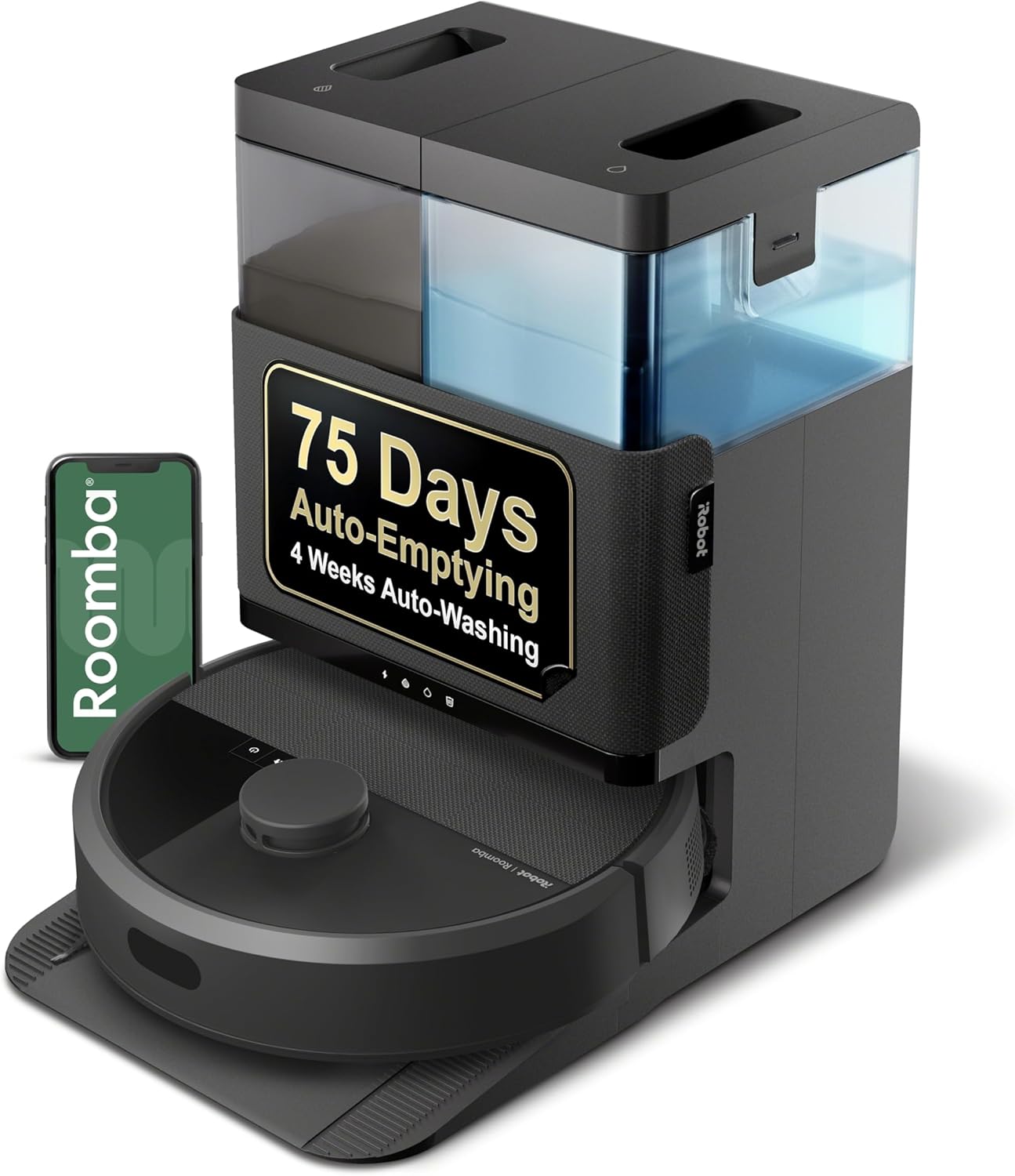
iRobot Roomba Plus 405 Combo
| Battery Life | 120 minutes |
|---|---|
| Capacity | 0.5 liters |
| Control Method | App, Push Button, Voice |
| Surface Recommendation | Carpet & Hard Floor |
| Filter Type | Cartridge |
The Roomba Plus 405 Combo pairs powered vacuuming with spinning DualClean mop pads and a multi-function AutoWash dock to cut down manual upkeep. It uses ClearView LiDAR to map rooms quickly and offers app, voice, or button control to schedule vacuum-only, mop-only, combo, or vacuum-then-mop runs; mop pads lift automatically when carpets are detected. The AutoWash dock handles self-emptying for up to 75 days of debris capture and also rinses and dries mop pads after runs, reducing the need to hand-wash pads. Practical cleaning features include four suction levels, SmartScrub for extra scrubbing power, and custom clean zones and keep-out areas in the app. Expect routine maintenance like rinsing dock tanks, wiping contacts, and changing filters every few months, and note the robot relies on the dock and water usage for mop maintenance so it adds occasional dock care. For homes with pets or mixed hard floors and carpets, it balances strong suction with automatic mop care to keep floors ready without frequent hands-on intervention.
Best for: Buyers who want mapped, scheduled vacuum-and-mop cleaning with minimal daily fuss and appreciate social proof that the platform is widely used and supported.
Less Ideal for: People who need a very compact, dock-free robot or who want a simple vacuum-only unit with no mop or dock maintenance responsibilities.
- Combines vacuuming and active scrubbing mopping with dual spinning mop pads
- ClearView LiDAR mapping enables room-by-room navigation and custom clean zones
- AutoWash dock self-empties debris for up to 75 days and washes/drys mop pads after runs
- Multiple control options via app, voice assistants, or onboard buttons and four suction levels
- Requires periodic dock maintenance (water tanks, rinse cycles) to keep auto-wash functions working
- Larger docked footprint and ongoing use of dock consumables compared with a vacuum-only robot
Verdict: Pick this if you want a mapped robot that both vacuums and deep-scrubs mops while the AutoWash dock handles most of the pad cleaning and debris emptying for you.
roborock Saros 20

| Suction | 36,000 Pa |
|---|---|
| Battery Life | 180 minutes |
| Filter Type | Washable Filter |
| Noise Level | 55 db |
| Power Source | Battery Powered |
The roborock Saros 20 is built for heavy cleaning jobs: a 36,000 Pa digital motor, dual anti‑tangle system, and adaptive lift chassis let it pull deep debris from rugs and cross thresholds without getting stuck. It combines precise StarSight 3D navigation and an RGB camera to map rooms, avoid more than 300 obstacles, and plan efficient routes that reduce missed spots. The slim profile reaches under low furniture while FlexiArm extends brushes and the mop to cover edges and corners. The RockDock adds hands‑free maintenance with hot‑water mop washing, hot‑air drying, and long auto dust‑emptying intervals for less upkeep. For dark hardwood specifically, its mapping and edge cleaning help avoid repeated passes that can highlight streaks, though aggressive suction and mop use mean you should choose gentle water settings and test on finish‑sensitive areas first. Expect solid pet hair pickup and long runtimes, but factor in the dock footprint and occasional app setup tuning to get optimal schedules and mop pressure for delicate floors.
Best for: Buyers prioritizing raw cleaning performance and minimal intervention who want a robot that handles pet hair, deep dirt, and complex floor plans with powerful suction and advanced navigation.
Less Ideal for: Those who need an ultra-compact or budget robot, or users who prefer a barebones device without a large automated dock system taking permanent floor space.
- Very high suction (36,000 Pa) for deep dirt and pet hair removal
- Advanced 3D navigation and RGB camera reduce collisions and missed areas
- AdaptiLift chassis crosses high thresholds and cleans under low furniture
- RockDock offers hot‑water wash, hot‑air dry, and extended auto emptying for hands‑free maintenance
- FlexiArm side brush and mop reach edges and behind curtains for edge‑to‑edge cleaning
- Powerful suction and automated mopping may require conservative settings on finished hardwood to avoid excess moisture or visible streaking
- Large multifunction dock requires dedicated floor space for the full hands‑free benefits
Verdict: If top-tier suction, obstacle-aware navigation, and a hands‑free self‑cleaning dock are your priority for deep clean performance on hardwood, the Saros 20 delivers.
Tikom G8000 Max Robot Vacuum

| Suction | 5000Pa |
|---|---|
| Battery Life | 150 minutes |
| Dustbin Capacity | 450 ml |
| Water Tank | 300 ml |
| Noise Level | 45 db |
The Tikom G8000 Max is a low-profile robot vacuum that combines strong suction with mopping to keep hard floors and low-pile carpets tidy with minimal user effort. In use it maps and navigates with anti-collision and anti-fall sensors, and supports app, remote, voice, and onboard button control so you can schedule cleanings and start runs from a phone or the included remote. Notable features include a 5000Pa suction motor for lifting pet hair and debris, a combined 450 ml dustbin plus 300 ml water tank for simultaneous vacuuming and mopping, and a runtime up to 150 minutes with automatic recharge. Its 3-inch height lets it access under furniture and the Zig-zag cleaning mode improves coverage on open floor areas. Limitations to keep in mind are that higher-pile carpets may not get deep cleaning compared with upright vacuums and mopping is best for maintenance rather than heavy wet cleaning; occasional emptying of the dustbin and refilling the water tank are still required. For routine hardwood maintenance the G8000 Max offers a practical balance of suction, run time, and smart controls.
Best for: Buyers who want a practical, time-saving floor care solution for hardwood and low-pile carpets and prioritize long runtime, reliable navigation, and flexible control options.
Less Ideal for: Households that need deep carpet extraction, heavy wet mopping, or commercial-grade cleaning should consider a dedicated upright or standalone mop system instead.
- Strong 5000Pa suction effective on hard floors and short-pile carpets
- Simultaneous vacuuming and mopping with combined dustbin and water tank saves time
- Long run time up to 150 minutes with auto-recharge for larger homes
- Slim 3-inch profile reaches under low furniture
- Multiple control options including app, remote, voice, and onboard button
- Mopping function is for light maintenance and not heavy wet cleaning
- May be less effective on high-pile carpets compared with full-size vacuums
Verdict: A slim, long-running robot that combines powerful suction and light mopping to keep hardwood floors clean with minimal hands-on work.
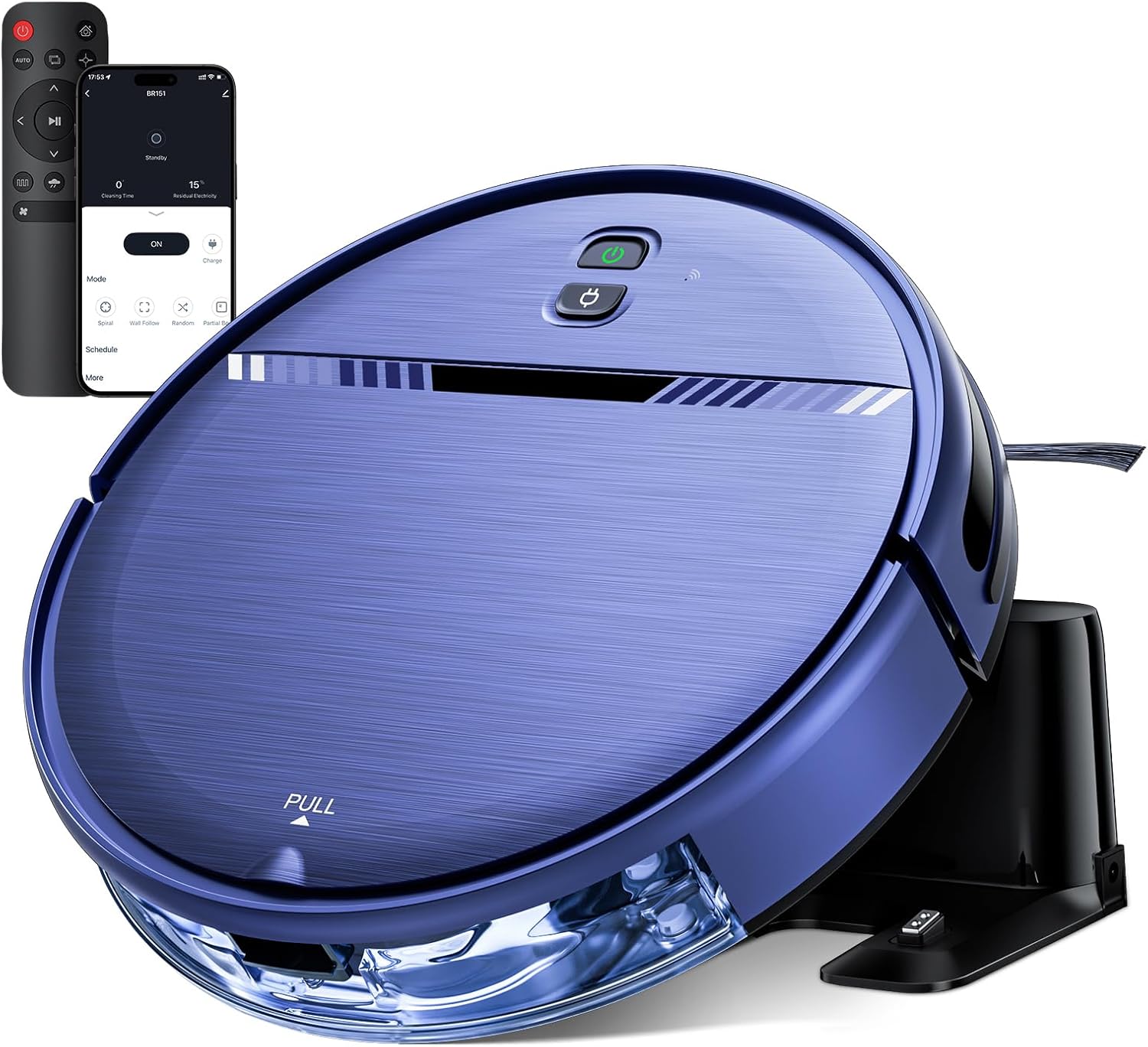
iMartine BR151 Robot Vacuum
| Suction | 2300Pa |
|---|---|
| Battery Life | 100 minutes |
| Capacity | 230 ml |
| Filter Type | Three-layer high-efficiency (washable) + filter cotton |
| Control | App, Remote, Voice |
The iMartine BR151 is an entry-level robot that vacuums and mops in one pass, aimed at everyday floor maintenance. It pairs a 2-in-1 dustbin and water tank with three suction levels (up to 2300Pa) so you can switch between light daily picks and stronger cleaning for stuck dirt. Navigation relies on infrared sensors and mechanical obstacle detection, which handles edge cleaning and simple furniture layouts but does not map rooms precisely. The Tuya Smart app plus Alexa and Google Assistant support lets you schedule runs, change modes, and start voice-controlled cleanings, while auto-recharge and a roughly 100-minute runtime keep it running through typical small-to-medium sessions. Practical benefits include a slim profile for getting under furniture, washable filtration, and quiet operation under 65 dB. Expect limits on mapping accuracy, small dustbin capacity compared with higher-end models, and basic obstacle handling on cluttered floors, so it is best for straightforward layouts and regular maintenance rather than deep, autonomous whole-home cleaning.
Best for: Buyers looking for an affordable 2-in-1 vacuum/mop to keep hard floors and low-pile carpets tidy with scheduled app or voice control and straightforward operation.
Less Ideal for: Homes with complex layouts, heavy clutter, deep-pile carpets, or users who want advanced mapped navigation and large-capacity bins for hands-off, whole-home cleaning.
- 2-in-1 dustbin and water tank allows simultaneous vacuuming and mopping
- Three suction levels up to 2300Pa for selectable cleaning intensity
- App control plus Alexa and Google Assistant voice support for remote operation
- Slim profile and quiet operation make it unobtrusive under furniture and during use
- Navigation uses basic infrared and mechanical sensors rather than advanced mapping
- Dustbin and water tank sizes are modest, requiring more frequent emptying/refills
Verdict: A cost-conscious 2-in-1 robot that delivers selectable suction and basic app/voice convenience for regular maintenance on hard floors and low-pile carpets.
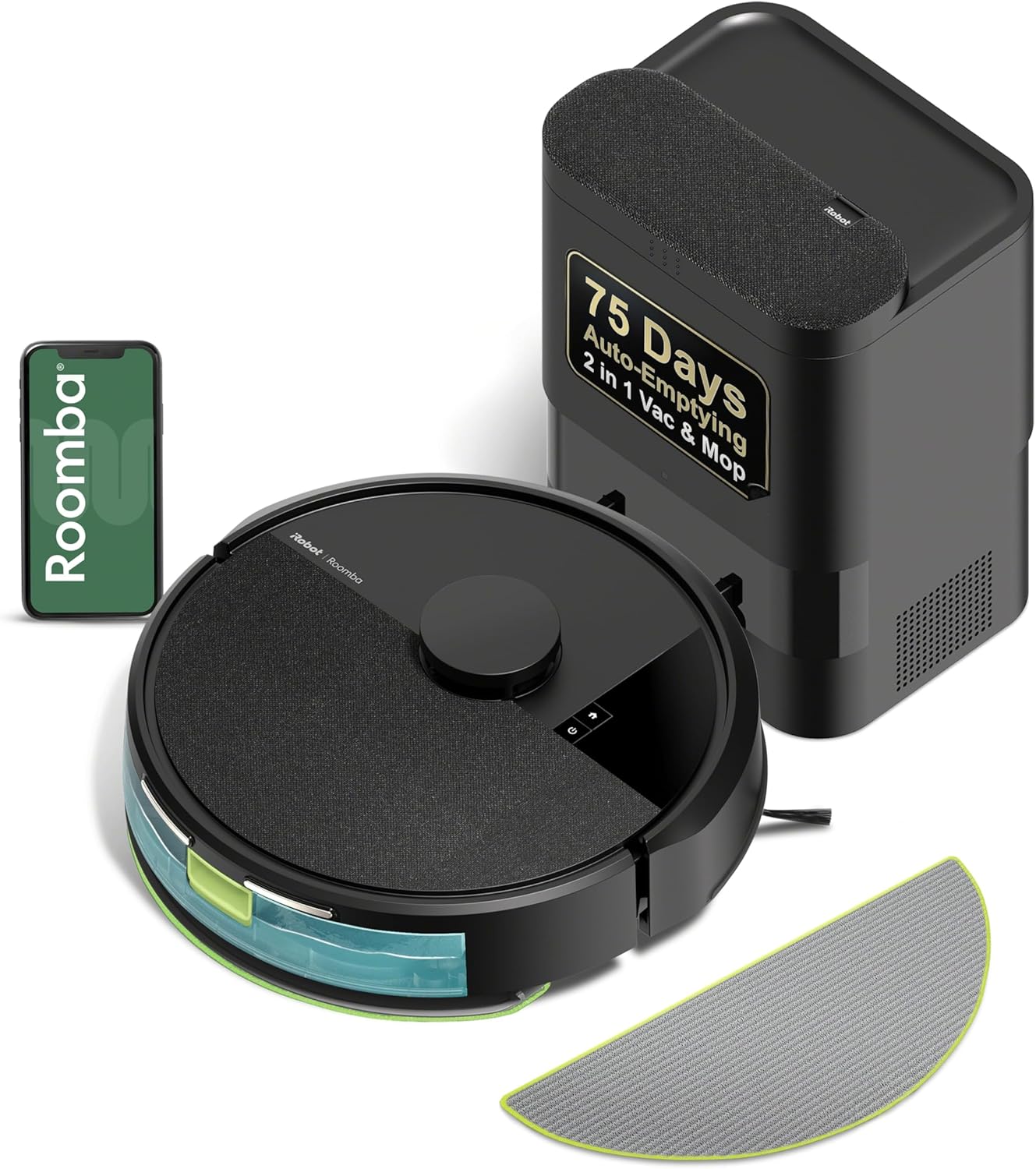
iRobot Roomba 105 Combo
| Surface Recommendation | Carpet & Hard Floor |
|---|---|
| Battery Life | 100 minutes |
| Controller Type | App Control, Button Control, Voice Control |
| Filter Type | Cartridge |
The Roomba 105 Combo is a vacuum-and-mop robot built for regular home cleaning on carpets and hard floors, with ClearView LiDAR mapping, 3 cleaning modes, and a self-emptying AutoEmpty dock. In typical use you pick mop only, vacuum only, or vacuum-and-mop, schedule runs in the iRobot Home app or start with voice commands, and the robot maps rooms to avoid obstacles and stairs. Notable features include a 4-stage cleaning system with power-lifting suction and an edge-sweeping brush for better corner cleaning, a washable microfiber mop pad and a micro-pump that meters cleaning solution for controlled mopping, plus a dock that holds up to 75 days of debris in a disposable bag. Practical benefits for LVP floors are targeted wet cleaning with carpet detection so rugs stay dry, and LiDAR navigation for consistent coverage. Limitations to expect are routine maintenance like filter and brush cleaning, a 100-minute battery life that may need recharges for larger homes, and dependency on the companion app for advanced settings and map customization.
Best for: Buyers who want a mostly hands-off vacuum-and-mop robot that reliably cleans LVP and other hard floors and values documented performance and peer reviews when choosing a dependable, low-maintenance option.
Less Ideal for: People who need the longest possible run time for very large homes, want a mop dock that washes and dries pads, or who prefer fully bagless base stations.
- Self-emptying AutoEmpty dock holds up to 75 days of debris for low-touch maintenance.
- ClearView LiDAR mapping gives reliable room coverage and obstacle avoidance.
- Combined vacuum-and-mop modes with a micro-pump and washable microfiber pad let you control how much liquid is applied to hard floors.
- 70x power-lifting suction and an edge-sweeping brush improve pickup, including pet hair and edge debris.
- App and voice control with scheduling and keep-out zones simplify routine cleaning.
- Battery runtime is 100 minutes which may require mid-run recharges in larger homes.
- AutoEmpty uses disposable bags, adding ongoing consumable cost.
- Does not include heated pad washing or advanced self-washing dock features found on higher-end models.
Verdict: Choose the Roomba 105 Combo if you want a trustworthy LiDAR-mapped vacuum-and-mop with a hands-free AutoEmpty dock that keeps LVP clean with minimal daily effort.
roborock Q10 S5+

| Maximum Suction | 10,000 Pa |
|---|---|
| Capacity | 2.7 liters |
| Battery Life | 150 minutes |
| Filter Type | Washable |
| Noise Level | 65 db |
The roborock Q10 S5+ is a robot vacuum and mop combo built for low-touch, regular maintenance of mixed flooring. It navigates with 360° LiDAR mapping and ReactiveTech obstacle avoidance, so it plans efficient routes and avoids common household objects while supporting multi-level maps and no-go zones via the app. The unit pairs a 10,000 Pa suction system and smart carpet detection to boost suction on rugs and a dual anti-tangle brush setup to reduce hair clogs, which is helpful for pet homes. Its VibraRise 2.0 sonic mopping lifts and scrubs floors and can auto-lift the mop when carpet is detected. The included auto-empty dock holds a 2.7 L dust bag for extended hands-free operation, advertised up to about 70 days between bag changes. Battery runtime and app controls allow scheduled and voice-operated cleaning. Expect roughly moderate noise and a relatively large robot footprint that may limit access under very low furniture, and advanced features depend on using the app and 2.4 GHz Wi-Fi.
Best for: Buyers who prioritize low-maintenance, reliable cleaning backed by broad user adoption and want a robot that cleans floors and mops with strong suction and advanced navigation.
Less Ideal for: If you need an ultra-compact robot for very low-clearance furniture or want a model that runs without any networked app features, this is not the best fit.
- Strong 10,000 Pa suction for deep pickup on carpets and floors
- LiDAR mapping with multi-level maps and no-go zones for predictable navigation
- VibraRise sonic mopping that auto-lifts on carpet to protect rugs
- Large 2.7 L auto-empty dock reduces how often you need to empty the bin
- Dual anti-tangle brush design reduces hair snags and maintenance
- Relies on 2.4 GHz Wi‑Fi and the app for full feature set
- Noise level is moderate and may be noticeable during runs
Verdict: Choose the Q10 S5+ when you want a mostly hands-free robot that combines strong suction, LiDAR mapping, and auto-emptying for dependable weekly cleaning under $1,000.
Shark Matrix Plus AV2610WA

| Battery Life | 110 minutes |
|---|---|
| Power Source | Battery Powered |
| Filter Type | washable fabric filter (pre motor) |
| Compatible Devices | Amazon Echo |
| Other Special Features of the Product | LiDAR Navigation, Sonic Mopping, Edge Cleaning |
The Shark Matrix Plus AV2610WA is a hybrid robot that vacuums carpets and hard floors while scrubbing with a sonic mopping system. It uses Matrix Clean to make multiple passes over dirt and CleanEdge Detect to pull debris from edges and corners, and a self-cleaning brushroll that resists hair wrap for easier pet-hair maintenance. Sonic Mopping scrubs hard floors up to 100 times per minute so the robot can tackle stuck-on stains while vacuuming in one run. Navigation is powered by 360° LiDAR mapping for accurate home mapping, obstacle avoidance, and room-by-room scheduling through the SharkClean app, plus voice compatibility with Alexa. After cleaning the robot returns to an XL bagless base that holds up to 60 days of debris and uses sealed HEPA filtration to contain fine dust. Practical downsides are the system complexity and larger footprint of the self-empty base, which means more setup space and slightly more maintenance steps than a simple robot. The unit also relies on the app for advanced customization, so buyers who avoid smart apps should expect a steeper learning curve.
Best for: Buyers who want a near hands-off, whole-home 2-in-1 cleaning solution that handles pet hair and stuck-on messes and prioritize reliable mapping and filtration.
Less Ideal for: People with very small homes or limited floor space for a large self-empty base, or users who prefer a fully manual, non-app-based robot.
- Combines vacuuming and sonic mopping so you can vacuum and scrub in a single pass
- Matrix Clean and LiDAR mapping provide methodical, room-by-room cleaning and reliable navigation
- Self-cleaning brushroll reduces hair wrap for better pet-hair performance
- XL bagless self-empty base holds up to 60 days of debris with sealed HEPA filtration
- App control and Alexa compatibility let you schedule, zone-clean, and set no-go areas
- Self-empty base increases the system footprint and requires dedicated floor space
- Advanced features depend on app setup which adds complexity for non-technical users
Verdict: If you want an all-in-one, low-touch robot that vacuums, sonic-mops, and self-empties while offering precise LiDAR mapping, the Shark Matrix Plus is a strong, practical choice.
Choosing the Right Robot Mop for Laminate Floors: Key Factors to Consider
Moisture Delivery and Control
Laminate flooring is sensitive to excess water, so how a robot mop delivers moisture matters more than raw cleaning force. Look for models with adjustable water flow, intermittent spray, or single-pass damp-mop modes rather than continuous flooding. Controlled delivery reduces the risk of edge swelling and loosening of the laminate layers.
A mop that allows you to set lower moisture levels for delicate finishes will preserve the floor over time. Also consider whether the unit's reservoir seals well and whether the design prevents leaks when the robot is idle or docked.
Cleaning Method and Pad Type
The cleaning action should be gentle enough to avoid abrasion yet effective at removing scuffs and grime. Microfiber pads that use light agitation or oscillation are usually safer than stiff brushes on laminate. Pads that are removable and machine-washable extend life and maintain cleaning performance.
Check whether the mop uses a single damp pad, dual rotating pads, or a brush-plus-pad system. Each has pros and cons: rotating pads add agitation for tough spots but may be harsher; static microfiber pads are milder but depend on good moisture control and multiple passes for heavy soils.
Navigation Accuracy and Coverage
Good navigation reduces repeated wet passes over the same area and helps the robot clean more efficiently. Laminate owners should favor robots with room mapping, obstacle avoidance, and predictable pathing so the unit does not linger in one spot and over-wet the floor. Reliable edge detection also prevents the mop from contacting baseboards or thresholds too aggressively.
Efficient coverage means fewer battery cycles and less time the floor spends wet. Mapping features that allow you to set no-go zones or virtual barriers are useful for protecting vulnerable thresholds or rugs.
Pad Maintenance and Consumables
Pad condition directly affects streaking and cleaning effectiveness. High-quality, reusable pads that wash clean without pilling will perform better over time than low-cost disposables. Consider how easy it is to remove, replace, and launder pads and whether replacements are readily available.
Also evaluate filters, brushes, and any sealing gaskets for the water system. Simple maintenance routines and accessible spare parts reduce the chance that a neglected component will leave residue or cause uneven moisture distribution.
Run Time and Coverage Per Charge
Battery life determines how much continuous floor area a robot mop can cover before recharging. For laminate floors in larger rooms or open plans, longer run time means fewer interruptions and fewer half-dry passes. Confirm typical runtime for the model class and whether it supports automatic recharge-and-resume for larger jobs.
Shorter runs are acceptable if the robot cleans in well-managed, targeted sessions and if the unit docks reliably. Keep in mind that higher mop settings or extra passes may reduce runtime, so balance battery expectations with chosen cleaning intensity.
Why Laminate Floors Need Special Mopping Care
Laminate flooring mimics hardwood but reacts differently to water and abrasion. The top wear layer can dull or scratch from harsh scrubbing, and water that soaks into joints can cause swelling. A Robot Mop for Laminate Floors should therefore limit moisture exposure and use soft, nonabrasive contact to maintain finish and fit.
Choosing a robot that has explicit hard-floor modes, controlled spray, or damp-mop settings lets you clean regularly without increasing the risk of long-term damage. Regular light cleaning is better than infrequent heavy wet mopping, so automation that supports gentle but frequent passes is particularly valuable.
- Excess water can seep into seams and cause edge lift
- Abrasive pads or brushes can dull the wear layer
- Short, frequent damp passes often outperform infrequent deep wet mops
Setting Up Your Robot Mop for Laminate
Before first use, read the manufacturer guidance on hard-floor settings and pad attachment. Start with the lowest moisture setting and a fresh microfiber pad to test how your laminate reacts. Run the robot along a small area and inspect for streaks, residue, or shine changes.
Position virtual barriers or no-go zones near thresholds, vents, and area rugs to prevent unnecessary wetting. Establish a routine schedule of frequent light cleans rather than rare heavy sessions because that reduces soil buildup and limits moisture exposure each time.
- Attach fresh microfiber pads and choose a low-moisture mode
- Run a short test sweep and inspect the floor
- Use mapping features to block sensitive zones and rugs
Common Laminate Cleaning Problems and Fixes
Streaks often come from dirty pads, too much water, or poor pad-to-floor contact. Address streaking by switching to a cleaner or fresher pad, reducing water output, and ensuring the pad makes even contact across the whole cleaning head.
Warping or edge lift can result from repeated over-wetting. If you notice swelling, stop automated mopping and dry affected areas thoroughly. Adjusting the robot to an even drier mode and using fewer passes will reduce future risk.
- Streaking: Replace pads and lower moisture
- Residue: Rinse pads thoroughly and vacuum before mopping
- Warping: Reduce wetness and inspect seams after each clean
Maintaining Pads and the Water System
Wash and inspect microfiber pads regularly to avoid redepositing grime. Follow care instructions for temperature limits and avoid fabric softeners that reduce absorbency. Replace pads when they show signs of wear or pilling to maintain consistent contact and absorbency.
For units with tanks and spray nozzles, flush the system occasionally to prevent clogs and bacterial buildup. Empty reservoirs between long idle periods and store the mop with pads removed to speed drying and reduce odors.
- Machine-wash pads on a gentle cycle, air-dry when possible
- Flush reservoirs monthly and wipe nozzles clean
- Store with pads removed to prevent mildew
Routine Schedules That Protect Laminate
Develop a schedule that prioritizes short, frequent damp mopping sessions—three to five times a week for high-traffic areas and once a week for lower-traffic zones. Frequent light cleaning prevents grit build-up that causes scratches and reduces the need for heavier wet cleaning.
Use scheduled runs during dry periods so floors dry quickly. Avoid running the robot right before closing doors on humid days or before you anticipate heavy spills to keep moisture-related risk low.
- High traffic: short sessions multiple times per week
- Low traffic: weekly light mopping
- Schedule runs for dry parts of the day
How We Chose the Best Robot Mop for Laminate Floors
We focused on attributes that directly affect laminate-floor performance and long-term surface health. Primary evaluation criteria included cleaning effectiveness on common floor soils, ability to control and limit moisture exposure, and gentle cleaning actions that avoid abrasion. We also assessed navigation and mapping to prevent repeated wet passes in the same spot, run-time and recharge behavior to cover typical room sizes, and the availability and convenience of replaceable pads or filters. Products were excluded if they lacked specific settings or modes for hard floors, had uncontrolled continuous-water delivery, or did not support washable or replaceable cleaning pads. We prioritized designs that offer adjustable mop pressure, variable water flow or pulsed-spray modes, and navigation features that keep mopping passes efficient and minimal. Durability of pad materials and ease of maintenance were also weighted, since pad condition and cleaning-system upkeep directly affect laminate outcomes.
Our full evaluation process is outlined in our review methodology.
FAQ
Can robot mops damage laminate floors?
They can if the unit delivers excessive water or uses abrasive pads. Choose models with damp-mop modes, adjustable moisture, and soft microfiber pads to minimize risk.
How often should I run a robot mop on laminate?
Often and light is best. High-traffic areas benefit from several short runs per week while lower-traffic rooms can be mopped weekly to prevent grit buildup and reduce heavy wet-mopping needs.
Is it safe to use cleaning solution with a robot mop on laminate?
It depends on the solution. Use only manufacturer-approved or pH-neutral cleaners designed for laminate floors and dilute as directed. Avoid harsh solvents or oil-based products that can leave residues or damage finishes.
What pad type should I use on laminate?
Soft microfiber pads are generally the safest choice because they lift soils without scratching. Avoid stiff-bristled brushes or abrasive scrubbing pads on laminate surfaces.
How do I prevent streaking after robot mopping?
Keep pads clean and dry between runs, choose a low-moisture setting, and inspect for trapped grit. Regularly launder pads and use a light spray rather than continuous wetting to reduce streaks.
Final Verdict
When choosing a robot mop for laminate floors, prioritize moisture control, gentle cleaning action, and reliable navigation to avoid repeated wet passes. Durable, washable microfiber pads and simple maintenance routines will keep cleaning consistent and reduce the risk of streaking or damage. Balance run time and coverage with the lowest effective moisture setting and a scheduled routine of short, frequent cleans. That approach preserves laminate appearance while delivering the convenience of automated maintenance.