
Note: This article contains affiliate links. If you click on these links and make a purchase, we may earn a small commission at no extra cost to you. This helps support our research and content. Read our full affiliate disclosure here.
If you live in a multi-level home, a robot mop that reliably transitions between hardwood, tile, and low-pile rug areas can save hours of manual work each week. A Robot Mop for Multiple Floors should manage varied surfaces, carry enough battery for longer runs, and provide cleaning modes that match each floor type. This guide shortlists the top options in the category and explains the features that matter most for homes with stairs and multiple levels. Below we summarize why each pick made the list and the practical criteria used to evaluate them.
Top Picks at a Glance
| Best Overall The best all-around choice for most situations | iRobot Braava jet m6 |  |
| Best Quality Built to a higher standard if you want something more solid | roborock Saros 20 |  |
| Best Value The sweet spot between price and what you get | ILIFE A30 Pro Robot Vacuum |  |
| Best Budget The cheapest option that still gets the job done reliably | ILIFE V5s Plus Robot Vacuum |  |
| Top Rated A top-rated pick with lots of positive feedback | eufy E25 Robot Vacuum |  |
| Most Popular A crowd favorite that many people choose with confidence | iRobot Roomba 105 Combo |  |
| Best Seller A high-volume bestseller chosen again and again | roborock Q10 S5+ |  |
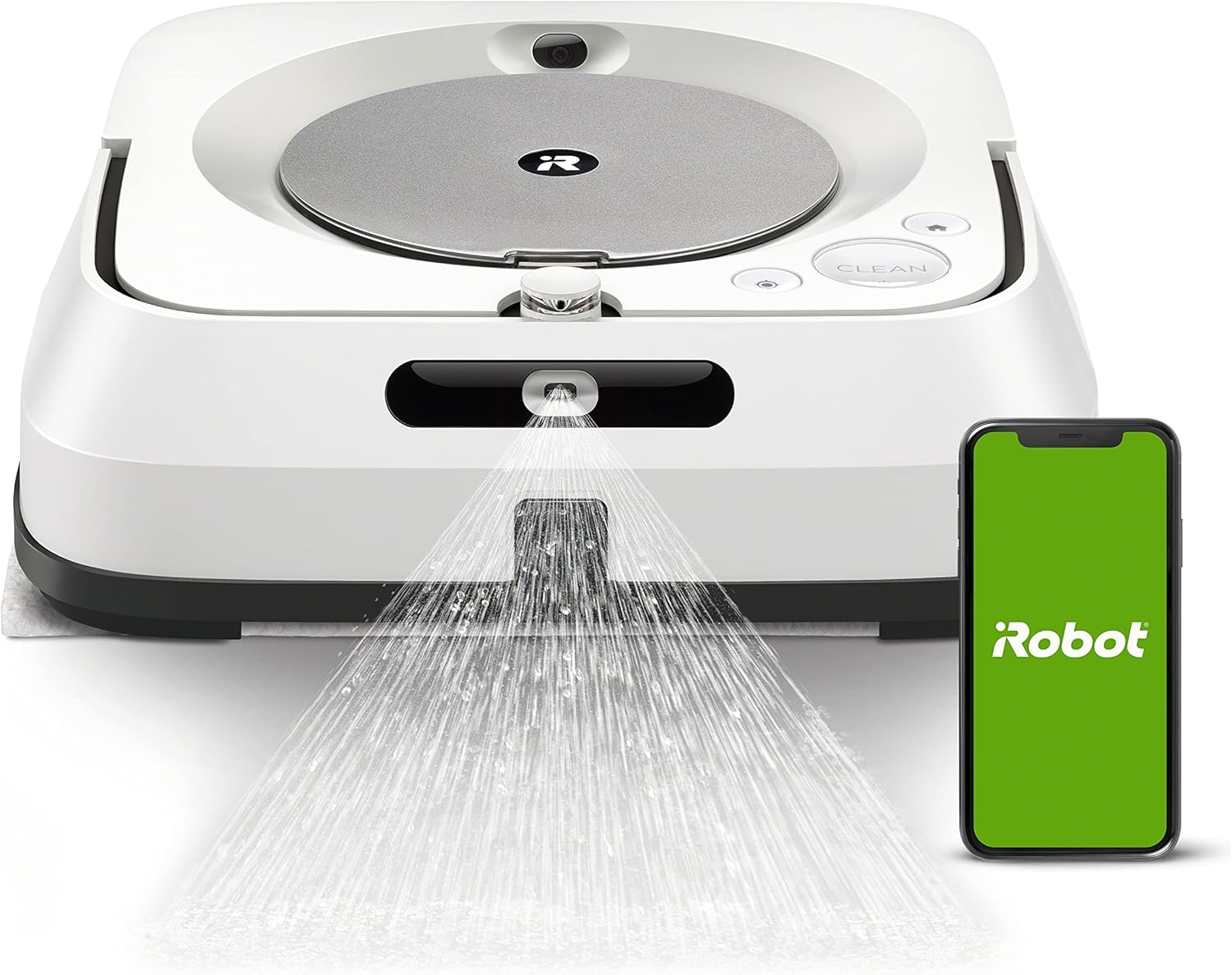
iRobot Braava jet m6
| Surface Recommendation | Hard Floors |
|---|---|
| Battery Life | 150 minutes |
| Power Source | Battery Powered |
| Control Method | App |
The Braava jet m6 is built to handle sticky messes, kitchen grease, and everyday mopping across multiple rooms without much intervention. Load a disposable or reusable mop pad, set a target area from the iRobot Home app or a voice assistant, and the m6 uses vSLAM navigation and Imprint Smart Mapping to map rooms, avoid obstacles, and clean in straight, efficient passes. Precision Jet Spray helps loosen grime ahead of the pad, and the robot will return to its dock to recharge and resume if the job is not finished. The app adds scheduling, spot clean targeting, and Keep Out Zones for areas you want it to avoid. Practical benefits include hands-off maintenance for hard floors and room-by-room control that fits into a smart home setup. Limitations are that it is intended for finished hard floors only, may struggle with very heavy or dried-on gunk that needs scrubbing, and requires pads and cleaning solution for best results.
Best for: Buyers who want a capable, set-and-forget robot mop that handles multiple rooms and integrates with smart home routines for regular hard-floor maintenance.
Less Ideal for: Homes that primarily have carpets, require deep scrubbing of stubborn stains, or owners who do not want to manage replacement pads and cleaning solutions.
- Smart mapping with vSLAM for efficient room-by-room navigation
- Precision Jet Spray loosens sticky messes before mopping
- Wi‑Fi and voice assistant control plus app scheduling and Keep Out Zones
- Auto recharge and resume for larger cleaning jobs
- Designed only for finished hard floors and not for carpets or heavy scrubbing
- Requires consumable mop pads and cleaning solution for full effectiveness
Verdict: Pick the Braava jet m6 if you want a smart, multiroom robot mop that automates regular hard‑floor cleaning and fits into a voice‑enabled home.
roborock Saros 20

| Suction | 36,000 Pa |
|---|---|
| Battery Life | 180 minutes |
| Filter Type | Washable Filter |
| Noise Level | 55 db |
| Power Source | Battery Powered |
The roborock Saros 20 is built for heavy cleaning jobs: a 36,000 Pa digital motor, dual anti‑tangle system, and adaptive lift chassis let it pull deep debris from rugs and cross thresholds without getting stuck. It combines precise StarSight 3D navigation and an RGB camera to map rooms, avoid more than 300 obstacles, and plan efficient routes that reduce missed spots. The slim profile reaches under low furniture while FlexiArm extends brushes and the mop to cover edges and corners. The RockDock adds hands‑free maintenance with hot‑water mop washing, hot‑air drying, and long auto dust‑emptying intervals for less upkeep. For dark hardwood specifically, its mapping and edge cleaning help avoid repeated passes that can highlight streaks, though aggressive suction and mop use mean you should choose gentle water settings and test on finish‑sensitive areas first. Expect solid pet hair pickup and long runtimes, but factor in the dock footprint and occasional app setup tuning to get optimal schedules and mop pressure for delicate floors.
Best for: Buyers prioritizing raw cleaning performance and minimal intervention who want a robot that handles pet hair, deep dirt, and complex floor plans with powerful suction and advanced navigation.
Less Ideal for: Those who need an ultra-compact or budget robot, or users who prefer a barebones device without a large automated dock system taking permanent floor space.
- Very high suction (36,000 Pa) for deep dirt and pet hair removal
- Advanced 3D navigation and RGB camera reduce collisions and missed areas
- AdaptiLift chassis crosses high thresholds and cleans under low furniture
- RockDock offers hot‑water wash, hot‑air dry, and extended auto emptying for hands‑free maintenance
- FlexiArm side brush and mop reach edges and behind curtains for edge‑to‑edge cleaning
- Powerful suction and automated mopping may require conservative settings on finished hardwood to avoid excess moisture or visible streaking
- Large multifunction dock requires dedicated floor space for the full hands‑free benefits
Verdict: If top-tier suction, obstacle-aware navigation, and a hands‑free self‑cleaning dock are your priority for deep clean performance on hardwood, the Saros 20 delivers.
ILIFE A30 Pro Robot Vacuum

| Battery Life | 150 minutes |
|---|---|
| Filter Type | Hepa |
| Capacity | 2.5 liters |
| Power Source | Battery Powered |
| Controller Type | App, Remote, Voice Control |
The ILIFE A30 Pro is a midrange self-emptying robot that combines vacuuming and mopping with LiDAR mapping for predictable, room-by-room cleaning. It uses a 2-in-1 on-board dustbin and water tank to run vacuum and mop simultaneously, and the included self-emptying base holds five 2.5L dust bags so the system can go for months without you emptying it. LiDAR navigation and multi-floor mapping create accurate maps and let you set no-go zones, schedules, and spot cleaning from the ILIFEClean app or via voice assistants. Suction modes range from quiet to a claimed 10000Pa max for heavier debris, and a HEPA filter helps capture fine dust. Practical limitations: the mop water capacity is modest, the 200ml tank means heavier mopping jobs need refills, and the app requires a 2.4GHz Wi-Fi network only. While performance on low-pile carpet and hard floors should be solid, very dense rugs or large homes may need multiple runs or manual touch-ups.
Best for: Buyers who want a low-maintenance cleaning routine and prioritize automated, scheduled whole-home cleaning with reliable mapping and occasional mopping included.
Less Ideal for: Homes that need heavy-duty mopping or very deep-cleaning of dense high-pile carpets should consider a dedicated wet-cleaner or a more powerful upright for spot jobs.
- Self-emptying base with five 2.5L dust bags for extended hands-free operation
- LiDAR navigation with multi-floor mapping and no-go zones for consistent coverage
- Vacuum and mop simultaneously with selectable suction and water levels
- HEPA filter and multiple suction modes for better dust and pet hair pickup
- Small onboard water tank limits continuous mopping time
- Max suction value is claimed and real-world results can vary
Verdict: If you want long stretches of hands-off floor care with reliable LiDAR mapping and a bagged self-emptying base, the A30 Pro delivers practical automation."}
ILIFE V5s Plus Robot Vacuum

| Battery Life | 110 minutes |
|---|---|
| Capacity | 300 ml |
| Controller Type | App Control, Voice Control, Remote Control |
| Compatible Devices | Amazon Echo, Google Home |
The ILIFE V5s Plus is a slim 2-in-1 robot that vacuums and mops while offering app, remote and voice control for scheduled cleaning. It runs up to 110 minutes per charge and automatically returns to its charging dock when the battery is low, making it suitable for daily maintenance across small to medium rooms. The unit provides five cleaning modes including auto, spot, edge and max for adjustable suction and targeted passes, and its 300 ml tanks handle both dust and water for light mopping tasks. Practical benefits include a low profile that reaches under furniture, compatibility with Alexa and Google Assistant, and sensor suites that reduce falls and collisions. Limitations are a modest suction level compared with higher-end models, a relatively small water/dust capacity that requires frequent emptying for larger homes, and simpler navigation that may miss complex path optimization on cluttered carpets. For its price point the V5s Plus delivers consistent, hands-off upkeep rather than deep clean performance on thick carpeted surfaces.
Best for: Buyers looking for an affordable, no-frills robot that keeps hard floors and low-pile carpet tidy with minimal setup and smart-home control.
Less Ideal for: Homes that need powerful deep-cleaning on thick or high-pile carpets or large houses where longer runtimes and larger dust/water capacity are required.
- 2-in-1 vacuum and mop combination for quick maintenance of floors and light spills
- 110-minute runtime with automatic self-charging for largely unsupervised cleaning cycles
- Multiple cleaning modes and scheduling via app, remote or voice for flexible operation
- Slim profile and sensors help the robot reach under furniture and avoid drops or collisions
- Smaller 300 ml tanks and dustbin need more frequent emptying during larger jobs
- Navigation is basic compared with lidar or advanced mapping systems, so pathing can be inefficient on cluttered layouts
Verdict: A budget-friendly robot that combines vacuuming and light mopping with smart controls to keep small-to-medium homes tidy without breaking the bank.
eufy E25 Robot Vacuum

| Maximum Suction | 20,000 Pa |
|---|---|
| Capacity | 2.5 liters |
| Noise Level | 57 db |
| Battery Type | Lithium Ion |
| Runtime | 125 mins |
The eufy E25 is a hybrid robot vacuum and mop built to clean hard floors, tile, wood and short carpet with minimal intervention. It pairs a 11.4-inch HydroJet roller mop that refreshes and self-washes in real time with 20,000 Pa suction for lifting embedded dirt and pet hair, while the CornerRover arm and extendable side brush help reach edges and corners. The all-in-one station auto-empties dust, refills water, and hot-dries the mop so daily maintenance is largely hands-off, and the app, voice assistants, and multi-level mapping let you schedule targeted runs and store up to five floor plans. Laser-guided navigation and obstacle avoidance keep the robot on-track across thresholds and uneven tile up to typical low heights, and the anti-tangle brush cuts down on hair clogs. Expect quieter operation in standard mode and about 125 minutes runtime for full hard-floor sessions, but plan for the station footprint and occasional firmware or app setup steps. For homes with pets and mixed hard surfaces the E25 delivers strong cleaning with a high degree of automation.
Best for: Buyers who prioritize proven cleaning performance and want a mostly hands-off robot that manages mopping and vacuuming across tile and mixed hard floors, with smart mapping and pet-friendly brush design.
Less Ideal for: People with very tall thresholds, thick high-pile rugs, or who need a compact station footprint for tight storage spaces should consider different form factors.
- HydroJet self-cleaning roller mop refreshes continuously to avoid cross-contamination
- All-in-one station automates dust emptying, mop washing, hot drying and water refilling
- 20,000 Pa suction combined with anti-tangle DuoSpiral brushes handles pet hair and embedded dirt
- Laser navigation with obstacle avoidance and multi-level mapping remembers up to five floor plans
- CornerRover arm and extendable side brush improve edge and corner cleaning
- Station and robot together occupy significant floor space compared with standalone units
- Requires 2.4 GHz Wi-Fi for smart features and does not support 5 GHz networks
Verdict: If you want a largely hands-free robot that reliably vacuums and deep-mops uneven tile and mixed hard floors while minimizing manual maintenance, the eufy E25 is a strong choice.
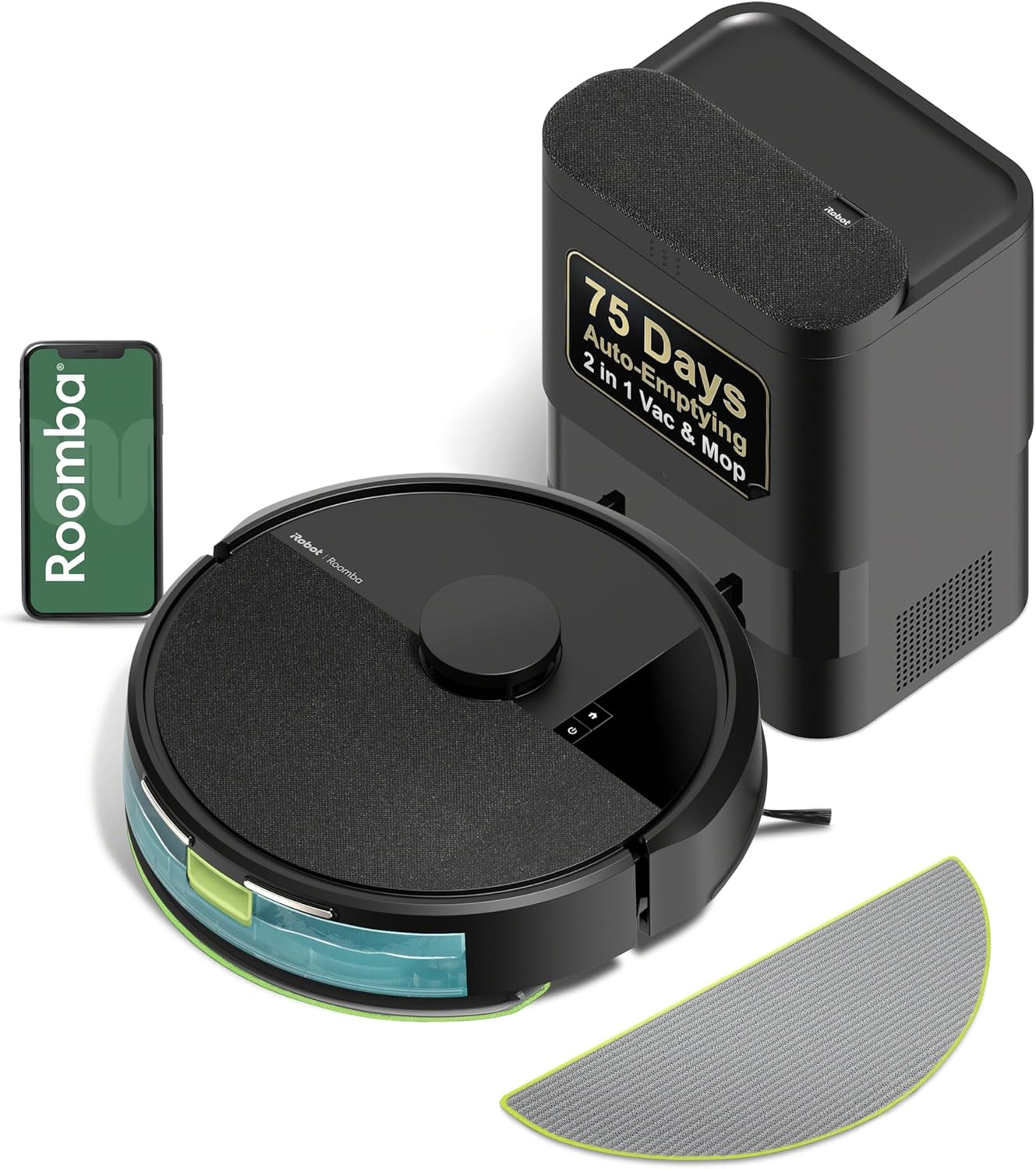
iRobot Roomba 105 Combo
| Surface Recommendation | Carpet & Hard Floor |
|---|---|
| Battery Life | 100 minutes |
| Controller Type | App Control, Button Control, Voice Control |
| Filter Type | Cartridge |
The Roomba 105 Combo is a vacuum-and-mop robot built for regular home cleaning on carpets and hard floors, with ClearView LiDAR mapping, 3 cleaning modes, and a self-emptying AutoEmpty dock. In typical use you pick mop only, vacuum only, or vacuum-and-mop, schedule runs in the iRobot Home app or start with voice commands, and the robot maps rooms to avoid obstacles and stairs. Notable features include a 4-stage cleaning system with power-lifting suction and an edge-sweeping brush for better corner cleaning, a washable microfiber mop pad and a micro-pump that meters cleaning solution for controlled mopping, plus a dock that holds up to 75 days of debris in a disposable bag. Practical benefits for LVP floors are targeted wet cleaning with carpet detection so rugs stay dry, and LiDAR navigation for consistent coverage. Limitations to expect are routine maintenance like filter and brush cleaning, a 100-minute battery life that may need recharges for larger homes, and dependency on the companion app for advanced settings and map customization.
Best for: Buyers who want a mostly hands-off vacuum-and-mop robot that reliably cleans LVP and other hard floors and values documented performance and peer reviews when choosing a dependable, low-maintenance option.
Less Ideal for: People who need the longest possible run time for very large homes, want a mop dock that washes and dries pads, or who prefer fully bagless base stations.
- Self-emptying AutoEmpty dock holds up to 75 days of debris for low-touch maintenance.
- ClearView LiDAR mapping gives reliable room coverage and obstacle avoidance.
- Combined vacuum-and-mop modes with a micro-pump and washable microfiber pad let you control how much liquid is applied to hard floors.
- 70x power-lifting suction and an edge-sweeping brush improve pickup, including pet hair and edge debris.
- App and voice control with scheduling and keep-out zones simplify routine cleaning.
- Battery runtime is 100 minutes which may require mid-run recharges in larger homes.
- AutoEmpty uses disposable bags, adding ongoing consumable cost.
- Does not include heated pad washing or advanced self-washing dock features found on higher-end models.
Verdict: Choose the Roomba 105 Combo if you want a trustworthy LiDAR-mapped vacuum-and-mop with a hands-free AutoEmpty dock that keeps LVP clean with minimal daily effort.
roborock Q10 S5+

| Maximum Suction | 10,000 Pa |
|---|---|
| Capacity | 2.7 liters |
| Battery Life | 150 minutes |
| Filter Type | Washable |
| Noise Level | 65 db |
The roborock Q10 S5+ is a robot vacuum and mop combo built for low-touch, regular maintenance of mixed flooring. It navigates with 360° LiDAR mapping and ReactiveTech obstacle avoidance, so it plans efficient routes and avoids common household objects while supporting multi-level maps and no-go zones via the app. The unit pairs a 10,000 Pa suction system and smart carpet detection to boost suction on rugs and a dual anti-tangle brush setup to reduce hair clogs, which is helpful for pet homes. Its VibraRise 2.0 sonic mopping lifts and scrubs floors and can auto-lift the mop when carpet is detected. The included auto-empty dock holds a 2.7 L dust bag for extended hands-free operation, advertised up to about 70 days between bag changes. Battery runtime and app controls allow scheduled and voice-operated cleaning. Expect roughly moderate noise and a relatively large robot footprint that may limit access under very low furniture, and advanced features depend on using the app and 2.4 GHz Wi-Fi.
Best for: Buyers who prioritize low-maintenance, reliable cleaning backed by broad user adoption and want a robot that cleans floors and mops with strong suction and advanced navigation.
Less Ideal for: If you need an ultra-compact robot for very low-clearance furniture or want a model that runs without any networked app features, this is not the best fit.
- Strong 10,000 Pa suction for deep pickup on carpets and floors
- LiDAR mapping with multi-level maps and no-go zones for predictable navigation
- VibraRise sonic mopping that auto-lifts on carpet to protect rugs
- Large 2.7 L auto-empty dock reduces how often you need to empty the bin
- Dual anti-tangle brush design reduces hair snags and maintenance
- Relies on 2.4 GHz Wi‑Fi and the app for full feature set
- Noise level is moderate and may be noticeable during runs
Verdict: Choose the Q10 S5+ when you want a mostly hands-free robot that combines strong suction, LiDAR mapping, and auto-emptying for dependable weekly cleaning under $1,000.
Choosing the Right Robot Mop for Multiple Floors: Key Factors to Consider
Battery Range and Recharge Strategy
Battery capacity directly influences how much square footage a robot mop can cover before returning to its dock. On multiple floors you will often need a mop that can run long enough to finish an entire level or reliably return to base and resume after charging.
Consider both run time and the mop's recharge behavior. Some units resume where they left off after recharging, while others restart or require manual intervention. If you have large levels or plans that include long open areas, prioritize longer run times and smart recharge-and-resume features to avoid unfinished jobs.
Mapping, Navigation, and Multi-Floor Memory
Accurate mapping helps the mop learn each floor's layout, avoid stairs, and apply floor-specific cleaning rules. For homes with multiple floors, look for robots that support saving multiple floor maps and switching between them automatically or with minimal input.
Advanced navigation reduces missed spots and repeated passes. Reliable cliff sensors and obstacle detection are important for safety on staircases and landings. Good mapping also speeds up routine cleaning by allowing no-go lines and room groupings per level.
Wet Cleaning Performance on Different Surfaces
Wet cleaning systems vary. Some mops use disposable or reusable pads combined with a dampening system, while others apply a measured spray. The ideal solution cleans sealed hardwood without leaving streaks, while also loosening dirt on tile grout and hard surfaces.
Assess how the mop handles transitions between surface types. A mop that leaves too much moisture on wood can damage floors over time, while one that is too dry may underperform on ceramic or stone. Look for adjustable moisture settings or floor-specific modes.
Water Reservoir Design and Spill Prevention
Reservoir capacity affects how often you need to refill between floors. Larger tanks are helpful but must be balanced against added weight and the potential for leaks. A well-designed reservoir dispenses fluid evenly and seals during transport so you can carry the dock or robot between levels without spills.
Good valves and flow control reduce streaking and avoid over-wetting. If you plan to clean multiple floors in one outing, confirm whether the reservoir size and dispensing rate match the coverage you expect.
Maintenance Needs and Replacement Consumables
Owning a robot mop means periodic pad washing, replacement of disposable pads or filters, and occasional brush or sensor cleaning. High-maintenance designs increase ongoing time and cost, while low-maintenance options simplify regular use.
Check how easy it is to remove and wash pads, access the reservoir, and clean sensors. Availability and cost of replacement pads or specialized cleaning pads will affect long-term wear and convenience.
Scheduling, App Control, and Quiet Operation
Scheduling features let you run cleanings when you're away or during quiet hours. Intuitive app control and voice assistant support make it easier to assign floors, set no-go zones, and view cleaning history.
Noise levels matter for homes where people work or sleep while the mop runs. Look for units with quiet cleaning modes and scheduling that avoids disruption on particular floors.
How Multi-Floor Mapping Works
Most modern robot mops use lidar, camera, or SLAM-based sensors to create maps of your home. When a unit supports multiple-floor mapping, it stores separate floor plans so you do not need to remap every time you move the robot between levels. This reduces setup time and avoids confusion when switching from basement to main floor.
Mapping accuracy affects cleaning efficiency. A robot that can reliably detect stairways and differentiate rooms will follow planned routes and apply the right cleaning parameters to each area.
- Floor memory stores distinct maps for each level
- No-go lines and room zones can be set per map
- Automatic floor recognition reduces manual switching
Transporting and Dock Placement Between Floors
Because most robot mops are not designed to climb stairs, you will typically carry the dock or the robot between floors. Choose a consistent dock location for each level and ensure the base sits on a flat, unobstructed surface. If you plan to move the dock between floors, consider a model with a secure reservoir and minimal setup steps.
If you prefer to move only the robot, select one with simple power-on procedures and fast reconnection to the dock. Some models restart mapping quickly when placed in a new location, while others require a brief recalibration.
- Place docks away from high-traffic areas
- Keep dock and surrounding area clear for consistent returns
- Consider a spare dock per floor if you want fully autonomous transfers
Floor-Specific Cleaning Modes and Settings
The best multi-floor mops let you tailor moisture levels and cleaning intensity to the surface. For example, use lower moisture on sealed wood and more active scrubbing or additional passes on tile. Some units allow room-level customization so you can set different parameters within the same map.
Look for clearly labeled modes and easy adjustments in the app or on the unit. Simple presets are useful for everyday cleaning, while manual options give you control for deeper cleans when needed.
- Adjustable dampness prevents over-wetting wood floors
- Stronger cleaning cycles help with grout and stubborn spots
- Customizable room settings aid targeted upkeep
Daily Upkeep and Storage Tips for Multi-Level Use
Daily maintenance keeps a robot mop running reliably across floors. Empty and dry pads after each session to prevent mold, wipe sensors and charging contacts weekly, and inspect pads for wear regularly. When storing the unit between uses, keep it and its dock in a dry, temperate location.
If you move the robot between floors frequently, label docks or storage locations so you do not mix maps inadvertently. Regular firmware updates also improve navigation and multi-floor handling over time.
- Air dry reusable pads to avoid odor
- Check and clean cliff sensors to prevent falls
- Store docks on level surfaces to ensure proper charging
When to Choose Recharge-and-Resume Versus Multiple Docks
Recharge-and-resume is useful when you want a single dock and a mop that can complete larger cleaning jobs autonomously. The robot returns to charge, then resumes where it left off. This reduces the need to carry docks between floors but requires dependable mapping and accurate resume behavior.
Multiple docks, one per floor, remove the need for long-range battery capacity but require extra setup. If you have regular cleaning on every level and do not want to move a dock, having a spare base can be a practical choice despite the extra space requirement.
- Recharge-and-resume is best for larger single-sweep jobs
- Multiple docks are convenient for fully autonomous multi-floor setups
- Consider home layout and storage space when choosing an approach
How We Chose the Best Robot Mop for Multiple Floors
We focused on real-world performance attributes that matter in a multi-level home rather than marketing claims. Key evaluation criteria included battery range and recharge behavior to verify a mop can cover large areas and return to base for recharging; mapping and navigation accuracy so the unit can remember floor plans, handle stairs safely, and resume cleaning on the correct level; cleaning modes and pad or solution compatibility to ensure effective wet cleaning across sealed wood, tile, and other common floors; and build quality plus brush and pad systems that tolerate repeated use without excessive maintenance. We also considered water management and reservoir capacity because prolonged runs on multiple floors require efficient liquid delivery and spill prevention. Noise levels and scheduled cleaning flexibility were reviewed for everyday convenience. Units without reliable navigation, weak battery life, or poor water control were excluded. The final list emphasizes mops that balance coverage, floor-specific cleaning performance, and low ongoing upkeep.
Our full evaluation process is outlined in our review methodology.
FAQ
Can a robot mop remember more than one floor plan?
Many modern models support storing multiple floor maps. This lets the robot switch between saved layouts without remapping, which is helpful if you keep docks or robots on different levels.
Do I need a separate dock on each floor?
You do not strictly need a dock per floor. Some owners prefer a dock on each level for hands-off use, while others move a single dock or rely on recharge-and-resume. The best choice depends on your layout and how often you want to avoid carrying the robot or dock.
Will a robot mop damage my hardwood floors?
A well-designed robot mop with adjustable moisture settings will not over-wet sealed hardwood. Avoid models that soak pads and use lower-moisture modes for delicate wood. Regularly check pads and flooring to prevent long-term issues.
How often should I replace mop pads and consumables?
Replacement frequency depends on usage and pad type. Reusable pads may last many washes but show wear over months, while disposable pads need more regular replenishment. Inspect pads monthly and replace when coverage or cleaning performance drops.
Can robot mops climb stairs between floors?
No. Robot mops cannot climb stairs. You will need to move the robot or its dock between levels manually or station a dock on each floor for autonomous operation.
Final Verdict
For multi-level homes, prioritize battery life, reliable mapping, and water control when choosing a robot mop. Expect tradeoffs between run time and the convenience of multiple docks; longer battery life and accurate recharge-and-resume behavior reduce the need to move equipment between floors. Also consider ease of maintenance and pad systems to keep ongoing upkeep simple. Focus on units that let you tune moisture for different surfaces and that store separate floor maps. Those features will deliver the most consistent results across levels and help you choose a robot mop that fits your cleaning habits with minimal fuss.