
Note: This article contains affiliate links. If you click on these links and make a purchase, we may earn a small commission at no extra cost to you. This helps support our research and content. Read our full affiliate disclosure here.
If you live with hardwood floors, you want a cleaning tool that removes grit and sticky spots without damaging finishes. Robot mops that also vacuum combine dry pickup and damp mopping so you can reduce daily sweeping and occasional deep cleaning. This guide focuses on models designed for hardwood surfaces, highlighting options that protect finishes, control moisture, and work around furniture. Below are the top shortlisted robot mops with vacuuming for hardwood floors. We evaluated each for suction, mop performance, navigation, and floor-safe features to help you find the best fit for your home.
Top Picks at a Glance
| Best Overall The best all-around choice for most situations | eufy X10 Pro Omni |  |
| Best Quality Built to a higher standard if you want something more solid | roborock Saros 10R |  |
| Best Value The sweet spot between price and what you get | ILIFE A30 Pro Robot Vacuum |  |
| Best Budget The cheapest option that still gets the job done reliably | ILIFE V5s Plus Robot Vacuum |  |
| Top Rated A top-rated pick with lots of positive feedback | eufy C28 Robot Vacuum |  |
| Most Popular A crowd favorite that many people choose with confidence | iRobot Roomba 105 Combo |  |
| Best Seller A high-volume bestseller chosen again and again | roborock Q10 S5+ |  |
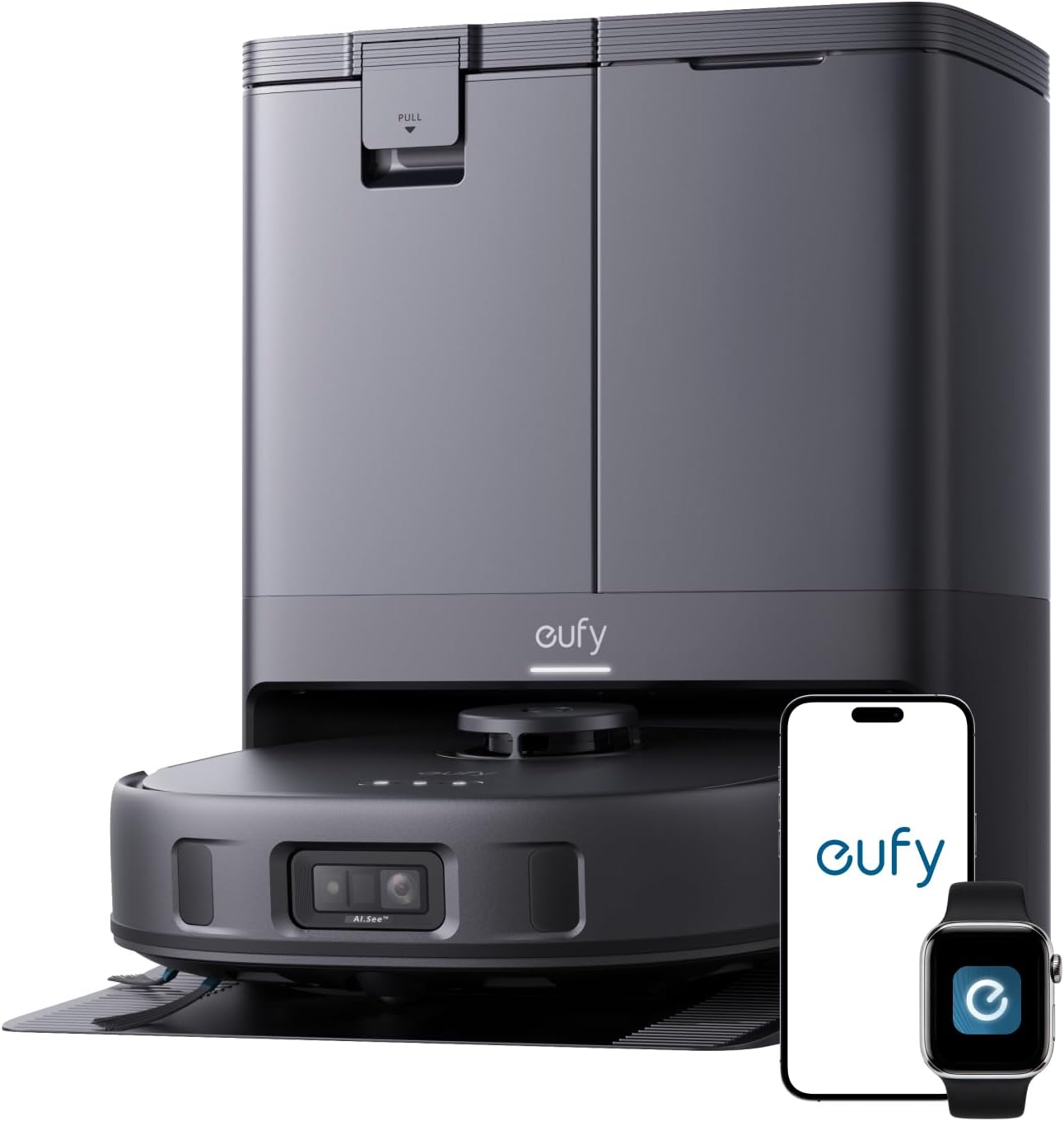
eufy X10 Pro Omni
| Battery Life | 173 minutes |
|---|---|
| Power Source | Battery Powered |
| Capacity | 2.5 liters |
| Filter Type | Washable |
| Compatible Devices | Amazon Echo, Google Home, Smartphones, Tablets |
The eufy X10 Pro Omni is a high-end robot vacuum and mop that automates most of the maintenance work with an all-in-one station that self-empties, self-washes mop pads, and dries them with heated air. It pairs app, voice, and remote controls with iPath laser navigation and AI obstacle avoidance to map rooms, avoid cords and toys, and schedule room-by-room cleaning. The unit offers up to 173 minutes of battery life, a pro-detangling roller for pet hair, and a powerful 8,000 Pa suction mode for deep cleaning carpets and hard floors. Practical benefits include reduced hands-on upkeep thanks to the 2.5 L dust bag and 3 L water tank at the station, and washable filters for lower consumable cost. Important limitations are the 220-volt listing and 2.4 GHz Wi-Fi requirement, which may need attention for certain garages or regional power setups, and the 60 dB noise level which can be noticeable during operation. The X10 Pro Omni is best when you want near hands-free whole-floor care and strong suction without daily intervention.
Best for: Buyers who prioritize reducing hands-on cleaning and want a stationed robot that handles emptying, washing, and drying with dependable navigation and strong suction.
Less Ideal for: People who need a compact, ultra-quiet unit for small spaces or those who cannot accommodate the station’s power or 2.4 GHz Wi-Fi requirements.
- All-in-one station self-empties, self-washes, and self-dries mop pads to minimize manual maintenance
- Strong 8,000 Pa suction that tackles embedded dirt on carpets and upholstery
- AI obstacle avoidance with iPath laser navigation reduces collisions and missed areas
- Long runtime (173 minutes) suitable for larger floor areas between charges
- Washable filter and pro-detangling brush reduce consumable and hair-tangling issues
- Station and robot require matching regional voltage and use 2.4 GHz Wi-Fi only
- Noise level around 60 dB can be intrusive in quiet spaces
- Higher-capability station increases footprint compared with simple docking bases
Verdict: If you want a near hands-free robot that vacuums, mops, and largely maintains itself while delivering strong suction and smart navigation, the eufy X10 Pro Omni is a top choice.
roborock Saros 10R

| Suction | 22,000 Pa |
|---|---|
| Battery Life | 180 minutes |
| Filter Type | Washable |
| Noise Level | 65 db |
| Power Source | Battery Powered |
The roborock Saros 10R is a performance-focused robot vacuum and mop built to handle everyday dirt and pet hair on hard floors and low-pile carpets. It pairs powerful 22,000 Pa HyperForce suction with a Zero-Tangling DuoDivide brush and FlexiArm side brush to pick up hair without frequent brush cleaning, while the ultra-slim 3.14-inch body slips under low furniture to reach hidden dust. The multifunctional dock 4.0 automates maintenance with hot-water mop washing, hot-air drying, 60-day dust collection and auto refill features that greatly reduce hands-on upkeep. Navigation relies on the StarSight 2.0 system with 3D sensing and obstacle avoidance, which improves edge and cord handling and supports auto re-wash for high-traffic spots. For hardwood floors the mop functions and automatic mop lift when carpets are detected help avoid over-wetting. Trade-offs are the relatively loud 65 dB reported noise level during operation and a large, heavier docked system footprint, which may be more than needed for small homes.
Best for: Buyers who prioritize strong cleaning performance and low-maintenance operation on hard floors and have pets or long hair that require frequent deep pickup.
Less Ideal for: People living in very small apartments or who need a whisper-quiet machine for nighttime cleaning should consider smaller or quieter alternatives.
- Very strong 22,000 Pa suction for deep pickup on hardwood and low-pile carpets
- Zero-tangling main brush and omnidirectional wheels reduce hair maintenance
- Ultra-slim 3.14-inch profile reaches under low furniture and into tight spots
- Multifunctional dock automates mop washing, drying, and up to 60 days of dust collection
- 3D obstacle detection and advanced mapping improve edge cleaning and cord avoidance
- Noise level around 65 dB may be noticeable during cleaning
- Large multifunctional dock increases system footprint and setup complexity
Verdict: Choose the Saros 10R if you want top-tier suction and a hands-free docked system that keeps hardwood floors and pet hair under control with minimal daily effort.
ILIFE A30 Pro Robot Vacuum

| Battery Life | 150 minutes |
|---|---|
| Filter Type | Hepa |
| Capacity | 2.5 liters |
| Power Source | Battery Powered |
| Controller Type | App, Remote, Voice Control |
The ILIFE A30 Pro is a midrange self-emptying robot that combines vacuuming and mopping with LiDAR mapping for predictable, room-by-room cleaning. It uses a 2-in-1 on-board dustbin and water tank to run vacuum and mop simultaneously, and the included self-emptying base holds five 2.5L dust bags so the system can go for months without you emptying it. LiDAR navigation and multi-floor mapping create accurate maps and let you set no-go zones, schedules, and spot cleaning from the ILIFEClean app or via voice assistants. Suction modes range from quiet to a claimed 10000Pa max for heavier debris, and a HEPA filter helps capture fine dust. Practical limitations: the mop water capacity is modest, the 200ml tank means heavier mopping jobs need refills, and the app requires a 2.4GHz Wi-Fi network only. While performance on low-pile carpet and hard floors should be solid, very dense rugs or large homes may need multiple runs or manual touch-ups.
Best for: Buyers who want a low-maintenance cleaning routine and prioritize automated, scheduled whole-home cleaning with reliable mapping and occasional mopping included.
Less Ideal for: Homes that need heavy-duty mopping or very deep-cleaning of dense high-pile carpets should consider a dedicated wet-cleaner or a more powerful upright for spot jobs.
- Self-emptying base with five 2.5L dust bags for extended hands-free operation
- LiDAR navigation with multi-floor mapping and no-go zones for consistent coverage
- Vacuum and mop simultaneously with selectable suction and water levels
- HEPA filter and multiple suction modes for better dust and pet hair pickup
- Small onboard water tank limits continuous mopping time
- Max suction value is claimed and real-world results can vary
Verdict: If you want long stretches of hands-off floor care with reliable LiDAR mapping and a bagged self-emptying base, the A30 Pro delivers practical automation."}
ILIFE V5s Plus Robot Vacuum

| Battery Life | 110 minutes |
|---|---|
| Capacity | 300 ml |
| Controller Type | App Control, Voice Control, Remote Control |
| Compatible Devices | Amazon Echo, Google Home |
The ILIFE V5s Plus is a slim 2-in-1 robot that vacuums and mops while offering app, remote and voice control for scheduled cleaning. It runs up to 110 minutes per charge and automatically returns to its charging dock when the battery is low, making it suitable for daily maintenance across small to medium rooms. The unit provides five cleaning modes including auto, spot, edge and max for adjustable suction and targeted passes, and its 300 ml tanks handle both dust and water for light mopping tasks. Practical benefits include a low profile that reaches under furniture, compatibility with Alexa and Google Assistant, and sensor suites that reduce falls and collisions. Limitations are a modest suction level compared with higher-end models, a relatively small water/dust capacity that requires frequent emptying for larger homes, and simpler navigation that may miss complex path optimization on cluttered carpets. For its price point the V5s Plus delivers consistent, hands-off upkeep rather than deep clean performance on thick carpeted surfaces.
Best for: Buyers looking for an affordable, no-frills robot that keeps hard floors and low-pile carpet tidy with minimal setup and smart-home control.
Less Ideal for: Homes that need powerful deep-cleaning on thick or high-pile carpets or large houses where longer runtimes and larger dust/water capacity are required.
- 2-in-1 vacuum and mop combination for quick maintenance of floors and light spills
- 110-minute runtime with automatic self-charging for largely unsupervised cleaning cycles
- Multiple cleaning modes and scheduling via app, remote or voice for flexible operation
- Slim profile and sensors help the robot reach under furniture and avoid drops or collisions
- Smaller 300 ml tanks and dustbin need more frequent emptying during larger jobs
- Navigation is basic compared with lidar or advanced mapping systems, so pathing can be inefficient on cluttered layouts
Verdict: A budget-friendly robot that combines vacuuming and light mopping with smart controls to keep small-to-medium homes tidy without breaking the bank.
eufy C28 Robot Vacuum

| Suction | 15,000 Pa |
|---|---|
| Battery Life | 140 minutes |
| Capacity | 3 liters |
| Filter Type | Washable |
The eufy C28 is a full-featured robot vacuum and mop designed to reduce hands-on maintenance. It uses LiDAR navigation to map rooms and avoid obstacles without cameras while its HydroJet roller mop spins and self-cleans into a separate dirty-water tank, and the included Omni station automatically empties dust into a 3 L container, refills and washes the mop, and dries it with hot air. In daily use it handles hard floors and short-pile carpet, boosts suction on carpets, and its zero-tangle DuoSpiral brush is built to manage pet hair without frequent brush cleaning. The unit reports long runtimes for multi-room jobs and can lift the mop on rugs to protect carpets. Practical limitations include the robot's overall size and weight for homes with very low clearances and the dependence on the docking station for the hands-free features to work as advertised. For buyers who prioritize low-maintenance cleaning and reliable navigation, the C28 delivers measurable time savings but it is best suited to households that can accommodate the Omni station footprint.
Best for: A cautious buyer who wants dependable mapping, strong suction, and near hands-off vacuuming and mopping with minimal daily maintenance.
Less Ideal for: Homes with very limited floor space for the docking station or users who need a compact robot that performs primarily without a large base station.
- 15,000 Pa suction with automatic carpet boost for stronger pickup on rugs
- All-in-one Omni station auto-empties dust, washes and hot-dries the mop, and collects wastewater for up to 75 days
- LiDAR navigation avoids obstacles using laser mapping without cameras to protect privacy
- Zero-tangle DuoSpiral roller reduces hair wrap and simplifies pet-hair maintenance
- Large station and robot size may be difficult to place in tight or low-clearance homes
- Hands-free features require the Omni station, so benefits are reduced if you only use the robot standalone
Verdict: Buy this if you want a privacy-safe LiDAR robot that combines strong suction with a station that largely automates emptying, mop washing, and drying for low-maintenance floor care.
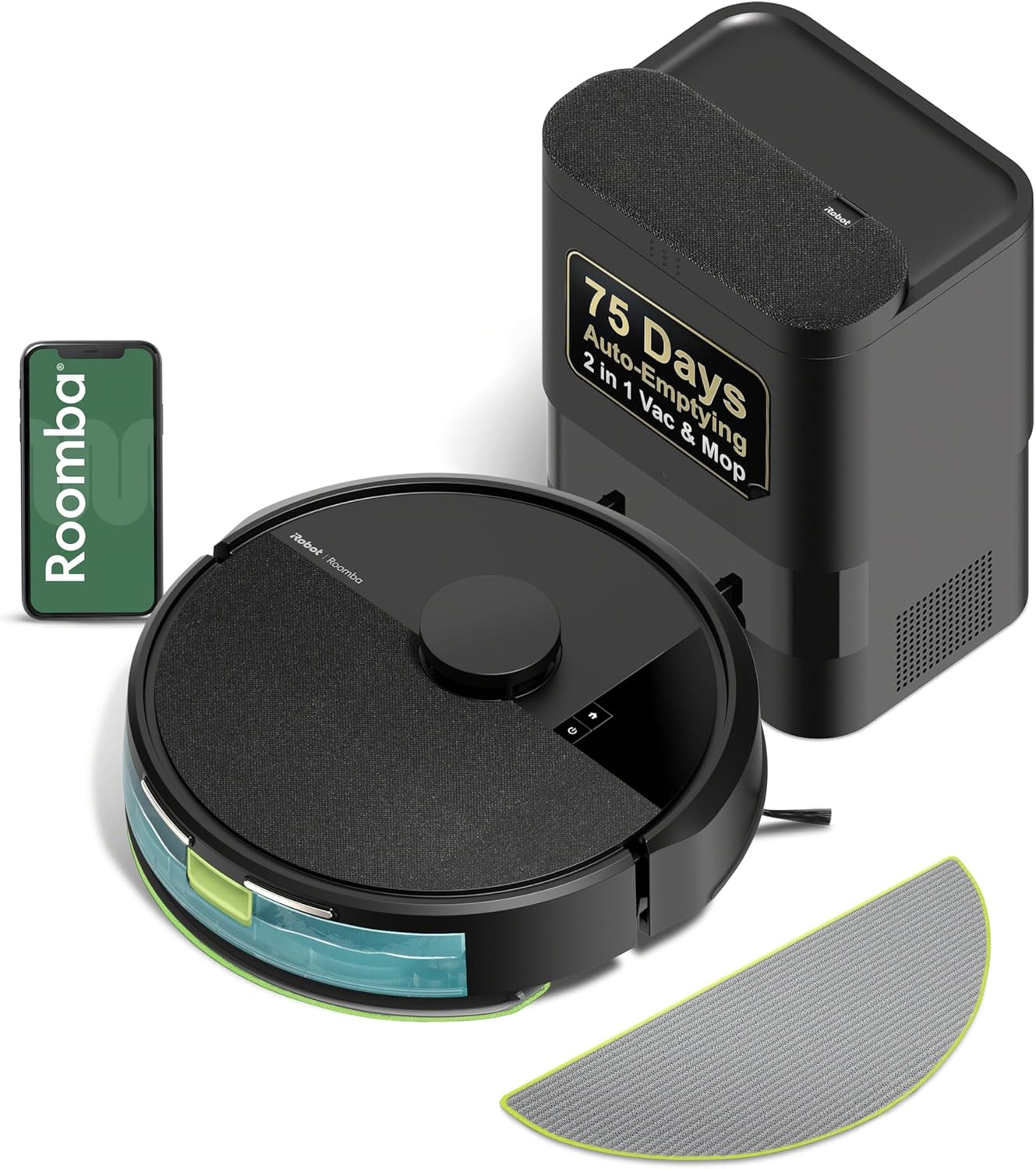
iRobot Roomba 105 Combo
| Surface Recommendation | Carpet & Hard Floor |
|---|---|
| Battery Life | 100 minutes |
| Controller Type | App Control, Button Control, Voice Control |
| Filter Type | Cartridge |
The Roomba 105 Combo is a vacuum-and-mop robot built for regular home cleaning on carpets and hard floors, with ClearView LiDAR mapping, 3 cleaning modes, and a self-emptying AutoEmpty dock. In typical use you pick mop only, vacuum only, or vacuum-and-mop, schedule runs in the iRobot Home app or start with voice commands, and the robot maps rooms to avoid obstacles and stairs. Notable features include a 4-stage cleaning system with power-lifting suction and an edge-sweeping brush for better corner cleaning, a washable microfiber mop pad and a micro-pump that meters cleaning solution for controlled mopping, plus a dock that holds up to 75 days of debris in a disposable bag. Practical benefits for LVP floors are targeted wet cleaning with carpet detection so rugs stay dry, and LiDAR navigation for consistent coverage. Limitations to expect are routine maintenance like filter and brush cleaning, a 100-minute battery life that may need recharges for larger homes, and dependency on the companion app for advanced settings and map customization.
Best for: Buyers who want a mostly hands-off vacuum-and-mop robot that reliably cleans LVP and other hard floors and values documented performance and peer reviews when choosing a dependable, low-maintenance option.
Less Ideal for: People who need the longest possible run time for very large homes, want a mop dock that washes and dries pads, or who prefer fully bagless base stations.
- Self-emptying AutoEmpty dock holds up to 75 days of debris for low-touch maintenance.
- ClearView LiDAR mapping gives reliable room coverage and obstacle avoidance.
- Combined vacuum-and-mop modes with a micro-pump and washable microfiber pad let you control how much liquid is applied to hard floors.
- 70x power-lifting suction and an edge-sweeping brush improve pickup, including pet hair and edge debris.
- App and voice control with scheduling and keep-out zones simplify routine cleaning.
- Battery runtime is 100 minutes which may require mid-run recharges in larger homes.
- AutoEmpty uses disposable bags, adding ongoing consumable cost.
- Does not include heated pad washing or advanced self-washing dock features found on higher-end models.
Verdict: Choose the Roomba 105 Combo if you want a trustworthy LiDAR-mapped vacuum-and-mop with a hands-free AutoEmpty dock that keeps LVP clean with minimal daily effort.
roborock Q10 S5+

| Maximum Suction | 10,000 Pa |
|---|---|
| Capacity | 2.7 liters |
| Battery Life | 150 minutes |
| Filter Type | Washable |
| Noise Level | 65 db |
The roborock Q10 S5+ is a robot vacuum and mop combo built for low-touch, regular maintenance of mixed flooring. It navigates with 360° LiDAR mapping and ReactiveTech obstacle avoidance, so it plans efficient routes and avoids common household objects while supporting multi-level maps and no-go zones via the app. The unit pairs a 10,000 Pa suction system and smart carpet detection to boost suction on rugs and a dual anti-tangle brush setup to reduce hair clogs, which is helpful for pet homes. Its VibraRise 2.0 sonic mopping lifts and scrubs floors and can auto-lift the mop when carpet is detected. The included auto-empty dock holds a 2.7 L dust bag for extended hands-free operation, advertised up to about 70 days between bag changes. Battery runtime and app controls allow scheduled and voice-operated cleaning. Expect roughly moderate noise and a relatively large robot footprint that may limit access under very low furniture, and advanced features depend on using the app and 2.4 GHz Wi-Fi.
Best for: Buyers who prioritize low-maintenance, reliable cleaning backed by broad user adoption and want a robot that cleans floors and mops with strong suction and advanced navigation.
Less Ideal for: If you need an ultra-compact robot for very low-clearance furniture or want a model that runs without any networked app features, this is not the best fit.
- Strong 10,000 Pa suction for deep pickup on carpets and floors
- LiDAR mapping with multi-level maps and no-go zones for predictable navigation
- VibraRise sonic mopping that auto-lifts on carpet to protect rugs
- Large 2.7 L auto-empty dock reduces how often you need to empty the bin
- Dual anti-tangle brush design reduces hair snags and maintenance
- Relies on 2.4 GHz Wi‑Fi and the app for full feature set
- Noise level is moderate and may be noticeable during runs
Verdict: Choose the Q10 S5+ when you want a mostly hands-free robot that combines strong suction, LiDAR mapping, and auto-emptying for dependable weekly cleaning under $1,000.
Choosing the Right Robot Mop with Vacuuming for Hardwood Floors: Key Factors to Consider
Suction Strength and Debris Handling
Good suction matters because hardwood floors show dust, pet hair, and small grit quickly. Stronger vacuuming picks up abrasive particles that scratch finishes if left in place. Consider how the robot picks up both fine dust and larger debris such as cereal or pet kibble. Brushroll design and filter type also affect how efficiently a unit handles a mix of debris without scattering it.
If you have pets or high-traffic entries that bring in dirt, prioritize models with adjustable suction settings that can be raised for cleanup and reduced for quiet, routine runs. Also check how the robot deals with long pet hair, as entanglement can reduce pickup performance and increase maintenance.
Mop System and Moisture Management
Hardwood flooring is vulnerable to water damage, so the way a robot dispenses and manages moisture is critical. Look for systems with controlled water flow, multiple mop settings, or oscillating pads that clean with minimal wetting. A reservoir that meters water and a mop pad that wicks rather than puddles will reduce the risk of cupping or finish degradation.
Also consider whether the mop component is passive (pad-only) or active (vibrating or oscillating). Active systems generally remove dried spots and sticky residues more effectively with less water, while passive pads rely more on detergent and wiping. Removable, machine-washable pads and easy access to the water tank matter for upkeep and hygiene.
Navigation Accuracy and Zone Control
Precise navigation keeps the robot on hardwood where it should be and prevents accidental wetting of rugs or thresholds. Look for mapping and virtual no-mop zone features so you can prevent the robot from entering carpeted areas or water-sensitive zones. Reliable cliff sensors and edge detection are essential to avoid drops or edge damage.
Room mapping that remembers floor plans saves time and improves cleaning efficiency by letting you run targeted cleanups. If your home has many furniture legs, narrow passages, or mixed floor types, prioritize robots with lidar or advanced vision systems for fewer stuck runs and consistent coverage.
Battery Life and Coverage Per Charge
Battery runtime determines how much floor the robot can service in a single cycle. Larger homes or multi-room cleaning sessions benefit from longer run times or automatic return-and-resume capability. Consider both the advertised runtime and realistic coverage, since suction power and mop operation can shorten effective battery life.
Charging convenience also matters. Models that can return to base and recharge before resuming will complete larger tasks without user intervention. If you have open-plan hardwood spaces, moderate runtime may be enough. For multi-level homes, expect to move the base or run separate sessions for each floor.
Maintenance, Consumables, and Upkeep
Ongoing maintenance affects ownership cost and convenience. Check how easy it is to empty the dustbin, clean or replace filters, and remove tangled hair from brush assemblies. For the mopping side, consider the cost and availability of replacement pads and water filters if used.
Simple removable parts that can be washed or swapped quickly make routine care less of a chore. Also evaluate whether accessory storage and replacement parts are straightforward to order and install. Frequent maintenance needs can negate convenience gains from automation.
Controls, Scheduling, and Smart Features
A useful control system makes it easier to fit the robot into daily life. App-based scheduling, custom room runs, and adjustable cleaning modes let you tailor performance to hardwood floors. Voice control and integrations can add convenience but are secondary to reliable app features.
Also check whether the software allows no-mop maps, spot cleaning, or multi-pass strategies. Practical features like quiet mode, edge cleaning settings, and progress notifications reduce the need for constant oversight.
How Robot Mops Protect Hardwood Finishes
Properly designed robot mops minimize standing water and use controlled wiping motions to remove soils without saturating wood. The best units pair measured dispensing with absorbent pads or active scrubbing to lift residues, which lowers the risk of finish damage.
Sensors and mapping features also help protect floors by keeping cleaning where intended and avoiding repeated passes in one spot. Combining vacuum pickup with wiping removes abrasive particles first, so the mop action is less likely to grind grit across the surface.
- Look for water metering or adjustable moisture settings.
- Prefer units that vacuum before mopping to remove loose grit.
Setting Up No-Mop Zones and Virtual Barriers
Virtual no-mop zones let you protect rugs, entry mats, or unfinished areas without physical barriers. Mapping-based robots create room outlines you can edit and save, so the robot never applies moisture where it could cause harm.
If a model lacks virtual barriers, physical magnetic strips can sometimes be used, but they require placement and may not be ideal for every home. Evaluate your floor plan and pick robots with barrier features that fit your living situation.
- Use no-mop zones to block rugs and pet beds.
- Set high-traffic thresholds as no-go areas during mop cycles.
Routine Care and Simple Troubleshooting
Routine care keeps a robot mop working effectively on hardwood. Empty the dustbin after heavy debris runs, launder mop pads regularly, and check brush rolls for hair buildup. Regularly inspect sensors and wheels for trapped debris that can affect navigation.
If the robot leaves streaks, reduce the water setting, replace a worn pad, or run an extra vacuum-only pass first. For spot stains, use a damp pad manually before a scheduled run rather than increasing moisture across the whole room.
- Wash reusable pads after each mopping session.
- Keep a small supply of replacement filters and pads.
Integrating Robot Cleaning Into Weekly Maintenance
Robotic mops with vacuuming are best used as part of a routine, not a full replacement for occasional deep hand cleaning. Use the robot for daily or every-other-day upkeep to keep dust and grit from accumulating. Reserve manual mopping or targeted spot treatments for heavier soiling.
Plan runs around foot traffic patterns. Nightly runs or daytime cleanings while you are out can maintain a consistent finish with minimal intervention.
- Schedule lighter daily runs and a deeper mop once a week.
- Combine robot vacuuming with monthly manual inspections of floor finish.
Noise, Timing, and Running Around People and Pets
Noise levels matter if the robot runs while you are home. Many models offer quiet modes that reduce suction and motor noise for less disruption. Balance noise reduction with cleaning needs, since lower power can trade off pickup performance.
Consider pet behavior. Some animals may be stressed by active robots, so schedule runs when pets are away or in separate rooms. Use spot cleaning for areas where pets track water or litter.
- Test quiet modes to see if they meet your cleanup needs.
- Run robots during predictable low-traffic times for best results.
How We Chose the Best Robot Mop with Vacuuming for Hardwood Floors
We shortlisted products that explicitly support hardwood floor care and deliver both vacuuming and mopping in a single unit. Our evaluation prioritized features that affect daily results on wood surfaces rather than general gadget bells and whistles. Key filters included suction power and debris pickup effectiveness on fine dust and pet hair, the quality and control of the mopping system including water dispensing and pad motion, navigation accuracy for avoiding carpets and stairs, and user controls such as scheduling and zone management. We excluded models that do not offer a controlled wet-mopping mode suitable for sealed wood or those that rely on excessive water flow. We also ruled out devices lacking reliable obstacle detection or the ability to isolate no-mop zones. In short, included products had to demonstrate safe moisture control, solid suction for loose debris, and navigation precise enough to protect hardwood in everyday use.
Our full evaluation process is outlined in our review methodology.
FAQ
Can a robot mop with vacuuming safely clean sealed hardwood?
Yes, many combined units are designed for sealed hardwood, provided you use the lowest appropriate water setting and a controlled mop mode. Avoid continuous heavy wetting and use virtual no-mop zones to protect sensitive areas.
Will the mop function damage my wood floors over time?
Damage is unlikely if the robot meters water correctly and you maintain the pads. The main risk is standing water or abrasive grit left under the pad, so vacuum-first operation and moisture control are important.
How often should I run a robot mop on hardwood?
Frequency depends on traffic and pets. Many homes benefit from daily or every-other-day vacuuming with mopping a few times per week. High-traffic entryways might need more frequent attention.
Do I need special cleaning solution for the mop reservoir?
Most manufacturers recommend plain water or mild, manufacturer-approved cleaners in small dilution. Avoid harsh chemicals and bleach that can harm finishes or leave residues.
Can the robot handle transitions to area rugs or thresholds?
Robots differ in how they manage transitions. Mapping and no-mop zones are the safest way to keep mopping off rugs, and good edge detection prevents accidental wetting of carpeted areas.
How do I prevent streaking after a mopping cycle?
Streaks often come from excess moisture or dirty pads. Lower the water setting, replace or wash the pad, and run a vacuum-only pass first to remove grit. Occasional manual spot cleaning can address dried residues.
Final Verdict
When choosing a robot mop with vacuuming for hardwood floors, prioritize controlled moisture management, effective vacuuming to remove abrasive particles, and reliable navigation that keeps the mop where it belongs. Balance suction power against battery life and noise, and factor in maintenance needs like pad cleaning and filter changes. Focus on models that let you set no-mop zones, adjust water flow, and schedule runs around your household routine. That approach minimizes finish risk while keeping floors consistently clean, so you can confidently integrate a robot into your hardwood care plan.