
Note: This article contains affiliate links. If you click on these links and make a purchase, we may earn a small commission at no extra cost to you. This helps support our research and content. Read our full affiliate disclosure here.
If you live with shedding pets, you need a robotic cleaner that both picks up loose fur and leaves floors mopped, not just vacuumed. A Robot Mop with Vacuuming for Pets combines suction for hair and debris with wet cleaning to handle tracked-in mud, paw-print smears, and sticky spots. Choosing the right unit matters because some designs prioritize suction while others focus on mopping coverage, and maintenance needs can differ widely. This guide shortlists the top options in the category and walks through the performance and upkeep traits that matter most for homes with cats and dogs. Below you will find our picks and the evaluation criteria used to rank them, plus practical advice on setup, daily use, and care.
Top Picks at a Glance
| Best Overall The best all-around choice for most situations | eufy C28 Robot Vacuum |  |
| Best Quality Built to a higher standard if you want something more solid | roborock Saros 20 |  |
| Best Value The sweet spot between price and what you get | ILIFE A30 Pro Robot Vacuum |  |
| Best Budget The cheapest option that still gets the job done reliably | ILIFE V5s Plus Robot Vacuum |  |
| Top Rated A top-rated pick with lots of positive feedback | iRobot Roomba 105 Combo |  |
| Most Popular A crowd favorite that many people choose with confidence | Tikom G8000 Max Robot Vacuum |  |
| Best Seller A high-volume bestseller chosen again and again | roborock Q10 S5+ |  |
eufy C28 Robot Vacuum

| Suction | 15,000 Pa |
|---|---|
| Battery Life | 140 minutes |
| Capacity | 3 liters |
| Filter Type | Washable |
The eufy C28 is a full-featured robot vacuum and mop designed to reduce hands-on maintenance. It uses LiDAR navigation to map rooms and avoid obstacles without cameras while its HydroJet roller mop spins and self-cleans into a separate dirty-water tank, and the included Omni station automatically empties dust into a 3 L container, refills and washes the mop, and dries it with hot air. In daily use it handles hard floors and short-pile carpet, boosts suction on carpets, and its zero-tangle DuoSpiral brush is built to manage pet hair without frequent brush cleaning. The unit reports long runtimes for multi-room jobs and can lift the mop on rugs to protect carpets. Practical limitations include the robot's overall size and weight for homes with very low clearances and the dependence on the docking station for the hands-free features to work as advertised. For buyers who prioritize low-maintenance cleaning and reliable navigation, the C28 delivers measurable time savings but it is best suited to households that can accommodate the Omni station footprint.
Best for: A cautious buyer who wants dependable mapping, strong suction, and near hands-off vacuuming and mopping with minimal daily maintenance.
Less Ideal for: Homes with very limited floor space for the docking station or users who need a compact robot that performs primarily without a large base station.
- 15,000 Pa suction with automatic carpet boost for stronger pickup on rugs
- All-in-one Omni station auto-empties dust, washes and hot-dries the mop, and collects wastewater for up to 75 days
- LiDAR navigation avoids obstacles using laser mapping without cameras to protect privacy
- Zero-tangle DuoSpiral roller reduces hair wrap and simplifies pet-hair maintenance
- Large station and robot size may be difficult to place in tight or low-clearance homes
- Hands-free features require the Omni station, so benefits are reduced if you only use the robot standalone
Verdict: Buy this if you want a privacy-safe LiDAR robot that combines strong suction with a station that largely automates emptying, mop washing, and drying for low-maintenance floor care.
roborock Saros 20

| Suction | 36,000 Pa |
|---|---|
| Battery Life | 180 minutes |
| Filter Type | Washable Filter |
| Noise Level | 55 db |
| Power Source | Battery Powered |
The roborock Saros 20 is built for heavy cleaning jobs: a 36,000 Pa digital motor, dual anti‑tangle system, and adaptive lift chassis let it pull deep debris from rugs and cross thresholds without getting stuck. It combines precise StarSight 3D navigation and an RGB camera to map rooms, avoid more than 300 obstacles, and plan efficient routes that reduce missed spots. The slim profile reaches under low furniture while FlexiArm extends brushes and the mop to cover edges and corners. The RockDock adds hands‑free maintenance with hot‑water mop washing, hot‑air drying, and long auto dust‑emptying intervals for less upkeep. For dark hardwood specifically, its mapping and edge cleaning help avoid repeated passes that can highlight streaks, though aggressive suction and mop use mean you should choose gentle water settings and test on finish‑sensitive areas first. Expect solid pet hair pickup and long runtimes, but factor in the dock footprint and occasional app setup tuning to get optimal schedules and mop pressure for delicate floors.
Best for: Buyers prioritizing raw cleaning performance and minimal intervention who want a robot that handles pet hair, deep dirt, and complex floor plans with powerful suction and advanced navigation.
Less Ideal for: Those who need an ultra-compact or budget robot, or users who prefer a barebones device without a large automated dock system taking permanent floor space.
- Very high suction (36,000 Pa) for deep dirt and pet hair removal
- Advanced 3D navigation and RGB camera reduce collisions and missed areas
- AdaptiLift chassis crosses high thresholds and cleans under low furniture
- RockDock offers hot‑water wash, hot‑air dry, and extended auto emptying for hands‑free maintenance
- FlexiArm side brush and mop reach edges and behind curtains for edge‑to‑edge cleaning
- Powerful suction and automated mopping may require conservative settings on finished hardwood to avoid excess moisture or visible streaking
- Large multifunction dock requires dedicated floor space for the full hands‑free benefits
Verdict: If top-tier suction, obstacle-aware navigation, and a hands‑free self‑cleaning dock are your priority for deep clean performance on hardwood, the Saros 20 delivers.
ILIFE A30 Pro Robot Vacuum

| Battery Life | 150 minutes |
|---|---|
| Filter Type | Hepa |
| Capacity | 2.5 liters |
| Power Source | Battery Powered |
| Controller Type | App, Remote, Voice Control |
The ILIFE A30 Pro is a midrange self-emptying robot that combines vacuuming and mopping with LiDAR mapping for predictable, room-by-room cleaning. It uses a 2-in-1 on-board dustbin and water tank to run vacuum and mop simultaneously, and the included self-emptying base holds five 2.5L dust bags so the system can go for months without you emptying it. LiDAR navigation and multi-floor mapping create accurate maps and let you set no-go zones, schedules, and spot cleaning from the ILIFEClean app or via voice assistants. Suction modes range from quiet to a claimed 10000Pa max for heavier debris, and a HEPA filter helps capture fine dust. Practical limitations: the mop water capacity is modest, the 200ml tank means heavier mopping jobs need refills, and the app requires a 2.4GHz Wi-Fi network only. While performance on low-pile carpet and hard floors should be solid, very dense rugs or large homes may need multiple runs or manual touch-ups.
Best for: Buyers who want a low-maintenance cleaning routine and prioritize automated, scheduled whole-home cleaning with reliable mapping and occasional mopping included.
Less Ideal for: Homes that need heavy-duty mopping or very deep-cleaning of dense high-pile carpets should consider a dedicated wet-cleaner or a more powerful upright for spot jobs.
- Self-emptying base with five 2.5L dust bags for extended hands-free operation
- LiDAR navigation with multi-floor mapping and no-go zones for consistent coverage
- Vacuum and mop simultaneously with selectable suction and water levels
- HEPA filter and multiple suction modes for better dust and pet hair pickup
- Small onboard water tank limits continuous mopping time
- Max suction value is claimed and real-world results can vary
Verdict: If you want long stretches of hands-off floor care with reliable LiDAR mapping and a bagged self-emptying base, the A30 Pro delivers practical automation."}
ILIFE V5s Plus Robot Vacuum

| Battery Life | 110 minutes |
|---|---|
| Capacity | 300 ml |
| Controller Type | App Control, Voice Control, Remote Control |
| Compatible Devices | Amazon Echo, Google Home |
The ILIFE V5s Plus is a slim 2-in-1 robot that vacuums and mops while offering app, remote and voice control for scheduled cleaning. It runs up to 110 minutes per charge and automatically returns to its charging dock when the battery is low, making it suitable for daily maintenance across small to medium rooms. The unit provides five cleaning modes including auto, spot, edge and max for adjustable suction and targeted passes, and its 300 ml tanks handle both dust and water for light mopping tasks. Practical benefits include a low profile that reaches under furniture, compatibility with Alexa and Google Assistant, and sensor suites that reduce falls and collisions. Limitations are a modest suction level compared with higher-end models, a relatively small water/dust capacity that requires frequent emptying for larger homes, and simpler navigation that may miss complex path optimization on cluttered carpets. For its price point the V5s Plus delivers consistent, hands-off upkeep rather than deep clean performance on thick carpeted surfaces.
Best for: Buyers looking for an affordable, no-frills robot that keeps hard floors and low-pile carpet tidy with minimal setup and smart-home control.
Less Ideal for: Homes that need powerful deep-cleaning on thick or high-pile carpets or large houses where longer runtimes and larger dust/water capacity are required.
- 2-in-1 vacuum and mop combination for quick maintenance of floors and light spills
- 110-minute runtime with automatic self-charging for largely unsupervised cleaning cycles
- Multiple cleaning modes and scheduling via app, remote or voice for flexible operation
- Slim profile and sensors help the robot reach under furniture and avoid drops or collisions
- Smaller 300 ml tanks and dustbin need more frequent emptying during larger jobs
- Navigation is basic compared with lidar or advanced mapping systems, so pathing can be inefficient on cluttered layouts
Verdict: A budget-friendly robot that combines vacuuming and light mopping with smart controls to keep small-to-medium homes tidy without breaking the bank.
iRobot Roomba 105 Combo
| Surface Recommendation | Carpet & Hard Floor |
|---|---|
| Battery Life | 100 minutes |
| Controller Type | App Control, Button Control, Voice Control |
| Filter Type | Cartridge |
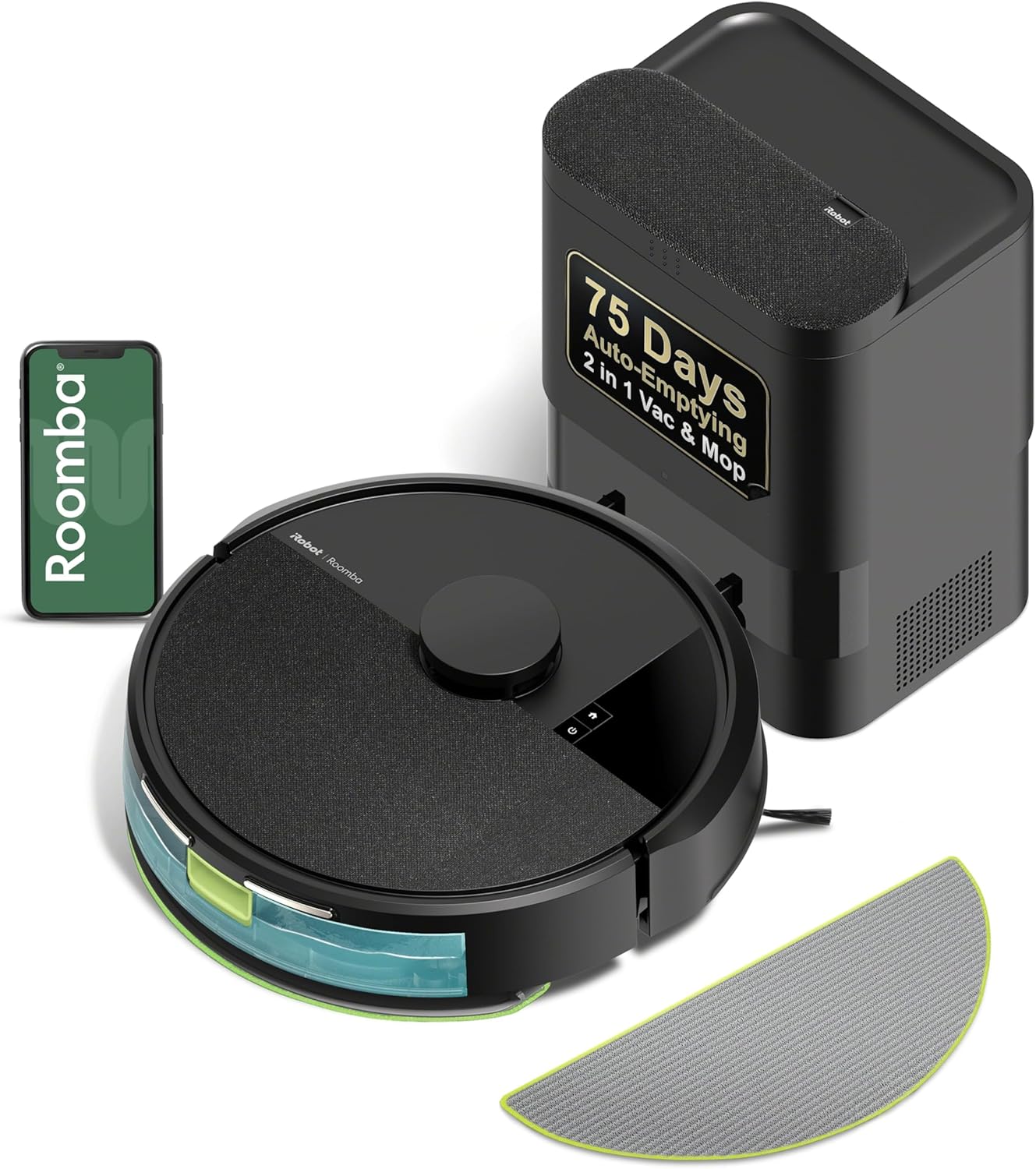
The Roomba 105 Combo is a vacuum-and-mop robot built for regular home cleaning on carpets and hard floors, with ClearView LiDAR mapping, 3 cleaning modes, and a self-emptying AutoEmpty dock. In typical use you pick mop only, vacuum only, or vacuum-and-mop, schedule runs in the iRobot Home app or start with voice commands, and the robot maps rooms to avoid obstacles and stairs. Notable features include a 4-stage cleaning system with power-lifting suction and an edge-sweeping brush for better corner cleaning, a washable microfiber mop pad and a micro-pump that meters cleaning solution for controlled mopping, plus a dock that holds up to 75 days of debris in a disposable bag. Practical benefits for LVP floors are targeted wet cleaning with carpet detection so rugs stay dry, and LiDAR navigation for consistent coverage. Limitations to expect are routine maintenance like filter and brush cleaning, a 100-minute battery life that may need recharges for larger homes, and dependency on the companion app for advanced settings and map customization.
Best for: Buyers who want a mostly hands-off vacuum-and-mop robot that reliably cleans LVP and other hard floors and values documented performance and peer reviews when choosing a dependable, low-maintenance option.
Less Ideal for: People who need the longest possible run time for very large homes, want a mop dock that washes and dries pads, or who prefer fully bagless base stations.
- Self-emptying AutoEmpty dock holds up to 75 days of debris for low-touch maintenance.
- ClearView LiDAR mapping gives reliable room coverage and obstacle avoidance.
- Combined vacuum-and-mop modes with a micro-pump and washable microfiber pad let you control how much liquid is applied to hard floors.
- 70x power-lifting suction and an edge-sweeping brush improve pickup, including pet hair and edge debris.
- App and voice control with scheduling and keep-out zones simplify routine cleaning.
- Battery runtime is 100 minutes which may require mid-run recharges in larger homes.
- AutoEmpty uses disposable bags, adding ongoing consumable cost.
- Does not include heated pad washing or advanced self-washing dock features found on higher-end models.
Verdict: Choose the Roomba 105 Combo if you want a trustworthy LiDAR-mapped vacuum-and-mop with a hands-free AutoEmpty dock that keeps LVP clean with minimal daily effort.
Tikom G8000 Max Robot Vacuum

| Suction | 5000Pa |
|---|---|
| Battery Life | 150 minutes |
| Dustbin Capacity | 450 ml |
| Water Tank | 300 ml |
| Noise Level | 45 db |
The Tikom G8000 Max is a low-profile robot vacuum that combines strong suction with mopping to keep hard floors and low-pile carpets tidy with minimal user effort. In use it maps and navigates with anti-collision and anti-fall sensors, and supports app, remote, voice, and onboard button control so you can schedule cleanings and start runs from a phone or the included remote. Notable features include a 5000Pa suction motor for lifting pet hair and debris, a combined 450 ml dustbin plus 300 ml water tank for simultaneous vacuuming and mopping, and a runtime up to 150 minutes with automatic recharge. Its 3-inch height lets it access under furniture and the Zig-zag cleaning mode improves coverage on open floor areas. Limitations to keep in mind are that higher-pile carpets may not get deep cleaning compared with upright vacuums and mopping is best for maintenance rather than heavy wet cleaning; occasional emptying of the dustbin and refilling the water tank are still required. For routine hardwood maintenance the G8000 Max offers a practical balance of suction, run time, and smart controls.
Best for: Buyers who want a practical, time-saving floor care solution for hardwood and low-pile carpets and prioritize long runtime, reliable navigation, and flexible control options.
Less Ideal for: Households that need deep carpet extraction, heavy wet mopping, or commercial-grade cleaning should consider a dedicated upright or standalone mop system instead.
- Strong 5000Pa suction effective on hard floors and short-pile carpets
- Simultaneous vacuuming and mopping with combined dustbin and water tank saves time
- Long run time up to 150 minutes with auto-recharge for larger homes
- Slim 3-inch profile reaches under low furniture
- Multiple control options including app, remote, voice, and onboard button
- Mopping function is for light maintenance and not heavy wet cleaning
- May be less effective on high-pile carpets compared with full-size vacuums
Verdict: A slim, long-running robot that combines powerful suction and light mopping to keep hardwood floors clean with minimal hands-on work.
roborock Q10 S5+

| Maximum Suction | 10,000Pa |
|---|---|
| Capacity | 2.7 liters |
| Battery Life | 150 minutes |
| Filter Type | Washable |
| Control Method | App, Voice |
The roborock Q10 S5+ combines a 10,000 Pa HyperForce suction system with a VibraRise 2.0 sonic mopping module and a 2.7 L self-emptying dock to deliver largely hands-free cleaning for homes with pets. It maps rooms with LiDAR and supports multi-level mapping, no-go zones, app scheduling and voice control so you can set cleaning routines and avoid restricted areas without manual intervention. The dual anti-tangle brush design and ultrasonic carpet detection help the robot manage hair-heavy areas by raising the mop and boosting suction on carpets, while ReactiveTech obstacle avoidance reduces stalls around clutter. Battery life is rated around 150 minutes for longer runs, and the washable filter simplifies upkeep. Limitations include a moderate noise level around 65 dB and reliance on 2.4 GHz Wi-Fi only, which might complicate setup on networks that favor 5 GHz. The unit is feature-rich for pet owners who want minimal daily maintenance, though occasional brush cleaning and dock bag replacements will still be required over time.
Best for: Buyers who prioritize reliable, low-touch cleaning for homes with pets and want a mapped, app-driven robot that handles hair and multi-floor routines without constant supervision.
Less Ideal for: People who need ultra-quiet operation or who require 5 GHz Wi-Fi compatibility and advanced custom network setups should consider other models.
- Very strong 10,000 Pa suction for lifting embedded pet hair
- Large 2.7 L self-emptying dust bag supports up to about 70 days between changes
- Dual anti-tangle brush system reduces hair wrap and maintenance
- LiDAR-based mapping with multi-level support and app-controlled no-go zones enables precise, scheduled cleaning
- VibraRise 2.0 sonic mopping with auto-lift protects carpets while mopping
- Only supports 2.4 GHz Wi-Fi which may limit connectivity options
- Reported noise level around 65 dB is louder than some competitor models
Verdict: If you want a hands-off, pet-focused robot that combines very strong suction, a long-running self-empty system, and carpet-safe mopping, the Q10 S5+ is an easy choice.
Choosing the Right Robot Mop with Vacuuming for Pets: Key Factors to Consider
Suction Strength and Brush Design
Pet hair can tangle on brushes and hide in crevices, so suction alone is not enough. Look for systems where the brush geometry and brushless channels complement suction to lift hair from carpet edges and bare floors. A tangle-resistant roller or a wide suction mouth helps prevent frequent unclogging.
Brush design affects long-term upkeep. Units with easily removable and washable rollers reduce the time you spend clearing hair. Consider how accessible the brush area is and whether the device uses replaceable parts that are inexpensive and easy to find.
Mop System and Water Management
Mopping for pet messes requires even water distribution and some mechanical agitation to loosen stuck-on dirt like mud or food residue. Systems that spray water in a controllable stream or use rotating pads tend to remove paw marks more effectively than passive damp cloths.
Reservoir capacity influences how much area a single cycle can cover before refilling. Also check whether the unit isolates dirty water from clean water and how the cleaning pads are attached and laundered. These details determine how sanitary the mopping process remains over repeated use.
Filtration and Odor Control
Homes with pets benefit from filtration that captures dander and fine particles. A sealed dustbin and HEPA-grade or high-efficiency filters reduce the amount of allergens recirculated during vacuuming. Check whether the filter is washable or replaceable and how often the manufacturer recommends changing it.
Some models include carbon filters or odor-neutralizing media in the dustbin. While these do not remove all smells, they can help reduce lingering pet odors between full cleanings.
Battery Life and Cleaning Coverage
Battery runtime determines whether a single charge can cover a multi-room home or whether the robot must return to base and resume. For pet households you may run the robot more frequently, so efficient battery use matters. Look for runtime estimates that match your home size and for quick recharge-and-resume capabilities.
Also consider the reported cleaning coverage per cycle and whether the navigation system allows for zone cleaning. The ability to target high-traffic pet zones reduces unnecessary runtime and conserves battery for tougher spots.
Ease of Maintenance and Consumables
Pet owners will empty dustbins and launder mop pads more often, so choices that simplify those tasks save time. Consider how the dustbin opens, whether it has anti-dust seals, and if mop pads are machine-washable. Systems that flag maintenance needs in-app or with simple indicators reduce guesswork.
Consumable costs matter too. Check expected lifespans for filters, brushes, and pads and whether replacements are readily available. Lower ongoing upkeep means you can run the device more often without a large time cost.
Navigation Around Pets and Furniture
Pets and their accessories create unpredictable obstacles. A robot that maps rooms and navigates gently around bowls, toys, and sleeping pets will complete more thorough runs without getting stuck. Look for pet-safe detection, quiet modes to avoid startling animals, and soft bumpers to minimize disturbances.
The ability to create no-go zones or set virtual barriers is useful for protecting litter areas or delicate beds. Clear mapping and reliable obstacle detection reduce the need for human intervention during cleaning cycles.
Setting Up for Pet Success
Before you run a combined vacuum-and-mop robot, prepare the environment to maximize cleaning efficiency. Pick up small toys, secure loose rugs, and move water or food bowls to reduce tripping hazards. Wipe up large spills by hand first so the robot can focus on hair and residue rather than moving heavy liquids.
Position the robot base in an open area for unobstructed returns. If the unit offers a quiet or pet-friendly cleaning mode, test it when your animals are present to ensure it does not provoke anxiety.
- Clear small objects and cords from floors
- Pre-treat heavy spills manually
- Test quiet operation around pets
Daily Routines That Reduce Fur Buildup
Consistent, short cleaning cycles often work better than infrequent long ones in pet households. Run the robot once a day in high-traffic areas and more often during heavy shedding seasons. Daily cleaning prevents hair from matting into carpets and reduces allergens in the room air.
Pair robotic runs with a weekly human-led deep clean. Empty the dustbin and rinse the mop pad after each run to keep the device effective and odor-free.
- Schedule short daily cleans for living areas
- Rinse mop pads after each wet cycle
- Empty the dustbin after high-hair runs
Addressing Stains and Sticky Spots
Robot mops handle light smears and tracked-in dirt but may struggle with old stains or thick residue. Treat fresh stains promptly with a targeted cleaner and towel, then run the robot to maintain overall floor cleanliness. For recurrent trouble spots, create a cleaning zone so the robot concentrates effort there.
If your device supports adjustable water flow or multiple passes, use those settings for stubborn paw prints. Test cleaning agents on a small hidden area first to avoid finish damage to sealed wood or laminate floors.
- Pre-treat heavy stains before robot runs
- Use targeted zones for trouble areas
- Adjust water flow for sticky messes
Managing Allergens and Home Air
Regular robotic cleaning reduces loose dander and visible hair, but true allergen control also requires good filtration and occasional deep cleaning. Replace filters according to the schedule and consider running the robot when pets are outdoors to let it work uninterrupted.
Combine robotic cleaning with periodic vacuuming of upholstery and bedding where pets spend time. This helps capture trapped dander that floor cleaning cannot remove.
- Keep filters fresh and dustbins sealed
- Run cleaning cycles when pets are away if possible
- Deep-clean pet bedding weekly
Maintaining the Robot for Reliable Pet Cleaning
Routine maintenance keeps performance steady. Clear brushes and roller bays of hair after several runs, inspect seals for blockages, and air dry mop pads thoroughly to prevent mildew. Follow the manufacturer's guidance for filter washing or replacement frequency.
Track consumable lifespans so you are not caught without replacement pads or filters during peak shedding months. Simple preventive care reduces downtime and ensures each cycle is as effective as possible.
- Remove hair from roller assemblies frequently
- Air dry or replace damp mop pads between uses
- Schedule filter checks and replacements
How We Chose the Best Robot Mop with Vacuuming for Pets
We selected products that balance two core capabilities: reliable pet-hair pickup and effective wet mopping. Our filters focused on measurable performance attributes rather than brand recognition or hype. Key evaluation criteria included suction power and brush design for hair removal, water-distribution and pad-scrubbing effectiveness for mopping, run time and area coverage for typical multi-room cleaning sessions, ease of maintenance for frequent pet-related chores, and smart features that improve scheduling and obstacle handling around animal bowls and toys. We also considered reservoir size and refill convenience because pet owners often need frequent touch-ups. We excluded single-function devices that only vacuum or only mop and units that require excessive manual intervention between cycles. Models that rely on fragile or hard-to-clean brushes were downgraded. Final selections represent a balance of real-world usability, straightforward upkeep, and consistent cleaning performance for homes with pets.
Our full evaluation process is outlined in our review methodology.
FAQ
Can a robot mop with vacuuming pick up long pet hair without tangling?
Many hybrid robots handle short and moderate-length hair, but very long hair can still tangle on traditional brush rolls. Look for tangle-resistant rollers, brushless suction paths, or easily removable brush assemblies to reduce snags and make cleaning quicker.
How often should I run the robot if I have multiple shedding pets?
Running the robot daily in high-traffic zones is common for multi-pet homes, with additional targeted runs during heavy shedding seasons. Short, frequent cycles prevent hair buildup and are easier on filters and brushes than infrequent long sessions.
Will the wet-mop function spread pet odors around the house?
If the mop pads or reservoirs are not cleaned regularly, damp pads can trap and spread odors. Rinse or replace pads after wet cycles and empty reservoirs to minimize odor transfer and microbial growth.
Are robot mops safe to use around pet bowls and litter areas?
Most units navigate around small obstacles, but you should set virtual no-go zones for litter boxes and food areas to avoid cross-contamination. Clearing bowls during cleaning and using zone restrictions keeps the robot from disturbing pet resources.
How do I stop my robot from scaring my pets?
Use quieter cleaning modes if available and introduce the robot gradually while monitoring your animals. Placing the dock in a calm area and running the robot when pets are occupied can help reduce anxiety.
Final Verdict
For homes with pets, prioritize a robot that combines strong hair pickup with a capable mopping system and easy maintenance. Balance suction and brush design against mopping coverage and water management so routine runs remove fur and fresh messes without excessive upkeep. Consider battery life, filtration, and navigation features that reduce interruptions and protect pet areas. Choose a unit that matches your home size and cleaning cadence, and plan for regular filter and pad upkeep. That approach delivers consistently cleaner floors and lowers the time you spend on daily pet-related chores.