
Note: This article contains affiliate links. If you click on these links and make a purchase, we may earn a small commission at no extra cost to you. This helps support our research and content. Read our full affiliate disclosure here.
If you live with shedding dogs and hardwood floors, choosing the right robot vacuum can save hours of sweeping and prevent hair buildup in corners and crevices. The right model makes a noticeable difference in hair pickup, reduces brush jams, and protects wood surfaces from unnecessary abrasion. This guide shortlists the top robot vacuums designed to handle dog hair on hardwood floors. We evaluated candidates for effective suction, brush systems that resist tangles, and features that protect finished wood. Read on for practical buying guidance and the criteria we used to choose these top picks.
Top Picks at a Glance
| Best Overall The best all-around choice for most situations | iRobot Roomba 105 Combo |  |
| Best Quality Built to a higher standard if you want something more solid | roborock Q10 S5+ |  |
| Best Value The sweet spot between price and what you get | ILIFE A30s Robot Vacuum |  |
| Best Budget The cheapest option that still gets the job done reliably | Lefant M210 Robot Vacuum |  |
| Top Rated A top-rated pick with lots of positive feedback | WSUANE D15S Max Robot Vacuum |  |
| Most Popular A crowd favorite that many people choose with confidence | Tikom G8000 Max Robot Vacuum |  |
| Best Seller A high-volume bestseller chosen again and again | Shark AI Ultra AV2501S |  |
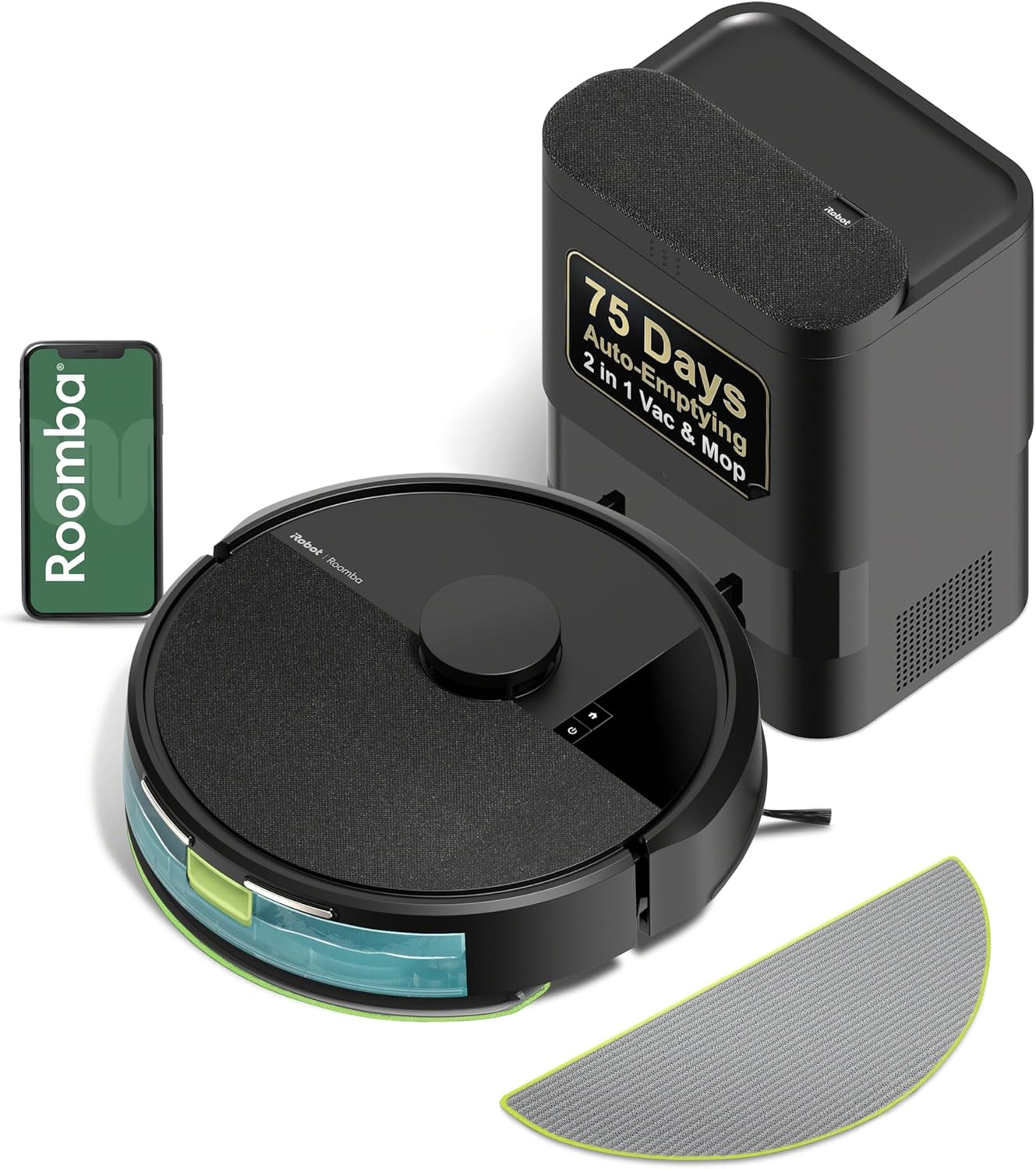
iRobot Roomba 105 Combo
| Battery Life | 100 minutes |
|---|---|
| Controller Type | App Control, Button Control, Voice Control |
| Other Special Features of the Product | Self-Emptying, LiDAR Navigation, Simultaneous Vacuuming & Mopping |
| Filter Type | Cartridge |
The Roomba 105 Combo pairs a robot vacuum-mop with an AutoEmpty dock to cut down on routine maintenance while handling daily wet and dry messes. It uses ClearView LiDAR to build maps and navigate reliably, and offers three cleaning modes so you can vacuum only, mop only, or vacuum-and-mop in one run. The 4-stage cleaning system combines intense suction, an edge-sweeping brush, a multi-surface brush, and a reusable microfiber mop pad; controls include the iRobot Home app, onboard buttons, or voice assistants. The AutoEmpty dock holds up to 75 days of debris in a disposable bag, which helps reduce exposure to dust when emptying. Practical limits include a roughly 100-minute battery runtime that may require recharging in larger homes and basic mapping features compared with higher-end models, and routine upkeep like brush and filter cleaning. For hardwood floors with dog hair, the machine's strong suction and edge brush make daily hair pickup simple, and the mop function safely avoids rugs while mopping hard surfaces.
Best for: Buyers who want an easy-to-manage robot that handles daily dog hair and routine mopping on hardwood with minimal hands-on emptying and simple app control.
Less Ideal for: Homes needing very long runtime for whole-house cleaning in a single cycle or users who require advanced multi-level mapping and the most powerful commercial-grade scrubbing systems.
- ClearView LiDAR mapping for consistent navigation and coverage
- AutoEmpty dock holds up to 75 days of debris to reduce manual emptying
- 70x power-lifting suction combined with edge and multi-surface brushes improves hair and edge pickup on hard floors
- App, voice, and button controls make scheduling and targeted cleans simple
- Mop pad with controlled water flow and SmartScrub option for deeper scrubbing of stains
- About 100 minutes of battery life may be short for very large homes
- Mop is a microfiber pad rather than a powered spinning system, so heavy stuck-on grime may need spot cleaning
Verdict: Choose the Roomba 105 Combo if you want LiDAR navigation and a hands-free AutoEmpty dock to keep hardwood floors free of dog hair with minimal daily upkeep.
roborock Q10 S5+

| Maximum Suction | 10,000Pa |
|---|---|
| Capacity | 2.7 liters |
| Battery Life | 150 minutes |
| Filter Type | Washable |
| Control Method | App, Voice |
The roborock Q10 S5+ combines a 10,000 Pa HyperForce suction system with a VibraRise 2.0 sonic mopping module and a 2.7 L self-emptying dock to deliver extended, low-maintenance cleaning for homes. It maps with LiDAR for precise multi-level navigation and uses ReactiveTech obstacle avoidance and ultrasonic carpet detection to automatically lift the mop and boost suction on rugs. App and voice control let you schedule runs, set no-go zones, and choose emptying modes, while the dual anti-tangle brush design reduces hair wrap—helpful for pet owners. The VibraRise mop scrubs with rapid vibrations and lifts on carpets for safe transitions, but the unit is not whisper-quiet and the product lists a 65 dB noise level at standard settings. Battery life is rated up to 150 minutes, which suits larger homes, and the 70-day dust bag interval cuts routine maintenance. Expect reliable pickup of dog hair on hardwoods and useful automation, though occasional edge cleaning or deep carpet agitation may still require spot passes or manual attention.
Best for: Buyers who prioritize deep, hands-off cleaning for pet hair on hard floors and want a robot that combines high suction with reliable mapping and long self-empty intervals.
Less Ideal for: People who need an ultra-quiet machine for shared living spaces or those who prefer a simpler, budget robot without advanced mapping and self-emptying features.
- Very strong 10,000 Pa suction for lifting embedded pet hair and debris
- 2.7 L self-emptying dock provides long intervals between maintenance
- Dual anti-tangle brush design reduces hair wrap and brush cleanings
- LiDAR mapping and ReactiveTech obstacle avoidance produce precise, efficient runs
- VibraRise sonic mopping lifts on carpets and delivers aggressive scrubbing on hard floors
- Noise level can be noticeable during full-power cleaning (listed around 65 dB)
- Auto-mop lift and ultrasonic carpet detection add complexity that may need occasional calibration
Verdict: If you want powerful, low-maintenance pet hair cleanup on hardwood with precise navigation and long self-emptying intervals, the Q10 S5+ is a top practical choice.
ILIFE A30s Robot Vacuum

| Max Suction | 10,000 Pa |
|---|---|
| Battery Life | 150 minutes |
| Dustbin Capacity | 450 ml |
| Navigation | LiDAR (SLAM) |
The ILIFE A30s is a robot vacuum built around strong suction and LiDAR mapping to handle everyday dirt and pet hair on hard floors and carpets. It uses LDS LiDAR and SLAM to map rooms and plan efficient cleaning runs, and you control it with the ILIFE Clean app, voice assistants, or the included remote. Notable features for pet owners include a dual anti-tangle brush and selectable suction power up to 10,000Pa plus an auto carpet boost mode, which together help lift fur from baseboards and area rugs. The 450 ml dustbin and 150‑minute runtime support longer sessions between emptying and charging, though this model does not mop. Setup requires 2.4 GHz Wi‑Fi for app features and some users may find the unit louder during high suction at around the listed noise level. Navigation accuracy and no-go zone controls make it practical for targeted cleaning, but if you need mopping or quieter operation at top power, look elsewhere.
Best for: Buyers focused on practical, reliable pet‑hair cleanup who want a mapped, app‑controlled robot that maximizes suction and targeted cleaning on hardwood and rugs.
Less Ideal for: Those who need a robot that also mops or who prioritize ultra-quiet operation over maximum suction.
- Powerful maximum suction (up to 10,000Pa) for lifting pet hair and debris
- LiDAR navigation with SLAM enables reliable mapping and efficient coverage
- Dual anti-tangle brush designed to reduce hair wrap during pet-hair cleaning
- App, voice and remote control let you set schedules, no-go zones and targeted room cleans
- No mopping function included so it only vacuums
- High suction modes can be noticeably louder than quieter models
Verdict: Choose the A30s if you want mapped, app‑controlled vacuuming with strong suction and anti-tangle brushes that keep dog hair moving off hardwood and rugs.
Lefant M210 Robot Vacuum

| Battery Life | 120 minutes |
|---|---|
| Capacity | 500 cubic centimeters |
| Filter Type | Cartridge |
| Compatible Devices | Amazon Echo, Google Home, Smartphones |
| Other Special Features of the Product | Anti-Fall, Auto-Docking, Obstacle Avoidance, Pet Hair Pick Up, Scheduling |
The Lefant M210 is a small, app-controlled robot vacuum aimed at regular upkeep on hardwood and other hard floors. Its low 3-inch profile slips under furniture, and a brushless suction port helps pick up pet hair without brush tangles. You can run scheduled cleans, pick from six modes including edge and spot, and control the unit via the Lefant app or Alexa/Google voice commands. The listed 120-minute runtime (quiet mode) covers mid-size rooms on a single charge, and the 500ml dustbin reduces how often you empty it. Navigation relies on infrared anti-collision and anti-drop sensors rather than LIDAR, so it follows zigzag or randomized patterns rather than tightly mapped routes; that makes coverage fine for open hardwood areas but less precise in cluttered rooms. Noise is moderate at about 52 dB and suction is tuned for surface dirt rather than deep carpet extraction. For buyers wanting a straightforward, affordable hardwood-focused cleaner, the M210 delivers solid basic performance, but expect simpler navigation and fewer advanced mapping features than higher-end models.
Best for: Buyers on a tight budget who need a dependable, easy-to-use robot for regular hardwood and low-pile cleaning and value app/voice scheduling over advanced mapping.
Less Ideal for: Homes that require precise room mapping, systematic multi-room navigation, or deep-cleaning on high-pile carpets should consider more advanced models.
- Slim profile fits under low furniture for hidden-dirt pickup
- Brushless suction port reduces hair tangles for pet owners
- App scheduling plus Alexa and Google voice control for hands-free operation
- 500ml dustbin and up to 120 minutes runtime support longer cleaning cycles
- Navigation uses infrared sensors and randomized or zigzag patterns rather than LIDAR mapping, so room coverage can be less efficient in cluttered spaces
- Suction and cleaning are optimized for hard floors and low-pile carpet, not deep-cleaning thick carpet
Verdict: If you want an affordable, compact robot that handles daily hardwood and pet hair cleaning with app and voice scheduling, the Lefant M210 is a practical pick.
WSUANE D15S Max Robot Vacuum

| Suction | 10000Pa max |
|---|---|
| Dustbin Capacity | 3.5 liters |
| Navigation | dToF LiDAR mapping |
| Run Time | Up to 160 minutes |
| Filter Type | Three-layer high-efficiency (washable) + filter cotton (not washable) |
The WSUANE D15S Max is a robot vacuum and mop combo designed to keep floors clean with minimal intervention. It maps rooms with dToF LiDAR for accurate navigation and lets you set no-go zones and targeted cleaning through the app, while the 3.5 L self-emptying dock holds several weeks of debris so you do not need to empty the bin often. The motor offers up to 10000Pa suction with multiple power modes and an Auto Boost that increases suction on carpets, and a blade-equipped roller plus high-speed side brushes reduce hair tangles—useful for pet hair on hardwood. Runtime varies by mode with up to about 160 minutes on the quiet setting and automatic return-to-base charging. Filtration is a three-layer system with a washable element and an additional non-washable cotton filter. Trade-offs include a reported noise level around 70 dB at higher power and a large dock footprint, so it is best where uninterrupted, hands-off cleaning and strong hair pickup matter more than absolute quiet or minimal storage space.
Best for: Buyers who prioritize reliable, low-maintenance cleaning for homes with shedding dogs and want precise mapping plus a hands-off dustbin solution.
Less Ideal for: People who need an ultra-quiet vacuum or have very tight storage space for a large docking station.
- Large 3.5 L self-emptying dustbin reduces how often you touch dirt
- High maximum suction (10000Pa) with Auto Boost for carpets and heavy debris
- dToF LiDAR mapping with no-go zones enables precise, repeatable cleaning routes
- Hair-cutting anti-tangle roller and side brushes help prevent clogs from pet hair
- Long runtime options up to 160 minutes for larger areas or long sessions
- Noise can reach about 70 dB at higher power levels
- Self-emptying station and dock require space and add to footprint
Verdict: If you want dependable, hands-off pickup of dog hair on hardwood with precise mapping and a large self-emptying bin, the D15S Max delivers that cleaning-first solution.
Tikom G8000 Max Robot Vacuum

| Suction | 5000Pa |
|---|---|
| Battery Life | 150 minutes |
| Dustbin Capacity | 450 ml |
| Water Tank | 300 ml |
| Noise Level | 45 db |
The Tikom G8000 Max is a low-profile robot vacuum that combines strong suction with mopping to keep hard floors and low-pile carpets tidy with minimal user effort. In use it maps and navigates with anti-collision and anti-fall sensors, and supports app, remote, voice, and onboard button control so you can schedule cleanings and start runs from a phone or the included remote. Notable features include a 5000Pa suction motor for lifting pet hair and debris, a combined 450 ml dustbin plus 300 ml water tank for simultaneous vacuuming and mopping, and a runtime up to 150 minutes with automatic recharge. Its 3-inch height lets it access under furniture and the Zig-zag cleaning mode improves coverage on open floor areas. Limitations to keep in mind are that higher-pile carpets may not get deep cleaning compared with upright vacuums and mopping is best for maintenance rather than heavy wet cleaning; occasional emptying of the dustbin and refilling the water tank are still required. For routine hardwood maintenance the G8000 Max offers a practical balance of suction, run time, and smart controls.
Best for: Buyers who want a practical, time-saving floor care solution for hardwood and low-pile carpets and prioritize long runtime, reliable navigation, and flexible control options.
Less Ideal for: Households that need deep carpet extraction, heavy wet mopping, or commercial-grade cleaning should consider a dedicated upright or standalone mop system instead.
- Strong 5000Pa suction effective on hard floors and short-pile carpets
- Simultaneous vacuuming and mopping with combined dustbin and water tank saves time
- Long run time up to 150 minutes with auto-recharge for larger homes
- Slim 3-inch profile reaches under low furniture
- Multiple control options including app, remote, voice, and onboard button
- Mopping function is for light maintenance and not heavy wet cleaning
- May be less effective on high-pile carpets compared with full-size vacuums
Verdict: A slim, long-running robot that combines powerful suction and light mopping to keep hardwood floors clean with minimal hands-on work.
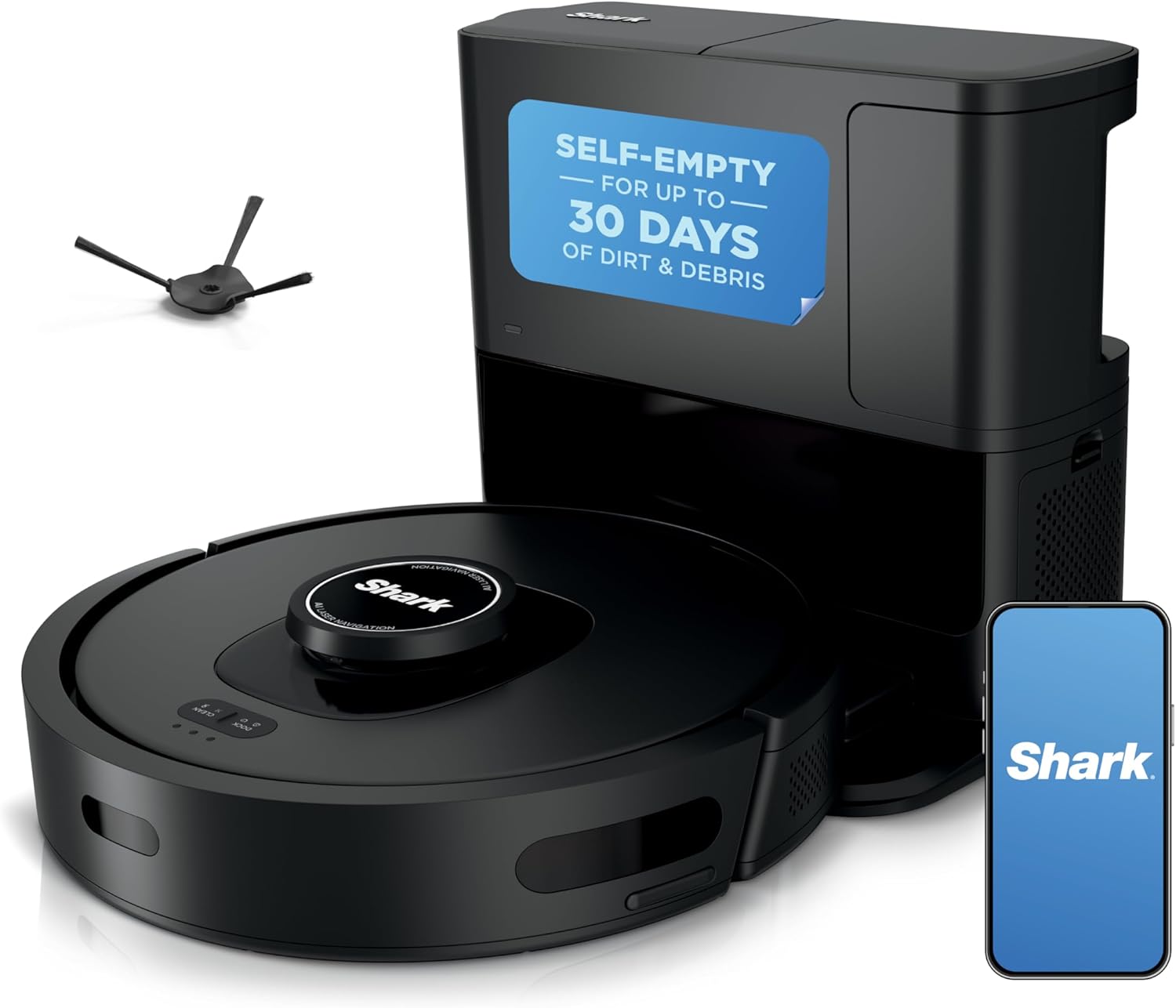
Shark AI Ultra AV2501S
| Battery Life | 120 minutes |
|---|---|
| Compatible Devices | Amazon Alexa, Google Home |
| Filter Type | Foam |
| Power Source | Battery Powered |
| Other Special Features of the Product | Bagless, Pet Hair Pick Up, Self-Cleaning Brushroll, Self-Emptying |
The Shark AI Ultra AV2501S is a self-emptying robot vacuum built to handle everyday home messes and pet hair on both hardwood and carpeted floors. It navigates with 360° LiDAR mapping and Matrix Clean to follow a precise grid and make multiple passes over dirt-prone areas, while a self-cleaning brushroll reduces hair wrap so suction stays consistent. The included HEPA-capable self-empty base stores up to 30 days of debris for low-maintenance operation, and up to 120 minutes of runtime with recharge-and-resume covers larger homes. You control scheduling and targeted cleans through the SharkClean app or voice assistants. Practical strengths are the methodical navigation and pet-focused brush design that keep hardwood floors free of fur without frequent manual intervention. Important limitations are that the system is relatively heavy and the bagless base still requires occasional emptying and filter maintenance, and it may struggle with very fine dust in deep grout or thick high-pile rugs compared with handheld cleaning. For cautious buyers who prioritize reliable, low-touch pet-hair cleanup on hard floors, it offers a solid balance of automation and cleaning power.
Best for: Buyers who want dependable, low-maintenance pet-hair cleanup on hardwood and mixed floors and value methodical navigation and hands-off operation.
Less Ideal for: People seeking a lightweight, minimalist cleaning solution or those whose homes are dominated by very high-pile rugs or extensive grout detailing.
- Matrix Clean grid navigation for thorough, repeat passes over dirty areas
- Self-cleaning brushroll helps prevent hair wrap from pet fur
- HEPA-capable self-empty base holds up to 30 days of debris for low-touch maintenance
- 360° LiDAR mapping enables accurate room mapping and obstacle avoidance
- Up to 120 minutes runtime with recharge-and-resume for larger coverage
- Base and filters still need periodic maintenance despite 30-day capacity
- May be less effective on very deep pile rugs or in narrow grout lines
Verdict: If you want a low-touch robot that reliably picks up dog hair from hardwood and returns to empty itself, the Shark AI Ultra delivers methodical mapping and pet-focused cleaning features.
Choosing the Right Robot Vacuum for Dog Hair on Hardwood Floors: Key Factors to Consider
Suction Strength and Modes
Strong suction is the most important factor for lifting embedded dog hair from hardwood gaps and plank seams. A vacuum with multiple power modes lets you run quieter, lower-power cleaning for daily maintenance and switch to high suction for weekly deep cleans or after heavy shedding episodes.
Look for models that report airflow or suction in meaningful units or provide explicit high-power cleaning modes. Constant high suction is useful but can shorten battery life, so the ability to alternate modes helps balance cleaning effectiveness and run time.
Brush Type and Tangle Resistance
Brush-roll design determines whether hair winds around components or feeds directly into the dustbin. Combination rubber rollers or filament-and-rubber hybrids tend to resist long-hair tangles better than single bristle rolls. A brushless suction-only design avoids tangles entirely, but it must have sufficient suction and a good edge-cleaning system to compensate.
Also consider how the brush assembly is accessed and cleaned. Quick-release rollers and tool-free caps make routine maintenance faster, which matters if you deal with regular heavy shedding.
Wheel and Base Impact on Hardwood
Wheels and base construction affect how the robot moves and whether it scuffs or scratches hardwood. Softer, rubberized wheels reduce surface marking and improve traction, while low-profile bases help the unit access under furniture without dragging or catching.
Check for protective bumpers and gentle contact algorithms that slow the robot when approaching furniture or walls. These features reduce the chance of damaging delicate finishes during normal operation.
Navigation Accuracy and Edge Pickup
Effective navigation keeps the robot from repeatedly missing the same areas and ensures systematic coverage along walls and under furniture. Models with mapping and room-based cleaning tend to collect hair more thoroughly because they can concentrate passes where dogs rest or shed most.
Edge-cleaning performance matters because dog hair often accumulates at baseboards. Look for side brush configurations or dedicated edge-sweeping strategies combined with firm suction along the perimeter to avoid pushing hair away from the wall.
Filter Quality and Allergen Control
Pet dander is a major concern for many dog owners. A vacuum with a high-quality filter, ideally HEPA-grade or equivalent, traps fine particles that otherwise recirculate in the room. Filter placement and the integrity of seals around the dustbin also influence overall performance.
Consider the cost and availability of replacement filters, and whether the filter is washable or needs regular replacement. Better filtration reduces allergy triggers and keeps expelled air cleaner during operation.
Battery Life and Charging Behavior
Battery capacity determines how much floor area a robot can cover in one run. Longer runtimes reduce the need for mid-clean recharging, which can interrupt coverage and leave hair behind. Models that automatically return to base, recharge, and resume cleaning are especially useful for larger homes or multiple-room jobs.
Also consider recharge time and whether the unit supports partial-charge resume behavior. Faster recharge and reliable resume capability result in more complete cleans with less user intervention.
Daily Maintenance Tips to Keep Hair Under Control
Establish a short daily routine to prevent hair from accumulating. Empty the dustbin after heavy sessions and quickly clear visible curls from brushes to keep suction effective. A microfibre dry mop used before the robot runs will collect surface hair and let the vacuum focus on embedded strands.
Place washable doormats and area rugs near common shedding spots to trap hair before it spreads. Regularly brushing your dog outdoors reduces the volume of loose hair indoors and cuts down on how often you need deep cleans.
- Empty dustbin after high-shedding runs
- Wipe intake and brush housing with a dry cloth weekly
- Check and clean side brushes and sensors monthly
Setting Up Your Home for Better Cleaning
Create clear paths and raise loose cables to reduce entanglement. Move small items and lightweight area rugs out of the robot's route to prevent snagging. If your home has many dark-finished floors, avoid glossy reflective rugs that can confuse optical sensors.
Designate a recharge hub location with a few feet of clearance on either side so the robot can dock and align reliably. Keep the base on a hard, level surface rather than a rug to improve docking consistency.
- Tuck cords away to prevent tangles
- Remove low-lying clutter before scheduled runs
- Keep dock area clear to assist reliable returns
When to Run High-Power Versus Quiet Modes
Use quiet or eco modes for daily maintenance when hair accumulation is light. These settings are less intrusive and conserve battery while handling surface hair and dust. Reserve boost or turbo modes for once-per-week deep cleans, after grooming sessions, or when you see clumps forming at baseboards.
For homes with heavy shedding breeds, consider scheduling a high-power run during the day when you can monitor the robot for tangles. Alternating modes helps balance cleanliness, noise, and battery health.
- Eco mode for daily upkeep
- Turbo mode for weekly deep cleaning
- Schedule high-power runs post-grooming
Replacing and Maintaining Consumables
Plan for routine replacement of filters and brushes according to manufacturer guidance. Even the best filters lose efficiency over time, and worn brushes collect less hair and may begin to scratch floor finishes. Keep spare filters and brush caps on hand to avoid downtime.
Store consumables in a dry, dust-free area and label dates when items are installed to track usage intervals. Some filters can be gently rinsed and dried, but only follow the specific cleaning instructions to avoid damaging filtration media.
- Track filter and brush replacement dates
- Use only recommended cleaning methods for filters
- Keep spares for quick swaps after heavy-shedding periods
How We Chose the Best Robot Vacuum for Dog Hair on Hardwood Floors
We started by focusing on attributes that matter for removing pet hair from hardwood without harming the floor finish. Primary evaluation criteria included suction power at multiple motor speeds, brush and roller design for tangle resistance, and filtration performance to control allergens. We also assessed navigation and edge-cleaning ability to ensure hair is collected along baseboards and in corners rather than left behind. Battery life and recharge behavior were considered so the vacuum can cover typical room layouts in one or two runs. Finally, we looked at maintenance needs, specifically how easy it is to clear hair from brushes and dustbins, and whether replacement parts are readily accessible. We excluded models that rely solely on low-power suction and side brushes that push hair instead of collecting it. Noise levels that realistically interfere with daily life were penalized. The list favors designs that balance strong hair pickup with gentler interaction with hardwood, plus sensible maintenance demands. These same dimensions form the basis of the scoring metrics used for each product entry.
Our full evaluation process is outlined in our review methodology.
FAQ
Can a robot vacuum really pick up all dog hair on hardwood floors?
A robot vacuum can collect most loose hair, especially with strong suction and a tangle-resistant brush system. However, very fine undercoat and hair in deep seams may require occasional spot cleaning or a manual pass with a broom or microfiber mop.
Will using a robot vacuum damage hardwood floors?
Most modern robots use soft rubber wheels and low-profile bases that are gentle on finished wood. To prevent abrasion, keep wheels clean, avoid hard debris that can scratch, and choose models with protective bumpers and gentle contact behavior.
How often should I empty the dustbin when dealing with heavy shedding?
Empty the dustbin after any heavy shedding session and at least once per day during high-shed seasons. Regular emptying maintains suction efficiency and reduces the risk of hair compacting around the filter.
Do robot vacuums need special filters for pet dander?
Higher-grade filters that meet HEPA or HEPA-equivalent standards capture more fine dander and are a good choice for allergy concerns. Check filter sealing and replace filters on the recommended schedule to maintain performance.
How do I prevent the brush from getting tangled with dog hair?
Choose units with rubberized or hybrid rollers designed to shed hair, and perform quick weekly checks to remove hair from end caps and axles. Models with tool-free brush removal make this task faster and reduce downtime.
Final Verdict
For homes with dogs and hardwood floors, prioritize a robot vacuum that balances strong, selectable suction with a brush design built to resist tangles. Good navigation and edge-cleaning behavior ensure hair along baseboards and in corners is collected, while soft wheels and thoughtful bumpers protect your floor finish. Focus on maintenance ease and filter quality as long-term considerations. Choosing a model that is simple to clean and has dependable filtration will deliver the most consistent results and reduce the time you spend on manual touch-ups.