
Note: This article contains affiliate links. If you click on these links and make a purchase, we may earn a small commission at no extra cost to you. This helps support our research and content. Read our full affiliate disclosure here.
If you live with cats, litter scatter and fine dust are an ongoing cleaning challenge. A robot vacuum designed for cat litter can cut daily maintenance time by picking up granules, minimizing tracked litter, and reducing airborne dust from the litter box area. This guide covers seven carefully shortlisted robot vacuums optimized for handling cat litter and related messes. We evaluated models across suction performance, brush and roller design, filtration, navigation, and how they handle fine particles and hair. Read on to find which features matter most for litter-heavy homes and which tradeoffs to expect as you choose the right unit.
Top Picks at a Glance
| Best Overall The best all-around choice for most situations | roborock Q7 M5+ |  |
| Best Quality Built to a higher standard if you want something more solid | roborock Saros 20 |  |
| Best Value The sweet spot between price and what you get | Tikom G8000 Max Robot Vacuum |  |
| Best Budget The cheapest option that still gets the job done reliably | ILIFE V2 Robot Vacuum |  |
| Top Rated A top-rated pick with lots of positive feedback | uninell UR3 Robot Vacuum |  |
| Most Popular A crowd favorite that many people choose with confidence | iRobot Roomba 105 Combo |  |
| Best Seller A high-volume bestseller chosen again and again | eufy 11S Max Robot Vacuum |  |
roborock Q7 M5+
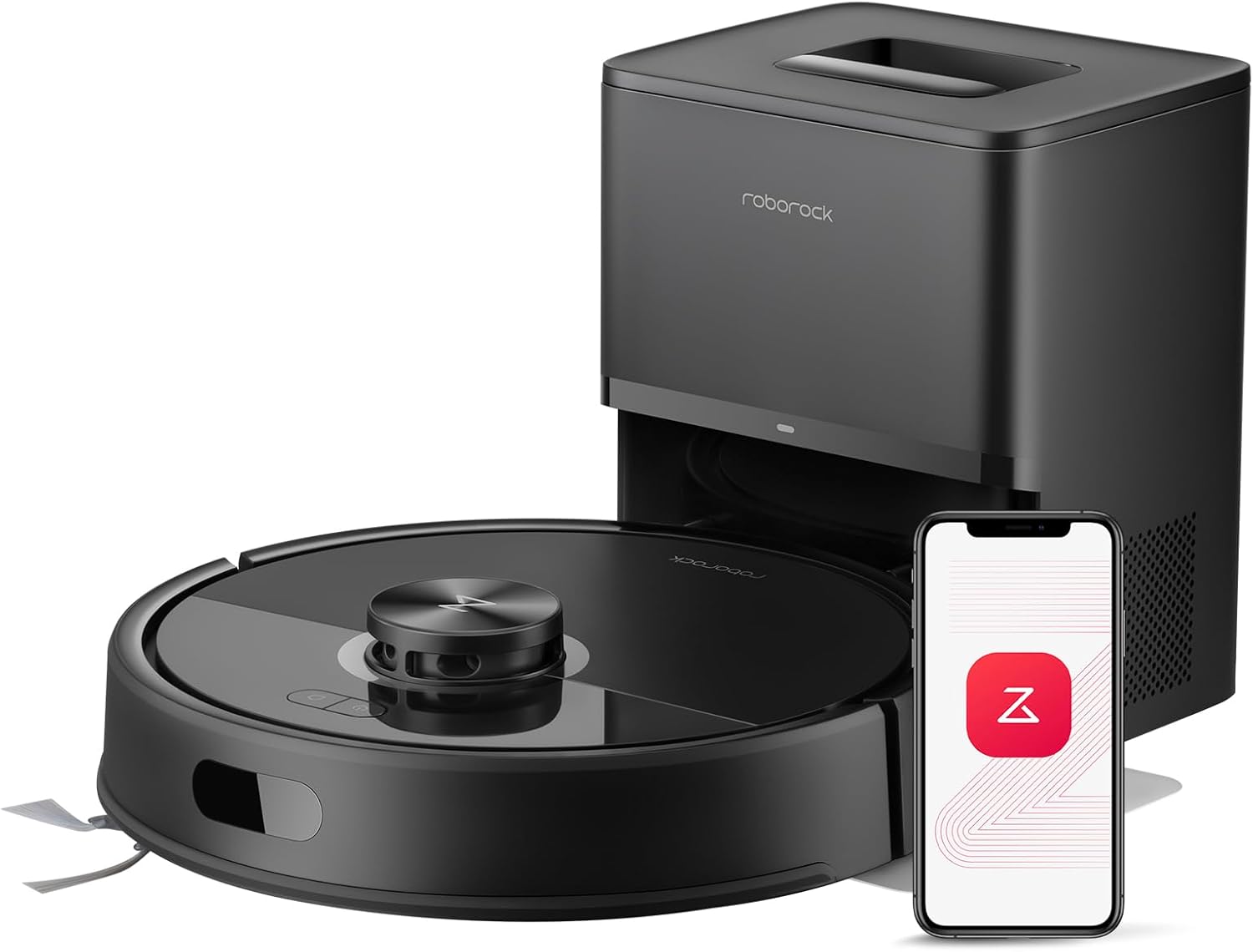
| Suction Power | 10000 Pa |
|---|---|
| Dust Capacity | 2.7 liters |
| Battery Life | 150 minutes |
| Navigation | PreciSense LiDAR |
The roborock Q7 M5+ combines powerful vacuuming with an electronic mop and a large self-empty dock to reduce maintenance for busy homes. It uses PreciSense LiDAR navigation and multi-level mapping to plan efficient cleaning paths and supports app and voice control for scheduling, no-go zones, and spot cleans. The 10000 Pa HyperForce suction and dual anti-tangle brush system are designed to handle pet hair and lift litter from floors and low-pile carpet, while the 2.7 L sealed dust bag in the RockDock Plus provides up to several weeks of hands-free emptying between changes. Battery life supports long runs and the app offers adjustable water flow for mopping. Trade-offs include a reported noise level around 65 dB during operation and the unit is not optimized for deep-cleaning very thick carpets or outdoor use, plus app features require a 2.4 GHz Wi-Fi network. For cat owners dealing with litter, routine placement of mats and occasional edge cleaning will still help capture stray granules the robot might miss.
Best for: Buyers who want a low-maintenance robot that reliably handles pet hair and frequent small debris with strong suction and hands-free emptying.
Less Ideal for: Those needing a near-silent unit for noise-sensitive homes or owners whose primary concern is deep-cleaning very thick carpets or outdoor areas.
- Very strong 10000 Pa suction for lifting litter and pet hair
- Dual anti-tangle brush system reduces hair wrap and interruptions
- 2.7 L sealed dust bag in auto-empty dock allows long hands-free intervals
- PreciSense LiDAR and multi-level mapping produce efficient, reliable navigation
- App and voice control with customizable schedules and no-go zones
- Around 65 dB noise level during cleaning
- Not designed for deep cleaning very thick or high-pile carpets
Verdict: Choose the Q7 M5+ if you want powerful suction plus long stretches of hands-free cleaning to cut down the chore of managing cat litter and pet hair.
roborock Saros 20

| Suction | 36,000 Pa |
|---|---|
| Battery Life | 180 minutes |
| Filter Type | Washable Filter |
| Controller Type | App Control, Remote Control, Voice Control |
| Noise Level | 55 db |
The roborock Saros 20 is a performance-focused robot vacuum and mop built for heavy-duty cleaning tasks like pet hair and tracked litter. It pairs a very powerful 36,000 Pa digital motor with a dual anti-tangle system and specialized side/mop extension to pull debris from carpet edges and corners, while its slim 3.13-inch profile and AdaptiLift chassis let it reach under low furniture and climb double-layer thresholds up to 3.46 inches. Navigation is driven by StarSight 3D sensors and an RGB camera that recognize hundreds of obstacles for fewer interruptions and more complete coverage, and the Roborock app provides learning SmartPlan scheduling and voice control. The RockDock base automates mop washing with hot water and hot-air drying, offers extended water capacity, and supports long auto-empty cycles for less hands-on maintenance. Trade-offs include a relatively large, heavier unit compared with minimalist models and a noise level around 55 dB during operation, but for homes that need strong suction and reliable obstacle avoidance—especially with pet messes—this model delivers sustained, hands-off cleaning.
Best for: Buyers who prioritize raw suction and reliable obstacle-aware navigation for homes with pets and frequent tracked litter and who want an automated dock to minimize maintenance.
Less Ideal for: Those seeking the smallest, lightest robot for occasional touch-ups or buyers who need an ultralow-noise model for constant night-time operation.
- Very high suction power (36,000 Pa) for pulling deep-set dirt, pet hair, and litter
- StarSight 3D navigation and RGB camera detect and avoid many obstacles for more complete coverage
- AdaptiLift chassis climbs up to 3.46-inch thresholds and cleans under low furniture at 3.13 inches
- RockDock one-piece dock automates mop washing, 212°F hot-water wash, and hot-air drying for hands-free maintenance
- Dual anti-tangle system and extended side/mop reach reduce hair wrap and improve edge cleaning
- Relatively heavy and larger footprint compared with compact robot vacuums
- Reported noise level around 55 dB may be noticeable during high-power runs
Verdict: If you want one of the most powerful, obstacle-aware robot vacuums for cleaning cat litter and pet hair with minimal hands-on maintenance, the Saros 20 is a top choice.
Tikom G8000 Max Robot Vacuum

| Suction | 5000Pa |
|---|---|
| Battery Life | 150 minutes |
| Dustbin Capacity | 450 ml |
| Water Tank | 300 ml |
| Noise Level | 45 db |
The Tikom G8000 Max is a low-profile robot vacuum that combines strong suction with mopping to keep hard floors and low-pile carpets tidy with minimal user effort. In use it maps and navigates with anti-collision and anti-fall sensors, and supports app, remote, voice, and onboard button control so you can schedule cleanings and start runs from a phone or the included remote. Notable features include a 5000Pa suction motor for lifting pet hair and debris, a combined 450 ml dustbin plus 300 ml water tank for simultaneous vacuuming and mopping, and a runtime up to 150 minutes with automatic recharge. Its 3-inch height lets it access under furniture and the Zig-zag cleaning mode improves coverage on open floor areas. Limitations to keep in mind are that higher-pile carpets may not get deep cleaning compared with upright vacuums and mopping is best for maintenance rather than heavy wet cleaning; occasional emptying of the dustbin and refilling the water tank are still required. For routine hardwood maintenance the G8000 Max offers a practical balance of suction, run time, and smart controls.
Best for: Buyers who want a practical, time-saving floor care solution for hardwood and low-pile carpets and prioritize long runtime, reliable navigation, and flexible control options.
Less Ideal for: Households that need deep carpet extraction, heavy wet mopping, or commercial-grade cleaning should consider a dedicated upright or standalone mop system instead.
- Strong 5000Pa suction effective on hard floors and short-pile carpets
- Simultaneous vacuuming and mopping with combined dustbin and water tank saves time
- Long run time up to 150 minutes with auto-recharge for larger homes
- Slim 3-inch profile reaches under low furniture
- Multiple control options including app, remote, voice, and onboard button
- Mopping function is for light maintenance and not heavy wet cleaning
- May be less effective on high-pile carpets compared with full-size vacuums
Verdict: A slim, long-running robot that combines powerful suction and light mopping to keep hardwood floors clean with minimal hands-on work.
ILIFE V2 Robot Vacuum

| Battery Life | 120 minutes |
|---|---|
| Capacity | 300 ml |
| Filter Type | Sponge |
| Control Method | Remote |
| Noise Level | 69 db |
The ILIFE V2 is an entry-level robot vacuum built to keep hardwood and other hard floors tidy without a lot of fuss. Its 2.99-inch slim body fits under low furniture while a tangle-free suction port and sponge filter make it practical for homes with pet hair. You can run scheduled cleanings, switch between auto, spot and edge modes, or start jobs with the included remote control or the single-button on the unit. A 300 ml dustbin and up to 120 minutes of runtime let it cover medium rooms on one charge, and it will automatically return to the dock when the battery is low. Noise is noticeable at 69 dB and there is only one power level, so it lacks adjustable suction or app-based controls, but for straightforward floor maintenance on hardwood and low-pile carpet the V2 delivers solid value at an affordable price.
Best for: Buyers who want an affordable, no-frills robot to maintain hardwood and low-pile carpet cleanliness with simple controls and scheduled runs.
Less Ideal for: Those who need strong adjustable suction, smart app control, or advanced mapping for large or complex homes should consider higher-end models.
- Slim 2.99-inch profile cleans under low furniture
- Tangle-free suction port suited for pet hair
- 120 minutes runtime with automatic return-to-dock
- Multiple cleaning modes (auto, spot, edge) and simple remote control
- Single power level limits suction control for heavier debris
- No smartphone app or advanced navigation features
Verdict: A low-cost, slim robot vacuum that reliably maintains hardwood floors and handles pet hair for budget-focused buyers.
uninell UR3 Robot Vacuum

| Battery Life | 180 minutes |
|---|---|
| Capacity | 0.6 liters |
| Compatible Devices | Alexa, Amazon Echo, Google Home, Smartphones |
| Filter Type | Sponge |
| Other Special Features of the Product | No-Go Zone |
The uninell UR3 is a self-emptying robot vacuum and mop designed for routine whole-home cleaning with minimal intervention. It uses LiDAR mapping to build accurate floor plans, supports up to five saved maps and app-based no-go zones, and can be controlled by app, voice assistants, or a physical remote. The 7000Pa cyclone suction with auto-boost on carpets and a brush that dives into pile is intended to lift embedded dirt and pet hair, while the 2-in-1 dust and water tank lets you vacuum, mop, or do both in one run. A 3.5L self-emptying base holds weeks of debris and the robot returns to recharge and resume as needed, supported by a 180-minute runtime for large coverage. For cat-litter situations the strong suction and tangle-resistant design help pick up granules, but wet mopping should be avoided immediately after litter pickup to prevent tracking. The unit is relatively quiet and includes remote control for non-tech users, though it requires a 2.4 GHz Wi-Fi network for full app features and map sync.
Best for: Buyers who want a set-and-forget cleaner that reliably maps multi-floor homes, holds large amounts of debris, and focuses on thorough pet-hair and litter pickup with minimal daily maintenance.
Less Ideal for: People who need cloud-free mapping or only use 5 GHz Wi-Fi networks, or those who expect instant wet-mopping after heavy granular messes without extra drying steps.
- LiDAR mapping with saved maps and app-set no-go zones for reliable, repeatable coverage
- 3.5L self-emptying station reduces manual emptying for weeks
- 7000Pa suction and auto-carpet boost to pull pet hair and embedded dirt from rugs
- Long 180-minute runtime lets it cover large areas before recharging
- Multiple control options including app, Alexa/Google voice, and a physical remote
- Full app functionality requires 2.4 GHz Wi-Fi which may limit users on 5 GHz-only networks
- Mop function can track litter if mopping is used immediately after vacuuming granular messes
- Accessories and replacement parts like filters and bags may need periodic purchase
Verdict: Choose the UR3 if you want a LiDAR-mapped, self-emptying robot built to pick up pet hair and cat litter with long runtimes and minimal day-to-day maintenance.
iRobot Roomba 105 Combo
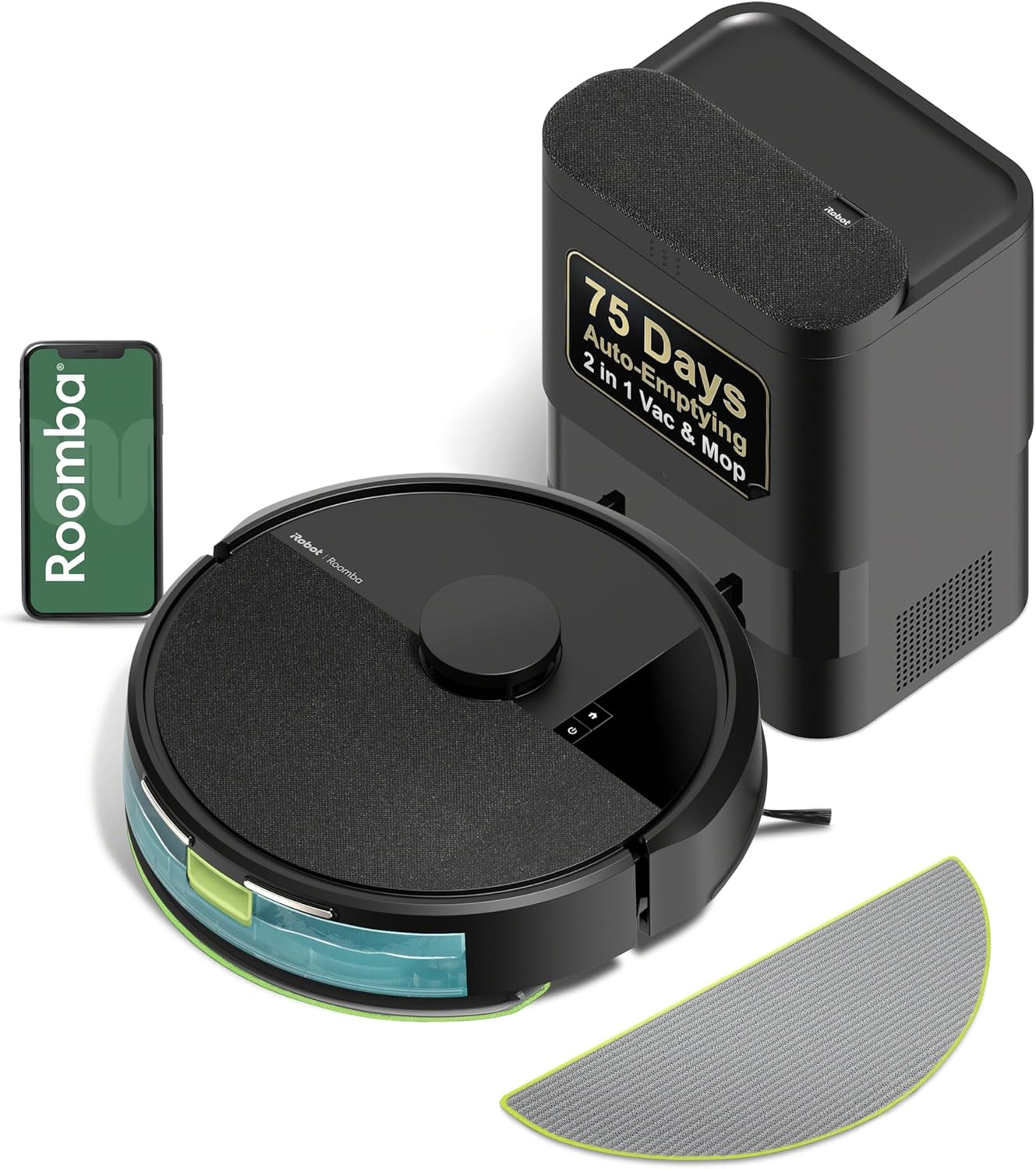
| Surface Recommendation | Carpet & Hard Floor |
|---|---|
| Battery Life | 100 minutes |
| Controller Type | App Control, Button Control, Voice Control |
| Filter Type | Cartridge |
The Roomba 105 Combo pairs a vacuum and mop with a self-emptying AutoEmpty dock to reduce hands-on maintenance for busy homes. It uses ClearView LiDAR to map rooms and navigate around obstacles while offering three cleaning modes: vacuum, mop, or vacuum-and-mop together. The cleaning system combines intensified suction, an edge-sweeping brush and a multi-surface brush to lift trapped dirt and pet hair, while a microfiber pad with controlled water flow and SmartScrub gives deeper scrubbing on hard floors. The dock holds debris in a bag for up to 75 days, which helps contain dust and allergens when you dispose of it. Setup and schedules are managed in the Roomba Home App or via voice assistants, and the robot detects and avoids carpets while mopping. Expect basic upkeep like occasional brush cleaning and periodic filter replacement, and know that effective mopping depends on using recommended solutions and occasional pad laundering.
Best for: Homeowners who want a mostly hands-off solution for daily floor care and prioritize devices with automatic debris containment and reliable mapping for cleaning around cat litter areas.
Less Ideal for: People who need industrial‑grade wet scrubbing or who prefer plug-and-play robots without any Wi-Fi setup should consider different models or standalone mop systems.
- Self-emptying AutoEmpty dock holds up to 75 days of debris for low-maintenance use
- ClearView LiDAR mapping provides precise navigation and room coverage
- Combined vacuum-and-mop modes let you vacuum and mop in one run with SmartScrub for deeper scrubbing
- Edge-sweeping and multi-surface brushes plus boosted suction help pull pet hair and litter from edges and carpets
- App, touch, and voice controls make scheduling and targeted cleans simple
- Battery life is listed at about 100 minutes which may require multiple runs for larger homes
- Mopping uses a microfiber pad and liquid dosing rather than a powered scrubbing mechanism, so heavy stuck-on messes may need spot cleaning
- Requires 2.4 GHz Wi-Fi for setup and continued app-based control
Verdict: Choose the Roomba 105 Combo when you want reliable LiDAR navigation plus a self-emptying dock to keep cat litter and pet hair contained with minimal daily effort.
eufy 11S Max Robot Vacuum
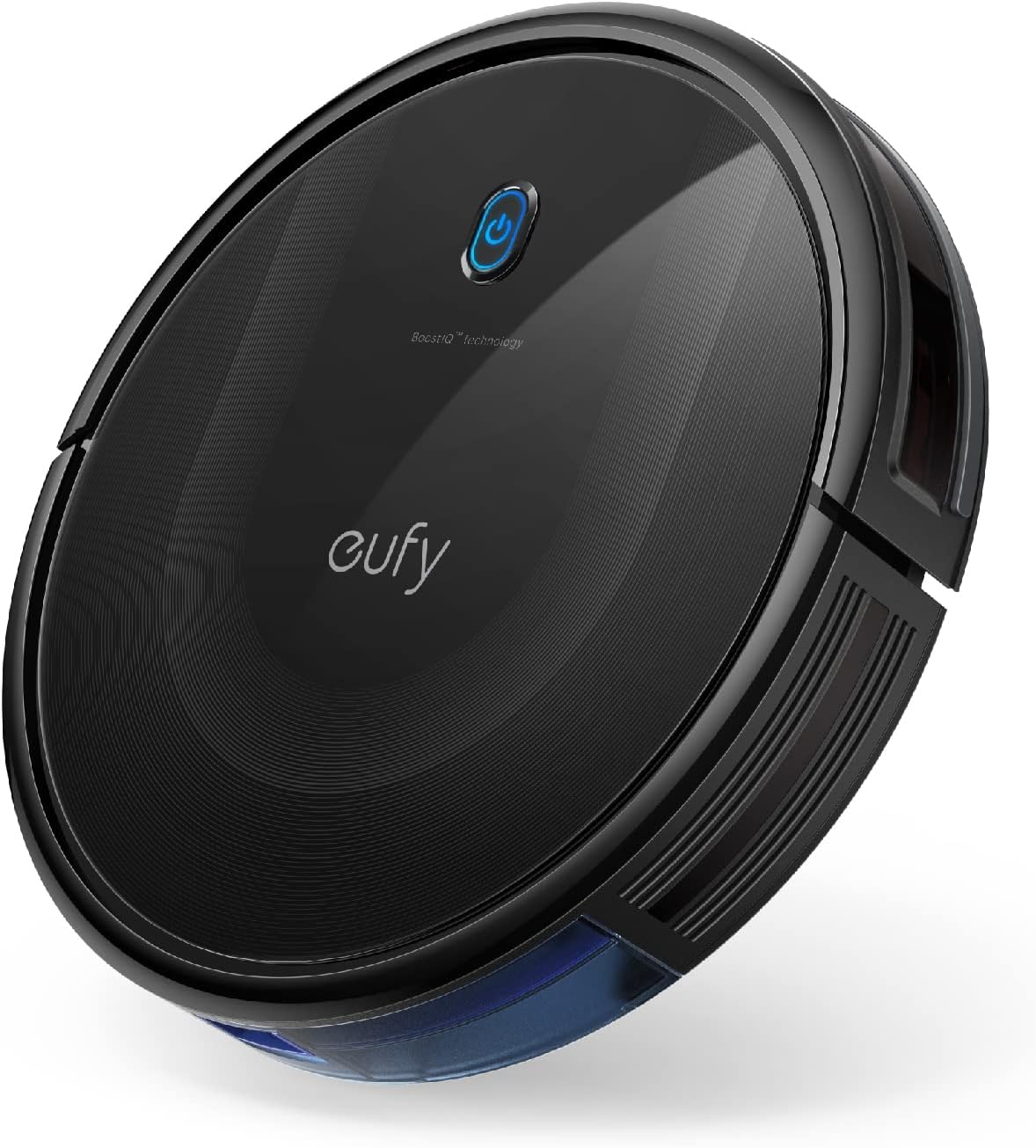
| Surface Recommendation | Hard Floor & Tile & Medium carpet |
|---|---|
| Battery Life | 100 minutes |
| Suction Power | 2000 Pa |
| Capacity | 600 ml |
| Noise Level | 55 db |
The eufy 11S Max is a low-profile robot vacuum built to clean hard floors and medium-pile carpets without drawing attention. Its 2.85-inch slim body lets it slide under low furniture while 2000Pa suction and a 12.8-inch cleaning path pick up dust, crumbs, and pet hair. It runs up to 100 minutes on hardwood at a reported low 55 dB, and automatic return-to-base means it tops off battery without user intervention. Controls are simple: the included remote and onboard buttons let you start, stop, and switch modes quickly, though there is no Wi-Fi or app control. Practical touches include washable filters, drop-sensing and anti-collision sensors, and a 600 ml dust capacity that reduces how often you empty the bin. The trade-offs are straightforward: navigation is basic rather than lidar or map-based, so room coverage is more random and may miss tight corners, and the single-side-brush design can be less thorough along edges compared with dual-brush models. For routine, quiet cleaning of hardwood, the 11S Max balances strong suction and a slim profile in a simple, reliable package.
Best for: Buyers who prioritize a quiet, no-frills robot that cleans hardwood reliably and fits under low furniture will appreciate this model for regular maintenance cleaning.
Less Ideal for: If you want mapped cleaning, smartphone scheduling, or the most thorough edge-cleaning for complex floorplans, choose a model with advanced navigation and app control instead.
- Slim 2.85" profile reaches under low furniture
- Up to 100 minutes runtime for extended cleaning sessions
- Powerful 2000Pa suction for effective pickup on hard floors
- Quiet operation at about 55 dB suitable for daytime or evening use
- Large 600 ml dust capacity and washable filter lower maintenance frequency
- Random navigation rather than mapping can lead to uneven coverage
- No Wi‑Fi or smartphone app means limited scheduling and remote control options
Verdict: A slim, quiet robot with strong suction made for routine hardwood maintenance when you want reliable, no-frills cleaning.
Choosing the Right Robot Vacuum for Cat Litter: Key Factors to Consider
Suction Strength and Multi-Mode Power
Suction strength matters because cat litter comes in a range of particle sizes, from coarse clumping granules to fine dusty litters. Higher suction helps pull heavier granules out of carpet fibers and across transitions, while adjustable power modes let you run quieter low-power cleanups during the day and boost suction for targeted litter box runs.
Look for vacuums that list suction in standardized units or offer distinct modes labeled for pet or max pickup. Keep in mind stronger suction usually draws more battery, so consider whether the unit sustains high power long enough to cover the litter-prone areas in your home.
Brush and Roller Design
Brushes and rollers control how litter is dislodged and funneled into the intake. A combination of rubberized rollers and wide openings tends to handle granular litter better than traditional bristled brushes that scatter particles. Anti-tangle features are also important because cat hair can rapidly wrap around smaller axles and reduce pickup efficiency.
Examine how the roller paths and side brushes interact with edges and corners near the litter box. Removable, tool-free brush access simplifies cleaning hair buildup, which otherwise diminishes litter pickup over time.
Filtration and Dust Containment
Cat litter dust can be an irritant and an allergen, so filtration quality is a core consideration. Sealed systems paired with HEPA or high-efficiency filters capture fine particles rather than simply redistributing them. The filter type and how dust is sealed during emptying affect indoor air quality after a run.
Also consider how the dustbin is emptied. A bagged or well-sealed drop mechanism reduces clouding when you dispose of litter, while open bins can release trapped dust back into the room. Frequent emptying schedules are common in multi-cat homes, so pick a design that keeps dusty hands to a minimum.
Navigation Accuracy and Edge Cleaning
Navigation determines whether the robot consistently finds the litter-prone spots. Mapping-enabled models that create reliable routes let you schedule runs focused on litter box areas, ramps, or carpeting where granules collect. Good edge-cleaning performance prevents litter build-up along baseboards and corners where cats often scatter.
Poor navigation leads to missed zones or repeated passes over the same area, wasting battery and leaving litter behind. Choose systems with obstacle detection and configurable no-go barriers if your litter box is in a confined or cluttered space.
Dustbin Capacity and Maintenance Frequency
Dustbin capacity dictates how often you must empty the unit, especially in homes with multiple cats or heavy litter scatter. A larger bin reduces interruptions but can add weight or take more space on the charging dock. The ease of emptying matters too: a well-sealed, easily removable bin minimizes dust exposure during disposal.
Consider models with optional auto-empty docks if you prefer longer autonomous intervals. Also factor in filter replacement frequency and whether common filters are easy to source for ongoing maintenance.
Hair Management and Tangle Resistance
Cat hair quickly accumulates on brush components and can impair litter pickup if not addressed. Tangle-resistant rollers and brushless designs help maintain consistent performance with less frequent manual dehairing. Removable brush modules with easy-access ports make routine maintenance faster and reduce downtime.
If you have long-haired cats, prioritize systems specifically designed to handle hair loads without frequent tangles. This reduces the effort of cleaning rollers between runs and keeps litter pickup efficient over time.
Preparing Your Space for Robot Litter Cleanup
Small adjustments to your litter area can vastly improve a robot vacuum's effectiveness. Lift or reposition lightweight mats and clear small obstacles so the robot can travel cleanly around the box. Keep the box against a wall where possible to reduce three-sided scattering patterns.
Designate a run schedule that targets times your cat is less active to reduce interruption. If the litter box is in a bathroom or closet, leave the door propped open during scheduled cleanings or use mapping features to allow entry only during run windows.
- Use a mat designed to trap granules to reduce the area the robot must cover.
- Create a clear path from the robot's dock to the litter area to avoid navigation errors.
- Secure loose cables and small items that could be mistaken for debris.
Types of Litter and How They Affect Pickup
Different litter formulas behave very differently under a robot vacuum. Clumping litters with larger granules are easier to pick up by suction but may roll or scatter when brushed. Fine dustier litters can be the hardest to contain and create more airborne particles during cleaning.
If you frequently switch litter types, expect variation in pickup performance. Adjust suction mode and schedule more frequent runs when using dusty formulas to limit accumulation and airborne dust.
- Larger granules: better for suction, may need edge passes to collect scattered pieces.
- Fine dusty litter: demands stronger filtration and higher suction or multiple passes.
- Pellet or crystal litters: tend to be heavy and easier to vacuum but can abrade rollers over time.
Managing Odors and Hygiene Around the Litter Box
Robot vacuums do not replace routine litter box maintenance. Frequent scooping, a well-ventilated location, and regular litter changes remain essential to control odors. However, a vacuum that removes scattered granules quickly reduces the spread of odors through tracked litter into living spaces.
Consider pairing a robot vacuum with air filtration or a litter box hood to manage smells at the source. Keep sanitation supplies accessible so you can periodically clean the robot's brushes and dustbin to prevent odor buildup inside the machine.
- Empty or replace the dustbin promptly to avoid lingering odors.
- Clean rollers and side brushes monthly or more often in multi-cat homes.
- Store replacement filters and brush parts so maintenance does not get delayed.
Scheduling and App Features Useful for Cat Owners
App control and scheduling let you align cleanings with your cat's routines. Many robots support multiple daily schedules so you can plan short runs after litter box use. Geofencing or room-based scheduling helps target only the litter-prone areas without running the vacuum across the whole home.
Look for features like quiet mode or adjustable suction that let you run the robot during times when your cat is resting. Some apps also display maintenance reminders for filter changes and brush cleaning, which is helpful to sustain litter pickup performance.
- Use room-based schedules to focus cleaning on litter zones.
- Enable maintenance alerts to prevent degraded suction from clogged filters.
- Set do-not-disturb windows if your cat is sensitive to the robot's presence.
Auto-Empty Docks: Convenience Vs. Containment
Auto-empty docks extend the period between manual bin emptying, which is convenient for heavy litter homes. They also store captured debris in a larger container that you empty less frequently. For cat litter, choose docks designed to minimize dust release during transfer and disposal.
Consider the tradeoffs: docks increase the upfront system footprint and can add ongoing maintenance like replacing dock bags or filters. If you are sensitive to dust during disposal, prioritize docks with sealed transfer systems and strong filtration at the dock itself.
- Auto-empty docks reduce daily maintenance but add periodic dock servicing.
- Ensure the dock has good seal design to avoid dust clouds during emptying.
- Verify dock filter replacement intervals before committing to a docked system.
How We Chose the Best Robot Vacuum for Cat Litter
We selected robot vacuums that target homes with cats by emphasizing specs and features that directly affect litter pickup and indoor air quality. Primary filters included suction power at multiple settings, brush and roller designs that resist hair tangles and scatter, and filtration systems rated to capture fine dust and allergens. We also weighed navigation reliability and mapping accuracy because consistent pathing reduces missed litter zones and repeat runs. Battery life and recharge behavior were considered for average litter cleanup cycles, while dustbin capacity and dust-release design influenced how often owners must empty and manage captured litter. We excluded units lacking clear filtration figures or brush designs unsuited to pet hair and granular debris. Models without any evidence of robust edge cleaning or efficient scheduled cleaning were also filtered out. The final picks balance suction, agitation, filtration, and navigation to reflect real-world cat-litter cleanup needs rather than headline features alone.
Our full evaluation process is outlined in our review methodology.
FAQ
Can a robot vacuum pick up all types of cat litter?
It depends. Larger granular litters and heavier crystals are generally easy for most robot vacuums to pick up, while very fine, dusty litters can be harder to contain and may require strong suction and frequent runs. Brush design and filtration also influence effectiveness.
Will hair clog the robot when cleaning around litter boxes?
Hair can accumulate on brushes and rollers and reduce performance over time. Models with tangle-resistant rollers or easy-access brush chambers require less frequent manual cleaning and maintain litter pickup efficiency better in homes with shedding cats.
How often should I empty the dustbin when using the robot for litter?
Frequency depends on bin capacity and the number of cats, but many multi-cat homes will need to empty daily or every other day. Larger bins or auto-empty docks extend intervals, but routine checks ensure the robot runs at peak suction and avoids overfilling.
Does running a robot vacuum create more airborne litter dust?
A poorly sealed filtration system can stir fine dust into the air, but units with sealed pathways and high-efficiency filters capture most particles. Running the vacuum more often and using models with better filtration reduces airborne dust over time compared with allowing litter to accumulate.
Should I change my litter type to make robot cleaning easier?
Switching to a larger-grain or low-dust formula can improve pickup and reduce airborne particles. Consider testing a different litter in a small amount first to see how your robot performs before making a full switch.
Final Verdict
When choosing a robot vacuum for cat litter, prioritize suction, filtration, and brush design because those directly determine how much litter and dust the unit removes and how much maintenance it demands. Match the robot's bin capacity and dock options to your household size, and favor navigation features that let you target litter-prone zones. Expect tradeoffs between suction power and runtime, and between convenience features like auto-empty docks and ongoing dock maintenance. Focus on the features that reduce your daily upkeep and protect indoor air quality, and you will have a practical, low-effort solution for litter cleanup.