
Note: This article contains affiliate links. If you click on these links and make a purchase, we may earn a small commission at no extra cost to you. This helps support our research and content. Read our full affiliate disclosure here.
If you share your home with a dog, picking the right robot vacuum can make unexpected messes and daily hair maintenance much less stressful. A robot vacuum for dog poop is not just about suction. It is about brush design, dustbin access, and how a machine handles soft solids without spreading them around. This guide shortlists the top options designed to manage pet accidents and heavy shedding. We evaluated models on practical criteria that matter in real-world use, including suction and brush access, navigation and containment, and cleanup workflow. Read on for the criteria we used and what to consider before adding one to your cleaning routine.
Top Picks at a Glance
| Best Overall The best all-around choice for most situations | iRobot Roomba j9+ |  |
| Best Quality Built to a higher standard if you want something more solid | roborock Qrevo S5V |  |
| Best Value The sweet spot between price and what you get | roborock Q7 M5+ |  |
| Best Budget The cheapest option that still gets the job done reliably | ILIFE V2 Robot Vacuum |  |
| Top Rated A top-rated pick with lots of positive feedback | Vyzzle E20 Robot Vacuum |  |
| Most Popular A crowd favorite that many people choose with confidence | Shark AI Ultra AV2501S |  |
| Best Seller A high-volume bestseller chosen again and again | eufy C28 Robot Vacuum |  |
iRobot Roomba j9+

| Surface Recommendation | Hardfloor, Carpet |
|---|---|
| Other Special Features of the Product | Auto-Docking, Dirt Detection Sensor, Obstacle Avoidance, Scheduling, Self-Emptying, Smart Mapping |
| Controller Type | Alexa, Siri, Voice Control, iRobot Home App |
| Battery Life | 180 minutes |
| Filter Type | Cartridge |
The Roomba j9+ is a top-tier self-emptying robot vacuum designed to handle pet hair and household dirt with minimal intervention. It uses PrecisionVision Navigation and a camera to map your home quickly and steer around obstacles like toys and cords, while Dirt Detective intelligence prioritizes dirtier rooms and adjusts cleaning accordingly. The 3-stage system with dual rubber brushes and claimed 100% stronger suction improves pickup on carpets and hard floors, and the Clean Base holds up to 60 days of debris so you do not need to empty the bin often. Voice control and the iRobot Home app make scheduling and targeted cleanups simple. Practical limits include reliance on camera-based navigation (so very dark or reflective floors can occasionally confuse it) and the usual need to manage low objects or very tangled cords for best performance. Replacement bags and maintenance of brushes and filter are ongoing costs. For dog-owning households the j9+ adds extra protections and avoidance routines aimed at pet messes, but it still benefits from some supervision in high-clutter areas.
Best for: A buyer who wants a largely hands-off vacuum that tackles pet hair and prioritizes messy rooms, and who values fast smart mapping and obstacle avoidance.
Less Ideal for: People who need a purely offline device with no camera-based navigation or those who prefer the lowest possible ongoing consumable costs.
- Self-emptying Clean Base holds up to 60 days of debris so you rarely need to manually empty the bin
- PrecisionVision Navigation and camera-based obstacle avoidance reduce collisions with pet toys and bowls
- Dirt Detective intelligence prioritizes and adapts cleaning to the dirtiest rooms
- Dual multi-surface rubber brushes and stronger suction improve pet hair pickup on carpets and hard floors
- Camera-based navigation can struggle on very dark or reflective surfaces
- Requires replacement bags and periodic brush/filter maintenance
- May need supervision in very cluttered rooms to avoid getting stuck
Verdict: Choose the Roomba j9+ if you want a self-emptying robot that intelligently avoids pet messes and spends less time needing hands-on maintenance.
roborock Qrevo S5V

| Suction | 12,000 Pa |
|---|---|
| Battery Life | 180 minutes |
| Dock Capacity | 2.7 liters |
| Noise Level | 64 db |
| Filter Type | Washable |
The roborock Qrevo S5V is a high-performance robot vacuum and mop designed for hands-off whole-home cleaning. It pairs a 12,000Pa brushless motor with a zero-tangle floating brush and side brush to pick up pet hair and debris while the FlexiArm dual spinning mops and adjustable water flow deliver more aggressive wet cleaning for sticky spots. The included multifunctional dock automatically self-empties dust, refills water, self-washes and warm-air dries the mops, and stores debris for extended periods, reducing maintenance. Navigation uses PreciSense LiDAR plus structured light obstacle recognition for reliable mapping and avoidance of cables and small obstacles; the app supports room targeting, no-go zones, and multi-floor maps. Practical limits: noise is listed at 64 dB so it is audible during runs, the mop lift clears low-pile carpets but not high rugs, and only 2.4 GHz Wi-Fi is supported which may restrict network setups. For owners who prioritize strong suction and automated dock features, this model delivers thorough cleaning with minimal intervention.
Best for: Buyers who want industry-level suction and an automated dock to minimize daily upkeep, especially households that need heavy-duty cleaning for pet hair and frequent messes.
Less Ideal for: People who need whisper-quiet overnight cleaning, those with exclusively high-pile rugs, or users who require 5 GHz Wi‑Fi connectivity.
- Very strong 12,000Pa suction for embedded dirt and pet hair
- Zero-tangle brush design reduces hair wrap on the main brush
- All-in-one dock self-empties, refills, washes and warm-air dries mops for low maintenance
- PreciSense LiDAR with structured light obstacle recognition for reliable mapping and avoidance
- App control with room targeting, no-go zones, and multi-floor mapping
- Only supports 2.4 GHz Wi-Fi which may be incompatible with some modern routers
- Listed noise level (64 dB) is noticeable during cleaning
- Mop lift is limited to 10 mm so higher rugs must be manually avoided
Verdict: If you need a performance-focused robot that handles heavy pet hair and reduces hands-on upkeep with an advanced self-washing dock, the Qrevo S5V is a compelling choice.
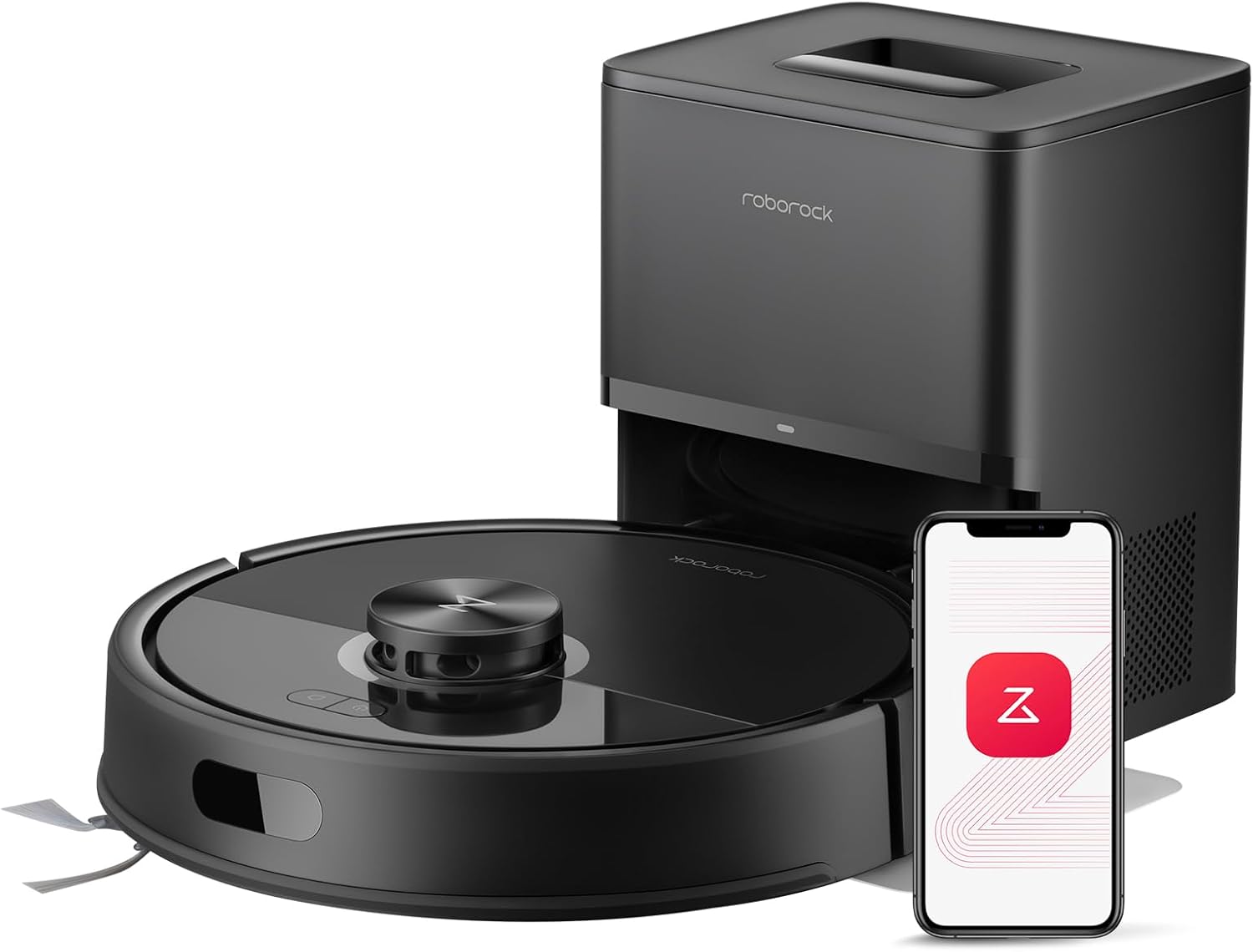
roborock Q7 M5+
| Suction Power | 10000 Pa |
|---|---|
| Dust Bag Capacity | 2.7 liters |
| Battery Life | 150 minutes |
| Navigation | PreciSense LiDAR |
| Noise Level | 65 db |
The roborock Q7 M5+ combines powerful 10000 Pa suction, PreciSense LiDAR navigation, and an electronic mop to handle everyday dirt and pet messes with minimal oversight. It maps rooms precisely and can be scheduled or controlled from the Roborock app to run while you are away, and the RockDock Plus auto-empty dock holds a 2.7 L sealed dust bag for roughly 7 to 9 weeks of use before you need to replace it. The Dual Anti-Tangle design and anti-tangle side brush reduce hair wrap, which keeps cleaning cycles consistent in homes with shedding dogs. Battery runtime is about 150 minutes, enough for most multi-room jobs, and multiple suction and water flow settings let you tailor cleaning intensity. Expect typical robot limits though: it navigates around obstacles but can struggle with very small piles or very soft messes, and mopping is best for light, damp cleaning rather than heavy wet cleanup. Noise is noticeable during max suction but reasonable for the performance offered.
Best for: Buyers who prioritize long stretches of hands-off cleaning and strong suction to keep homes with shedding dogs tidy will get the most value from this robot.
Less Ideal for: If you need a machine that handles large wet or messy accidents (fresh heavy liquids or solids) reliably without manual intervention, consider a different solution.
- Very strong 10000 Pa suction for deep cleaning on carpets and edges
- Large 2.7 L sealed dust bag in the auto-empty dock for 7–9 weeks hands-free emptying
- PreciSense LiDAR navigation with multi-level mapping for efficient room coverage
- Dual Anti-Tangle brush system reduces hair wrap from pets, lowering maintenance
- App control and scheduling with no-go zones and spot cleaning options
- Mopping is electronic and suited for light damp cleaning rather than soaking or heavy wet messes
- Can be noisy at maximum suction settings
Verdict: If you want a high-suction, self-emptying robot that cuts down on daily pet hair maintenance, the Q7 M5+ is a dependable hands-off choice.
ILIFE V2 Robot Vacuum

| Battery Life | 120 minutes |
|---|---|
| Capacity | 300 ml |
| Filter Type | Sponge |
| Control Method | Remote |
| Noise Level | 69 db |
The ILIFE V2 is an entry-level robot vacuum built to keep hardwood and other hard floors tidy without a lot of fuss. Its 2.99-inch slim body fits under low furniture while a tangle-free suction port and sponge filter make it practical for homes with pet hair. You can run scheduled cleanings, switch between auto, spot and edge modes, or start jobs with the included remote control or the single-button on the unit. A 300 ml dustbin and up to 120 minutes of runtime let it cover medium rooms on one charge, and it will automatically return to the dock when the battery is low. Noise is noticeable at 69 dB and there is only one power level, so it lacks adjustable suction or app-based controls, but for straightforward floor maintenance on hardwood and low-pile carpet the V2 delivers solid value at an affordable price.
Best for: Buyers who want an affordable, no-frills robot to maintain hardwood and low-pile carpet cleanliness with simple controls and scheduled runs.
Less Ideal for: Those who need strong adjustable suction, smart app control, or advanced mapping for large or complex homes should consider higher-end models.
- Slim 2.99-inch profile cleans under low furniture
- Tangle-free suction port suited for pet hair
- 120 minutes runtime with automatic return-to-dock
- Multiple cleaning modes (auto, spot, edge) and simple remote control
- Single power level limits suction control for heavier debris
- No smartphone app or advanced navigation features
Verdict: A low-cost, slim robot vacuum that reliably maintains hardwood floors and handles pet hair for budget-focused buyers.
Vyzzle E20 Robot Vacuum

| Maximum Suction | 8000 centimeters |
|---|---|
| Battery Life | 150 minutes |
| Noise Level | 45 db |
| Power Source | Battery Powered |
| Controller Type | App Control, Voice Control |
The Vyzzle E20 is a self-emptying robot vacuum and mop designed for homes with pets and mixed floors. It uses 360° LiDAR mapping and SLAM to build accurate room maps, supports virtual no-go and no-mop zones, and offers app and voice control for scheduled cleaning. The core cleaning hardware delivers up to 8000Pa suction with a Smart Carpet Boost and three suction levels, while a 2-in-1 dust box and water tank plus adjustable water flow let it vacuum and mop in one pass. The dock holds a sealed 3.5L dust bag for up to 60 days of hands-free emptying, and the unit can run up to 180 minutes on a single charge with recharge-and-resume. In practice this means strong pickup on hair, crumbs, and light debris, reliable room-by-room coverage, and reduced daily maintenance thanks to the auto-empty base. Limitations include the need to set no-mop zones or remove the mop pad before carpeted mopping and dependence on 2.4GHz Wi-Fi for smart features; very heavy or wet messes still require spot cleaning by hand.
Best for: Buyers who want a low-maintenance, map-driven robot that reliably handles pet hair and routine debris without daily emptying and who prioritize consistent, hands-off operation.
Less Ideal for: People who need a robot to handle heavy wet messes like large pet stools or frequent liquid spills without manual spot-cleaning or those who lack a stable 2.4GHz Wi-Fi network for app features.
- Strong maximum suction (8000Pa) with Smart Carpet Boost for deeper cleaning on rugs
- LiDAR-based mapping and SLAM for accurate room maps and efficient pathing
- Self-emptying dock with 3.5L sealed dust bag for up to 60 days of hands-free emptying
- Combined vacuum-and-mop system with three suction levels and three water flow settings
- Long run time (up to 180 minutes) plus recharge-and-resume for large homes
- Mop mode requires care around carpets and may need manual intervention to avoid wetting rugs
- Smart features require 2.4GHz Wi-Fi which can limit connectivity options
Verdict: For pet households that want thorough, mapped cleaning with minimal upkeep, the Vyzzle E20 delivers strong suction plus a 60-day self-emptying system to keep routine maintenance out of your way.
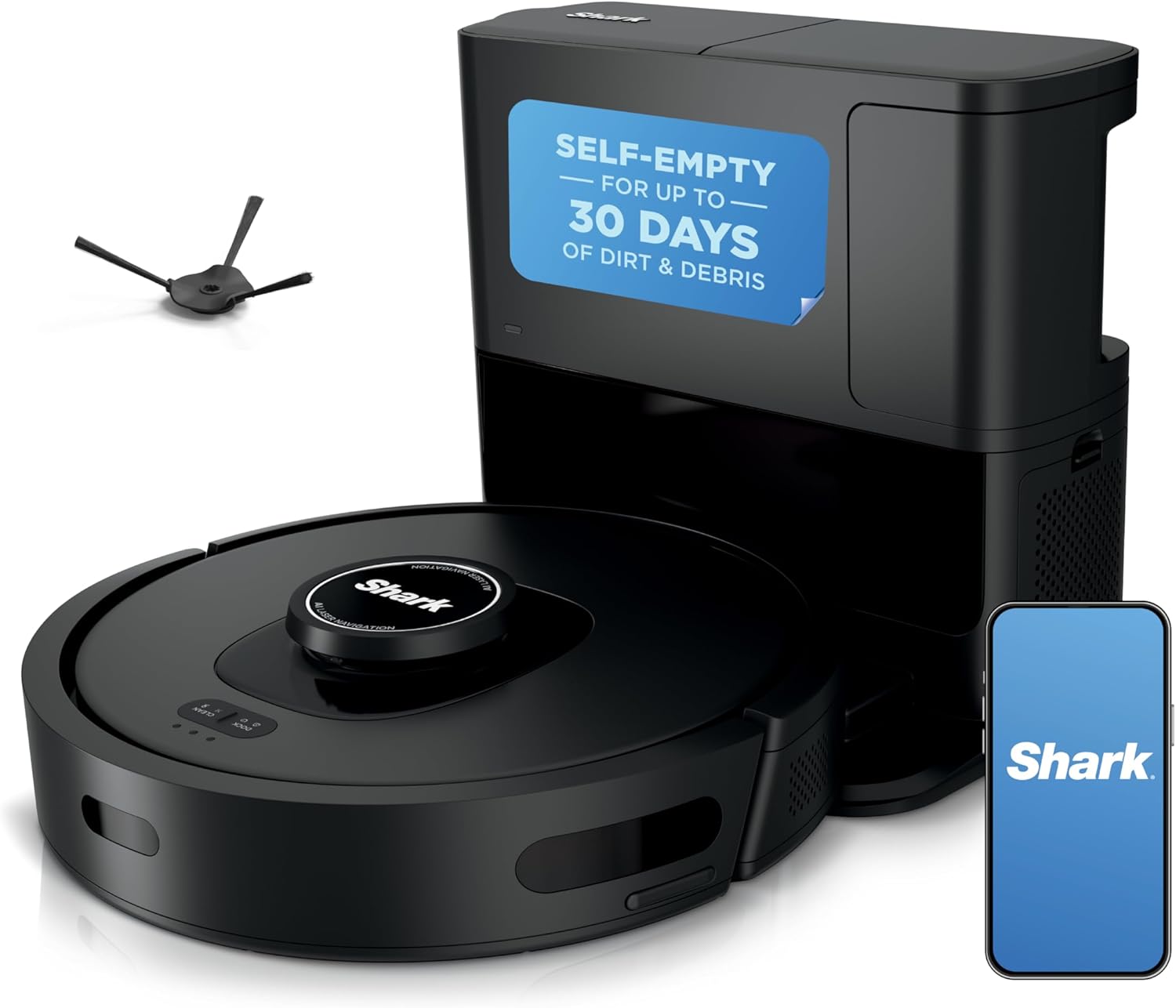
Shark AI Ultra AV2501S
| Battery Life | 120 minutes |
|---|---|
| Filter Type | Foam |
| Control Method | Voice |
| Compatible Devices | Amazon Alexa, Google Home |
| Surface Recommendation | Carpets & Hard Floors |
The Shark AI Ultra AV2501S is a LiDAR-navigated robot vacuum built for hands-off, whole-home cleaning on carpets and hard floors. It uses Matrix Clean navigation to run precise grid passes over high-traffic or messy zones, a self-cleaning brushroll that resists hair wrap, and a 30-day capacity bagless self-empty base so you can go long stretches without emptying. HEPA filtration and suction tuned for pet hair help capture dander and fine dust, while up to 120 minutes of runtime and recharge-and-resume make it capable of covering larger homes. App control plus Alexa and Google Assistant voice control let you schedule targeted cleans and set virtual boundaries. Important limitations: it is designed for general pet hair and debris rather than gross messes, and like most robot vacuums it is not intended to pick up wet or large solid waste without risk of spreading it or clogging the system. Expect strong hands-free maintenance for everyday shedding and tracked-in dirt but plan manual intervention for soiled or hazardous incidents.
Best for: Buyers who want a mostly hands-off vacuum that excels at routine pet hair and dust control and value long unattended runs and reliable mapping for whole-home coverage.
Less Ideal for: Those who need a solution for cleaning up fresh pet feces, vomit, or other wet/large messes should choose a machine intended for spot cleanup or plan manual cleanup instead.
- Precise Matrix Clean grid navigation for thorough coverage
- Bagless self-empty base with up to 30-day dirt capacity reduces emptying frequency
- Self-cleaning brushroll minimizes hair wrap for pet homes
- True HEPA filtration captures dust and allergens
- App control and voice assistant compatibility for targeted schedules and commands
- Not designed to handle wet or bulky solid messes like fresh pet feces
- Large debris or liquids can clog or damage the brushroll and base if encountered
Verdict: Choose the Shark AI Ultra if you want a mapped, self-emptying robot that reliably handles pet hair and allergen control so you can minimize daily vacuuming chores.
eufy C28 Robot Vacuum

| Suction Power | 15,000 Pa |
|---|---|
| Battery Life | 140 minutes |
| Capacity | 3 liters |
| Filter Type | Washable |
| Control Method | App, Push Button, Voice |
The eufy C28 is a full-featured robot vacuum and mop that combines 15,000 Pa suction with a HydroJet self-cleaning roller mop and an all-in-one Omni station to minimize maintenance. In everyday use it vacuums hard floors and short-pile carpets, lifts pet hair with a zero-tangle DuoSpiral brush, and mops using a heated wash-and-dry cycle that dumps wastewater into the station. LiDAR navigation maps rooms, avoids small obstacles without using cameras, and raises the mop automatically when the robot detects short carpets. The Omni station auto-empties dust into a 3L containment, refills and washes the mop, and applies 50°C air drying so the mop is ready for the next run; eufy claims the station can handle routine care for up to 75 days. Practical benefits include quieter multi-room runs, hands-free mop maintenance, and reduced brush clogging for pet households. Limitations to consider are the machine size and weight that make it less portable and the reliance on the station for hands-free features, which adds to the footprint in tight spaces.
Best for: Buyers who want a low-maintenance robot that handles both vacuuming and mopping with automated station-based cleaning and who prioritize reliable hair management in pet households.
Less Ideal for: People with very small homes, constrained floor space, or those who need a lightweight portable robot without a large station should consider more compact models.
- Strong 15,000 Pa suction for lifting pet hair and debris from floors and carpets
- HydroJet roller mop with self-washing and 50°C drying reduces manual mop care and mold risk
- Zero-tangle DuoSpiral brush minimizes hair wrapping for multi-pet homes
- LiDAR navigation and obstacle avoidance that protect privacy while mapping rooms
- All-in-one Omni station auto-empties, refills, and handles wastewater to extend maintenance intervals
- Omni station increases overall footprint and requires space for installation
- Large unit weight and dimensions limit easy relocation between homes or storage
- Hands-free features depend on the station being used and maintained
Verdict: Choose the eufy C28 if you want a mostly hands-off vacuuming and mopping system that keeps pet hair and mop maintenance under control with a capable self-cleaning station.
Choosing the Right Robot Vacuum for Dog Poop: Key Factors to Consider
Suction Power and Debris Pickup
Strong suction is essential when a robot vacuum needs to pick up small dry debris and help contain soft solids before a full cleanup. Higher airflow and well-positioned intakes pull material off carpets and hard floors instead of smearing it. Consider both advertised suction metrics and the vacuum's intake geometry, since a well-designed inlet often matters as much as raw power.
Suction also affects how well a unit lifts embedded pet hair. Machines with adjustable power settings let you boost suction for accident cleanup and dial it back for quieter everyday use. Remember that more powerful modes usually reduce run time, so evaluate expected battery life under heavier loads.
Brush and Roller Design
Brushes determine whether hair and soft debris get tangled, pushed, or lifted. A robot vacuum for dog poop should have a brushless or mixed-brush system that minimizes wrap and provides easy access for cleaning. Removable rollers and simple snap-out brushes make it faster and cleaner to detach material that might be contaminated.
Look for designs that keep mess away from bearings and internal housings. Rubber extractors or flexible flaps tend to shove debris toward the suction inlet rather than winding it around axles, which reduces maintenance and the risk of spreading soft waste across surfaces.
Navigation and Containment
How a robot moves through your home has an outsized effect on accident management. Reliable mapping and obstacle detection reduce the chance of running through a fresh mess and smearing it across floors. Virtual barriers and no-go zones let you isolate contaminated areas until you can handle them manually.
For homes with unpredictable pet behavior, responsive sensors and gentle obstacle approaches help the robot avoid startling animals while still performing targeted cleaning. Consider whether the unit supports spot clean modes and scheduled runs that reduce the chance of encountering fresh accidents.
Bin Capacity and Hygiene
A dustbin that is easy to remove and empty limits how much contact you have with contaminated debris. Larger bins reduce how often you must empty after messy incidents, but quick-release systems and washable liners are equally important for hygiene. Consider how easy it is to rinse or wipe interior bin surfaces without creating secondary mess.
Also check whether the dustbin shape traps material in corners or around seals. Smooth internal surfaces and wide openings simplify removal of sticky or soft debris and reduce the time you spend disassembling parts for cleaning.
Filtration and Odor Control
High-quality filtration helps contain fine particles from pet waste and hair, improving indoor air quality after a cleanup. HEPA-style or multi-stage filters capture dander and small particulates, while activated-carbon elements can reduce odors. Replaceable filters and clear maintenance intervals keep performance consistent over time.
Odor control features do not replace immediate cleanup, but they can mitigate lingering smells between manual interventions. Consider filter lifespan and how easy it is to access and replace filter elements when evaluating long-term maintenance.
Preparing Your Home for Safe Robot Cleanup
Before deploying a robot vacuum in a home with a pet that occasionally has accidents, prepare the environment to reduce risk. Clear small objects, put up virtual boundaries if supported, and confine the robot to hard floors when possible to avoid carpeting spread.
Train household members on a simple routine: isolate the affected area, run the vac in a contained spot mode if available, then manually finish with targeted cleaning. This sequence reduces the chance of repeated passes over the same spot, which can spread soft material.
- Use no-go zones around litter areas or frequently soiled rugs
- Keep a handheld or stick vacuum available for immediate pickup
- Schedule runs during predictable quiet times to avoid startling pets
Cleaning and Disinfecting the Robot After an Accident
After a robot vac encounters a pet accident, act quickly to prevent staining and odors. Power the device off and remove the dustbin outdoors or over a trash liner. Wear disposable gloves if you expect to handle contaminated parts.
Rinse washable bins and filters according to manufacturer guidance. For non-washable filters, tap them gently outside to dislodge large particles and replace them more frequently. Wipe brush housings and roller bearings with a disinfectant wipe safe for the material, then allow full drying before reuse.
- Remove rollers and manually clear hair and debris before rinsing
- Avoid submerging electrical components; only wash removable washable parts
- Keep spare filters and brush seals on hand to speed recovery
When to Use Spot Cleaning Vs Full Runs
Spot cleaning is the preferred first response to a fresh mess. Most robot vacuums offer a concentrated cleaning mode that revisits a small area several times. Use this to pick up solids and loose hair without sending the robot on a full house run.
Full runs are useful for routine maintenance and hair control across multiple rooms. After a spot-clean intervention and a manual finish, schedule a regular full run to remove residual debris and refresh floors.
- Trigger spot clean immediately after isolating the area
- Use full runs at lower suction for daily upkeep and higher suction for weekly deep cleans
- Combine with manual spot-treatment for sticky or staining messes
Maintenance Routines That Reduce Future Mess
Consistent maintenance reduces how often a robot spreads or misses pet-related debris. Establish a weekly inspection routine for brushes, inlet areas, and filter condition. Removing hair before it accumulates prevents wrapping and keeps suction pathways clear.
Rotate consumables on a schedule based on use severity. Frequent heavy-duty cleanups warrant shorter intervals for filter replacement and brush inspection. Keeping spare parts on hand shortens downtime after an accident and preserves performance.
- Check rollers and side brushes weekly in high-shed homes
- Clean filters monthly and replace according to wear
- Keep a short checklist for emergency cleanups accessible to all household members
How We Chose the Best Robot Vacuum for Dog Poop
We focused on features that directly affect how well a robot vacuum handles pet accidents and heavy shedding. Key evaluation criteria included suction power and debris containment, brush and roller design for easy cleaning and tangle resistance, navigation and obstacle handling to avoid smearing messes, dirtbin capacity and access for hygienic emptying, and sealing/filtration to limit odors and airborne particles. We prioritized units with straightforward maintenance workflows and accessible service points so owners can remove contaminated debris without touching soiled parts. We excluded products that lack explicit brush clearance, have sealed dustbins without easy emptying, or use weak navigation that increases the risk of spreading soft waste. Products were filtered for realistic home use: effective on mixed surfaces, able to operate around furniture, and designed for repeated cleanups. Spec sheets, manufacturer maintenance notes, and feature lists informed our selection rather than unverified performance claims. The result is a list of practical choices that balance cleaning power, containment, and ease of maintenance.
Our full evaluation process is outlined in our review methodology.
FAQ
Can a robot vacuum actually pick up wet or semi-solid pet messes?
Robot vacuums are primarily designed for dry debris. Some units can handle small soft solids without spreading them if suction is strong and brushes push debris into the intake. However, manual cleanup is usually required for larger or wet messes to avoid damage and odors.
Will pet hair clog a robot vacuum after a messy incident?
Hair can combine with soft debris to form clogs, especially around rollers and inlet seals. Regularly removing hair from brushes and keeping the inlet clear reduces clog risk. Designs with accessible, tangle-resistant rollers are easier to maintain after incidents.
How should I disinfect parts that touched pet waste?
Power off and remove washable parts first. Rinse bins and washable components with water and mild detergent, then disinfect with a product safe for the material. Avoid wetting electrical connectors and allow full drying before reassembly.
Is it safe to run a robot vacuum when my dog is loose in the house?
Many dogs tolerate robot vacuums, but behaviors vary. If your dog chases or reacts to the unit, use scheduled runs when the pet is in another room or confined. Virtual boundaries and careful introduction reduce stress for both pet and device.
How often should I replace filters after repeated accident cleanups?
Replace filters more frequently than the normal schedule if you regularly encounter messy incidents. Check filters after each major cleanup and swap them when you notice reduced airflow, visible contamination, or persistent odors.
Final Verdict
When choosing a robot vacuum for dog poop, prioritize features that limit spread and simplify cleanup: strong, well-channeled suction, accessible brush systems, and easy-to-empty bins. Navigation that lets you isolate areas and reliable filtration are valuable secondary considerations. Accept tradeoffs between raw power and maintenance effort. A machine that is easy to clean and service will often perform better in a pet household than one with slightly higher suction but difficult access. Use spot cleaning and quick manual follow-up as your primary strategy, and choose a model whose design makes those tasks fast and hygienic.