
Note: This article contains affiliate links. If you click on these links and make a purchase, we may earn a small commission at no extra cost to you. This helps support our research and content. Read our full affiliate disclosure here.
If you have vinyl plank floors, the right robot vacuum makes daily maintenance simple without risking scratches, edge lifting, or finish dulling. You want a machine that is gentle on the surface, strong enough to remove dust and pet hair, and smart enough to avoid traps like rugs with high lips or wet areas. This guide presents six shortlisted robot vacuums chosen for use on vinyl plank flooring and explains the practical tradeoffs—cleaning power, navigation, brush types, and floor-safety features—that matter most. Below you will find our top picks plus clear guidance on which features to prioritize for vinyl plank care, followed by user-focused advice on setup and upkeep.
Top Picks at a Glance
| Best Quality Built to a higher standard if you want something more solid | roborock Qrevo S Pro |  |
| Best Value The sweet spot between price and what you get | roborock Q7 L5 Robot Vacuum |  |
| Best Budget The cheapest option that still gets the job done reliably | ILIFE V5s Plus Robot Vacuum |  |
| Top Rated A top-rated pick with lots of positive feedback | iRobot Roomba 105 Combo |  |
| Most Popular A crowd favorite that many people choose with confidence | iRobot Roomba 105 Combo |  |
| Best Seller A high-volume bestseller chosen again and again | eufy C28 Robot Vacuum & Mop |  |
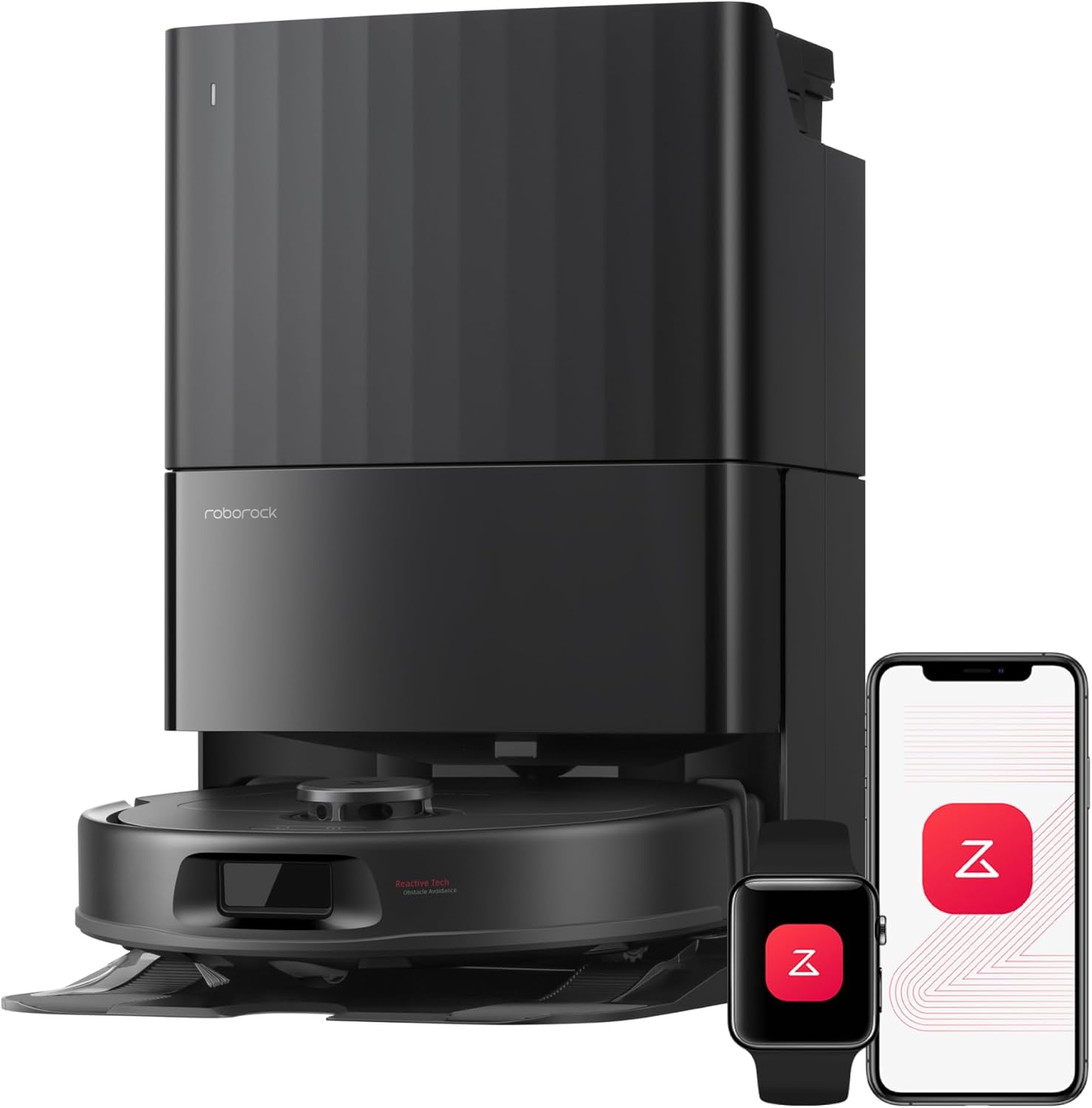
roborock Qrevo S Pro
| Suction | 18,500 Pa |
|---|---|
| Dock capacity | 2.7 liters |
| Battery life | 180 minutes |
| Navigation | PreciSense LiDAR |
The roborock Qrevo S Pro is a high-performance robot vacuum and mop designed for whole-home floor care. It uses PreciSense LiDAR navigation and Reactive Tech obstacle avoidance to map multiple floors, avoid furniture and small objects, and follow scheduled cleaning routes. For hard floors like vinyl plank, the machine combines 18,500 Pa suction with a dual spinning mop module that adjusts water flow and lifts the mop over carpets, while the multifunctional dock handles auto dust emptying into a sealed 2.7 L bag and runs 167°F mop self-cleaning plus warm air drying. Battery life is rated up to 180 minutes, so it can cover larger areas between charges, and washable filters and anti-tangle brushes reduce maintenance for pet homes. Trade-offs include a relatively complex dock and setup compared with basic vacuums and the need for 2.4 GHz Wi‑Fi for full app features, but for buyers prioritizing strong suction, reliable mapping, and hands-free mop care, it delivers practical, high-capacity cleaning for vinyl plank and mixed-floor homes.
Best for: Buyers who want a performance-focused, low-maintenance cleaning solution that combines strong suction and automated mop care to keep vinyl plank floors and mixed surfaces consistently clean with minimal hands-on effort.
Less Ideal for: People seeking a very compact or budget robot with minimal setup and no smart features should consider simpler models instead.
- Powerful 18,500 Pa suction that lifts dust, crumbs, and pet hair from hard floors and low-pile rugs.
- All-in-one dock with automatic dust emptying and heated mop self-cleaning plus warm air drying for low-maintenance mopping.
- PreciSense LiDAR navigation and Reactive Tech obstacle avoidance for accurate mapping and reliable pathing on vinyl plank surfaces.
- Dual liftable spinning mops with adjustable water flow that handle daily stains without overwetting vinyl.
- Long 180-minute battery life suitable for cleaning larger apartments or multiple rooms on one charge.
- Requires 2.4 GHz Wi‑Fi for full app functionality which may limit smart features for some networks.
- Multifunctional dock adds complexity and footprint compared with simpler charging stations.
Verdict: If you want a high‑power robot that reliably vacuums and mops vinyl plank floors with hands‑free mop cleaning and long runtime, the Qrevo S Pro is a top performance choice.
roborock Q7 L5 Robot Vacuum

| Suction | 8,000 Pa |
|---|---|
| Navigation | LiDAR |
| Battery life | 150 minutes |
| Water tank capacity | 270 ml |
| Filter type | Washable |
The roborock Q7 L5 is a LiDAR-guided robot vacuum that vacuums and mops in a single run, using an integrated 270 ml water tank and up to 8,000 Pa suction to handle dust and pet hair on hard floors and low‑pile carpet. It maps rooms with multi-floor support and quick mapping so you can set scheduled cleans, no-go zones, and targeted room runs from the Roborock app or with voice assistants. Practical features include a dual anti-tangle brush system that reduces hair wrap, carpet boost that increases suction where needed, washable filters, and a child lock. For hardwood floors the precise navigation and along-floor-direction cleaning reduce repeated passes and the electronic water control offers three water levels to avoid over-wetting. Limitations to note are the combined dustbin/water-tank design which means you cannot refill water without handling the combo unit, and the robot requires a 2.4 GHz Wi‑Fi connection for full app features.
Best for: Buyers who prioritize reliable, predictable cleaning on hardwood and want a robot that follows precise maps, runs on a schedule, and minimizes hair-related maintenance.
Less Ideal for: People who need separate, large-capacity water or dust tanks for long runs without handling the unit frequently or who cannot provide a 2.4 GHz Wi‑Fi network.
- LiDAR mapping and multi-floor mapping for accurate, efficient coverage
- Strong 8,000 Pa suction with carpet boost for better pickup of dust and pet hair
- Dual anti-tangle brushes minimize hair wrap and maintenance
- Electronic water tank with three water levels lets you control mop moisture
- App control plus Alexa and Google Home compatibility for scheduled, hands-free operation
- Integrated dustbin and water tank is a single combo part, which adds steps when refilling or emptying
- Requires 2.4 GHz Wi‑Fi for app connectivity, which may need router changes for some homes
Verdict: A strong‑suction, LiDAR‑mapped vacuum‑and‑mop that reliably cleans hardwood with low hair maintenance and smart app controls.
ILIFE V5s Plus Robot Vacuum

| Battery Life | 110 minutes |
|---|---|
| Capacity | 300 ml |
| Filter Type | Cartridge |
| Controller Type | App, Voice, Remote |
| Compatible Devices | Amazon Echo, Google Home |
The ILIFE V5s Plus is a slim robot vacuum that doubles as a mop, intended for everyday pickup on hard floors and low-pile carpet. It offers five cleaning modes (auto, spot, edge, max and scheduled) and works with an app, remote and voice assistants so you can start cleaning from your phone or with Alexa/Google Home. The 300 ml dustbin and 300 ml water tank support simultaneous vacuuming and mopping for light spills, while a 2600 mAh battery delivers up to about 110 minutes of runtime and automatic return-to-dock charging. Sensors help avoid drops and reduce collisions, and the low 3.19 in profile lets it pass under most furniture. Limitations include modest suction compared with higher-end models and a small dustbin/water tank that means more frequent emptying and refills in larger spaces; navigation is basic rather than lidar-guided so cleaning can be less systematic in complex floorplans. For vinyl plank floors it will handle daily dust, crumbs and pet hair well, but expect to mop only light marks rather than deep stains.
Best for: Buyers on a tight budget who want an affordable robot that keeps vinyl plank floors tidy with scheduled vacuuming and occasional mopping.
Less Ideal for: Homes that need heavy-duty suction, large continuous cleaning without interruptions, or precise room mapping should consider more advanced models.
- Two-in-one vacuum and mop cleans dust and light spills in one pass
- App, remote and voice control give flexible scheduling and hands-free starts
- Slim 3.19 inch profile fits under low furniture
- Long runtime up to 110 minutes with automatic self-charging
- Multiple cleaning modes let you target edges, spots or full-room runs
- No advanced navigation like lidar so mapping and room-accurate coverage are limited
- Dustbin and water tank are relatively small requiring more frequent maintenance
- Suction is modest compared with higher-end robot vacuums
Verdict: A budget-friendly vacuum-and-mop combo that delivers practical daily cleaning for vinyl plank floors without high-end navigation or power.
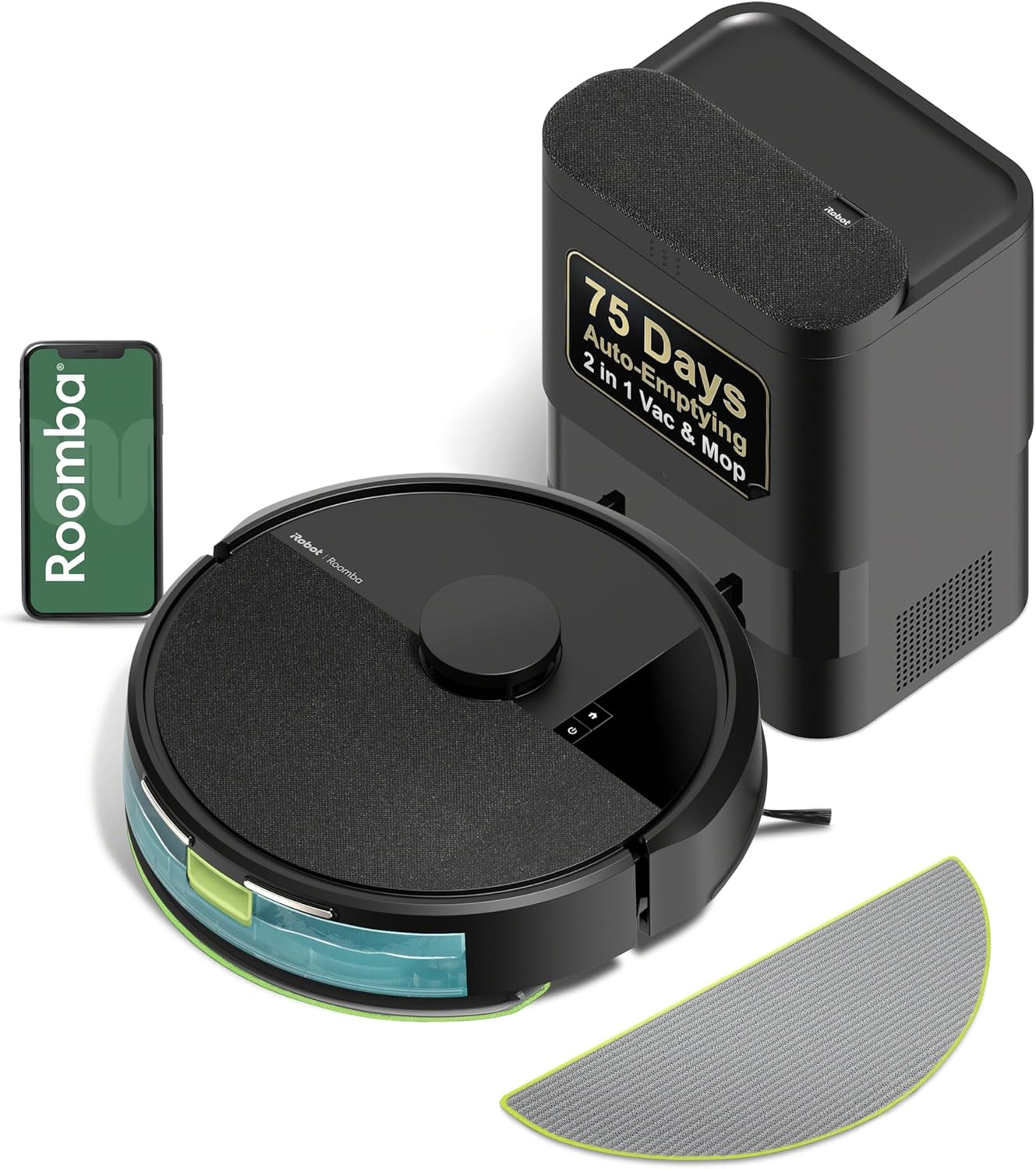
iRobot Roomba 105 Combo
| Surface Recommendation | Carpet & Hard Floor |
|---|---|
| Battery Life | 100 minutes |
| Other Special Features of the Product | LiDAR Navigation, Self-Emptying, Simultaneous Vacuuming & Mopping |
| Controller Type | App Control, Button Control, Voice Control |
| Filter Type | Cartridge |
The Roomba 105 Combo pairs a disc-shaped robot with an AutoEmpty dock so the machine can vacuum and mop floors with minimal hands-on maintenance. It uses ClearView LiDAR to map spaces and avoid obstacles while offering three cleaning modes: vacuum, mop, or vacuum-and-mop. The 4-stage cleaning system combines strong suction, an edge-sweeping brush, a multi-surface brush, and a reusable microfiber pad for scrubbing high-traffic spots with SmartScrub. Practical benefits include scheduled app and voice control, automatic carpet detection that keeps rugs dry during mopping, and a dust bag in the dock that holds up to 75 days of debris for less frequent emptying. For maintenance you will still need routine brush cleaning and occasional filter changes. Battery life is about 100 minutes, which is suitable for most single-floor or smaller multiroom jobs but may require a recharge for very large homes. The unit is tuned for indoor carpets and hard floors and provides reliable, low-effort cleaning for everyday messes on vinyl plank floors when you want consistent, maintenance-light operation.
Best for: Buyers who prioritize a dependable, low-maintenance robot that consistently cleans hard floors and reduces hands-on emptying and scheduling chores.
Less Ideal for: Households needing very long single-run runtimes for expansive floorplans or users who want heated pad washing and drying integrated into the dock.
- AutoEmpty dock holds up to 75 days of debris for hands-off maintenance
- ClearView LiDAR mapping provides consistent navigation and obstacle avoidance
- Combined vacuum-and-mop modes with SmartScrub for deeper scrubbing on hard floors
- Carpet detection prevents rugs from getting wet while mopping
- App and voice control make scheduled and on-demand cleaning simple
- 100-minute battery runtime may be short for very large homes without interim charging
- Mop uses a reusable microfiber pad rather than disposable pads or heated drying
- Some routine maintenance required such as brush cleaning and filter replacement
Verdict: Choose the Roomba 105 Combo when you want reliable, hands-off vacuuming and mopping with LiDAR navigation and a long‑interval AutoEmpty dock for low-maintenance care of vinyl plank floors.
iRobot Roomba 105 Combo

| Battery Life | 100 minutes |
|---|---|
| Power Source | Battery Powered |
| Capacity | 0.5 liters |
| Filter Type | Cartridge |
| Control Method | App, Push Button, Voice |
The Roomba 105 Combo is a compact robot vacuum that combines vacuuming and mopping for routine floor care on hard surfaces and low-pile carpets. It maps rooms with ClearView LiDAR so it cleans in organized rows and avoids obstacles and drops, and it detects carpets to automatically stop mopping where rugs are present. Users can choose vacuum-only, mop-only, or vacuum-and-mop modes and adjust three suction levels plus three water settings for the mop, which uses a reusable microfiber pad and a micro-pump to keep moisture even. The 4-stage cleaning system and edge brush help lift grit from edges and baseboards, and the 100-minute battery life is sufficient for many medium-size homes. Setup and scheduling are handled through the Roomba Home App or voice assistants, and maintenance is typical: emptying the 0.5 L bin, wiping contacts, and occasional brush and filter care. Trade-offs include a relatively modest dust capacity and no self-empty base, so frequent emptying may be needed in high-dirt homes, and taller thresholds or very thick carpets could limit passage and mopping effectiveness.
Best for: Buyers who want a reliable robot that mops and vacuums hard floors with mapped cleaning and easy app or voice control, and who value proven performance backed by many user reviews.
Less Ideal for: People needing hands-off, low-maintenance solutions that auto-empty or those with large homes and heavy pet hair buildup that would require frequent manual emptying and maintenance.
- LiDAR mapping for systematic cleaning and obstacle avoidance.
- Combined vacuum-and-mop modes with selectable water flow and SmartScrub for deeper scrubbing.
- Detects and avoids carpets when mopping to protect rugs.
- Adjustable suction levels to match surface needs and conserve battery.
- Works with app and voice assistants for scheduling and remote control.
- Does not include an auto-empty dock so the bin requires manual emptying.
- 0.5 liter dust/water bin is relatively small for larger households.
- Not designed for tall-pile carpets or heavy obstacle clearance.
Verdict: A dependable LiDAR-mapped vac-and-mop that delivers targeted cleaning on vinyl plank and other hard floors when you want mapped navigation and mopping without a self-empty dock.
eufy C28 Robot Vacuum & Mop

| Suction power | 15,000 Pa |
|---|---|
| Battery life | 140 minutes |
| Dust bag capacity | 3 liters |
| Control method | App, Push Button, Voice |
| Filter type | Washable |
The eufy C28 is a robot vacuum-mop designed to handle multi-room cleaning on hard floors and short-pile carpets with minimal intervention. It combines 15,000 Pa turbo suction and a DuoSpiral anti-tangle roller to pick up pet hair and fine debris, while a 28 cm HydroJet roller mop spins and self-cleans to remove marks and spills. Navigation uses LiDAR with obstacle avoidance and automatic mop lifting when crossing short carpets, so it maps rooms accurately and protects carpets. The included Omni all-in-one station auto-empties dust into a 3 L bag, refills and washes the mop, and hot-dries components to reduce odor and maintenance for roughly 75 days. Typical use is scheduled vacuum-and-mop cycles controlled by the app or voice commands, and it supports multi-floor mapping. Trade-offs are its relatively large station footprint and the need for occasional consumable replacements, but for buyers who prefer low-touch maintenance the C28 significantly reduces hands-on cleaning time.
Best for: Buyers who want a low-maintenance robot that handles regular vacuuming and mopping on vinyl plank or other hard floors with reliable navigation and strong pet-hair performance.
Less Ideal for: Shoppers who need a compact, minimal-footprint cleaner for very small apartments or who prefer a purely budget model without an automatic station should look elsewhere.
- Strong 15,000 Pa suction for lifting dirt and pet hair from hard floors and short carpets
- HydroJet self-cleaning roller mop with hot-air drying to prevent mold and remove marks
- All-in-one Omni station that auto-empties, washes, refills, and dries for up to about 75 days of hands-free maintenance
- DuoSpiral anti-tangle brush designed to handle long pet hair without wrapping
- LiDAR navigation with obstacle avoidance and automatic mop lift for safer multi-room routing
- Large all-in-one station requires floor space and adds to overall footprint
- Consumables like dust bags and mop parts will need replacement over time
Verdict: If you want a largely hands-free solution for regular cleaning on vinyl plank floors that combines strong suction and a self-washing mop, the eufy C28 delivers reliable, low-touch performance.
Choosing the Right Robot Vacuum for Vinyl Plank Flooring: Key Factors to Consider
Brush and Roller Design
Brush and roller types determine how contact is made with vinyl plank surfaces. Soft rubber or silicone rollers tend to be gentler than stiff bristle bars and are less likely to abrade or dull finishes. Edge brushes help sweep debris from baseboards, but aggressive bristles or metal components can catch on plank edges and lift seams.
When assessing a robot, look for replaceable, soft-contact brushes and low-profile rollers that roll smoothly across plank transitions. Consider whether the brush assembly can be removed and cleaned easily, because trapped grit or hair can create abrasive wear over time.
Suction Power and Adjustable Settings
Suction determines how well the robot removes fine dust and debris without relying on abrasive brushing. High suction is useful for pet hair and embedded dirt, but maximum power settings may increase motor vibration and contact force against the floor. Adjustable suction modes let you balance cleaning performance with gentler operation on delicate finishes.
Choose a robot that offers multiple power levels or an automatic mode that adapts suction to surface conditions. This reduces unnecessary stress on vinyl while still delivering the cleaning strength needed in high-traffic areas.
Navigation, Mapping, and Edge Handling
Accurate navigation reduces repeated contact with walls and baseboards and helps avoid corners and thresholds where vinyl planks can lift. Robots with mapping capability and virtual boundary setup let you keep the unit away from fragile transitions or damp areas. Good edge handling prevents the robot from pushing too hard into baseboards or getting wedged against furniture legs.
Look for models with precise mapping, clear no-go settings, and sensors that detect cliffs and thin rugs. Reliable path planning also shortens cleaning time and ensures coverage without unnecessary back-and-forth that could stress plank seams.
Wheel Design and Threshold Clearance
Wheel materials and suspension affect how smoothly a robot traverses plank seams and small thresholds. Soft, rubberized wheels absorb shock and reduce the chance of gouging while still providing traction. A robot that is too heavy or has rigid wheels can catch on edges and lift planks over time.
Check the maximum threshold height a robot can cross and whether it offers gentle ramping or a torque-limited drive to avoid sudden jerks. For homes with many room transitions, a design that eases onto thresholds will protect seams and reduce stress on both the floor and the vacuum.
Mopping Features and Moisture Control
Some robot vacuums include mopping functions that may expose vinyl plank floors to moisture. While light, controlled damp mopping can be safe for most finished vinyl, excessive water, abrasive scrubbing, or aggressive cleaning pads can harm seams and finishes.
If you prefer a robot with mopping capability, ensure it offers adjustable water flow, an electronic reservoir, or a dry-mop mode. Avoid continuous soaking and use settings that apply minimal moisture. Alternatively, choose a vacuum-only model if you have concerns about water exposure.
Maintenance and Consumables
Ongoing maintenance affects both cleaning effectiveness and how the robot interacts with your flooring. Brushes, filters, and wheels collect hair and grit that can become abrasive if not cleaned regularly. Easy access to these components reduces downtime and makes it more likely you will perform routine upkeep.
Consider how simple it is to replace rollers and filters, the availability of spare parts, and whether the dustbin is easy to empty without scattering dust. Lower maintenance friction increases long-term protection for vinyl planks by ensuring the robot operates as intended.
Why Vinyl Plank Flooring Needs Special Consideration
Vinyl planks are durable but susceptible to surface abrasion, seam lifting, and finish dulling from improper cleaning methods. A robot vacuum designed with soft-contact components and adjustable settings reduces mechanical wear compared with generic hard-floor designs.
Protecting the finish requires attention to contact materials, wheel design, and how the robot handles thresholds and transitions. Smart navigation and configurable no-go zones further prevent repeated impacts along baseboards and edges.
- Soft rollers and rubber wheels reduce abrasion
- Adjustable suction cuts down unnecessary surface stress
- Mapping and no-go zones protect sensitive areas
Setting Up Your Robot for Best Results on Vinyl
Place boundary markers or configure virtual no-go zones around areas with delicate thresholds, exposed seams, or puddle-prone spots. Keep the cleaning path free of cords and small objects that could be dragged across planks.
Schedule frequent short cleaning cycles rather than infrequent deep cleans. Regular light passes prevent grit buildup that causes abrasive wear, and they keep the dustbin and filters from clogging quickly.
- Use low or medium suction for everyday cleaning
- Run longer high-suction sessions only where needed
- Clear debris from brushes and wheels weekly
Dealing With Pet Hair and Fine Dust
Pet hair and fine dust can settle into plank seams and look unsightly if not removed consistently. A robot with reliable suction and a brush system that funnels hair into the dustbin will reduce manual touch-ups and keep seams cleaner.
If you or someone in the home has allergies, choose a robot with a HEPA-style or fine particulate filter and an easy-to-empty bin to limit airborne dust when you perform maintenance.
- Empty the bin after hair-heavy sessions
- Inspect rollers for wrapped hair and trim if needed
- Run a focused high-suction pass on high-traffic areas weekly
When to Avoid Mopping with Vinyl Planks
Not all vinyl plank installations tolerate moisture equally. If your flooring has loose seams, unsealed edges, or a click-lock installation, repeated wet mopping can encourage seam swelling or edge separation. Avoid automatic mopping in these cases.
For sealed, glued, or luxury vinyl installations designed to handle damp cleaning, use a robot that offers minimal, controlled water delivery and soft microfiber pads. Manual spot-mopping with a barely damp cloth is often safer for delicate seams.
- Check manufacturer recommendations for water exposure
- Prefer damp-mop settings with adjustable flow when available
- Use microfiber pads that do not abrade the finish
Troubleshooting Common Issues on Vinyl Floors
If you notice scuffing or dull spots after using a robot, inspect the wheels and rollers for trapped grit or hardened debris. Replace worn brushes and clean wheels to restore gentle contact with the surface.
If the robot repeatedly gets stuck on thresholds or lifts planks, reduce its weight load by disabling heavier accessories, adjust suction modes, and set physical or virtual barriers to prevent problematic routes.
- Clean wheels and rollers monthly
- Lower suction or change cleaning mode to reduce contact force
- Use tape or small ramps to smooth problematic thresholds
How We Chose the Best Robot Vacuum for Vinyl Plank Flooring
We evaluated robots based on criteria that directly affect vinyl plank floors and everyday usability. Key filters included suction performance across hard surfaces, brush and wheel design that minimize scratching, navigation accuracy to avoid repeated edge impacts, and onboard sensors or modes to prevent wet-mopping or exposure to liquids. Battery life and area coverage were considered for homes with open layouts, while dustbin capacity and filter type were reviewed for owners with pets or allergies. Excluded items included models intended only for heavy carpet use, units with hard metal brush bars that risk finish damage, and robots lacking basic obstacle or cliff detection. We prioritized machines that combine sufficient suction for fine debris with soft-contact components and configurable settings to reduce wear on plank seams and surface finish. Usability factors—app control, scheduling flexibility, and ease of maintenance—also influenced selections because they affect how consistently a robot will be used on vinyl floors.
Our full evaluation process is outlined in our review methodology.
FAQ
Can a robot vacuum scratch vinyl plank flooring?
It can if the robot has stiff brushes, hard wheels, or trapped grit. Choosing models with soft rollers, rubber wheels, and regular maintenance minimizes the risk of scratching.
Is it safe to use a robot vacuum that also mops on vinyl planks?
Sometimes. Light, controlled damp-mopping can be safe for sealed vinyl, but avoid continuous wet mopping on loose or unsealed planks. Look for adjustable water flow and a dry-mop option.
How often should I run a robot vacuum on vinyl plank floors?
Frequent short cycles are better than occasional deep cleans. Daily or every-other-day passes prevent grit buildup that causes abrasion and keep floors looking consistent.
What maintenance keeps a robot safe for vinyl flooring?
Clean rollers, brushes, and wheels regularly to remove trapped grit and hair. Replace worn consumables, empty the dustbin often, and check sensors to ensure proper navigation.
Will a robot damage plank seams or cause lifting?
Repeated heavy impacts or dragging can stress seams. Use virtual boundaries, gentle suction settings, and avoid routes with high thresholds to reduce seam stress.
Final Verdict
Prioritize robots that combine soft-contact components with adjustable suction and reliable navigation when shopping for a unit to use on vinyl plank flooring. Balancing gentle wheel and brush materials with enough suction to remove debris will protect the finish while maintaining cleanliness. Regular maintenance and sensible use of mopping features, if any, are the most important behaviors to prevent long-term wear. Choose a model that fits your home layout and cleaning frequency, then set boundaries and schedules that reduce stress on seams and transitions. With the right setup and upkeep, a robot vacuum can be a low-effort, floor-safe solution for vinyl plank maintenance.