
Note: This article contains affiliate links. If you click on these links and make a purchase, we may earn a small commission at no extra cost to you. This helps support our research and content. Read our full affiliate disclosure here.
A robot vacuum with automatic dirt disposal can drastically cut the amount of hands-on maintenance you need for daily floor care. If you want floors that stay consistently cleaner without emptying a dustbin after every session, these devices handle routine pickup and move the mess into a larger base that only needs attention every few weeks. This guide looks at the top shortlisted robot vacuums with automatic dirt disposal, explaining the tradeoffs in suction, navigation, maintenance, and base capacity. Below you will find our top picks and the practical evaluation criteria used to choose them, so you can match features to your home and cleaning habits.
Top Picks at a Glance
| Best Overall The best all-around choice for most situations | roborock Q7 M5+ Robot Vacuum |  |
| Best Quality Built to a higher standard if you want something more solid | ECOVACS DEEBOT X12 OmniCyclone |  |
| Best Value The sweet spot between price and what you get | ILIFE A30 Pro Robot Vacuum |  |
| Top Rated A top-rated pick with lots of positive feedback | MAMNV D13S MAX Robot Vacuum |  |
| Most Popular A crowd favorite that many people choose with confidence | Shark AI Ultra AV2501S |  |
| Best Seller A high-volume bestseller chosen again and again | roborock Q10 S5+ |  |
roborock Q7 M5+ Robot Vacuum

| Suction | 10000Pa |
|---|---|
| Dust bag capacity | 2.7 liters |
| Battery life | 150 minutes |
| Navigation | PreciSense LiDAR |
| Noise level | 65 db |
The roborock Q7 M5+ is a robot vacuum and mop combo designed to reduce upkeep by routing dirt into a 2.7L RockDock Plus dust bag that can hold several weeks of debris between changes. It uses PreciSense LiDAR for precise mapping and room-to-room navigation, and the app gives scheduling, no-go zones, and spot clean control. With up to 10000Pa HyperForce suction and a dual anti-tangle main brush plus a zero-tangle side brush, the Q7 M5+ is set up to pick up pet hair and deep-clean carpets while also handling hard-floor mopping with adjustable water flow. The VibraRise electronic mop and three power levels let you tune performance for mixed floors, while the 150-minute runtime covers typical apartments and many houses. Trade-offs include a moderate 65 dB noise level and reliance on app/voice control and 2.4 GHz Wi-Fi for advanced features, and taller furniture or very cluttered rooms can still limit access. For buyers wanting strong suction and long self-empty intervals, this model keeps maintenance minimal and cleaning consistent.
Best for: Buyers who want a low-maintenance, powerful robot that handles pet hair and mixed floors with long self-empty intervals and smart mapping to automate regular cleaning.
Less Ideal for: People who need ultra-quiet night-time cleaning, homes without compatible 2.4 GHz Wi-Fi, or those with very tight, cluttered spaces that prevent robot access.
- Large 2.7L sealed dust bag supports up to 7–9 weeks of self-emptying between changes
- Very strong 10000Pa suction for deep carpet and edge cleaning
- PreciSense LiDAR with multi-level mapping enables accurate room navigation and smart no-go zones
- Dual anti-tangle brush system reduces hair wrap from pets
- App and voice control with scheduling and spot/temporary cleaning modes
- App requires 2.4 GHz Wi-Fi for full functionality
- Noise level around 65 dB can be noticeable during higher power modes
- Larger or cluttered rooms may still block mop or vacuum access despite mapping
Verdict: If you want powerful suction and long stretches of hands-free cleaning without daily emptying, the Q7 M5+ delivers reliable self-emptying and smart navigation.
ECOVACS DEEBOT X12 OmniCyclone

| Suction | 22000Pa |
|---|---|
| Battery Life | 200 minutes |
| Capacity | 1.6 liters |
| Filter Type | WASHABLE |
| Noise Level | 61.1 db |
The DEEBOT X12 OmniCyclone is built for heavy-duty home cleaning: it pairs a high-suction 22,000Pa BLAST motor with a self-washing OZMO roller mop and a bagless OmniCyclone station so the robot both vacuums and refreshes its mop without frequent user intervention. In practice you use the app or voice control to map rooms, schedule runs, and target FocusJet pre-spray zones for dried or sticky messes; the robot then navigates with Smart AI, lifts its mop on carpets to avoid wetting rugs, and returns to the station where debris is emptied and the roller is washed and hot-dried. The long 200-minute runtime plus PowerBoost charging keeps it working across larger homes, and ZeroTangle brush design reduces hair wrap for pet owners. Trade-offs include a relatively high noise level and a sizable unit footprint, and advanced features require the app, 2.4 GHz Wi-Fi, and occasional station maintenance for best results.
Best for: Buyers who prioritize suction power and automated maintenance for whole-home cleaning — especially pet owners or larger households that want fewer manual emptying and mop maintenance chores.
Less Ideal for: People who need an ultra-quiet, very compact robot for small apartments or who prefer a simpler plug-and-play unit without app or Wi-Fi dependencies.
- Very strong 22,000Pa suction for deep pickup on hard floors and low-pile carpets
- Self-washing OZMO roller mop that refreshes with clean water to reduce smearing
- Bagless OmniCyclone station automates debris emptying without disposable bags
- Long 200-minute battery life plus PowerBoost charging for large homes
- ZeroTangle brush and Smart AI navigation reduce hair wrap and obstacle problems
- Louder operation compared with quieter robot models, listed noise about 61.1 dB
- Large and heavier unit which may be awkward in tight storage or transport
- Some advanced cleaning functions require 2.4 GHz Wi-Fi and app setup
Verdict: If you want top-tier suction with an automated, bagless self-emptying and self-washing system for big homes and pet hair, the DEEBOT X12 delivers strong, low-maintenance cleaning performance.
ILIFE A30 Pro Robot Vacuum

| Battery Life | 150 minutes |
|---|---|
| Max Suction | 10000 Pa |
| Filter Type | Hepa |
| Capacity | 2.5 liters |
| Power Source | Battery Powered |
The ILIFE A30 Pro is a self-emptying robot vacuum that combines strong suction, LiDAR mapping, and a built-in mop to handle routine cleaning with minimal intervention. It uses precision LiDAR and SLAM navigation to generate maps, let you set no-go zones, and run targeted room or whole-home cleans via the ILIFEClean app, remote, or voice assistant. The docked self-empty station uses replaceable 2.5 L bags (five included) to extend hands-free intervals up to the equivalent of months between bag changes, and the robot offers four suction levels including a Max mode rated at 10000 Pa for stubborn debris and pet hair. A two-in-one internal tank lets the unit vacuum and mop simultaneously, and runtime up to 150 minutes covers larger areas on a charge. Practical limitations include a relatively small onboard water tank for mopping, reliance on 2.4 GHz Wi-Fi for app features, and occasional need to empty or replace dust bags at set intervals. For buyers who want an autonomous, map-aware cleaner that reduces daily maintenance, the A30 Pro delivers a useful middle ground of power and convenience.
Best for: Buyers who want a low-touch, map-aware robot that handles regular vacuuming and light mopping while minimizing daily upkeep and intervention.
Less Ideal for: Homes that need heavy-duty mopping, very large water capacity, or users who lack a 2.4 GHz Wi-Fi network should consider dedicated mop systems or different connectivity options.
- Self-emptying station with 2.5 L replacement bags extends hands-free operation
- LiDAR navigation with SLAM mapping supports no-go zones, room selection, and efficient routes
- High peak suction up to 10000 Pa for effective pickup of pet hair and embedded dirt
- Vacuum-and-mop combo with simultaneous operation reduces total cleaning time
- Multiple control options: app scheduling, remote control, and voice assistant support
- Onboard water tank and dustbin are relatively small compared with standalone mopping systems
- App connectivity requires 2.4 GHz Wi-Fi only, which may limit some network setups
- Replacement dust bags are consumable and add ongoing maintenance cost
Verdict: Choose the A30 Pro if you want a powerful, LiDAR-mapped robot that significantly reduces hands-on dust disposal through an included self-emptying system.
MAMNV D13S MAX Robot Vacuum

| Max Suction Power | 11500Pa |
|---|---|
| Runtime | 160 mins |
| Dust Bag Capacity | 90-day capacity (via base station) |
| Filter Type | Foam, HEPA triple-stage |
| Compatible Devices | Amazon Echo, Google Home, Smartphones |
The MAMNV D13S MAX combines powerful suction, LiDAR mapping, and a 90-day self-emptying system to reduce hands-on maintenance. It vacuums, sweeps, and mops in a single pass using up to 11500Pa suction plus a 230ml water tank and 240ml dustbin combo, while LiDAR navigation builds precise multi-floor maps and supports no-go zones and targeted room routines through the app or voice assistants. The included dust collection station automatically empties the robot after each run into a large bag so you can schedule weeks of cleaning without touching debris, and carpet auto-boost raises suction where needed. Runtime and recharge behavior allow the robot to cover larger homes on a single cycle before returning to finish. Practical limitations include a moderate reported noise level and the relatively small on-robot water and dust reservoirs that rely on the base for long-term capacity, and occasional setup or mapping tweaks may be needed for complex floorplans. For buyers who prize low-maintenance automation, this model delivers reliable, mostly hands-off cleaning with advanced navigation and strong suction.
Best for: Buyers who want a largely worry-free, set-and-forget cleaning solution that minimizes daily maintenance and emphasizes reliable automated emptying and mapping.
Less Ideal for: People who need ultra-quiet operation for noise-sensitive environments or who prefer models with very large onboard tanks and dustbins without relying on a base station.
- Self-emptying dust collection station supports up to 90 days of hands-free debris disposal
- LiDAR navigation with multi-floor mapping and no-go zones for accurate, repeatable cleaning
- High suction (11500Pa) with carpet auto-boost for better pet hair and embedded dirt pickup
- App, Alexa and Google Home control plus custom routines and targeted zone cleaning
- Includes spare brushes, filters, mop pads and dust bags to maintain operation without immediate purchases
- Robot’s onboard water and dust reservoirs are small and depend on the base for extended runtime between maintenance
- Noise level around 70 dB may be noticeable during use
Verdict: If you want dependable hands-off floor care with precise LiDAR mapping and a long-interval self-emptying system, the D13S MAX is a reliable automatic-dirt-disposal choice.
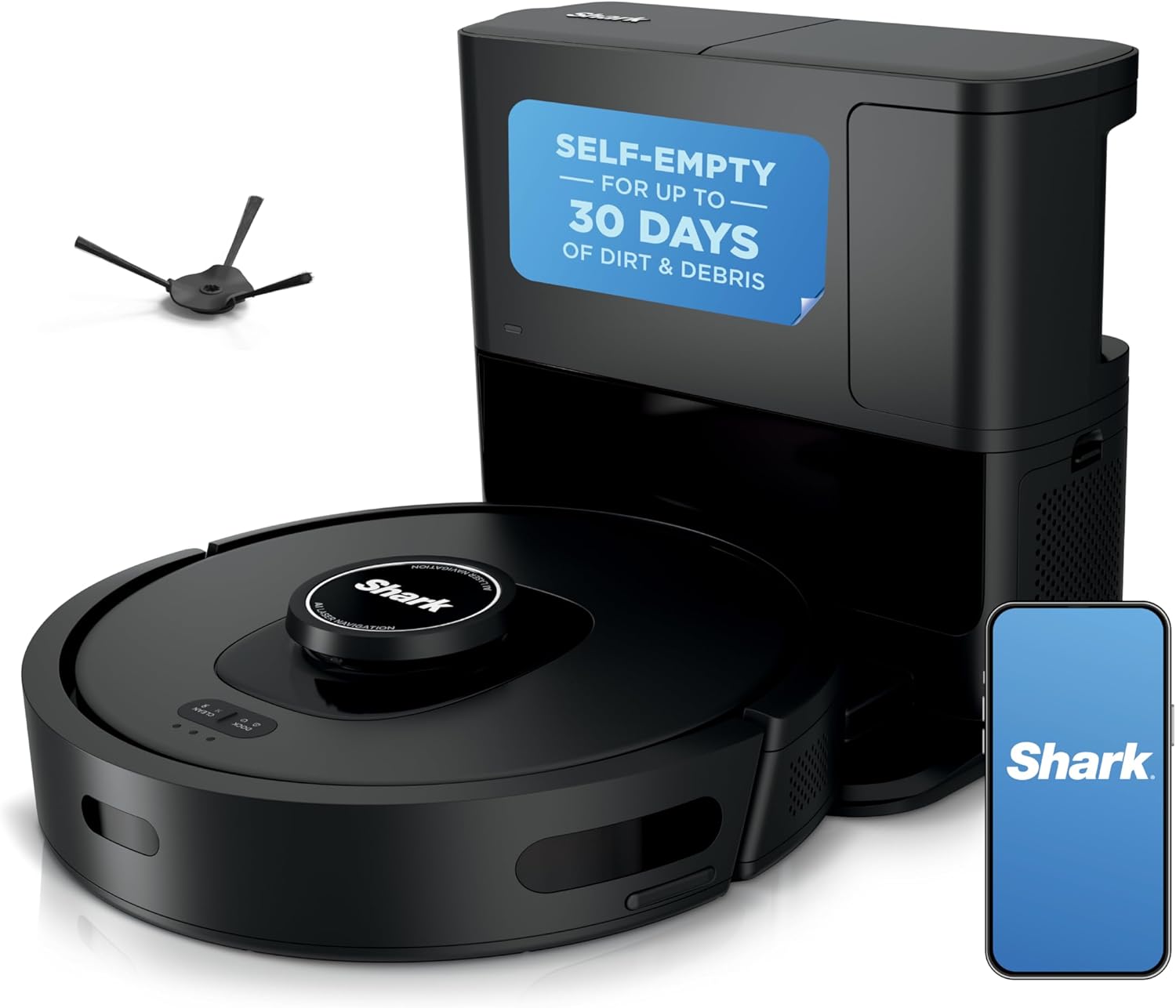
Shark AI Ultra AV2501S
| Battery Life | 120 minutes |
|---|---|
| Filter Type | Foam |
| Compatible Devices | Amazon Alexa, Google Home |
| Other Special Features of the Product | Bagless, Pet Hair Pick Up, Self-Cleaning Brushroll, Self-Emptying |
The Shark AI Ultra AV2501S is a self-emptying robot vacuum built to handle everyday messes and pet hair across carpets and hard floors. It uses 360° LiDAR mapping and Matrix Clean navigation to methodically cover rooms in a grid pattern, taking multiple passes on soiled areas for more thorough pickup, and the app plus voice control make scheduling and spot targeting straightforward. The included bagless self-empty base stores up to 30 days of debris and uses HEPA filtration to trap fine dust and allergens, while a self-cleaning brushroll reduces hair wrap. Runtime is up to 120 minutes with recharge-and-resume for larger homes. Practical limits include a single-speed setting and a foam filter instead of a replaceable multi-stage filter stack, and the unit is relatively heavy compared with simpler robot vacuums. For buyers focused on hands-off dirt disposal and reliable mapping, the AV2501S delivers consistent, low-maintenance cleaning, though power users who need multi-speed suction control or a different filter configuration may want to compare alternatives.
Best for: Buyers who prioritize hands-off maintenance and reliable, mapped whole-home cleaning—especially households with pets that need consistent hair and dust pickup.
Less Ideal for: Shoppers who need adjustable suction settings, advanced filter customization, or a lighter, simpler robot without a large self-emptying base.
- Bagless self-empty base holds up to 30 days of debris for low-maintenance operation
- 360° LiDAR mapping and Matrix Clean navigation provide organized, repeat-pass coverage
- Self-cleaning brushroll reduces hair wrap for better pet hair pickup
- Up to 120 minutes runtime with recharge and resume for larger cleaning jobs
- App control plus Alexa and Google Home voice control for easy scheduling and spot cleaning
- Single-speed suction limits control over cleaning intensity
- Uses a foam filter rather than a multi-stage or replaceable HEPA filter cartridge
Verdict: Choose the Shark AI Ultra if you want a mapped, self-emptying robot that minimizes hands-on maintenance and excels at picking up pet hair.
roborock Q10 S5+

| Maximum Suction | 10,000Pa |
|---|---|
| Capacity | 2.7 liters |
| Battery Life | 150 minutes |
| Filter Type | Washable |
| Control Method | App, Voice |
The roborock Q10 S5+ is a robot vacuum and mop designed to minimize day-to-day maintenance by combining strong suction, smart navigation, and a large self-emptying dock. It maps rooms with LiDAR for efficient routes, supports multi-level mapping and no-go zones in the app, and uses ReactiveTech structured light to detect and avoid obstacles. The VibraRise 2.0 mopping system provides sonic scrubbing and an auto-lift that raises the mop over carpets while ultrasonic carpet detection triggers increased suction when needed. In practical use the unit handles pet hair and mixed floors well, running up to 150 minutes per charge and returning to the 2.7 liter dust bag dock that can hold weeks of debris. The dual anti-tangle brush design reduces hair maintenance, though the unit is moderately loud and some advanced obstacle scenarios may still require occasional manual intervention. Setup and app control are straightforward, and voice assistants are supported for basic commands.
Best for: Buyers who prioritize hands-off cleaning reliability and want a proven self-emptying robot that reduces routine maintenance and handles pet hair and multi-floor homes.
Less Ideal for: Those who need the quietest possible robot for noise-sensitive environments or who prefer a simpler non-mopping robot without multi-level mapping features.
- Powerful 10,000 Pa suction for deep cleaning on carpets and hard floors
- Large 2.7 L self-emptying dock reduces how often you need to empty dust
- LiDAR mapping with multi-level maps and app-controlled no-go zones for reliable navigation
- Sonic VibraRise mopping with auto-lift and ultrasonic carpet detection prevents wetting carpets
- Dual anti-tangle brush system that lowers hair wrap and maintenance frequency
- Noise level is relatively high compared with quieter models
- Some cluttered obstacle layouts may still need manual clearing
Verdict: Choose the Q10 S5+ if you want a powerful, self-emptying robot that keeps floors clean with minimal hands-on maintenance.
Choosing the Right Robot Vacuum with Automatic Dirt Disposal: Key Factors to Consider
Cleaning Performance
Cleaning performance determines how well a robot vacuum removes dust, hair, and debris from different floor types. Pay attention to suction power and brush design because a strong motor alone does not guarantee good pickup without effective agitation and edge cleaning.
For mixed homes with rugs and hard floors, look for multi-surface brush rolls and adjustable suction or cleaning modes. Effective cleaning performance reduces the need for spot vacuuming between runs and helps the disposal base collect more material per emptying cycle.
Disposal Base Capacity and Dust Sealing
The automatic disposal base is the defining feature for this category, so capacity matters for how often you must empty it. Larger bases mean longer intervals between emptying, which improves convenience, especially in homes with pets.
Equally important is how well the base seals during transfer and storage. Good sealing prevents dust from escaping back into the room and keeps allergens contained. Consider bases that use replaceable bags or sealed containers and check manufacturer guidance on how many runs the base holds before service is required.
Navigation, Mapping, and Zone Control
Navigation accuracy affects how consistently a robot covers your floors and avoids getting stuck. Advanced mapping and zone controls let you prioritize high-traffic areas and keep the robot away from fragile objects or rooms you do not want cleaned.
Reliable navigation reduces redundant passes and ensures the disposal base receives representative amounts of debris per session. Look for features like multi-floor mapping, virtual no-go zones, and obstacle detection for a more dependable hands-off experience.
Battery Runtime and Recharge Behavior
Battery life determines the area a single cleaning cycle can cover. If the robot returns to recharge and resumes automatically, larger homes are less likely to require human intervention. Short runtimes can result in incomplete cleans and more frequent recharges, affecting how much dirt accumulates in the base between empties.
Also consider the time the battery needs to recharge and whether the robot can finish an interrupted job after docking. Effective battery and recharge behavior improves overall cleaning continuity and helps the disposal base collect full-session debris.
Maintenance and Consumables
Maintenance demands include cleaning brushes, filters, and emptying any smaller onboard dustbins. Even with an automatic disposal base, the robot itself still needs periodic upkeep. Easy-access components and widely available consumables minimize downtime and recurring cost friction.
Check how filters are replaced, whether dust bags for the base are proprietary, and how complicated brush maintenance is. Lower-maintenance designs save time and keep the disposal system working effectively over months and years.
Smart Features and App Control
Smart features influence convenience and the user experience. Reliable app control for scheduling, custom cleaning modes, and integration with voice assistants simplifies recurring cleaning without manual intervention.
Useful smart features include scheduled zone cleans, do-not-disturb timing, and maintenance alerts that remind you when the base or robot needs attention. Poorly implemented software can reduce the hands-off benefits of an automatic disposal system.
How Automatic Dirt Disposal Works
Automatic dirt disposal systems use a suction cycle to pull accumulated debris from the robot's dustbin into a larger collection container inside the base. The base often contains a motorized fan or cyclone that creates short, powerful bursts of suction to clear the robot bin into a bag or sealed compartment.
Understanding the mechanics helps set expectations for when the base needs to be emptied and how much dust may escape during transfer. Some systems use replaceable bags for easier disposal, while others rely on reusable sealed canisters that you empty into a trash bin.
- Transfer occurs at docking, typically after a cleaning run completes or at scheduled intervals.
- Some bases compress or shake contents to maximize capacity, while others simply collect without compaction.
- Bagged bases are more convenient for allergy control; canister bases avoid recurring bag purchases.
Managing Pet Hair and High-Debris Homes
Homes with shedding pets or frequent tracked-in debris place heavier demands on both the robot and the disposal base. Choose systems with stronger suction and wider brush paths to pick up hair without tangling, and a larger disposal base to avoid constant emptying.
In heavy-debris environments, plan for more frequent filter changes and brush cleaning. You may also want a base with a higher-capacity bag or a visible fill indicator so you know when to service the container.
- Look for tangle-resistant brush designs and high-efficiency filters.
- A base capacity rated for multiple weeks of use is preferable in pet households.
- Consider scheduling more frequent short runs to prevent matting on rugs and reduce clogging.
Noise and Placement Considerations
Automatic disposal bases add a short, loud suction event when the robot docks. That noise level is usually higher than the vacuuming noise of the robot itself, so plan base placement in a less-used area if noise is a concern.
Also consider the physical footprint of the base and any nearby furniture or cords. The base needs open clearance for reliable docking and should be placed on a hard, level surface to prevent tipping or poor alignment.
- Avoid placing bases inside cabinets or behind doors that might obstruct docking.
- Keep the immediate area clear of cables and children's toys.
- If noise matters, place the base in a laundry room, garage, or closet with suitable ventilation if possible.
Allergy Control and Dust Containment
Automatic disposal can help reduce how often you handle dust, which benefits allergy sufferers. The effectiveness depends on how well the base seals during transfer and whether it uses a bag that traps fine particles.
Look for bases and replacement bags that advertise sealed systems or HEPA-level containment for the best reduction in airborne dust during emptying. Even with sealed bases, follow recommended replacement intervals to maintain effective containment.
- Check whether the base uses replaceable bags and the availability of sealed bag designs.
- Regularly replace or wash filters on the robot to minimize recirculation of fine dust.
- Consider a unit with an indicator that signals when the base needs attention to avoid overfilling.
Integrating With Home Routines
To get the most out of an automatic disposal system, integrate the robot into a consistent cleaning schedule. Running the robot during low-traffic times reduces the chance of interruptions and gives the disposal base predictable material to collect.
Pair automatic runs with periodic manual checks of the base and filters. Even hands-off systems benefit from occasional manual inspection to prevent clogs and maintain suction performance over the long term.
- Schedule runs for when the home is least likely to have obstacles.
- Keep extra consumables on hand so you can replace bags and filters promptly.
- Use map-based zone scheduling to focus cleaning where dirt accumulates most.
How We Chose the Best Robot Vacuum with Automatic Dirt Disposal
We focused on practical, measurable factors that matter most to buyers who want a robot vacuum with automatic dirt disposal. Key evaluation criteria included suction and brush system effectiveness for edge-to-edge pickup; the capacity and sealing of the disposal base to minimize user's emptying frequency and dust escape; navigation accuracy and mapping features that determine coverage and missed areas; battery runtime and recharge behavior to understand real household coverage; upkeep needs including filter and brush access and replacement intervals; and smart features that affect scheduling and remote control. We excluded devices without a true automatic disposal base or those that require frequent manual emptying that defeats the hands-off promise. We also filtered out models lacking reliable navigation or with poor dust containment in the base. Our selection prioritized units that balance real-world cleaning performance with maintenance convenience and air-sealing where possible.
Our full evaluation process is outlined in our review methodology.
FAQ
How often will I need to empty the disposal base?
Frequency depends on base capacity and how much debris your home generates. Many bases hold several weeks of typical household debris, but homes with pets or heavy foot traffic may need emptying every one to two weeks.
Do disposal bases use bags or reusable containers?
Both options exist. Bagged bases capture dust in replaceable bags that are convenient for allergy control, while reusable canisters avoid ongoing bag purchases but require you to empty and clean them periodically.
Will the base release a lot of dust when it empties?
A well-designed base minimizes dust escape with sealed transfer and proper filtration. Some short bursts of noise and air movement are normal, so look for bases advertised with sealed systems or improved containment if dust escape is a concern.
Can the robot still work if the disposal base is full?
Most robots can continue to clean until the base or robot bin is full, but some models will prevent new runs if the base reports a full indicator. Regular checks help avoid interrupted cleaning and ensure reliable operation.
Are replacement bags and filters easy to find?
Availability varies by design. Many popular bag and filter types are widely sold, but proprietary sizes differ. Look for units with commonly available consumables or clear guidance on replacement intervals to avoid downtime.
Final Verdict
When choosing a robot vacuum with automatic dirt disposal, prioritize the features that match your household's cleaning load and tolerance for maintenance. Focus on proven cleaning performance, a disposal base with sufficient capacity and good sealing, and navigation that limits missed spots and repeat passes. Accept tradeoffs between base capacity, noise, and ongoing consumable costs. If you want the least hands-on maintenance, favor larger sealed bases and straightforward consumable replacement. Use the scoring criteria above to weigh what matters most for your home and cleaning habits so you can pick with confidence.