
Note: This article contains affiliate links. If you click on these links and make a purchase, we may earn a small commission at no extra cost to you. This helps support our research and content. Read our full affiliate disclosure here.
Picking a safe electric pressure cooker matters because pressure cooking concentrates heat and pressure into a small sealed space. You want predictable performance without surprises, reliable safety mechanisms, and controls that prevent user error. This guide covers seven shortlisted electric pressure cookers chosen for proven safety features, intuitive controls, and consistent cooking results. Below we summarize the attributes that matter and how each unit meets those needs, so you can pick a model that fits your kitchen habits and safety expectations.
Top Picks at a Glance
| Best Overall The best all-around choice for most situations | Ninja HyperHeat Pressure Cooker PC201SP |  |
| Best Quality Built to a higher standard if you want something more solid | Breville Fast Slow Pro BPR700BSS | 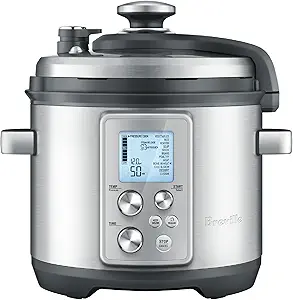 |
| Best Value The sweet spot between price and what you get | COMFEE' 6-Quart Electric Pressure Cooker |  |
| Best Budget The cheapest option that still gets the job done reliably | OLIXIS 10‑In‑1 Electric Pressure Cooker |  |
| Top Rated A top-rated pick with lots of positive feedback | Instant Pot Duo 6-Quart |  |
| Most Popular A crowd favorite that many people choose with confidence | Cosori Pressure Cooker 6QT |  |
| Best Seller A high-volume bestseller chosen again and again | Instant Pot RIO Wide 7.5QT |  |
Ninja HyperHeat Pressure Cooker PC201SP
| Wattage | 1200 watts |
|---|---|
| Capacity | 6 quarts |
| Operation Mode | Both Manual and Automatic |
| Control Method | Push Button |
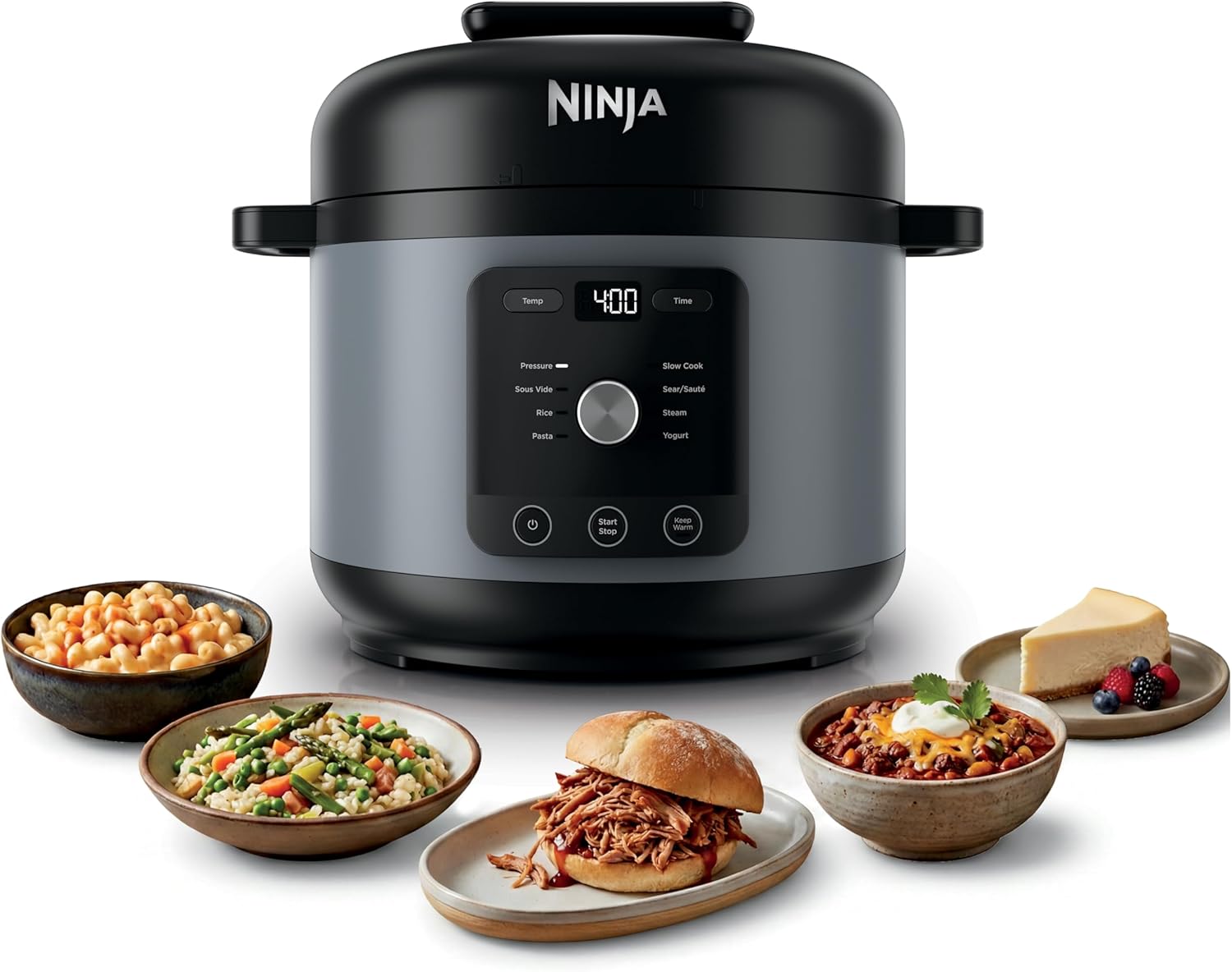
The Ninja HyperHeat 6.5-qt pressure cooker is a versatile all-in-one multi cooker that pressure cooks, slow cooks, steams, sous vides, sears, sautés, makes rice and yogurt, and more using a 1200-watt HyperHeat base. It is typically used for weeknight dinners, batch cooking, and entertaining thanks to a large 9.5-inch cooking surface that lets you brown ingredients directly in the pot and a removable SimpliServe pot that goes from cooker to table. The high wattage and HyperHeat system shorten build and cook times compared with traditional slow cooking, while the PFAS-free ceramic nonstick pot makes cleanup easier and reduces concern about nonstick chemicals. Controls are push-button and support both manual and automatic operation, and the included reversible rack extends cooking options. Trade-offs are that the unit is relatively heavy and sizable for countertop storage, and advanced users who want fully manual, precision programming may find the interface limited compared with some dedicated sous vide or pro appliances.
Best for: Buyers who want a single safe, high-power appliance that handles most kitchen tasks—pressure cooking, searing, steaming, sous vide and more—while simplifying cleanup and serving.
Less Ideal for: Users who need a compact travel-friendly cooker or those seeking a highly configurable pro-level controller for precision cooking.
- High 1200W HyperHeat system for faster pressure build and shorter cook times
- Removable SimpliServe ceramic nonstick pot that is PFAS-free and serves at the table
- 9-in-1 functionality replaces multiple appliances for versatile meal prep
- Wide 9.5-inch cooking surface allows searing and sautéing directly in the pot
- Large and relatively heavy, which takes up considerable countertop or storage space
- Control set is basic push-button which may lack advanced programmability for some users
Verdict: Choose this cooker if you want a safe, high-power multi-function pressure cooker that speeds up cooking and serves straight from a removable, PFAS-free pot.
Breville Fast Slow Pro BPR700BSS

| Capacity | 6 quarts |
|---|---|
| Wattage | 700 watts |
| Control Method | Touch |
| Number of settings | 11 |
| Material | Stainless Steel |
The Breville Fast Slow Pro is a 6-quart multi-cooker that switches automatically between fast pressure and slow cooking modes using top and bottom sensors to manage time, temperature and pressure. It is typically used for one-pot meals, braises, stews and steamed vegetables where you want consistent results without babysitting the cooker. Notable features include one-press program presets (11 pressure and multiple slow-cook settings), an LCD that displays pressure, temperature and countdown, and a hands-free auto steam release that chooses quick, pulse or natural release for you. The removable, dishwasher-safe lid and ceramic-coated bowl make cleanup straightforward and the included steamer basket and rack add cooking flexibility. Practical benefits for buyers are accurate temperature control for repeatable results and several built-in safety measures such as a triple-safe lid construction and a clear pressure indicator. The unit is not the smallest or lightest 6-quart cooker and the feature set is more than basic models, so it may feel like overkill for cooks who only need a simple slow cooker.
Best for: Buyers who prioritize reliable, repeatable performance and built-in safety in an electric multi-cooker and want precise control for pressure and slow cooking.
Less Ideal for: People who only need a simple, lightweight slow cooker or who prefer a minimal, entry-level appliance with fewer controls.
- Accurate dual-sensor control for consistent temperature and pressure
- Hands-free auto steam release reduces user exposure to hot steam
- Removable dishwasher-safe lid and ceramic-coated bowl simplify cleaning
- Detailed LCD feedback with pressure, temperature and countdown
- Includes stainless steamer basket and rack for versatile cooking
- Relatively heavy compared with basic multi-cookers
- Feature-rich interface can be more complex for casual users
Verdict: Choose this cooker if you want a safety-focused, performance-oriented multi-cooker that delivers consistent pressure and slow-cooking results.
COMFEE' 6-Quart Electric Pressure Cooker

| Wattage | 1000 |
|---|---|
| Control Method | Touch |
| Operation Mode | Automatic |
| Cooking Program | Cook, Keep Warm, Reheat, Simmer, Steam |
| Capacity | 6 quarts |
This COMFEE' 6-quart electric pressure cooker is a multiuse countertop cooker designed to replace several appliances by combining pressure cooking, slow cooking, rice cooking, steaming, sautéing and yogurt making into one unit. It is used by selecting one of the 14 presets or manual controls on the touch panel, setting a delay timer when needed, and letting the cooker manage pressure and temperature automatically. Notable features include a 24-hour delay timer, a nonstick inner pot, and a digital control interface that simplifies common tasks like soups, beans and rice. The cooker emphasizes safety with multiple protections including overheat protection, an auto pressure release and a lid-safety lock system, which makes it suitable for busy households or cooks who prefer hands-off meals. Limitations are the aluminum construction rather than stainless steel inner materials and the 6-quart capacity that may be small for very large families, but for everyday meal prep it provides a convenient, programmable alternative to stovetop pressure cooking.
Best for: Buyers who want a safe, all-in-one multicooker to streamline weekday meal prep and rely on presets and timers to handle cooking with minimal fuss.
Less Ideal for: If you frequently cook very large batches or prefer stainless steel inner pots for searing and durability, a larger or different construction may be a better choice.
- 14 programmable presets simplify cooking a wide range of dishes
- 10 safety features including lid-safety lock, overheat protection, and auto pressure release
- 24-hour delay timer lets you schedule meals in advance
- Touch digital controls make operation straightforward and repeatable
- Inner pot is aluminum rather than stainless steel which may concern longevity or high-heat use
- 6-quart capacity may be small for very large households or batch cooking
Verdict: Choose this cooker if you want a compact, programmable multicooker with strong safety features that simplifies everyday meals.
OLIXIS 10‑In‑1 Electric Pressure Cooker

| Capacity | 3 quarts |
|---|---|
| Wattage | 700 watts |
| Controller Type | Digital |
| Operation Mode | Automatic |
The OLIXIS 10‑In‑1 Electric Pressure Cooker is a small, stainless steel multi‑cooker aimed at everyday meals for one to two people. It offers ten smart presets—Rice, Meat, Stew, Yogurt, Canning, Steam and more—so you can cook everything from grains and soups to pressure‑steamed vegetables with one‑touch controls. The 3‑quart capacity and 700W power make it quick for small batches, and the maker claims up to 70% faster cooking versus conventional methods. Practical touches include a ceramic nonstick inner pot for easier release and cleaning, a 24‑hour delay start plus automatic keep‑warm, and triple safety protections such as pressure release valves and heat sensors to reduce risk during use. The stainless steel exterior is durable and resists scratches, but the smaller capacity limits this to singles, couples, or side‑dish prep rather than family meals. If you need a compact, programmable cooker focused on convenience and safety, this handles basic pressure cooking reliably, though heavy users may prefer a larger model with higher wattage and capacity.
Best for: Buyers looking for an affordable, compact electric pressure cooker that prioritizes safety and easy preset cooking for everyday single or two‑person meals.
Less Ideal for: Those who regularly cook for families, batch‑cook large portions, or need a higher‑power unit for faster pressure cycles should consider a larger model.
- Multiple one‑touch presets for a range of dishes
- Compact 3‑quart size suitable for small households
- Ceramic nonstick inner pot eases cleanup and prevents sticking
- 24‑hour delay start and automatic keep‑warm for flexible meal timing
- Triple integrated safety features including pressure release valves and sensors
- 3‑quart capacity is too small for large families or big batches
- 700W power limits speed and may extend pressure‑build times compared with higher‑watt models
Verdict: A budget‑friendly, safety‑focused 3‑quart multi‑cooker that delivers easy preset pressure cooking for singles or couples.
Instant Pot Duo 6-Quart

| Capacity | 5.68 liters |
|---|---|
| Wattage | 1000 watts |
| Control Method | Touch |
| Operation Mode | Automatic |
| Voltage | 120 |
The Instant Pot Duo 6-Quart is a versatile, safety-minded multicooker that replaces several countertop appliances with one stainless steel unit. It is used for quick pressure-cooked meals, slow cooking, sautéing before pressure or slow cycles, steaming vegetables, cooking rice, and making yogurt, with a keep-warm function for finished dishes. Notable features include 13 one-touch smart programs, an Easy-Release steam switch, a pro-grade 18/8 stainless steel inner pot with tri-ply bottom for even searing, and over 10 safety mechanisms including an easy-seal lid lock and overheat protection. In practice it speeds many braises and beans up to 70% versus slow cooking, simplifies one-pot meal prep for families, and cleans up easily because the lid and inner pot are dishwasher safe. The trade-offs are that it is a generalist rather than a specialist for any single function and the control panel is button-based with limited customization compared with some higher-end models, but for dependable, everyday pressure cooking the Duo delivers a solid, safe experience.
Best for: Buyers who prioritize a reliable, safety-focused all-in-one cooker for everyday family meals and consistent, worry-free pressure cooking.
Less Ideal for: Users who need highly customizable cooking controls or the absolute best single-function appliance for tasks like professional sous-vide or high-end baking.
- Multi-function 7-in-1 cooker replaces several appliances for space and prep savings
- Pro-grade stainless steel inner pot with tri-ply bottom supports searing and even heating
- Easy-Release steam switch and over 10 built-in safety mechanisms for safe pressure use
- Dishwasher-safe lid and inner pot make cleanup straightforward
- Limited advanced customization on the button-based control panel compared with premium models
- General-purpose design means some specialized functions are less refined than dedicated appliances
Verdict: Choose the Instant Pot Duo if you want a proven, safety-focused multicooker that reliably handles everyday pressure cooking and replaces several kitchen appliances.
Cosori Pressure Cooker 6QT
| Capacity | 6 quarts |
|---|---|
| Wattage | 1100 watts |
| Control Method | Touch |
| Special Features | 13-in-1 Cooking Presets, 9-in-1 Cooking Functions |
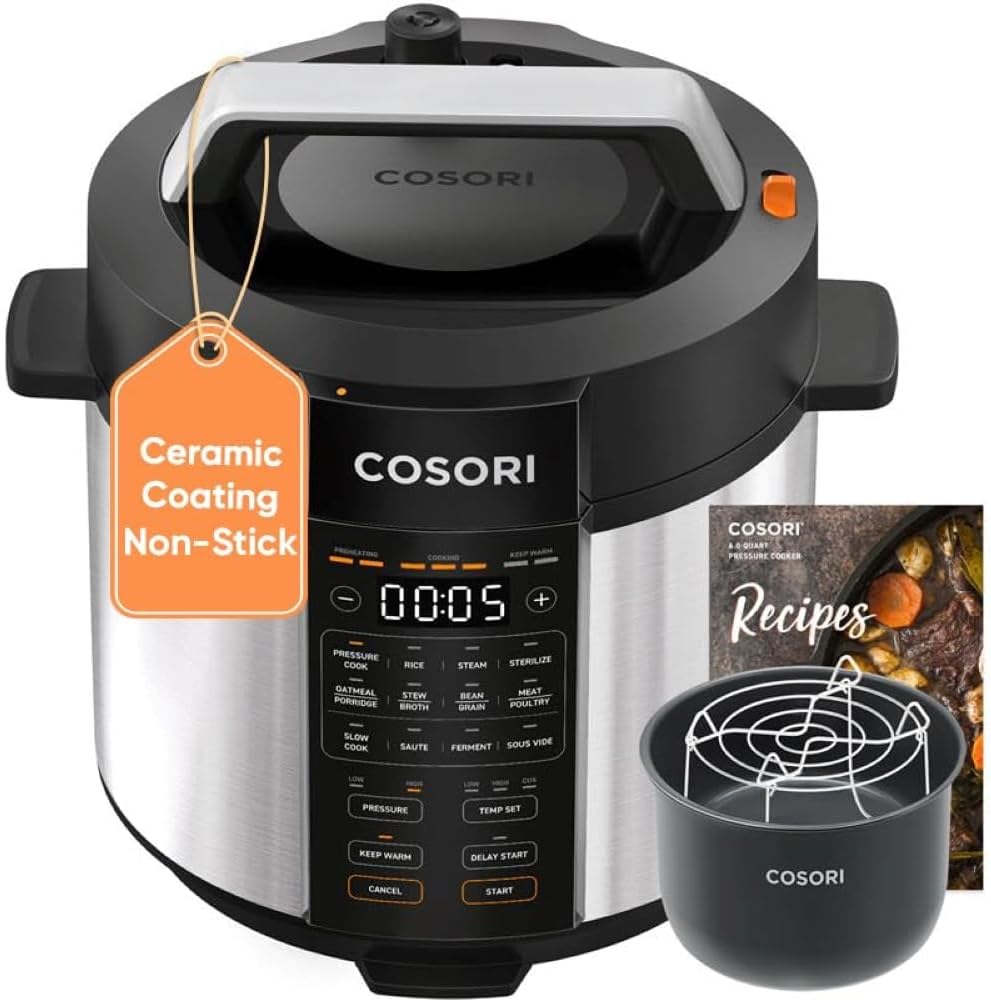
The Cosori 6QT pressure cooker is a versatile electric multi-cooker that handles pressure cooking, rice, steaming, slow cooking, sautéing, sous vide, fermenting, and more through its preset programs. It is typically used to speed up braises, tenderize meats, cook rice faster than a rice cooker, and finish stews or soups with one pot. Notable features include 13 cooking presets, nine core cooking functions, a touchscreen control panel with manual physical buttons, an 1100 W heater for faster heat-up, and a BPA-free ceramic-coated inner pot that is dishwasher-safe. Cosori emphasizes safer venting with a seal/vent button positioned away from the steam release and a backward-angled steam path plus multiple built-in safety protections that reduce the risk of accidental burns. The stainless steel housing and widened pot gap make cleanup and maintenance easier, though the unit is relatively heavy compared with simpler cookers and the many presets mean learning which program suits specific recipes. For buyers prioritizing safety features and straightforward presets, this model delivers strong performance with practical convenience.
Best for: Buyers who want a safety-focused, all-in-one cooker with clear presets and protections to confidently replace multiple appliances and reduce hands-on monitoring.
Less Ideal for: People who need a very lightweight, ultra-compact cooker or who prefer a bare-bones unit with only manual controls and no preset programs.
- Multiple presets and functions let you replace several single-purpose appliances
- Ceramic nonstick inner pot is dishwasher-safe and BPA-free for food contact
- Safer venting design and built-in overheat and lid protections reduce burn risk
- 1100 W power shortens heat-up and overall cook times compared with lower-watt models
- Heavier and larger footprint than basic electric pressure cookers
- Many presets can require trial to learn optimal settings for specific dishes
Verdict: Choose this Cosori if you want a safety-minded multi-cooker with plentiful presets and a dishwasher-safe ceramic inner pot to simplify everyday cooking.
Instant Pot RIO Wide 7.5QT

| Capacity | 7.5 quarts |
|---|---|
| Wattage | 1000 watts |
| Control Method | Touch |
| Operation Mode | Automatic |
The Instant Pot RIO Wide is a family-sized 7.5-quart electric multi-cooker built to speed up everyday cooking while keeping safety front and center. It offers seven core cooking functions and 13 one-touch smart programs so you can pressure cook, slow cook, sauté, steam, make rice, and even make yogurt with minimal fuss. The wide tri-ply stainless steel inner pot gives a larger searing area for browning and the outer lid with an Easy-Release steam system and multiple built-in safety mechanisms reduces the risk of accidents during use. Touch controls and status lights make it straightforward to operate and monitor, and the dishwasher-safe pot and lid simplify cleanup after big meals. Trade-offs are standard for a large electric pressure cooker: it is relatively heavy and takes counter space, and advanced users may find some controls less granular than on pro-style cookers. For cautious buyers who prioritize clear safety features and dependable, repeatable results, the RIO Wide delivers a reassuring, everyday cooking solution.
Best for: Buyers who want a reliable, family-sized multi-cooker with clear safety features and simple programmable controls for everyday meals and batch cooking.
Less Ideal for: Users seeking a lightweight, ultra-compact cooker for small kitchens or cooks who need professional-level manual control and fine-tuning.
- Large 7.5 quart capacity suitable for family meals and batch cooking
- Multiple built-in safety mechanisms including easy-seal lid lock and overheat protection
- Wide tri-ply stainless steel pot provides more searing area and stays in place for sautéing
- 13 one-touch programs and status lights simplify cooking and monitoring
- Dishwasher-safe inner pot and lid make cleanup straightforward
- Relatively heavy and requires significant counter or storage space
- Control scheme favors one-touch programs over highly granular manual adjustments
Verdict: Choose the Instant Pot RIO Wide if you want a family-capacity multi-cooker with strong safety features and easy one-touch programs for worry-free everyday cooking.
Choosing the Right Safe Electric Pressure Cooker: Key Factors to Consider
Safety Systems
Look for multiple, redundant safety systems rather than a single fail-safe. Mechanical pressure-relief valves, automatic pressure sensors, and lid-locking mechanisms each play a role in preventing accidental opening under pressure. A mechanically independent pressure release is important because electronic controls can fail.
Clear, labeled release paths and a visible or tactile lock indicator reduce the chance of user error. Consider whether the design routes steam away from handles and counters to avoid scalds. Finally, check for automatic overheat cutoff that stops heating if the unit detects a dangerously high temperature or loss of liquid, which are common causes of pressure accidents.
Control Simplicity
Simple, intuitive controls help prevent misuse. Preset programs that are clearly labeled for common foods reduce guesswork, but manual pressure and time adjustments should also be accessible for experienced cooks. A readable display and straightforward button layout matter when you are multitasking in the kitchen.
Avoid controls that hide critical functions behind long multi-press sequences. Logical feedback, such as clear status messages for 'pressurizing', 'cooking', and 'pressure released', helps you understand what the cooker is doing and when it is safe to open.
Pressure Management
Consistent and accurate pressure maintenance affects both safety and cooking results. A cooker that oscillates widely between pressure levels can trigger unnecessary venting or extend cook times. Look for units with precise pressure regulation and clear high/low pressure options for different recipes.
Also consider how the pressure is released. Natural release is gentler and safer for some dishes, while quick-release mechanisms are useful but must channel steam safely away from users. A well-designed venting path and a secure, easy-to-use release control lower the risk of scald injuries.
Build Materials And Seal Quality
The inner pot material and the quality of sealing gaskets affect durability and safety. Stainless steel or high-quality nonstick linings resist warping and corrosion from repeated high-heat cycles. Seals and gaskets should be easy to remove and inspect for wear because a compromised seal can cause pressure loss or uneven pressurization.
Metal housings and sturdy lid mechanisms typically offer better long-term alignment of sealing parts compared with flimsy plastics. Consider replacement-part availability for gaskets and valves since routine maintenance extends safe operation.
Ease Of Cleaning And Maintenance
A design that disassembles for cleaning reduces trapped food and residue that can damage seals or block vents. Dishwasher-safe inner pots, removable sealing rings, and vent components that can be rinsed or soaked simplify upkeep. Regular maintenance keeps safety mechanisms functioning correctly.
Also factor in how easy it is to inspect pressure valves and gaskets for wear or blockage. Hard-to-access components discourage routine checks and increase the chance of unnoticed failures.
How Pressure Safety Mechanisms Work
Electric pressure cookers combine heat, sealed vessels, and pressure regulation to speed cooking. Safety systems are layered to manage failures: a primary pressure regulator controls cooking pressure, secondary mechanical relief vents open if pressure becomes excessive, and lid locks prevent opening until pressure drops to a safe level.
Understanding these layers helps you evaluate whether a model is conservative or performance-focused. Conservative designs may take longer to reach operating pressure but provide clearer safety margins. Performance-focused units can be fine if they also include redundant mechanical safeguards and clear user guidance.
- Primary regulator maintains target cooking pressure
- Secondary relief valve activates if pressure rises unexpectedly
- Lid lock prevents opening under pressure
- Overheat cutoff protects against dry-boil scenarios
Safe Venting And Kitchen Placement
Venting design affects where steam exits and how hot surfaces behave during release. Look for steam paths that direct hot vapor away from the user and sensitive surfaces. Avoid placing the cooker under low cabinets unless the venting path is clearly downward or away from overhead woodwork.
Also plan kitchen placement so you have space to operate the release lever without reaching over hot components. A small clearance behind for steam is usually sufficient, but the area above and in front of the cooker should be free from shelving or flammable items.
- Position unit away from low cabinets and wooden shelving
- Ensure clear path for steam release to avoid contact with skin
- Keep handles and control panels reachable without leaning over the vent
Maintaining Seals And Valves
Regular inspection and cleaning of the sealing ring and pressure valves are essential safety steps. Food debris or grease can prevent a proper seal or clog a vent, which may cause erratic pressure behavior. Follow a routine of removing and washing seals after heavy use and visually checking the valve path for blockage.
Replace worn or misshapen gaskets promptly and keep spare rings on hand if you cook frequently. Some gaskets absorb odors over time, so swapping them out preserves both safety and flavor integrity.
- Remove and clean the sealing ring regularly
- Inspect and clean pressure valves after each use
- Replace gasket at first sign of cracking or deformation
Choosing Controls For Your Cooking Style
If you prefer hands-off, set-and-forget cooking, favor models with clear presets for grains, beans, meat, and vegetables. If you like tweaking pressure or time, make sure manual adjustments are easy and that the display reports real-time status. Some cooks prefer a tactile knob for quick changes, while others value a simple button layout with minimal steps.
Accessibility matters too. Large, high-contrast labels and audible confirmations reduce mistakes when cooking with distractions or in low light.
- Pick presets that match what you cook most often
- Ensure manual controls are simple and well-labeled
- Check for readable display and audible status signals
Common Safety Mistakes To Avoid
Do not try to force the lid open until the cooker indicates pressure is fully released. Forcing a locked lid risks sudden steam exposure and scalding. Also avoid overfilling, especially with foods that expand or foam, because that can block the vent and trigger unsafe pressure behavior.
Another common error is neglecting to maintain seals and vents. Skipping routine cleaning makes malfunctions more likely. Finally, do not substitute non-approved sealing parts; always use manufacturer-specified rings and valves to preserve designed safety tolerances.
- Never force-open a locked lid
- Avoid overfilling with foam-prone foods
- Perform routine maintenance to keep vents clear
How We Chose the Best Safe Electric Pressure Cooker
We focused on safety-first criteria and real-world usability when selecting the seven pressure cookers on this list. Our primary filters included physical safety systems, such as multiple redundant pressure-release mechanisms and locked lids; electronic protections like overheat cutoff and pressure sensors; and control clarity, meaning readable displays and straightforward pressure presets. We also evaluated build quality and materials for pressure retention and longevity, plus performance consistency across common recipes. Ease of cleaning and maintenance received weight because trapped food or degraded seals compromise safety over time. Noise and steam-control design were considered where they affect user comfort and safe venting. Units were excluded if they lacked clear, redundant safety designs, absence of a pressure-release mechanism, or poor user controls that could increase misuse risk. We prioritized models offering concrete, verifiable safety features and good documentation for safe operation. These criteria align with the scoring labels used in each product card to help you compare safety, controls, and upkeep at a glance.
Our full evaluation process is outlined in our review methodology.
FAQ
Are electric pressure cookers safe to leave unattended?
Often they are safe to leave unattended during the cooking cycle because modern models monitor pressure and temperature and shut off or hold when the program finishes. However, you should not leave them unattended if you are experimenting with nonstandard recipes or if the unit shows signs of malfunction.
How do I know when it is safe to open the lid?
Wait until the pressure indicator shows the unit has fully depressurized and any locking mechanism releases. Many cookers have visible or audible cues that signal it is safe to open. If in doubt, use a natural-release period or follow the specified wait times in the manual.
What maintenance keeps a pressure cooker safe over time?
Regularly clean the sealing ring, lid, and vent paths, and inspect gaskets for wear. Test mechanical valves for free movement and replace any parts that are cracked, warped, or stiff. Routine checks reduce the risk of pressure loss or blocked vents.
Is natural release safer than quick release?
Natural release is generally gentler because pressure declines slowly and reduces the chance of hot liquid sputtering out. Quick release is safe when the vent path directs steam away from people and delicate surfaces, but it requires caution to avoid scalds.
Can I use the pressure cooker on a timer or remote schedule?
Some units have delayed-start features, but delayed starts can be risky with perishable ingredients because food sits at unsafe temperatures before pressure begins. Use delayed-start functions only with appropriate recipes and when the manual explicitly allows it.
Final Verdict
When choosing a safe electric pressure cooker, prioritize redundant safety systems, clear controls, and easy maintenance. Tradeoffs are common: compact, high-performance units may be faster but should not sacrifice mechanical safeguards or easy-to-clean designs. Focus on reliable pressure management, visible safety indicators, and materials that make routine upkeep straightforward. Select the unit whose safety features and control style match how you cook, and maintain seals and valves regularly to keep the cooker operating safely over time.