
Note: This article contains affiliate links. If you click on these links and make a purchase, we may earn a small commission at no extra cost to you. This helps support our research and content. Read our full affiliate disclosure here.
Choosing the right safe Indian stainless steel pressure cooker matters because a pressure cooker is both a time-saver and a safety-critical kitchen tool. You want a model that seals well, vents predictably, and stands up to daily use without metal fatigue or malfunction. This guide highlights a shortlist of top-performing options that balance robust safety engineering with long-term durability. We evaluated features like locking lids, pressure indicators, multiple safety valves, and thick stainless construction to assemble our top picks. Read on for a concise look at what makes a pressure cooker safe and dependable, plus practical considerations to help you pick the right one for your kitchen.
Top Picks at a Glance
| Best Overall The best all-around choice for most situations | Hawkins 5 Litre Pressure Cooker HSS50 |  |
| Best Quality Built to a higher standard if you want something more solid | KOBACH 8QT Stainless Steel Pressure Cooker |  |
| Best Value The sweet spot between price and what you get | Prestige Alpha Deluxe 3.5L |  |
| Best Budget The cheapest option that still gets the job done reliably | Pigeon 3 Quart Pressure Cooker |  |
| Top Rated A top-rated pick with lots of positive feedback | T-fal Clipso 6.3 Quart Pressure Cooker |  |
| Best Seller A high-volume bestseller chosen again and again | Presto 6-Quart Stainless Steel Pressure Cooker |  |
Hawkins 5 Litre Pressure Cooker HSS50

| Capacity | 5 liters |
|---|---|
| Material | Stainless steel (AISI 304) |
| Closure Type | Inner Lid |
| Special Features | Manual |
This Hawkins 5 Litre pressure cooker is a straightforward stainless steel model intended for family cooking and everyday Indian recipes. It uses a manual inner lid design with a pressure regulator and a heavy sandwich bottom that promotes even heat distribution and resists bulging, which helps with consistent cooking and safer stove-top use. The body and lid are made from 18Cr/8Ni AISI 304 food-grade stainless steel, so it resists corrosion and is easy to keep hygienic. You can fry lightly before pressure cooking thanks to the sturdy base, and the improved pressure regulator aims to conserve fuel by maintaining steady pressure. It is hand-controlled and lacks digital controls or electronic safety features, so operation depends on user attention and traditional pressure-cooker technique. For cooks who prefer a simple, durable, factory-quality stainless steel cooker built for typical Indian stovetop use, this model delivers reliable performance, though it does not include modern convenience features like multiple pressure settings or automated timers.
Best for: Buyers who want a durable, factory-quality stainless steel pressure cooker for regular family meals and traditional stovetop Indian cooking and who value longevity and simple, proven design.
Less Ideal for: If you want programmable controls, multiple pressure levels, or electric convenience features, this manual stovetop model is not the best choice.
- Food-grade AISI 304 stainless steel body and lid resist corrosion and are hygienic
- Extra-thick sandwich bottom provides even heating and prevents bulging
- Inner lid construction with improved pressure regulator for stable pressure and fuel savings
- Suitable for light and deep frying before pressure cooking
- Manual, hand-controlled operation without electronic safety or timer features
- No multiple pressure settings for delicate or specialized recipes
Verdict: A solid, family-sized stainless steel stovetop pressure cooker that prioritizes durable, hygienic materials and even heating for dependable everyday Indian cooking.
KOBACH 8QT Stainless Steel Pressure Cooker

| Capacity | 8 quarts |
|---|---|
| Material | Stainless steel |
| Control Method | Touch |
| Closure Type | Locking lid |
The KOBACH 8QT stainless steel pressure cooker is a stovetop cooker built for faster, larger-batch cooking while prioritizing safety and convenience. It uses a composite induction-capable base and thickened stainless steel body to deliver even heat for soups, stews, rice, and tougher cuts that benefit from high-pressure braising. The lid locks with a toothless, one-handed press and stands upright on the counter, while interior water level markings help avoid overfilling. Safety is multi-layered: a preset pressure relief valve, swing-type steam exhaust, automatic locking valve, and a backup safety valve work together to manage excess pressure and reduce the chance of clogging or bursts. Practical benefits include significant time savings, durable stainless construction that resists sticking when used with adequate liquid, and dishwasher-safe components for easier cleanup. Limitations to note are that the unit is manual with a mechanical knob rather than electronic controls, requires attention to fill limits to prevent overflow with high-starch foods, and lacks an included secondary insert or steaming rack for specialized tasks.
Best for: Buyers who prioritize fast, reliable stovetop performance and layered safety when cooking for families or dinner parties will appreciate this cooker.
Less Ideal for: If you need programmable timing, electric pressure cooking, or a compact model for single-person meals, this large manual stovetop unit is not the best fit.
- Large 8‑quart capacity suitable for family meals and gatherings
- Compatible with gas, induction, and ceramic stovetops via composite bottom
- Multiple safety mechanisms including relief valve, swing exhaust, and backup safety valve
- One-handed toothless lid that locks and stands upright for hygienic handling
- Interior water level markers for accurate filling and consistent results
- Manual operation with mechanical controls rather than programmable or digital settings
- No included rack or accessories for steaming or canning tasks
Verdict: Choose this pressure cooker if you want a roomy, stainless steel stovetop cooker that speeds up family-size meals while offering multiple safety features.
Prestige Alpha Deluxe 3.5L

| Capacity | 3.5 liters |
|---|---|
| Material | Stainless steel |
| Closure Type | Outer Lid |
| Special Features | Manual |
The Prestige Alpha Deluxe 3.5L is a compact stainless steel stovetop pressure cooker designed for everyday Indian cooking. It uses Prestige's Alpha base for even heat distribution on induction and gas, and a controlled gasket-release system plus a visible pressure indicator for safer operation. The unit is manually operated with touch-style controls and an outer lid closure, and it comes with comfortable side handles for lifting and pouring. In practice it is well suited to cooking dals, rice, and vegetable curries quickly while retaining moisture and flavor, and the stainless construction makes it durable and easy to clean. Because it is a manual model there are no electronic programs, so timing and heat management are left to the cook, which experienced users will appreciate for flexibility but new users should learn safe venting steps. At 3.5 liters it fits small to medium households and the included gasket is replaceable if needed. For buyers prioritizing a simple, factory-quality stainless pressure cooker that works on induction, this model delivers consistent performance without extra frills.
Best for: Buyers who want a durable, no-frills stainless steel pressure cooker that performs reliably on induction and gas and who prefer manual control over automated programs.
Less Ideal for: If you need larger capacity for big families or want digital controls and preset programs, look at different models with bigger volumes or electronic features.
- Induction-capable Alpha base for even heat distribution
- Stainless steel construction for durability and easy cleaning
- Visible pressure indicator and controlled gasket-release system for safer venting
- Compact 3.5 liter capacity suitable for small to medium households
- Manual operation with no electronic presets or timers
- Limited to a single 3.5L size which may be small for larger families
Verdict: A compact, factory-quality stainless steel pressure cooker that delivers safe, reliable stovetop performance for practical everyday Indian cooking.
Pigeon 3 Quart Pressure Cooker

| Capacity | 3 liters |
|---|---|
| Material | Stainless steel |
| Special Features | Gas Stovetop Compatible, Induction Compatible Base, Manual |
| Closure Type | Inner Lid, Outer Lid |
The Pigeon 3 Quart Pressure Cooker is a compact stainless steel stovetop cooker designed for everyday Indian-style cooking. It uses an induction-compatible base and a thick multi-layer bottom to distribute heat evenly, so dals, rice, and stews cook faster and with less fuel. The unit features an inner and outer lid closure system, a manual hand control and touch control method for basic operation, and comfortable handles for handling on and off the hob. Practical benefits include quicker cooking times, energy savings compared with open-pot cooking, and a size that fits small families or single‑household meal prep. Because it is manual and stainless steel, cleaning is straightforward and the cooker works across gas, induction, ceramic, and solid plate cooktops. Trade-offs are its modest 3‑liter capacity which limits batch cooking, and the lack of advanced safety electronics or digital timers found on more expensive models.
Best for: Buyers seeking an affordable, no-frills stainless steel pressure cooker for daily Indian cooking who prioritize reliable stovetop performance and easy maintenance.
Less Ideal for: Those who regularly cook for large groups, need larger batch capacity, or want digital timers and advanced safety automation should consider larger or feature-rich alternatives.
- Induction-compatible base for use on modern cooktops
- Thick multi-layer base promotes even heat distribution
- Simple manual controls that are easy to operate
- Stainless steel construction is durable and easy to clean
- 3‑liter capacity may be small for larger families
- No digital controls or advanced safety features
Verdict: A budget-friendly, induction-ready stainless steel pressure cooker that delivers reliable stovetop performance for everyday Indian meals.
T-fal Clipso 6.3 Quart Pressure Cooker

| Capacity | 6.3 quarts |
|---|---|
| Material | Stainless steel |
| Compatible Cooktops | All stovetops including induction |
| Control Method | Touch |
| Operation Mode | Manual |
The T-fal Clipso 6.3 Quart is a stainless-steel stovetop pressure cooker built for everyday family meals and batch cooking. It uses pressurized steam to cut cooking times substantially, and the encapsulated base promises even heat distribution on all cooktops including induction. The one-hand opening system and secure locking mechanism make it straightforward to operate while the adjustable steam-release valve and included steam basket add control and versatility for vegetables, rice, and stews. Its dishwasher-safe pot (with removable gasket and valve) and the supplied recipe booklet simplify cleanup and getting started. For buyers prioritizing safety and durability, the Clipso includes a multi-point safety system and ergonomic side handles for secure handling. Expect a bit of weight from the all-stainless construction, and users who prefer ultra-light cookware or electric, set-and-forget multicookers may miss auto-programmed presets, since this model is manual and touch-controlled for pressure settings. The cooker is most useful for cooks who want fast, reliable stovetop pressure cooking with robust build quality.
Best for: Buyers who want a sturdily built, safety-focused stovetop pressure cooker for frequent family meals and meal prepping where reliable hardware and manual control matter most.
Less Ideal for: People seeking a lightweight or electric multicooker with automatic cooking programs or users who need a very compact, travel-friendly pot.
- Durable stainless-steel construction suitable for induction and all stovetops
- One-hand opening and secure locking system for safer operation
- Adjustable steam-release valve and included steam basket for cooking control and versatility
- Dishwasher-safe pot (with removable gasket/valve) simplifies cleanup
- Manual operation without electronic presets may not suit users who want automated programs
- Heavier stainless-steel build is less portable than lighter materials
Verdict: Choose the T-fal Clipso 6.3 Qt when you want a rugged, safety-minded stainless-steel pressure cooker that reliably speeds up stovetop meals.
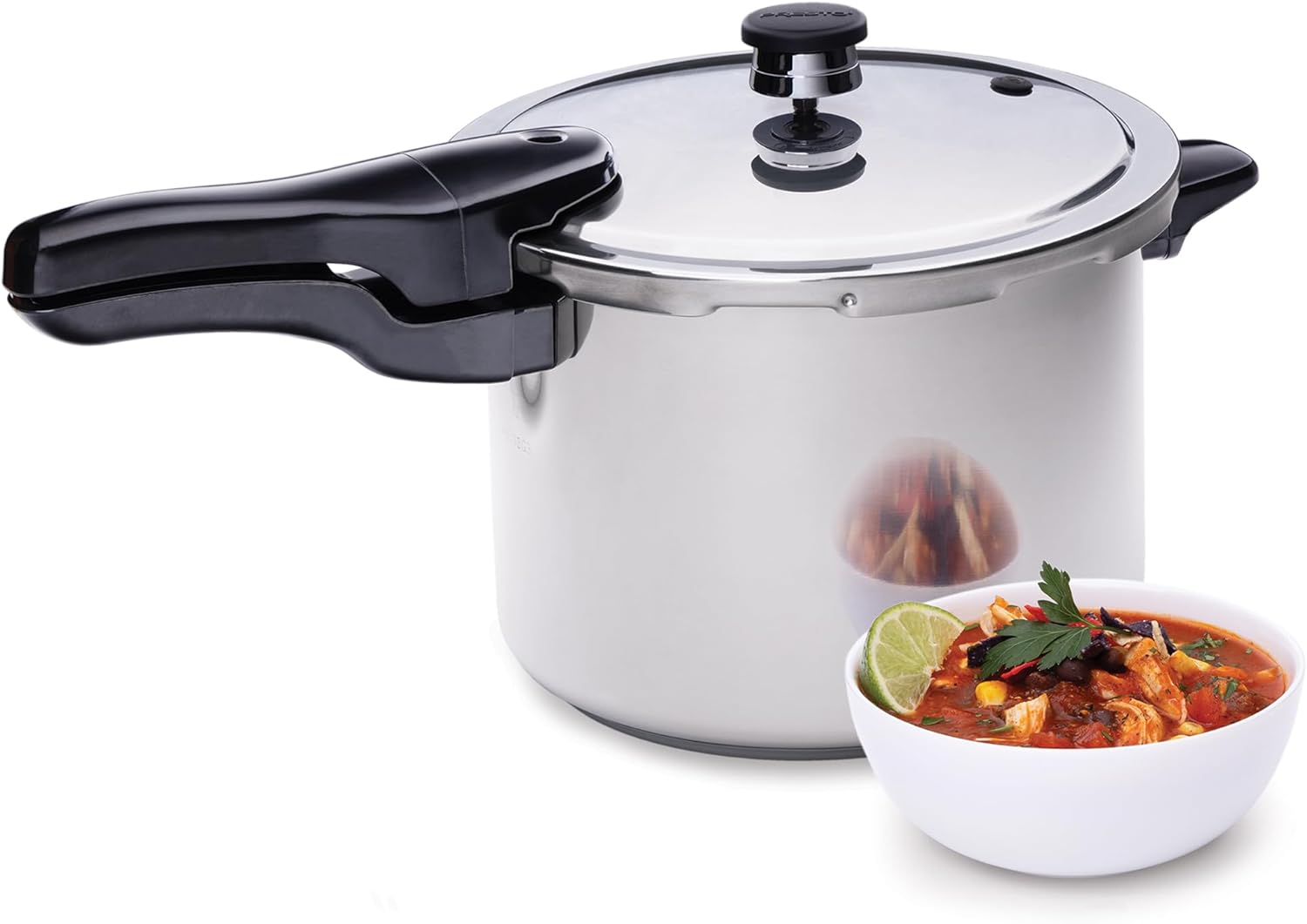
Presto 6-Quart Stainless Steel Pressure Cooker
| Capacity | 6 quarts |
|---|---|
| Material | Stainless Steel |
| Special Features | Induction compatible base, Locking lid, Dishwasher safe |
| Wattage | 1000 watts |
| Closure Type | Inner Lid |
The Presto 6-quart stainless steel pressure cooker is a classic stovetop model built for everyday cooking tasks that benefit from pressure—braises, stews, dals, and steamed vegetables come together much faster than conventional methods. It uses a pressure regulator to maintain cooking pressure automatically and a locking cover with a pop-up indicator so the lid cannot be opened while pressurized. The tri-clad base (aluminum core between stainless steel) promotes even heating on gas, electric and induction ranges, and the included rack lets you cook multiple items without mixing flavors. Controls are simple and mostly manual, so it is straightforward to use once you read the included recipe/instruction booklet. Parts like the sealing ring, overpressure plug, and vent are removable for cleaning and the pot body is dishwasher-safe. Be aware this is a traditional stovetop cooker rather than an electric multicooker, so timing and heat management are manual and may need attention on very high-output ranges. For cooks who prioritize reliable mechanical safety and fast results, this model is a dependable choice.
Best for: Buyers who want a proven, safety-focused stovetop pressure cooker for regular family meals and prefer simple mechanical controls over electronic interfaces.
Less Ideal for: Those who need programmable, hands-off electric pressure cooking or want smart app features and preset menus should consider electric multicookers instead.
- Automatic pressure regulator keeps cooking pressure steady without monitoring.
- Tri-clad base for even heat distribution on gas, electric, and induction stovetops.
- Locking lid with cover-lock indicator enhances safety during use.
- Removable safety parts and dishwasher-safe body simplify cleaning.
- Includes a rack and a 64-page instruction/recipe booklet to help beginners.
- Requires manual heat control and timing since it is a stovetop model, not an electric multicooker.
- Some small removable parts require hand washing and periodic inspection for wear.
Verdict: A no-nonsense, safety-minded stovetop pressure cooker that delivers fast, even cooking for everyday Indian home meals.
Choosing the Right Safe Indian Stainless Steel Pressure Cooker: Key Factors to Consider
Safety Mechanisms and Redundancy
Multiple independent safety mechanisms matter because any single part can fail. Look for pressure cookers that include a visible pressure indicator, a primary pressure regulator, and at least one redundant safety valve or rupture disc. Each feature reduces the chance of overpressure going undetected and provides alternative vent paths if the primary regulator becomes blocked.
In everyday use this redundancy protects against user error and food debris blocking vents. It also lowers the chance you will need emergency maintenance. When safety systems are well designed they also make normal pressure release more predictable and reduce sudden steam bursts during lid opening.
Lid Seal, Gasket Quality, and Locking
The gasket and lid locking system form the core pressure boundary. A high-quality, heat-resistant gasket maintains an even seal through repeated heating cycles and is easy to inspect and replace. The lid locking mechanism should clearly lock into place and prevent opening until internal pressure drops to a safe level.
Poorly designed locks or soft gaskets can cause steam leaks, uneven cooking, and faster gasket wear. Check for accessible gaskets that can be removed for cleaning and replacement, and locking systems that give a tactile or visible confirmation of a secure seal.
Stainless Steel Grade and Wall Thickness
Stainless material and panel thickness influence heat distribution, resistance to warping, and long-term corrosion resistance. Thicker bottoms and even stainless grades reduce hot spots and improve stability on a range of stovetops. High-quality stainless resists staining and interaction with acidic foods, which helps maintain a safe pressure boundary over years of use.
Also consider how the base is bonded for heat transfer. A well-constructed multi-layer or heavy-gauge base improves performance and reduces the chance that prolonged high heat will distort the vessel or the lid mating surface.
Ease of Use and Pressure Control
Precise pressure control affects both safety and cooking results. Simple, easy-to-read pressure indicators and straightforward regulator behavior let you maintain desired pressure without guesswork. Intuitive controls reduce the risk of operator error when switching from high-pressure cooking to natural or quick release.
Users should be able to manage common tasks—like bringing to pressure, maintaining steady pressure, and releasing pressure—without complex adjustments. Clear markings and documented guidance shorten the learning curve for safe operation.
Cleaning, Maintenance, and Replacement Parts
A pressure cooker that is easy to disassemble and clean will stay safer longer. Grease and food residue can block vents and degrade gaskets, so being able to clean or replace these parts without tools is a major practical benefit. Check that common wear parts such as gaskets and pressure regulators are standard sizes or otherwise accessible.
Good maintenance access also means you are more likely to spot early signs of wear, such as gasket cracking or handle looseness, and address them before they become safety issues.
Handle Construction and Attachment
Handles and their attachment points take mechanical stress during use, especially when full of liquid. Robustly attached handles reduce wobble and the risk of sudden drops during transport from stove to counter. Metal-reinforced rivets or strong mechanical fasteners last longer than weaker clips or adhesives.
Consider how handles behave when hot and whether their ergonomics reduce the chance of accidental spills. Secure, heat-resistant handles also improve control when tilting the cooker to inspect contents after pressure release.
Understanding Pressure Settings and Release Methods
Different pressure cookers manage pressure through spring-loaded regulators, weighted valves, or spring-pin indicators. Each method affects how quickly pressure builds, how steady it stays, and how predictable the release feels when you switch to natural or quick-release methods.
Natural release lets pressure fall gradually and is gentler on foods that can foam or spatter. Quick release vents steam rapidly and is useful when you need to stop cooking immediately, but it demands reliable venting paths and well-designed steam channels to avoid sputtering.
- Natural release: gentler and reduces splatter for foods that foam.
- Quick release: fast stop to cooking but needs robust venting.
- Steady regulators: keep a consistent pressure level for repeatable results.
How to Inspect and Replace Seals and Valves
Regular inspection is simple and effective. Before each use, check the gasket for cracks, brittleness, or deformation and ensure vents are free of food debris. Many gaskets are removable without tools and can be cleaned with warm soapy water and a soft brush.
When replacement is needed, choose a gasket that matches the cookware profile, and test it by sealing and bringing to low pressure first. For valves, follow manufacturer guidance to remove and clean regulator components, or replace regulators that show excessive wear or sticky operation.
- Inspect gasket condition and replace if showing cracks or stiffness.
- Keep vent paths clear of food residue and mineral buildup.
- Lubricate or replace moving valve parts only with compatible components.
Stovetop Compatibility and Heat Distribution
Most stainless pressure cookers are designed for general stovetop use. Consider whether the cooker has a heavy, bonded base for even heat spread, which helps avoid localized overheating and potential warping. A flatter, heavier base sits more stably on gas or electric burners.
If you cook on lower-power or uneven burners, a thicker base and reliable construction will yield more consistent pressure build and reduce cooking time variability.
- Heavy, flat base improves stability and heat transfer.
- Even heat distribution reduces hotspots and pressure cycling.
- Consider base design when using low-output cooktops.
Practical Safety Habits for Long-Term Use
Adopt routines that protect the cooker and reduce failure risk. Always allow pressure to drop to the indicated safe level before attempting to open the lid. Regularly clean vents and inspect the gasket and valve assembly after heavy use or cooking sticky, foamy foods.
Store the cooker with the lid inverted on the pot or with the gasket removed so air circulates and the gasket does not stay compressed. Replace wearable parts proactively rather than waiting for visible failure, particularly if you use the cooker several times a week.
- Let pressure fall to indicated safe level before opening.
- Clean vents after cooking starchy or foamy foods.
- Store with lid inverted or gasket removed to extend seal life.
Common Misconceptions About Pressure Cooker Safety
Many people think modern pressure cookers are inherently dangerous, but well-designed stainless cookers include multiple safety features that make them safe when used correctly. Problems usually arise from blocked vents, degraded gaskets, or improper lid placement rather than the basic pressure principle.
Another misconception is that higher pressure always means faster cooking. While higher pressure increases cooking speed, it also raises the need for accurate pressure control and reliable safety mechanisms. Choosing a cooker with predictable regulation and clear indicators mitigates risk while preserving speed benefits.
- Failure is usually from maintenance issues, not the pressure principle.
- Higher pressure requires better control and safety features.
- Proper user technique and upkeep are key to safe operation.
How We Chose the Best Safe Indian Stainless Steel Pressure Cooker
We prioritized measurable safety and durability features that directly affect everyday stovetop pressure cooking. Key evaluation criteria included lid locking and release mechanisms, visible and reliable pressure indicators, redundant pressure-relief valves, corrosion-resistant stainless construction and thickness, and handle and seal durability under repeated thermal cycling. We also checked compatibility with standard cooktop use and ease of regular maintenance such as gasket replacement and cleaning. Products excluded from consideration lacked clear safety mechanisms, used unclear or non-stainless materials for pressure-bearing parts, or offered inadequate documentation about pressure relief behavior. We favored designs with redundant safety features and clear user feedback during operation. Durability assessments focused on stainless grade and fabrication quality rather than brand prestige. Practical usability factors such as how easy it is to inspect and replace the sealing ring, and whether the lid locks securely during pressure build and release, were also important. Overall, the list reflects pressure cookers that combine multiple, well-executed safety systems with materials and construction that reduce long-term wear and failure risk.
Our full evaluation process is outlined in our review methodology.
FAQ
How often should I replace the gasket on a stainless pressure cooker?
Gaskets commonly last one to three years depending on frequency of use and care. Inspect your gasket regularly for cracks, deformation, or loss of elasticity and replace it when deterioration appears rather than waiting for a visible leak.
Is a thicker base always better for pressure cooking?
A thicker or bonded base generally improves heat distribution and reduces hotspotting, which helps maintain steady pressure. However, thicker bases add weight and can take longer to heat, so balance base construction with your stove type and cooking habits.
Can I use a stainless pressure cooker on any stovetop?
Most stainless pressure cookers work on standard gas and electric cooktops. Check that the cooker has a flat, stable base for your cooktop and consider base construction if you have a low-output or induction-style surface.
What should I do if the pressure regulator sticks?
If a regulator sticks, stop using the cooker until it is cleaned or the regulator is replaced. Follow regular cleaning procedures to remove food debris and mineral buildup, and if the regulator continues to stick, seek replacement parts before further use.
Is it safe to force-open the cooker if pressure seems stuck?
Never force-open a pressurized cooker. If the indicator shows pressure or the regulator is blocked, use the recommended release method to bring pressure down safely or allow the cooker to cool until pressure drops to zero.
Final Verdict
Prioritize models that combine clear, redundant safety features with sturdy stainless construction and accessible maintenance points. Focus on lid locking, visible pressure indication, and gasket replaceability because those elements most directly affect safe day-to-day operation. Tradeoffs commonly involve base thickness versus weight and how complex the pressure control is versus ease of use. Ultimately, choose a pressure cooker whose safety systems match how you cook and how often you will use it. If you want minimal fuss, favor simple, robust indicators and easy-to-replace seals; if you need speed and precision, seek reliable regulators and heavier construction for steady heat transfer.