
Note: This article contains affiliate links. If you click on these links and make a purchase, we may earn a small commission at no extra cost to you. This helps support our research and content. Read our full affiliate disclosure here.
Picking a safe induction pressure cooker matters because pressure cooking concentrates heat and steam, so small design choices directly affect kitchen safety and everyday convenience. If you use an induction cooktop, compatibility with magnetic bases, predictable pressure control, and reliable lid-locking features are essential to avoid accidents and to get consistent results. This guide pulls together the top shortlisted safe induction pressure cookers, focusing on locking and venting performance, induction-ready construction, and ease of use. Below you will find how we evaluated models, practical buying considerations, and answers to common user questions before the detailed product list.
Top Picks at a Glance
| Best Overall The best all-around choice for most situations | KOCH SYSTEME CS Pressure Cooker 8.5QT |  |
| Best Quality Built to a higher standard if you want something more solid | WMF Perfect Pressure Cooker 4.5 L |  |
| Best Value The sweet spot between price and what you get | KOBACH 8QT Pressure Cooker |  |
| Best Budget The cheapest option that still gets the job done reliably | Generic Small Pressure Cooker 4L |  |
| Top Rated A top-rated pick with lots of positive feedback | MICHELANGELO Stovetop Pressure Cooker 4.2 qt |  |
| Best Seller A high-volume bestseller chosen again and again | Presto 6-Quart Stainless Pressure Cooker |  |
KOCH SYSTEME CS Pressure Cooker 8.5QT

| Capacity | 8.5 quarts |
|---|---|
| Material | 18/10 stainless steel |
| Pressure settings | 100 / 60 / 0 kPa |
| Special features | Dishwasher Safe, Induction Compatible Base, Locking Lid |
The KOCH SYSTEME CS 8.5-quart pressure cooker is a heavy-duty stainless steel stovetop pot designed to speed up everyday cooking and handle larger family meals. It uses a thick 18/10 stainless body and a three-layer encapsulated base to promote even heating on induction, gas, electric, and ceramic cooktops, and it comes with a glass lid and steaming rack so you can pressure cook, steam, or simmer without extra cookware. Practical touches include one-hand locking and a removable silicone sealing ring for easier cleaning, while the three pressure settings (100, 60, and below 60 kPa) let you choose higher pressure for tough cuts or gentler heat for fish and eggs. The maker highlights an eight-point safety system with auto-locking, overpressure venting, and an anti-block shield to reduce misuse risk. Trade-offs are typical for stovetop models: you need to monitor heat changes and follow pressure-release steps, and the lid should not be washed in the dishwasher even though the pot is dishwasher-safe. For balanced buyers who want a versatile, safety-focused induction-capable cooker, this is a compelling choice.
Best for: Buyers who want a versatile, induction-ready stovetop pressure cooker that balances safety features with flexible pressure control for family-sized meals.
Less Ideal for: People looking for a plug-and-play electric pressure cooker with automatic programs and one-button presets should consider electric models instead.
- Induction-compatible triple-layer base for even heating and good warp resistance
- Three adjustable pressure settings for flexible cooking of meats, stews, and delicate foods
- One-hand locking lid and multiple safety features including auto-locking valve and overpressure venting
- Comes with glass lid and steaming rack to use as pressure cooker, steamer, or simmer pot
- Made from 18/10 stainless steel with a removable sealing ring for easier cleaning
- Lid is not dishwasher-safe which adds a step to cleanup
- Requires manual monitoring of stovetop heat and pressure release compared with electric models
Verdict: A safety-focused, induction-compatible 8.5-quart stainless steel pressure cooker that gives balanced buyers precise pressure control and multiway cooking in one pot.
WMF Perfect Pressure Cooker 4.5 L

| Capacity | 4.5 liters |
|---|---|
| Wattage | 230 watts |
| Voltage | 220 volts |
| Material | Cromargan stainless steel 18/10 |
| Controller Type | Mechanical knob |
The WMF Perfect 4.5 L is a classic stainless steel pressure cooker built for everyday, high-performance stovetop use, including induction. It uses a TransTherm universal base for even heat distribution and energy retention, and offers two cooking levels (gentle and intensive) to tailor temperature to vegetables, fish, meat, or stews. Practical touches include a large cooking signal for easy operation, an inner measuring scale, and a removable lid handle to simplify cleaning. Safety is comprehensive with a TÜV-approved five-stage system and a visible residual pressure pin that prevents the lid from opening prematurely. Controls are straightforward with a mechanical knob and an integrated soft steam outlet for gradual depressurization. The construction from Cromargan stainless steel feels durable and dishwasher-safe for the pot body, though the sealing ring and removable handle need hand care. It is a solid choice for cooks who want fast, reliable results and rugged build quality, but those seeking electric pressure cooker features or digital controls will need a different product.
Best for: Buyers who prioritize reliable, high-performance stovetop cooking on induction who want a durable, safety-focused pressure cooker for everyday meals.
Less Ideal for: Users who prefer electric, programmable pressure cookers with digital presets, or those who want fully dishwasher-safe accessories.
- TransTherm universal base works on all cooktops including induction and promotes even heating
- Two-step cooking regulator for temperature control tailored to different foods
- TÜV-approved five-stage safety system with visible residual pressure indicator
- Removable lid handle and inner measuring scale make cleaning and portioning easier
- Durable Cromargan 18/10 stainless steel construction and dishwasher-safe pot body
- Sealing ring and removable handle are not dishwasher-safe and require hand washing
- No digital controls or programmable timer for automated modern presets
Verdict: A tough, safety-focused stainless steel pressure cooker engineered for fast, reliable induction cooking.
KOBACH 8QT Pressure Cooker

| Capacity | 8 quarts |
|---|---|
| Material | Stainless steel |
| Max pressure | 17 PSI |
| Special Features | Dishwasher Safe, Induction Compatible Base |
The KOBACH 8QT is a stainless steel stovetop pressure cooker built for fast, family-size cooking and broad stovetop compatibility. It reaches up to 17 PSI to cut cook times dramatically and uses a thickened composite bottom to work on gas, induction, and ceramic ranges. The lid locks with a toothless one‑hand press and can stand upright on the counter, while interior water level markers help avoid overfilling. Safety is emphasized with a multi-stage pressure relief system that includes a swing-type steam exhaust valve, an automatic locking valve, an anti-clog cover for the release, and a backup safety valve. In practice it is useful for soups, stews, braises, and quicker grains or beans, and the dual side handles make lifting and draining easier. The stainless steel finish is dishwasher safe for cleanup, though stainless units typically require a bit more scrubbing than nonstick pans and heat must be managed to prevent food sticking. For buyers who want a straightforward, safety-focused stainless pressure cooker that works on induction, this model delivers practical performance.
Best for: Buyers who prioritize a safe, durable stovetop pressure cooker that shortens cook times and works across stovetops and who value straightforward mechanical controls over electronics.
Less Ideal for: Those who want an electric, program-driven pressure cooker or prefer a nonstick interior for low-effort cleanup should consider other options.
- Compatible with gas, induction, and ceramic stovetops via composite bottom
- Multiple safety features including pressure relief valve, swing-type exhaust, and backup safety valve
- One-handed toothless locking lid that stands upright for hygienic handling
- Interior water level markers for accurate filling and consistent results
- Durable 304 stainless steel construction and dishwasher-safe components
- Stainless steel surface can require more elbow grease to remove stuck-on food compared with nonstick interiors
- No electronic controls or preset programs for hands-off timed cooking
Verdict: A safety-focused, family-sized stainless steel stovetop pressure cooker that reliably speeds cooking and works on induction.
Generic Small Pressure Cooker 4L
| Capacity | 4 liters |
|---|---|
| Material | Aluminum |
| Operation Mode | Automatic |
| Controller Type | Mechanical knob |
| Special Features | Induction compatible base |
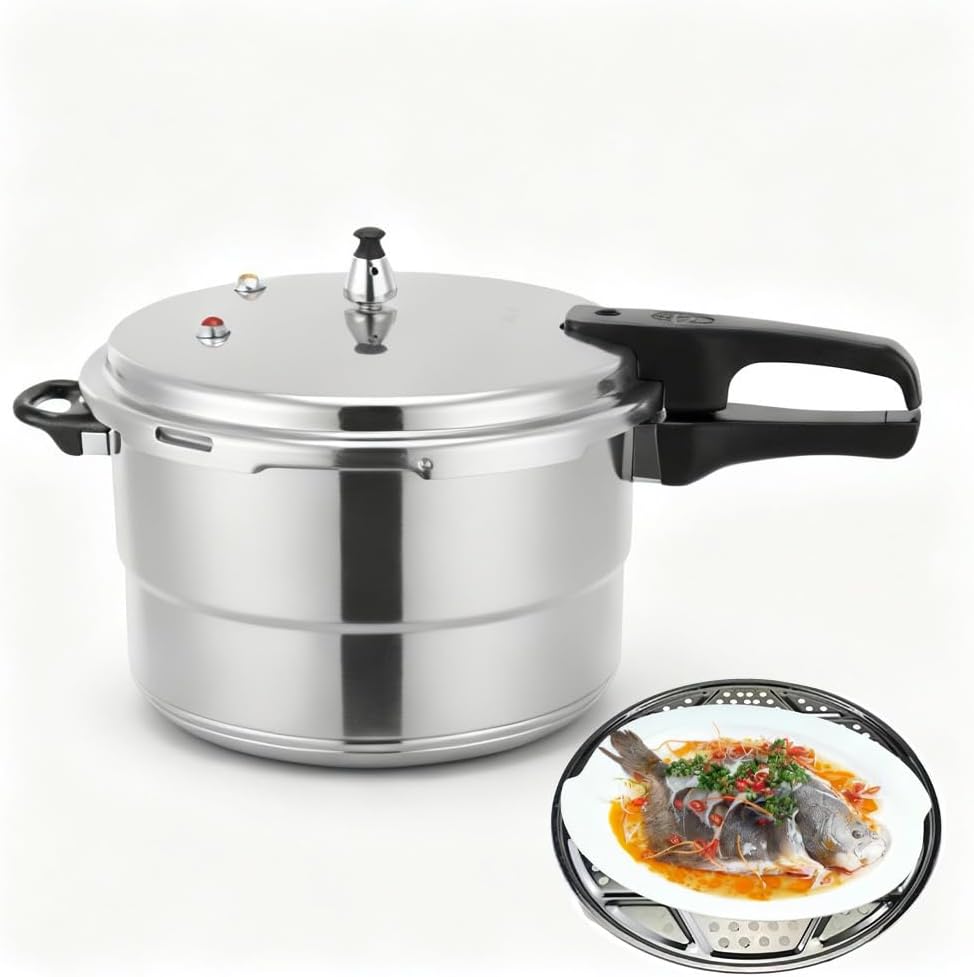
This small pressure cooker is a space-saving stovetop unit sized for 1 to 3 person households and light canning jobs. It is made from aluminum with a glossy finish and a magnetic base so it works on induction cooktops as well as gas stoves. The cooker uses mechanical controls and a push-button operation method with automatic pressure regulation and an over-pressure protection system for safer use. In practice it cooks much faster than open-pot methods, conserves energy, and is useful for braises, stews, steaming, and small-batch canning. Its compact footprint is easy to store, and the included manual helps first-time users get started. Limitations include the smaller 4 liter capacity, which is not ideal for large families or bulk canning, and the aluminum construction may require a little more care than stainless models to avoid scratches or discoloration over time.
Best for: Buyers looking for an affordable, space-saving pressure cooker for everyday meals and occasional small-batch canning who prioritize induction compatibility and straightforward mechanical controls.
Less Ideal for: Those who regularly cook for large families, need very large batch canning capacity, or prefer stainless-steel, heavy-duty cookware for long-term durability should look elsewhere.
- Magnetic base works on induction and gas stovetops
- Compact 4 L size saves counter and storage space
- Automatic pressure regulation and over-pressure protection for safer operation
- Faster, more energy-efficient cooking compared with conventional pots
- Smaller 4 L capacity limits use for large batches or big families
- Aluminum construction can be more prone to scratching or discoloration than stainless steel
Verdict: A budget-friendly, induction-capable compact pressure cooker that delivers faster, safer stovetop cooking for small households and occasional canning.
MICHELANGELO Stovetop Pressure Cooker 4.2 qt

| Capacity | 4.2 quarts |
|---|---|
| Material | Stainless steel |
| Pressure settings | 60 kPa and 100 kPa |
| Included components | Pressure lid, glass lid, steamer basket, extra sealing ring, stand |
This MICHELANGELO stovetop pressure cooker is built for straightforward, durable pressure cooking on any stovetop including induction. It uses a 304 stainless steel, uncoated pot and a multi‑layer base so heat distributes evenly and the unit works on gas, electric, ceramic, halogen, and induction. The lid locks with visible markings and the six‑fold safety system—pressure indicator, overpressure vent, safe‑open signal, steam release, and secure locking—makes it easier to monitor and open safely. Two pressure settings (60 kPa and 100 kPa) let you choose gentler or high‑pressure cooking for vegetables or tougher cuts of meat, and the set includes a glass lid and steamer basket for simmering or steaming without pressure. The removable silicone sealing ring and dishwasher‑safe pot simplify cleanup, though the lid and valve require hand washing. As a manual stovetop cooker it gives precise heat control but lacks the automation of electric models, so it requires attention during use. For buyers prioritizing safety and long‑term durability, this is a solid, no‑coating option.
Best for: Home cooks who put reliability and safe, durable materials above gadget bells and want a stovetop pressure cooker that works on induction and other ranges for everyday family meals.
Less Ideal for: People who prefer fully automated, set‑and‑forget electric pressure cookers or need large‑volume batch cooking beyond a small household.
- 304 stainless steel body with no nonstick coating for long‑term durability
- Multi‑layer induction‑compatible base works on all stovetops for even heat
- Six‑fold safety system with visible lock markings and safe‑open signal
- Two pressure settings for better control of texture and cooking time
- Includes steamer basket and glass lid for versatile stovetop use
- Lid, valve area, and sealing ring require hand washing for maintenance
- Manual operation requires monitoring and does not include programmable controls
Verdict: Choose this stovetop pressure cooker if you want a safe, induction‑compatible stainless steel cooker with visible safety features and simple, reliable manual control.
Presto 6-Quart Stainless Pressure Cooker
| Capacity | 6 quarts |
|---|---|
| Material | Stainless Steel |
| Special Features | Dishwasher Safe, Induction Compatible Base, Locking Lid |
| Wattage | 1000 watts |
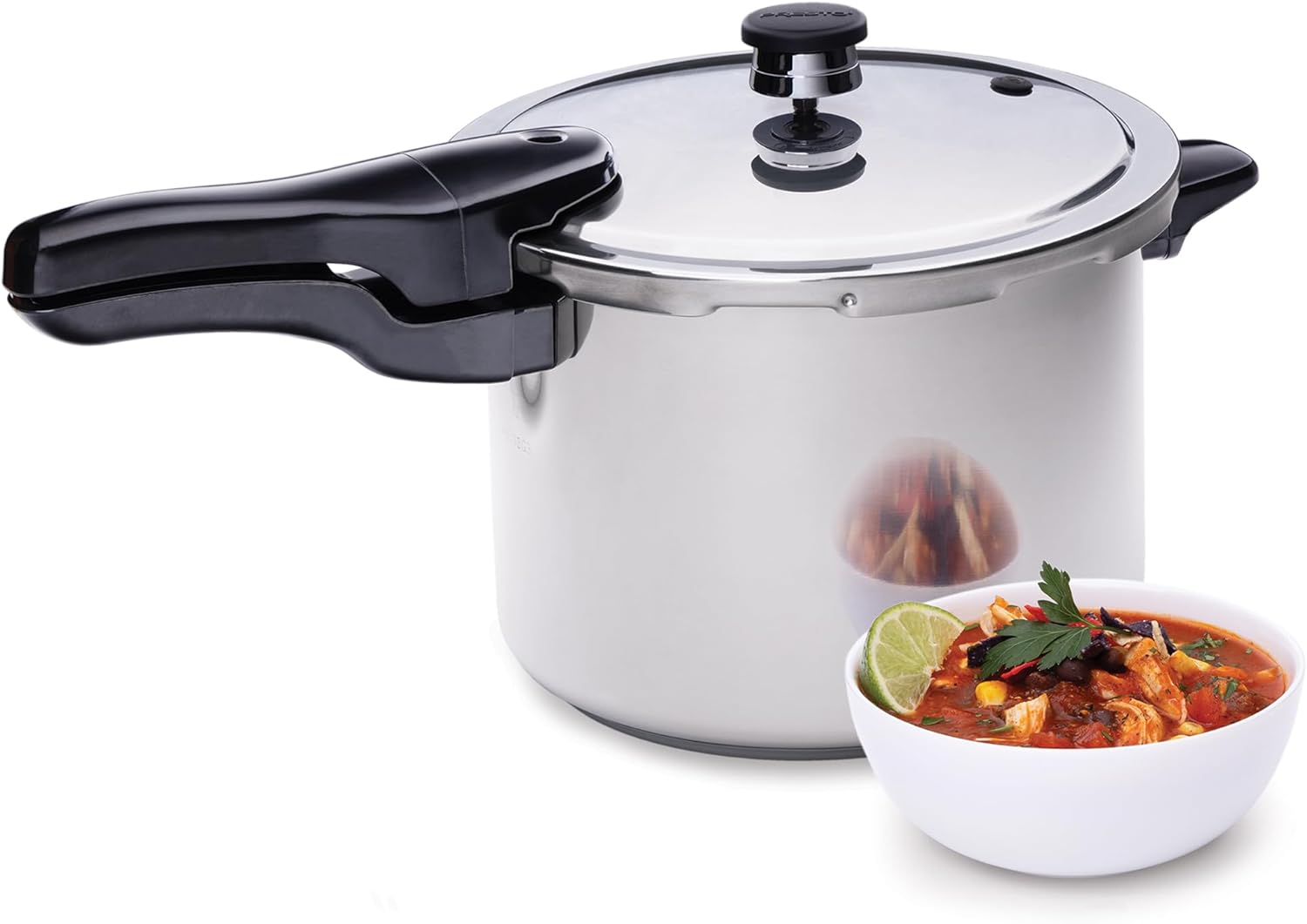
The Presto 6-quart stainless steel pressure cooker is a straightforward, safety-focused stovetop cooker that speeds up braises, stews, vegetables, and tougher cuts of meat. It uses a pressure regulator and cover lock indicator to keep cooking pressure visible and to prevent opening while pressurized, and an overpressure plug provides an extra safety fail-safe. The tri-clad base (aluminum core between stainless layers) promotes even heating on gas, electric, smooth-top, and induction ranges so foods won't scorch in spots, and the included rack lets you steam multiple items without flavor transfer. The unit is dishwasher-safe once removable sealing parts are taken out, and the package includes a 64-page recipe/instruction booklet that helps new users get comfortable with timings and the steam-release process. Downsides to consider are that it is a basic stovetop model without electronic controls or quick-release automation and it requires manual attention for pressure release and cleaning of removable bits.
Best for: Buyers who prioritize safe, reliable stovetop pressure cooking on induction or other ranges and want a simple, proven tool with clear safety features.
Less Ideal for: People seeking an electric or app-connected pressure cooker with automated programs and hands-off pressure-release features should look elsewhere.
- Tri-clad base for even heat distribution on induction and other stovetops
- Cover lock indicator and overpressure plug for layered safety
- Dishwasher-safe body (with removable sealing parts for hand wash)
- Includes cooking rack and a 64-page instruction/recipe booklet
- No electronic or automated pressure controls; manual timing and release required
- Requires disassembly to clean sealing ring and overpressure plug thoroughly
Verdict: Choose this Presto if you want a durable, safety-minded stovetop pressure cooker that works reliably on induction and other ranges.
Choosing the Right Safe Induction Pressure Cooker: Key Factors to Consider
Lid Locking Mechanism
A reliable lid lock prevents the cooker from being opened while pressure remains inside. Look for mechanical interlocks that physically block lid movement until pressure drops and visual indicators that clearly show when the pot is pressurized. This matters because accidental lid removal under pressure can cause severe scalding from steam and hot contents.
Mechanisms that lock automatically as pressure builds are preferable to manual locks that rely on user action. Also consider how intuitively the indicator communicates pressure state; ambiguous markings or tiny pop-up pins can be missed during busy cooking.
Pressure Regulation and Release Options
Precise pressure regulation keeps cooking times consistent and reduces the risk of overpressurization. Systems that offer multiple preset pressure levels or a reliable weighted regulator help you match recipes and reduce the need for emergency venting.
Equally important are the release methods. A controlled quick-release valve and a natural release option let you manage steam safely. Prefer designs with guarded release levers or long handles that keep hands away from steam paths to lower burn risk.
Induction Compatibility and Base Construction
An induction-ready base requires magnetic materials and even thickness to transfer heat efficiently. Poorly constructed bases can lead to hotspots, uneven pressure development, and longer time to reach target pressure, which affects both safety and cooking performance.
Check for stamped or layered bases that specify induction compatibility. Heavy, flat bases typically make better contact with induction cooktops and reduce wobble or instability during use, enhancing overall safety.
Gasket and Seal Materials
The gasket seals the pot and sustains repeated cycles of heat and pressure. High-quality, heat-resistant silicone or EPDM gaskets provide a secure seal and are less likely to harden or crack over time. A degrading gasket can cause steam leaks, erratic pressure, and longer cook times.
Consider whether the gasket is easy to remove and replace without tools. Availability of replacement gaskets and clear guidance on cleaning can extend the life of the cooker and maintain safety standards.
Venting Design and Steam Path Safety
How steam is routed and released affects how safely you can perform quick releases or emergency venting. A well-designed vent directs steam away from hands and nearby cabinets and includes guards or deflectors to minimize accidental contact.
Look for valves that are easy to operate with one hand and that provide a predictable flow. Complex or obstructed vents increase the chance of blockage and unsafe pressure conditions.
Ease of Cleaning and Maintenance
Regular cleaning prevents buildup that can interfere with seals, vents, and safety mechanisms. Models that disassemble easily allow thorough cleaning of the lid, gasket groove, and vent components. Dishwasher-safe parts can simplify upkeep but confirm the manufacturer guidance about which parts are safe to machine wash.
Maintenance matters for safety because neglected parts can reduce sealing performance or obstruct pressure indicators, increasing the risk of malfunction.
How Induction Affects Pressure Cooking
Induction cooktops heat the cookware directly through magnetic coupling, so a pressure cooker designed for induction reaches pressure faster and responds more quickly to control changes. That responsiveness improves safety when you need to reduce heat or stop pressure buildup quickly.
Because induction systems can change heat input nearly instantly, pairing that control with a pressure cooker that has precise pressure regulation and a stable base is important. Otherwise, rapid heat changes can lead to frequent cycling between pressure states, which complicates safe venting and release.
- Faster heat-up times shorten preheat periods but require reliable pressure regulation.
- Stable base contact reduces wobble and ensures consistent pressure development.
- Quick reaction to power changes makes visible pressure indicators more valuable.
Practical Safety Features to Prioritize
Beyond a basic lid lock, prioritize multiple redundant safety features. For example, a visible pressure indicator combined with a mechanical lock and a secondary pressure relief valve offers layered protection in the unlikely event one system fails.
Ergonomic controls that keep your hands away from steam and straightforward release actions are also important. Avoid designs with small, hard-to-reach valves or unclear markings that could lead to unsafe handling under pressure.
- Redundant interlocks and a separate pressure relief path.
- Visible and unambiguous pressure indicators.
- Long-handled or shielded release mechanisms.
Cleaning, Storage, and Gasket Care
A clean gasket and vent pathway are essential for safe operation. After each use, clean food debris from the lid and check the gasket for hardening, cuts, or deformation. Replace the gasket at the first sign of wear to maintain a proper seal.
Store the cooker with the lid inverted or slightly ajar on the pot to prevent gasket compression marks and to allow airflow. Regularly inspect the vent and regulator for buildup and follow the manufacturer's guidance for disassembly and cleaning.
- Remove and wash the gasket regularly to avoid residue buildup.
- Dry all components thoroughly before storage to prevent corrosion.
- Keep a schedule for replacing gaskets and checking valves.
Adapting Recipes and Pressure Times for Induction
Recipes developed for gas or electric coil cooktops can usually be used on induction but may reach pressure faster. Expect shorter preheat times and pay attention to visual pressure indicators rather than relying solely on time-based cues.
If a recipe calls for a gradual heat increase, use the induction cooktop controls to ramp heat slowly at first, then back off once pressure is reached. This approach helps prevent foaming or excessive liquid loss, which can interfere with sealing and venting.
- Watch pressure indicators more than cook time during the first uses.
- Reduce induction power once pressure is achieved to maintain steady conditions.
- Be cautious with high-starch liquids that foam and can block vents.
Common User Mistakes and How to Avoid Them
A frequent mistake is trying to open the lid too soon. Always confirm the pressure indicator shows zero and that any lock has released before attempting to open. If the indicator is stuck or ambiguous, allow extra cooling time and inspect the valve before forcing the lid.
Another common error is overfilling the pot. Overfilling increases the chance of food blocking the vent and can cause sputtering or unsafe steam release. Follow the recommended fill limits and use larger volumes of liquid for foods that expand or foam.
- Do not overfill beyond the manufacturer fill line.
- Ensure vent paths are clear before each use.
- Avoid forcing an unopened lid; allow full depressurization first.
How We Chose the Best Safe Induction Pressure Cooker
We focused on attributes that directly affect safety on induction cooktops and the real-world operation of a pressure cooker. Key evaluation criteria included lid locking and interlocks to prevent accidental opening under pressure, pressure regulation and release options for predictable operation, magnetic base design and induction heat transfer efficiency, and durable sealing materials that maintain pressure without excessive wear. We also considered user-friendly controls, such as clear pressure indicators and accessible release valves, plus construction quality and corrosion resistance since those impact long-term safety. We excluded units that lack verified induction-compatible bases or that use questionable sealing materials. Models with ambiguous or missing safety interlocks, poor venting design, or impractical maintenance requirements were removed from consideration. Technical specifications and user-focused safety features were prioritized over cosmetic extras. Where applicable, we checked compatibility notes for induction cooktops and favored designs that make pressure state obvious while minimizing accidental steam exposure.
Our full evaluation process is outlined in our review methodology.
FAQ
Can I use any induction burner with an induction pressure cooker?
Most induction pressure cookers work with standard induction burners, but performance depends on a flat, magnetic base and stable contact. Check that the cooker specifies induction compatibility and that your burner supports the cookware size.
How do I know when it is safe to open the pressure cooker?
Wait until the pressure indicator reads fully depressurized and any mechanical lid lock has released. If the indicator seems stuck, let the cooker cool longer or use the manufacturer-recommended release method instead of trying to pry the lid open.
How often should I replace the gasket?
Gasket lifespan varies with use, but inspect it periodically for hardening, cracks, or deformation. Replace it at the first sign of wear; many home cooks find annual replacement sufficient with regular use, while high-use households may need more frequent changes.
Is quick release safe on induction cooktops?
Quick release is safe when done with a guarded valve or long-handled release that directs steam away from hands and surfaces. Because induction reacts quickly, be prepared for faster pressure changes and use the release method recommended for your cooker.
What should I do if steam is escaping from the lid seal?
Stop heating and allow the cooker to depressurize naturally. After cooling, inspect the gasket and seal area for damage or food debris. Clean the groove and gasket, reseat the sealing ring, and replace it if any damage is found before using the cooker again.
Final Verdict
When choosing a safe induction pressure cooker, prioritize mechanical lid locks, clear pressure indicators, and a durable induction-compatible base. Those features directly reduce the risk of accidental opening and uneven pressure behavior on induction cooktops. Balance ease of maintenance and gasket replaceability with venting safety to match your cooking habits. If you value predictable performance and lower burn risk, pick a design with redundant safety features and straightforward release controls.