
Note: This article contains affiliate links. If you click on these links and make a purchase, we may earn a small commission at no extra cost to you. This helps support our research and content. Read our full affiliate disclosure here.
Picking a safe pressure cooker matters because pressure cooking concentrates heat and pressure in a sealed pot, so safety features directly affect how confidently you can cook everyday meals. Whether you plan to make stews, grains, or batch-cook for the week, the right unit reduces risk from steam release, lid failures, and accidental burns. This guide covers seven shortlisted safe pressure cookers that stood out for reliable pressure control, clear safety interlocks, and straightforward user controls. We evaluated each option on features that matter to home cooks who prioritize both protection and consistent results. Read on for the criteria we used and practical tips to match a safety-focused pressure cooker to your kitchen habits.
Top Picks at a Glance
| Best Overall The best all-around choice for most situations | Ninja HyperHeat Pressure Cooker PC201SP |  |
| Best Quality Built to a higher standard if you want something more solid | Breville Fast Slow Pro BPR700BSS | 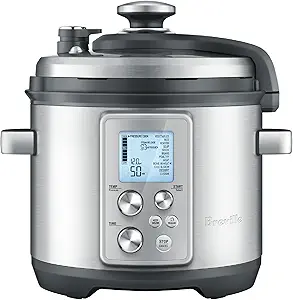 |
| Best Value The sweet spot between price and what you get | COMFEE' 6-Quart Pressure Cooker |  |
| Best Budget The cheapest option that still gets the job done reliably | Hawkins Contura CB30 3 Litre |  |
| Top Rated A top-rated pick with lots of positive feedback | Cosori 6-Quart Pressure Cooker |  |
| Most Popular A crowd favorite that many people choose with confidence | Instant Pot Duo 6-Quart |  |
| Best Seller A high-volume bestseller chosen again and again | Instant Pot RIO Wide 7.5QT |  |
Ninja HyperHeat Pressure Cooker PC201SP
| Wattage | 1200 watts |
|---|---|
| Capacity | 6 quarts |
| Operation Mode | Both Manual and Automatic |
| Special Features | Keep Warm Setting |
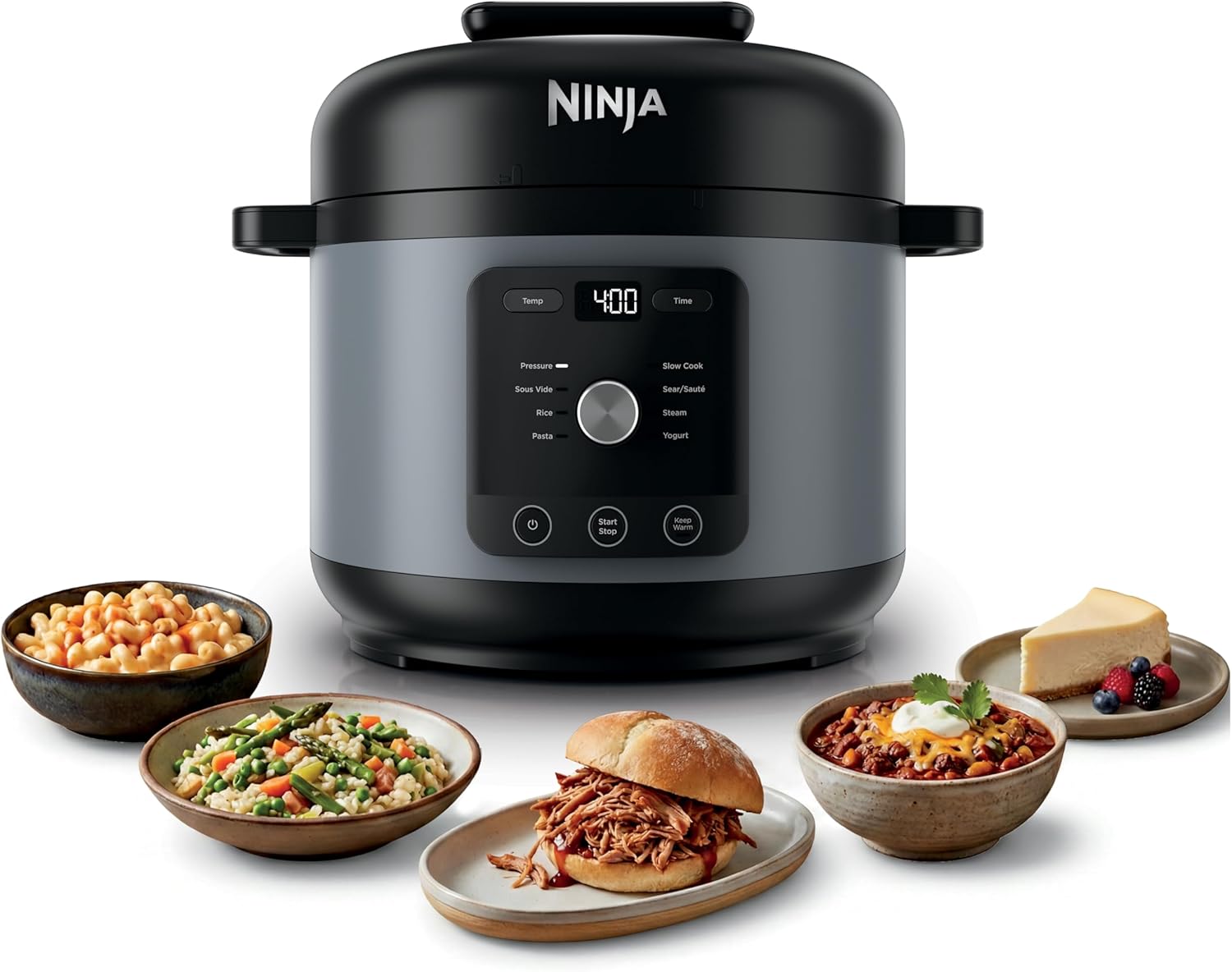
The Ninja HyperHeat PC201SP is a versatile 9-in-1 multi cooker that combines pressure cooking, slow cooking, searing, steaming, sous vide, rice cooking and more in a single 6.5-quart unit. Its 1200-watt HyperHeat system builds pressure quickly for faster cook times, and the wide 9.5-inch cooking surface makes it practical to sear and sauté directly in the pot, reducing extra pans. The removable SimpliServe pot lets you serve from the cooker and simplifies cleanup, and the ceramic nonstick finish is PFAS-free for lower-toxicity cooking. Controls are push-button and support both manual and automatic modes, with a keep-warm function for finishing meals. Trade-offs to consider are the unit weight and footprint compared with smaller multi cookers, and advanced users may miss an extensive manual-programming interface, but for everyday family cooking it replaces several appliances while keeping cleanup straightforward.
Best for: Buyers who want a single, safe all-in-one cooker to replace multiple appliances and prioritize faster, family-sized meals with easier cleanup and low-toxicity nonstick cookware.
Less Ideal for: Those who need a very compact, lightweight cooker for small kitchens or users who require highly granular custom programming and control.
- HyperHeat 1200W system that builds pressure quickly for faster cook times
- Large 9.5-inch cooking surface lets you sear and sauté in the same pot
- Removable SimpliServe pot for cooking-to-table serving and easier cleanup
- PFAS-free ceramic nonstick inner pot for lower-toxicity cooking and simple wiping
- Larger and heavier than some compact multi cookers, which may limit countertop storage
- Control scheme is push-button with limited advanced programmability for power users
Verdict: Choose this Ninja if you want a safe, family-sized multi cooker that speeds up meals and serves directly from a PFAS-free removable pot.
Breville Fast Slow Pro BPR700BSS

| Wattage | 700 watts |
|---|---|
| Voltage | 220 volts |
| Control Method | Touch |
| Number of settings | 11 |
| Capacity | 6 quarts |
The Breville Fast Slow Pro is a versatile 6-quart multi-cooker that automatically adjusts time, temperature and pressure between fast and slow cooking modes to produce consistent results. It is typically used for pressure cooking tough cuts, slow-simmering stews, and steaming vegetables using one-touch programs and 11 pressure/slow settings driven by dual top-and-bottom sensors. Practical features include a hands-free auto steam release that selects Quick, Pulse, or Natural release modes, a removable dishwasher-safe lid and a ceramic-coated cooking bowl that doubles as a serving dish. The LCD gives clear feedback with pressure, temperature and countdown timers while the triple-safe stainless lid and 3-way safety system prioritize user protection. Expect a slightly heavier footprint and learning curve compared with basic electric pressure cookers, and note that some advanced users may miss manual control granularity beyond the preset options. For cooks focused on reliable performance and built-in safety, this cooker delivers predictable results across a wide range of recipes.
Best for: Home cooks who prioritize reliable, repeatable performance and built-in safety features when pressure cooking a range of dishes.
Less Ideal for: Users seeking the lightest, most compact electric cooker or those who want fully manual, hands-on control over every pressure and temperature parameter.
- Automatic dual-sensor control adjusts time, temperature and pressure for consistent results
- Hands-free auto steam release reduces user contact with hot steam
- Removable dishwasher-safe lid and ceramic-coated bowl simplify cleaning and serving
- Clear LCD shows pressure, temperature and countdown for real-time feedback
- Triple-safe stainless steel lid construction with a 3-way safety system
- Heavier and bulkier than basic electric pressure cookers
- Limited manual control beyond the preset programs for power users
Verdict: Choose this cooker if you want a safety-focused, performance-oriented 6-quart multi-cooker that automates pressure and slow cooking for consistently good results.
COMFEE' 6-Quart Pressure Cooker

| Wattage | 1000 |
|---|---|
| Control Method | Touch |
| Operation Mode | Automatic |
| Cooking Program | Cook, Keep Warm, Reheat, Simmer, Steam |
| Capacity | 6 quarts |
This COMFEE' 6-quart electric pressure cooker combines a broad set of functions with straightforward controls to simplify everyday cooking. It offers pressure cooking plus slow cook, rice, steam, sauté, yogurt and other modes through 14 presets and a digital touch interface, so you can switch from weeknight stews to rice or yogurt with minimal fuss. Practical features like a 24-hour delay timer and keep-warm mode make meal planning easier, and the included ladle, measuring cup and steaming rack mean you can use it right away. Safety is emphasized with multiple protections including auto pressure release and a lid-safety lock. At 1,000 watts the unit reaches pressure and cooks quickly, but the aluminum body and nonstick pot will require careful cleaning to avoid wear over time. The cooker is compact enough for smaller kitchens but may be small for large gatherings. For buyers who want a reliable, all-in-one cooker with safety features and programmable convenience, this is a sensible option; heavy users who need larger capacity or stainless-steel inner pots may prefer a different model.
Best for: Buyers who prioritize a practical, safety-focused all-in-one cooker for everyday meals and like programmable presets and timer convenience to simplify cooking.
Less Ideal for: Those who frequently cook very large batches, prefer stainless-steel inner pots, or need an industrial-size pressure cooker for big families or meal prep.
- 14 programmable presets cover pressure cooking, slow cook, rice, steam, sauté, yogurt and more
- Digital touch controls and 24-hour delay timer simplify scheduling and one-touch cooking
- Multiple safety features including auto pressure release and lid-safety lock
- Comes with useful accessories (measuring cup, ladle, steam rack) for immediate use
- Inner pot is aluminum nonstick rather than stainless steel, which may wear faster with heavy use
- 6-quart capacity may be small for large families or batch cooking
Verdict: A safety-minded, programmable 6-quart multi-cooker that streamlines everyday meals with broad presets and handy built-in protections.
Hawkins Contura CB30 3 Litre

| Capacity | 3 liters |
|---|---|
| Material | Aluminum |
| Closure Type | Inner Lid |
| Wattage | 1000 |
| Voltage | 220 volts |
The Hawkins Contura CB30 is a compact 3‑liter stovetop pressure cooker built around a curved hard‑anodised aluminum body and a food‑grade stainless steel inner lid. It is used like any stovetop pressure cooker for fast one‑pot meals, stews, dals, and braises for small households, and the rounded sides make stirring and food removal easier. Key safety features include a pressure‑locked inner lid that cannot be opened under pressure, an automatic safety valve that vents steam downward, and a self‑centralising pivot to keep the lid secure without stressing the handles. The hard anodised finish improves heat absorption for more efficient cooking and resists wear, while stay‑cool handles and a longer‑lasting gasket reduce maintenance. Limitations are typical of compact aluminum cookers: it requires compatible stovetops and manual pressure management, and it lacks electric controls or multi‑mode convenience found on electric multicookers. For buyers wanting a durable, fuel‑efficient stovetop cooker with strong safety features, this model is a sensible, practical choice.
Best for: Buyers seeking a reliable, safety‑focused stovetop pressure cooker for everyday home cooking on a budget who value durability and efficient heat use.
Less Ideal for: People who want an electric, programmable pressure cooker with digital controls or those needing very large capacity for big families.
- Hard‑anodised body improves heat absorption and resists wear
- Stainless steel inner lid and inside-fitting gasket design for hygiene and durability
- Pressure‑locked safety lid and automatic safety valve for reliable pressure protection
- Rounded Contura shape makes stirring and food removal easier
- Stay‑cool handles with metal pivot reduce stress on handle plastic and increase longevity
- Requires manual stovetop pressure management; no electric controls
- Aluminum construction may be less suitable for induction without a compatible base
Verdict: A compact, safety‑oriented stovetop pressure cooker that delivers durable, fuel‑efficient cooking for budget‑minded households.
Cosori 6-Quart Pressure Cooker
| Capacity | 6 quarts |
|---|---|
| Wattage | 1100 watts |
| Control Method | Touch |
| Inner Pot | Non-stick ceramic coating |
| Functions | 9-in-1 cooking functions |
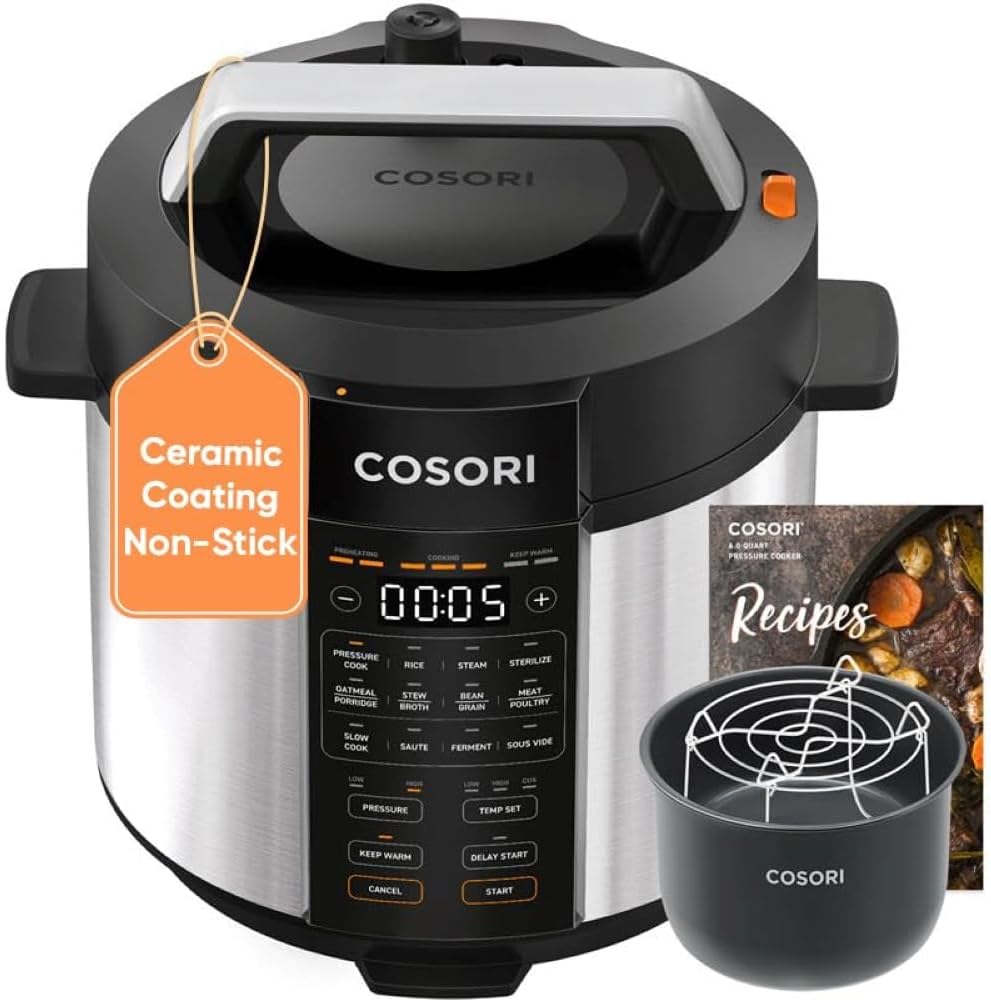
The Cosori 6-quart pressure cooker is a versatile electric multi-cooker that handles pressure cooking, rice, steaming, slow cooking, sautéing, fermenting, sous vide and more through built-in presets. It is typically used as an all-in-one countertop appliance to speed up braises, tenderize meats, cook rice faster than a dedicated rice cooker, and finish one-pot meals without babysitting. The 1100W stainless steel housing, touch controls and a non-stick ceramic inner pot make everyday use straightforward, and included extras like a steam rack and recipe book help new users get started. Notable safety-oriented design choices include a recessed seal/vent button, a backward-angled steam release and multiple safety protections to reduce burn risk during venting. The ceramic inner pot and dishwasher-safe lid simplify cleanup, but the unit is relatively heavy for its size and the abundance of presets can be redundant for cooks who prefer manual control. For buyers prioritizing safe, reliable pressure-cooking performance and easy cleanup, this model covers the essentials without a steep learning curve.
Best for: Home cooks who want a safer, reliable all-in-one pressure cooker to speed up family meals and reduce hands-on time while keeping cleanup simple.
Less Ideal for: Users who need an ultra-light portable unit or who prefer minimal electronics and full manual control over cooking parameters.
- Multiple built-in functions and 13 presets for one-pot versatility
- Non-stick ceramic inner pot that is dishwasher-safe and BPA-free
- Safer venting design with a recessed seal/vent button and angled steam release
- 1100W power and stainless steel exterior for robust, consistent heating
- Includes useful accessories and a recipe book to shorten the learning curve
- Relatively heavy for a 6-quart countertop cooker
- Many presets may be unnecessary for experienced cooks who prefer manual adjustments
Verdict: Choose this Cosori if you want a safety-minded, reliable 6-quart multi-cooker that simplifies fast, one-pot cooking and cleanup.
Instant Pot Duo 6-Quart

| Capacity | 5.68 liters |
|---|---|
| Wattage | 1000 watts |
| Control Method | Touch |
| Operation Mode | Automatic |
| Material | Stainless steel |
The Instant Pot Duo is a versatile countertop multicooker designed to replace several appliances with one 6-quart unit. It offers seven cooking functions and 13 one-touch programs so you can pressure cook stews and braises, slow-cook a pot roast, sauté to brown ingredients, steam vegetables, cook rice, and even make yogurt. The stainless steel inner pot with a tri-ply bottom handles searing and transfers heat evenly, while the easy-release steam switch and multiple built-in safety mechanisms simplify high-pressure cooking for cautious users. It runs on 1000 watts and includes a stainless steel steamer rack and dishwasher-safe parts for easier cleanup. The main limitations are that the 6-quart size may be large for singles or small kitchens and that learning times for pressure recipes takes a few tries to get right; also the unit is a bit heavy to move. For buyers who value consistent, faster cooking with clear safety features and broad recipe support, the Duo makes pressure cooking approachable without sacrificing capability.
Best for: Buyers who prioritize safe, reliable pressure cooking with multiple preset programs and want social proof of a widely used, well-established model for everyday family-style cooking.
Less Ideal for: Those who need a very compact, lightweight cooker for single-person meals or who prefer a dedicated single-function appliance for occasional use.
- 7-in-1 functionality consolidates multiple appliances into one unit
- Stainless steel inner pot with tri-ply bottom allows searing and even heat distribution
- Easy-release steam switch and numerous safety mechanisms reduce pressure-cooking risk
- Dishwasher-safe inner pot and lid simplify cleanup
- Includes a stainless steel steamer rack for flexible cooking setups
- Relatively heavy for a countertop appliance which makes repositioning awkward
- 6-quart capacity may be oversized for solo cooks or very small households
Verdict: Choose the Instant Pot Duo if you want a proven, safety-focused multicooker that replaces several kitchen appliances and makes pressure cooking approachable for everyday meals.
Instant Pot RIO Wide 7.5QT

| Capacity | 7.5 quarts |
|---|---|
| Wattage | 1000 watts |
| Control Method | Touch |
| Special Features | Programmable |
The Instant Pot RIO Wide 7.5QT is a family-sized electric multi-cooker designed to speed up everyday cooking while keeping operation straightforward and safe. It offers seven core functions plus 13 one-touch programs accessed via touch controls and status lights so you can monitor progress at a glance. The wide, tri-ply stainless steel inner pot gives more surface area for searing and batch cooking, and the dishwasher-safe pot and lid cut cleanup time. Safety features include an easy-release steam function, an easy-seal safety lid lock, overheat protection and multiple built-in safety checks, which make the cooker well suited to cautious users. In practice it handles stews, roasts, rice, yogurt and sautéing with predictable results and noticeably faster times than slow-cooking alone, and the large capacity is convenient for meal prep or feeding a family. The unit is heavier and larger than smaller models, so it needs a dedicated spot on the counter or a deep cabinet, and learning which preset to use for specific recipes takes a few tries. For buyers prioritizing reliable, well-documented safety features and consistent cooking performance, this model is a solid choice.
Best for: Buyers who want a dependable, safety-focused multi-cooker for family meals and meal prep and prefer clear safety features and simple, programmable controls.
Less Ideal for: Those who need a very compact or lightweight unit for small kitchens or single-person households should consider a smaller cooker instead.
- Large 7.5‑quart capacity fits family meals and batch cooking
- Tri-ply stainless steel inner pot provides even heating and good searing surface
- Multiple built-in safety mechanisms including easy-seal lid lock and overheat protection
- Dishwasher-safe pot and lid simplify cleanup
- Bulkier and heavier than smaller cookers, requiring more storage or counter space
- Learning curve for presets and program selection for optimal results
Verdict: Choose the Instant Pot RIO Wide if you want a family‑sized, safety-minded multi-cooker that simplifies batch cooking and everyday meals.
Choosing the Right Safe Pressure Cooker: Key Factors to Consider
Lid Locking Mechanism
A robust lid locking mechanism prevents the lid from opening while the cooker is pressurized, which is the single most important safety feature. Look for mechanical locks that engage automatically as pressure rises and clearly prevent twisting or removal until pressure drops to safe levels.
Lock design affects both safety and convenience. Some locks are simple, durable cams that require minimal maintenance, while others use more complex interlocks that rely on precise alignment. Consider how easy it is to confirm the lock is engaged and whether the mechanism is accessible for cleaning or inspection, since food residue can impede proper function over time.
Pressure Release Methods
Multiple pressure release methods reduce the chance of user error and give you control for different recipes. A safe cooker typically provides at least a manual venting option and a controlled quick-release mechanism, plus an automatic pressure bleed as a backup.
Think about how clearly the release controls are marked and whether they can be operated without placing your hand directly over the steam path. Features like long, angled release levers or remote-release designs lower burn risk. Also evaluate whether the release produces a focused jet of steam or a diffuse spray, as the latter can be harder to direct away from surfaces and people.
Pressure Indication Visibility
Visible pressure indicators tell you when the unit is still pressurized and when it is safe to open. A simple pop-up pin or digital pressure readout can prevent premature lid removal and accidental burns.
Consider whether the indicator is easy to read from your normal working position and whether it is likely to be obscured by steam or food splatter. Indicators that are integrated into the lid or control panel and that change color or position reliably under different temperatures are preferable for everyday use.
Seal and Gasket Quality
The sealing gasket creates the pressure vessel and its condition determines whether the cooker will hold pressure safely and predictably. High-quality gaskets resist compression set, food staining, and hardening caused by repeated heating cycles.
Pay attention to how the gasket is installed and removed because a hard-to-service seal makes regular inspection and replacement less likely. Some designs use replaceable, low-cost gaskets that are easy to swap; others require dealer service. Durability matters because a degraded gasket can lead to uncontrolled steam leaks and longer cook times that encourage unsafe operation.
Valve Redundancy and Quality
Redundant pressure relief valves provide fail-safe protection if the primary regulator or vent becomes blocked. A safe pressure cooker will have at least one primary pressure control plus a separate emergency relief path.
Inspect whether relief valves are metal or high-temperature polymer, how accessible they are for cleaning, and whether they are straightforward to test. Valves that are difficult to reach or clean tend to collect debris, which can compromise function. Redundancy means even if one path becomes partially obstructed, another will limit pressure rise to safe levels.
Control Layout and User Feedback
Clear, simple controls reduce user errors that lead to unsafe conditions. Controls should be labeled unambiguously, offer tactile or audible feedback, and, where applicable, provide clear presets for different pressure levels.
Digital displays that show pressure or remaining time can help you avoid guessing whether the cooker is done and ready to depressurize. Conversely, overly complex menus or unlabeled toggles increase the chance of misoperation. Good user feedback supports safe operation by confirming the cooker is in the mode you expect.
How Pressure Cookers Keep You Safe
Pressure cookers use sealed chambers to raise the boiling point of water, which shortens cooking times. Safety is achieved through mechanical and design features that control pressure, vent steam, and prevent lid opening until pressure is reduced to safe levels.
Key safety elements include a secure lid lock, a functioning pressure gauge or indicator, one or more relief valves, and a reliable gasket. Understanding these components helps you operate the cooker confidently and recognize when routine maintenance is required.
- Lid locks prevent accidental opening under pressure
- Relief valves and vents manage excess pressure automatically
- Visible indicators show when it is safe to open the lid
- Durable gaskets maintain a reliable seal over time
Routine Maintenance for Continued Safety
Regular maintenance keeps safety systems working as intended. Clean valve assemblies and vents after each use to remove food particles, and inspect gaskets for cracks, hardening, or deformation. Replace gaskets according to the manufacturer's interval or sooner if signs of wear appear.
Also check that locking mechanisms move freely and that indicator pins are not stuck. Simple upkeep prevents many common safety failures and extends the usable life of the cooker.
- Remove and rinse valves to clear debris
- Wipe sealing surfaces and check gasket seating
- Test indicator movement before first use after long storage
- Store gaskets slightly flexed, not tightly compressed
Choosing the Right Capacity and Features
Match the cooker's capacity to your typical batch sizes to avoid overfilling, which can block vents and valves. Most safety guidelines recommend not filling more than two-thirds full for general cooking and no more than half when cooking foods that foam or expand.
Consider features that improve safe usability, such as long-handled vent controls, clear pressure readouts, and removable inner pots for easier cleaning. A well-matched capacity and user-friendly features make safe operation more intuitive.
- Avoid overfilling to prevent clogging vents
- Choose accessible control placements to minimize reaching over steam
- Look for inner pots that lift out for safer cleaning
Common Missteps That Reduce Safety
Certain habits increase the chance of unsafe events. Filling beyond recommended capacity, neglecting valve cleaning, and forcing a stuck lid are common mistakes. Always follow maximum-fill marks and allow the cooker to depressurize fully before attempting to open the lid.
Using thick sauces or starchy foods without extra liquid can cause foaming that clogs vents. When cooking such foods, use lower fill levels and consider a controlled release method to avoid sputtering vents.
- Do not force open the lid if pressure indicator shows pressure
- Keep vents clear of foamy or sticky residues
- Follow recipe liquid recommendations for foaming foods
Safety Considerations for Electric Pressure Cookers
Electric pressure cookers integrate sensors, electronic controls, and automatic pressure regulation. These systems can add convenience but also introduce potential failure modes, such as sensor drift or electrical faults. Choose units with clear manual override options and mechanical relief valves as backups.
Battery-free mechanical indicators remain valuable even on electronic models, as electronics can fail in ways that obscure pressure state. Verify that electronics provide clear status messages and that manual venting remains accessible in an emergency.
- Prefer models with mechanical safety backups
- Ensure electronic error codes are clearly documented
- Check that manual venting can still be performed safely
How We Chose the Best Safe Pressure Cooker
We prioritized products that put safety front and center while still delivering reliable pressure cooking performance. Our selection filters focused on concrete, inspectable features that reduce the most common user risks: secure lid locking systems, multiple pressure release options, redundant pressure relief valves, and visible pressure indicators. We also considered material and construction standards, such as sturdy lid and sealing components and corrosion-resistant inner pots, since these affect long-term safety and function. Beyond pure safety hardware, we assessed ease-of-use elements that influence safe operation: intuitive controls, clear labeling for pressure and release functions, and cleaning access to valves and gaskets. We excluded units lacking documented pressure relief mechanisms or those with confusing locking systems that could allow lid opening under pressure. Finally, durability and serviceability were weighed because worn seals or hard-to-clean valves can degrade safety over time. The result is a list of pressure cookers that meet strict safety and usability tests important for everyday home kitchens.
Our full evaluation process is outlined in our review methodology.
FAQ
How full can I safely fill a pressure cooker?
Most guidelines recommend filling no more than two-thirds full for general foods and no more than half full for foamy or expanding foods. Overfilling can block vents and increase the risk of clogging relief valves, which compromises safe pressure release.
What should I do if the pressure indicator gets stuck?
If an indicator is stuck, first allow the unit to cool and fully depressurize. Then clean around the indicator and test its movement. If it remains stuck after cleaning, stop using the cooker until the part can be inspected or replaced because a stuck indicator can mask dangerous pressure.
Are electric pressure cookers less safe than stovetop models?
Electric models often include added electronic protections and automatic pressure control, which can enhance safety. However, electronics can fail, so mechanical backups like relief valves and visible pressure indicators remain important. Both types can be safe when maintained and used correctly.
How often should I replace the sealing gasket?
Gasket life depends on use and care, but inspect it regularly for cracks, hardening, or compression set. Replace the gasket as soon as you notice deterioration or if it no longer forms a consistent seal. Some home cooks replace gaskets annually with heavy use.
Can I clean pressure relief valves myself?
Yes, most relief valves are designed to be cleaned by users. Follow the manufacturer instructions for disassembly and rinsing, and reassemble carefully. Regular cleaning prevents debris buildup that can impede valve function and compromise safety.
Final Verdict
Prioritize pressure cookers with clear mechanical safety systems, accessible relief valves, and durable gaskets. Balance safety features with the controls and capacity that fit how you cook so you are more likely to use the device correctly every time. If you focus on locking mechanisms, visible pressure indicators, and simple, maintainable valve assemblies, you will minimize common risks while enjoying the time savings pressure cooking offers. Choose the cooker that best matches your routine and maintenance willingness to get reliable, safe performance.