
Note: This article contains affiliate links. If you click on these links and make a purchase, we may earn a small commission at no extra cost to you. This helps support our research and content. Read our full affiliate disclosure here.
If you need a security camera that keeps recording without frequent recharges, battery life is the most important spec to check. A long-running camera reduces maintenance trips, supports remote installations where power is inconvenient, and provides more continuous coverage between charges or swaps. This guide shortlists the top options for long battery life and evaluates them on runtime, video quality, and practical usability for typical home and small-property setups. Below you will find carefully chosen picks, plus the criteria we used to evaluate runtime, installation flexibility, and ongoing maintenance. Read on to find the best long-runtime security camera for your needs.
Top Picks at a Glance
| Best Overall The best all-around choice for most situations | REOLINK Argus MagiCam |  |
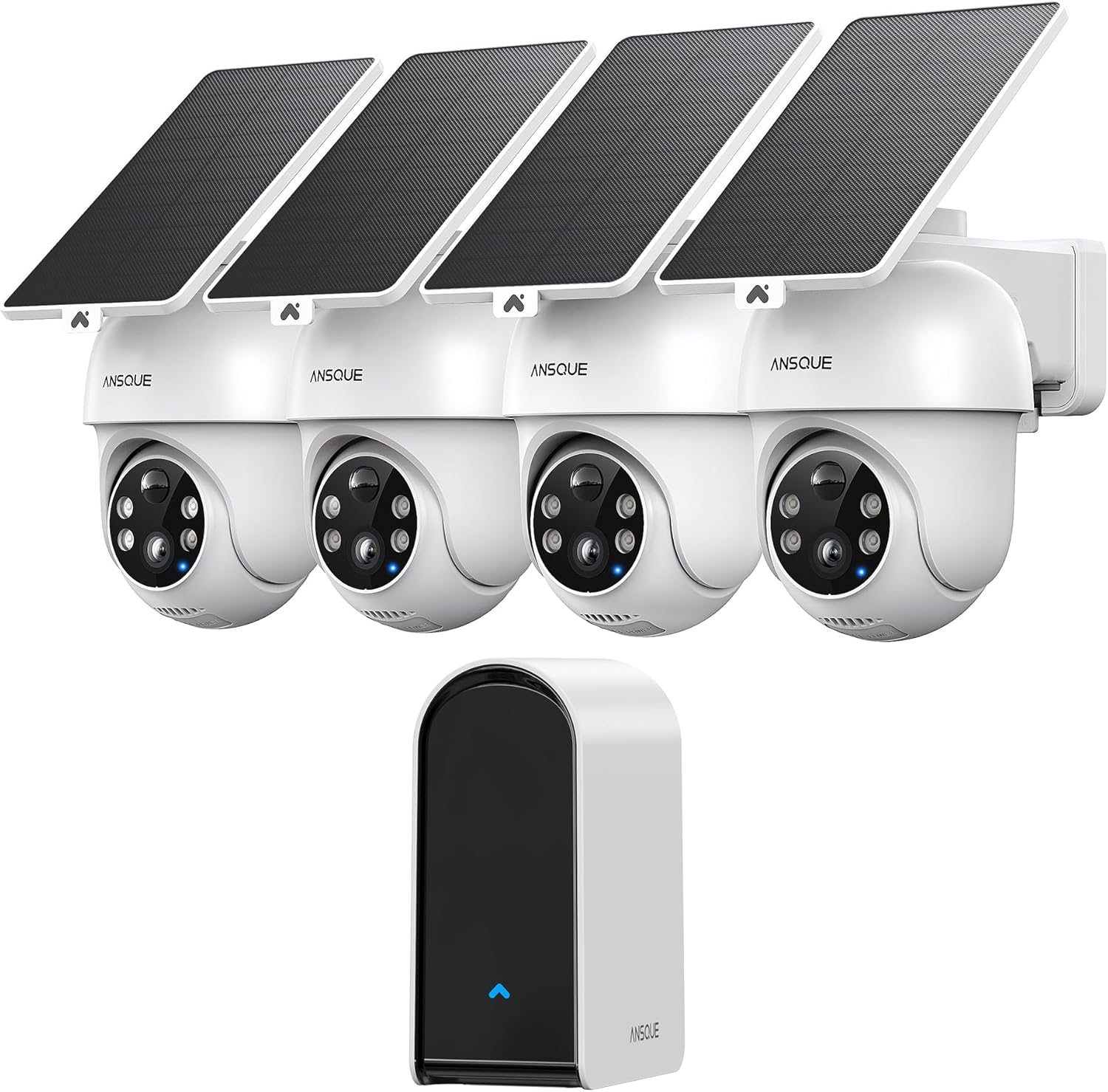
| Best Quality Built to a higher standard if you want something more solid | ANSQUE GU01 4-Cam Solar System |  |
| Best Value The sweet spot between price and what you get | eufy SoloCam S220 | 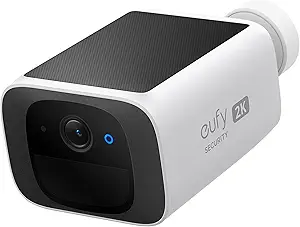 |
| Best Budget The cheapest option that still gets the job done reliably | realhide CB54 2K Security Camera |  |
| Top Rated A top-rated pick with lots of positive feedback | Blink Outdoor 4 Camera |  |
| Most Popular A crowd favorite that many people choose with confidence | HITELLARCAM CB54W 2K Camera |  |
| Best Seller A high-volume bestseller chosen again and again | Tapo C402 Outdoor Camera |  |
REOLINK Argus MagiCam

| Video Capture Resolution | 1080p |
|---|---|
| Frame Rate | 15 frames per second |
| Night Vision Range | 26 feet |
| Waterproof Rating | IP66 |
| Flash Memory Supported Size Maximum | 256 GB |
The Argus MagiCam is a battery-powered 1080p wireless camera designed for flexible indoor or outdoor use where running power is inconvenient. It mounts magnetically to metal surfaces or can be screw-mounted for a stable install, and the slim, portable body makes it easy to move for temporary monitoring or travel. Dual-band 2.4/5GHz Wi‑Fi helps keep live view and alerts responsive, while AI person detection and customizable detection zones reduce false alarms. Two-way audio lets you speak to visitors and the camera records locally to a microSD card or Reolink Home Hub with no mandatory subscription. Night vision extends visibility to roughly 26 feet and the camera is weather resistant for outdoor use. The camera runs on replaceable AA lithium batteries and Reolink claims up to nine months between changes under light recording use, which is useful for low-maintenance setups. Important limitations are the 15 fps frame rate and 1080p resolution, which are fine for general monitoring but not ideal for high-detail or fast-motion forensic footage, and the camera relies on local storage if you want to avoid any cloud plans.
Best for: Buyers who want a low-maintenance, flexible battery camera for routine home or rental monitoring and value long run time and simple local storage over maximum video detail.
Less Ideal for: Users who need high-frame-rate or ultra-high-resolution footage for forensic evidence, or those who prefer built-in rechargeable batteries and continuous power options.
- Magnetic and bracket mounting for quick, tool-free placement or permanent install.
- Dual-band 2.4/5GHz Wi‑Fi for more stable live view and fewer dropouts.
- AI person detection and customizable zones to cut down false motion alerts.
- Local recording to microSD or Reolink Home Hub with no required subscription.
- Long battery life using replaceable AA lithium batteries, rated up to nine months under light use.
- 1080p at 15 fps limits fine-detail capture and smoothness for fast action.
- Includes non-rechargeable AA batteries rather than a built-in rechargeable pack.
Verdict: Choose the Argus MagiCam when you want a portable, weatherproof battery camera that delivers long run time and reliable local recordings without subscription fees.
ANSQUE GU01 4-Cam Solar System
| Video Capture Resolution | 2K 3MP |
|---|---|
| Night Vision Range | 12 meters |
| Power Source | Solar Powered |
| Flash Memory Installed Size | 32 GB |
| Viewing Angle | 360 degrees |
The ANSQUE GU01 kit is a solar-powered outdoor surveillance system designed for continuous perimeter monitoring without a subscription. Each dome is a PTZ-style unit offering 360 degree panoramic coverage, 2K (3MP) video, 8× digital zoom and automatic human motion tracking; the app combines four feeds on one screen, supports custom detection zones and scheduled recording, and includes two-way audio and a sound-and-light alarm for deterrence. The kit emphasizes long unattended runtime with a detachable BC solar panel and an internal battery that the brand says can last up to a year under typical conditions; cameras wake quickly on motion and save events to the included 32 GB local storage with optional microSD expansion. Practical strengths are the color night vision aided by four LEDs and the cross-camera tracking that links clips across cameras for simpler incident review. Limitations to note are the lack of 24/7 continuous recording (motion-only capture) and reliance on digital zoom rather than optical, which limits image clarity when zoomed to read small details at distance.
Best for: Buyers who prioritize long battery life and continuous, low-maintenance outdoor monitoring and want a subscription-free system that stays powered by solar and records locally.
Less Ideal for: Users who need uninterrupted 24/7 continuous footage or who require optical zoom and the highest-detail long-range identification should consider alternatives.
- Solar-powered design for extended off-grid operation
- 360° PTZ coverage with auto human tracking to reduce blind spots
- 2K (3MP) video and color night vision for clearer low-light footage
- Includes 32 GB local storage with no subscription required
- App features like custom detection zones, scheduled recording and cross-camera tracking simplify monitoring
- Does not support continuous 24/7 recording, only motion-triggered events
- Zoom is digital only, so detail at high zoom distances is limited
Verdict: Choose the GU01 kit when you want a subscription-free, solar-powered outdoor system that delivers long unattended run time and full 360° coverage.
eufy SoloCam S220

| Video Capture Resolution | 2k |
|---|---|
| Power Source | Solar Powered |
| Field Of View | 135 degrees |
| Flash Memory Installed Size | 8 GB |
| Waterproof Rating | IP67 |
The eufy SoloCam S220 is a small, wire-free outdoor camera designed for low-maintenance surveillance powered by an integrated solar panel. It captures 2K video with a 135° field of view, uses an f/1.6 aperture plus infrared LEDs for improved night visibility, and includes two-way audio and app control for remote monitoring. The camera stores footage on its built-in 8GB eMMC so you do not need cloud storage or a hub to record, and AI-based human detection reduces false alerts while allowing you to set two detection zones. Installation is straightforward: mount with a single screw and rely on continuous solar charging with about three hours of daily sun recommended. Limitations include no HomeKit, no cloud or NAS support, and it cannot record 24/7; advanced face recognition requires pairing with HomeBase 3. For buyers prioritizing minimal upkeep and long-term run time, the solar charging and on-device storage make it a practical low-cost option, but those needing full-cloud backup, Apple HomeKit, or constant continuous recording should consider alternatives.
Best for: Someone who wants a low-maintenance outdoor camera that runs on solar power, stores footage locally, and minimizes ongoing costs and setup work.
Less Ideal for: Buyers who require cloud backups, HomeKit integration, or around-the-clock continuous recording should look elsewhere.
- Integrated solar panel for continuous charging with minimal maintenance
- 2K resolution and f/1.6 aperture for clearer daytime and improved night imaging
- Built-in 8GB storage eliminates mandatory cloud subscriptions or extra hubs
- AI human detection and configurable detection zones reduce false alerts
- Simple, wire-free installation that fits discreet places outdoors
- Does not support cloud or NAS storage
- Not compatible with Apple HomeKit
- Does not offer 24/7 continuous recording without HomeBase integration
Verdict: Choose the SoloCam S220 if you want a compact, solar-powered outdoor camera that delivers 2K video and reliable on-device storage for a low-maintenance, no-subscription surveillance setup.
realhide CB54 2K Security Camera

| Effective Video Resolution | 2000 |
|---|---|
| Frame Rate | 30 frames per second |
| Power Source | Battery Powered |
| Night Vision Range | 8 meters |
| Water Resistance Level | Waterproof |
The realhide CB54 is a wireless outdoor security camera designed to be a low-maintenance monitoring option for porches, driveways, and yards. It records in 2K resolution, uses an upgraded spotlight for full-color night vision, and streams over 2.4GHz or 5GHz Wi‑Fi to a smartphone app for live view and playback. The camera supports two-way audio so you can speak with visitors, and motion-triggered alerts push notifications to your phone. For storage it offers free cloud backup plus a local SD slot for up to 256GB, which keeps recordings safe even if the network drops. The rechargeable battery is rated up to six months depending on activity, making this a practical wire-free choice for spots without power. IP66 weatherproofing and a compact ABS housing mean it stands up to rain and dust, though true battery life will vary with motion frequency and settings. Setup is screw-in mounting and the camera is best used where wireless signal is stable for reliable 2K streaming.
Best for: Buyers who prioritize long between-charge battery life and straightforward wireless installation for outdoor monitoring on a budget.
Less Ideal for: Users who need always-on wired power, enterprise-level encryption or advanced analytics for high-security installations should look at wired or higher-end systems.
- 2K resolution with color night vision for clearer daytime and nighttime footage
- Dual-band Wi‑Fi (2.4GHz/5GHz) for faster, more reliable streaming
- Up to six months of rechargeable battery life under typical conditions
- Free cloud storage plus local SD card support for flexible backups
- IP66 weatherproofing for outdoor durability
- Actual battery life depends heavily on motion activity and camera settings
- No stated professional-grade waterproof rating detail beyond IP66
Verdict: Choose the realhide CB54 when you want a budget-friendly, long‑battery outdoor camera that delivers 2K footage and color night vision without running wires.
Blink Outdoor 4 Camera

| Video resolution | 1080p HD |
|---|---|
| Power | 2 AA Energizer lithium batteries included |
| Night vision | Infrared night vision |
| Connectivity | Requires Blink Sync Module for full features |
| Audio | Two-way audio |
The Blink Outdoor 4 is a compact wireless security camera built for simple outdoor monitoring and long unattended runtime. It streams 1080p HD live view, uses infrared for night vision, and supports two-way audio so you can see and speak to visitors from the Blink app. Setup is straightforward and the camera runs on two included AA Energizer lithium batteries; with a required Sync Module it can achieve up to two years of battery life in typical use. Enhanced dual-zone motion detection reduces nuisance alerts, and optional person detection via Blink subscription adds smarter alerts. Video storage works through Blink cloud plans or local backup if you add a Sync Module 2 or Sync Module XR with storage media. Integration with Alexa lets you view feeds on Echo Show devices and use basic voice controls. Limitations include the need for a separate Sync Module for full functionality and subscription costs for advanced CV features and cloud retention if you want continuous saved clips.
Best for: Buyers who prioritize a low-maintenance outdoor camera that can run long periods without attention and who want straightforward app-based monitoring and Alexa compatibility.
Less Ideal for: Users who need fully local recording without any hub or those who want advanced on-device analytics and long-term free cloud storage without a subscription should consider other options.
- Long battery life with included AA Energizer lithium batteries for up to two years of operation
- 1080p HD video with infrared night vision for clear day and night monitoring
- Two-way audio for live interaction through the Blink app
- Dual-zone enhanced motion detection to reduce false alerts
- Flexible storage: cloud plans plus optional local backup with compatible Sync Modules
- Requires a Blink Sync Module (sold separately) for multi-camera setups and local backup options
- Advanced person detection and extended cloud storage require a paid Blink subscription
Verdict: Buy this if you want a simple outdoor security camera that delivers reliable 1080p monitoring and exceptionally long battery life for low-maintenance protection.
HITELLARCAM CB54W 2K Camera

| Video Capture Resolution | 2k |
|---|---|
| Effective Video Resolution | 2304 |
| Frame Rate | 30 frames per second |
| Power Source | Battery Powered (5200 mAh) |
| Night Vision Range | 8 meters |
The HITELLARCAM CB54W is a wireless outdoor bullet camera designed for flexible, cable-free placement and routine home monitoring. It captures 2K video at 30 fps and uses built-in LED spotlights for full-color night footage, which helps identify details after dark. The camera pairs to a phone app over 2.4GHz or 5GHz Wi-Fi, sends instant motion alerts using AI-based detection, and supports two-way audio for real-time communication. Storage options include free cloud backup on a basic tier plus local microSD support, and the camera is rated IP66 for outdoor use. Its rechargeable 5200 mAh battery and power-saving modes are engineered for long run times—manufacturer data suggests 1 to 6 months between charges depending on activity—so it fits installations where wiring is impractical. Trade-offs are typical for battery models: continuous high-resolution recording and frequent motion triggers will shorten battery life, and some advanced cloud features may require paid plans for HD playback.
Best for: Buyers who prioritize long battery life and straightforward wireless outdoor monitoring and who want social proof from other users before committing.
Less Ideal for: Users who need uninterrupted continuous HD recording or enterprise-scale multi-camera deployments where wired power and constant recording are required.
- 2K resolution with color night vision and built-in spotlight for clearer low-light images
- Dual-band Wi-Fi (2.4GHz and 5GHz) for more stable wireless connections
- Long-life rechargeable 5200 mAh battery with power-saving modes for 1–6 months between charges under typical use
- Supports free cloud storage plus local microSD storage for flexible backup options
- IP66 weather resistance suited for outdoor installation and a quick app-based setup
- Actual battery life varies greatly with motion frequency and recording settings
- Full HD cloud playback may require a paid plan rather than the free tier
Verdict: Choose this camera if you want a weatherproof, battery-powered outdoor camera with 2K video and long, real-world battery life for occasional motion-triggered monitoring.
Tapo C402 Outdoor Camera

| Power Source | Battery Powered |
|---|---|
| Video Capture Resolution | 2k |
| Night Vision Range | 30 feet |
| Memory Storage Capacity | 512 GB |
| Connectivity Protocol | Wi-Fi (2.4 GHz) |
The Tapo C402 is a wireless outdoor bullet camera designed for flexible placement where power outlets are scarce. It records 1080p video with a wide 125-degree field of view and uses a large-aperture lens plus a built-in spotlight to deliver color night vision out to about 30 feet. The camera runs on an internal rechargeable battery that Tapo rates for up to 180 days under light laboratory use, which reduces how often you need to recharge for seasonal deployments. Built-in person and vehicle detection, activity zones, two-way audio, and app alerts help cut down false alarms and let you interact with visitors or delivery drivers. Video can be stored locally on a microSD card (up to 512 GB) or via Tapo Care cloud. It connects over 2.4 GHz Wi-Fi and works with Alexa and Google Assistant for voice viewing. Expect battery life and detection accuracy to vary with motion frequency, settings, and wireless conditions, and note that sustained continuous viewing or heavy recording will shorten the quoted runtime.
Best for: Buyers who prefer a low-maintenance outdoor camera with long battery runtime and reliable person detection for seasonal or hard‑to‑wire locations.
Less Ideal for: Users who need constant continuous recording, professional-grade surveillance with wired power, or high-resolution 4K footage should consider wired models instead.
- Long battery operation claimed up to 180 days, reducing maintenance for seasonal outdoor use
- Full‑color night vision with built‑in spotlight for clearer nighttime identification up to 30 ft
- Free person and vehicle detection plus activity zones to reduce false alerts
- Supports local microSD storage up to 512 GB and optional cloud backup
- Simple wireless setup on 2.4 GHz Wi‑Fi and integration with Alexa and Google Assistant
- 180‑day battery life is test‑condition dependent and will be much lower with frequent recordings or live view
- 2.4 GHz Wi‑Fi only, which may limit connectivity in congested networks
Verdict: Choose the Tapo C402 when you want a battery camera with long claimed runtime and practical person detection for low‑maintenance outdoor monitoring.
Choosing the Right Security Camera with Long Battery Life: Key Factors to Consider
Battery Capacity and Chemistry
Capacity and battery type directly determine how long a camera can operate between charges. Higher milliamp-hour ratings and lithium-based chemistries typically offer longer runtimes and better cycle life. Pay attention to whether the battery is user-replaceable, because removable packs make it easy to swap in a fresh unit without taking the camera down.
Battery chemistry also affects performance in different temperatures. Some cells lose capacity rapidly in cold weather, which reduces effective runtime for outdoor cameras. Consider whether the camera supports hot-swappable batteries or external power options if you expect extreme climate conditions.
Power Management and Operating Modes
How a camera uses power in real operation has more impact than raw battery size. Cameras that rely on continuous 24/7 recording will drain batteries much faster than those using low-power standby combined with motion-triggered wakeups. Look for configurable detection zones, adjustable sensitivity, and adaptive frame rates that reduce active recording time without missing important events.
Advanced power-saving features such as scheduled arm/disarm, event-based uploads, and local buffering before upload can dramatically extend real-world runtime. Evaluate the available operating modes and how easily you can tune them to your daily activity patterns.
Video Resolution, Frame Rate, and Compression
Higher resolution and frame rates provide clearer evidence but require more energy to process and more bandwidth to transmit. Efficient compression reduces upload time and the energy used for wireless transfers. Choosing a camera with a balance between adequate clarity and efficient codecs will extend battery life while preserving useful footage.
If you primarily need still-image verification or occasional motion clips, lower frame rates and event-triggered high-resolution snapshots can save power compared with continuous HD streaming.
Connectivity and Signal Strength
Wireless link quality affects how much power a camera uses when transmitting footage. A weak Wi-Fi connection can cause retransmissions, longer active radio time, and therefore higher energy use. Consider cameras that support dual-band Wi-Fi, mesh-friendly protocols, or optional cellular backup depending on your site.
Placement planning to ensure strong signal at the camera location is as important as the camera's advertised wireless specs. In some setups, using a local hub with more efficient, lower-power radio protocols can reduce per-device energy demands.
Installation Location and Environmental Durability
The camera sited outdoors faces temperature swings, moisture, and sunlight that can affect both battery life and long-term reliability. Weather-resistant housings and operational temperature ranges ensure the camera and battery perform as expected. For outdoor mounts, consider shaded placement to avoid heat-related battery stress and water-tight cable routing if any external power options are used.
Mounting height and orientation also influence motion detection frequency and exposure to elements. Install with maintenance access in mind so you can reach batteries for charging or swapping without compromising coverage.
Maintenance Workflow and Accessories
Practical upkeep affects the real cost of ownership for battery cameras. Removable batteries, quick-release mounts, and available solar charging panels reduce downtime and maintenance effort. Understand the battery recharge cycle time and whether spare batteries are available or proprietary.
Also verify how the camera stores and uploads footage. Local microSD storage can buffer events and reduce immediate uploads, while cloud-only workflows may mean more frequent transmissions. Choose accessories and workflows that minimize hands-on maintenance while meeting your evidence-retention needs.
Balancing Runtime and Video Clarity
Long battery life often requires tradeoffs with video quality and upload behavior. Decide whether you need continuous high-definition footage or shorter event clips with higher clarity when motion is detected. For many home and property uses, prioritizing event-based high-resolution snapshots and lower baseline frame rates yields the best balance of battery longevity and useful evidence.
Adjustable settings let you tailor the camera for your priorities: increase resolution and frame rate only for nighttime or motion events, or reduce continuous streaming quality to save power.
- Use motion-triggered recording to conserve battery
- Lower base frame rate, raise event snapshot quality
- Prefer efficient compression codecs to reduce transmit time
Optimizing Placement for Better Signal and Power
Placement influences both detection reliability and wireless performance. Mount cameras where they have a clear line of sight to activity zones but also a strong Wi-Fi signal. Poor signal increases transmit time and drains battery faster.
If signal strength is marginal, consider a Wi-Fi extender, repositioning the router, or choosing a camera with stronger antenna design. For remote sites, solar charging accessories can offset the need for frequent battery swaps.
- Avoid mounting behind thick walls or metal that blocks signal
- Install at heights that maximize field of view while allowing access
- Consider solar panels for continuous top-up in sunny locations
Managing False Alarms to Save Power
Frequent false triggers can dramatically shorten battery life by creating numerous short recordings and uploads. Use detection zone configuration and sensitivity tuning to reduce irrelevant activations from passing cars, tree movement, or shadows. Some cameras offer person-only detection or smart filters to minimize nonessential events.
Periodic review of event logs will show what triggers most activations and guide adjustments. Properly configured schedules that disarm the camera during predictable activity windows can also reduce unnecessary wakeups.
- Configure detection zones to focus on entry points
- Enable person or vehicle classification when available
- Use schedules to disable motion alerts during known busy times
Charging Options and Spares Strategy
Consider how you will keep cameras powered over time. Removable batteries allow a pool-and-swap approach so one battery can charge while another runs in the camera. Fast-charge support and battery availability are useful operational details.
Solar panels or optional wired power kits can reduce manual maintenance. Even with solar, expect reduced charging in winter or shaded areas, so have a spare battery plan for continuous coverage.
- Keep at least one spare battery per frequently accessed camera
- Check if chargers support simultaneous multi-battery charging
- Factor seasonal sunlight changes when relying on solar panels
Legal and Privacy Considerations
Placement and recording practices should comply with local privacy and surveillance laws. Avoid aiming cameras at private spaces where recording would infringe on others' reasonable expectation of privacy. Post clear notices if required by local regulations when monitoring shared or public access points.
Also consider data handling: choose a storage workflow that meets your privacy expectations, whether encrypted local storage or a cloud service with clear retention policies.
- Avoid recording into neighbors' windows or private areas
- Review retention and access controls for stored footage
- Follow local rules for notification when recording in public spaces
How We Chose the Best Security Camera with Long Battery Life
We focused on devices that deliver extended autonomous operation without relying on continuous mains power. Our selection filters prioritized realistic, repeatable metrics over marketing claims: published or measured battery runtime under common usage patterns, power-saving modes and motion-triggered behavior, video resolution and compression that affect storage and power, and the practicality of recharging or swapping batteries. We also weighed wireless connectivity stability, weather resistance for outdoor deployment, and accessory options like solar charging or removable battery packs. Excluded items included wired-only cameras, products without verifiable battery runtime information, and devices that require proprietary hub hardware that significantly alters power profiles. The final shortlist favors cameras that balance long runtime with adequate footage clarity and dependable connectivity. Each product was evaluated on the same core dimensions so that buyers can compare tradeoffs between battery longevity, image quality, and ease of maintenance.
Our full evaluation process is outlined in our review methodology.
FAQ
How long does a typical long-life battery camera last between charges?
It depends on usage patterns. Under light, motion-triggered use many long-life cameras can run several months between charges, while continuous recording or frequent event uploads will shorten runtime to days or weeks.
Will cold weather reduce my camera's battery life?
Yes. Cold temperatures commonly reduce effective battery capacity. Expect shorter runtimes in winter and consider sheltered placement, battery warmers, or a higher-capacity spare to maintain coverage.
Can I use solar charging to avoid manual recharges?
Solar charging can significantly extend time between manual recharges if the panel gets adequate sun. Performance varies by season and installation angle, so plan for reduced solar input in winter and keep a backup battery strategy.
Does higher video resolution always mean much shorter battery life?
Higher resolution typically increases power use, but efficient codecs and event-triggered high-resolution captures can limit the impact. Balancing base streaming quality with high-resolution event snapshots is an effective approach.
How can I reduce false triggers that drain the battery?
Adjust detection zones and sensitivity, enable person or vehicle classification if available, and set schedules to prevent recording during predictable busy times. Reviewing event logs helps identify and correct frequent false sources.
Final Verdict
Prioritize battery runtime, configurable power modes, and real-world connectivity when choosing a security camera with long battery life. Expect tradeoffs between continuous high-resolution streaming and months-long battery operation; tuning detection settings and using accessories like spare batteries or solar panels bridges that gap. Base your final choice on how often you can realistically maintain batteries, the clarity you need from recordings, and the installation environment to ensure reliable, low-maintenance surveillance.