
Note: This article contains affiliate links. If you click on these links and make a purchase, we may earn a small commission at no extra cost to you. This helps support our research and content. Read our full affiliate disclosure here.
If you need surveillance that works when the internet goes down or where a connection is not available, choosing a Security Camera without Internet can be the right move. Offline cameras record locally to SD cards or onboard drives, avoid cloud subscription requirements, and reduce exposure to network-based attacks. That said, not every offline camera handles storage, power, or alerting the same way. This guide shortlists top offline options and explains the practical tradeoffs that matter when you are securing a home, shed, rental unit, or remote property. Below you will find concise buying criteria and evaluation notes to help you pick an offline camera that fits your setup.
Top Picks at a Glance
| Best Overall The best all-around choice for most situations | Tefrio CQ1S Cellular Security Camera |  |
| Best Quality Built to a higher standard if you want something more solid | TACTACAM Defend 360 DFD-PTZ01 | 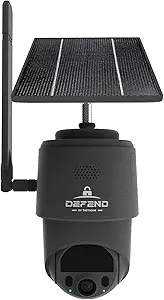 |
| Best Value The sweet spot between price and what you get | HOSAFE.COM ZC-YT10 Solar 4G Camera |  |
| Best Budget The cheapest option that still gets the job done reliably | YOTON YC02 Solar 4G Camera |  |
| Top Rated A top-rated pick with lots of positive feedback | LIWAN 4G LTE Cellular Security Camera |  |
| Most Popular A crowd favorite that many people choose with confidence | Ebitcam S40 4G Solar Camera |  |
| Best Seller A high-volume bestseller chosen again and again | TOAIOHO ZY-G3-US-FK Solar 4G Camera |  |
Tefrio CQ1S Cellular Security Camera

| Connectivity Technology | 4G LTE |
|---|---|
| Power Source | Solar Powered |
| Video Capture Resolution | 2k |
| Night Vision Range | 49 feet |
| Waterproof Rating | IP65 |
This Tefrio CQ1S cellular security camera kit is designed for remote, off-grid surveillance where Wi-Fi or mains power are unavailable. Each kit includes cameras with built-in 4G LTE SIM support and solar panels so the units can run continuously without wired power; you do need to subscribe to an unlimited cellular data plan for each camera. In daily use the camera streams 2K video to a phone app, lets you pan 355° and tilt 90° for near-360° coverage, and offers 4x digital zoom. Color and infrared night vision extend useful imaging to about 49 feet and the app supports basic person and vehicle detection with instant push alerts. Recordings can be saved locally to a microSD card or to cloud storage after a trial period. Practical strengths are the self-powered design and wide controllable field of view, while limitations include dependency on a paid data plan, cellular coverage in your area, and reliance on digital zoom rather than optical zoom for detail at distance.
Best for: Buyers who need reliable surveillance for remote properties or jobsites without Wi-Fi or mains power and who prioritize continuous, low-maintenance monitoring over minimizing ongoing service costs.
Less Ideal for: Users who have reliable home Wi-Fi and want to avoid monthly data fees or those who need optical zoom or multi-country cellular compatibility.
- Solar-powered with included panel for continuous off-grid operation
- Built-in 4G LTE SIM enables remote access without any Wi-Fi or wired network
- 355° pan and 90° tilt with 2K streaming provides broad, detailed coverage
- Color and infrared night vision up to 49 feet for low-light visibility
- Supports local microSD storage plus optional cloud storage and camera sharing
- Requires a paid unlimited cellular data plan for continuous service
- No optical zoom; distant detail relies on digital zoom which reduces clarity
- Built-in SIM is non-removable and limited to use within the United States
Verdict: Choose this kit when you need truly off-grid, solar-powered security with cellular remote access and wide PTZ coverage for remote properties or job sites.
TACTACAM Defend 360 DFD-PTZ01

| Connectivity Technology | Wireless (LTE cellular) |
|---|---|
| Battery Power | 10000 milliamp_hours |
| Indoor Outdoor Usage | Outdoor |
The TACTACAM Defend 360 is a weatherproof, off-grid security camera built to monitor remote sites that lack WiFi or mains power. It connects over LTE cellular, so you can place it at a cabin, gate, or job site and get live view, instant motion alerts, 4K photos and 1080p video in the companion app. The camera supports full 360° pan, tilt and zoom so a single unit can cover wide areas that would otherwise require multiple fixed cameras. Solar charging plus a 10000 mAh rechargeable battery keep it running continuously outdoors, and the rugged housing is designed to tolerate rain and temperature swings. Expect straightforward setup through the app and basic on-camera features like motion-triggered captures; advanced cloud AI features and continuous high-resolution video may depend on data plan or subscription. If you need a fully on-grid NVR setup, this cellular-first design will feel different from WiFi/IP systems, but for remote, performance-focused monitoring it provides a practical, self-contained solution.
Best for: Buyers who prioritize reliable off-grid surveillance and need a single durable camera to actively monitor large or remote properties without running power or WiFi.
Less Ideal for: People who want a low-cost local NVR solution or who prefer cameras tied directly to a home WiFi network and local storage only.
- LTE cellular connectivity lets the camera operate where there is no WiFi
- 360° pan/tilt/zoom replaces multiple fixed cameras for broad coverage
- Solar plus 10000 mAh rechargeable battery supports continuous off-grid operation
- 4K photo capture and 1080p video with instant motion alerts to your phone
- Weather-resistant build suitable for outdoor use
- Relies on cellular data and may require a separate data plan or subscription for full features
- Advanced AI features are gated behind optional subscriptions or services
Verdict: Choose the Defend 360 when you need a durable, solar-powered LTE camera that delivers remote 360° monitoring without any WiFi or mains power.
HOSAFE.COM ZC-YT10 Solar 4G Camera

| Power Source | Solar Powered & Battery Powered |
|---|---|
| Video Capture Resolution | 2k |
| Night Vision Range | 50 feet |
| Waterproof Rating | IP66 |
| Flash Memory Supported Size Maximum | 128 GB |
This HOSAFE.COM ZC-YT10 is a wire-free outdoor security camera designed for off-grid locations that need monitoring without a home internet connection. It runs on a preinstalled 4G SIM and a built-in solar panel with rechargeable batteries so the camera can stay powered continuously in remote areas. The unit offers motorized pan/tilt for near-360 degree coverage, 4x digital zoom, auto focus, PIR motion sensing with push alerts, two-way audio, and selectable color night vision up to about 50 feet. Video records in 2K and can be saved to a microSD card (up to 128 GB) or the vendor cloud service after activating the free/cloud options in the app. Practical limits to expect are cellular data dependency and the need to maintain or top up the SIM data plan after the trial, and occasional setup/configuration quirks via the UBOX app. The camera is IP66 rated for outdoor use and includes mounting hardware, making it straightforward to install on barns, cabins, construction sites, and other locations where WiFi is unavailable.
Best for: Practical buyers who need reliable remote monitoring where WiFi is unavailable and prefer a low-maintenance, solar-powered system for properties like cabins, farms, or work sites.
Less Ideal for: Users who want an always-free cloud connection without managing a cellular plan or people who need multi-country SIM flexibility and full WiFi support.
- Operates without WiFi using built-in 4G LTE and a preinstalled SIM for off-grid sites
- Solar panel plus rechargeable battery enables continuous, wire-free outdoor power
- Motorized pan/tilt with wide coverage and 4x zoom reduces blind spots
- 2K video and color night vision up to 50 feet for clearer day and night footage
- Local microSD storage up to 128 GB plus optional cloud backup via the app
- Requires a cellular data plan after the trial period to stay online
- Official support limited to use in the United States and with the included SIM
Verdict: Choose this solar 4G camera when you need dependable, wire-free surveillance in locations without WiFi and are willing to manage a cellular data plan.
YOTON YC02 Solar 4G Camera

| Connectivity Protocol | 4G LTE |
|---|---|
| Power Source | Battery Powered with Solar |
| Video Capture Resolution | 2k |
| Night Vision Range | 10 meters |
| Waterproof Rating | IP66 |
The YOTON YC02 is a battery and solar-powered outdoor security camera that connects over 4G LTE instead of Wi‑Fi, making it suitable for farms, RVs, and job sites where internet is unavailable. It records in 2K with H.265 encoding at 15 fps, offers two-way audio and a loud 70 dB alarm, and supports local storage on the included 32 GB TF card (up to 128 GB). The kit ships with a solar panel, mounting hardware, and a built-in SIM with a short trial of data so you can get the camera online without wiring. Smart detection uses PIR plus humanoid filtering and configurable zones to reduce false alerts, and IP66 weather resistance keeps the unit working through rain and dust. Practical limitations are the single-band 4G requirement and fixed-focus optics with a 77° viewing angle, so fine detail at long range or in weak cellular areas may be limited; frame rate is modest at 15 fps which can affect fast motion clarity. For off-grid monitoring this is a self-contained option that prioritizes easy installation and continuous power.
Best for: Buyers who need reliable, low-maintenance outdoor surveillance in locations without internet or mains power and who value plug-and-play installation and solar-backed runtime.
Less Ideal for: Users who require multi-band cellular compatibility, higher frame rates for fast action, or very long-range, telephoto detail should look for alternative cameras with stronger cellular radios or optical zoom.
- Operates on 4G LTE with preinstalled SIM for true off-grid use
- Solar panel plus 7800mAh battery for long continuous operation
- Includes 32GB TF card and supports up to 128GB local storage with optional cloud trial
- 2K recording with H.265, two-way audio, and PIR humanoid detection for useful alerts
- IP66 weather resistance and mounting kit for quick outdoor installation
- Single-band 4G only so performance depends on local carrier coverage
- Fixed-focus lens and 77° viewing angle limit long-distance detail
- 15 fps frame rate may produce less smooth video for fast-moving subjects
Verdict: If you need a self-contained outdoor camera that runs on solar and 4G for true off-grid monitoring, the YC02 is a straightforward, ready-to-install choice.
LIWAN 4G LTE Cellular Security Camera

| Connectivity Protocol | Cellular (4G LTE) |
|---|---|
| Video Capture Resolution | 2k |
| Power Source | Corded Electric |
| Waterproof Rating | IP65 |
| Optical Zoom | 4x |
This LIWAN cellular security camera is a wired, plug-in bullet camera that uses a built-in 4G LTE SIM so it can operate without any WiFi connection, making it suitable for off-grid or spotty-internet locations. It records continuously when powered and supports local microSD storage up to 128GB plus optional cloud backup, while motion detection sends smartphone alerts and you can use two-way audio to listen and speak through the app. The camera captures 2K video with a 4x optical zoom and multiple night-vision modes including color night vision and a built-in spotlight for clearer low-light footage. Setup is straightforward: mount, plug in the adapter, and use the preinstalled SIM (trial data included) to get a live feed. Important limitations are that continued remote viewing requires purchasing a cellular data plan after the trial and the device only works with the preinstalled SIM in the US, so it is not a drop-in replacement for WiFi cameras or multi-carrier systems. The plastic IP65 body and wall-mount form factor give weather resistance for outdoor use but expect typical plastic housing durability compared with higher-end metal enclosures.
Best for: Buyers who prioritize a dependable camera that keeps recording and can be monitored remotely where WiFi is unavailable or unreliable, such as farms, cabins, or isolated properties.
Less Ideal for: People who need multi-carrier flexibility, want a WiFi-first camera, or who cannot or do not want to pay for an ongoing cellular data plan.
- Works without WiFi using built-in 4G LTE SIM for remote live view and alerts
- Continuous wired power for stable 24/7 recording
- 2K resolution with 4x optical zoom and color-capable night vision for clearer footage
- Motion detection with adjustable sensitivity and two-way audio for interaction
- IP65 waterproof rating suitable for outdoor mounting
- Requires purchasing a cellular data plan after the trial to maintain remote features
- Only supports the preinstalled SIM and US cellular use, limiting carrier flexibility
Verdict: Choose this camera when you need a weatherproof, plug-in security camera that reliably records and provides remote access without any WiFi connection.
Ebitcam S40 4G Solar Camera

| Connectivity Technology | 4G LTE Cellular Network |
|---|---|
| Video Capture Resolution | 2k |
| Night Vision | Night Color |
| Memory Storage Capacity | 32 GB |
| Waterproof Rating | IP65 |
The Ebitcam S40 is designed for remote outdoor monitoring where WiFi or mains power is unavailable. It uses a built-in prepaid 4G SIM and a 6W solar panel with an internal battery so the camera can stream 2K live video to your phone over Verizon, AT&T, or T-Mobile networks. The unit pans and tilts for wide coverage, uses a PIR motion sensor to trigger alerts, records to a local microSD card (up to 128 GB) and offers two-way audio and a built-in spotlight for color night vision. Setup is straightforward through the companion app, but each camera requires its own data plan after the trial expires and the SIM is non-replaceable. The camera is IP65 weather resistant and intended for farms, jobsites, cabins, and similar off-grid locations, though its cellular-only support is limited to U.S. carriers. Expect reliable remote access and continuous power in sunny locations, but plan for ongoing cellular costs and occasional connectivity checks when signal or battery levels drop.
Best for: Buyers who need a self-contained outdoor camera for remote properties or job sites and prioritize reliable off-grid live access and continuous power over avoiding ongoing service fees.
Less Ideal for: Users wanting a no-monthly-cost camera, multi-camera shared data plans, or installations outside the United States should consider alternatives.
- Works without WiFi using built-in 4G SIM for remote live view.
- Solar panel plus internal battery provides continuous power in sunny locations.
- 2K resolution with color night vision and 4x digital zoom for clearer footage.
- PIR motion detection with app alerts and local microSD recording up to 128 GB.
- IP65 weather resistance and two-way audio for outdoor monitoring and deterrence.
- Built-in prepaid SIM is non-replaceable and requires paid data after the trial.
- Cellular support limited to U.S. carriers and each camera needs its own data plan.
Verdict: If you need a solar-powered outdoor camera that streams 2K live video without WiFi, the Ebitcam S40 delivers a self-contained solution for remote sites.
TOAIOHO ZY-G3-US-FK Solar 4G Camera

| Connectivity Protocol | Cellular |
|---|---|
| Power Source | Battery Powered |
| Video Capture Resolution | 1296p |
| Flash Memory Supported Size Maximum | 128 GB |
| Waterproof Rating | IP66 |
This solar 4G security camera is designed to run without home WiFi by using a built-in SIM and a solar panel paired with a rechargeable battery, letting it operate continuously in remote or internet-free locations. Install it on an exterior wall, connect the solar panel, and the camera draws power to recharge its 7800mAh battery so you can avoid frequent manual charging. It records 1296p video in MP4, offers color night vision with a floodlight, and provides wide coverage with 336° pan and 90° tilt controlled from the app over the cellular link. Motion-triggered recording, PIR alerts, and an audible alarm mode help deter intruders, and two-way audio lets you speak through the built-in speaker and mic. Storage options include local microSD up to 128 GB and cloud recording via the vendor app. Important limitations are the built-in nonremovable SIM that requires a cellular plan after the free trial and the reliance on cellular service quality for live view and push alerts, but for locations without WiFi this camera provides a self-contained monitoring solution.
Best for: Buyers who prioritize a worry-free, internet-free outdoor camera for places without reliable WiFi and want a self-powered system that keeps recording and alerting automatically.
Less Ideal for: Users who prefer complete control over cellular service or want to avoid recurring data subscriptions should consider wired or local-network cameras instead.
- Built-in 4G cellular connectivity works without home WiFi
- Solar panel plus 7800mAh rechargeable battery supports continuous outdoor operation
- Pan 336° and tilt 90° with 1296p video and color night vision for broad, clear coverage
- PIR motion alerts, audible alarm, and two-way audio for active deterrence
- Supports local microSD storage up to 128 GB and optional cloud backup
- Built-in nonremovable SIM requires subscribing to a cellular data plan after the trial
- Performance and live-view responsiveness depend on local cellular signal quality
Verdict: A self-contained solar and 4G outdoor camera that delivers continuous internet-free surveillance for locations without WiFi.
Choosing the Right Security Camera Without Internet: Key Factors to Consider
Local Storage Type and Capacity
Where and how footage is stored is the core distinction for offline cameras. An SD card slot offers simple, removable storage but may have limits on maximum capacity and can wear out over time. Built-in solid-state storage or support for external USB drives often provides higher capacity and longer sustained recording.
You should consider how long you need to retain footage between manual checks. If you cannot retrieve media daily, prioritize higher-capacity solutions and loop-recording behavior that overwrites the oldest files safely. Also verify how the camera handles full storage events and whether it creates easy-to-find files for forensic review.
Power Source and Backup Options
An offline camera must still have power to record continuously. Hardwired mains power gives the most consistent uptime, while battery models offer flexible placement but require recharge or replacement schedules. Some cameras support both mains and battery modes for redundancy.
For locations with unreliable electricity consider units that work with external battery packs or accept PoE, which can be paired with an uninterruptible power supply. Think through how long the camera needs to run on backup and whether low-power modes affect motion detection or recording quality when conserving energy.
Recording Behavior When Offline
Not all cameras behave the same when disconnected from a network. Some continue full recording and local alerts, while others severely limit features without a cloud connection. Confirm that the camera continues motion-triggered recording, handles scheduled recording, and retains footage locally without requiring periodic cloud check-ins.
Also check whether features such as local timestamping, file integrity, and automatic loop overwrite function properly while offline. These behaviors determine whether the system is genuinely reliable for standalone surveillance.
Video Resolution and Night Performance
Higher resolution improves the chance of identifying faces or license plates but increases storage consumption and may shorten retention time on a fixed-capacity card. Balance resolution with expected storage and retention needs. Many users find 1080p offers clear detail while keeping file sizes reasonable.
Night vision and low-light sensitivity are equally important. Look for cameras with infrared illumination or good low-light sensors. Also consider lens angle: wider fields capture more area but reduce detail at distance, which affects how you position the camera relative to key targets.
Local Alerting and Access
Without internet connectivity you may still want timely alerts or simple local access to footage. Some offline cameras support local Wi-Fi or Bluetooth direct connections for phone access when you are on site. Others provide audible alarms or wired relay outputs to trigger local sirens or lights.
Consider how you will review footage after an event. Cameras that provide easy file export, clear file naming, and straightforward timestamped clips will reduce the hassle of incident review when remote cloud playback is not available.
Installation Environment and Durability
A camera's housing rating, mounting options, and resistance to weather or dust affect long-term reliability. Outdoor installations need appropriate IP ratings and serviceable seals to prevent moisture intrusion. Indoor cameras should prioritize discreet mounts and reliable indoor power fittings.
Also think about temperature tolerance if you are installing in unconditioned spaces and whether the unit allows firmware updates without internet to address future security or stability issues.
How Offline Recording Works
Offline security cameras record footage locally to media such as SD cards, internal drives, or attached USB storage. They either run continuously, record on a schedule, or trigger recording on motion events. Understanding the recording strategy helps set expectations for how much footage will be retained and how you will retrieve it.
Some systems also support network-attached storage over a local network without internet, but truly standalone setups rely on removable media. Consider how files are indexed and whether the camera timestamps video internally, as this affects the ease of reviewing events.
- Continuous recording consumes the most storage but ensures no gaps.
- Motion-triggered recording saves storage but can miss subtle events.
- Scheduled recording is useful for predictable coverage windows.
Placement Tips for Best Coverage
Position cameras to cover primary entry points and high-value areas while minimizing wide open spaces that dilute detail. Mount at a height that balances field of view with facial recognition—typically 8 to 10 feet for home entrances. Avoid pointing cameras directly into bright light sources to reduce glare and silhouette effects.
For outdoor cameras, place them under eaves when possible to shield from direct precipitation and reduce cleaning frequency. Consider overlapping coverage so a single blind spot or vandalism does not remove all visual records.
- Aim slightly downward to capture faces rather than sky.
- Use multiple narrow-angle cameras for long driveways.
- Keep lenses clear of vegetation and reflective surfaces.
Powering Offline Cameras: Practical Options
Tap into existing AC wiring for the most reliable continuous operation, or use Power over Ethernet if your setup supports it for combined power and local-network connectivity. For remote installations without mains, choose high-capacity rechargeable battery packs and plan maintenance intervals for swapping or recharging.
Solar panels paired with a battery bank can extend uptime for truly remote locations, but ensure the balance between solar output, battery capacity, and the camera's power draw during recording and night illumination.
- Mains power with a local UPS gives the best resilience.
- Batteries require monitoring and a clear maintenance plan.
- Solar setups need appropriate sizing for winter or shaded sites.
Managing Storage and Retention
Estimate daily storage needs by considering resolution, frame rate, and expected motion frequency. If you need multi-week retention, opt for larger internal storage or plan for frequent card swaps. Look for cameras that use efficient codecs and configurable frame rates to help control storage usage.
Set up a loop-recording policy that overwrites oldest footage predictably, and label or organize exported clips promptly after incidents to avoid accidental overwrites during investigations.
- Lower frame rates and resolution reduce storage but may miss fast motion.
- Regular exporting of critical clips prevents accidental loss.
- Check file formats for easy playback on standard media players.
Security and Privacy Without a Cloud
Operating offline reduces exposure to cloud-based vulnerabilities and subscription privacy concerns. However, physical security of the camera and storage media becomes more important. Locking housings, tamper-resistant mounts, and hidden placement of SD cards can deter casual theft.
If the camera supports local network access, secure that network and use strong local passwords. Keep firmware up to date via manual updates when available to mitigate known vulnerabilities even in an offline deployment.
- Physical tamper resistance is a key component of offline security.
- Local network access still needs strong authentication.
- Keep an update plan for firmware to address security fixes.
How We Chose the Best Security Camera Without Internet
We focused on factors that determine how well an offline security camera performs when it cannot rely on the internet. Primary evaluation criteria included local storage flexibility, power reliability, motion detection and alerting when offline, video quality and low-light performance, and durability for intended installation locations. We looked for cameras that offer robust loop recording or easy media removal, simple local playback options, and dependable standby-to-record power behavior. Usability items such as setup without a cloud account, clear local-access playback methods, and straightforward file export were also important. We excluded devices that require mandatory cloud activation, phones-as-cameras solutions, or designs that lose basic recording capability without a persistent network. The resulting picks balance recording resilience, installation versatility, and straightforward local management for real-world offline use.
Our full evaluation process is outlined in our review methodology.
FAQ
Can a security camera record without any network connection?
Yes. Many cameras can record directly to onboard storage such as an SD card or internal drive without a network connection. Confirm the model supports standalone recording and does not require periodic cloud activation.
How do I view footage from an offline camera remotely?
Remote viewing without internet is limited. Some cameras allow direct local Wi-Fi or Bluetooth connections for on-site access, or you can remove the storage media and review it on a laptop. True remote access generally requires a network connection or local networking equipment.
How long will footage be saved on an SD card?
Retention depends on card capacity, video resolution, and how often the camera records. A high-capacity card can store days to weeks of footage. Cameras typically support loop recording, overwriting oldest files when the card fills.
Are offline cameras less secure than cloud cameras?
Offline cameras reduce exposure to cloud-based risks but increase the importance of physical security and local access controls. Without cloud backups, lost or stolen storage media can permanently remove incident evidence.
Can I get motion alerts from a camera with no internet?
Some offline models provide local alerts through onboard alarms, direct Bluetooth/Wi-Fi connections, or wired relay outputs. However, push notifications to your phone usually require some network connection or a local gateway device.
Final Verdict
For situations where internet is unavailable or undesired, prioritize offline recording reliability, storage capacity, and power resilience. Decide whether you need continuous recording or motion-triggered capture, and match resolution to storage and identification needs. Also plan for secure mounting and an accessible workflow for retrieving and exporting footage. By focusing on robust local storage, dependable power, and straightforward local access, you can deploy a security camera without internet that meets your monitoring and evidence-retention goals with confidence.