
Note: This article contains affiliate links. If you click on these links and make a purchase, we may earn a small commission at no extra cost to you. This helps support our research and content. Read our full affiliate disclosure here.
If you want surveillance that avoids cloud accounts and internet connections, choosing a security camera without Wi-Fi focuses the experience on local recording and privacy. These offline cameras are useful when you need reliable motion detection, stored video you control, and a simple setup that does not rely on home networking. This guide presents seven shortlisted security cameras without Wi-Fi that cover common home and small-business use cases. We evaluated each option for storage, power and mounting flexibility, motion detection accuracy, and ease of retrieving footage. Read on to find which approach fits your priorities and how to match a camera to your space.
Top Picks at a Glance
| Best Overall The best all-around choice for most situations | TACTACAM Defend 360 | 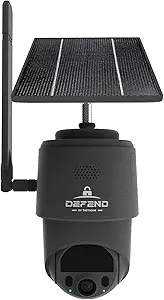 |
| Best Quality Built to a higher standard if you want something more solid | Vosker VKX V300 |  |
| Best Value The sweet spot between price and what you get | HOSAFE.COM RBX-S52 2K Solar Camera |  |
| Best Budget The cheapest option that still gets the job done reliably | YOTON YC02 Solar 4G Camera |  |
| Top Rated A top-rated pick with lots of positive feedback | SEHMUA RBX-S90 2K Solar Camera |  |
| Most Popular A crowd favorite that many people choose with confidence | IHOXTX DF220 4G Security Camera |  |
| Best Seller A high-volume bestseller chosen again and again | SEHMUA S40 4G Solar Camera |  |
TACTACAM Defend 360

| Connectivity Technology | Wireless (LTE cellular) |
|---|---|
| Battery Power | 10000 milliamp_hours |
| Indoor Outdoor Usage | Outdoor |
| Other Special Features of the Product | 360° remote pan/tilt/zoom; solar + battery power; 4K photo, 1080p video; weatherproof |
The TACTACAM Defend 360 is a self-contained outdoor security camera designed for locations without Wi‑Fi, using LTE cellular for live view and alerts. It combines a remotely controllable pan/tilt/zoom head with 4K photo capture and 1080p video so you can scan wide areas from your phone instead of installing multiple fixed cameras. Power is handled by an internal rechargeable battery and optional solar charging to keep the unit running off‑grid at gates, cabins, job sites, or boats. The camera is weather resistant and built for continuous outdoor exposure, and it sends instant motion alerts and images to the app. Limits to consider are cellular data requirements and any monthly plan for LTE service, and advanced AI tracking features may require a subscription. For buyers wanting a standalone, weatherproof system that covers large sightlines and runs without a home network, the Defend 360 is a practical choice.
Best for: Buyers who need a reliable outdoor security camera for remote or off‑grid sites and prefer a self-contained system that runs without local Wi‑Fi.
Less Ideal for: People who want a zero‑ongoing‑cost system or have unlimited high‑bandwidth video needs without paying for cellular data and subscriptions.
- Works over LTE so no Wi‑Fi or local network setup is required
- 360° remote pan, tilt and zoom reduces need for multiple cameras
- Solar and rechargeable battery support continuous off‑grid operation
- 4K photos and 1080p video with instant motion alerts to a phone app
- Weather resistant construction for long‑term outdoor use
- Requires a cellular data plan for live view and alerts
- Advanced AI features may be behind a subscription
Verdict: Choose the Defend 360 when you need a weatherproof, solar‑capable security camera that delivers full remote pan/tilt/zoom and works anywhere there is cellular signal without Wi‑Fi.
Vosker VKX V300

| Power Source | Solar Powered |
|---|---|
| Video Capture Resolution | 1080p |
| Connectivity Technology | Wireless |
| Alert Type | Motion |
| Maximum Range | 100 feet |
The Vosker VKX V300 is a standalone cellular security camera built for remote sites that lack Wi-Fi. It uses an included SIM and 4G-LTE to send motion-triggered photo alerts and 15-second video clips to your phone, and its frameless solar panel plus a swappable 14,000 mAh front-access battery aim to keep it running for months without external power. Installation is screw-in with a rugged antenna and IP65 weather resistance, making it suitable for jobsites, farms, and cabins. The camera captures 1080p daytime video, a 90-degree field of view, and infrared night vision rated out to 100 feet, and it includes a deterrent light to help ward off intruders. Practical limits include cellular dependency where coverage is weak and potential data costs tied to video requests, and while the solar charging claims long autonomy, actual runtime will depend on sun exposure and motion activity. For buyers who need a durable, off-grid monitoring solution, the VKX simplifies setup and ongoing power management compared with battery-only trail cams.
Best for: Buyers who need reliable, off-grid surveillance for remote properties, worksites, or storage areas and prioritize continuous monitoring without running Wi-Fi or wired power.
Less Ideal for: Users with poor cellular reception at the install site or those who prefer a local-network camera with unlimited home network bandwidth and no cellular fees.
- Built-in 4G-LTE with included SIM for monitoring without Wi-Fi
- Frameless solar panel plus swappable 14,000 mAh front-access battery for extended autonomous operation
- 1080p daytime video and infrared night vision up to 100 feet with a 90° field of view
- IP65 weather resistance and rugged antenna designed for outdoor jobsite conditions
- Motion-activated photo alerts and on-demand 15-second video clips through an app
- Relies on cellular coverage and may incur data or service costs for video requests
- Actual solar/battery runtime varies with location and sunlight, so uptime can be inconsistent in low-sun environments
Verdict: Choose the Vosker VKX V300 when you need a rugged, solar-powered cellular camera that delivers off-grid motion alerts and video without any Wi-Fi connection.
HOSAFE.COM RBX-S52 2K Solar Camera

| Connectivity Technology | 4G Cellular, Wireless |
|---|---|
| Video Capture Resolution | 1440p |
| Power Source | Solar and Battery Powered |
| Night Vision Range | 50 feet |
| Waterproof Rating | IP66 |
This HOSAFE.COM RBX-S52 is a fully wireless outdoor security camera that uses a preinstalled 4G SIM and a solar panel plus internal battery so it does not require Wi‑Fi or a hard power connection. It offers remote PTZ control (270° pan, 90° tilt) and 4x zoom for broad coverage, a 2K image sensor with four spotlights for color night video, and a PIR motion sensor that pushes alerts to your phone. Recordings save to the included 64 GB microSD or the vendor cloud (360‑day free option after application), and you can view live video, speak via two‑way audio, and replay events in the UBox phone app. The camera is rated IP66 and is intended for wall or ceiling mounting outdoors; the built‑in SIM provides about a 7‑day trial and then requires topping up data through the app. Practical buyers will like the wire‑free install and long runtime, but expect to manage cellular data and the vendor‑locked SIM behavior if you need to move the camera or use a different carrier.
Best for: Buyers who want a no‑Wi‑Fi, low‑maintenance outdoor camera that installs without wiring and delivers wide PTZ coverage and color night footage while accepting the ongoing task of managing cellular data.
Less Ideal for: Users who need carrier portability, plan to use the camera outside the U.S., or prefer a device that connects to an existing home Wi‑Fi network and local NVR setups.
- True wire‑free operation via built‑in 4G SIM plus solar panel and rechargeable battery
- PTZ control with 270° pan, 90° tilt and 4x zoom for wide coverage
- 2K sensor with spotlights for color night vision and up to 50 feet night range
- Includes 64 GB microSD and optional cloud backup with mobile app playback
- IP66 weatherproofing suited for outdoor installation
- Ships with a preactivated, vendor‑tied SIM and limited free trial data so ongoing cellular data fees are required
- Not designed to work with other SIM cards or outside the United States without contacting support
Verdict: Choose this camera if you need a genuinely wire‑free outdoor security solution with PTZ and color night vision and are prepared to manage a vendor SIM and cellular data plan.
YOTON YC02 Solar 4G Camera

| Connectivity Protocol | 4G LTE |
|---|---|
| Video Capture Resolution | 2k |
| Power Source | Battery Powered with Solar Panel |
| Waterproof Rating | IP66 |
| Flash Memory Supported Size Maximum | 128 GB |
The YOTON YC02 is an off-grid outdoor security camera built to run on cellular networks and a solar-charged battery, so it works where Wi‑Fi is unavailable. It ships with a preinstalled SIM and a 32GB SD card for local recording and offers 2K video capture, color night vision, two-way audio, and app control through the included Ubox/Cellular system. The unit is IP66-rated and includes a solar panel and mounts for straightforward outdoor installation, making it useful for farms, RVs, and job sites. Motion alerts use PIR plus humanoid filtering to reduce false alarms and there is a loud built-in alarm for deterrence. Limitations to note are the single-band 4G requirement—it only works on supported US carriers—and modest frame rate and viewing angle compared with higher-end models, so very fast action or ultra-wide coverage may be constrained. For buyers who need a standalone, low-maintenance camera in remote locations, the YC02 is a practical option.
Best for: Buyers who need a low-cost, self-contained outdoor camera for remote sites without reliable Wi‑Fi and prefer minimal ongoing maintenance or subscriptions.
Less Ideal for: Users who require multi-band cellular roaming outside supported US networks or need high-frame-rate, ultra-wide surveillance for fast-moving scenes.
- Works without Wi‑Fi using preinstalled 4G SIM for remote/off-grid locations
- Included solar panel plus 7800mAh battery enables long continuous operation
- 32GB SD card included with local recording and support up to 128GB
- 2K capture and color night vision improve identification in low light
- PIR plus humanoid detection and two-way audio for smarter alerts and interaction
- Operates on single-band 4G only so compatibility is limited to supported US carriers
- 15 fps frame rate and 77° viewing angle are modest compared with higher-end cameras
Verdict: If you need a budget-friendly, truly off-grid outdoor camera that runs on cellular and solar power, the YOTON YC02 delivers reliable local recording and basic smart detection without Wi‑Fi.
SEHMUA RBX-S90 2K Solar Camera

| Connectivity Technology | 4G LTE Cellular |
|---|---|
| Power Source | Solar Powered |
| Video Capture Resolution | 2k |
| Mount Type | Wall Mount & Ceiling Mount |
The SEHMUA RBX-S90 is a standalone cellular security camera built for off-grid and no-WiFi locations, pairing 2K resolution with a detachable solar panel for continuous outdoor monitoring. It mounts tool-free with a one-press quick release latch, supports 350° pan and 100° tilt for wide coverage, and uses a built-in SIM (Verizon, AT&T, T-Mobile) to send live video and push alerts through the UBoxPro app. The camera includes PIR human detection to cut down false alarms, two-way audio to communicate with visitors or deter intruders, and local microSD storage up to 128GB plus optional cloud backup. IP65 weatherproofing and MPEG-4 footage make it suitable for farms, cabins, RVs, and jobsites where running power or Wi‑Fi is impractical. Expect to pay for a cellular data plan after the trial and to manage occasional signal limitations where cellular service is weak, but the solar panel and cellular connectivity mean minimal onsite maintenance once it is positioned for good sun and reception.
Best for: Buyers who need a low-maintenance outdoor camera for remote, off-grid, or no‑WiFi locations and prioritize continuous, reliable monitoring over integrating with a home Wi‑Fi system.
Less Ideal for: Users who have consistent high-speed home Wi‑Fi and prefer cameras that integrate directly with local networks or those who want a solution that avoids ongoing cellular service fees.
- Operates without Wi‑Fi using built-in SIM and 4G LTE for remote monitoring
- Removable solar panel enables continuous power in sunny, off-grid locations
- 2K resolution with color night vision and wide pan/tilt coverage improves identification and scene coverage
- PIR human detection reduces false alerts and provides timely push notifications
- Tool-free one-press mounting/quick‑release simplifies installation and battery-free servicing
- Requires a paid cellular data plan after the trial to continue live streaming
- Performance depends on local cellular signal strength which can limit streaming quality or reliability
Verdict: Choose the RBX-S90 when you need a solar-powered, no-WiFi 4G camera that stays online in remote locations with minimal upkeep.
IHOXTX DF220 4G Security Camera

| Connectivity Technology | Wireless (4G cellular) |
|---|---|
| Power Source | Battery Powered (5200mAh) |
| Video Capture Resolution | 1080p |
| Viewing Angle | 110 degrees |
| Other Special Features | 2-Way Audio, PIR Motion Sensor, Night Vision |
The IHOXTX DF220 is a battery-powered 4G cellular bullet camera intended for locations without WiFi or easy power access. It uses a 4G SIM for data transmission so you can place it in gardens, garages, vacation homes, or other off-grid spots and receive real-time app alerts. The camera records 1080p H.264 video with a 110-degree field of view and supports two-way audio for remote communication. An upgraded PIR sensor aims to reduce false alarms by focusing on human movement, and built-in audible and flashing-light alarms provide active deterrence at night. The unit includes a 5200mAh internal battery for extended runtime and records locally to a TF card when formatted correctly. Practical limitations are that it depends on a stable 4G signal, does not support any WiFi connections, and cannot connect directly to TVs or computers, so all footage and settings must be managed through the smartphone app.
Best for: Buyers who need a practical off-grid surveillance option and want social-proof reassurance from a camera that prioritizes human-only motion detection and smartphone alerts.
Less Ideal for: Users in areas with weak or no 4G coverage, or those who need direct local viewing on TVs or computers rather than app-based management.
- Works without WiFi via 4G SIM so it can be installed where internet is unavailable
- Built-in 5200mAh battery provides long runtime for off-grid placement
- PIR human detection reduces false alerts from insects, leaves, or weather
- 1080p video and two-way audio allow clear monitoring and remote communication
- Requires reliable 4G cellular coverage and a SIM plan for remote access
- No WiFi support and no direct TV/computer connections, all management is via the smartphone app
Verdict: Choose the DF220 when you need a reliable, battery-powered security camera that delivers human-focused alerts and 4G remote monitoring where WiFi is not available.
SEHMUA S40 4G Solar Camera

| Connectivity Technology | 4G LTE Cellular |
|---|---|
| Video Capture Resolution | 2k |
| Waterproof Rating | IP65 |
| Power Source | Solar Powered |
| Night Vision | Night Color |
The SEHMUA S40 is a cordless outdoor bullet camera designed for locations without Wi-Fi or wired power, using a built-in 4G LTE SIM and a solar panel to stay online. It captures 2K (1440p) video, offers a 360 degree viewing capability via horizontal and vertical rotation, and includes full color night vision and 4x digital zoom for clearer detail after zooming. The camera relies on PIR motion detection to send real-time app alerts and supports two-way audio for remote conversation. Setup is aimed at remote sites like farms, barns, RVs, and job sites: initial charging via cable is required, then the solar panel maintains the internal battery. Key practical limits are the need for reliable 4G coverage and a cellular subscription after the included trial, and the camera does not support Wi‑Fi at all, so it cannot join existing home networks or local NVR systems. App control, cloud or SD recording, and multi-user viewing make management straightforward, but ongoing cellular data costs and signal strength are the main considerations for long-term use.
Best for: Buyers who need a reliable surveillance camera in sites without Wi‑Fi or mains power and who prefer a plug-free, low-hardware installation that relies on cellular service and solar charging.
Less Ideal for: Users who expect to integrate the camera into an existing Wi‑Fi-based home system or who lack dependable 4G coverage at the installation site should consider alternatives.
- True wireless operation with built-in solar panel and large internal battery for off-grid locations
- Cellular connectivity via built-in SIM works where Wi‑Fi is unavailable and supports major U.S. carriers
- High-resolution 2K video with 4x digital zoom and 360 degree adjustable view for broad coverage
- Color night vision and PIR motion sensor provide clearer nighttime images and fewer false alerts
- Two-way audio and app-based multi-user access simplify remote monitoring and communication
- Requires consistent 4G LTE signal and ongoing cellular plan after the trial ends
- Initial setup needs a full wired charge before solar can maintain the battery
Verdict: Choose the SEHMUA S40 when you need a truly wireless, solar-powered security camera that works without Wi‑Fi and provides high-resolution color video in remote outdoor locations.
Choosing the Right Security Camera Without Wi-Fi: Key Factors to Consider
Storage Type and Capacity
Whether a camera records to microSD cards, removable USB drives, or a local NVR (network video recorder) determines how you manage footage. MicroSD is common for single standalone units and is convenient for quick removal and transfer to a computer. Larger installations often use an NVR that aggregates multiple cameras and provides longer retention.
Pay attention to maximum supported card sizes and file formats. Look for straightforward file export options like FAT32/EXFAT compatibility or direct USB access. If you need extended retention or continuous recording, choose a solution that supports higher-capacity media or local archival to an external drive.
Power Source and Runtime
Cameras without Wi-Fi still need reliable power. Hardwired units or those using PoE (Power over Ethernet) deliver continuous power and avoid battery maintenance, making them ideal for fixed outdoor or indoor installs. Battery-powered cameras offer flexibility in placement and are useful where wiring is impractical, but battery life varies with recording frequency, resolution, and temperature.
Consider how motion-triggered recording, scheduled recording windows, and low-power modes affect runtime. If you choose a battery model, check how easy it is to swap batteries or recharge them and whether low-battery alerts are provided without an internet connection.
Recording Modes and Triggering
How and when a camera records affects storage needs and the usefulness of captured clips. Options include continuous recording, motion-triggered clips, scheduled recording, and pre-buffering a few seconds before an event. Motion-triggered recording conserves space but depends on sensor tuning to avoid false positives from wind or passing animals.
Look for adjustable sensitivity, configurable detection zones, and the ability to set minimum clip lengths or cool-down intervals between triggers. Cameras that support pre-roll buffering or configurable frame rates give more usable evidence while still managing storage constraints.
Video Quality and Compression
Resolution, frame rate, and compression determine how detailed saved footage will be and how much space it consumes. Higher resolution and frame rate improve identification and situational awareness but use more storage. Efficient codecs help balance clarity and file size; however, some cameras use proprietary formats that complicate playback without specific software.
Choose a camera that records at a practical resolution for the viewing distance you expect and that stores files in standard, widely playable formats when possible. If identification at night or from a distance is a priority, prioritize resolution and optics over extremely high frame rates.
Durability and Environmental Protection
For outdoor or semi-exposed locations, the camera housing should resist water, dust, and temperature extremes. Ratings such as ingress protection classes or stated operating temperature ranges indicate how well a unit tolerates weather. Tamper-resistant mounts and visible deterrence features can also reduce the risk of vandalism or theft.
Consider where you will install the device and choose a construction level appropriate for that environment. Indoor-only units should be kept inside to avoid premature failure, while outdoor-rated units often include sun shields, flexible mounting brackets, and gaskets to keep connectors dry.
Offline Recording Architectures
Cameras without Wi-Fi record locally using a few common approaches. Single-unit solutions typically write to microSD cards or onboard flash, which is simple and works well for single-point monitoring. Multi-camera setups often rely on an NVR appliance that stores footage from several cameras centrally and simplifies retention management.
Each architecture has tradeoffs. Single-camera local storage is low-cost and easy to deploy but can limit retention. NVR systems provide centralized backups and longer retention but require additional hardware and slightly more complex setup. Choose the architecture that matches how many locations you want to cover and how long you need to keep footage.
- MicroSD: easiest for single cameras, quick removal and transfer
- Local NVR: central storage for multiple cameras, easier long-term retention
- Removable drives: convenient for periodic backups without network access
Placing Offline Cameras for Best Coverage
Placement is key for useful footage regardless of connectivity. Aim cameras at likely approaches, entry points, and pathways rather than broad open areas. Position cameras higher to avoid tampering and to give a better perspective for identification.
Consider sightlines and lighting. Avoid backlit positions that silhouette subjects. For outdoor installs, place cameras under eaves or behind small covers to reduce direct weather exposure while preserving a clear field of view.
- Cover primary entry paths and driveway or yard approaches
- Keep cameras out of direct sunlight and away from strong backlight
- Mount at 8 to 10 feet for a balance of coverage and usable facial detail
Accessing and Backing Up Footage Locally
Without cloud sync, you need a plan for retrieving and backing up clips. Cameras that write to removable media allow quick physical transfer. Others provide USB export, direct wired access to files, or an option to copy footage to a local drive via a closed local network.
Regular backups prevent data loss if the camera is damaged or stolen. Schedule routine copying of critical clips to an external drive and store a copy offsite if footage may be needed for evidence. Prefer systems that use standard file containers for compatibility with common video players.
- Use removable media or USB export for straightforward file transfer
- Copy important clips to an external drive periodically
- Verify playback compatibility before relying on a device for evidence
Choosing Between Wired and Battery Models
Wired and Power over Ethernet models deliver continuous power and typically more consistent performance. They suit long-duration monitoring and places where you do not want to swap batteries. Battery cameras are flexible for temporary coverage, remote spots, or renters who cannot run wiring, but they require more maintenance.
Assess how often you are willing to inspect batteries and how mission-critical uninterrupted coverage is. Some battery cameras include power-saving modes, adjustable recording windows, and solar charging accessories that extend maintenance intervals.
- Wired for continuous operation and lower maintenance
- Battery for flexible placement and temporary needs
- Solar or external power accessories can reduce battery swaps
Privacy and Legal Considerations
Using a camera without Wi-Fi reduces exposure of footage to third-party servers, but you still must follow local privacy laws. Avoid pointing cameras at neighbors' private spaces or areas with an expectation of privacy like bathrooms or inside homes where guests change or sleep.
If footage could be used as evidence, ensure chain-of-custody practices when handling and storing clips. Label exports with timestamps, keep original files intact, and avoid altering files if you might need them for legal purposes.
- Avoid recording private indoor spaces of others
- Keep original files intact for potential evidence
- Understand local laws about audio recording, which may differ from video rules
How We Chose the Best Security Camera Without Wi-Fi
We prioritized attributes that matter when you deliberately avoid Wi-Fi and cloud services. Primary selection criteria included the type and reliability of local storage, power options and runtime, motion detection accuracy and adjustability, physical weather and tamper resistance for outdoor use, and how straightforward it is to access and back up footage. We also considered video resolution and night-vision effectiveness because they directly affect how useful locally stored clips are for identification. Excluded from consideration were devices that require mandatory cloud activation, constant internet connection for basic recording, or proprietary subscription-only access to footage. We filtered out products with unclear local export paths or those that lock recorded files behind online-only apps. Final choices reflect cameras that record reliably to onboard media or local network storage without needing an active internet connection, while still offering usable resolution, dependable detection, and sensible power or battery-life characteristics.
Our full evaluation process is outlined in our review methodology.
FAQ
Can a security camera without Wi-Fi record continuously?
Yes, many offline cameras support continuous local recording when paired with sufficient storage or an NVR. Continuous recording uses more space than motion-triggered modes, so plan for higher-capacity media if you need 24/7 footage.
How do I retrieve footage from a camera with only local storage?
Common methods include removing and reading a microSD card, exporting via a USB connection, or copying files from an NVR. Some cameras also allow direct wired access to files over a local network without internet access.
Are offline cameras less secure because they are not connected?
Being offline reduces exposure to remote hacking and cloud leaks, but physical risks increase. If an intruder can access or destroy the camera, footage may be lost. Combining secure mounting, redundant storage, and regular backups improves overall security.
Will a camera without Wi-Fi still detect motion reliably?
Motion detection depends on the camera's sensors and firmware rather than network connection. Many offline models offer adjustable sensitivity and detection zones to reduce false triggers and maintain reliable event capture.
Can I get alerts from a camera that is not connected to the internet?
Real-time push alerts typically require a network connection. However, some systems can provide local notifications via a connected display or record events for later review. Wired setups tied to an NVR may offer on-site alarms without internet.
Final Verdict
When you choose a security camera without Wi-Fi, prioritize how you will store and retrieve footage, the power model that suits your installation, and durability for the expected environment. Expect tradeoffs between convenience and autonomy: local storage gives control and privacy, while wired power and centralized recorders reduce maintenance. Decide whether you need continuous coverage or motion-triggered clips, confirm export compatibility for evidence, and plan a backup routine. With these priorities in mind, you can select an offline camera that balances privacy, reliability, and practical maintenance for your specific location.