
Note: This article contains affiliate links. If you click on these links and make a purchase, we may earn a small commission at no extra cost to you. This helps support our research and content. Read our full affiliate disclosure here.
If you need a high-capacity fridge that balances freezer access with organized refrigeration, choosing the right side-by-side refrigerator matters. Side-by-side layouts keep frozen items and chilled foods at eye level and make it easier to separate meal prep zones in a busy kitchen. When a unit is on sale, you can often get better features for the same budget, but you still need to verify capacity, energy use, and layout suit your household. This guide shortlists the top side-by-side refrigerators currently on sale and explains the practical strengths and tradeoffs of each option. We evaluated capacity, storage flexibility, energy efficiency, temperature control, and reliability-related features to help you pick the model that fits your cooking and grocery routines. Read on to see which designs match your needs and why they made the list.
Top Picks at a Glance
| Best Overall The best all-around choice for most situations | Samsung Family Hub Side-by-Side |  |
| Best Quality Built to a higher standard if you want something more solid | Whirlpool WRSC5536RZ Side-by-Side |  |
| Best Value The sweet spot between price and what you get | Midea MRS25I7BST Side-by-Side Refrigerator |  |
| Best Budget The cheapest option that still gets the job done reliably | Iceblue LS-156BSSD Side-by-Side Refrigerator |  |
| Top Rated A top-rated pick with lots of positive feedback | Forno Salerno Side-by-Side Refrigerator |  |
| Most Popular A crowd favorite that many people choose with confidence | Avanti Mini Fridge RMS551SS |  |
Samsung Family Hub Side-by-Side

| Configuration | Side-by-Side |
|---|---|
| Capacity | 26.7 cubic feet |
| Freezer Capacity | 9.5 cubic feet |
| Voltage | 115 volts |
| Defrost System Type | Automatic |
This Samsung Family Hub side-by-side refrigerator pairs a large, organized interior with smart-home conveniences. The Family Hub touch display sits on the door to show calendars, photos, and manage groceries while Alexa and app control let you interact remotely. Internally you get multivent all-around cooling, four adjustable shelves, and a dedicated indoor icemaker and filtered water dispenser for everyday use. The flat-panel stainless finish and recessed handles give a modern built-in look and a fingerprint-resistant surface that is easier to keep clean. Practical benefits include even cooling across shelves to help food last longer and a roomy freezer and fresh-food split that fits family-sized shopping trips. The smart features add convenience but depend on network setup and occasional software interactions, and a refrigerator this size requires full freestanding installation and sufficient kitchen clearance. Energy consumption is higher than compact units, so it suits buyers prioritizing capacity and features over minimal running costs.
Best for: Buyers who want a feature-rich, family-sized side-by-side refrigerator that blends smart-home controls with a modern, low-maintenance exterior and roomy storage for weekly shopping.
Less Ideal for: People with very tight kitchen spaces, minimal interest in smart features, or those prioritizing the lowest possible energy use should consider smaller or simpler models.
- Large 26.7 cubic foot capacity with separate freezer and fresh-food sections
- Family Hub touchscreen with Alexa and app control for remote management
- Filtered water dispenser and high-capacity indoor icemaker built into the door
- Multivent all-around cooling and adjustable shelving for even temperatures and flexible storage
- Requires significant kitchen clearance and is heavy to move during installation
- Smart features require network setup and may receive software updates that change behavior
Verdict: Choose this Samsung when you want a large, smart side-by-side refrigerator that combines Family Hub connectivity with practical storage and built-in water and ice.
Whirlpool WRSC5536RZ Side-by-Side

| Capacity | 20.85 cubic feet |
|---|---|
| Configuration | Side-by-Side |
| Freezer Capacity | 6.97 cubic feet |
| Installation Type | Freestanding |
| Certification | Energy Star |
The Whirlpool WRSC5536RZ is a counter-depth side-by-side refrigerator built for everyday family use and straightforward performance. It provides roughly 20.85 cubic feet of total capacity with clear, adjustable glass shelves and deep door bins to keep groceries organized from top to bottom. The unit includes an in-door ice and water dispenser with a built-in filtration system and intuitive controls for hands-free dispensing. As a compressor-cooled, freestanding model with automatic defrost and an electronic lock, it focuses on reliable cooling rather than advanced smart features. Its Energy Star designation and listed annual consumption reflect modest operating costs for a mid-size refrigerator. Limitations include the smaller freezer capacity typical of side-by-side layouts and a reciprocating compressor rather than inverter technology, which can influence noise and long-term efficiency compared with variable-speed compressors. The design is practical, with a fingerprint-resistant stainless finish that fits modern kitchens but buyers seeking the quietest or most energy-efficient compressors may want to compare other systems.
Best for: Buyers who prioritize dependable, no-frills cooling and organized daily food storage in a mid-size, counter-depth package for a family kitchen.
Less Ideal for: Shoppers who need maximum freezer space or who want the quietest, most energy-efficient variable-speed compressor systems.
- Counter-depth side-by-side layout that integrates with cabinetry for a streamlined look
- In-door ice and water dispenser with built-in water filtration for convenient access
- Adjustable frameless glass shelves and deep door bins for flexible organization
- ENERGY STAR certified to help reduce annual energy use compared with non-certified models
- Freezer capacity is limited compared with top-freezer or bottom-freezer layouts
- Uses a reciprocating compressor rather than an inverter/variable-speed compressor
Verdict: Choose this Whirlpool if you want a dependable, counter-depth side-by-side refrigerator with convenient in-door ice and water and practical storage for everyday family use.
Midea MRS25I7BST Side-by-Side Refrigerator

| Configuration | Side-by-Side with Icemaker and Water Dispenser |
|---|---|
| Capacity | 24.5 cubic feet |
| Cooling Method | Compressor |
| Installation Type | Freestanding |
This Midea side-by-side refrigerator packs practical features into a counter-depth form that fits flush with cabinetry while still offering 24.5 cubic feet of usable space. It includes an internal autofill water pitcher and a built-in water dispenser so you get chilled water without an external pitcher to fill, plus an icemaker for steady ice supply. Gallon-sized door bins and crisper drawers make everyday organization straightforward and the electronic control panel with interior LED lighting keeps settings visible and accessible. The stainless finish is fingerprint-resistant which reduces visible smudges in a busy kitchen. Trade-offs are typical for counter-depth side-by-sides: although the layout prioritizes organization, the narrower interior compared with a full-depth model may reduce long-item storage and total usable shelf depth. For buyers focused on a streamlined kitchen look and convenient beverage access, this model balances features and space efficiently.
Best for: Buyers who want a clean, built-in look and straightforward daily conveniences like an internal autofill pitcher and icemaker while keeping kitchen organization simple.
Less Ideal for: Households that need maximum internal depth or those who prioritize smart home integration and app control features.
- Autofill internal water pitcher plus water dispenser for hands-off chilled water
- Built-in icemaker provides a steady supply of ice
- Gallon-size door bins and crisper drawers simplify organization
- Fingerprint-resistant stainless finish reduces visible smudges
- Counter-depth design means less shelf depth than full-depth refrigerators, limiting long-item storage
- Only standard electronic controls without advanced smart connectivity
Verdict: Choose this Midea side-by-side if you want a counter-depth refrigerator that hides smudges, offers an autofill water pitcher and icemaker, and keeps a streamlined kitchen profile.
Iceblue LS-156BSSD Side-by-Side Refrigerator
| Capacity | 15.6 cubic feet |
|---|---|
| Freezer Capacity | 6.08 cubic feet |
| Defrost System Type | Frost Free |
| Compressor Type | Inverter Compressor |
| Power Source | Corded Electric |
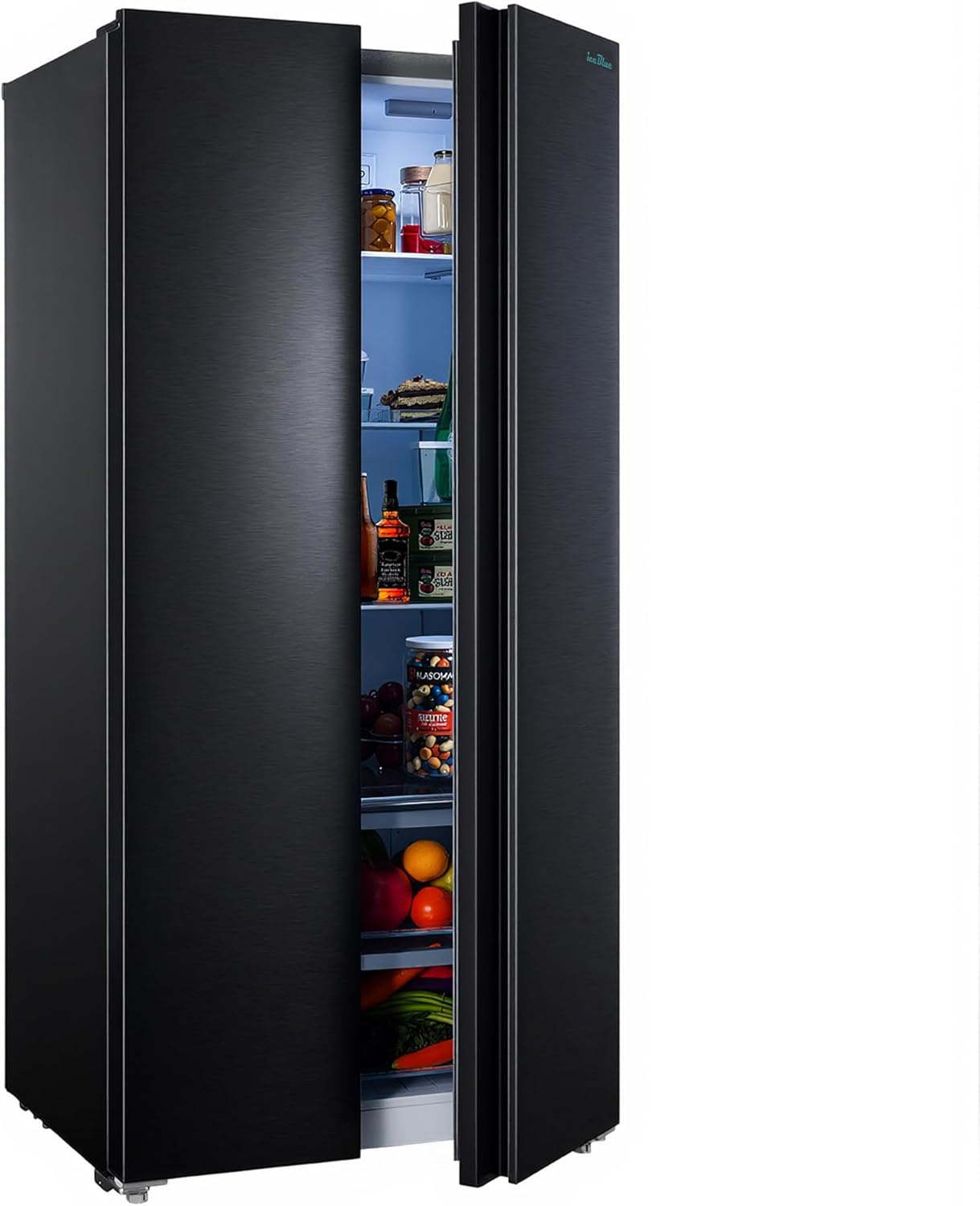
The Iceblue LS-156BSSD is a freestanding side-by-side refrigerator that delivers usable storage in a relatively compact full-size cabinet. It provides separate refrigerator and freezer zones with digital temperature control and five variable settings, so you can tune the fridge (32 to 42°F) and the freezer (-10 to 5°F) for drinks, fresh food, or frozen items. The unit uses an inverter compressor and frost-free defrosting to reduce manual maintenance and improve efficiency compared with basic compressors, and tempered glass shelves plus humidity-controlled crisper drawers help organize groceries. Practical benefits include a slim 33-inch footprint for tighter kitchens and six door shelves for bottles and condiments. Downsides are the listed 420 kWh/year energy use and the heavier weight, which may matter during delivery or placement, and some buyers may prefer a brand with longer-established appliance support. For shoppers prioritizing a budget-friendly side-by-side with zoning and modern controls, this model covers the essentials without premium frills.
Best for: Buyers seeking an affordable, full-featured side-by-side that balances usable capacity and modern controls for everyday home food and beverage storage.
Less Ideal for: Those who need the absolute lowest energy draw or who require extended manufacturer service and spare-part support from a long-established appliance brand.
- Dual-zone temperature control with five settings for separate fridge and freezer tuning
- Inverter compressor and frost-free system reduce manual defrosting and improve running stability
- Tempered glass shelves and humidity-controlled crisper drawers for organized storage
- Slim 33-inch width fits tighter kitchen spaces while offering full-size capacity
- Relatively high annual energy consumption at 420 kWh/year
- Heavy unit may require professional delivery and careful placement
Verdict: A budget-friendly side-by-side that gives separate fridge and freezer zones with modern controls and inverter cooling for buyers who want full-size functionality without premium pricing.
Forno Salerno Side-by-Side Refrigerator

| Capacity | 15.62 cubic feet |
|---|---|
| Configuration | Freestanding |
| Compressor Type | Inverter Compressor |
| Defrost System Type | Automatic |
| Annual Energy Consumption | 65 kilowatt hours per year |
The Forno Salerno side-by-side refrigerator is a counter-depth style unit designed for kitchens that need a built-in look without a full cabinet install. It uses an inverter compressor and a multi-air flow cooling system to keep temperatures consistent across adjustable glass shelves, crisper drawers, door bins and a gallon storage bin. LED touch controls let you set temperatures precisely and the fast freeze and fast cool modes speed chilling when you add groceries. Practical touches include spill-proof glass shelves for easier cleanup, a door-ajar alarm, and electronic lock capability. The 15.6 cubic foot capacity is suitable for small families or kitchens with moderate storage needs, and the frost-free design reduces maintenance. Expect typical trade-offs of a narrower 33-inch side-by-side: less overall storage than full-width refrigerators and slightly smaller freezer space, so you may need to plan shelf and bin layout carefully if you store bulk or tall items.
Best for: Buyers who prioritize steady, low-maintenance cooling and a built-in, counter-depth appearance for a smaller kitchen will appreciate this refrigerator.
Less Ideal for: Households that routinely store large quantities, oversized platters, or bulk frozen goods should consider larger-capacity models instead.
- Inverter compressor and multi-air flow for consistent, efficient cooling
- LED touch controls with fast cool and fast freeze modes for rapid temperature changes
- Spill-proof glass shelves and adjustable storage for easier cleaning and organization
- Door-ajar alarm and electronic lock add convenience and security
- 15.6 cu. ft. capacity is modest compared with full-width refrigerators
- Narrow side-by-side layout limits space for tall or bulky items
Verdict: Choose the Forno Salerno if you want a reliable, counter-depth side-by-side fridge with efficient inverter cooling and user-friendly controls for a smaller kitchen.
Avanti Mini Fridge RMS551SS

| Capacity | 5.5 cubic feet |
|---|---|
| Fresh Food Capacity | 3.3 cubic feet |
| Freezer Capacity | 2.2 cubic feet |
| Cooling Method | Compressor |
| Defrost System Type | Automatic |
The Avanti 5.5 cu. ft. mini fridge is a compact side-by-side refrigerator designed to add both fresh and frozen storage in small spaces like dorms, offices, or apartments. It separates 3.3 cu. ft. of fresh food space from a 2.2 cu. ft. freezer and uses a rotary scroll compressor for steady cooling. Adjustable glass shelves, door bins, a crisper drawer with glass cover, and fixed freezer shelves make organization straightforward, while the flush-back design helps it fit tight layouts. Temperature control is full-range, so you can tune cooling to preserve different foods. Energy Star certification indicates it runs more efficiently than non-rated units, though annual energy use is listed and should be considered for long-term running costs. Expect straightforward, manual operation rather than smart features, and know the one-year limited warranty is basic support. For buyers focused on compact, practical storage with reliable compressor cooling, this Avanti delivers sensible features in a small footprint, but it does not offer bells and whistles like app control or advanced ice/water dispensers.
Best for: Buyers who want a reliable, space-saving refrigerator with distinct fresh and frozen compartments and value real-world performance and energy efficiency over smart features.
Less Ideal for: People who need large capacity, integrated smart controls, or built-in ice and water dispensers should look at larger or higher-end alternatives.
- Side-by-side layout gives separate fresh and freezer compartments for organized storage
- Adjustable glass shelves and door bins let you customize storage for different items
- Compressor cooling with rotary scroll compressor provides reliable temperature control
- ENERGY STAR certified for better energy efficiency compared with non-rated compact fridges
- One-year limited warranty is relatively short compared with some competitors
- No smart features or advanced dispensers, so controls are manual and basic
Verdict: Choose this compact Avanti if you need a dependable, energy-efficient side-by-side mini fridge that maximizes usable fresh and frozen space in tight layouts.
Choosing the Right Side-by-Side Refrigerator on Sale: Key Factors to Consider
Capacity and Internal Layout
Capacity is more than a single cubic-foot number. Pay attention to how the interior is divided between refrigerator and freezer compartments and whether shelves are adjustable or removable. An efficient layout gives you usable space for tall bottles, party platters, and wide trays without forcing awkward stacking.
Shelving materials and layout affect day-to-day convenience. Tempered glass shelves prevent spills from dripping through, and adjustable door bins let you fit large condiments or gallon jugs. Consider how the freezer shelves and baskets are arranged for frozen pizza boxes, bulk items, and ice trays; a poorly organized freezer can negate the benefits of a large overall capacity.
Energy Efficiency and Operating Cost
A side-by-side refrigerator on sale can still cost more over time if it draws excess power. Look for models with efficient compressors, good insulation, and proven energy ratings. These features reduce monthly electricity use and are especially important if the fridge will be in continuous operation in a busy household.
Operating costs also depend on how you use the fridge. Units with adaptive defrost or variable-speed compressors adjust to usage patterns and often run quieter while consuming less energy. When comparing sale models, weigh initial savings against estimated annual energy consumption to understand true value.
Temperature Control and Freshness
Consistent temperatures and good airflow are crucial for food safety and freshness. Dual-evaporator systems or well-designed airflow ducts help maintain separate humidity and temperature zones for produce, dairy, and frozen goods. Look for models that advertise even cooling across shelves and stable freezer temperatures.
Controls matter too. Precise digital thermostats and clear control panels make it easier to set the correct temperatures for seasonal changes or long absences. Better temperature control reduces spoilage and preserves texture and flavor over time.
Durability and Build Quality
Durability affects long-term ownership costs and satisfaction. Check for robust drawer mechanisms, rust-resistant finishes, and solid door seals. Thinner shelving or light-duty door bins may save on upfront cost but lead to repairs or replacements sooner.
Interior materials that resist staining and are easy to wipe down reduce maintenance time. Pay attention to hinge designs and gasket quality since these elements are common wear points on side-by-side refrigerators.
Fit, Installation, and Kitchen Integration
Getting a sale model home requires ensuring it will fit and install cleanly. Measure doorway widths, alcove depth, and ceiling height before buying. Consider reversible doors, minimum clearance for ventilation, and whether the unit needs to be flush with cabinetry or can stand slightly proud.
Installation features such as adjustable leveling feet, front vents versus rear vents, and accessible water-line connections for ice/water dispensers affect ease of setup. If you have a tight kitchen layout, prioritize models designed for easier installation and minimal clearance requirements.
Convenience Features and Maintenance
Convenience elements influence daily use and upkeep. Features such as external dispensers, filtered water systems, and interior LED lighting improve user experience but can add components that need servicing. Consider how easy it is to replace filters, clean drawers, and defrost the freezer when necessary.
Models with tool-free removable shelves and door bins speed up cleaning, while replaceable gasket designs make minor repairs simple. Balance convenience options against potential maintenance complexity when choosing a sale model.
Understanding Side-by-Side Layout Tradeoffs
Side-by-side refrigerators place the freezer and refrigerator sections next to each other, offering equal vertical access to frozen and chilled goods. This layout is convenient for households that frequently use both compartments because it keeps everything at reachable heights without bending to access a bottom freezer.
However, the vertical split means each side is narrower than comparable top-freezer or bottom-freezer units. That can limit the types of trays or platters you can store. Consider how often you need to fit wide items and whether adjustable shelving or door bin capacity offsets the narrower compartment widths.
- Good for frequent freezer access and organized vertical storage
- Narrow compartment widths can limit wide or bulky items
- Choose models with adjustable shelves to maximize flexibility
How Energy Ratings Translate to Real Costs
Energy rating labels provide a standardized comparison of electricity consumption, but your actual cost depends on local energy rates and usage patterns. A model with a modestly better rating can save meaningful money over several years, especially in high-usage households.
Look beyond the rating number to features that reduce runtime, such as variable-speed compressors or better insulation. Also consider the placement of the refrigerator; a unit installed near a heat source or in a hot garage will run more and negate some efficiency advantages.
- Compare estimated annual kWh to gauge long-term operating costs
- Consider features that cut runtime, not just label grades
- Placement in the home affects actual energy use
Practical Storage Tips for Side-by-Side Fridges
Maximize usefulness by using bins and organizers that fit the narrower shelves. Store tall bottles in door bins and reserve middle shelves for stackable containers. Use drawer humidity controls for produce and dedicated shelves for dairy to reduce cross-contamination and extend freshness.
If you frequently host or prep large meals, plan how to store platters and party trays. Removable shelves and door bin flexibility let you temporarily reconfigure the fridge for short-term needs without permanent compromises.
- Use adjustable bins for tall items
- Reserve drawers for produce with humidity control
- Temporarily remove shelves for party platters
Ice and Water Dispensers: Convenience Versus Complexity
Built-in ice and water dispensers are convenient but add plumbing and filter maintenance. If you value instant cold water and filtered ice, check the accessibility of filter replacements and the filter life. These systems may slightly reduce usable shelf space in the freezer or refrigerator and add points of potential failure.
Self-contained dispenser designs are simpler to install and maintain than plumbed-in systems, but they may need more frequent emptying and filter changes. Factor in the ongoing maintenance when judging a sale model's overall suitability.
- Dispenser convenience comes with maintenance tradeoffs
- Check filter life and replacement accessibility
- Self-contained units avoid plumbing but require manual refills
Preparing for Delivery and Installation on a Sale Unit
When a refrigerator is purchased during a sale, confirm delivery windows and measure installation clearances ahead of time to avoid last-minute compatibility issues. Verify that the path from delivery truck to installation spot accommodates the unit width and height, and keep packaging materials until the appliance is tested.
Plan for disposal or relocation of your old refrigerator and ensure water and electrical connections meet local codes. If the sale model includes optional installation services, weigh the cost of professional setup against your comfort level with appliance installation tasks.
- Measure doorways and alcove clearances before purchase
- Keep packaging until the unit is fully operational
- Check local codes for water-line installations
How We Chose the Best Side-by-Side Refrigerator on Sale
We prioritized factors that matter most for side-by-side refrigerators and for buyers hunting a sale. First, capacity and internal layout were key because these fridges are chosen for organized, high-volume storage. We shortlisted units with clear shelving strategies, adjustable bins, and usable freezer-to-fridge ratios. Second, energy efficiency was a primary filter since ongoing power consumption affects long-term cost; we favored models with efficient compressors and favorable energy ratings. Third, temperature control and cooling consistency were evaluated, focusing on features such as dual evaporators, precise thermostats, and airflow design that reduce frost and keep produce fresh longer. Fourth, build quality and user-facing convenience features were considered, including drawer durability, shelving materials, and door-access ergonomics. Fifth, installation and footprint constraints were reviewed to ensure straightforward fitment and leveling options for typical kitchens. Excluded from the list were units with persistent reliability complaints, extremely limited warranty coverage, or very narrow availability during the sale window. We did not include models that sacrifice usable storage for aesthetic touches with no practical benefit. The result is a curated selection that balances storage practicality, energy efficiency, temperature performance, and everyday usability—criteria that align with the scoring labels used below.
Our full evaluation process is outlined in our review methodology.
FAQ
Are side-by-side refrigerators more energy efficient than other layouts?
It depends on the model. Efficiency varies by compressor type, insulation, and design. Compare estimated annual energy use and look for features like variable-speed compressors to find the most efficient option.
Will a side-by-side refrigerator fit through standard doorways?
Most models are designed to fit common doorways, but widths can vary. Measure doorway and hallway clearances and compare them to the unit dimensions before buying, accounting for any angled turns during delivery.
How easy is it to replace water filters or service dispensers?
Accessibility varies by design. Some units have tool-free filter access while others require moving shelves or panels. Check how often filters need replacement and whether the process can be done without specialized tools.
Do side-by-side refrigerators provide good freezer organization?
They can, especially if the model includes adjustable baskets, dedicated shelving, and clear bins. Because the freezer is vertical, look for models with pull-out drawers or baskets to keep items visible and accessible.
What maintenance keeps a side-by-side refrigerator running well?
Regularly clean interior surfaces and door gaskets, replace water filters per the manufacturer schedule, defrost manual-freezer sections if needed, and vacuum condenser coils annually if they are exposed. Routine upkeep extends life and maintains efficiency.
Final Verdict
When choosing a side-by-side refrigerator on sale, prioritize usable storage layout, reliable temperature control, and energy efficiency. Decide which convenience features you truly use and verify that the unit will fit your kitchen and installation constraints. Tradeoffs are inevitable: models that maximize capacity may reduce shelf width, while feature-rich units can increase maintenance needs. Focus on the dimensions and internal configuration that match your routines, and weigh estimated operating costs alongside upfront savings. With those priorities in mind, you can confidently select a sale model that balances daily convenience with long-term value.