
Note: This article contains affiliate links. If you click on these links and make a purchase, we may earn a small commission at no extra cost to you. This helps support our research and content. Read our full affiliate disclosure here.
If you prefer a refrigerator that keeps things straightforward, models without a built-in water or ice dispenser remove a common point of maintenance and free up exterior space for cleaner styling. A refrigerator without water and ice dispenser is often quieter, easier to service, and presents fewer hygiene concerns. This guide covers our five shortlisted options and explains why each made the cut. We evaluated storage flexibility, energy efficiency, temperature consistency, and ease of upkeep to help you choose a unit that fits your kitchen, cooking habits, and maintenance preferences. Read on for quick buying pointers and practical considerations before the product list.
Top Picks at a Glance
| Best Value The sweet spot between price and what you get | Anypro 3.2 Cu.Ft Refrigerator |  |
| Best Budget The cheapest option that still gets the job done reliably | Midea 3.3 Cu ft Compact Refrigerator |  |
| Top Rated A top-rated pick with lots of positive feedback | Frigidaire Retro Refrigerator EFR751 |  |
| Most Popular A crowd favorite that many people choose with confidence | EUHOMY BR-145 Beverage Refrigerator |  |
| Best Seller A high-volume bestseller chosen again and again | hOmeLabs Beverage Refrigerator HME030065N | 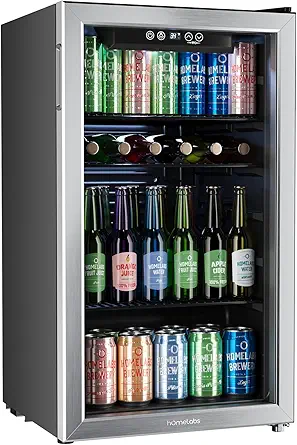 |
Anypro 3.2 Cu.Ft Refrigerator

| Capacity | 3.2 cubic feet |
|---|---|
| Freezer Capacity | 1.1 cubic feet |
| Defrost System Type | Manual |
| Cooling Method | Compressor |
| Refrigerant | R-600A |
This Anypro 3.2 cu ft refrigerator is a space-conscious two-door unit that pairs a 1.1 cu ft freezer above a 2.1 cu ft fresh-food section, aimed at dorms, apartments, offices, or as a secondary fridge. It uses compressor cooling with direct cooling technology and a 7-position mechanical thermostat so you can dial temperatures for drinks, produce, or frozen items; shelving is glass and two removable shelves plus a crisper drawer make organization straightforward. The fridge is freestanding, energy-conscious with reported low noise, and comes with basic accessories like an ice tray and defrost scoop which simplifies setup and maintenance. Because defrosting is manual you will need to plan occasional thawing of the freezer, and the compact capacity means it is best for singles, couples, or light secondary storage rather than family meal prep. In short, it delivers reliable basic refrigeration in a small footprint with simple controls and practical storage but without advanced features like auto-defrost or an ice/water dispenser.
Best for: Buyers who need a reliable, no-frills secondary or primary fridge for small living spaces and prioritize compact footprint, straightforward controls, and low-noise operation.
Less Ideal for: People who need large weekly grocery storage, frost-free operation, or built-in ice and water dispensing should look for larger or feature-rich models.
- Compact two-door layout with separate top freezer for versatile small-space use
- 7-position mechanical thermostat for simple, precise temperature control
- Removable glass shelves and crisper drawer for easy organization and cleaning
- Energy-efficient compressor operation with relatively low reported noise
- Freezer requires manual defrosting rather than automatic defrost
- Limited total capacity makes it unsuitable as a primary fridge for larger households
Verdict: A practical, compact two-door refrigerator that delivers straightforward, energy-conscious cooling for small spaces without unnecessary bells or whistles.
Midea 3.3 Cu ft Compact Refrigerator

| Capacity | 3.3 cubic feet |
|---|---|
| Annual Energy Consumption | 260 kilowatt hours per year |
| Temperature Range | 33.8°F to 50.0°F |
| Defrost System Type | Manual |
| Door Orientation | Reversible |
The Midea 3.3 cu ft compact refrigerator is a small, freestanding fridge built for dorms, offices, and tight kitchens that need straightforward cold storage without a freezer or ice maker. It uses a rotary compressor with R600A refrigerant and claims about 260 kWh/year energy use, so it runs more efficiently than many entry-level minis and can lower operating cost over time. The interior has three shelves, a 2L bottle rack, an adjustable thermostat (33.8°F to 50°F), and LED lighting for easy access. The door is reversible for flexible placement and the unit is rated at under 42 dB for relatively quiet operation. Setup is simple since it is manual defrost and freestanding, but that also means you will need to periodically defrost and there is no built-in freezer or ice function. For buyers prioritizing basic, efficient refrigerated storage in a compact footprint, this model delivers solid value; if you need freezer space, automatic defrost, or advanced temperature controls, look elsewhere.
Best for: Buyers who need an affordable, energy-efficient compact fridge for dorms, offices, or small apartments and prioritize low running costs and simple refrigerated storage.
Less Ideal for: Users who need a freezer, automatic defrost, or advanced temperature control for long-term frozen storage should consider other models.
- ENERGY STAR certified with low annual energy consumption for lower operating cost
- Reversible door and compact freestanding design fit tight spaces
- Adjustable thermostat and removable shelves allow flexible storage layouts
- Interior LED light and 2L bottle rack improve usability
- Relatively quiet operation rated below 42 dB
- Manual defrost design requires occasional de-icing
- No freezer compartment or ice-making capability
Verdict: A budget-friendly, ENERGY STAR certified compact fridge that keeps running costs low while delivering straightforward, quiet refrigerated storage for small spaces.
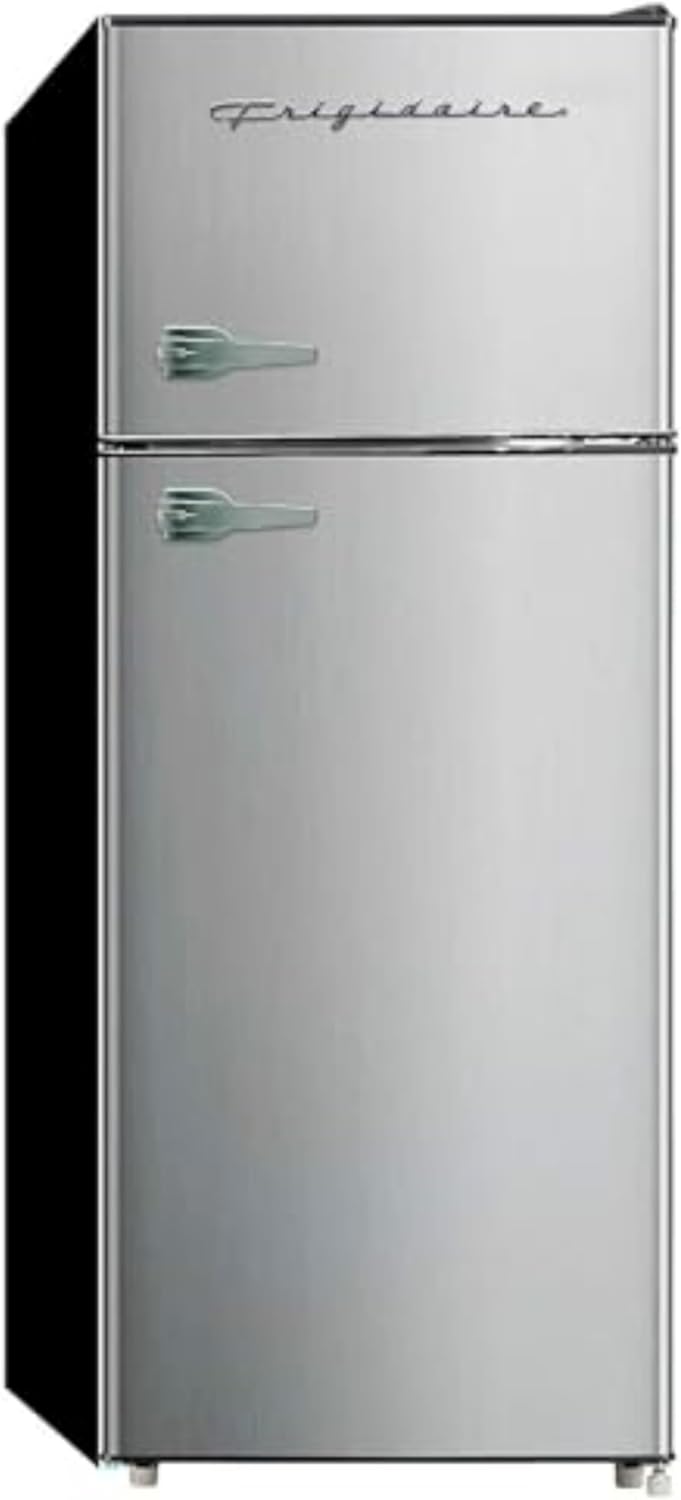
Frigidaire Retro Refrigerator EFR751
| Capacity | 7.5 cubic feet |
|---|---|
| Freezer Capacity | 2 cubic feet |
| Configuration | Freezer-on-Top |
| Defrost System Type | Manual |
| Power Source | Corded Electric |
This Frigidaire apartment-size refrigerator pairs a retro look with straightforward, dependable cooling for small spaces. It provides 7.5 cu ft of total capacity with a separate 2 cu ft top freezer, three adjustable glass shelves, a full-width door bin and a transparent crisper for organized everyday storage. The unit uses a compressor cooling system with mechanical controls and an adjustable thermostat, so temperature adjustment is simple and familiar to anyone who has used basic refrigerators. Practical touches include removable shelves, a reversible door hinge for flexible placement, two front leveling legs and rear castors for easier positioning. The manual defrost freezer and quiet operation keep maintenance and noise low, but the unit does not offer automatic defrost, a water line, or built-in ice features. Energy use is moderate for the class, and installation is freestanding only. If you want a no-frills, reliable compact fridge that focuses on usable storage and basic cooling performance, this model delivers without extra complications.
Best for: Buyers who prioritize straightforward, dependable refrigeration for a dorm, apartment, or secondary space and want simple controls and flexible interior organization.
Less Ideal for: Those seeking automatic defrost, integrated water or ice dispensers, or the most energy efficient compact refrigerator available should look elsewhere.
- Separate top freezer plus 7.5 cu ft total offers clear refrigerated and frozen storage
- Adjustable glass shelves and removable components make interior organization flexible
- Reversible door and rear castors allow easier placement in tight spaces
- Simple mechanical controls and compressor cooling are familiar and easy to use
- Manual defrost freezer requires occasional user intervention
- No built-in water or ice dispensing features
- Annual energy consumption is relatively high compared with the most efficient compact models
Verdict: A reliable, no-frills compact refrigerator that emphasizes usable storage and simple, familiar operation without added water or ice features.
EUHOMY BR-145 Beverage Refrigerator

| Capacity | 4.5 cubic feet |
|---|---|
| Temperature Range | 32°F to 61°F |
| Cooling Method | Compressor (rotary_scroll) |
| Number Of Shelves | 4 |
| Defrost System Type | Frost Free |
The EUHOMY BR-145 is a compressor-driven beverage refrigerator designed to store drinks and wine at controlled temperatures without a freezer or ice dispenser. It cools in a wide 32°F to 61°F range using a rotary scroll compressor and a digital control panel, so you can set fridge conditions for beer, soda, or white and red wines. The interior holds up to 145 cans or about 37 wine bottles on adjustable glass shelves and wire racks, and the double-pane tempered glass door with LED lighting makes stock visible while limiting UV exposure. It is marketed as quiet, running under 40 dB in typical operation, and supports built-in installation with a reversible door. Practical compromises are size and energy use: it is a compact undercounter unit that still consumes roughly 240 kWh/year and lacks a freezer, so it is best for beverage-only storage rather than general refrigeration needs. Service is backed by a one-year warranty and removable trays help with cleaning and reconfiguration.
Best for: Buyers who prioritize reliable, visible beverage storage and want a dedicated undercounter or freestanding drink fridge with adjustable shelving and quiet compressor operation.
Less Ideal for: Those seeking a multiuse kitchen fridge with a freezer, ice maker, or the lowest possible energy use should look elsewhere.
- Wide digital temperature range (32°F–61°F) for beer, soda, or wine.
- Compressor cooling for consistent, uniform temperatures.
- Spacious interior fits up to 145 cans or 37 wine bottles with adjustable shelves.
- Quiet operation claimed under 40 dB and LED lighting for visibility.
- Annual energy consumption listed at about 240 kWh which is relatively high for a compact fridge.
- No freezer compartment so it cannot freeze or make ice.
Verdict: Choose the EUHOMY BR-145 if you need a dedicated, compressor-cooled beverage fridge with a wide temperature range and adjustable storage for cans and wine.
hOmeLabs Beverage Refrigerator HME030065N

| Capacity | 3.2 cubic feet |
|---|---|
| Temperature Range | 34°F-50°F |
| Cooling Method | Compressor |
| Number of Shelves | 3 |
| Defrost System Type | Automatic |
This hOmeLabs beverage refrigerator is a compact display cooler built for holding cans and bottles in small spaces like home bars, offices, dorms, or gaming rooms. It uses a whisper-quiet compressor and compressor cooling to maintain consistent temperatures from 34°F to 50°F via a touch-button digital control panel, and a bright interior LED light makes it easy to see contents without opening the door. The unit includes three removable chrome wire shelves that can be rearranged to hold slim cans or a few wine bottles, and the reversible double-glazed glass door framed in stainless-steel gives a clean, show-ready look. Practical benefits are steady cooling with relatively quiet operation, clear visibility for quick access, and straightforward controls that are easy to use. Important downsides are that it is a single-zone, freezerless cooler so it only stores chilled beverages, and the annual energy consumption is relatively high compared with some small refrigerators, which may matter for long-term running costs.
Best for: Buyers who want a reliable, easy-to-use freestanding beverage cooler for a small home bar, office, or dorm and prioritize quiet operation and clear display over advanced features.
Less Ideal for: People who need frozen storage, multi-zone temperature control, or the most energy-efficient compact refrigerator should consider other appliance types.
- Holds up to 120 slim cans in a 3.2 cu ft interior for concentrated beverage storage
- Touch-button digital temperature control down to 34°F for consistent cooling
- Reinforced glass door with interior LED light for clear product display
- Three removable adjustable shelves let you rearrange storage for cans or bottles
- Whisper-quiet compressor keeps noise low for indoor use
- No freezer compartment or multi-temperature zones so it only chills beverages
- Listed annual energy consumption is relatively high for a compact unit
Verdict: A quiet, easy-to-use 3.2 cu ft beverage cooler that displays and chills up to 120 cans for buyers who want a dependable freestanding drink fridge without water or ice features.
Choosing the Right Refrigerator Without Water and Ice Dispenser: Key Factors to Consider
Interior Layout and Adjustable Shelving
Interior layout determines how well the refrigerator adapts to your groceries and lifestyle. Shelves that adjust easily, door bins sized for bottles, and a mix of drawers and compartments let you store tall items, deli trays, and produce without crowding.
A refrigerator without a water or ice dispenser often gains usable interior volume where dispensers would otherwise be installed, so look for well-thought-out shelf placement and clear paths for airflow. Consider the number and type of crisper drawers and whether one drawer has humidity control. These details directly affect how much usable food you can store and how organized the interior stays over time.
Temperature Consistency And Cooling Performance
Consistent temperatures across shelves and drawers keep food fresher longer. Check for features that improve air circulation such as multi-zone cooling, vents positioned for even flow, and separation between freezer and fresh-food compartments.
A steady thermostat and accurate temperature controls are especially important when the unit lacks automatic ice-making, because inconsistent cold zones can lead to faster spoilage or freezer burn. Also evaluate how quickly a unit recovers after the door is opened; faster recovery reduces temperature swings that shorten produce life.
Energy Use And Long-Term Operating Costs
Without a dispenser and its pump or heater, these refrigerators can be simpler mechanically and sometimes more energy efficient. Still, overall energy use depends on compressor efficiency, insulation quality, and features like inverter technology.
Estimate annual energy consumption using the appliance's rated kWh or energy label and factor that into long-term ownership costs. Lower energy draw matters if the fridge runs 24/7 in a busy household, and more efficient models often keep temperatures steadier while saving on utility bills.
Ease Of Cleaning And Maintenance
A refrigerator without an exterior dispenser removes a frequent dirt and drip source, but interior cleaning remains key. Look for spill-resistant shelving, removable door bins, and gasket designs that are easy to wipe.
Consider access to the drip pan and condenser area for periodic cleaning. Fewer moving parts usually mean fewer service calls, but check how accessible filters, lights, and fan housings are. Simpler designs reduce the time and effort required to keep the unit hygienic and odor-free.
Noise Levels And Daily Operation
Noise is important in open-plan homes and kitchens near living spaces. Refrigerators without dispensers often avoid the intermittent pump noises and ice-maker motors, but compressor and fan sound still matter.
Look at stated noise levels when available or user feedback on hums, clicks, and cycling. Consider placement in your home and whether vibration dampers or quieter inverter compressors are offered. A quieter unit improves comfort in shared spaces and avoids drawing attention to normal cycles.
Dimensions And Fit For Your Kitchen Layout
Because these refrigerators remove dispenser housings, they sometimes offer a cleaner exterior and slightly different depth or door profiles. Still, accurate measurements are essential for a proper fit.
Measure clearances including door swing, hinge protrusion, and required ventilation space. Also account for floor leveling and the ability to clear doorways during delivery. Choosing a model that fits without modification keeps installation straightforward and ensures easy everyday access.
Why Choose A Refrigerator Without A Dispenser
Opting for a refrigerator without a water or ice dispenser simplifies both the exterior look and ongoing maintenance. You avoid dealing with drip trays, clogged dispenser lines, and regular filter replacements that dispensers demand.
That simplicity also often translates into more interior storage space and fewer mechanical components that can fail. For households that use countertop pitchers or standalone ice makers, removing the dispenser is a practical tradeoff that emphasizes core cooling performance over convenience features.
- Cleaner exterior with flat doors and fewer seams
- Fewer maintenance tasks and replacement parts
- Potentially larger usable interior capacity
- Reduced risk of dispenser-related leaks or odors
Layout Tips For Maximizing Usable Space
Match the refrigerator interior to how you shop and cook. If you buy large platters or have tall bottles, prioritize models with adjustable shelves and deep door bins. If you store lots of fresh produce, look for roomy crisper drawers with humidity controls.
Consider tradeoffs between flexible shelving and fixed compartments. Some designs include convertible drawers that switch between fridge and freezer temperatures, which can be helpful for occasional freezing needs without relying on an ice maker.
- Use adjustable shelves for tall items and flexible organization
- Prefer full-width shelves that can hold wide platters
- Check drawer depth for bulk produce storage
- Door bin capacity matters for beverage storage
Installation And Kitchen Integration
Think through installation early. A refrigerator without an external dispenser may have a simpler door profile, which can make it easier to fit between cabinets or under overhead cupboards. Still, confirm the clearance for door swing and ventilation.
If you plan a built-in or counter-depth installation, verify depth and hinge type to avoid obstructed doors. Also plan for routine access to the condenser area for cleaning and ensure the floor and path to the installation spot will support delivery and placement.
- Measure door swings and clearance before purchase
- Confirm ventilation space behind the unit
- Consider reversible doors if kitchen layout demands
- Ensure the floor can support the unit's weight
Simple Maintenance Routines That Keep Food Fresh
Regular cleaning and minor upkeep keep any refrigerator performing well. Wipe spills promptly, clean door gaskets with mild detergent, and periodically vacuum the condenser coils if they are accessible. Doing these tasks keeps the compressor from working harder than necessary.
Set a simple checklist: clean interior shelves monthly, check temperature settings every few weeks, and inspect door seals for tears or gaps. Without a dispenser, you avoid filter swaps, but internal components still benefit from occasional attention to extend service life.
- Wipe up spills immediately to prevent odors
- Inspect and clean door gaskets quarterly
- Vacuum condenser coils at least twice a year
- Monitor temperatures and adjust as needed
Matching Features To Household Needs
Think beyond the absence of a dispenser. Prioritize features that support your routine such as easy-to-read controls, bright interior lighting, and specialized drawers. For families, consider models with generous freezer compartments and clear bin organization.
For singles or couples who cook less often, a compact model with efficient cooling and good shelving may be ideal. Balance must-have conveniences against features you can live without, since eliminating dispensers often shifts emphasis to other functional details.
- Families may prioritize larger freezer space
- Singles might prefer compact, energy-efficient units
- Look for clear controls and good interior lighting
- Decide if reclosing drawers or auto-defrost matters
How We Chose the Best Refrigerator Without Water and Ice Dispenser
We selected refrigerators that deliver reliable core cooling without the added complexity of built-in water or ice dispensers. Our editorial filters favored units with clear, measurable benefits for buyers who want simpler operation and lower maintenance. Evaluation criteria included storage configuration and adjustable shelving to assess daily usability; temperature consistency and cooling technology to ensure food safety; energy efficiency and estimated running cost to reflect long-term ownership; and build quality plus ease of cleaning to minimize upkeep. We also considered noise levels for open-plan homes and the clarity of user controls for straightforward operation. We excluded models that rely on integrated dispensers or require frequent filter replacements as those contradict the low-maintenance premise. Also omitted were units with unclear performance data or poor interior organization. The outcome is a list focused on practical refrigeration performance, low maintenance, and keener attention to usable storage and efficiency.
Our full evaluation process is outlined in our review methodology.
FAQ
Are refrigerators without dispensers more reliable?
They can be simpler and have fewer moving parts, which often reduces potential failure points. Reliability also depends on compressor quality, build materials, and how well the unit is maintained.
Will I lose usable space without an exterior dispenser?
Not necessarily. Many models that omit dispensers dedicate that area to interior storage or offer a cleaner door design. Review internal layout and shelf dimensions to confirm usable capacity.
How do I handle water and ice needs if my refrigerator lacks a dispenser?
You can use countertop water pitchers, filtered jugs, or standalone ice makers depending on how much ice you need. These alternatives avoid the plumbing and filter maintenance that built-in dispensers require.
Do these refrigerators use less energy?
They sometimes consume less due to fewer powered dispenser components, but total energy use depends on compressor efficiency, insulation, and features. Check the unit's energy rating or kWh estimate for a more accurate comparison.
Is cleaning easier without a dispenser?
Yes. Without an exterior dispenser you remove a common drip and grime source, but interior cleaning remains important. Look for spill-proof shelves and removable bins to simplify maintenance.
Final Verdict
Choosing a refrigerator without a water and ice dispenser is a practical move if you value simplicity, easier cleaning, and a quieter kitchen. Prioritize solid interior organization, consistent cooling, and efficient operation to get the most from a no-dispenser design. Weigh the tradeoffs between convenience features and low-maintenance reliability. If you focus on storage flexibility, temperature control, and straightforward upkeep, you can confidently select a model that fits your space and lifestyle.