
Note: This article contains affiliate links. If you click on these links and make a purchase, we may earn a small commission at no extra cost to you. This helps support our research and content. Read our full affiliate disclosure here.
If allergies make daily life uncomfortable, a compact air purifier can reduce airborne triggers in bedrooms, home offices, and small living spaces. Choosing the right small air purifier for allergies matters because not all compact units capture the same particle sizes, cover the same square footage, or run quietly enough for night use. This guide shortlists the top small air purifiers for allergy relief and explains the technical and practical differences that matter for home use. Below you will find our top picks for compact units suited to allergy control, along with the evaluation criteria we used and practical buying advice to help you pick the best fit for your space and symptoms.
Top Picks at a Glance
| Best Overall The best all-around choice for most situations | Winix A230 Air Purifier |  |
| Best Value The sweet spot between price and what you get | FULMINARE H13 HEPA Air Purifier |  |
| Best Budget The cheapest option that still gets the job done reliably | AromaRoom AP103-A Air Purifier |  |
| Top Rated A top-rated pick with lots of positive feedback | Levoit Core 300-P Air Purifier |  |
| Most Popular A crowd favorite that many people choose with confidence | Levoit Core Mini-P |  |
| Best Seller A high-volume bestseller chosen again and again | VOOPNU HEPA Air Purifier DH-JH12 |  |
Winix A230 Air Purifier

| Power Source | ac |
|---|---|
| Filter Type | HEPA |
| Floor Area | 230 square_feet |
| Noise Level | 27 db |
| Particle Retention Size | 0.03 micrometer |
The Winix A230 is a compact 4-stage air purifier designed for bedrooms and small living spaces that need reliable allergy and odor control. It pulls air through a prefilter, activated carbon, and True HEPA stage to capture particles down to 0.03 microns while the PlasmaWave feature helps reduce volatile compounds and microbes. A built-in air quality sensor provides a visual cue and lets the unit run in Auto Mode, adjusting fan speed as pollution levels change, and Sleep Mode keeps operation quiet overnight. Practical benefits include strong particle removal for pet dander, pollen, and smoke, plus the carbon filter to cut household odors, all in a relatively small, easy-to-place package. Limitations are that it lacks WiFi or smart-home integration and is best suited to single rooms rather than whole-house coverage, so larger open-plan spaces will require a higher-capacity model or multiple units.
Best for: Buyers who want a reliable, compact purifier that balances strong allergen removal with quiet overnight operation for bedrooms or small living areas.
Less Ideal for: Those who need whole-house purification, remote smart controls, or higher CADR for very large rooms should consider larger or connected models instead.
- True HEPA filtration captures most common allergens and fine particles.
- Activated carbon stage reduces VOCs and household odors.
- Auto Mode with built-in sensor adjusts fan speed for convenience and efficiency.
- Sleep mode and low noise make it suitable for bedroom use.
- No WiFi or smart-home connectivity for remote control or scheduling.
- Coverage is intended for single rooms and not large open-plan areas.
Verdict: A compact, bedroom-friendly purifier that delivers effective HEPA filtration and automatic sensor-driven cleaning for everyday allergy and odor control.
FULMINARE H13 HEPA Air Purifier

| Filter type | H13 HEPA |
|---|---|
| Recommended room size | 215 ft² / 20 m² |
| Noise level (low) | ~24 dB |
| Timers | 2, 4, 8, 10, 12 hours |
The FULMINARE H13 is a small, portable air purifier designed for bedrooms and similar-size spaces where allergy control and low noise matter. It pulls air through an H13 true HEPA filter and vents through a 360 degree outlet, which the manufacturer says refreshes air up to five times per hour in rooms around 215 square feet. Controls include a near-silent sleep mode (around 24 dB) and multiple timer settings, plus an independent night light useful for bedrooms or nurseries. In daily use it is easy to place on a nightstand or desk and run continuously to reduce airborne particles, pet hair and common odors. Maintenance is straightforward but requires periodic filter replacement and removing packaging before first use. The unit is plug powered with the adapter stored under the base so it is not battery dependent. Expect effective small-room filtration and very quiet operation, but plan for regular filter purchases and limited coverage for larger rooms.
Best for: Buyers who prioritize quiet, effective particle filtration for bedrooms or small living spaces and want a compact plug-in unit that runs continuously without batteries.
Less Ideal for: People who need whole-room or open-plan coverage, or who prefer an air purifier with built-in smart/home integration features.
- H13 true HEPA filtration captures fine particles and allergens
- 360° air outlet with dual-channel design for even circulation in small rooms
- Very quiet sleep mode suitable for light sleepers
- Independent night light and multiple timer options for bedroom use
- Plug-in design with compact footprint easy to place on bedside or desk
- Recommended coverage limited to about 215 ft² so not suitable for larger open-plan areas
- Requires periodic filter replacements which add to operating cost
Verdict: A very quiet, compact HEPA purifier that delivers reliable small‑room allergy relief with simple plug‑in convenience.
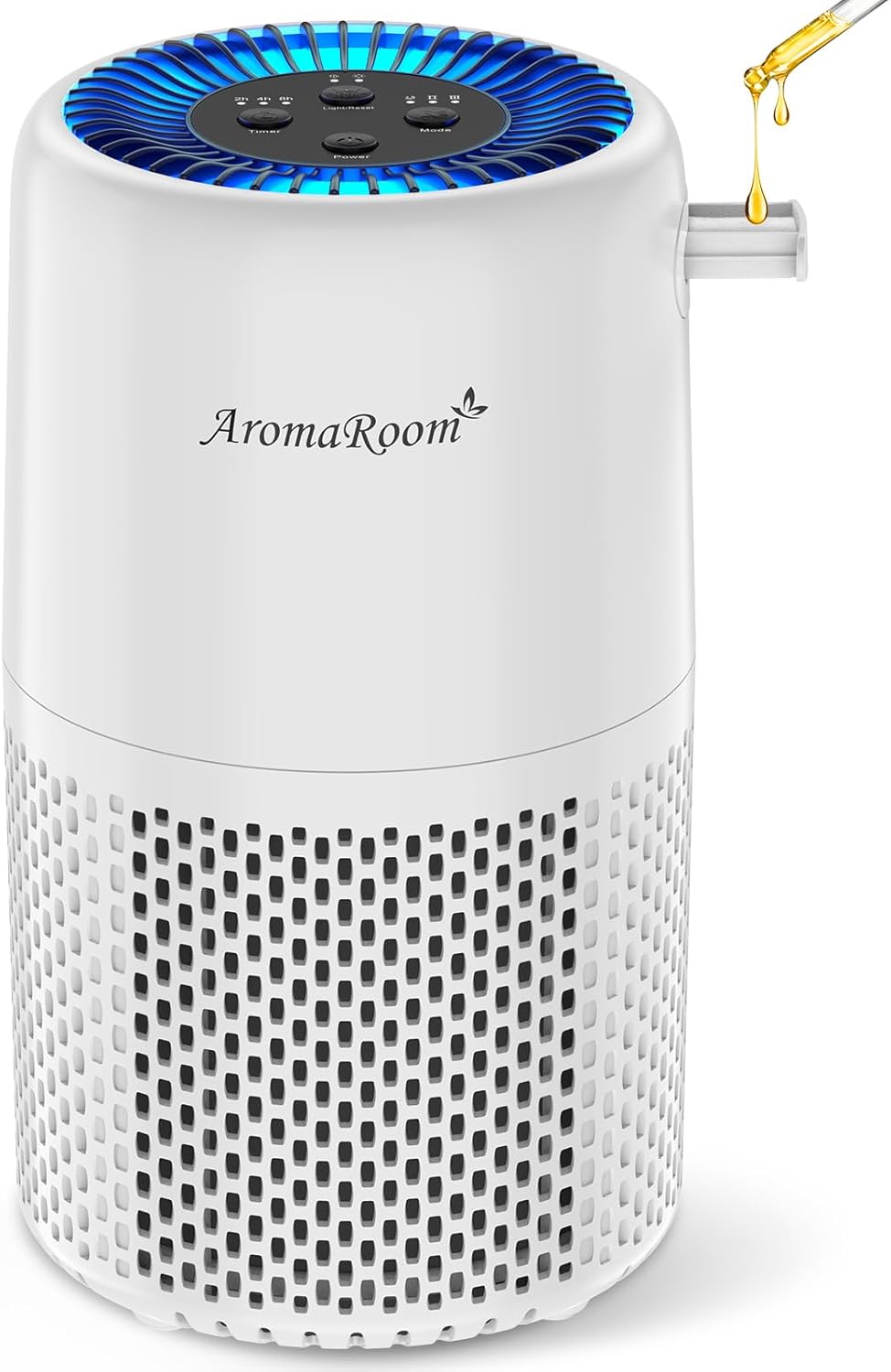
AromaRoom AP103-A Air Purifier
| Filtration | H13 HEPA 3-in-1 filter |
|---|---|
| Coverage | Circulates air twice/hour in 323 ft² (30 m²) |
| Noise level | 22 dB (sleep mode) |
| Timer | 2/4/8 hours |
The AromaRoom AP103-A is a small-room air purifier built around a True H13 HEPA 3-in-1 filter and a smoke-removal layer, designed to capture fine particles like dust, pollen, pet dander, and smoke. It circulates room air roughly twice per hour in spaces up to about 323 ft², and offers three timer settings plus a sleep mode that drops noise to about 22 dB for overnight use. The unit includes an aroma pad for adding essential oils and has a simple control set suitable for bedrooms and nurseries. Practical benefits include strong particle capture from the H13 filter and very low acoustic output on the lowest setting, which makes it easy to keep running all night. The main downsides are that it is compact and targeted at small rooms rather than whole-home use, and the brand recommends replacing the proprietary filter every 3 to 6 months to maintain performance, which adds ongoing cost.
Best for: Buyers looking for an affordable, compact purifier for a bedroom, nursery, or small living space who prioritize quiet overnight operation and strong particle removal.
Less Ideal for: Those who need to purify large open-plan areas or want a unit with advanced connectivity and multi-room coverage should consider larger, higher-CADR models instead.
- True H13 HEPA 3-in-1 filter captures particles down to 0.1–0.3 microns
- Quiet sleep mode rated at about 22 dB for low-noise overnight use
- Effective circulation for small rooms up to roughly 323 ft² with two air changes per hour
- Aroma pad offers optional scenting for a combined purification and fragrance experience
- Designed for small rooms and not intended to purify large open areas
- Requires proprietary filter replacements every 3–6 months, adding recurring cost
Verdict: A compact, budget-friendly H13 HEPA purifier that quietly removes allergy-causing particles in small bedrooms and nurseries.
Levoit Core 300-P Air Purifier

| Filter Type | 3 in 1 Filtration |
|---|---|
| Floor Area | 1073 square_feet |
| Noise Level | 24 db |
| Wattage | 56 watts |
| Particle Retention Size | 0.3 micron |
The Levoit Core 300-P is a small, purpose-built HEPA air purifier aimed at improving indoor air quality in bedrooms, living rooms, and home offices. It uses a 3-in-1 Levoit Original filter (pre-installed) and a 56W motor to capture 99.97% of particles down to 0.1–0.3 microns, and AHAM-verified CADR figures make its cleaning ability measurable for smoke, dust, and pollen. Controls are touch-based with a dedicated Sleep Mode that drops noise to about 24 dB and lets you turn off display lights for undisturbed rest; a timer and a check-filter indicator add convenience. The unit is lightweight and portable so you can move it between rooms, but it lacks smart connectivity and Auto Mode on this variant, requiring manual speed changes. Filters should be replaced every 6–8 months for best performance, and the manufacturer recommends using genuine replacement filters. For allergy relief in small to medium rooms the Core 300-P delivers strong, quiet filtration, though buyers who want smartphone control or automatic sensing should consider other SKUs or models.
Best for: Buyers who prioritize reliable, tested filtration to reduce allergens and smoke in bedrooms or small living spaces and prefer a straightforward, no-frills purifier that consistently performs.
Less Ideal for: Users who want Wi-Fi control, automatic air-quality sensing, or hands-off automation should look at smart-enabled models instead.
- True HEPA-grade 3-in-1 filter capturing 99.97% of 0.1–0.3μm particles
- AHAM-verified CADR with specific smoke, dust, and pollen ratings for measurable performance
- Very quiet Sleep Mode at about 24 dB and display light-off option for nighttime use
- Portable, compact design easy to move between rooms and set up
- No smart connectivity or Auto Mode on this Core 300-P variant requiring manual speed control
- Requires regular genuine filter replacements every 6–8 months to maintain rated performance
Verdict: If you want a compact, AHAM-verified HEPA purifier that reliably reduces allergens and smoke with whisper-quiet night operation, the Core 300-P is a dependable choice.
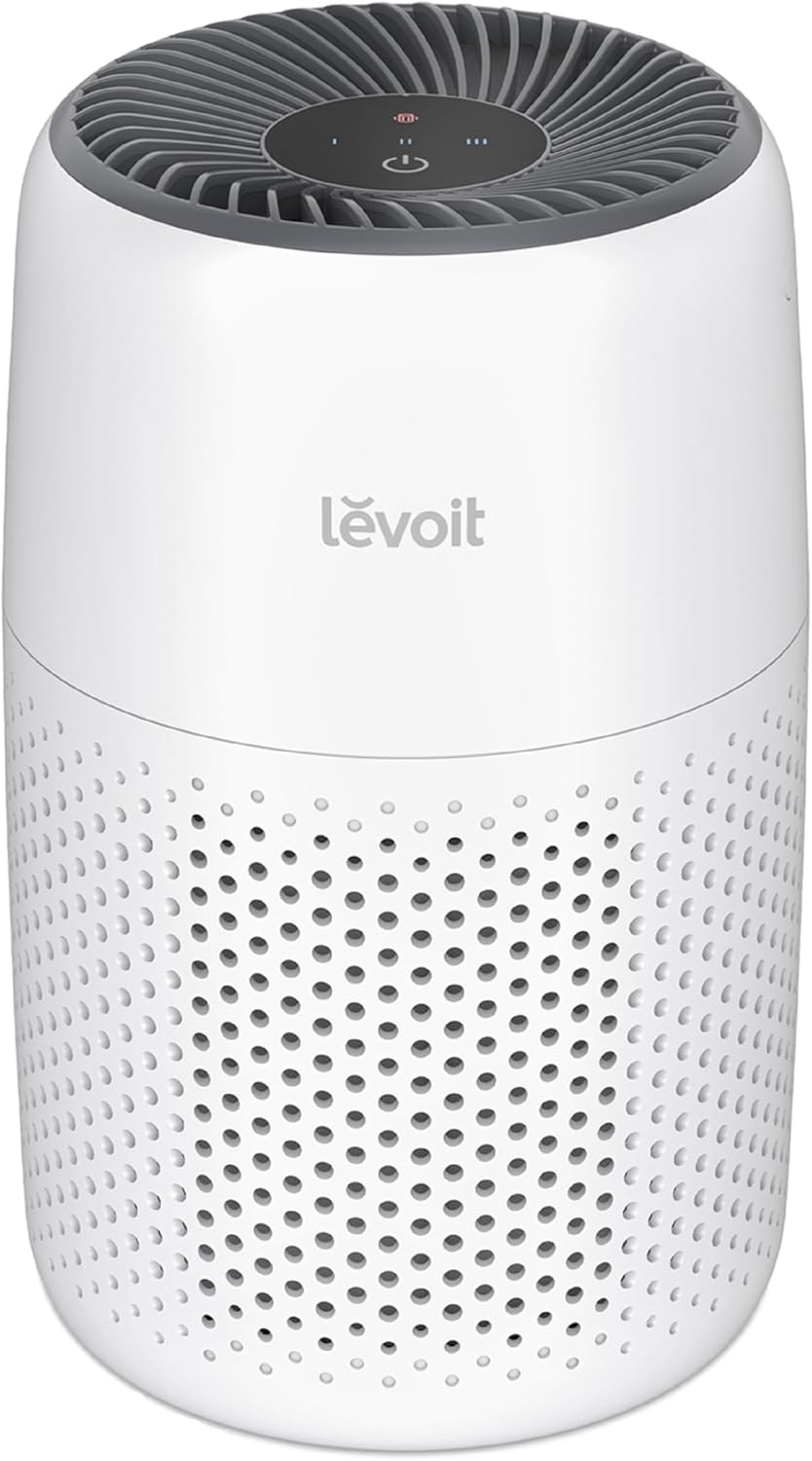
Levoit Core Mini-P
| Rated Power | 7W |
|---|---|
| Noise Level | 27-45dB |
| Particle Retention Size | 0.3 micron |
The Levoit Core Mini-P is a small, plug-in air purifier intended for bedrooms, offices, or desktops where space and noise matter. It uses a two-stage system with a pre-filter and main high-efficiency filter to capture lint, pet dander, smoke, and fine airborne particles, and includes a small aromatherapy sponge for light scenting. With a rated power of 7W and reported noise between 27 and 45 dB, it runs quietly in sleep mode and features an auto-off display to reduce disturbance. Practical benefits include true compact footprint, low energy use, and simple filter replacement with available genuine filters. Important limitations are its small coverage area — it is meant for spot use rather than whole-room cleaning — and the aromatherapy area requires careful dosing to avoid damaging plastics. For allergy-focused buyers it helps reduce visible allergens on a desk or nightstand, but those needing higher clean air delivery for larger rooms will need a larger unit.
Best for: Buyers who prioritize reliable, well-reviewed small purifiers for spot-cleaning near a bed or workspace and who want a quiet, energy-efficient unit backed by broad customer adoption.
Less Ideal for: People who need fast whole-room air cleaning or high clean-air delivery rates should choose a larger purifier designed for bigger square footage.
- Compact desktop size fits on bedside tables and desks
- Pre-filter plus main high-efficiency filter captures pet dander, smoke, and fine particles
- Very low power draw at 7W for continuous overnight use
- Quiet operation with sleep mode and auto-off display to minimize disturbance
- Small coverage area not suitable for cleaning air in medium or large rooms
- Aromatherapy sponge requires only 2–3 drops or it may overflow and damage internal parts
Verdict: A quiet, energy-efficient compact purifier that reliably reduces allergens and odors at a bedside or desk, making it a practical spot-treatment choice for allergy sufferers.
VOOPNU HEPA Air Purifier DH-JH12

| Filter type | H13 True HEPA triple-layer |
|---|---|
| Coverage (laboratory tested) | 250 ft² per 15 minutes / up to 1,076 ft² per hour |
| Noise level | 22 dB (low) |
| Speeds | 3 fan speeds |
The VOOPNU DH-JH12 is a small, user-friendly air purifier built around an H13 true HEPA triple-layer filter and 360° surround intake for steady airflow in confined spaces. It is intended for everyday use in bedrooms, offices, or near pet areas where pollen, pet dander, smoke and odors are concerns. Controls are simplified to make operation painless and it offers three fan speeds, a timer and an essential oil tray if you want light scenting. The manufacturer cites lab-tested coverage of roughly 250 ft² every 15 minutes and up to about 1,076 ft² per hour, which matches its marketing as a compact yet capable unit. Notable benefits include very quiet low-speed operation (as low as 22 dB) and multiple certifications for safety and emissions. Limitations to keep in mind are the small physical footprint and correspondingly modest filter volume, which means you will need to replace filters on the recommended schedule and run the unit continuously for best results in persistent allergy situations. There is no advanced app or smart-home integration, so control is manual only.
Best for: Buyers who prioritize straightforward, reliable allergy relief in bedrooms or small living spaces and want a quiet, easy-to-use purifier with verified filtration performance.
Less Ideal for: Do not choose this if you need networked controls, whole-house coverage, or a unit designed for large open-plan living areas.
- H13 true HEPA triple-layer filter captures fine particles including pollen and pet dander
- 360° air intake for even circulation in small rooms
- Very quiet operation down to 22 dB for overnight use
- Simple controls and timer make it easy to run continuously
- No smart or remote control options for automated scheduling
- Compact unit holds smaller filters so replacements may be needed more frequently
Verdict: A quiet, simple H13 HEPA purifier that gives risk-averse buyers dependable allergy reduction in small rooms without complicated setup.
Choosing the Right Small Air Purifier for Allergies: Key Factors to Consider
Filtration Type and Efficiency
The filter media determines what the purifier actually removes from the air. For allergy relief, look for true HEPA or HEPA-equivalent filters that capture at least 0.3 microns, since pollen, dust mite debris, and many mold spores fall into or near that size range.
Higher-efficiency filters catch smaller particulates and will reduce allergen load more effectively, but they can also increase resistance to airflow. That makes it important to balance filter efficiency with the unit's ability to move enough air for your room size.
Room Coverage and CADR
Small purifiers are designed for limited square footage. Check the Clean Air Delivery Rate or manufacturer-specified room coverage to ensure the unit can cycle air quickly enough in your bedroom or office.
A purifier rated for a slightly larger room than yours will cycle air more times per hour, improving allergen reduction. Conversely, an undersized unit will struggle to lower particle concentration meaningfully, even if it has a high-efficiency filter.
Noise and Night Use
If you plan to run a purifier in a bedroom, noise matters. Some compact units have loud fans at higher speeds, which can disrupt sleep or become a nuisance.
Look for measured decibel ratings or low-speed performance listings. Many units offer a night or sleep mode that dims lights and lowers fan speed. Consider how tolerant you are of low-level fan noise and prioritize quieter operation if sleep or focus is important.
Filter Maintenance and Operating Cost
Filter replacements are the primary ongoing cost for purifiers. Understand the expected lifetime of the prefilter and main HEPA media, how easy filters are to buy and swap, and whether the device uses proprietary modules that increase cost.
Also factor energy consumption since small units are often run for many hours daily. A low-wattage unit can save money over time, especially if it is efficient at circulating air in your space.
Size, Placement, and Portability
A small purifier should be easy to position where you need it most. Compact dimensions and light weight allow you to move the unit between bedroom and living spaces or set it on a nightstand without blocking airflow.
Consider clearance requirements for intake and exhaust, whether vertical or table placement works for your layout, and if the design interferes with furniture or room traffic.
Controls and Additional Features
Practical controls make daily use straightforward. Simple touch or dial controls, intuitive indicator lights for filter replacement, and reliable timers help you integrate the purifier into routines.
Extra features such as air quality sensors and automatic fan adjustments can be useful but are not essential. If you have multiple people using the unit, selectable modes and child locks may be worth considering for convenience and safety.
Best Room Placement Practices
Placement affects performance more than many buyers expect. For optimal allergen removal, set the purifier where air circulates naturally but away from obstructions that block intake or exhaust. A central position in a small bedroom or a bedside table with clearance on all sides works well.
Avoid corners and tight shelving where airflow is restricted. If you have multiple seating or sleeping areas, place the unit closer to the area where you spend the most time to reduce local particle concentration quickly.
- Keep at least 6 inches of clearance around intake and exhaust vents.
- Place units off the floor if pets or dust near the floor contribute to allergens.
- Avoid placing the purifier directly against walls or behind furniture.
Managing Pet Dander and Pollen Season
If pets or seasonal pollen are the main triggers, run the purifier continuously during high-activity times such as mornings or when bringing items in from outside. Pre-filter stages that capture larger hair and debris can extend HEPA media life when pets are present.
During peak pollen season, combine purifier use with simple behavior changes like removing shoes at the door and keeping bedroom windows closed when pollen counts are high to reduce incoming allergens.
- Use higher fan speeds briefly after activities that raise particulate levels.
- Vacuum and dust regularly to reduce load on the purifier.
Interpreting Noise and Performance Specs
Manufacturers publish decibel levels and CADR or suggested room size, but real-world noise can vary with placement and surface contact. Lower fan speeds reduce noise but also decrease the air exchange rate, so balance quiet operation with the need to cycle air sufficiently.
When choosing a unit, prioritize measured noise at night mode for bedroom use and consider models with variable fan control to tune performance based on activity and time of day.
- Look for separate night or sleep mode noise specs when available.
- Expect low fan speeds to be quieter but less effective at rapid air cleaning.
Energy Use and Continuous Operation
Small purifiers are relatively low wattage, but running one continuously can add to energy use. Check power consumption and whether the unit has energy-saving modes or programmable schedules to limit runtime when allergens are less active.
For continuous allergen control, pick a unit that balances low energy draw with the capacity to ramp up when needed, such as during cleaning or heavy pollen periods.
- Use timers to run the purifier at higher speeds only during peak exposure times.
- Consider units with energy-efficient fans and motors for long-term cost control.
When a Second Unit Makes Sense
A single small purifier can be effective in one room but will not clean the whole home. If you spend significant time in multiple rooms, a second compact unit placed strategically can provide continuous protection where you need it most.
Consider whether moving one portable unit between rooms meets your needs or if simultaneous coverage is preferable. Multiple smaller units may be more effective than one larger unit placed centrally when doors stay closed between rooms.
- Place units in primary sleeping and living spaces for maximum impact.
- Dual units allow quieter, lower-speed operation while maintaining air changes per hour.
How We Chose the Best Small Air Purifier for Allergies
We prioritized units that demonstrably focus on particle removal and practical daily use for allergy sufferers. Selection began with compact designs intended for small rooms and bedrooms. We filtered out units that lack true high-efficiency particulate filtration or do not specify CADR or particle capture measures relevant to common allergens. Key evaluation criteria included filtration efficiency for fine particles, true HEPA or equivalent media performance, effective room coverage for small spaces, noise levels for day and night use, filter life and ease of replacement, and energy use for continual operation. We also considered build quality and user-friendly controls because allergy sufferers often run purifiers continuously or overnight. Excluded were bulky or whole-house systems, units without verified filtration specs, and devices that rely solely on ionization without proven particulate capture. The final shortlist reflects products that balance proven filtration, appropriate small-room coverage, quiet operation, and manageable maintenance.
Our full evaluation process is outlined in our review methodology.
FAQ
How big a purifier do I need for a small bedroom?
Match the purifier's recommended room coverage or CADR to your bedroom square footage. A unit rated for a slightly larger room will cycle air more frequently and reduce allergens faster than an undersized model.
Do small purifiers remove viruses and bacteria?
Many true HEPA filters capture particulates in the size range of some bacteria and respiratory droplets, but effectiveness varies. Small purifiers are primarily designed for particle and allergen reduction rather than sterilization.
How often should I change filters?
Filter life depends on use and pollutant load. For continuous daily operation in an allergy-heavy environment, HEPA filters often need replacement every 6 to 12 months, while prefilters may require more frequent cleaning or swapping.
Are ozone-generating purifiers safe for allergies?
Ozone generators are not recommended for routine home use because ozone can irritate airways and worsen symptoms. For allergy control, rely on mechanical filtration such as HEPA media instead.
Will a purifier help with pet allergies?
A compact purifier with true particulate filtration can reduce airborne pet dander and hair that circulates in the room. It is most effective when combined with regular cleaning and pet management practices.
Final Verdict
When choosing a small air purifier for allergies, prioritize true HEPA filtration, appropriate room coverage, and quiet operation if you will use it in a bedroom. Factor in filter lifetime and ease of maintenance since ongoing replacements are the main running cost. Tradeoffs are common: the highest-efficiency filters may need stronger fans to move air, which raises noise and energy use. Pick the unit that balances filtration performance with acceptable noise and operating cost for your living space so you can confidently reduce airborne allergens where you spend the most time.