
Note: This article contains affiliate links. If you click on these links and make a purchase, we may earn a small commission at no extra cost to you. This helps support our research and content. Read our full affiliate disclosure here.
If you keep a boat in-season or store it between outings, moisture control is one of the most important maintenance tasks to prevent mildew, corrosion, and lingering odors. A small dehumidifier for boat use reduces cabin humidity, protects cushions and electronics, and helps preserve the finish on wood and metal. This guide shortlists the top small dehumidifiers suited to marine interiors and enclosed compartments. We evaluated options for quiet operation, water-handling or drain flexibility, energy efficiency, and physical fit so you can choose a unit that works with your boat's layout and ventilation. Read on for the criteria we used and practical buying considerations before the product list.
Top Picks at a Glance
| Best Overall The best all-around choice for most situations | Eva-Dry EDV-2400 Dehumidifier |  |
| Best Quality Built to a higher standard if you want something more solid | Davis Air-Dryr 500 |  |
| Best Value The sweet spot between price and what you get | TABYIK DH-CS01 35oz Dehumidifier |  |
| Best Budget The cheapest option that still gets the job done reliably | Better Boat Moisture Absorber 13oz |  |
| Top Rated A top-rated pick with lots of positive feedback | KeepGlad RX02-B Dehumidifier |  |
| Most Popular A crowd favorite that many people choose with confidence | Pro Breeze Mini Dehumidifier PB-02 |  |
| Best Seller A high-volume bestseller chosen again and again | ToLife Dehumidifier TZ-C2 |  |
Eva-Dry EDV-2400 Dehumidifier
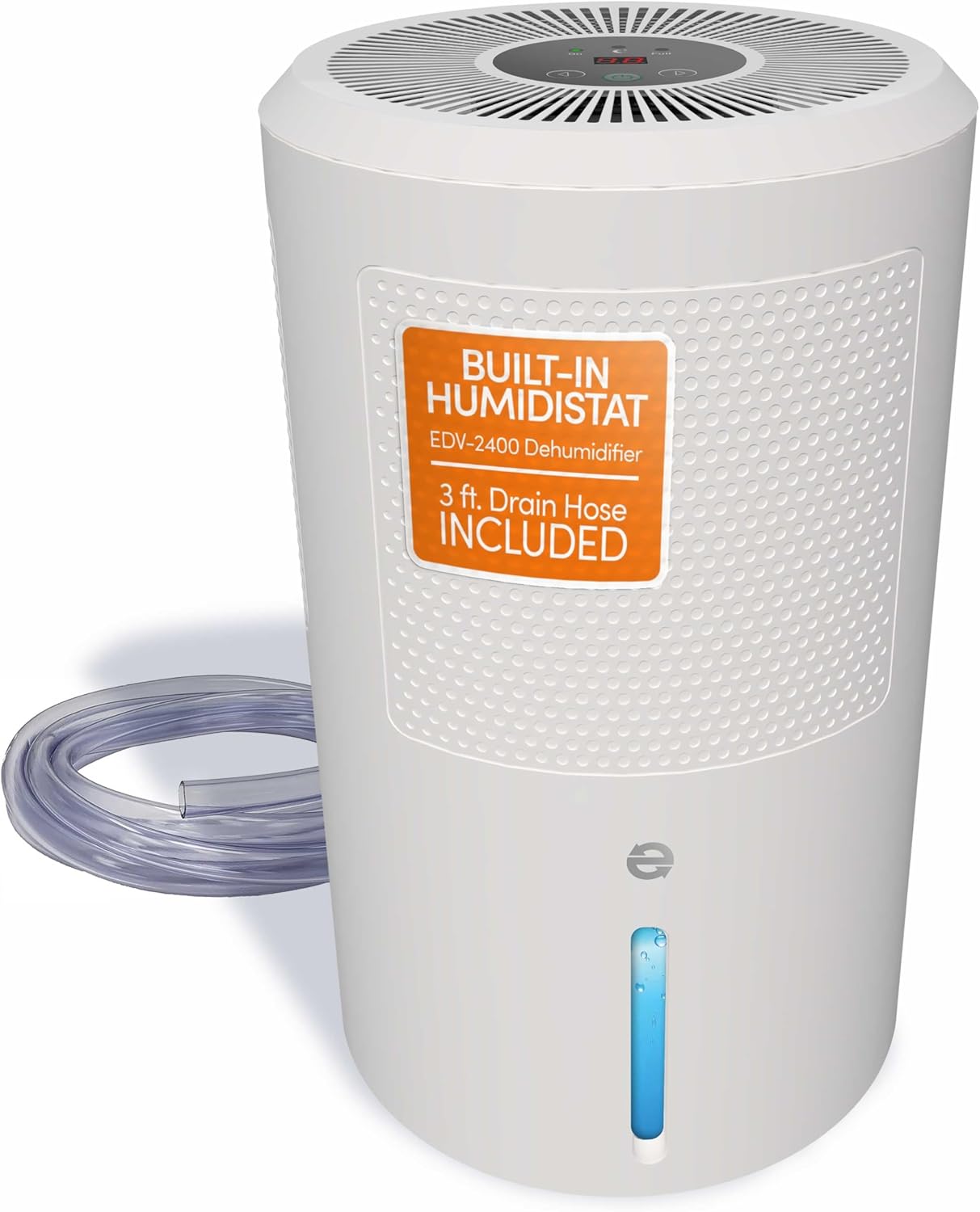
| Floor Area | 267 square_feet |
|---|---|
| Tank Volume | 1.8 liters |
| Dehumidification Capacity | 0.73 liters_per_day |
| Wattage | 60 watts |
| Operation Mode | Continuous, Night |
The Eva-Dry EDV-2400 is a Peltier electric dehumidifier sized for small spaces such as boat cabins, RVs, bathrooms and bedrooms; it removes moisture to a set target using an adjustable humidistat and collects water in a 1.8 L tank or via the included 3-foot drain hose for continuous operation. It offers a clear digital RH readout, two fan speeds and automatic shutoff when the tank is full or the target humidity is reached, which makes it easy to set and forget while you sleep or store gear. Because it uses thermoelectric technology it is quieter than compressor units and draws modest power, but the moisture removal rate is low (about 0.73 L/day) so it works best in warm, moderately damp small spaces rather than very cold or very wet environments. The unit does not auto-restart after power loss, so boats left unattended through long power cycles may need a model with automatic restart. For on-board use the compact footprint, included drain hose, and built-in humidistat make maintenance simple and practical.
Best for: Buyers who want a compact, low-noise dehumidifier to control humidity in small boat cabins, RVs, or tight indoor spaces and who prioritize easy setup and automatic humidity control.
Less Ideal for: Owners needing fast moisture removal for large or very damp spaces, or who require an unattended unit that auto-restarts after power outages.
- Built-in adjustable humidistat lets the unit auto-cycle to maintain target RH%
- Includes 3-foot drain hose for continuous hands-free drainage
- Compact and relatively quiet Peltier operation suitable for cabins and small spaces
- Digital RH display plus two fan speeds and automatic tank-full shutoff
- Low dehumidification rate (about 0.73 liters per day) limits effectiveness in very damp or cold conditions
- Unit does not automatically restart after a power loss, requiring manual restart
Verdict: A compact, quiet boat-friendly dehumidifier with a built-in humidistat and drain hose that is ideal for maintaining comfortable humidity in small cabins and RVs.
Davis Air-Dryr 500
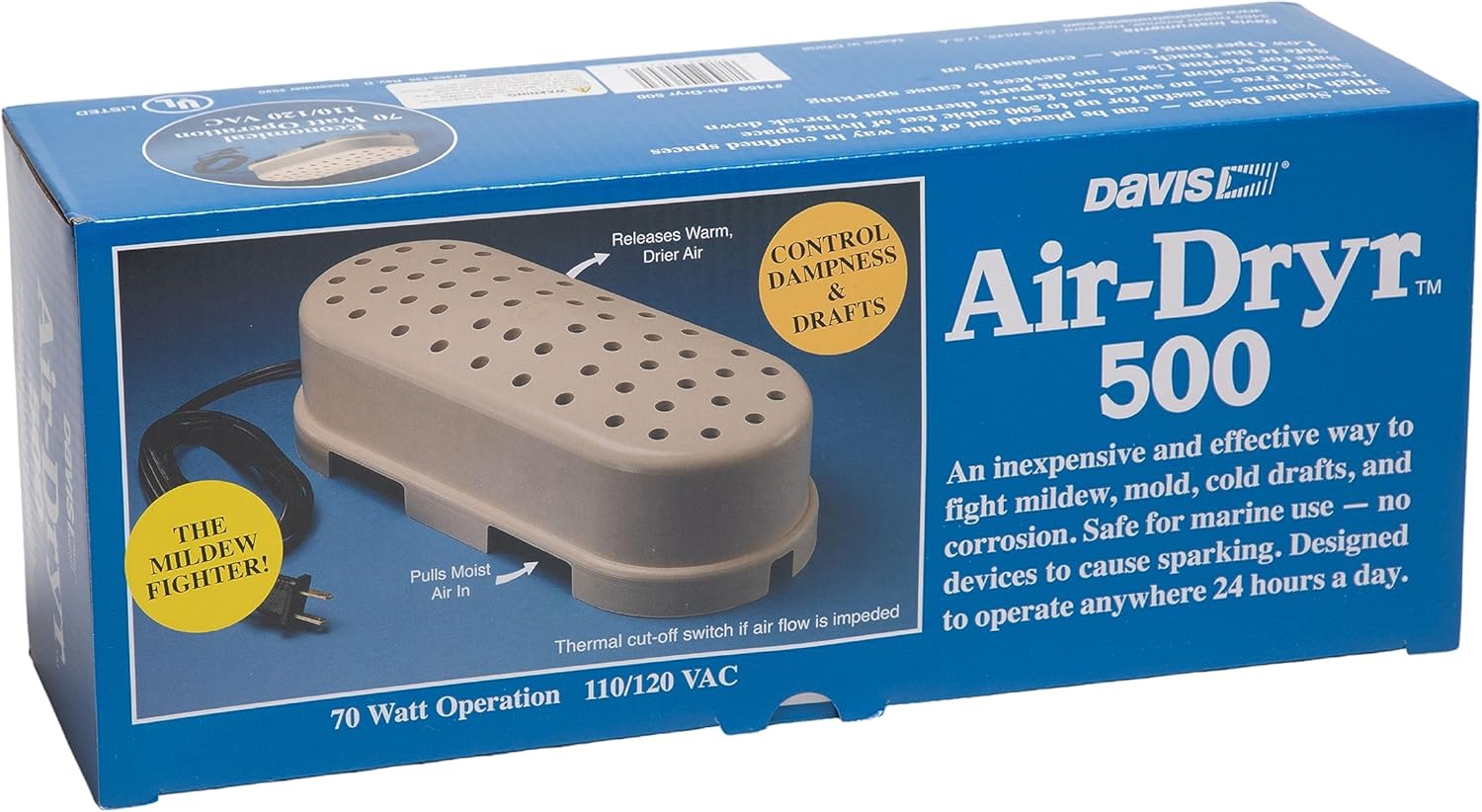
| Floor Area | 500 square_feet |
|---|---|
| Capacity | 1 g |
| Operation Mode | Continuous |
| Other Special Features of the Product | Quiet Operation, Low Maintenance, Energy Efficient, Safety Features |
The Davis Air-Dryr 500 is a slim, low-maintenance air dryer built for continuous operation in confined spaces such as boats, RVs, and small rooms. It moves a high volume of air through a one-gallon desiccant reservoir and is intended to run 24 hours a day with low operating cost and quiet performance. The unit is made from durable polycarbonate with a neutral beige finish, includes a thermal cutoff to prevent overheating, and is safe for marine use because it has no sparking components. Installation is straightforward and the integrated handle and slim profile let you tuck it into tight bilge areas or cabin corners. Limitations are its modest capacity—suitable for small volumes only—and the desiccant-based drying means periodic maintenance to refresh or replace the media rather than never-ending automated drainage. It also does not offer humidity display or automatic humidistat control so users must monitor conditions manually.
Best for: Buyers who need a durable, low-noise desiccant dryer to keep condensation down in small boats, RVs, or tight cabins and who prioritize continuous performance over automated controls.
Less Ideal for: People seeking a high-capacity electric compressor dehumidifier with automatic humidistat control or those who want fully hands-off water collection and drainage.
- Designed for continuous 24/7 operation with low running cost
- Quiet and stable, suitable for placement in confined boat or RV spaces
- Polycarbonate housing for durability and a slim profile that fits tight areas
- Thermal cutoff and non-sparking design improve safety for marine environments
- Small 1 gallon capacity limits runtime between desiccant service or replacement
- No built-in humidistat or digital humidity readout for automatic control
Verdict: A compact, marine-safe continuous desiccant dryer that delivers quiet, low-cost moisture control for small boats and tight spaces.
TABYIK DH-CS01 35oz Dehumidifier

| Tank Volume | 1000 ml |
|---|---|
| Dehumidification Capacity | 0.45 liters_per_day |
| Wattage | 40 watts |
| Operation Mode | Continuous |
| Number of Speeds | 1 |
The TABYIK DH-CS01 is a small Peltier dehumidifier intended to remove light moisture from confined spaces such as cabins, bathrooms, closets, and RVs. It runs continuously on a single-speed setting, collecting up to about 16 oz (450 ml) per day under warm, very humid conditions, and sends collected water into a 35 oz (1,000 ml) removable tank with an auto shutoff when the tank nears full. The unit advertises very low noise (about 28 dB) and modest power consumption (about 40 watts), so it can operate overnight without bothering occupants or drawing heavy current from onboard power. A built-in handle and compact footprint make placement and moving easy, and the separate seven-color light offers optional illumination. Limitations include a modest daily extraction rate typical of thermoelectric designs, a single speed with no humidity setpoint control, and the need to empty the tank periodically for continuous operation; it is not intended for high-moisture penetration or large open spaces.
Best for: Boat owners who need a low-noise, low-power dehumidifier for small, enclosed cabins or storage lockers and prioritize portability and minimal electrical draw.
Less Ideal for: Those who need rapid moisture removal for large damp spaces, areas with persistent condensation, or units that must run unattended for long periods without emptying.
- Compact, lightweight design with built-in handle for easy placement in tight boat cabins
- Low noise operation (~28 dB) suitable for sleeping quarters
- Low power draw (around 40 W) that is friendly to small onboard electrical systems
- Large transparent 35 oz tank with auto shutoff to prevent spills
- Simple one-button operation and easy-to-clean intake filter
- Low maximum extraction (about 0.45 L/day) so it cannot handle heavy condensation or very wet bilges
- Single-speed unit with no adjustable humidity setpoint limits precise moisture control
Verdict: A compact, quiet, and energy‑efficient dehumidifier that fits small boat cabins where low power use and portability matter most.
Better Boat Moisture Absorber 13oz

| Capacity | 13 ounces |
|---|---|
| Floor Area | 300 square_feet |
| Tank Volume | 13 fluid ounces |
| Air Flow Capacity | 1 cfm |
| Upper Temperature Rating | 100 °C |
This Better Boat moisture absorber is a single‑use bucket that pulls moisture from the air using calcium chloride crystals combined with activated charcoal to reduce musty odors as it collects water. You peel the foil seal, replace the lid and set it on a flat surface; crystals clump as they absorb moisture and the semi‑transparent bucket shows when it needs replacing. The snap‑on lid and internal mesh make it spill resistant for boats, RVs and other moving environments, and the unscented charcoal blend helps control odors that plain desiccants may not. It is intended for small spaces up to about 250 to 300 square feet and lasts roughly 30 to 60 days depending on humidity. Limitations are that it is disposable rather than rechargeable, so ongoing use requires buying replacements, and it offers only passive absorption rather than active dehumidification or adjustable humidity control. For simple, low‑maintenance moisture and odor control in cabins, lockers, and compact boat compartments it performs well, but it will not replace an electric dehumidifier for high humidity or larger areas.
Best for: Someone wanting a low‑cost, maintenance‑free way to control dampness and musty smells in small boat compartments, lockers, or cabins without installing equipment.
Less Ideal for: People needing continuous, high‑capacity dehumidification or precise humidity control for larger areas or very humid climates should choose an electric dehumidifier instead.
- Activated charcoal plus crystals reduces both moisture and musty odors.
- Semi‑transparent disposable bucket shows when crystals have solidified.
- Snap‑on lid and mesh screen help prevent spills during movement on boats and RVs.
- Simple set‑and‑forget operation with no power or maintenance required.
- Disposable design requires periodic replacement rather than being refillable or rechargeable.
- Passive absorption only; no fan or adjustable humidity control for large or very damp spaces.
Verdict: A cheap, no‑effort disposable solution that removes moisture and odors from small boat spaces without power or installation.
KeepGlad RX02-B Dehumidifier

| Floor Area | 1000 square_feet |
|---|---|
| Capacity | 98 fluid ounces |
| Number of Speeds | 3 |
| Wattage | 90 watts |
| Dehumidification Capacity | 2.5 pints_per_day |
The KeepGlad RX02-B is a compact dehumidifier meant for enclosed small spaces where moisture control matters. It uses a dual semiconductor design and a 90W compressor to run three fan speeds and a digital humidity display so you can set and monitor a target humidity. It accepts a drain hose for continuous unattended draining and also has an auto shutoff when the 98 oz tank is full, which reduces the need for frequent emptying. The unit includes a washable filter and offers quiet sleep operation with a low noise mode and a seven-color ambient light that can be turned off for night use. Practical strengths are the timer function for scheduled runs and the portable form with an ergonomic handle. Limitations include a modest daily dehumidification rate (about 2.5 pints per day listed) and a relatively low airflow rating, so it is best for very small cabins or single compartments rather than larger or very damp spaces; buyers should plan placement close to the moisture source for best results.
Best for: Sensible buyers who want a small, easy-to-move dehumidifier that can run unattended and quietly in compact, enclosed spaces like a boat cabin or small berth.
Less Ideal for: Those needing high-capacity moisture removal for large or heavily water-damaged spaces should choose a larger, higher-capacity unit instead.
- Continuous drain option for hands-free operation
- Digital humidity display with timer and three fan speeds for controlled runtime
- Washable air filter helps capture dust and reduces maintenance cost
- Quiet sleep mode and lights-off behavior suitable for night use or sleeping areas
- Portable size and ergonomic handle for easy relocation
- Low dehumidification capacity makes it unsuitable for very wet or large spaces
- Airflow and listed performance are modest, requiring closer placement to the moisture source
Verdict: A compact, quiet unit with continuous-drain and digital controls that is a reliable choice for small enclosed spaces where low-noise unattended operation matters.
Pro Breeze Mini Dehumidifier PB-02

| Floor Area | 215 square_feet |
|---|---|
| Capacity | 16 fluid ounces |
| Tank Volume | 17 fluid ounces |
| Wattage | 21 watts |
| Dehumidification Capacity | 0.25 liters_per_day |
The Pro Breeze PB-02 is a lightweight, portable dehumidifier that uses thermoelectric (Peltier) cooling to quietly remove moisture from small spaces such as cabins and boats. It is intended for rooms up to roughly 215 sq ft and collects about 9 ounces (0.25 liters) per day into a 16–17 ounce tank with automatic shutoff and an LED full indicator. The unit runs continuously at low power (around 21–23 watts), making it cheap to operate overnight, and its whisper-quiet operation keeps noise to a minimum when placed near sleeping quarters. Practical benefits for boat use include compact size and simple plug-in operation suitable for cabins, closets, and small compartments where condensation and window fogging are common. Important limitations are its low daily extraction rate and temperature operating floor (does not work below about 41°F), so it is not meant to replace a full-size refrigerant dehumidifier in larger or very cold spaces. Regular cleaning of the intake is recommended to maintain airflow in damp, salty environments.
Best for: Boat owners wanting an inexpensive, low-noise solution to control light condensation in small cabins, lockers, or bathrooms where space is limited and continuous quiet operation matters.
Less Ideal for: People who need high-capacity moisture removal for large or heavily damp spaces, or who require reliable operation in cold ambient temperatures.
- Very quiet Peltier operation suitable for sleeping areas
- Low power draw (around 21–23W) for inexpensive continuous use
- Compact and lightweight for easy placement and storage on a boat
- Auto shutoff and LED indicator when the tank is full
- Removes only about 9 ounces (0.25 L) per day, so slow in very damp conditions
- Does not operate below roughly 41°F, limiting use in cold storage areas
Verdict: A compact, whisper-quiet mini dehumidifier that is ideal for small boat cabins and enclosed spaces where low noise and low energy use are the top priorities.
ToLife Dehumidifier TZ-C2
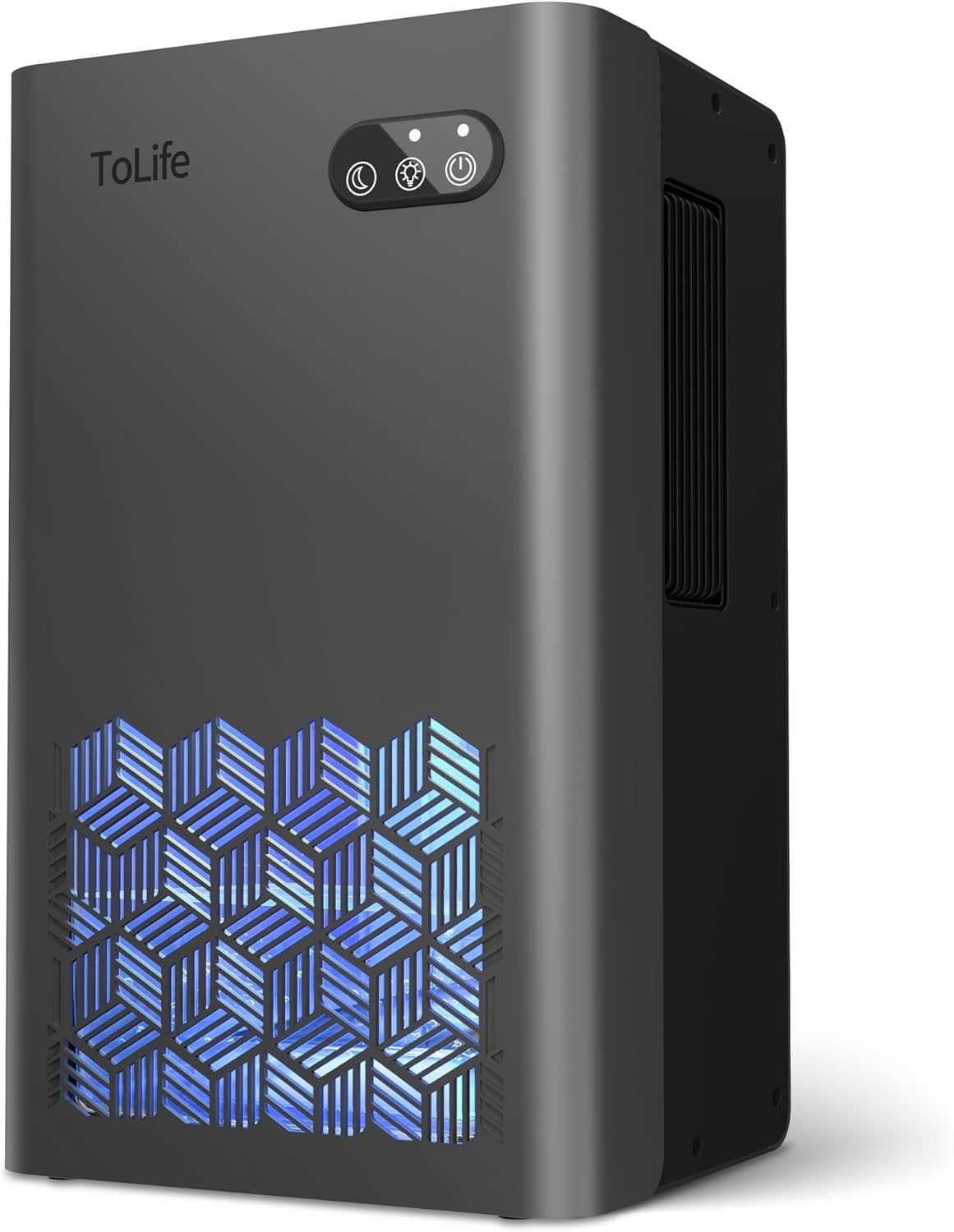
| Floor Area | 1000 |
|---|---|
| Tank Volume | 95 fluid ounces |
| Number of Speeds | 2 |
| Wattage | 93 watts |
| Voltage | 220 volts |
The ToLife TZ-C2 uses semiconductor condensation technology to quietly pull moisture from the air and deposit it into a removable 95 oz tank, making it a straightforward option for damp rooms. It offers two operating modes: a higher-power setting for faster moisture removal and a low-speed sleep mode that runs under 30 dB for overnight use. A seven-color LED can act as a night light and the unit includes automatic shutoff when the tank is full or removed, plus handles for easy moving between rooms. Practical benefits include simple setup, low noise, and a compact footprint that fits in basements, bathrooms, or bedrooms. Limitations are its modest rated dehumidification capacity and stated coverage, which means it will be most effective in smaller basement zones or for spot treatments rather than drying a large, very damp basement quickly. Also this model runs on 220 volts, so electrical compatibility should be confirmed for your location.
Best for: Buyers who need an affordable, portable dehumidifier for spot dehumidifying small basement areas, bathrooms, or bedrooms and who prioritize low noise and easy portability.
Less Ideal for: People looking to dry large, very damp basements or whole-house coverage should consider a higher-capacity compressor dehumidifier instead.
- Large removable 95 oz water tank reduces how often you need to empty it
- Quiet sleep mode under 30 dB suitable for nighttime operation
- Portable design with handles for moving between rooms
- Automatic shutoff prevents overflow when the tank is full
- Dehumidification capacity is modest and may be slow in very damp or large basements
- Requires 220 volt power which may not match all household outlets
Verdict: A compact, budget-friendly portable dehumidifier that is best for quiet, small-area moisture control and occasional basement spot treatments.
Choosing the Right Small Dehumidifier for Boat: Key Factors to Consider
Moisture Removal Rate
A dehumidifier's moisture removal rate determines how quickly it reduces cabin humidity and prevents condensation. In a boat's confined spaces, a unit that can remove several pints per day at typical cabin temperatures will stabilize conditions faster and reduce mold risk. Consider rated output at cooler temperatures, since boat cabins and bilges often run cooler than household rooms.
Overestimating a unit based on warm-room specs can leave you with persistent dampness. Look for humidity control range and realistic performance numbers for lower temperatures so the unit can keep pace with moisture sources like wet gear, bilge evaporative humidity, and poor ventilation.
Power Consumption and Source
Boats often have limited electrical capacity and may run dehumidifiers off shore power, generator, or battery/inverter systems. Choose a unit with efficient power draw that matches available supply and consider continuous-run current draw if you plan to leave it operating overnight or during extended stays.
Also note start-up draw versus steady-state consumption. Thermoelectric and compressor-based small dehumidifiers have different power profiles; matching the technology to your boat's electrical system reduces the risk of tripping breakers or depleting batteries while still achieving effective moisture control.
Noise Level and Vibration
Noise matters aboard small vessels where living space is tight and engine noise may already be present. A deceptively loud unit can be disruptive when anchored or sleeping below deck. Check manufacturer noise ratings and user reports about tonal quality and vibration.
Low-vibration mounting options, rubber feet, or soft-mounting hardware help reduce transmitted noise. For cabins used for sleeping or long stays, prioritize quieter units even if they compromise slightly on extraction rate.
Reservoir Capacity and Drainage Options
Small dehumidifiers vary between internal reservoirs and continuous-drain setups. In a boat, emptying a reservoir frequently is inconvenient, so models that offer a built-in pump, gravity drain hose, or direct-plumb option are often preferable. Reservoir capacity affects how often you need to service the unit when continuous drainage is not possible.
Consider where condensate will go and whether you can route a drain to a bilge pump, through-hull, or a container. Anti-siphon considerations and frost protection around the drain path may also be relevant depending on where the unit is installed.
Size, Weight, and Mounting
Space is at a premium on boats, so the unit's footprint and weight are critical. A compact, lightweight dehumidifier is easier to position in cabins, lockers, or under berths. Some units offer multiple mounting orientations or brackets for fixed installation.
Assess airflow needs and ensure the intake and exhaust will not be blocked by cushions or gear. Also check access for routine maintenance like filter cleaning and reservoir emptying when deciding on placement.
Durability and Corrosion Resistance
Marine environments expose equipment to moisture, salt, and temperature swings. Dehumidifiers with corrosion-resistant coatings, sealed electrical components, and robust housings will have longer service life in boats. Look for units designed to tolerate humid, salty air rather than indoor-only devices without protective finishes.
Serviceability matters too. Units with accessible filters and simple service procedures reduce the chance of downtime and make it easier to maintain performance over several seasons aboard.
Where to Install a Small Dehumidifier on a Boat
Placement makes a big difference in effectiveness. Ideal locations include a central cabin area with good airflow, a hanging locker where damp clothing is stored, or an enclosed bilge space that accumulates condensation. Avoid putting the unit directly against soft surfaces where intake or discharge can be blocked.
If you plan to use a gravity drain or hose, place the dehumidifier higher than the intended drain point and route the hose with a gentle downward slope. For remote or permanently installed units, consider vibration isolation and secure mounting to avoid movement in rough conditions.
- Central cabin placement for even humidity reduction
- High locker placement when using gravity drain
- Secure mounting with isolation pads to reduce vibration
- Keep clearances of several inches around intake and exhaust
Thermoelectric Vs Compressor-Based Small Units
Thermoelectric units are lightweight and quiet but generally less efficient at extracting moisture, especially in cooler conditions. They can be a good match for small lockers or brief use when power is strictly limited.
Compressor-based small dehumidifiers typically remove more moisture per day and perform better at lower ambient temperatures, but they draw more power and may produce more noise. Choose the technology that fits your boat's power budget and the humidity challenge you face.
- Thermoelectric: lower power, quieter, lower extraction
- Compressor-based: higher extraction, better low-temp performance, higher power draw
Managing Condensate Safely Onboard
Decide whether you will empty a reservoir manually or set up continuous drainage. Continuous drainage is often the least labor-intensive solution, but it requires a reliable route for the condensate that avoids creating new corrosion or mold-prone areas. Use marine-grade hoses and clamps and avoid routing water onto surfaces that cannot tolerate moisture.
If manual emptying is necessary, choose a unit with a clear reservoir and simple removal path. For installations using a pump or automatic drain, verify that power for the pump is stable and protected from spray and salt exposure.
- Prefer continuous drain for long-term unattended use
- Use corrosion-resistant fittings and hoses
- Keep condensate away from upholstery and wood finishes
Ventilation and Complementary Moisture Control
A dehumidifier is one part of a moisture-control strategy that should also include ventilation and good storage practices. Promote airflow when safe to do so by opening hatches or using small fans to reduce stagnant pockets of humid air. Store wet gear in ventilated containers or remove it when possible.
Silica packets and moisture absorbers can help in small lockers, but they are not substitutes for an appropriately sized dehumidifier in damp cabins. Combining passive and active measures yields the best protection against mildew and corrosion.
- Use fans to break up stagnant humid spots
- Store wet items outside or in ventilated bins
- Combine passive desiccants with an active dehumidifier for lockers
Maintenance Tips for Long-Term Reliability
Regular maintenance keeps small dehumidifiers effective. Clean or replace filters per the manufacturer's schedule, clear dust from intake grills, and inspect drain lines for blockages. Periodic checks for corrosion on fittings and screws will catch early signs of salt damage.
If storing the unit for off-season, drain and dry it thoroughly and store in a dry place. Run a brief test cycle before reinstalling to confirm the unit still performs as expected.
- Clean filters and intake grills regularly
- Inspect drain hoses and fittings for clogs or wear
- Store drained and dry during extended off-season periods
How We Chose the Best Small Dehumidifier for Boat
We focused on factors that matter for marine environments and small enclosed spaces. Primary evaluation criteria included moisture removal rate at typical cabin temperatures and humidity levels, power consumption and energy efficiency for limited onboard power, physical footprint and mounting or placement options for confined spaces, and noise level to avoid disturbing occupants. We also considered drainage choices and reservoir capacity so units can run unattended or be plumbed to a safe discharge point, plus durability and corrosion resistance for damp, salty conditions. We excluded full-size household units and units rated only for whole-house use because they are impractical in boats. Models that lacked reliable low-temperature performance, had inconsistent moisture ratings, or offered no workable drainage options were removed. No brand names are cited here; instead we prioritized spec-driven performance, marine-appropriate features, and real-world usability in boat cabins, bilges, and storage lockers. The scoring criteria below match these priorities and reflect what owners will observe during typical onboard use.
Our full evaluation process is outlined in our review methodology.
FAQ
How large a dehumidifier does my boat cabin need?
It depends on cabin volume, typical humidity sources, and ambient temperature. For small cabins or lockers, a compact unit rated for small rooms or 20 to 50 square feet is often sufficient. For larger enclosed cabins or boats with significant wet gear, choose a higher extraction capacity that still fits your power budget.
Can I run a small dehumidifier from the boat's battery?
Often yes, but you must check the unit's power draw and your battery and inverter capacity. Low-power thermoelectric units are easier to run from batteries, while compressor models may require more robust power or shore power to avoid draining batteries quickly.
Is continuous drainage necessary on a boat?
Continuous drainage reduces maintenance because you do not need to empty reservoirs manually. It is recommended for long-term or unattended use, provided you can route the condensate safely to an appropriate discharge point without creating new moisture problems.
Will a dehumidifier prevent mold completely?
A dehumidifier significantly reduces the risk of mold by keeping relative humidity below levels that support growth, but it does not remove existing spores or address all moisture sources. Combine dehumidification with ventilation and cleaning to manage mold risk effectively.
Can I install a small dehumidifier in the bilge?
Placing a small dehumidifier in a dry bilge space can help control humidity, but it should not be exposed to standing water or heavy spray. Ensure the unit has adequate clearance, a safe power supply, and a suitable drain route if condensate will be produced.
Final Verdict
Choose a small dehumidifier that balances extraction capacity with the limitations of your boat's power and space. Prioritize realistic moisture removal at cabin temperatures, noise and vibration control for comfort, and drainage options that match how you will use the boat. Durable construction and easy maintenance will extend service life in a marine environment. By focusing on those tradeoffs and the factors discussed above, you can select a unit that keeps cabins dry, reduces mildew risk, and minimizes hands-on maintenance so you can enjoy more time on the water with less upkeep.