
Note: This article contains affiliate links. If you click on these links and make a purchase, we may earn a small commission at no extra cost to you. This helps support our research and content. Read our full affiliate disclosure here.
If you want cafe-style espresso and textured milk without taking over your counter, a compact machine with a built-in frother is the simplest route. The right small espresso machine with milk frother saves space while still delivering stable brew temperatures, sufficient steam pressure, and straightforward daily operation. This guide collects seven carefully shortlisted compact espresso machines that balance extraction consistency, milk-steaming performance, and easy upkeep. Read on to see which features matter most for tight kitchens and regular at-home lattes, and which machines made our list based on those priorities.
Top Picks at a Glance
| Best Overall The best all-around choice for most situations | CASABREWS 3700 Essential |  |
| Best Quality Built to a higher standard if you want something more solid | Breville Bambino BES450BSS | 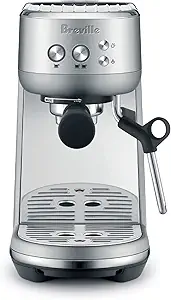 |
| Best Value The sweet spot between price and what you get | XIXUBX EM700-BL Espresso Machine |  |
| Best Budget The cheapest option that still gets the job done reliably | SHARDOR 3.5 Bar Espresso Machine 4-Cup |  |
| Top Rated A top-rated pick with lots of positive feedback | Aromaster AREM26 Espresso Machine |  |
| Most Popular A crowd favorite that many people choose with confidence | IMUSA 4-Cup Espresso Maker |  |
| Best Seller A high-volume bestseller chosen again and again | CASABREWS CM5418 Espresso Machine |  |
CASABREWS 3700 Essential

| Output Pressure | 20 bar |
|---|---|
| Wattage | 1350 watts |
| Operation Mode | Semi-Automatic |
| Coffee Input Type | Ground |
| Capacity | 43.9 fluid ounces |
The CASABREWS 3700 Essential is a compact semi-automatic espresso machine designed for home use and small offices. It brews espresso using a 20-bar Italian pump and a PID system that helps keep extraction temperature steady, while a powerful steam wand produces microfoam for lattes and cappuccinos. Typical use is straightforward: fill the removable 43.9 oz tank, tamp ground coffee into the 51mm portafilter, and choose single or double-shot brewing with one-touch buttons that can be programmed for volume. The brushed stainless-steel body gives a durable, kitchen-friendly look and there is a cup warmer and removable drip tray to simplify cleanup. Practical benefits include fast warm-up times, consistent pressure for crema, and included accessories (tamper, single/double filters) to get started right away. Limitations are the single boiler design, which means waiting between steaming and brewing for best results, and the lack of a built-in grinder, so you will need pre-ground coffee or a separate grinder to tune flavor. Overall, it suits buyers wanting café-style drinks from a compact, well-equipped machine without a commercial price tag.
Best for: Buyers who want a compact, café-capable machine that produces espresso and milk-based drinks at home and value consistent temperature control and a full frothing wand.
Less Ideal for: Those who need fully hands-off automatic brewing with an integrated grinder or users who need commercial‑level simultaneous brew and steam performance.
- 20-bar pump with PID temperature control for consistent extraction and crema
- Powerful steam wand capable of producing microfoam for lattes and cappuccinos
- Removable 43.9 oz water tank makes refills and cleaning simple
- Includes 51mm portafilter, single and double filters, and tamper so you can start immediately
- Stainless-steel housing and removable drip tray improve durability and maintenance
- Single boiler requires cooling time between steaming and brewing for optimal shots
- No built-in grinder so a separate grinder is needed to achieve freshest flavor
Verdict: A compact, feature-rich home espresso machine that delivers consistent shots and café-quality milk frothing in a small footprint.
Breville Bambino BES450BSS

| Operation Mode | Semi-Automatic |
|---|---|
| Wattage | 1560 watts |
| Coffee Input Type | Ground |
| Filter Type | Reusable |
| Capacity | 47 fluid ounces |
The Breville Bambino is a performance-focused, compact semi-automatic espresso machine built to deliver fast, consistent shots and capable milk texturing in a small footprint. It uses a ThermoJet heating system with PID temperature control to reach extraction temperature in about three seconds, and a 54mm portafilter plus low-pressure pre-infusion and 9-bar extraction help pull balanced, full-bodied espresso. The included manual steam wand produces fine microfoam suitable for latte art when you practice technique, while single- and dual-wall filter baskets support both beginner-friendly and more advanced dosing. Setup is straightforward and the stainless steel body fits neatly on tight countertops. Limitations include the lack of a built-in grinder and a manual approach to tamping and steaming, so it requires a separate grinder and some practice to get consistent barista-level results; the water capacity is moderate so frequent refills may be needed in high-use settings. For the size and speed, it delivers café-style drinks with real control over extraction and milk texture.
Best for: Buyers focused on espresso performance who want a compact machine that delivers quick, consistent extraction and hands-on milk texturing for cafe-style drinks at home.
Less Ideal for: Those who prefer an all-in-one, push-button experience with an integrated grinder or fully automatic milk systems should consider other models.
- ThermoJet heating with PID delivers rapid and stable extraction temperature in about 3 seconds
- 54mm portafilter and low-pressure pre-infusion yield full-bodied, balanced espresso
- Manual steam wand creates fine microfoam for latte art
- Compact stainless steel design fits small countertops
- No built-in grinder so a separate grinder is required for best results
- Manual tamping and steaming require practice to master consistent shots
Verdict: Choose the Bambino if you want a fast-heating, compact machine that produces café-quality espresso and real microfoam without taking up much counter space.
XIXUBX EM700-BL Espresso Machine

| Output Pressure | 20 bar |
|---|---|
| Operation Mode | Semi-Automatic |
| Capacity | 34 fluid ounces |
| Wattage | 1100 watts |
| Coffee Input Type | Ground |
The XIXUBX EM700-BL is a compact semi-automatic espresso maker aimed at home baristas who want consistent espresso and simple milk steaming without taking up much counter space. It uses a 20-bar pump with pre-infusion and a PID controller to stabilize brewing temperature, which helps deliver repeatable shots and stronger crema when you grind and tamp correctly. A single-button extraction handles 1-oz and 2-oz shots by press length, and the removable 34 oz water tank plus detachable drip tray make refilling and cleaning straightforward. The stainless steel steam wand and included frothing pitcher produce dense microfoam suitable for lattes and cappuccinos, and the machine runs relatively quietly thanks to vibration reduction. Practical extras include basic brewing accessories in the box and an auto shut-off feature. Limitations are typical for compact machines: you still need a good grinder and some tamping technique to get the best results, and plastic components mean it is not a pro-grade build. For buyers seeking predictable home espresso and easy milk frothing in a small footprint, this is a strong value choice.
Best for: Buyers who want a space-saving, reliable home espresso setup that makes consistent shots and easy milk-based drinks with minimal fuss.
Less Ideal for: Those seeking a commercial-grade machine or fully automatic one-touch specialty drink maker should consider higher-end or super-automatic models instead.
- PID temperature control offers stable, repeatable brewing temperatures
- 20-bar pump with pre-infusion helps produce good crema and balanced extraction
- Compact footprint with a removable 34 oz water tank for easy refills
- Steam wand and included frothing pitcher deliver smooth microfoam for milk drinks
- Plastic construction in parts limits long-term professional durability
- Performance depends on an external grinder and proper tamping technique
Verdict: A compact, PID-equipped home espresso machine that delivers consistent shots and reliable milk frothing in a small footprint.
SHARDOR 3.5 Bar Espresso Machine 4-Cup

| Output Pressure | 3.5 bar |
|---|---|
| Wattage | 800 watts |
| Operation Mode | Semi-Automatic |
| Coffee Input Type | Ground |
| Capacity | 4 cups |
The SHARDOR 3.5 Bar Espresso Machine is a compact, budget-friendly semi-automatic unit designed for small kitchens and casual daily use. It uses an 800W heating system and a die-cast aluminum boiler to reach brewing temperature quickly, and the 3.5-bar pressure delivers a lighter espresso-style shot with a thin crema that suits people who prefer an easy-to-drink cup. Controls are simple: a single intuitive knob switches between brewing and steaming, and the adjustable steam wand produces a range of milk textures for cappuccinos and lattes. The machine accepts ground coffee and includes a reusable filter and a small carafe, so there are no ongoing pod costs. Practical benefits include a very small footprint that fits dorm rooms or tight counters and basic safety features such as overheat and overpressure protection. Limitations are its modest pump pressure compared with true espresso machines and a plastic-heavy construction that reduces long-term durability and commercial styling. For buyers prioritizing price and space over cafe-level extraction, this is a capable entry-level option.
Best for: Buyers wanting an affordable, space-saving machine to make simple espresso drinks and basic milk-frothed beverages at home without the complexity of pro-grade equipment.
Less Ideal for: People seeking true high-pressure espresso extraction, barista-level crema and temperature control, or a heavy-duty, long-lasting metal-bodied machine.
- Fast 800W heating with die-cast boiler for quick warm-up
- Adjustable steam wand that makes cappuccinos and lattes possible at home
- Reusable filter and ground-coffee input avoid pod costs
- Very compact footprint fits small kitchens and dorm rooms
- 3.5-bar output produces a milder espresso-style shot rather than high-pressure extraction
- Predominantly plastic construction may feel less durable than metal-bodied machines
Verdict: A compact, low-cost espresso machine that quickly makes drinkable espresso-style shots and frothed milk for buyers who prioritize space and value.
Aromaster AREM26 Espresso Machine

| Power | 1400W |
|---|---|
| Pressure Pump | 20-Bar |
| Water Tank Capacity | 37 fluid ounces |
| Special Features | PID Temperature Control, Pre-Infusion, One-Touch Descaling |
The Aromaster AREM26 is a compact semi-automatic espresso maker aimed at daily home use and small offices, combining a 20-bar pressure pump, PID temperature control, and a 1400W fast-heat system to deliver espresso with steady temperature and good crema. It uses a dual-circuit design so you can pull hot espresso and then switch to steam for milk frothing quickly, and the 360° swivel steam wand makes cappuccinos and lattes easier for beginners. The removable 37 oz water tank and one-touch descaling simplify maintenance, and the stainless steel exterior and cup warmer give it a durable, polished feel on a small countertop. Notable conveniences include pre-infusion and anti-dry burn protection for more consistent shots and quieter operation than many machines in this class. Expect a learning curve if you want barista-level extraction and milk texture, and the machine is best for single- or two-cup routines rather than heavy commercial use. Routine cleaning and proper tamping are still needed to get the most consistent results.
Best for: Buyers who prioritize a reliable, consistent home espresso routine and want a compact machine that heats quickly, protects against dry burn, and is simple to maintain.
Less Ideal for: Those who need a commercial-grade, high-throughput machine or users wanting fully automatic one-touch espresso and milk programs.
- Fast 1400W heating and dual-circuit design for quick back-to-back brewing and steaming
- PID temperature control and pre-infusion for more consistent espresso extraction
- 360° swivel steam wand with heat-resistant grip for easy milk frothing
- Removable 37 oz water tank and one-touch descaling for straightforward maintenance
- Learning curve to dial in shots and milk texture for users seeking café-level results
- Designed for home or small-office use and not intended for high-volume commercial brewing
Verdict: Aromaster AREM26 is a compact, reliability-focused home espresso machine that heats fast and uses PID control and safety features to deliver consistent daily shots with easy maintenance.
IMUSA 4-Cup Espresso Maker

| Capacity | 4 cups |
|---|---|
| Wattage | 800 watts |
| Operation Mode | Semi-Automatic |
| Filter Type | Permanent |
The IMUSA 4-Cup Espresso Maker is a compact, countertop espresso machine aimed at home use and small batches. It uses an 800-watt heater and a 5-bar pressure system with a 3-position selector to brew espresso directly into the included glass carafe, and it has a steam nozzle milk frother for cappuccinos and lattes. The permanent filter and removable drip tray make daily cleaning straightforward, and the cool-touch carafe handle improves safe pouring. Its matte black plastic exterior keeps the unit lightweight and space-friendly, while the 4-cup capacity suits singles or small groups. Expect decent crema and froth for everyday beverages, though the modest pressure and small capacity mean it will not match commercial machines in extraction or steam power. This is best for users who want simple, affordable cafe-style drinks at home without complicated programming or a large footprint.
Best for: Buyers who want a small, easy-to-use machine that produces espresso and frothed milk at home without a steep learning curve and value social-proof through reliable, simple performance.
Less Ideal for: Anyone seeking professional-grade extraction, high-pressure steam performance, or larger-capacity machines for frequent entertaining should look at more powerful or commercial-style units.
- Compact footprint fits small kitchens or limited counter space
- Built-in steam nozzle milk frother for cappuccinos and lattes
- Permanent filter and removable drip tray simplify cleanup
- Glass carafe with cool-touch handle allows safe, direct serving
- 5-bar pressure is lower than true commercial espresso machines, limiting extraction intensity
- Plastic exterior may feel less durable than metal-bodied models
Verdict: A compact, user-friendly espresso maker with a milk frother that delivers café-style drinks at home with minimal fuss, ideal for small households.
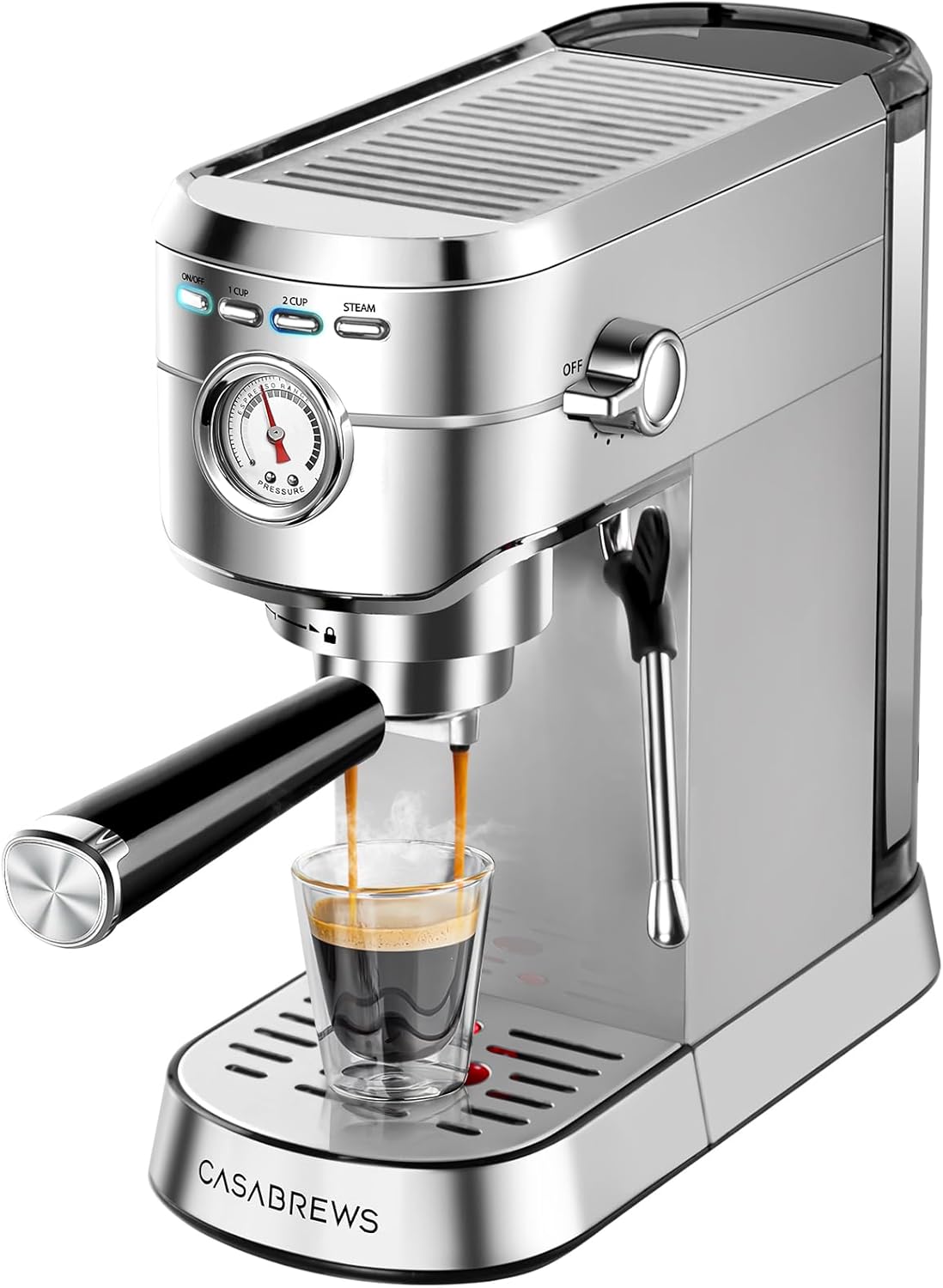
CASABREWS CM5418 Espresso Machine
| Output Pressure | 20 bar |
|---|---|
| Wattage | 1350 watts |
| Operation Mode | Semi-Automatic |
| Coffee Input Type | ground_coffee |
| Filter Type | Reusable |
The CASABREWS CM5418 is a compact home espresso machine aimed at making café-style drinks without taking much counter space. It uses a 20-bar Italian pump and a built-in pressure gauge to help dial in extraction, and a low-pressure pre-infusion feature to improve flavor balance. Typical use involves grinding or using ground espresso, tamping into the included 51mm portafilter, and selecting single or double volume with one-touch buttons, then steaming milk with the powerful steam wand to produce microfoam for lattes and cappuccinos. The removable 34 oz water tank and cup warming tray make day-to-day brewing convenient, and the stainless steel body and reusable filter baskets are easy to clean. Expect a short warm-up time and clear visual feedback from the pressure gauge, which helps hobbyists learn adjustments for better shots. Limitations are the single-boiler design that requires cooling between steaming and brewing cycles and a manual workflow that needs basic tamping and grind adjustments for best results.
Best for: Buyers who want a space-saving, entry-level machine that still offers pressure control and a steam wand to learn espresso and milk-texturing skills at home.
Less Ideal for: People who need rapid back-to-back brewing and steaming for high-volume serving or those seeking fully automatic one-touch drink programs.
- 20-bar pump with built-in pressure gauge for visually guided extraction adjustments
- Powerful steam wand capable of producing microfoam for latte and cappuccino milk texture
- Compact stainless steel design with a removable 34 oz water tank for easy refills
- Includes 51mm portafilter, single and double filters, tamper and reusable filter baskets
- Single-boiler system requires cooldown between steaming and brewing sessions
- Semi-automatic operation demands manual tamping and grind tuning to get consistent shots
Verdict: A compact, user-taught espresso machine that combines strong extraction control and a capable steam wand for buyers who want café-style drinks at home while learning the craft.
Choosing the Right Small Espresso Machine with Milk Frother: Key Factors to Consider
Brew Temperature and Pressure Consistency
Temperature and pressure are the foundation of good espresso. Small machines vary in how well they maintain the ideal brewing temperature during successive shots. Inconsistent temperatures produce sour or bitter flavors and make it difficult to dial in a grind.
Look for descriptions of stable boiler or thermoblock control and realistic pump pressure capabilities. For small machines, short recovery times between shots also matter if you plan to make multiple beverages in a row.
Steam Power and Milk Texture Control
A built-in frother can range from a simple steam pipe to a dedicated automatic milk system. The amount of steam pressure and the control you have over frothing determine whether you can produce microfoam for latte art or only coarse aeration for cappuccinos.
Check how the frother is operated, whether there is adjustable steam flow, and how easy it is to purge and clean the milk path after use. For frequent milk-based drinks, stronger steam performance and manual control deliver the most versatility.
Physical Size and Kitchen Fit
Small machines trade capacity and complexity for compactness. Measure the actual countertop footprint, including clearance above the cup platform for taller latte glasses and the space needed to operate the frother wand.
Also consider water tank size and accessibility. Smaller tanks require more frequent refilling, and side- or rear-fill arrangements affect placement flexibility in tight kitchens.
Cleaning, Maintenance, and Daily Upkeep
Maintenance habits shape long-term enjoyment. Removable drip trays, accessible group heads, and easy-to-remove milk components make daily cleaning quicker and reduce hygiene risks. Machines with straightforward descaling processes and clear service intervals minimize surprises.
Pay attention to how milk residue is drained or wiped, whether the steam wand is removable, and how filters or screens are accessed for routine rinsing.
User Interface and Learning Curve
Controls range from single-button operation to pressure/temperature displays and programmable shot volumes. For a small home machine, an intuitive interface shortens setup time and reduces frustration while you learn to dial in shots and milk texture.
Consider how the machine communicates status, whether there are simple presets, and how much manual adjustment the design expects from the operator.
How to Fit a Compact Espresso Machine Into a Small Kitchen
Plan placement around water access and the most convenient route to empty the drip tray and refill the water tank. If counter space is limited, prioritize machines with top-fill tanks or side-fill access that can sit against a wall. Leave a few inches of clearance where the steam wand will move to avoid scalds or cramped ergonomics.
Think through storage for accessories such as a small knock box, a tamper, and a dedicated grinder. A compact bean grinder paired with a small espresso machine often takes more space than buyers expect, so measure your full workflow footprint before committing.
- Measure height clearance for taller cups and travel mugs.
- Ensure adjacent space for tamping and steaming without blocking cabinet doors.
- Position near a sink if refilling and cleaning are frequent.
Daily Routines That Keep Milk Systems Hygienic
Milk residues breed bacteria and degrade flavor quickly. Immediately after steaming, purge the wand and wipe it with a damp cloth. If the machine uses a milk pitcher attachment or internal milk circuit, follow any short post-use cleaning steps to prevent buildup.
Weekly or more frequent deep cleaning of removable milk parts and descaling of the boiler or thermoblock preserves steam performance. Establish a simple checklist you use after every session to make upkeep fast and consistent.
- Purge the wand right after each pour.
- Wipe and rinse external parts; soak removable components weekly.
- Run a quick steam-only cycle before the next use to clear internal residue.
Matching Grinder Choice to a Small Espresso Machine
Even the best small machines rely on a consistent grind to produce balanced espresso. A quality burr grinder with stepless or fine detents will be far more useful than a blade model. For compact setups, choose a small footprint grinder with easy grind adjustment and a hopper capacity that matches how often you brew.
If counter space is tight, consider grinders designed for small kitchens that can sit flush against the back splash or be stored in a nearby cabinet when not in use. Avoid overfilling small hoppers, since stale beans will hurt extraction quality.
- Prefer burr grinders for consistent particle size.
- Look for easy, repeatable grind adjustments.
- Match hopper size to your daily consumption to keep beans fresh.
Troubleshooting Common Extraction and Steaming Issues
If espresso tastes sour or thin, it often indicates under-extraction or low brew temperature. Try a finer grind, a slightly longer tamp, or ensure the machine has reached proper operating temperature. If shots are bitter, back off the grind or reduce extraction time.
Poor milk texture typically relates to insufficient steam or incorrect steaming technique. Aim to introduce air briefly then focus on stretching and texturing the milk. If steam seems weak, check for scale buildup or air in the system; routine descaling and correct filling mitigate these problems.
- Adjust grind and dose for taste balance.
- Purge and check steam pressure if frothing is inconsistent.
- Regular descaling maintains both brew and steam performance.
What to Expect From a Small Machine Versus a Prosumer Unit
Small espresso machines are designed to balance results and footprint. Expect slightly longer heat recovery, smaller water reservoirs, and simpler steam systems compared with larger prosumer machines. That tradeoff does not preclude excellent espresso, but it does mean planning your workflow differently, especially for back-to-back drinks.
Value in the small format comes from efficient design and clear compromises. Choose a machine whose limits match how you brew: occasional lattes for a couple versus frequent drink production for guests will call for different priorities.
- Smaller boilers or thermoblocks have different recovery times.
- Compact steam wands may require more technique to achieve microfoam.
- Expect smaller water tanks and more frequent refilling.
How We Chose the Best Small Espresso Machine with Milk Frother
We focused on attributes that most directly affect daily espresso and milk-steaming results in small-format machines. Key criteria included consistent brew temperature and pressure, steam wand or frother power and control, actual footprint and usable counter clearance, ease of cleaning the group head and milk system, and reliability indicators like materials and build quality. We also considered usability factors such as intuitive controls, routine maintenance demands, and the availability of straightforward replacement parts. Products were excluded if they relied on single-use capsules only, lacked any manual milk-steaming capability, or had ambiguous specifications for pump pressure or steam output. We favored machines that paired measurable extraction control with practical milk texture options so buyers can make authentic espresso-based drinks without needing a large, professional setup. The scoring emphasized measurable technical specs and real-world usability rather than marketing claims alone.
Our full evaluation process is outlined in our review methodology.
FAQ
Can small espresso machines produce real crema?
Often they can. Many compact machines use pump systems capable of producing adequate pressure to create crema. However, crema quality still depends on fresh, properly ground beans and correct extraction technique.
How often should I descale a compact espresso machine?
It depends on water hardness and frequency of use. For typical home use with moderately hard water, plan to descale every 2 to 3 months. Using filtered or softened water can extend intervals.
Is a steam wand better than an automatic frother for milk drinks?
A manual steam wand offers more control for microfoam and latte art but requires technique. Automatic frothers are easier for beginners and faster for consistent texture, but they may limit the range of milk textures you can achieve.
Will a small machine handle multiple drinks in a row?
Some can, but many compact units need a short recovery time between shots and steaming cycles. If you plan to make several milk-based drinks consecutively, prioritize steam power and quicker heat recovery in your selection.
What maintenance matters most for milk-based drinkers?
Daily purging and wiping of the steam wand, frequent cleaning or descaling of any internal milk path, and regular inspection of removable seals or screens keep milk hygiene under control. Consistent routines prevent flavor degradation and mechanical issues.
Final Verdict
Choosing a small espresso machine with a milk frother requires balancing countertop fit, steam capability, and the level of control you want over extraction and milk texture. Prioritize machines that deliver stable brew temperature and usable steam pressure for the drinks you make most often, and factor in easy cleaning to keep milk systems hygienic. With those tradeoffs in mind, you can confidently pick a compact unit that produces reliable espresso and creamy textured milk without overwhelming your kitchen.