
Note: This article contains affiliate links. If you click on these links and make a purchase, we may earn a small commission at no extra cost to you. This helps support our research and content. Read our full affiliate disclosure here.
Picking the right small freezer for home use matters if you rely on frozen bulk meals, seasonal produce, or need extra space for meal prep. A compact freezer can expand your storage without taking over a kitchen, garage, or utility closet, but poor choices lead to wasted space, high running costs, or hard-to-organize interiors. This guide shortlists the top compact freezers built for home use and evaluates them on the practical factors that affect daily life: usable capacity, energy draw, interior layout, and reliability. Read on for focused, buyer-oriented guidance and clear reasons each shortlisted model earned a spot.
Top Picks at a Glance
| Best Overall The best all-around choice for most situations | Kismile Compact Upright Freezer |  |
| Best Quality Built to a higher standard if you want something more solid | Frigidaire Chest Freezer 7 Cu. Ft. |  |
| Best Value The sweet spot between price and what you get | DEMULLER 3.5 cu ft Chest Freezer |  |
| Best Budget The cheapest option that still gets the job done reliably | 5 SUNDAY LIVING 3.5 Cu Ft Chest Freezer | 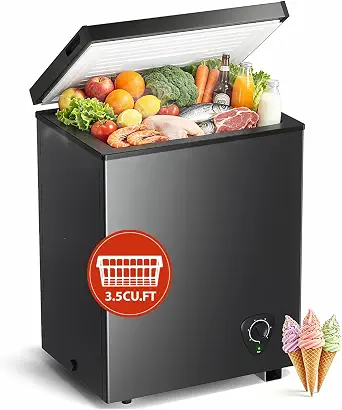 |
| Top Rated A top-rated pick with lots of positive feedback | Whynter CUF-301SS 3.0 cu ft Upright Freezer |  |
| Most Popular A crowd favorite that many people choose with confidence | Upstreman BR321 3.2 Cu.Ft Mini Fridge |  |
| Best Seller A high-volume bestseller chosen again and again | BODACIOUS 5.0 Cu Ft Chest Freezer |  |
Kismile Compact Upright Freezer

| Capacity | 3.2 cubic feet |
|---|---|
| Wattage | 90 watts |
| Voltage | 115 volts |
| Number Of Shelves | 2 |
The Kismile Compact Upright Freezer is a small freestanding freezer designed for apartments, dorms, or as a secondary household unit. It provides about 3.0 cubic feet of storage across two removable shelves and a slide-out glass shelf, which makes organizing frozen meals, meat, ice cream, and breast milk straightforward. Temperature is set with a 7-position front-mounted dial that ranges roughly from -7.6°F to 6.8°F, letting you choose colder or milder storage for different items, and the unit uses an R600a refrigerant and a low-power compressor for energy-efficient operation. The reversible door and adjustable feet help fit it into tight spaces, and claimed noise is under 40 dB so it can sit near living or sleeping areas. Expect manual defrosting and basic controls rather than automatic features, and the top handle design means you do not have to bend to open it. For buyers wanting a compact, economical freezer with flexible placement and simple temperature control, this is a sensible option; if you need large capacity, fast commercial freezing, or auto-defrost, look elsewhere.
Best for: Buyers who need a reliable, space-efficient secondary freezer for everyday home use and value quiet, energy-conscious operation and flexible placement.
Less Ideal for: Users who need large commercial-style capacity, automatic defrost, or advanced freezing features like rapid-freeze or connectivity.
- Compact 3.0 cu ft capacity fits small spaces like dorms and apartments
- Seven-step front thermostat offers a wide temperature range for different frozen goods
- Reversible door and adjustable feet allow flexible placement and installation
- Low-noise operation under 40 dB suitable for placement near living areas
- Removable shelves and a slide-out glass shelf simplify organization and cleaning
- Manual defrosting requires occasional maintenance
- Basic controls with no smart features or rapid-freeze function
Verdict: A quiet, energy-efficient compact upright freezer that fits small homes and delivers flexible, no-frills frozen storage.
Frigidaire Chest Freezer 7 Cu. Ft.

| Capacity | 7 cubic feet |
|---|---|
| Voltage | 120 volts |
| Number Of Shelves | 1 |
| Installation Type | Freestanding |
This Frigidaire chest freezer is a compact, performance-minded unit that adds dedicated frozen storage without taking much floor space. It delivers straightforward freezing with a front-mounted adjustable thermostat (seven settings) for manual temperature control and a power-on indicator so you can confirm operation at a glance. The top-opening lid and removable vinyl-coated wire basket make it easy to organize frequently used items while larger packages sit below. Practical touches include adjustable leveling legs for stability, a recessed handle for cleaner lines, and a defrost drain to speed manual defrosting and draining. The interior uses an aluminum liner for durability and the unit is freestanding so placement is flexible. Limitations are typical of manual-defrost chest freezers: you must defrost periodically and there is no automatic ice-management or advanced temperature monitoring. For buyers who prioritize simple, reliable cold storage and usable internal space, this model performs well for everyday home needs.
Best for: Buyers who need dependable extra freezer capacity in a small footprint and prefer simple, manual controls over smart features for consistent performance.
Less Ideal for: Those who want a frost-free, low-maintenance freezer or remote temperature monitoring should consider an automatic-defrost model with digital controls instead.
- Compact 7.0 cu. ft. capacity adds substantial frozen storage for a small footprint
- Adjustable front thermostat with seven settings for manual temperature control
- Removable vinyl-coated wire basket keeps small items accessible and organized
- Defrost drain simplifies manual defrosting and cleanup
- Adjustable legs and recessed handle improve placement and usability
- Manual defrost requires periodic thawing and maintenance
- No advanced temperature monitoring or alarm features
Verdict: A practical, space-efficient chest freezer that gives reliable extra frozen storage with straightforward manual controls.
DEMULLER 3.5 cu ft Chest Freezer

| Capacity | 3.5 cubic feet |
|---|---|
| Wattage | 70 watts |
| Voltage | 110 volts |
| Number Of Shelves | 1 |
The DEMULLER 3.5 cu ft chest freezer is a small, freestanding unit designed to add freezer capacity in tight spaces like apartments, dorms, or garages. It uses an electronic control and digital display to set temperatures from -15°F to 41°F with 1°F precision, and a fast-freeze mode aimed at preserving flavor and nutrients. Interior organization comes from two removable stainless-steel baskets that keep smaller items accessible, and the D-shaped cooling tubes around the cabinet promote even cooling. The unit runs quietly and claims noise under 38 dB, which is useful in shared living areas, and manual defrost with a side drain hole simplifies thaw cycles. Expect straightforward setup—plug in, unlock, and program the temperature—but note this is a compact chest freezer so internal volume and shelf flexibility are limited compared with upright models, and it requires occasional manual defrosting. The included one-year support gives basic coverage if issues arise.
Best for: Buyers who need an efficient, space-saving extra freezer for everyday frozen goods and prioritize precise temperature control and quiet operation.
Less Ideal for: Not a good fit for users who need large commercial capacity, frequent no-maintenance operation, or complex internal shelving arrangements.
- Compact footprint fits small spaces such as apartments or dorms
- Digital temperature control with 1°F increments and wide temperature range
- Two removable stainless-steel baskets for organization
- Quiet operation suitable for shared or quiet environments
- Fast-freeze capability and even cooling from D-shaped cooling tubes
- Manual defrost requires periodic draining and more maintenance than frost-free units
- Limited internal space compared with larger or upright freezers
Verdict: A compact, quiet chest freezer with precise digital temperature control that delivers usable extra storage for small homes and tight spaces.
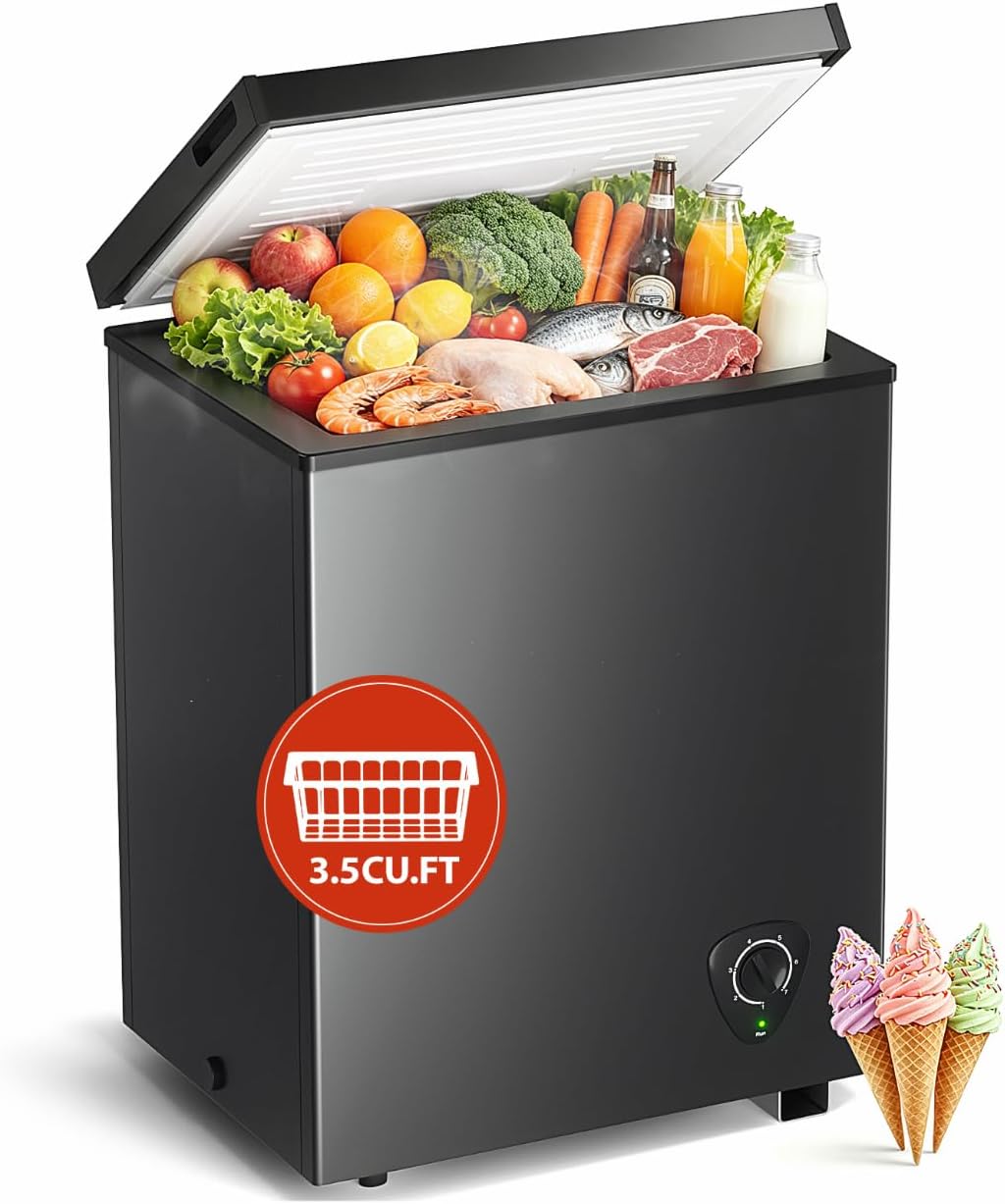
5 SUNDAY LIVING 3.5 Cu Ft Chest Freezer
| Capacity | 3.5 cubic feet |
|---|---|
| Wattage | 85 watts |
| Voltage | 120 volts |
| Number Of Shelves | 1 |
| Specification Met | ETL |
This compact chest freezer provides straightforward cold storage for small households, dorms, or offices. It offers 3.5 cubic feet of capacity and a top-opening door with a removable basket that helps organize frequently used items. The seven-step thermostat gives a usable temperature range from about 10.2 to -11.4°F so you can choose anything from light chilling to deeper freezing, and LED power/run indicators show operational status. The unit is designed for quiet operation, keeping noise under 40 dB, and its freestanding installation makes placement flexible. Practical trade-offs are expected at this size: the interior is limited for bulk storage and there is only one shelf/basket rather than multiple compartments, and it is a basic model without advanced features like automatic defrost or smart controls. For buyers who need a simple, low-power secondary freezer in a tight footprint, this does the job efficiently; buyers needing large or feature-rich freezers should look at bigger units.
Best for: Buyers looking for an affordable, space-saving secondary freezer for occasional use in small apartments, dorm rooms, or offices who prioritize quiet, simple operation.
Less Ideal for: Households that need large-capacity long-term frozen storage or advanced features like frost-free operation and Wi-Fi monitoring should consider larger or feature-rich models.
- Compact footprint fits small kitchens, dorms, or offices
- Adjustable 7-step thermostat for a usable temperature range down to -11.4°F
- Removable basket helps organize and access frequent items
- Whisper-quiet compressor operation rated under 40 dB
- Limited 3.5 cu ft capacity restricts bulk or long-term storage
- Basic feature set with no automatic defrost or smart connectivity
Verdict: A budget-friendly, compact chest freezer that delivers quiet, adjustable freezing in small spaces for buyers who need simple secondary cold storage.
Whynter CUF-301SS 3.0 cu ft Upright Freezer

| Capacity | 3 cubic feet |
|---|---|
| Temperature range | -14° to 50° F |
| Wattage | 100 |
| Door orientation | Reversible |
| Number of shelves | 3 |
The Whynter CUF-301SS is a small upright freezer designed for tight spaces such as garages, offices, dorms, or kitchens and can be switched to refrigerator mode when you need chilled storage. It uses a compressor-based cooling system with a mechanical dial that sets refrigerator temperatures from 32 to 50°F or freezer temperatures from -14 to -11°F, and includes two wire shelves plus a removable slide-out basket for basic organization. The reversible-swing stainless steel door and recessed handle make placement flexible while the included cylinder lock and keys let you secure contents in shared spaces. Rated to use relatively little energy, this unit is quiet enough for nearby rooms and runs on standard 115V household power. Limitations for garage use include modest capacity—only 3 cubic feet—and basic mechanical controls rather than precise digital settings, so it is best for regular food and beverage storage rather than long-term bulk freezing or temperature-critical items.
Best for: Practical buyers who need a compact, energy-conscious cold storage unit for a garage, office, or small household space and value flexibility between fridge and freezer modes.
Less Ideal for: Users who need large capacity or precise temperature control for long-term freezing, or those who store large frozen loads regularly.
- Convertible freezer/refrigerator mode for flexible cold storage needs
- Reversible stainless steel door and recessed handle for flexible placement
- Integrated lock with two keys for secure shared-space storage
- Quiet compressor operation suitable for near-room placement
- Includes removable shelf and slide-out basket for basic organization
- Only 3.0 cu ft capacity, limiting bulk storage
- Mechanical thermostat lacks precise digital control
- Not designed for heavy-duty or large-volume freezing tasks
Verdict: A compact, energy-conscious convertible freezer that fits garages and small spaces when you need a reliable, secure solution for everyday frozen or chilled storage.
Upstreman BR321 3.2 Cu.Ft Mini Fridge

| Capacity | 3.2 cubic feet |
|---|---|
| Freezer Capacity | 0.3 cubic feet |
| Defrost System Type | Manual Defrost |
| Voltage | 115 volts |
| Annual Energy Consumption | 206 kwh |
The Upstreman BR321 is a compact compressor mini fridge designed to deliver reliable cooling in tight spaces. Its 3.2 cu.ft interior includes a 0.3 cu.ft freezer and two adjustable glass shelves so you can store bottles, snacks, and small containers while customizing shelf height for taller items. Temperature is controlled with a five-level adjustable thermostat rated from about 32°F to 50°F, and the unit uses a rotary scroll compressor that balances cooling power with reasonable efficiency. Practical touches include a crisper drawer, reversible door, adjustable leveling feet, and a tight door seal to help hold temperature. It runs quietly at about 38 dB and carries ETL certification and Energy Star efficiency notes, which is helpful for long-haul or overnight use in noise-sensitive environments. Expect manual defrosting and a small footprint that limits total food volume; this model is best for drinks, lunch items, and short-term perishables rather than large grocery loads or long-term frozen storage. Installation is freestanding only and there is no lock on the door.
Best for: Buyers who want a dependable, quiet compact refrigerator for a truck cab, dorm, or small office and prioritize straightforward, reliable operation over advanced features.
Less Ideal for: People who need large-capacity refrigeration, extensive frozen storage, or programmable temperature control should look for larger or purpose-built units instead.
- Generous usable interior for a 3.2 cu.ft compact with a 0.3 cu.ft freezer.
- Adjustable glass shelves and crisper drawer allow flexible organization for bottles and food.
- Quiet operation around 38 dB suitable for sleeping or cab environments.
- Reversible door and leveling feet let you fit it into tight or uneven spaces.
- Energy-efficient compressor with ETL listing and modest annual energy consumption.
- Manual defrost means occasional maintenance to remove frost in the freezer.
- Not suited for storing large frozen items or maintaining hard ice cubes due to small freezer size.
- No door lock or advanced temperature controls beyond the basic 5-level dial.
Verdict: A quiet, energy-conscious 3.2 cu.ft compressor mini fridge that reliably chills drinks and perishables in compact spaces, making it a safe choice for risk-averse buyers needing simple dependable cooling.
BODACIOUS 5.0 Cu Ft Chest Freezer

| Capacity | 5 cubic feet |
|---|---|
| Wattage | 58 watts |
| Voltage | 110 volts |
| Door Orientation | Top |
| Specification Met | ETL |
This BODACIOUS 5.0 cu ft chest freezer is a compact, top-opening unit aimed at small households, apartments, or secondary food storage. It provides simple chest-freezer functionality with one removable shelf and a fast-freeze mode to lock in freshness for meats and bulk groceries. Notable features include very low noise operation under 40 dB for placement near living areas, modest power draw (about 0.36 kWh/24h) for low running costs, and a built-in drain and hidden handle that make cleaning and handling easier. Installation is simple as a freestanding or countertop unit and the ETL specification indicates basic safety compliance. Limitations are its small internal organization compared with upright models and the single-shelf layout, which can make finding small items harder and requires more careful packing. The freezer is straightforward to operate and suits buyers who want dependable cold storage without extra bells and whistles.
Best for: Buyers who need a reliable, low-noise secondary freezer for everyday home use and prioritize low running costs and simple, no-frills storage.
Less Ideal for: Families who need large-volume long-term storage or users who prefer upright shelving and quick front access to items should consider larger or different-style freezers.
- Ultra-quiet operation under 40 dB suitable for apartments or near living spaces
- Low energy consumption (about 0.36 kWh per 24 hours) for lower electricity costs
- Fast-freeze function helps preserve freshness of meats and produce
- Compact footprint fits small kitchens, garages, or offices and is freestanding
- Single-shelf chest layout limits internal organization and access to small items
- Smaller capacity than full-size freezers, so not ideal for large households
Verdict: A quiet, energy-efficient 5.0 cu ft chest freezer that delivers reliable secondary cold storage for small homes and apartments.
Choosing the Right Small Freezer for Home Use: Key Factors to Consider
Usable Capacity and Interior Layout
Usable capacity is the real measure of how much food the freezer will hold, not just the advertised cubic feet. Shelves, baskets, and compartment shapes change what fits and how accessible items are. Consider the kinds of items you freeze most often, whether they are large platters, small bags, or tall containers.
A good interior layout reduces time spent digging for items and lowers door-open time, which helps maintain stable temperatures. Removable shelves or adjustable baskets add flexibility for seasonal needs or long-term changes in storage patterns.
Energy Efficiency and Operating Cost
Energy use determines the ongoing cost of running a small freezer. Even compact units can have widely different annual consumption depending on insulation, compressor efficiency, and thermostat design. Look for clear energy specifications and consider how often the freezer will be accessed; frequent openings increase energy use.
Lower energy draw matters for sustainability and monthly utility bills, especially if the unit will run in a conditioned living space. Better-insulated models often cost more up front but save money over years of continuous operation.
Temperature Control and Recovery
Stable, accurate temperature control is essential for food safety and for preventing freezer burn. A thermostat that holds a steady setpoint plus a compressor that recovers quickly after door openings or power fluctuations reduces the risk of partial thawing. Consider whether the unit offers a fast-freeze or quick-cool mode for newly added items.
Recovery speed is also important if the freezer will be placed in areas with temperature swings, such as a garage or unheated basement. Units with stronger insulation and more responsive controls maintain safe temperatures more reliably.
Noise Level and Vibration
Noise and vibration affect where a small freezer can comfortably live in a home. A quiet unit is necessary when the freezer sits near living rooms, bedrooms, or open-plan spaces. Compressors vary in sound output and duty cycle, and internal fan designs can add high-frequency noise.
Excessive vibration can cause rattles or accelerate wear on interior components. Look for units with well-damped compressors and solid feet or leveling options to reduce movement and keep the freezer operating quietly.
Footprint and Installation Flexibility
The external dimensions, door swing, and required clearance determine whether a compact freezer fits the intended location. Measure doorways, hallways, and the installation spot before purchasing. Some small freezers can be recessed or placed under counters while others need more clearance for ventilation.
Consider whether the freezer will be indoors, in a garage, or in a utility closet. Ventilation requirements and ambient temperatures vary by location, and some models are not rated for unconditioned spaces.
Maintenance and Serviceability
Ease of maintenance affects long-term convenience and reliability. Defrosting method, removable parts, and how accessible the compressor and condenser are for cleaning should influence your choice. Frost-free designs eliminate manual defrosting but add mechanical complexity.
Availability of replacement parts and clear warranty terms matter when evaluating longevity. Units that are simpler to service typically cost less to maintain and can extend the useful life of the appliance.
Where to Place a Small Freezer in Your Home
Placement affects performance and convenience. A small freezer should sit on a level surface with enough clearance for airflow around the condenser. Avoid locations that experience extreme heat or cold unless the unit is rated for those conditions.
Think about traffic flow when you choose a spot. Placing the freezer near food prep areas or the garage door can make it easier to move groceries in and out. If noise is a concern, choose a location away from bedrooms and main living spaces.
- Allow manufacturer-recommended ventilation clearance.
- Keep the unit on a stable, level floor to avoid excess vibration.
- Avoid direct sunlight or proximity to heat sources.
Managing Frost and Defrost Options
Small freezers come in manual-defrost and frost-free varieties. Manual defrost models often have better insulation and slightly lower energy use but require periodic thawing to remove ice buildup. Frost-free freezers automate this task but may cycle more frequently and use more energy.
If you choose a manual-defrost unit, plan for a simple defrost routine. Remove food to coolers, power down, and let the ice melt completely before cleaning and restarting. For busy households, frost-free convenience can outweigh the incremental energy penalty.
- Manual defrost: lower energy, periodic maintenance.
- Frost-free: hands-off operation, potentially higher energy use.
- Use drainage and absorbent towels when defrosting to protect floors.
Choosing the Right Temperature Settings
Set the freezer to a steady temperature that preserves food quality without unnecessary energy use. The ideal freezer temperature is typically at or below 0 degrees Fahrenheit. Check the unit periodically with an appliance thermometer to verify accuracy.
If the freezer includes a fast-freeze or quick-freeze function, use it when adding large amounts of unfrozen food. After the initial freeze period, return to the normal setpoint to conserve energy.
- Keep temperatures at or below 0 degrees Fahrenheit for long-term storage.
- Use quick-freeze for newly added items, then revert to normal operation.
- Monitor temperature with a simple freezer thermometer for peace of mind.
Organizing a Compact Freezer for Maximum Use
Efficient organization increases usable space and reduces door-open time. Group similar items in bins or labeled bags and reserve the most frequently used items near the front. Use stackable containers or flat packs for better space utilization.
Create a loose inventory system so you can find items quickly. Clear bins or see-through bags help you identify contents without prolonged door openings, which preserves internal temperature and reduces energy use.
- Use baskets or bins to separate categories like meats, vegetables, and prepped meals.
- Flatten bags of food to maximize stacking space.
- Label items with dates to manage rotation and reduce waste.
Safety and Power Interruption Planning
Plan for short power outages by keeping a thermometer inside the freezer and avoiding unnecessary door openings. A full freezer retains cold better than a partially filled one. Consider storing high-risk items in the coldest compartment and use ice or dry ice only when necessary and handled safely.
If you expect frequent outages, look for a freezer with faster recovery time and better insulation. For long interruptions, have a plan to transfer perishables to another cold storage option or consume them promptly.
- Keep an appliance thermometer inside to monitor temperature during outages.
- Avoid opening the door during a power interruption to maintain cold.
- Know the local guidelines for disposing of thawed perishable foods.
How We Chose the Best Small Freezer for Home Use
We focused on attributes that directly affect how well a small freezer performs in everyday home settings. Key evaluation criteria included usable internal capacity and layout, because real storage space determines how much food you can keep frozen and how easily you can organize it. Energy efficiency and annual operating cost were assessed to reflect long-term household running expenses and to identify units that minimize power draw without sacrificing performance. Temperature control and recovery speed were considered to ensure safe freezing, especially after door openings or brief power interruptions. Build quality, warranty support, and noise levels were included to account for reliability and whether a unit is suitable for shared living spaces or placement near living areas. Finally, installation flexibility and footprint were checked to confirm a unit can fit common home locations such as a garage, basement, or kitchen alcove. We excluded large upright and chest freezers that exceed typical compact dimensions or designed for commercial use. Products that lacked clear specifications for capacity, energy consumption, or temperature control were not considered for the shortlist.
Our full evaluation process is outlined in our review methodology.
FAQ
How much usable capacity do I actually get from a small freezer?
Advertised cubic feet include internal components and unusable corners. Expect usable capacity to be several percent lower. Review internal shelf and basket layouts to estimate how many containers or bulk items will fit practically.
Are frost-free small freezers better than manual-defrost models?
Frost-free models remove the need for manual thawing, which is convenient, but they can use more energy due to periodic defrost cycles. Manual-defrost freezers are often more energy efficient but require scheduled maintenance to remove ice buildup.
Can I put a small freezer in an unheated garage or basement?
It depends on the freezer's ambient temperature rating. Some compact freezers are designed to operate in unconditioned spaces, while others require a moderate indoor environment. Check the unit's specified operating range before installing it in an area with wide temperature swings.
What maintenance is required to keep a small freezer running well?
Regular tasks include cleaning interior surfaces, defrosting if it is a manual model, and keeping condenser coils dust-free if accessible. Ensure door seals remain flexible and clean to maintain an airtight closure and monitor temperature accuracy periodically.
How noisy are small freezers and does noise vary a lot between models?
Noise varies based on compressor design, fan operation, and cabinet damping. Some units are nearly silent in daily operation while others have noticeable hums or periodic clicks. If noise is a concern, prioritize quieter models and look for units with good vibration isolation.
Final Verdict
When selecting a small freezer for home use, prioritize usable internal capacity and energy efficiency first, then weigh temperature control and noise against where you plan to install the unit. Be realistic about the types and volumes of food you will store and choose an interior layout that supports easy organization. Factor in maintenance preferences such as manual versus frost-free operation and confirm the unit is rated for your intended location. With these tradeoffs in mind, you can confidently choose a compact freezer that fits your space, budget for operating costs, and daily routines.