
Note: This article contains affiliate links. If you click on these links and make a purchase, we may earn a small commission at no extra cost to you. This helps support our research and content. Read our full affiliate disclosure here.
Choosing the right small meat grinder matters whether you want fresher burger, better sausage mixes, or more control over texture in small-batch recipes. A compact grinder saves counter space while delivering the power and grind precision you need for home use. This guide covers our shortlisted picks for small meat grinders and explains the practical tradeoffs between capacity, motor performance, and cleanup. Below you will find top small meat grinder options chosen for home kitchens, plus clear buying criteria and answers to common user questions to help you pick the best unit for your needs.
Top Picks at a Glance
| Best Overall The best all-around choice for most situations | Cuisinart Meat Grinder MG-100 |  |
| Best Quality Built to a higher standard if you want something more solid | STX Magnum 1800W Meat Grinder |  |
| Best Budget The cheapest option that still gets the job done reliably | LHS Manual Meat Grinder 9303 |  |
| Top Rated A top-rated pick with lots of positive feedback | AAOBOSI Meat Grinder MGC04 |  |
| Most Popular A crowd favorite that many people choose with confidence | Gourmia Electric Meat Grinder GMG525 |  |
Cuisinart Meat Grinder MG-100

| Wattage | 300 watts |
|---|---|
| Capacity | 3 pounds |
| Voltage | 120 volts |
The Cuisinart MG-100 is a compact electric meat grinder built for home kitchens that need reliable, occasional grinding. It uses a 300-watt motor to process up to about 3 pounds per minute and comes with medium and coarse metal cutting plates plus two sausage attachments for breakfast links and regular sausages. Operation is straightforward with a single on/off switch and a reverse function to clear jams, and the included pusher and accessory storage keep small parts organized. In practice it handles beef, pork, poultry, and game cleanly for meatloaf, burgers, sausages, and similar recipes, and the stainless steel exterior is easy to wipe down. Limitations are its modest motor and throughput compared with commercial units, so it is best for batch cooking rather than continuous heavy use, and it lacks very fine plates for ultra-fine grinds or non-meat milling options. For home cooks who want control over grind size and the ability to make sausages, it delivers straightforward performance without a large footprint.
Best for: Home cooks who want a reliable, no-frills grinder for weekend batch cooking and occasional sausage making and who value simple controls and easy cleanup.
Less Ideal for: People who need a heavy-duty, high-throughput grinder for commercial or very frequent large-volume processing should consider larger, more powerful units.
- 300-watt motor capable of grinding up to 3 pounds per minute
- Includes two metal cutting plates for medium and coarse grinds
- Two sausage attachments for making different styles of sausages
- Reverse function helps clear jams and keeps operation smooth
- Compact stainless steel design that is easy to clean and store
- Not intended for continuous commercial use due to modest motor power
- Does not include a very fine plate for ultra-fine grinds
Verdict: A compact, easy-to-use home meat grinder that gives dependable medium- and coarse grinds plus sausage-making capability for weekend batch cooking.
STX Magnum 1800W Meat Grinder

| Wattage | 1800 watts |
|---|---|
| Capacity | 1.36 kg |
| Material Type | Stainless Steel |
| Power Source | Electrical |
The STX Magnum 1800W is a purpose-built home grinder that turns whole cuts into ground meat quickly and handles soft bones you would not attempt in lighter machines. It uses a 1800W locked motor with an air-cooled cowl and circuit breaker for sustained, safe operation while the large feed tray and 2.5-inch output let you process several pounds per batch. The package ships with three stainless cutting blades, five grinding plates, sausage tubes, a kubbe attachment, meat claws, and a pusher, so you can grind fine to coarse, stuff sausages, or form kubbe without buying extras. In practice the grinder moves meat fast — manufacturer claims up to roughly 220–260 lb/hour depending on plate and meat — which is useful if you make large batches for burgers or charcuterie. The unit is sizable and built from stainless components, so it feels durable but requires countertop space and basic cleaning after use. If you need a compact tabletop machine for occasional light tasks, this is overkill; for performance-focused home butchers and regular batch grinding it offers strong throughput and accessory value.
Best for: Home cooks who prioritize performance and capacity and regularly grind batches of meat, make sausages, or process whole cuts for burgers and charcuterie.
Less Ideal for: Casual users who grind only once in a while or who need a compact, lightweight countertop appliance better suited to very small batches.
- Powerful 1800W motor for steady high-throughput grinding
- Large feed tray and 2.5-inch output for processing several pounds per batch
- Includes multiple grinding plates, blades, sausage tubes and kubbe attachment for versatile use
- Air-cooled design with circuit breaker for safer continuous operation
- Physically large and requires significant countertop/storage space
- Not intended for very small, occasional jobs where a compact grinder would be simpler
Verdict: Choose the STX Magnum 1800W if you want a rugged, high-throughput home grinder that handles regular batch processing and sausage making with factory-quality accessories.
LHS Manual Meat Grinder 9303

| Power Source | Manual |
|---|---|
| Material Type | Acrylonitrile Butadiene Styrene, Stainless Steel |
| Included Components | Lid |
This manual LHS meat grinder is a budget-friendly, hand-crank unit intended for occasional home use. You load trimmed, not-frozen meat into the hopper, turn the long handle clockwise and force the meat through stainless steel blades and interchangeable plates for coarse or fine grinds. The grinder ships with two cutting plates, a sausage-stuffing tube, cookie/dough shapers and a transparent hopper so you can watch progress while working. Its heavy-duty plastic body and suction base let you mount it on a smooth countertop edge to reduce movement during use, and the enclosed blades make handling safer than some open designs. Because it is manual, it does not need power and is quieter than electric models, but it does require physical effort and works best for small batches. The suction base needs a smooth, dry surface and proper clamping to hold; performance on textured or wet counters may be weak. For home cooks wanting an inexpensive way to grind meat, make sausage, or prep small quantities of baby food, this unit covers the basics without frills.
Best for: Buyers who want an inexpensive, no-power solution for occasional home grinding and sausage making and prefer a simple tool that covers basic tasks.
Less Ideal for: Those who need to grind large volumes frequently or want a hands-free electric grinder for heavy-duty kitchen use should consider a powered model instead.
- Stainless steel blades with coarse and fine plates for basic grind control
- Power-free hand crank for quiet operation and no electricity required
- Includes sausage stuffing tube and cookie/dough shapers for added versatility
- Suction base secures the grinder to smooth countertops during use
- Transparent hopper lets you see the grinding process
- Manual operation requires physical effort and is slow for large quantities
- Suction base may not hold well on textured or wet surfaces
Verdict: A low-cost, compact manual grinder that delivers basic home grinding and sausage-making capabilities without electricity.
AAOBOSI Meat Grinder MGC04

| Wattage | 2800 watts |
|---|---|
| Capacity | 1.5 kg |
| Voltage | 120 volts |
| Power Source | electric |
The AAOBOSI MGC04 is a compact, all-in-one electric meat grinder designed for home kitchens. It grinds meat through a feed tray into a stainless steel housing and includes three grinding plates, two blades, a sausage stuffer, kubbe kit, and slicing/shredding attachments so you can make ground meat, sausages, kubbe, and basic shredding tasks. The listed 2800W peak motor and 1.5 kg per minute capacity (with the 7 mm plate) mean it handles small to medium batch jobs quickly, and thermal vents plus overload protection and a reverse function reduce the chance of jams or overheating during continuous use. Its mostly stainless-steel construction and removable parts make cleanup straightforward, and dishwasher-safe blades speed maintenance. Practical limits are its recommended avoidance of bones and very tough sinew, and the capacity suits home cooks rather than high-volume commercial use. Expect a solid, safety-minded unit that simplifies home grinding and sausage work but keep meat trimmed to prevent clogging.
Best for: Home cooks who want a reliable, safety-focused grinder to process fresh meat and make sausages or kubbe in small to medium batches without fuss.
Less Ideal for: People needing a heavy-duty commercial grinder or those who regularly process large volumes or bone-in meat should choose a commercial-grade machine instead.
- Includes multiple stainless steel plates and blades for grinding, stuffing, and shredding
- High peak wattage and a 1.5 kg/minute throughput for quick small-batch processing
- Safety features including overload protection, reverse function, and locking knob to prevent jams and overheating
- Mostly stainless steel construction with removable parts and dishwasher-safe blades for easier cleaning
- Not intended for grinding bones or very tough sinew which can cause jams
- Capacity and duty cycle are suited to home use rather than continuous commercial workloads
Verdict: A dependable, safety-minded small meat grinder that handles home sausage and ground-meat tasks quickly and with easy cleanup.
Gourmia Electric Meat Grinder GMG525
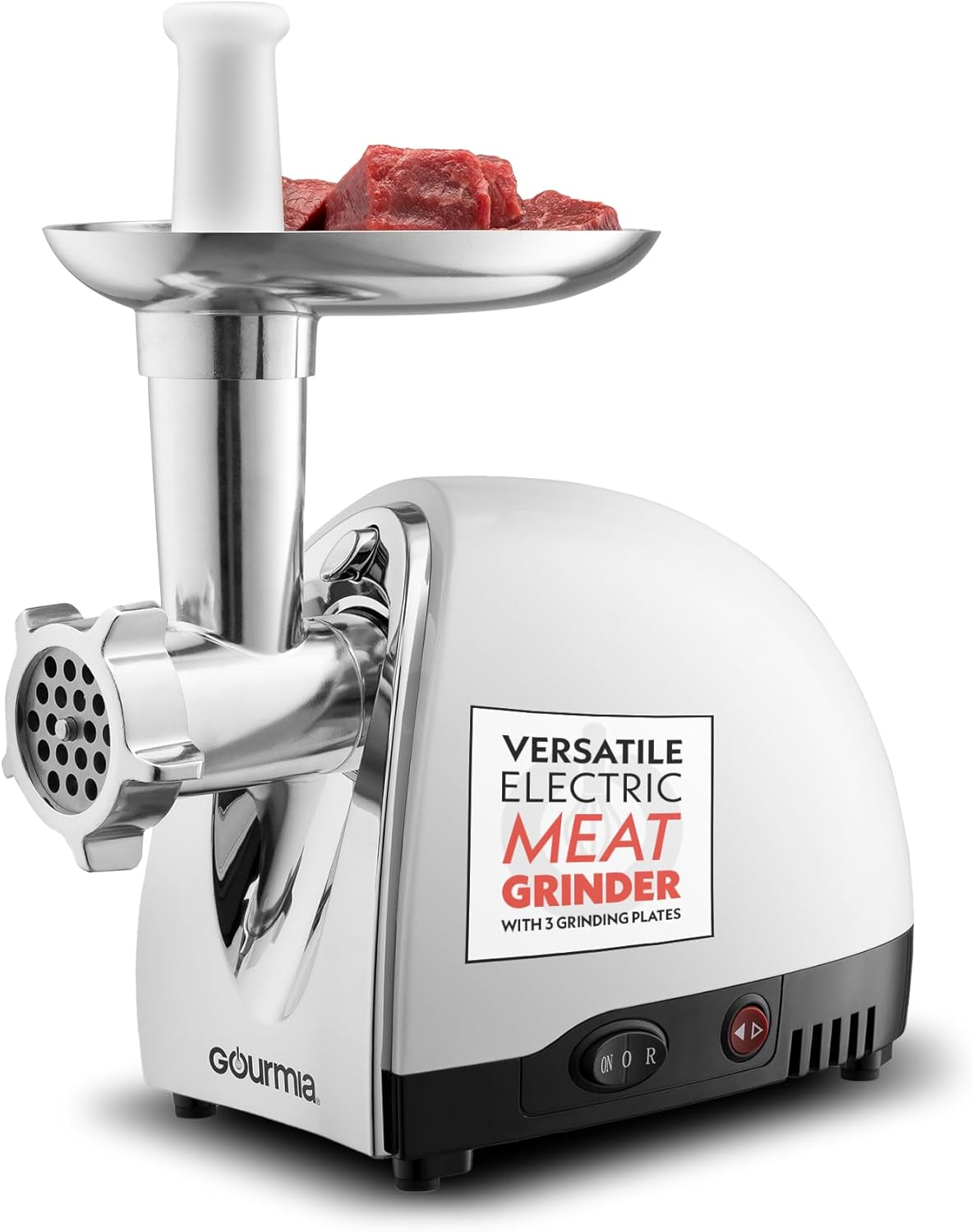
| Wattage | 500 watts |
|---|---|
| Voltage | 120 volts |
| Included Components | 3 Cutting Plates, Food Pusher, Kebbe Attachment, Sausage Attachment |
| Material Type | Plastic, Stainless Steel |
The Gourmia GMG525 is a countertop electric meat grinder built for home use, driven by a 500-watt motor that handles beef, pork, chicken and similar meats. It ships with three stainless steel grind plates (fine, medium, coarse), a kebbe funnel and a sausage stuffing attachment so you can make burgers, meatballs, tartare and sausages with varied textures. Controls are simple: an on/off/reverse switch helps clear small jams and keeps meat moving through the feed throat. Assembly and disassembly are straightforward and the metal plates and cutting parts are removable for hand washing. The unit is mostly plastic-bodied with stainless steel working parts, so it stays relatively light and compact on the counter but does not have heavy-duty commercial construction. For routine home grinding it delivers consistent results, though very large batches or dense cuts will slow it and may require pausing to avoid overheating. Overall it is a practical, easy-to-use option for cooks who want fresher ground meat and basic sausage-making capability at home.
Best for: Buyers who prioritize a compact, easy-to-use home grinder with included sausage-making attachments and want a proven, mid-power unit with solid user feedback.
Less Ideal for: Those who need a heavy-duty commercial grinder for continuous high-volume processing or who expect industrial-strength construction should look at larger, pro-grade machines.
- 500-watt motor provides enough power for routine home grinding.
- Three stainless steel grind plates offer fine to coarse textures.
- Includes sausage and kebbe attachments for making filled products.
- Reverse switch helps clear minor jams and improves workflow.
- Removable metal parts make cleanup and maintenance straightforward.
- Plastic exterior and lighter build are not designed for heavy commercial use.
- Large or very dense batches may require pauses to avoid motor strain.
Verdict: A convenient, user-friendly home meat grinder that delivers versatile textures and sausage-making capability without the size or cost of commercial equipment.
Choosing the Right Small Meat Grinder: Key Factors to Consider
Grind Consistency and Plate Options
How uniformly a grinder cuts meat strongly affects texture and mouthfeel. For home cooks, look for units that include multiple cutting plates or blades so you can switch between coarse and fine grinds. Consistent particle size also matters for sausage binding and even cooking.
A grinder that jams or tears fibers will produce inconsistent results and require reprocessing, so plate fit and cutter sharpness are practical considerations. Consider whether replacement plates are readily available and made from durable stainless steel to maintain consistent output over time.
Motor Power and Duty Cycle
Small grinders have smaller motors, so you need to know how much continuous use they can handle. Motor power affects the machine's ability to process tougher cuts, handle short bursts of sinuous muscle, and push fat through without clogging. Duty cycle or recommended run time influences whether a grinder suits occasional burger batches or frequent sausage making.
If you plan to process frozen or partially frozen meat, higher torque and stall resistance are beneficial. Check whether the motor is designed for intermittent home use or heavier, near-commercial loads to avoid overheating and premature wear.
Size, Capacity, and Kitchen Footprint
A small meat grinder must balance throughput with storage and counter space. Capacity determines how much you can process in a single session without overworking the motor. For small households, a compact feed throat and hopper are usually sufficient and reduce food waste.
Also evaluate how the machine stores—does it come apart easily for compact storage? Consider where you will place it during use and whether you need suction feet or a non-slip base to stabilize the unit while grinding.
Ease of Cleaning and Food Safety
Meat grinders require thorough cleaning after every use to prevent bacterial growth. Units with removable heads, stainless steel plates, and dishwasher-safe parts speed cleanup and reduce downtime. Surfaces with fewer crevices are easier to sanitize.
Check whether the manufacturer provides clear cleaning instructions and whether small parts like screws, plates, and blades can be separated without tools. A design that minimizes hidden cavities and uses corrosion-resistant materials will make regular maintenance simpler and safer.
Build Materials and Long-Term Durability
Materials impact durability, weight, and how the grinder handles repeated stress. Full metal heads and stainless steel components typically outlast aluminum or plastic parts. Metal gear trains or well-sealed gearboxes are less likely to strip under strain.
Consider how wearable parts like blades and plates can be replaced and whether the vendor supplies extra accessories. A machine that feels solid and uses corrosion-resistant materials will often deliver reliable service over several years of home use.
Noise, Vibration, and User Comfort
Noise level and vibration affect where and when you will use a grinder. Smaller grinders can be louder relative to their size because they lack heavy insulation. Excessive vibration can make the machine move during use and increase wear on fasteners.
Look for units with rubber feet, balanced rotors, and damped housings to improve comfort. Quieter machines are easier to use in shared living spaces and reduce fatigue during longer grinding sessions.
Choosing the Right Grind Size for Recipes
Different recipes call for different grind sizes. Coarse grinds are best for chunky burgers and chili, medium grinds suit most sausages and meatloaves, and fine grinds are preferred for smooth sauces and some deli-style preparations. Selecting a grinder that provides multiple plate sizes gives you flexibility without needing multiple machines.
When adjusting grind size, work in cold conditions. Chill the meat and keep plates and blades cold to prevent smearing. Feeding smaller, consistent strips of meat into the throat improves throughput and reduces the chance of clogging.
- Coarse: chunky textures, burger blends
- Medium: sausages, meatloaf, kebabs
- Fine: spreads, pâtés, smooth sausages
Preparing Meat for Best Results
Trim connective tissue and silver skin that can wrap around the auger and cause clogs. Cut meat into uniform strips so the grinder can feed evenly. Cold meat and partially chilled fat reduce smearing and make for cleaner cuts.
If you are combining lean and fatty cuts, mix them before grinding to ensure even distribution. For small grinders, process modest batches and pause between runs to prevent overheating the motor.
- Trim large sinews before grinding
- Cut to uniform 1-inch strips for consistent feeding
- Keep meat and plates chilled to reduce smearing
Maintenance Tips to Extend Service Life
After each use, disassemble removable parts and wash them promptly. Dry metal components thoroughly and lightly oil non-food-contact shafts to prevent rust. Store plates and blades in a dry place and consider wrapping sharp cutters to protect both the blade and your hands.
Inspect drive components periodically for wear, tighten fasteners if needed, and replace worn plates or blades to maintain grind quality. Following a simple maintenance routine prevents common failures and keeps performance consistent over years of home use.
- Wash and dry all parts immediately after use
- Lightly oil exposed metal shafts to prevent corrosion
- Replace dull blades to maintain clean cuts
Sausage Making and Attachments
If you plan to make sausage, verify the grinder supports a sausage-stuffing attachment and provides a range of funnel sizes. A smooth feed and steady torque make casing filling easier and reduce air pockets. Smaller grinders may handle modest sausage batches well but are not intended for high-volume charcuterie production.
For specialty work such as kibbeh or fine pâtés, look for fine plates and stable RPM under load. Proper casing handling and a manageable hopper size are practical advantages for small-batch sausage makers.
- Check compatibility for sausage funnels
- Use steady, even pressure when stuffing casings
- Work in small batches to avoid overheating
Storage and Countertop Considerations
Plan for where the grinder will live when not in use. Units that disassemble into flat components are easier to tuck into cabinets. If you have limited counter space, choose a model with a small footprint and a stable base to reduce the chance of movement during operation.
Consider how often you will use the grinder; frequent users benefit from keeping the unit accessible, while occasional users may prefer a machine with compact storage dimensions.
- Measure cupboard space before buying
- Prefer units that disassemble for compact storage
- Stable base reduces movement during grinding
How We Chose the Best Small Meat Grinder
We focused on small meat grinders intended for regular home use and evaluated each candidate across concrete, buyer-relevant dimensions. Key evaluation criteria included grind consistency and cut quality, which determines how evenly the unit processes different muscles and fat ratios. Motor power and torque were assessed because a compact motor must still handle short bursts of dense or sinewy meat without stalling. Ease of cleaning and disassembly matter for frequent use and food-safety compliance, so units with removable, dishwasher-safe components scored higher. Build quality and materials were weighed to estimate long-term durability under typical home workloads. Finally, noise and vibration were considered since smaller units often trade insulation or mass for portability. We excluded large-capacity commercial grinders, single-use novelty devices, and machines that require external tools or extensive modification to operate. The final list favors balanced performers that match real home workflows: moderate throughput, straightforward cleaning, and dependable grind results for burgers, sausages, and small roasts.
Our full evaluation process is outlined in our review methodology.
FAQ
How often should I sharpen or replace grinder blades?
Blades dull with use and may need sharpening or replacement after several months of regular use. If grind output becomes ragged or the motor strains more than usual, the cutter is likely dull. Many home users replace blades and plates seasonally or as performance declines.
Can small grinders handle partially frozen meat?
Many small grinders can process slightly chilled or partially frozen meat, but fully frozen blocks are not recommended. Higher torque helps with firmer meat, but avoid overworking the motor and feed smaller strips to reduce the chance of clogs.
Is it safe to dishwasher wash grinder parts?
Some plates and blades are dishwasher-safe, but repeated dishwashing can dull cutting surfaces faster and promote corrosion on non-stainless components. When possible, hand wash and dry metal parts promptly to extend lifespan.
How do I prevent the grinder from jamming?
Prevent jams by trimming tough sinew, cutting meat into consistent small pieces, keeping components cold, and avoiding overloads. If a jam occurs, reverse the drive if available or disassemble and clear obstructions rather than forcing the unit.
What safety precautions should I take during use?
Keep hands and utensils away from the feed throat and use the provided pusher. Securely attach and lock the head before operation. Unplug the unit before disassembly or cleaning and follow manufacturer guidelines to avoid injury.
Final Verdict
Small meat grinders are useful tools for home cooks who want better texture control and fresher results than pre-ground meat offers. Prioritize grind consistency, motor torque, and ease of cleaning when choosing a unit, and accept tradeoffs between capacity and compactness depending on how often you will grind. Focus on models that match your typical batch size and routine maintenance commitment. With the right balance of power and cleanup convenience you can confidently produce burgers, sausages, and small-batch charcuterie at home.