
Note: This article contains affiliate links. If you click on these links and make a purchase, we may earn a small commission at no extra cost to you. This helps support our research and content. Read our full affiliate disclosure here.
If you process meat at home or run small-batch production, the right #12 meat grinder makes a big difference in speed, texture, and cleanup. You want a unit that handles frequent use without binding, produces consistent grind sizes, and is easy to maintain. This guide covers the top shortlisted #12 meat grinders chosen for home and light commercial tasks, with attention to throughput, material quality, and ease of use. Below you will find practical evaluation criteria and concise buying guidance to help you pick the best grinder for your specific workload and food-safety needs.
Top Picks at a Glance
| Best Overall The best all-around choice for most situations | STX Turboforce II 4000 |  |
| Best Quality Built to a higher standard if you want something more solid | Weston Pro Series #12 Meat Grinder |  |
| Best Value The sweet spot between price and what you get | AAOBOSI #12 Meat Grinder |  |
| Top Rated A top-rated pick with lots of positive feedback | LEM BigBite #12 Meat Grinder |  |
| Most Popular A crowd favorite that many people choose with confidence | STX Turboforce 3000 Series |  |
STX Turboforce II 4000
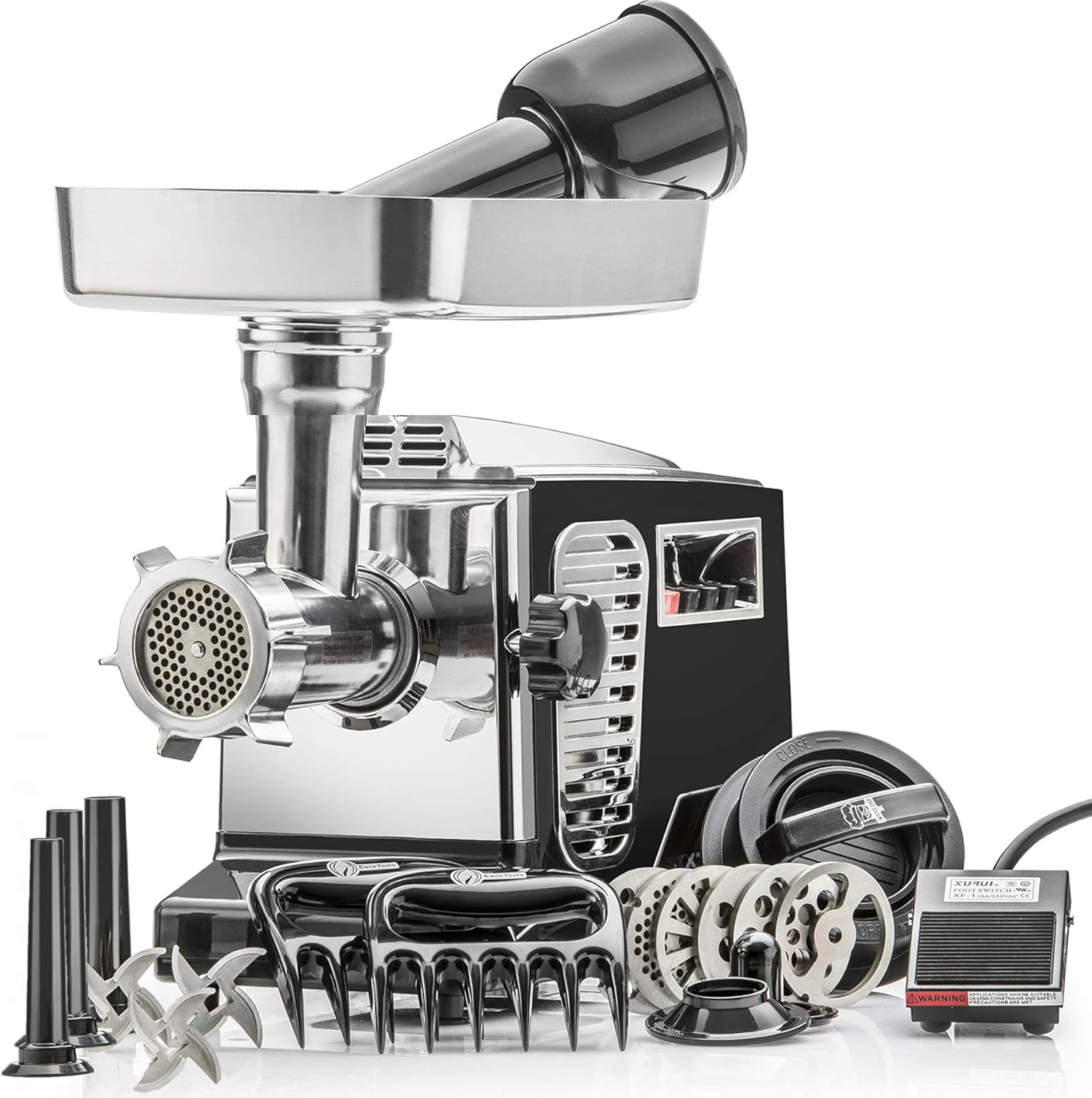
| Wattage | 2000 watts |
|---|---|
| Voltage | 120 volts |
| Capacity | 3 pounds |
| Included Components | Grinding head, meat pusher, 6 plates, 3 blades, sausage tubes, kubbe attachment, foot pedal |
The STX Turboforce II 4000 is a powerful No.12 home meat grinder designed for high-capacity kitchen use. It pairs a locked 2000 watt motor with a patented quad air induction cooling system and circuit breaker to keep the unit running during extended grinding sessions, and the large tray and 2-1/2 inch output let you process multiple pounds of meat quickly. The unit includes several stainless steel cutting blades, five grinding plates, sausage tubes, a kubbe attachment, meat claws, a patty press and a foot pedal for hands-free control, which makes stuffing and portioning simple. It can handle soft bones and grinds at a high hourly rate depending on plate and meat type, so it suits batch sausage making and home butchery. The grinder is mostly cast and stainless parts but uses some high-impact plastic on the housing, so heavy use benefits from careful cleaning and correct assembly. This is a workhorse-style home grinder that prioritizes power and throughput over compactness or ultra-quiet operation.
Best for: Buyers who want a robust, high-throughput No.12 home grinder for regular sausage making, batch processing, or small-scale butchery and value power and included accessories.
Less Ideal for: People who need a compact, lightweight grinder for occasional light use or who prioritize the quietest, most all-metal construction.
- 2000 watt motor with air-cooled design and circuit breaker for extended grinding
- Includes multiple grinding plates, cutting blades and sausage/stuffing accessories
- Large tray and 2-1/2 inch output support high-capacity grinding
- Foot pedal control allows hands-free operation during stuffing
- Housing uses high-impact plastic in places, which may feel less durable than all-metal units
- Large size and power make it less suited to small kitchens or occasional light use
Verdict: Choose the STX Turboforce II 4000 if you need a powerful, accessory-rich No.12 grinder that handles high-volume home grinding and sausage work reliably.
Weston Pro Series #12 Meat Grinder

| Wattage | 750 watts |
|---|---|
| Capacity | 9 pounds |
| Voltage | 120 volts |
The Weston Pro Series #12 is built for heavy-duty home and small commercial use, driven by a 1 horsepower (750 watt) air-cooled motor designed for continuous operation. Its rifled-head design and offset throat push meat quickly through the supplied coarse (7 mm) and fine (4.5 mm) stainless plates, yielding about 6–9 lb of ground meat per minute, and the included sausage stuffer funnels let you turn those grinds into a variety of sausages. Practical touches include an auger-grabbing stomper for faster disassembly, a tray with cover for organized storage, a built-in knife sharpener for prep, and permanently lubricated gears for long run times. Because the unit is mostly stainless steel and engineered for quiet performance, it handles frequent batches with minimal fuss, though its 42 lb weight and large footprint mean it is best used on a dedicated counter rather than stored after each use. If you need fast, reliable grinding and sausage-making capacity in a reasonably compact commercial-format machine, this model delivers strong real-world performance.
Best for: Buyers who prioritize consistent, high-performance grinding for frequent batches or small commercial tasks and want a grinder that supports sausage making and heavy use.
Less Ideal for: Casual users who only grind small quantities occasionally or need a lightweight, highly portable countertop appliance.
- Powerful 1 HP (750 W) motor for continuous, high-throughput grinding
- Rifled-head design and offset throat for fast 6–9 lb/min processing
- Includes coarse and fine stainless steel plates plus a sausage stuffer kit with four funnel sizes
- Built-in knife sharpener, auger-grabbing stomper, and tray storage improve prep and cleanup
- Heavy and bulky, making it less convenient to move or store frequently
- No explicit forward-reverse function for clearing jams
Verdict: Choose this Weston Pro Series #12 when you need a powerful, reliable grinder that can handle frequent high-volume grinding and sausage making.
AAOBOSI #12 Meat Grinder

| Wattage | 3000 watts |
|---|---|
| Capacity | 7 pounds |
| Voltage | 120 volts |
| Material Type | Stainless Steel |
This AAOBOSI #12 meat grinder is designed for serious home use and small game processing, pairing a high-torque motor with a reinforced all-metal gearbox to handle larger batches. It grinds meat at variable speeds and includes reverse to help clear jams, plus two stainless blades, four cutting plates, three sausage tubes, a kibbe kit, burger press and meat claws so you can grind, stuff, and form patties without buying extras. The wide feed tray and lengthened auger are intended to reduce clogging and the built-in storage box keeps accessories organized when not in use. Practical protections like cooling vents, overheat and overcurrent safeguards, and dishwasher-safe blades improve longevity and cleanup. Expect a fairly heavy, countertop appliance that performs best with chilled or cut-up meat; the powerful motor can process quickly but you will need space to operate and a sink for disassembly and washing. For buyers who want a robust, multi-function grinder that can handle frequent use, this model is a solid choice.
Best for: Buyers who want a durable, multifunction meat grinder to process larger batches, make sausages, and prepare burgers or kubbe at home while minimizing trips to the butcher.
Less Ideal for: Casual users who only grind small amounts occasionally or who need a compact, lightweight countertop unit better suited to limited kitchen space.
- Powerful 3000W max motor and all-metal gearbox for heavy-duty grinding
- Triple speed with reverse to manage different meats and clear jams
- Comes with multiple stainless steel plates, blades and sausage stuffing accessories
- Built-in storage box keeps attachments organized
- Safety features and cooling vents help prevent overheating during extended use
- Relatively heavy and large, so it requires dedicated counter or storage space
- Most parts require disassembly and hand/dishwashing which adds cleanup time
Verdict: If you need a robust #12 grinder that handles frequent, larger-batch grinding and includes sausage and burger accessories, this AAOBOSI is a practical, well-equipped choice.
LEM BigBite #12 Meat Grinder

| Horsepower | 0.75 HP |
|---|---|
| Capacity | 7 pounds |
| Pounds Per Minute | 11 |
| Material Type | Stainless Steel |
| Power Source | electric |
The LEM BigBite #12 is a commercial-style electric meat grinder built for regular home or small-scale commercial use. Its 0.75 HP motor and BigBite auger design pull large chunks of meat through quickly, allowing the unit to process up to about 11 pounds per minute and handle everything from beef and pork to venison and raw chicken bones. The grinder ships with stainless-steel knife, head, auger, three grinding plates (coarse, fine, stuffing), three stuffing tubes, a meat pan, and a stomper, and it disassembles for cleaning which simplifies maintenance. Permanently lubricated motor bearings and a noise-dampening housing are practical touches that help it run smoothly and quietly during extended jobs. At roughly 33 pounds it is a substantial, stable machine, and the included storage drawer keeps plates and accessories organized. The main trade-offs are its size and weight, which require dedicated counter or table space, and its higher power compared with compact consumer models, which may be overkill for occasional light use. For those who grind frequently or want predictable, durable performance, this grinder delivers dependable results.
Best for: Buyers who prioritize long-term, reliable performance and plan to grind frequently or process large batches of meat, including hunters and home cooks making sausages or pet food.
Less Ideal for: If you only grind small amounts rarely or need a lightweight, easily storable appliance, choose a smaller, more compact consumer grinder instead.
- Powerful 0.75 HP motor for steady, heavy-duty grinding
- BigBite auger design feeds large pieces for faster processing
- Stainless-steel knife, head, auger, and plates for durability and easy cleaning
- Includes coarse/fine plates and stuffing tubes for sausage making
- Permanently lubricated motor and noise-dampening design for reliable, quieter operation
- Bulky and heavy, needs a dedicated workspace
- May be more capacity and power than needed for occasional users
Verdict: Choose the LEM BigBite #12 when you want a durable, pro-style grinder that reliably handles large batches and heavy-duty use.
STX Turboforce 3000 Series

| Capacity | 3 pounds |
|---|---|
| Wattage | 1800 watts |
| Voltage | 110 volts |
The STX Turboforce 3000 Series is a powerful home-focused electric meat grinder designed to process large batches of meat for sausages, burgers, and kubbe. It uses a size #12 polished aluminum grinding head with a large hopper that holds about 3 pounds of prepped meat and an auger with variable intake to feed larger cuts. Included accessories cover common jobs: three stainless steel cutting blades, five grinding plates (including a sausage stuffing plate), three stuffing tubes, a kubbe attachment, claw holders, and a burger/slider press. The unit is rated with a high maximum wattage and is reported to run between roughly 800 and 1200 watts under load, which lets it handle continuous grinding at an advertised 180–240 pounds per hour when meat is properly prepared. Practical limits: it is intended for home use only and explicitly not for grinding bones, tendons, produce, or commercial workloads, and the manufacturer warns against attempting bone grinding. Expect a substantial, bench-style footprint and a learning curve in prepping meat to avoid clogging, but for serious home butchers this grinder supplies capacity and the accessory set needed for sausage making and batch burger production.
Best for: Buyers who prioritize capacity and accessory versatility for at-home sausage making, batch burger production, and regular meat processing and who value demonstrated customer satisfaction before purchasing.
Less Ideal for: People who need a compact, lightweight grinder for occasional small jobs or anyone who intends to grind bones or run commercial-level continuous workloads.
- Large #12 grinding head and high-capacity hopper for batch grinding
- Comes with multiple plates, stuffing tubes, kubbe attachment and burger press for versatile use
- Stainless steel cutting blades for durable, food-grade cutting
- Capable of high throughput when meat is properly prepped (manufacturer rate 180–240 lb/hr)
- Not designed to grind bones, tendons, or non-meat items
- Heavy and sizable countertop footprint limits portability
Verdict: Choose the Turboforce 3000 if you want a robust, accessory-rich #12 home grinder built for frequent batch processing and serious sausage work.
Choosing the Right #12 Meat Grinder: Key Factors to Consider
Grinding Capacity
Grinding capacity defines how much meat the machine can process per minute or hour and directly affects workflow. If you run small-batch production or prepare large family meals, higher throughput reduces time at the counter and prevents long rest periods that can affect meat temperature and texture.
Consider the rated pounds-per-hour and whether that figure is continuous or a short duty-cycle peak. A motor that can sustain rated capacity without overheating is preferable. Also weigh how easy it is to feed larger pieces versus having to pre-cut into smaller portions.
Build and Materials
Durable construction extends service life and reduces maintenance downtime. Look for corrosion-resistant metals in the head, auger, blade, and plates, and heavy-gauge housings that resist flex under load.
Threaded fittings, replaceable wear parts, and metal gears or robust couplings are signs the grinder was designed for repeated use. Plastic components in wear zones can accelerate failure, so prioritize machines with serviceable metal parts where possible.
Feed System and Hopper Size
The feed system dictates how smoothly meat travels into the auger and whether you will experience frequent jams. A well-shaped hopper with adequate capacity reduces the need for constant refilling and helps you maintain a steady grind.
Consider feed tube diameter and the ergonomics of packing or pushing meat into the throat. A design that accommodates simple, safe pushing tools and keeps hands clear improves both throughput and safety.
Ease of Cleaning and Maintenance
Food safety depends on thorough cleaning between uses. Machines that disassemble quickly without special tools and have accessible surfaces for scrubbing save time and reduce the chance of bacterial buildup.
Check whether parts are straightforward to remove, if small crevices trap meat, and how easily blades and plates can be accessed for sharpening or replacement. Routine maintenance tasks like lubrication points or motor ventilation cleaning should be simple and well-documented.
Noise, Vibration, and Mounting
Noise and vibration affect the environment where you use the grinder and can indicate durability issues. Excessive vibration can loosen fasteners and cause wear, while loud motors may not be acceptable in a home kitchen.
Assess how the unit mounts to a countertop or stand, whether rubber feet or isolation mounts are included, and if the overall balance minimizes wobble. A stable platform reduces long-term stress on bearings and drive components.
Accessory Fit and Serviceability
Accessories such as different plate sizes, stuffing funnels, and specialized cutters expand what you can do with a single machine. Compatibility with commonly available plates and blades makes it easier to adapt to new recipes or replace worn parts.
Also consider how easy it is to source replacement parts and whether the design allows simple repairs. Machines with modular parts and documented service procedures reduce lifetime ownership friction.
How Grind Size Affects Cooking Results
Grind size has a direct impact on texture, moisture retention, and how meat binds in recipes. Coarse grinds are better for sausages and coarse-textured dishes, while finer grinds are preferred for smooth pâtés and certain burger styles.
Choose plates that give you the grain profile you need for the recipes you plan to make. Consistency from batch to batch is important when flavoring or casing meats, so a grinder that holds tolerances in plates and blade alignment will yield more predictable results.
- Coarse plate uses: sausages, chili meat
- Medium plate uses: standard burgers, meatloaf
- Fine plate uses: smooth emulsions and fine-textured blends
Power and Duty Cycle: Matching Use to Motor
A higher-rated motor does not only mean faster grinding; it also indicates resilience to continuous work. For small commercial or frequent home use, choose units with motors designed for extended duty cycles rather than short bursts.
Look at thermal protection features and whether the motor stalls under load. Units with simple overload reset mechanisms are easier to recover if the grinder is pushed hard, but prevention through appropriate motor sizing is better than relying on resets.
- Duty cycle matters for sustained processing
- Thermal protection prevents motor damage
Sanitation Best Practices
Thorough cleaning after each use is essential to prevent bacterial growth. Disassemble the head and wipe all mating surfaces, taking care to remove trapped fat and connective tissue from the feed throat and auger.
Sanitize metal parts according to food-safety guidelines, and air-dry components fully before reassembly. Plan cleaning steps into your workflow so that sanitation does not become an afterthought after heavy use.
- Disassemble and soak plates and blades in hot, soapy water
- Clean the hopper and throat with a brush to remove residual bits
- Sanitize and dry completely before storing
Space, Mounting, and Countertop Considerations
A #12 meat grinder requires a stable, spacious surface for safe operation. Ensure your counter or workbench can accommodate the machine footprint and a catch bowl or tray for output.
If you will use the grinder frequently, consider a dedicated stand or bolting options for added stability and to reduce fatigue. Account for cord routing and nearby power availability when planning a permanent spot.
- Measure machine footprint plus clearance for feeding
- Verify outlet access and use proper grounding
- Consider anti-slip mats or bolting for high-use setups
Plates, Blades, and Replacement Parts
Quality of the blade and plates determines cut cleanliness and how often you will need replacements or sharpening. Hardened steel plates and replaceable blades keep performance consistent as components wear.
Understand the plate sizes you will use most and whether the grinder accepts a range of aftermarket options. Having spare plates and a routine sharpening plan prevents production slowdowns.
- Keep at least one spare set of commonly used plates
- Inspect blades for nicks that degrade cut quality
- Use appropriate sharpening methods recommended for the material
How We Chose the Best #12 Meat Grinder
We focused on the capabilities that matter most for #12 meat grinders used in home kitchens and small-batch production. First, we prioritized grinding capacity and motor reliability to ensure units handle expected daily throughput without overheating. Second, construction and material quality were critical, favoring stainless or heavy-gauge components that resist corrosion and wear. Third, we examined feed design and hopper size to assess how smoothly meat moves through the head and whether users can maintain a steady yield with minimal clogging. Fourth, accessory compatibility and blade/plate quality were considered because they determine grind consistency and future serviceability. Fifth, ease of cleaning and disassembly were weighed since regular sanitation is essential for safety. We excluded units designed only for very light occasional use or models lacking repairable parts. The final picks passed filters for sustained motor duty cycles, robust metalwork, sensible feed ergonomics, and straightforward maintenance procedures.
Our full evaluation process is outlined in our review methodology.
FAQ
How often should I clean a #12 meat grinder?
Clean the grinder immediately after each use, disassembling head parts, plates, and the blade. Thorough cleaning and drying prevents bacterial growth and keeps parts moving smoothly.
Can I grind frozen meat in a #12 grinder?
Partially frozen, firm-but-not-rock-hard meat is easiest to grind and produces the cleanest cuts. Fully frozen blocks can damage plates and strain the motor, so thaw to a firm, cold state before grinding.
What grind sizes are typical for home sausage making?
Common sizes for sausages include coarse plates for chunky textures and medium plates for standard sausage blends. The choice depends on desired bite and how the meat will be mixed with seasonings and fat.
How do I know if a grinder needs a new blade or plate?
Signs include increased tearing instead of cutting, inconsistent grind texture, or a noticeable drop in throughput. Regular inspection for nicks, dull edges, and uneven wear helps you plan replacements before quality declines.
Is it better to have a bigger hopper or a faster motor?
They address different needs. A larger hopper reduces refills and improves workflow, while a properly sized motor ensures consistent throughput. For frequent use, prioritize motor duty cycle first, then hopper size.
Final Verdict
Focus on the specific workload and hygiene needs when choosing a #12 meat grinder. Prioritize a motor and duty cycle that match your expected throughput, then consider head construction, plate options, and how easily the unit disassembles for cleaning. Expect tradeoffs between raw speed, noise, and ease of maintenance, and choose the combination that aligns with your processing volume and sanitation workflow. With the right mix of capacity, durable materials, and serviceable parts, you can confidently select a grinder that meets small-batch demands and stays reliable over time.