
Note: This article contains affiliate links. If you click on these links and make a purchase, we may earn a small commission at no extra cost to you. This helps support our research and content. Read our full affiliate disclosure here.
Choosing the right smart light bulb changes how you use light at home. The right bulb can improve mood, save energy, and make daily routines simpler by offering dependable connectivity, accurate color, and useful automation. This guide spotlights seven shortlisted smart light bulbs that stand out for typical home use and different lighting needs. We evaluated each option on connectivity, color and brightness performance, and ease of daily use. Read on for concise, practical guidance to match a smart bulb to the rooms and controls you already use.
Top Picks at a Glance
| Best Overall The best all-around choice for most situations | LIFX Color A19 800 Lumens |  |
| Best Quality Built to a higher standard if you want something more solid | Philips Hue A19 White & Color 3-Pack |  |
| Best Value The sweet spot between price and what you get | Govee Smart A19 Light Bulb H6008 |  |
| Best Budget The cheapest option that still gets the job done reliably | Tapo L531E Smart A19 Bulb |  |
| Top Rated A top-rated pick with lots of positive feedback | Philips Hue A19 Smart Bulb | 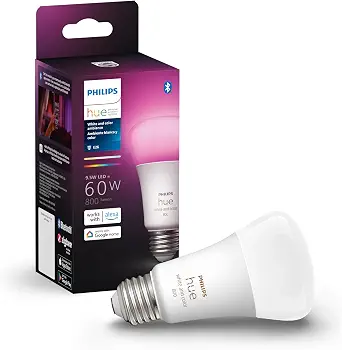 |
| Most Popular A crowd favorite that many people choose with confidence | Govee Smart A19 Light Bulb H6008 |  |
| Best Seller A high-volume bestseller chosen again and again | Amazon Basics Smart A19 Bulb | 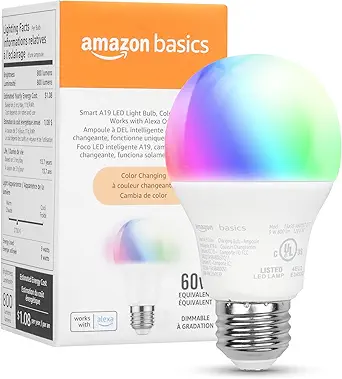 |
LIFX Color A19 800 Lumens

| Light Output Maximum | 800 lumens |
|---|---|
| Wattage | 9 watts |
| Light Color | RGB + Tunable White |
| Connectivity Protocol | Wi-Fi |
| Light Source Operating Life | 25000 hours |
The LIFX Color A19 2-pack is a full‑featured smart bulb aimed at replacing standard A19 lamps with vivid color and tunable white lighting. Each bulb screws into an E26 socket and connects over 2.4 GHz Wi‑Fi (with Bluetooth for setup), so you control brightness, color scenes, schedules and music sync from the LIFX app or with Siri, Alexa, or Google Assistant without a hub. At 800 lumens and 9 watts the bulbs deliver 60W equivalent output while supporting a wide white range and billions of saturated colors thanks to LIFX SuperColor tech. Practical benefits include scene saving, routines for circadian lighting, Matter HomeKit pairing via QR code, and no‑hub convenience. Downsides to note are the moderate CRI of about 82 and that advanced features require the app ecosystem, which may be a small learning curve if you want granular automations. For general rooms, accent lighting, or smart upgrades where color and app control matter, these bulbs are easy to install and noticeably more colorful than typical smart bulbs.
Best for: Buyers who want bright, no‑hub smart bulbs with rich color and easy voice/App control for living rooms, bedrooms, or accent lighting and who value ready‑made themes and schedules.
Less Ideal for: People who need the highest color accuracy for tasks like art or photography lighting or those who prefer minimal app ecosystems and only basic on/off control.
- No hub required — connects over 2.4 GHz Wi‑Fi with quick Bluetooth setup and Matter QR pairing for HomeKit
- Very wide color range and tunable whites for mood scenes and circadian schedules
- 800 lumens output at 9W replaces a 60W incandescent while remaining energy efficient
- Works with Siri, Alexa, Google Assistant and supports music sync and app routines
- Color rendering around CRI 80 may not match higher‑CRI bulbs for critical color work
- Requires the LIFX app for full feature access and advanced scene creation
Verdict: Choose these LIFX bulbs if you want plug‑and‑play, hub‑free smart bulbs that deliver vivid colors, tunable whites, and rich app-driven scenes for everyday rooms.
Philips Hue A19 White & Color 3-Pack

| Light Output Maximum | 806 lumens |
|---|---|
| Light Source Wattage | 9 watts |
| Bulb Base | E26 |
| Connectivity Protocol | Bluetooth, Zigbee |
| White Brightness | 800 lumens |
These Philips Hue A19 White and Color bulbs are a versatile smart lighting option for anyone who wants reliable color and white tuning across common A19 fixtures. They deliver up to about 800 lumens of white light and millions of colors, and can be controlled locally over Bluetooth for single-room setups or added to a Hue Bridge for whole-home automation, remote access, and advanced routines. Setup is straightforward: screw in, pair with the Hue app, and use voice control with Alexa or Google Assistant. Notable features include dimming, preset scenes that mimic natural light cycles, and compatibility with Zigbee ecosystems and Matter when bridged. Practical benefits are consistent color rendering, a broad palette for mood lighting, and smooth integration into existing Hue systems. The bulbs consume low LED wattage while matching a 60W incandescent output, but unlocking the full multi-room scheduling and remote control requires purchasing a separate Hue Bridge. For buyers focused on performance, these bulbs prioritize color accuracy and ecosystem stability over being the cheapest Bluetooth-only option.
Best for: Buyers who prioritize color accuracy, reliable smart-home integration, and advanced lighting scenes for room-level or whole-home setups.
Less Ideal for: People who want the lowest-cost, standalone smart bulbs and do not plan to invest in a smart lighting hub or ecosystem.
- Wide color range plus warm-to-cool white for accurate mood and task lighting
- Supports Bluetooth for quick single-room control and Zigbee/Hue Bridge for full-home automation
- Works with Alexa, Google Assistant, and integrates into Hue routines and scenes
- Around 800 lumens output while using low LED wattage for energy-efficient bright light
- Full remote control and advanced features require a separate Hue Bridge purchase
Verdict: Choose these Philips Hue A19 bulbs if you want high-quality color and dependable smart-home integration that scales from a single room to a full Hue system.
Govee Smart A19 Light Bulb H6008
| Light Type | LED |
|---|---|
| Wattage | 9 watts |
| Bulb Base | E26 |
| White Brightness | 800 lumens |
| Connectivity Protocol | Bluetooth, Wi‑Fi |
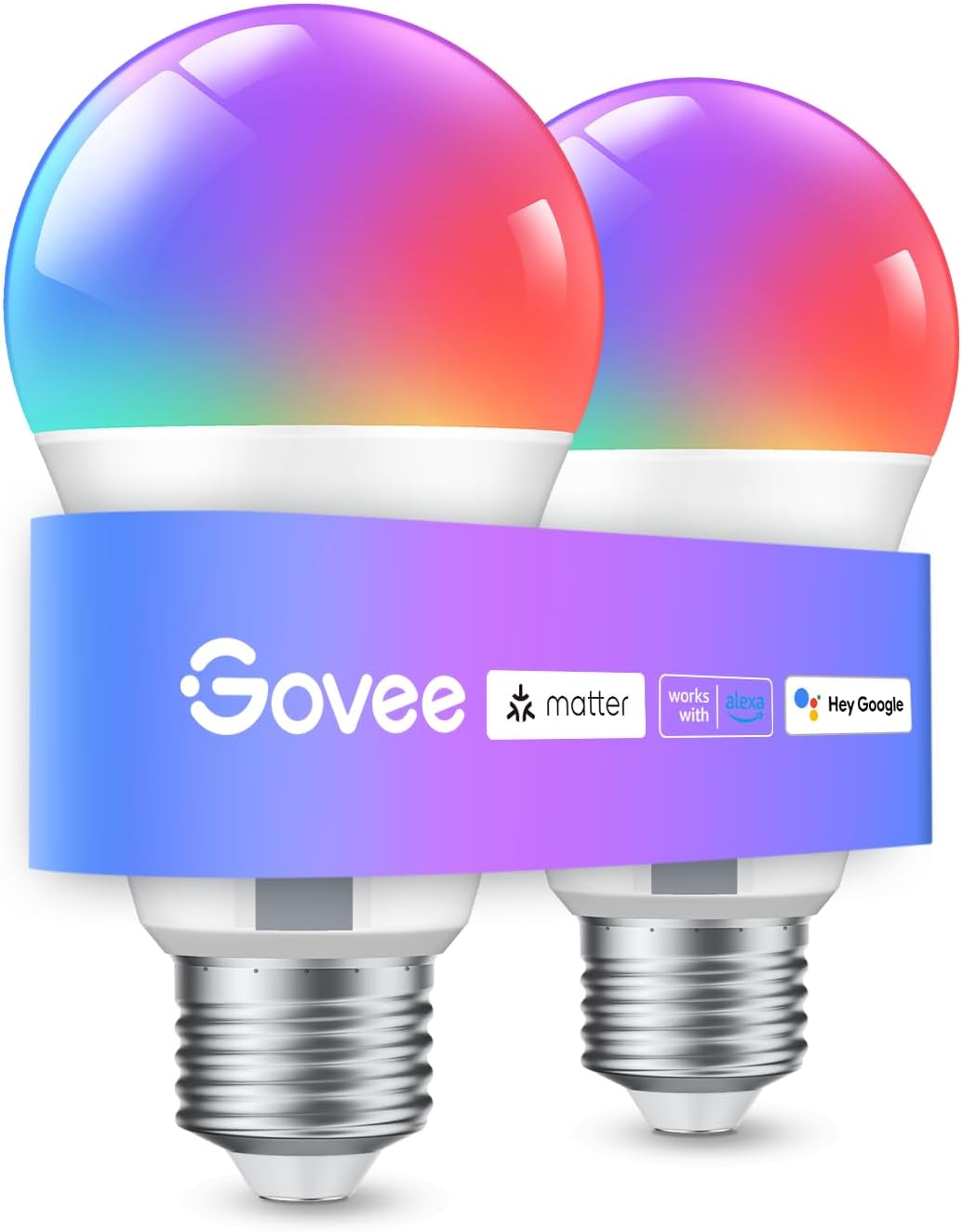
These Govee A19 smart bulbs are everyday multicolor LED replacements that connect directly to your 2.4 GHz Wi‑Fi or Bluetooth and work with Alexa, Google Assistant, Siri (via HomeKit) and other controllers. In normal use you screw them into E26 fixtures and control brightness, color temperature and color scenes from the Govee Home app or by voice, and you can schedule timers or group multiple bulbs for synchronized control. Notable conveniences include 800 lumen white brightness, 2700–6500K tunable white range, 54 preset scene modes and a music sync mode that reacts to sound. The bulbs are Energy Star rated and draw about 9 watts while providing roughly a 60W incandescent equivalent. Limitations to keep in mind: they require a 2.4 GHz Wi‑Fi network for full remote control features, music sync relies on microphone access from your phone, and they cannot be used reliably behind a smart switch that cuts power. For buyers who want simple app and voice control plus vivid colors without adding a hub, these perform well and are easy to set up.
Best for: Buyers who want a practical, no-hub smart bulb that delivers bright white light plus color options for everyday rooms and scheduled routines.
Less Ideal for: Users who need bulbs to work behind switched circuits, require 5 GHz Wi‑Fi support, or want lighting that operates without smartphone microphone permissions.
- Full multicolor and tunable white (2700–6500K) control from app or voice
- Direct Wi‑Fi and Bluetooth connection so no hub required
- 800 lumens white output at 9 watts for energy efficient 60W-equivalent brightness
- Wide set of preset scenes and group/timer scheduling for routine automation
- Music sync mode for reactive lighting during media or parties
- Requires 2.4 GHz Wi‑Fi for remote features and some integrations
- Music sync depends on phone microphone access which may be less reliable than direct audio input
- Not suitable for fixtures controlled by switches that cut power to the bulb
Verdict: A straightforward, energy‑efficient smart A19 bulb that gives bright tunable white plus full RGB color control without requiring a hub.
Tapo L531E Smart A19 Bulb

| Light Source Wattage | 9 watts |
|---|---|
| White Brightness | 800 lumens |
| Light Color | RGBW |
| Connectivity Protocol | Wi-Fi |
| Color Rendering Index | 90 |
The Tapo L531E is a budget-friendly multicolor A19 smart bulb that brings 16 million colors and tunable white (2500K–6500K) into a standard E26 socket without requiring a hub. You control it via the Tapo app or voice assistants; the app supports scenes, schedules, away mode and energy monitoring so it can automate routines and track power use. At 800 lumens it replaces a 60W incandescent while using about 8.3W in operation and claims very low standby draw. Notable lighting specs include a wide 220° beam angle and CRI above 90 for more natural colors, and the bulb is fully dimmable from 1% to 100%. Tradeoffs are typical for Wi‑Fi single‑band bulbs: setup requires 2.4 GHz Wi‑Fi and advanced integrations beyond Alexa/Google may be limited, and color accuracy and peak brightness will not match higher-end or professional fixtures. For everyday rooms, accent lighting and casual smart-home setups, the L531E delivers strong capability for the price.
Best for: Buyers who want an affordable, full‑color smart bulb that is easy to set up and useful for mood lighting, routines, and energy tracking in everyday rooms.
Less Ideal for: Anyone needing very high output or professional-grade color accuracy for large rooms or task lighting should consider higher-lumen or specialty fixtures instead.
- Wide color range with true‑white RGBW LED and tunable white for versatile scenes
- High CRI (>90) for more accurate color rendering
- Works with Alexa and Google Assistant and uses native Wi‑Fi so no hub is needed
- Energy monitoring and low power consumption help track and reduce usage
- Requires 2.4 GHz Wi‑Fi and may not integrate with some advanced smart home hubs
- Brightness is 800 lumens which is adequate for many rooms but not for large, primary light sources
Verdict: If you want an inexpensive, no‑hub multicolor smart bulb with solid color quality and built‑in energy monitoring, the Tapo L531E is an excellent value.
Philips Hue A19 Smart Bulb

| Light Output Maximum | 806 lumens |
|---|---|
| Wattage | 10 watts |
| Light Source Operating Life | 25000 hours |
| Connectivity Protocol | Bluetooth, Zigbee |
| Control Method | App, Voice |
The Philips Hue A19 Smart Bulb is a full-featured color-changing LED intended as a reliable, everyday smart lighting option for indoor rooms. It delivers roughly 800 lumens of light and can produce warm-to-cool white plus millions of colors, all controlled from the Hue app or by voice through Alexa, Google Assistant, or Apple HomeKit. Out of the box it works over Bluetooth for quick setup and local control of up to 10 lights, and it also supports Zigbee and Wi-Fi when paired with a Hue Bridge for remote access, routines, and more stable network integration. With an expected operating life of about 25,000 hours and a CRI of 80, the bulb provides long-lasting, consistent brightness and color. The main compromises are that some advanced features and multi-room scale require adding a Hue Bridge, and full integration may be more involved than basic Bluetooth bulbs. For buyers prioritizing a mature smart ecosystem and dependable operation, this bulb is a strong choice.
Best for: Buyers who want a dependable, well-supported smart bulb and value a mature ecosystem for reliable daily lighting and long-term upgrades.
Less Ideal for: People who only want a minimal, bridge-free smart bulb and want every feature without adding a hub or investing in an ecosystem.
- Wide color range and adjustable warm-to-cool white for versatile moods
- Supports Bluetooth for simple setup and Zigbee/Wi-Fi with Hue Bridge for stable, large-scale control
- Approximately 800 lumens brightness suitable for general room lighting
- Long rated life around 25,000 hours for low replacement frequency
- Some advanced features, remote control, and large-scale automation require purchasing a Hue Bridge
Verdict: A reliable, ecosystem-ready smart bulb that delivers consistent color and brightness and scales into a robust Hue system when you add the Bridge.
Govee Smart A19 Light Bulb H6008

| Light Source Operating Life | 50000 hours |
|---|---|
| White Brightness | 800 lumens |
| Power Consumption | 9 watts |
| Connectivity Protocol | Bluetooth, Wi‑Fi |
| Control Method | App, Voice |
These Govee A19 smart bulbs are a flexible way to add color and schedules to indoor rooms without a hub. They install into any standard E26 socket and connect over 2.4 GHz Wi‑Fi or Bluetooth so you can control color, tunable white, and brightness from the Govee Home app or with voice assistants. Built-in music sync uses your phone microphone to react to sound for party or ambient effects, and the app includes dozens of preset scenes plus timers and grouping so multiple bulbs behave as one. At 800 lumens white output and an estimated 50,000‑hour life, they provide useful general lighting while using about 9 watts. Expect the usual smart bulb caveats: they require a stable 2.4 GHz network, will not work behind dumb wall switches that cut power, and music sync depends on phone microphone access. For buyers who value easy app control, rich color options, and no-hub setup, these bulbs deliver robust features in a four-pack; they are less suitable if you need outdoor-rated or higher-output replacement bulbs.
Best for: Buyers who prioritize easy, hub-free smart lighting with wide color options and strong social proof from other reviewers, and who want bulbs they can control by app and voice for rooms and entertaining.
Less Ideal for: Do not choose these bulbs if you need outdoor-rated fixtures, very high white-output commercial lighting, or if your setup uses switches that frequently cut power to smart bulbs.
- Full RGB + tunable white color control with 54 preset scenes for mood lighting
- Works directly with Alexa, Google Assistant, Siri/HomeKit and Matter-compatible ecosystems
- Dual connectivity (2.4GHz Wi‑Fi and Bluetooth) so bulbs can be controlled locally or remotely via app
- Music sync and grouping features for synchronized multi-bulb effects and schedules
- Requires stable 2.4 GHz Wi‑Fi and will not connect to 5 GHz networks
- Not rated for outdoor use or for fixtures controlled by mechanical switches that cut power
Verdict: A versatile four‑pack of hub-free smart A19 bulbs that deliver rich color, voice and app control, and easy group and music-sync features for living spaces.
Amazon Basics Smart A19 Bulb

| Wattage | 9 watts |
|---|---|
| Incandescent Equivalent Wattage | 60 watts |
| White Brightness | 800 lumens |
| Bulb Base | E26 |
| Network Connectivity | 2.4 GHz Wi-Fi only |
This Amazon Basics Smart A19 bulb is a straightforward Alexa-only smart bulb that replaces a 60W incandescent with a 9W LED while offering 16 preset colors and dimming from 5% to 100% through the Alexa app. Installation is simple: screw in the E26 bulb, connect it to a 2.4 GHz Wi-Fi network, and add it in the Alexa app with no hub required. The bulb is useful for room mood lighting, routines and remote control when you are away, and it supports grouping so you can manage multiple lights by room. Practical benefits include energy-efficient lighting, reliable white brightness at 800 lumens, and easy voice control if you already use Alexa devices. Important limitations are compatibility and network requirements: it works only with Alexa, does not support Google Assistant or HomeKit, and connects only to 2.4 GHz Wi-Fi, so homes using other ecosystems or 5 GHz-only networks will need alternatives. Also, the bulb cannot be used with a physical dimmer switch and requires app or voice dimming.
Best for: Buyers who want a simple, low-risk smart bulb that integrates directly with an Alexa-centered home and prioritizes easy setup, remote control, and reliable white and color lighting.
Less Ideal for: People who use Google Assistant, Apple HomeKit, SmartThings, or those who rely exclusively on 5 GHz Wi-Fi or physical dimmer switches should look elsewhere.
- Easy setup with Alexa and no hub required
- Energy-efficient 9W LED with 800 lumens white output
- Color changing with 16 preset colors and app/voice dimming
- Remote control and routines via the Alexa app
- Works in damp interior locations such as bathrooms
- Only compatible with Alexa and not other voice assistants
- Supports 2.4 GHz Wi-Fi only and will not connect to 5 GHz networks
- Not compatible with physical dimmer switches
Verdict: A dependable, easy-to-set-up color-changing smart bulb for anyone building or expanding an Alexa-first smart lighting setup.
Choosing the Right Smart Light Bulb: Key Factors to Consider
Connectivity Protocol
Which wireless standard a smart light bulb uses matters because it affects reliability, range, and how many bulbs you can manage. Bulbs that use local standards provide faster, more dependable response when you control them from within the house.
If you plan to control bulbs through a voice assistant or a home automation hub, confirm the protocol works with those systems. Some protocols also support mesh networking so bulbs act as repeaters to extend range, which improves responsiveness in larger homes.
Color Range and White Balance
Color-capable bulbs vary in how accurately they reproduce colors and how warm or cool their whites can get. Better color rendering makes accent lighting and task lighting more pleasing and useful. If you use bulbs for photography of items, cooking areas, or reading, accurate whites and saturated colors matter more.
Also consider tunable white range. Bulbs that shift from warm to cool white let you match lighting to different activities, from relaxed evenings to focused daytime tasks, without changing fixtures.
Brightness and Beam Pattern
Brightness, measured in lumens, determines whether a bulb can light a small room or just provide accent illumination. Look for lumen ratings appropriate to the room size and fixture. A bulb with high lumens but a narrow beam may create hotspots instead of even room lighting.
Consider beam angle and whether the bulb is meant for open fixtures, recessed cans, or directional lamps. Matching beam spread to fixture type reduces glare and improves useful light distribution.
App Experience and Integrations
The companion app is the primary daily interface for many smart bulbs, so ease of setup, scheduling, and scene creation matters. Apps that provide sensible presets, simple scheduling, and robust scene management save time and make automation reliable.
Check that the bulb integrates with the voice assistants or home platforms you already use. Native integrations remove the need for extra hubs and often provide faster responses. Also consider whether the app receives regular updates and supports firmware patches to keep devices secure.
Energy Use and Lifespan
Smart bulbs use LEDs that are generally energy efficient, but differences in wattage, driver efficiency, and standby power can affect long-term energy cost. Lower operating wattage with the same lumen output is preferable for savings and lower heat output.
A rated lifespan helps set expectations about replacement frequency. Longer lifespans reduce waste and the hassle of swapping bulbs in hard-to-reach fixtures. Consider both rated hours and whether the manufacturer supports firmware updates that can extend useful life by fixing bugs.
Physical Fit and Dimming Compatibility
Make sure the bulb fits your fixtures physically and is compatible with any in-wall dimmers you intend to use. Some smart bulbs are not designed to be used with legacy dimmer switches and can flicker or behave unpredictably if paired with incompatible hardware.
Check base type and bulb shape for enclosed fixtures or recessed cans where heat buildup can shorten life. Also verify clearance and height of lamps and pendants so the bulb does not protrude or interfere with shades.
Which Rooms Benefit Most From Smart Bulbs
Smart bulbs work well in high-use rooms where adjustable light improves comfort or function. Living rooms and bedrooms benefit from tunable white and scenes for relaxation or reading, while kitchens and home offices gain from cooler, brighter settings for tasks.
Entryways, porches, and hallways are good places for motion-triggered or schedule-based bulbs to improve convenience and safety. Consider using bulbs with a wide beam spread in open-plan areas and directional bulbs in task-specific fixtures.
- Living room: scenes and dimming for media and social time
- Bedroom: warm white and wake-up schedules
- Kitchen: bright, cool whites for prep and cooking
- Hallway/porch: motion or schedule-based control for safety
Hub Vs Hubless Setups
Some smart bulbs require a dedicated hub to access full features and to connect multiple devices reliably. Hubs can centralize control and reduce dependence on cloud services, which improves responsiveness and local automations.
Hubless bulbs connect directly to Wi-Fi or to voice assistants over a cloud service. These are simpler to start with but can add network load and sometimes have slower response. Choose the approach that matches your tolerance for extra hardware versus network complexity.
- Hub pros: local control, better mesh scalability, less cloud dependence
- Hub cons: additional hardware, initial setup overhead
- Hubless pros: easy out-of-the-box, fewer devices to manage
- Hubless cons: potential network congestion, cloud reliance
Setting Up Scenes and Schedules
Scenes let you combine multiple bulbs into a single mood with color, brightness, and timing. Effective scenes are simple, like 'Movie Night' with dimmed warm light or 'Morning Prep' with bright cool light. Use scenes to reduce the number of manual adjustments you make daily.
Scheduling can automate lights around your routine or sunrise and sunset times. For safety, staggered schedules and randomized on-off patterns can simulate occupancy when you are away. Ensure your chosen system supports both calendar-based and astronomical schedules if you need them.
- Create a handful of versatile scenes for common activities
- Use sunrise/sunset schedules for natural transitions
- Test schedules for a few days to ensure timings feel right
Color Temperature Tips
Color temperature strongly influences how a room feels. Warm whites around 2700K to 3000K are flattering and relaxing. Cooler whites above 4000K are better for tasks and areas where clarity is important. Many smart bulbs let you pick an exact Kelvin value or choose presets like 'Warm' and 'Daylight'.
When setting color for mixed lighting, balance bulbs so adjacent fixtures do not clash in temperature. For multi-zone rooms, using a consistent base temperature and adding accent colors for effect keeps spaces visually cohesive.
- Warm whites for relaxation and living spaces
- Cool whites for workspaces and kitchens
- Use accent colors sparingly to avoid visual fatigue
Privacy and Security Basics
Smart bulbs connect to your home network and can be a point of entry if not secured. Use strong, unique passwords for your Wi-Fi and associated apps. Prefer bulbs and apps that support encrypted connections and regular firmware updates.
Limit third-party access to only the services you trust. Disable remote access in the app if you do not need it, and monitor device activity occasionally for unexpected behavior or unauthorized logins.
- Use WPA2 or WPA3 Wi-Fi security
- Enable two-factor authentication where available
- Keep device firmware and apps up to date
How We Chose the Best Smart Light Bulb
We prioritized real-world performance and practical features that matter when replacing conventional bulbs with smart light bulbs. Our evaluation emphasized reliable wireless connectivity, including how well bulbs hold a connection and respond to app or voice commands. Color fidelity and tunable white range were judged for how closely bulbs render whites and colors at different brightness levels. Brightness and beam distribution were considered so bulbs can light common room sizes without hotspots or dim corners. Energy efficiency and standby power usage were measured to estimate operating cost and heat in normal use. App and integration capabilities were assessed for available features, update frequency, and whether routine setups like schedules and scenes are straightforward. We excluded bulbs that lack basic safety certifications or have unclear firmware-update policies. Very niche specialty bulbs that serve only one narrow fixture type were also removed to keep the list broadly useful. The final shortlist favors options that balance dependable connectivity, good color performance, practical brightness, and user-friendly controls.
Our full evaluation process is outlined in our review methodology.
FAQ
Can smart bulbs work with existing dimmer switches?
Often they do not pair well with legacy dimmer switches. Many smart bulbs include built-in dimming and should be used with the dimmer set to full on or replaced with a compatible switch to avoid flicker and unpredictable behavior.
Do smart bulbs still work if the internet goes down?
It depends on the bulb and setup. Bulbs connected via a local hub or a mesh protocol may retain basic local control even without internet. Bulbs that rely solely on cloud services typically lose remote and voice functionality until connectivity returns.
How much energy do smart bulbs save compared with traditional bulbs?
Smart LED bulbs are generally more energy efficient than incandescent bulbs, using far fewer watts to produce the same lumens. Actual savings depend on usage patterns, brightness settings, and whether automation reduces unnecessary run time.
Are there privacy concerns with smart light bulbs?
Yes. Smart bulbs communicate over your network and sometimes via cloud services. Choose products that offer encrypted connections, clear update policies, and minimal data collection. Limiting third-party integrations and keeping firmware current reduces risk.
Can I mix different brands of smart bulbs in the same system?
Mixing brands is often possible at a basic level through a central hub or a compatible platform, but feature parity and color matching can vary. Expect some differences in color rendering and app controls when combining bulbs from different manufacturers.
Final Verdict
When choosing a smart light bulb, prioritize the connection type that matches your home control strategy, then match brightness and color range to the room's function. Consider app quality and integration with your voice or automation platform, and check physical fit and dimmer compatibility before you buy. Balancing reliable connectivity, accurate color, and useful app features will result in the most satisfying smart lighting experience. Focus on the tradeoffs that matter for your home and pick the option that best fits how you use light daily.