
Note: This article contains affiliate links. If you click on these links and make a purchase, we may earn a small commission at no extra cost to you. This helps support our research and content. Read our full affiliate disclosure here.
If you want to add remote control, scheduling, and basic energy monitoring to a window or portable air conditioner, choosing the right smart plug matters. Air conditioners draw significantly more current than typical smart-home devices, so a plug that handles higher loads and maintains a stable connection keeps the unit safe and responsive. This guide shortlists the top smart plugs for air conditioners and explains the technical and practical factors that matter. We tested each option against real-world usage priorities like load capacity, connectivity stability, safety protections, and scheduling flexibility. Read on to see which features to prioritize and why these picks made the list.
Top Picks at a Glance
| Best Overall The best all-around choice for most situations | TP-Link Tapo P115 Smart Plug | 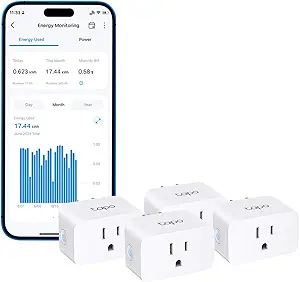 |
| Best Quality Built to a higher standard if you want something more solid | Kasa Smart Plug Mini EP10 | 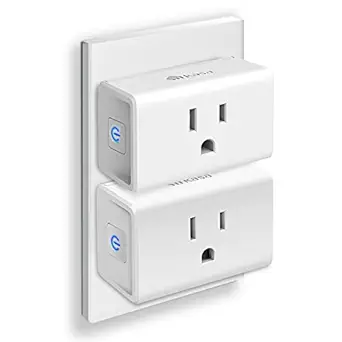 |
| Best Value The sweet spot between price and what you get | GHome Smart Plug WP3 |  |
| Best Budget The cheapest option that still gets the job done reliably | Govee Smart Plug H5083 |  |
| Top Rated A top-rated pick with lots of positive feedback | Govee Smart Plug H5080 |  |
| Most Popular A crowd favorite that many people choose with confidence | Kasa Smart Plug HS103 (2-Pack) |  |
TP-Link Tapo P115 Smart Plug

| Current Rating | 15 A |
|---|---|
| Wattage | 1800 watts |
| Connectivity Protocol | Wi‑Fi |
| Controller Type | Amazon Alexa, Google Assistant, SmartThings |
| Number of Items | 4 |
The Tapo P115 is a compact Wi‑Fi smart plug designed to give real-time energy monitoring and straightforward remote control of household devices. You set schedules and timers in the Tapo app, monitor consumption with clear charts, and use voice commands via Alexa or Google Assistant to turn devices on or off. Practical safety features include auto‑shutoff when power draws exceed a set threshold and a Smart Charge Guard that cuts power at a low‑battery limit to prevent overcharging. Its small footprint helps avoid blocking adjacent outlets, and local control lets the plug respond to the app even if the internet goes down. For high‑draw appliances like window air conditioners, the 15 A / 1800 W rating covers many smaller units, but larger central or high‑amp ACs will exceed that limit. Setup is simple on 2.4 GHz Wi‑Fi and the app's energy reports make it easy to schedule heavy‑use devices for off‑peak hours to lower bills.
Best for: Buyers who want a compact smart plug that tracks energy and lets them schedule or remotely control small to medium window or portable ACs to reduce runtime and bills.
Less Ideal for: People who need to control large central HVAC systems or very high‑amp air conditioners should choose a higher‑capacity hardwired or inline solution instead.
- Real‑time energy monitoring with charts for tracking and estimating bills
- Voice control with Alexa and Google Assistant for hands‑free operation
- Compact design that minimizes blocking adjacent outlets
- App scheduling and away mode for automated or randomized on/off routines
- Safety features including auto‑off for overcurrent and Smart Charge Guard to prevent overcharging
- Maximum 15 A / 1800 W limit may be insufficient for larger air conditioners or units with high startup current
- Requires 2.4 GHz Wi‑Fi only, so it will not connect to 5 GHz networks
Verdict: Choose the Tapo P115 when you want a compact, energy‑monitoring smart plug to remotely schedule and track small to medium air conditioners for lower runtime and clearer energy costs.
Kasa Smart Plug Mini EP10

| Current Rating | 15 A |
|---|---|
| Operating Voltage | 120 volts AC |
| Connectivity Protocol | Wi-Fi (2.4 GHz only) |
| Wattage | 1800 watts |
| Control Type | on/off, scheduling |
The Kasa Smart Plug Mini EP10 is a two‑pack of ultra‑compact Wi‑Fi outlets designed for everyday appliance control via the Kasa app or voice assistants. You plug them into a standard 120V, 2.4 GHz outlet and use the app to switch devices on and off, create schedules, set timers, or enable Away Mode to simulate occupancy. The small footprint is intentional so the second outlet stays usable, and the 15A/1800W rating covers most small room appliances. UL certification and flame‑retardant construction provide added safety confidence. For air conditioner use the EP10 can handle window units and smaller portable ACs that draw under the plug rating, and schedules or timers let you pre‑cool rooms or cycle units on a routine. Limitations: there is no energy monitoring so you cannot track compressor draw or runtime, and 2.4 GHz Wi‑Fi only means placement near a compatible router is required; higher‑draw central HVAC or units with high startup currents may exceed its specifications.
Best for: Buyers who want a compact, reliable smart plug to automate and schedule room air conditioners or portable cooling units while prioritizing simple setup and voice control.
Less Ideal for: Users who need power monitoring, remote load diagnostics, or who plan to control high‑start‑current HVAC systems that exceed a 15A/1800W rating.
- Ultra‑compact design leaves the second outlet usable
- Compatible with Alexa and Google Assistant for voice control
- Schedules, timers, and Away Mode enable simple automation and energy savings
- 15A/1800W rating and UL certification for common household appliance safety
- No energy monitoring or power usage reporting
- Only supports 2.4 GHz Wi‑Fi which may limit placement
Verdict: A compact, UL‑certified smart plug built for easy remote and voice control of smaller air conditioners and portable cooling units that stay within a 15A/1800W limit.
GHome Smart Plug WP3

| Current Rating | 10 A |
|---|---|
| Wattage | 1200 watts |
| Operating Voltage | 120 volts |
| Connectivity Protocol | Bluetooth, Wi-Fi (2.4 GHz only) |
| Controller Type | Amazon Alexa, Google Assistant, SmartThings |
The GHome Smart Plug WP3 is a compact Wi‑Fi smart outlet designed for remote control, voice commands, and scheduled automation through the GHome/Smart Life/Tuya apps. It connects only to 2.4 GHz networks and supports Alexa and Google Assistant voice control after setup in the companion app, letting you switch appliances on or off from anywhere. Built‑in schedule, countdown, random and cycle timers make it easy to automate run times and create away‑mode activity. The plug is rated 10 A / 1200 W, so it works well with smaller window air conditioners and supplementary cooling devices but is undersized for most larger room or central AC units. Setup is straightforward when the router environment is stable, and grouping and sharing let you control multiple plugs from one app account. The unit is ETL and FCC listed and has IP40 protection for indoor use, but the single‑outlet design and 10 A limit are the main constraints to keep in mind when pairing with high‑draw compressors.
Best for: Buyers who want reliable remote and scheduled control of a small window AC or secondary cooling device and prioritize easy app/voice automation and energy‑saving schedules.
Less Ideal for: Do not use this with full‑size room or central air conditioners or any heavy compressor load where higher current capacity and dedicated controls are required.
- App and voice control via GHome/Smart Life/Tuya with Alexa and Google Assistant compatibility
- Multiple timer modes including schedules, countdown, random and cycle timers for automation
- Simple 2.4 GHz Wi‑Fi setup with option for Bluetooth connection
- ETL and FCC listings for basic safety compliance
- 10 A / 1200 W maximum limits use to lower‑power AC units and small cooling devices
- Requires 2.4 GHz Wi‑Fi which can be an issue on networks that default to 5 GHz
Verdict: Choose the WP3 if you need dependable app and voice scheduling to automate a small window AC or secondary cooling appliance while saving energy.
Govee Smart Plug H5083

| Rated Voltage | AC 120V |
|---|---|
| Max Current | 10 A |
| Wi‑Fi Band | 2.4GHz Only |
| Certification | ETL & FCC |
The Govee Smart Plug H5083 is a small, easy-to-install outlet adapter that lets you control lamps, fans, and window air conditioners via the Govee Home app or voice assistants. It connects over 2.4 GHz Wi‑Fi or Bluetooth so you can set timers, build schedules, and group multiple plugs for one-touch control. The compact design keeps the second outlet usable on most duplex sockets, and built-in overload protection and ETL certification add basic safety for higher-draw devices. For running a portable AC, the 10 A / 120 V rating limits the plug to units under about 1,100 watts, so it is a sensible choice for low-power window or small portable models that fall within that limit. The plug attempts automatic reconnection after Wi‑Fi or power interruptions, which helps with hands-off AC schedules, but it does not support 5 GHz networks and lacks advanced energy monitoring or high-current 15 A support found on heavier-duty models. If you need simple remote on/off, voice control, and scheduling for a budget AC setup, this plug does that reliably; for larger AC units choose a higher-amperage smart outlet instead.
Best for: Buyers on a tight budget who want voice control and simple scheduled on/off for small window or portable ACs that draw under the plug's rated current, and who value an easy app setup without a hub.
Less Ideal for: Homes with larger window units, mini‑splits, or portable ACs that draw over 10 A should avoid this plug and choose a 15 A or hardwired smart controller instead.
- Supports voice control via Alexa and Google Assistant for hands-free operation
- Works over 2.4 GHz Wi‑Fi and Bluetooth for straightforward pairing without a hub
- Scheduling, 24‑hour timer, and group control simplify automated AC on/off routines
- Compact form factor keeps adjacent outlet usable and fits standard US sockets
- ETL certification and overload protection provide basic safety for higher-draw devices
- Rated for 10 A only, so it cannot safely handle most high‑capacity window or portable air conditioners
- No energy monitoring or power usage readout to track AC consumption
Verdict: A budget-friendly, easy-to-use smart plug that delivers voice control and reliable scheduling for small air conditioners that stay within its 10 A rating.
Govee Smart Plug H5080

| Voltage | 120 volts |
|---|---|
| Amperage | 15 A |
| Connector Type | Plug in |
| Plug Type | Type B |
| Specification Met | Etl |
The Govee Smart Plug H5080 is a compact, app- and voice-controlled outlet rated for 15A and 120V, so it can handle higher-draw devices like many window air conditioners. You control it via the Govee Home app over 2.4GHz Wi‑Fi or Bluetooth and pair it with Alexa or Google Assistant for hands-free on/off. The app offers minute-accurate timers, weekly cycles, sunrise/sunset automation and group control, which is useful for scheduling AC runtime or coordinating multiple plugs. Its smaller footprint leaves the neighboring socket free and the unit is built from fire-resistant ABS and ETL certified for added safety. Expect basic energy monitoring features on other Govee models, but this H5080 focuses on reliable switching rather than advanced power analytics. Also note it requires the Govee Home account and only works on 2.4GHz Wi‑Fi, so setups on 5GHz networks need adjustment. For air conditioner use pay attention to the AC's startup surge and verify the unit's continuous current needs against the plug's 15A rating.
Best for: Homeowners who prioritize a safe, dependable smart switch for scheduling and voice control of higher-draw room AC units and want a compact outlet that preserves the neighboring socket.
Less Ideal for: People who need integrated energy consumption tracking or who only run their home network on 5GHz without a 2.4GHz option should consider different models.
- 15A rating suitable for many window and portable air conditioners
- Compact design leaves adjacent outlet usable
- App scheduling, minute-accurate timers, and sunrise/sunset automation
- Works with Alexa and Google Assistant for voice control
- ETL certified and made from fire-resistant material
- Only supports 2.4GHz Wi‑Fi and Bluetooth, not 5GHz
- No built-in advanced energy monitoring on this model
- Requires a Govee Home account to use app features
Verdict: If you need a compact, safety-certified smart plug that can handle many window or portable air conditioners and offers reliable app scheduling and voice control, this Govee H5080 is a practical choice.
Kasa Smart Plug HS103 (2-Pack)

| Amperage | 15 A |
|---|---|
| Connector Type | Plug In |
| Plug Type | Type B |
| Product Grade | Residential |
| Number of Items | 2 |
The Kasa HS103P2 is a compact Wi‑Fi smart plug pair designed to add remote and voice control to lamps, fans, humidifiers and other plug‑in appliances. Each plug connects to 2.4 GHz Wi‑Fi and is controlled from the Kasa app, where you can set schedules, countdown timers, away mode and group plugs with other Kasa devices. Voice control works with Alexa and Google Assistant for hands‑free on/off. The side button provides local toggle control when you want to switch a device without the app. Practical benefits include easy setup, UL safety certification and useful energy tracking features in the app for run time and usage monitoring. Limitations: these plugs require a 2.4 GHz network, do not include built‑in energy metering on this model, and the compact design still occupies a full outlet plug space so multi‑outlet strips can become crowded. For powering an air conditioner specifically, ensure the AC unit's startup current and manufacturer guidance match the plug's load rating before use.
Best for: Buyers who prioritize reliable, well‑reviewed smart plugs for automating small home appliances and who value straightforward app and voice control backed by a known brand.
Less Ideal for: People who need integrated energy metering or who plan to control high‑current air conditioners that may exceed the plug’s load or have large startup surges should look for purpose‑built HVAC relays or smart plugs rated for heavy loads.
- Easy mobile setup and remote control via the Kasa app
- Works with Alexa and Google Assistant for voice control
- Scheduling, countdown timer and Away Mode for automation
- UL certified for safety and reliable basic operation
- Requires 2.4 GHz Wi‑Fi and will not work on 5 GHz networks
- No built‑in energy monitoring on this HS103 model
- Not designed for high startup currents of large window or portable AC units
Verdict: A dependable, easy‑to‑use two‑pack of smart plugs that adds voice and scheduled control to small appliances with the assurance of UL safety certification.
Choosing the Right Smart Plug for Air Conditioners: Key Factors to Consider
Continuous Current Rating
The continuous current rating tells you the maximum steady current a smart plug can handle without overheating. Air conditioners, even small window units, can draw several amps continuously and significantly higher current at compressor startup. Selecting a plug with a continuous rating well above your unit's running amperage reduces thermal stress and extends device life.
Check the plug's specified amperage and compare it to your air conditioner's nameplate running and starting currents. Allow a safety margin to account for startup spikes and potential prolonged operation during hot weather.
Surge and Inrush Handling
Compressors create a brief but large inrush current when they start. A smart plug designed for high-inrush loads will specify surge or inrush tolerance and may use heavier internal relays or solid-state switching. Proper inrush handling prevents nuisance tripping and reduces the risk of contact welding inside mechanical relays.
If a plug lacks explicit inrush specs, treat it as intended for low-power devices only. For units with powerful compressors, prioritize plugs that document transient performance or use contactors and relays rated for inductive loads.
Safety Certifications and Protections
Certifications from recognized labs and built-in protections like overload cutoff and thermal shutdown are critical when controlling high-power appliances. Certifications validate that the plug has been tested to national electrical codes and safety standards.
Look for devices that include overcurrent protection, thermal protection, and clear labeling of intended appliance types. These safety features reduce fire risk and provide automatic shutdown if the plug overheats or an electrical fault occurs.
Connectivity and Range
Reliable remote control depends on consistent wireless connectivity. Many smart plugs use Wi-Fi, while some integrate with local smart-home hubs via protocols like Zigbee or Z-Wave. For air conditioners located far from the router, range and mesh support become important to avoid dropped commands or missed schedules.
Evaluate the plug's wireless spec, support for 2.4 GHz networks, and whether it supports mesh repeater functionality. Consider placement, obstacles, and whether a hub-based solution is preferable in larger homes.
App Features and Automation
The companion app and automation capabilities determine how easily you can schedule cooling, create temperature-based rules, or integrate the plug with other smart-home routines. Useful features include multiple schedule types, countdown timers, energy usage reporting, and simple scenes or triggers.
Prioritize plugs with clear scheduling interfaces and reliable local control options if you want faster response times. Energy reporting can help you track runtime and spot inefficiencies but is secondary to safe switching and compatibility with automation platforms you already use.
Physical Design and Outlet Fit
The plug's size, orientation, and number of outlets affect whether it fits near the air conditioner and whether it blocks neighboring sockets. Heavier plugs with metal contacts and ventilation around the relay perform better under heat.
Choose a compact, well-ventilated design with a grounded connection and a straightforward plug orientation. If the air conditioner uses a tight or awkward inlet, consider low-profile or right-angle plugs to avoid strain on the power cord.
Understanding Load Types: Resistive Vs Inductive
Air conditioners are inductive loads because they use motors and compressors. Inductive loads have different switching characteristics than resistive loads like heaters or incandescent lamps. When a compressor starts, the momentary inrush current can be many times higher than the steady running current.
Because of these differences, not every smart plug is suitable for motor-driven appliances. Devices designed for inductive loads incorporate heavier-duty switching components and sometimes specify a separate motor or compressor rating.
- Expect higher startup current than steady-state current
- Switching components must tolerate inductive stresses
- Look for explicit motor or compressor ratings when available
Local Control Vs Cloud Dependence
Smart plugs that support local control respond faster and continue working during internet outages. Cloud-dependent plugs can be more convenient for remote access but may fail if the manufacturer service goes offline or if your internet drops.
For air conditioners, reliable on/off and schedule execution is often more important than remote voice commands. If uninterrupted operation during network outages matters, choose plugs with local scheduling or hub-based control.
- Local schedules run without internet
- Cloud services enable remote access and voice integration
- Consider hybrid solutions that offer both local and cloud control
Automation Ideas for Cooling Efficiency
Beyond simple on/off schedules, smart plugs can be part of automation that reduces energy use and maintains comfort. Pairing a temperature sensor or using a thermostat integration can prevent unnecessary run time and keep indoor temperatures steady.
You can create rules to delay restart after a power cycle to protect the compressor, or to only allow cooling when someone is home. These strategies extend equipment life and reduce wasted runtime.
- Use delays to limit frequent compressor cycling
- Combine occupancy sensors to avoid unnecessary cooling
- Automate based on temperature thresholds rather than fixed times
Installation Tips and Best Practices
Always inspect the air conditioner's nameplate for running amperage and recommended circuit size before selecting a smart plug. Verify that the plug's continuous and maximum ratings exceed those values with a safety margin.
Install the plug in a location that allows airflow around the device and avoid placing it behind the air conditioner where heat can accumulate. If the plug becomes hot during operation, discontinue use and consult a technician.
- Leave space for ventilation around the plug
- Use a dedicated circuit for high-draw air conditioners when possible
- Test schedules and automation during moderate conditions before peak summer use
Energy Monitoring and Troubleshooting
Energy reporting can be valuable to track run hours and detect abnormal consumption that may indicate maintenance issues. Look for plugs with accurate wattage and amperage readouts if monitoring is important to you.
If a plug reports frequent overcurrent events or disconnects during operation, that can signal a mismatch between the plug rating and the AC load or a wiring issue. Treat frequent faults as a safety concern and stop using the plug until the root cause is identified.
- Use runtime logs to spot inefficiencies
- Frequent fault logs warrant professional inspection
- Energy data helps justify maintenance or upgrades
How We Chose the Best Smart Plug for Air Conditioners
We selected smart plugs for air conditioners by focusing on the electrical, connectivity, and usability characteristics that directly affect safe and dependable control of cooling appliances. Key evaluation criteria included continuous current rating and surge tolerance to ensure the plug can handle typical AC startup and run currents, certified safety features such as overload and thermal protection, and robust wireless performance for reliable on/off and schedule execution. We also weighed app and ecosystem maturity, looking for clear scheduling, timers, and simple automation that work consistently. Installation simplicity and footprint were considered so the plug does not block adjacent outlets or interfere with ventilation around the air conditioner plug-in. Finally, we checked user-facing diagnostics like energy monitoring and status reporting to help owners spot problems early. We excluded any smart outlet not rated or specified to support high-current appliances, as well as devices lacking required safety certifications. Our process favored products whose specifications and documented protections matched the demands of air conditioners rather than lightweight plugs intended only for lamps or phone chargers.
Our full evaluation process is outlined in our review methodology.
FAQ
Can I plug my window air conditioner into a standard smart plug?
It depends on the plug's current rating and whether it is designed for inductive loads. Many standard smart plugs are intended for low-power devices and may not tolerate the startup current of a compressor. Always compare the plug's amp rating to your unit's nameplate specs and choose a plug rated for higher current and motor loads.
Will using a smart plug void my air conditioner warranty?
Warranty impact varies by manufacturer and warranty terms. Adding a smart plug typically does not change the internal appliance warranty, but modifying electrical connections or using underspecified accessories could complicate claims. Review your warranty terms and avoid permanent wiring changes.
Are there safety features I should look for in a smart plug for AC units?
Yes. Prioritize devices with overload protection, thermal shutdown, and recognized safety certifications. These features help prevent overheating and automatically cut power in unsafe conditions. Clear labeling that the plug supports motor loads is also useful.
Can smart plugs help save energy with air conditioners?
Smart plugs can reduce wasted runtime through better scheduling, occupancy-based automation, and temperature-triggered rules. They can also provide runtime logs to identify inefficient operation. However, energy savings depend on user behavior and how the automation is configured.
Do I need a hub to use a smart plug with an air conditioner?
Not always. Many smart plugs operate on Wi-Fi without a hub, while others use Zigbee or Z-Wave and require a compatible hub for local control. Hub-based systems can improve network reliability and are worth considering if the AC is far from the router or if you want local-only automation.
Final Verdict
When adding smart control to an air conditioner, prioritize electrical safety and reliable switching over bells and whistles. Ensure the smart plug has a continuous current rating and surge tolerance that exceed your unit's demands, includes meaningful safety protections, and offers dependable connectivity for scheduled and automated control. Balance convenience features like energy monitoring and app automation against the core need for safe, repeatable operation. Choosing a plug with clear motor-load support and strong connectivity will give you the best chance of smooth, trouble-free cooling automation. Focus on specifications and safety certifications first, then match feature sets to how you want to control and monitor your air conditioner.