
Note: This article contains affiliate links. If you click on these links and make a purchase, we may earn a small commission at no extra cost to you. This helps support our research and content. Read our full affiliate disclosure here.
A smart speaker for kitchens can transform how you cook, time tasks, and manage playlists while your hands are busy. In a room where steam, spills, and quick queries are common, the right kitchen-ready speaker makes everyday routines faster and less messy. This guide lists seven shortlisted smart speakers that suit typical kitchen conditions and use patterns, selected for dependable voice recognition, durability, and clear audio for recipes and timers. Below you will find the evaluation factors we used and a curated set of practical picks designed for frequent kitchen use.
Top Picks at a Glance
| Best Overall The best all-around choice for most situations | Apple HomePod 2nd Generation |  |
| Best Quality Built to a higher standard if you want something more solid | Sonos Era 100 | 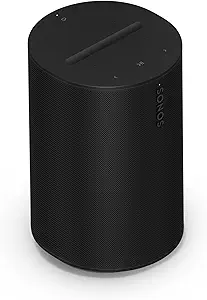 |
| Best Value The sweet spot between price and what you get | Bose Portable Smart Speaker |  |
| Best Budget The cheapest option that still gets the job done reliably | Jensen JAS-725 Undercabinet Music System |  |
| Top Rated A top-rated pick with lots of positive feedback | Sonos One Gen 2 |  |
| Most Popular A crowd favorite that many people choose with confidence | Amazon Echo Dot (newest model) |  |
| Best Seller A high-volume bestseller chosen again and again | Amazon Echo Show 5 |  |
Apple HomePod 2nd Generation

| Number of Microphones | 4 |
|---|---|
| Speaker Maximum Output Power | 38 watts |
| Connectivity Technology | Wireless |
The HomePod (2nd generation) is a small, table-top smart speaker built around a 4-inch woofer and five beamforming tweeters to deliver clear, room-filling sound with bass punch for its size. It uses room sensing to tune audio to the space and supports stereo pairing and multiroom audio with other HomePods, which makes it useful for background music in a kitchen or for more immersive sound when paired. Siri is built in for hands-free voice control of music and smart home devices, and the speaker supports Matter and Thread for modern home automation setups. Practical benefits include strong voice integration for quick timers or recipe queries and compact tabletop mounting that fits typical kitchen counters. Limitations are the ecosystem focus: best functionality requires Apple devices and Apple Music for some features, and there is limited cross-platform voice assistant flexibility compared with some competitors. The included power cable keeps setup simple but it is not battery powered, so placement is restricted to near an outlet.
Best for: Someone who wants a compact kitchen speaker that prioritizes sound quality and seamless voice control with Apple devices for everyday tasks like timers, music, and smart-home commands.
Less Ideal for: Users who rely on non-Apple platforms, want a portable battery-powered speaker, or need broad voice assistant choice should consider alternatives.
- Room-sensing tuning delivers balanced, high-fidelity sound for small to medium rooms
- Built-in Siri for hands-free control, timers, and smart home commands
- Supports Matter and Thread for modern smart home interoperability
- Stereo pairing and multiroom audio with other HomePods for expanded sound
- Full feature set works best within the Apple ecosystem and with Apple Music
- Requires a nearby power outlet since it is not portable
Verdict: Buy this HomePod if you want a compact kitchen speaker that pairs room-tuned, high-fidelity sound with tight Apple ecosystem voice and smart‑home control.
Sonos Era 100

| Connectivity Technology | Bluetooth, USB, Wi-Fi |
|---|---|
| Wireless Technology | Airplay, Bluetooth, NFC, Wi-Fi |
| Audio Encoding | Dolby Digital 2.0 Stereo |
| Speaker Maximum Output Power | 10 watts |
The Sonos Era 100 is a compact, performance-oriented smart speaker designed to fill small to medium rooms with detailed stereo sound and stronger bass than previous Sonos compact models. It pairs Wi‑Fi streaming, Bluetooth and a 3.5 mm line-in for flexible source options, and supports hands-free voice control via Alexa and AirPlay for quick kitchen use. The next-gen dual-tweeter architecture and a larger midwoofer produce clearer separation and fuller low end, and Sonos Trueplay tuning adjusts EQ to the room for more consistent results on shelves or counters. Setup is straightforward with the Sonos app and it can be grouped with other Sonos speakers for multiroom playback or used as a stereo pair for wider imaging. Limitations include a modest maximum output power that may not satisfy very large or outdoor spaces and a corded-only power design that reduces portability, but for in-kitchen listening it balances clarity, connectivity, and convenient voice control.
Best for: Buyers who prioritize clear, room-tuned stereo sound and seamless streaming in the kitchen and want integrated voice control and multiroom capability.
Less Ideal for: People who need a battery-powered portable speaker or very high-volume sound for large open-air gatherings should look elsewhere.
- Next-gen dual-tweeter and larger midwoofer for improved stereo clarity and deeper bass
- Multiple connectivity: Wi‑Fi, Bluetooth, AirPlay and 3.5 mm line-in for versatile source options
- Trueplay room tuning via the Sonos app delivers consistent sound on shelves or counters
- Hands-free voice control with built-in microphone and Alexa support for quick kitchen commands
- Modest maximum output power limits performance in very large or outdoor areas
- Requires a power outlet so it is not portable around the house
Verdict: A compact, kitchen-friendly smart speaker that prioritizes tuned stereo clarity and flexible streaming options for listeners who want great sound and voice convenience.
Bose Portable Smart Speaker

| Wireless Technology | Bluetooth, Wi-Fi |
|---|---|
| Battery Average Life | 12 hours |
| Control Method | Voice |
| Water Resistance Level | Water Resistant |
| Connectivity Technology | 1x USB Type-C (Power) |
The Bose Portable Smart Speaker is a compact, battery-powered smart speaker built to work both around the kitchen and out on the patio. It radiates 360-degree sound with stronger bass than similar compact models, and offers Wi‑Fi streaming, AirPlay 2, and Bluetooth for cordless playback. Built-in Alexa and Google Assistant let you control music, set timers, and manage smart-home devices hands-free while you cook, and a microphone mute gives a quick privacy option. The speaker is water resistant and has a built-in handle for easy moving between rooms. Battery life is rated up to 12 hours, which is enough for most daytime kitchen sessions but shorter than some competitors, and charging uses a USB-C power connection. There is a single Ethernet port and basic onboard controls, so advanced multi-zone network setups are possible but not elaborate. If you want clear, room-filling audio in a durable, portable package for kitchen use, this model balances sound quality and smart features well.
Best for: Buyers who want a practical, high-quality smart speaker for kitchen use that can be moved easily between rooms and used hands-free to control music and timers.
Less Ideal for: Users seeking the longest possible battery runtime or a speaker with advanced on-device multi-room controls should consider other options.
- 360-degree sound with deep bass for even coverage in open kitchen spaces
- Wi‑Fi, Bluetooth and AirPlay 2 support for flexible streaming
- Built-in Alexa and Google Assistant for hands-free control and timers
- Water resistant design and built-in handle for safe, easy portability
- USB‑C power and up to 12 hours battery life for cordless use during the day
- Battery life is shorter than some competing portable speakers
- No detailed multi-room management interface on the speaker itself
Verdict: A portable, kitchen-friendly smart speaker that pairs true 360-degree Bose sound with voice assistants and easy portability.
Jensen JAS-725 Undercabinet Music System

| Connectivity Technology | Bluetooth, Wi-Fi |
|---|---|
| Power Source | Corded Electric |
| Built-In Media | CD |
| Bluetooth Range | 10 meters |
| Audio Output Mode | Stereo |
The Jensen JAS-725 is an undercabinet Alexa-enabled music system built for kitchens and other work surfaces where counter space matters. It mounts under a cabinet and offers three playback options: stream over Wi‑Fi using Alexa, pair a phone via Bluetooth, or plug in with the auxiliary line-in. The unit includes built-in stereo speakers and a CD player for physical media, plus a hands-free microphone so Alexa can hear far-field voice commands while music plays. A 4× LED work light illuminates the countertop below, making it practical as both a sound source and task light. Setup is straightforward for basic Wi‑Fi and Bluetooth use, and the 120V corded power means no battery replacements. Limitations include modest overall audio fidelity compared with larger dedicated speakers and the modest 90-day warranty, so buyers seeking premium sound or long-term support may prefer higher-end options. For budget-conscious kitchens that need voice control and space-saving installation, it delivers a solid set of features for the price.
Best for: Buyers equipping a kitchen on a budget who want hands-free Alexa voice control, simple streaming from phones, and a space-saving undercabinet install with a built-in task light.
Less Ideal for: Audiophiles seeking high-fidelity sound or buyers who need long manufacturer support and extended warranties should look at higher-end speakers.
- Alexa-enabled Wi‑Fi playback for hands-free voice control and streaming
- Three playback modes: Wi‑Fi/Alexa, Bluetooth, and auxiliary line-in for flexible sources
- Under-cabinet mount with included hardware saves counter space and adds a built-in LED work light
- Built-in stereo speakers and CD player add convenience for physical media and everyday listening
- Audio performance is modest compared with larger bookshelf or smart speakers
- Short 90-day warranty period
Verdict: A budget-friendly undercabinet Alexa speaker that adds voice control, streaming and task lighting to a kitchen without taking up counter space.
Sonos One Gen 2

| Audio Output Mode | Stereo |
|---|---|
| Speaker Type | Multiroom wireless speaker |
| Control Method | Voice |
| Power Source | Corded Electric |
| Speaker Maximum Output Power | 180 watts |
The Sonos One Gen 2 is a compact, voice-controlled smart speaker designed to deliver room-filling sound while fitting on a countertop or shelf. It connects over Wi-Fi (with Ethernet option) and supports Amazon Alexa for hands-free control, plus AirPlay 2 and the Sonos app for streaming and multiroom setups. In daily kitchen use it provides clear midrange and balanced sound for music, podcasts, and timers, and two units can be paired for true stereo separation or used as surround speakers with compatible Sonos gear. The unit is humidity resistant so it tolerates kitchen steam better than many bookshelf speakers, and its corded power means consistent performance without battery drain. Trade-offs include the lack of Bluetooth streaming and reliance on a stable Wi-Fi network, and the speaker is a bit pricier than simple smart speakers, but it brings better audio quality and integration for a reliable, long-term kitchen audio setup.
Best for: Buyers wanting a dependable kitchen smart speaker that prioritizes stable streaming, good sound, and hands-free voice control for everyday cooking and routines.
Less Ideal for: Users who need portable, battery-powered speakers or those who prefer direct Bluetooth pairing for ad hoc device connections.
- Built-in voice control with Amazon Alexa for hands-free kitchen use
- Wi‑Fi and Ethernet connectivity enable stable streaming and multiroom setups
- Humidity resistant design suits placement near sinks or steam sources
- Can pair two units for stereo sound or integrate with other Sonos speakers
- No Bluetooth streaming option limits direct device pairing
- Requires a reliable Wi‑Fi network for full functionality
Verdict: A reliable, humidity-resistant smart speaker that delivers better sound and steady Wi‑Fi voice control for kitchen use.
Amazon Echo Dot (newest model)

| ASIN | B09B8V1LZ3 |
|---|---|
| Price | 49.99 USD |
The Echo Dot (newest model) is a small Alexa-powered speaker designed for everyday voice control, music playback, and smart-home tasks in rooms like kitchens. It streams from Amazon Music, Spotify, Apple Music and supports Bluetooth streaming, and can be grouped with other Echo devices for multiroom audio or paired with Fire TV for basic home theater use. Built-in temperature and motion sensors let you trigger simple routines such as turning lights on when you enter the room or adjusting fans based on indoor temperature, which is handy for kitchen automation. It also includes eero Built-in to extend an existing eero mesh network and multiple privacy controls, including a physical microphone-off button. Sound is surprisingly full for the size but not meant to replace larger speakers when you want deep bass at high volume. The Echo Dot is straightforward to set up and use, but advanced audiophiles or users needing powerful, room-filling sound should consider larger models.
Best for: Buyers who prioritize easy voice control and kitchen automation with proven user experience and widespread third-party support, and who value a compact, privacy-minded device backed by many user reviews.
Less Ideal for: Users seeking high-fidelity, powerful audio for cooking parties or open-plan spaces should choose a larger, more powerful speaker instead.
- Compact design fits easily on a kitchen counter or shelf
- Works with major music services and supports multiroom audio with other Echo devices
- Built-in temperature and motion sensors enable simple automation like entry-triggered lighting
- eero Built-in can extend an existing eero mesh Wi‑Fi network in the home
- Physical microphone-off button and multiple privacy controls
- Small speaker driver limits bass and maximum loudness for large or noisy rooms
Verdict: A compact, widely supported Alexa speaker that is an easy, privacy-conscious choice for adding reliable voice control and basic music to the kitchen.
Amazon Echo Show 5
| Display | 5.5-inch |
|---|---|
| Camera | 2 MP |
| Voice assistant | Alexa |
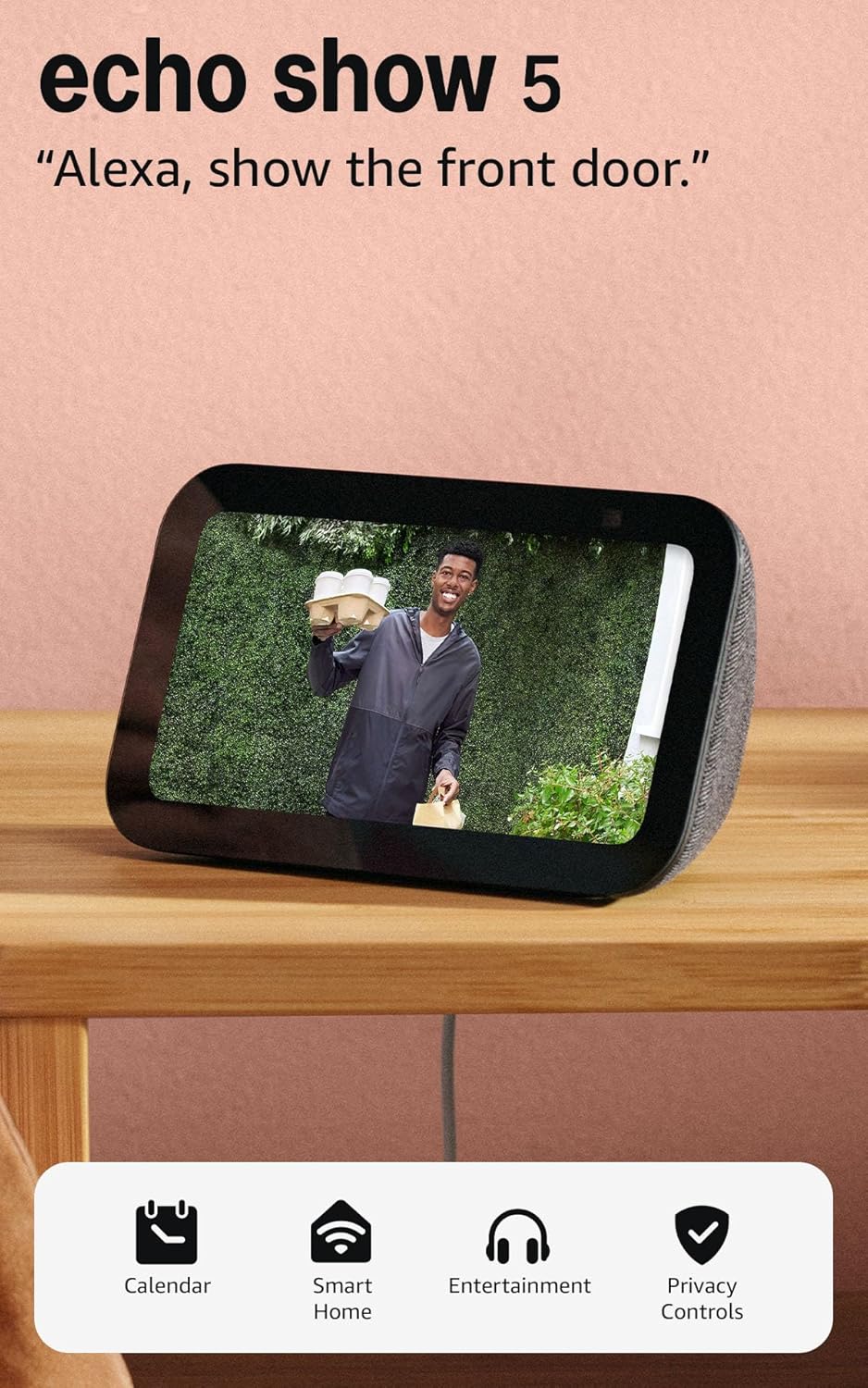
The Echo Show 5 is a small smart display intended for countertop use where space is limited, like a kitchen. It provides a 5.5-inch touchscreen for quick glances at timers, recipes, and video feeds while Alexa voice control runs timers, sets reminders, and manages compatible smart lights and thermostats. The speaker delivers stronger bass and clearer vocals than previous small Echo models, so music and cooking podcasts sound fuller without needing a separate speaker. The 2 MP camera makes quick video calls and Drop In easy, and a physical shutter plus mic/camera off button give straightforward privacy control. Practical convenience features include a photo slideshow background and the ability to view compatible security cameras and video doorbells. Limitations are the small display for detailed recipe steps and the modest camera resolution for close-up video; heavy multimedia users may prefer a larger screen. For a kitchen counter, it balances compact footprint, usable display, and reliable Alexa features.
Best for: Buyers who want a compact, easy-to-use smart display for kitchen counters that prioritizes simple Alexa controls, hands-free timers, and occasional video calls with straightforward privacy features.
Less Ideal for: Users who want a large, high-resolution screen for step-by-step cooking videos or audiophiles seeking room-filling sound should consider larger displays or standalone speakers.
- Compact footprint fits easily on most kitchen counters
- 5.5-inch touchscreen for quick recipe steps, timers, and camera views
- Improved bass and clearer vocals for better audio playback than older small Echo models
- Built-in 2 MP camera with shutter and mic off button for straightforward privacy controls
- Direct control of compatible smart-home devices from the device or by voice
- Small display can be cramped for long, detailed recipe instructions
- Camera resolution and speaker size are limited compared with larger smart displays
Verdict: A space-saving kitchen smart display that delivers reliable Alexa control, useful glanceable info, and better-than-before small-device sound for everyday countertop use.
Choosing the Right Smart Speaker for Kitchens: Key Factors to Consider
Voice Recognition Accuracy
Accurate voice recognition matters because kitchens are noisy environments. Cooking appliances, extractor fans, and running water can trigger false starts or cause missed commands. Better recognition reduces the need to repeat queries, keeping your hands free and preventing interruptions during a recipe step.
When evaluating accuracy, consider far-field microphones and multi-mic arrays that are designed to pick up commands from across a room. Noise-cancellation and beamforming technology can improve performance by focusing on your voice and ignoring background sounds. Also factor in whether the assistant handles follow-up queries naturally, since multi-step recipe interactions are common in kitchen use.
Audio Clarity for Speech
For kitchen use, the most important part of audio performance is clear midrange reproduction so spoken instructions, timers, and notifications are intelligible. Heavy bass is less relevant than crisp voice clarity, especially when you may be standing at different positions from the speaker.
Check for devices that emphasize vocal clarity or list specific features for dialogue enhancement. Good dispersion helps if multiple people need to hear the response from across the room. Also consider volume headroom to overcome ambient noise without distorting speech.
Resistance to Moisture and Spills
Kitchens expose electronics to steam, grease, and accidental splashes. Moisture resistance reduces the risk of premature failure and keeps controls reliable over time. Look for enclosures with water-resistant coatings or IP ratings suitable for splash-prone locations.
Even when a device is not fully waterproof, protective design elements such as sealed buttons, raised feet to avoid pooling, and nonporous fabrics around the speaker can lengthen lifespan in a kitchen setting. Consider placement options that minimize direct exposure while still providing useful voice pickup and audio coverage.
Placement Flexibility and Power Options
How and where you place a smart speaker affects its performance. Countertop placement near the cooking area is convenient but increases exposure to heat and mess. Wall-mount or shelf placement can keep the device safer but may change how well it hears you or how clearly it projects sound.
Power options matter too. Hardwired, plug-in devices offer consistent uptime for timers and music. Battery-powered models add portability for moving between prep areas or outdoor cooking, but check battery life and recharge convenience. Consider whether you need a unit with stable continuous power or a portable device that fits intermittent use.
Privacy Controls and Local Features
Many people use smart speakers in common areas like kitchens where conversations happen frequently. Simple and accessible privacy controls—physical mute switches for microphones and clear indicator lights—help you quickly disable voice listening when desired. Evaluate how easy it is to confirm the device is not actively listening.
Also consider local processing features for routine tasks like timers and alarms that should continue to work reliably even if cloud services are unavailable. The degree of local capability affects responsiveness and privacy exposure for everyday kitchen interactions.
Connectivity and Ecosystem Compatibility
A kitchen speaker should maintain a stable connection to your home network to reliably answer queries, stream music, and control any smart appliances. Look for devices with solid Wi-Fi performance and support for your home network bands.
Ecosystem compatibility matters if you plan to integrate voice control with timers, smart plugs, or lighting. Confirm that the assistant and supported skills or routines align with your existing smart devices. Also verify whether routine firmware updates are handled smoothly, as consistent updates affect long-term security and feature availability.
Best Placement Practices in the Kitchen
Place the speaker where it can hear you without being directly above a stove or sink. Elevated locations reduce splashes and keep controls away from spills while maintaining good voice pickup. If you experience frequent cooking noise, try positioning the device slightly to the side of the main prep area where voices are less masked by fans and pans.
Consider acoustic reflections when placing a speaker. Tiled backsplashes and hard countertops can create echoes that affect clarity. Soft materials like a small mat under the unit or nearby fabric can dampen reflections and improve perceived speech intelligibility.
- Avoid direct heat and steam from ranges or kettles.
- Keep at least a few inches of clearance for microphone pickup.
- Mounting higher or on a shelf can protect from spills while preserving range.
Keeping Your Kitchen Speaker Clean
Regular light cleaning prevents grease buildup that can interfere with buttons and mics. Use a slightly damp cloth rather than spraying cleaners directly on the device. For fabric-covered units, follow the manufacturer guidelines for spot cleaning or vacuuming dust from the grille.
Pay attention to ports and microphone openings. Compressed air can dislodge crumbs and flour, but use short bursts from a distance to avoid driving debris further inside. Avoid submerging any part of the device even if it has some water resistance.
- Wipe down after heavy cooking sessions.
- Check seals and buttons for grease accumulation.
- Avoid abrasive cleaners or solvents.
Using Voice Shortcuts and Routines
Custom voice routines can streamline common kitchen tasks like starting timers, setting multiple timers at once, or pulling up step-by-step recipes. Preprogramming these routines saves time and reduces the need for repeated commands when your hands are occupied.
Keep phrasing simple and consistent. Short commands reduce recognition errors and make interactions faster during cooking. Test routines with ambient kitchen noise to ensure they trigger reliably.
- Create named timers such as "pasta" or "sauce" for quick reference.
- Combine actions like "start timer and set lighting" when multitasking.
- Use single-word triggers for frequently used routines.
Audio Tips for Hearing Recipes and Timers
Raise the volume enough to cut through background noise but avoid distortion. If the device has an equalizer or voice enhancement setting, prioritize midrange clarity over bass. For multi-person households, test responses from different positions so everyone can hear timers and instructions.
If music is part of the kitchen routine, consider pairing the speaker with a secondary audio device or grouping speakers for broader sound coverage. When grouped playback is used, verify that voice commands still reach the active unit handling timers and alarms.
- Use voice boost or dialogue enhancement features if available.
- Test alarm tones at typical cooking distances.
- Keep volume levels moderate when children or pets are present.
Troubleshooting Common Kitchen Issues
If voice commands are frequently missed, check for firmware updates, reposition the speaker, and reduce nearby noise sources. Periodic reboots can resolve connectivity glitches that affect voice responsiveness. If the device struggles only during heavy cooking, temporarily relocate it until noise drops.
For intermittent audio dropout, inspect Wi-Fi signal strength at the intended placement and consider network extenders or moving the router if coverage is weak. Ensure no other electronics are causing interference in the immediate area.
- Restart device and router as a first step.
- Check microphone mute status if commands are ignored.
- Move to a different outlet to test for power-related issues.
How We Chose the Best Smart Speaker for Kitchens
We focused on attributes that matter in a kitchen environment rather than broad home audio benchmarks. Our selection process filtered for reliable voice recognition in noisy conditions, physical durability against humidity and occasional splashes, and straightforward setup and ongoing operation for nontechnical users. We also prioritized devices with clear midrange and vocal articulation so spoken recipes, timers, and voice responses are easy to understand. Battery life or continuous power behavior was considered when portability or countertop placement matters. Additional filters excluded units with unclear update policies, poor microphone reviews, or reported frequent connectivity interruptions. In short, we selected devices that combine voice accuracy, moisture and splash resistance, durable controls, and consistent network performance. Any product that failed to meet minimum standards on these concrete dimensions was excluded.
Our full evaluation process is outlined in our review methodology.
FAQ
Can a smart speaker handle timers and alarms without Wi-Fi?
Many smart speakers keep basic timers and alarms functional locally, but capability varies by device. Offline alarms typically work, while cloud-dependent features and third-party skills usually require a network connection.
How do I protect a speaker from steam and grease?
Place the unit away from direct steam paths and above the countertop when possible. Regularly wipe down exterior surfaces and avoid placing it immediately next to the stove to reduce grease buildup.
Will background noise from cooking prevent the speaker from hearing me?
Background noise can interfere, but devices with multiple microphones and noise-cancellation perform better. Positioning and consistent phrasing also improve reliability during noisy cooking sessions.
Are battery-powered speakers practical for kitchen use?
Battery-powered models add portability and let you move the speaker around the kitchen or outdoors, but you should check battery life and recharge convenience. For constant countertop use, a plugged-in unit eliminates downtime concerns.
How do I keep family members from accessing voice history?
Most systems offer visible mute switches and voice-history controls in settings. Regularly review privacy settings and use the physical microphone cutoff when you do not want the device to listen.
Final Verdict
Pick a smart speaker for kitchens by prioritizing voice recognition and speech clarity first, then consider moisture resistance and placement flexibility. Decide whether you need portability or continuous power, and factor in privacy features and stable connectivity. Balance these tradeoffs based on how often you cook, the typical noise level in your kitchen, and whether you need routines or local alarm reliability. With those priorities clear, you can confidently choose a kitchen-ready smart speaker that streamlines cooking tasks and stays reliable over time.