
Note: This article contains affiliate links. If you click on these links and make a purchase, we may earn a small commission at no extra cost to you. This helps support our research and content. Read our full affiliate disclosure here.
Choosing the right stainless steel can opener matters because it affects everyday kitchen tasks from meal prep to food storage. A reliable opener saves time, reduces frustration, and avoids jagged lids or metal shavings that can compromise safety. This guide shortlists the top stainless steel can openers that deliver consistent cutting, corrosion resistance, and comfortable operation. We evaluated durability, cutting performance, ergonomics, and ease of cleaning to narrow the selection. Read on to see the top picks and find the style and features that fit how you use a can opener at home.
Top Picks at a Glance
| Best Overall The best all-around choice for most situations | Hamilton Beach Extra-Tall Can Opener 76700 |  |
| Best Quality Built to a higher standard if you want something more solid | Rösle Can Opener 12757 |  |
| Best Value The sweet spot between price and what you get | OXO SteeL Can Opener |  |
| Best Budget The cheapest option that still gets the job done reliably | Amazon Basics Can Opener |  |
| Top Rated A top-rated pick with lots of positive feedback | Graceliving Premium Can Opener GR001 |  |
| Most Popular A crowd favorite that many people choose with confidence | KitchenAid Classic Can Opener |  |
| Best Seller A high-volume bestseller chosen again and again | Cuisinart Electric Can Opener CCO-50BKN |  |
Hamilton Beach Extra-Tall Can Opener 76700

| Operation Mode | Automatic |
|---|---|
| Wattage | 130 watts |
| Material Type | Stainless Steel |
| Included Components | Can opener |
This Hamilton Beach electric can opener is designed to handle a wide range of can sizes thanks to its extra-tall cutting head, and the automatic operation frees your hands while it works. The removable cutting lever and stainless steel blade make cleanup straightforward since the lever detaches for rinsing, and the unit automatically shuts off when a can is finished. Cord storage keeps countertops tidy and the integrated knife sharpener is a convenient add-on that eliminates the need for a separate sharpener. At 130 watts it powers through everyday cans but the mostly plastic body around the motor means it is not as heavy-duty feeling as all-metal commercial models. The opener sits upright and is simple to position under taller cans, but users who want a completely metal, professional-grade unit or a battery-powered portable option should look elsewhere.
Best for: Buyers who want a reliable, easy-to-clean countertop can opener that handles tall cans and adds everyday convenience with an integrated knife sharpener.
Less Ideal for: Those seeking a professional, all-metal commercial unit or a cordless, travel-friendly opener should consider alternative models.
- Extra-tall cutting head fits taller and larger cans easily
- Removable cutting lever for easy rinsing and cleaning
- Automatic shutoff frees hands and prevents over-cutting
- Built-in knife sharpener adds convenience without extra tools
- Cord storage keeps countertop clutter to a minimum
- Not a fully metal commercial-grade construction, so feels less heavy-duty
- Requires counter power and is not portable for cordless use
Verdict: Choose this model if you want a user-friendly stainless steel automatic can opener that cleans easily and handles taller cans while adding a handy knife sharpener.
Rösle Can Opener 12757

| Material Type | Stainless Steel |
|---|---|
| Blade Material Type | Stainless Steel |
| Operation Mode | Manual |
| Unit Count | 1 Count |
The Rösle 12757 is a heavy-duty manual can opener built entirely from 18/10 stainless steel and engineered for smooth, controlled can opening. Its pliers-style grip clamps onto the can lip so the user rotates an ergonomically shaped thumbscrew to turn the cutting wheel; the design keeps the blade from contacting food and lifts the lid cleanly. The lateral cutting wheel severs the can at the seam, producing fewer sharp edges and allowing the lid to sit back on top if needed. Its solid stainless construction and simple manual operation make it durable and easy to clean, and the firm grip reduces wrist strain compared with small hand-turn openers. Because it is manual, speed depends on user effort and it requires two-handed operation, and its metal construction means it is heavier than plastic models. The Rösle is best where long service life, clean cuts, and a stable grip matter most, especially for cooks who open cans frequently and prefer a robust tool over an electric alternative.
Best for: Buyers who prioritize long-lasting, professional-quality kitchen tools and want a reliable manual opener that delivers clean, safe cuts during frequent use.
Less Ideal for: If you prefer one-handed or automated solutions, have limited hand strength, or only open cans infrequently, an electric or lightweight compact opener may be a better choice.
- All-stainless 18/10 construction for durability and corrosion resistance
- Pliers-style grip secures to the can for stable, low-strain operation
- Lateral cutting wheel leaves minimal sharp edges and keeps lid and contents separate
- Does not contact food with blade, improving hygiene and clean-up
- Manual operation requires physical effort and two-handed use
- Heavier than plastic or compact can openers, may feel bulky for occasional users
Verdict: Choose the Rösle 12757 when you want a durable, pro-grade stainless steel can opener that clamps securely and leaves safe, smooth edges.
OXO SteeL Can Opener

| Material Type | Stainless Steel |
|---|---|
| Blade Material Type | Stainless Steel |
| Operation Mode | Manual |
| Included Components | Can Opener |
The OXO SteeL Can Opener is a straightforward manual can opener built for frequent kitchen use. It uses sharp stainless steel cutting components and large, cushioned handles that make gripping and turning easier for people who open cans regularly. The oversized knob reduces wrist strain and helps the opener feed smoothly around lids, while a built-in bottle opener adds small convenience. Its simple, all-metal construction is durable and easy to wipe clean, though the manufacturer recommends hand washing. The design works for both left- and right-handed users and feels heavier-duty than basic compact models, making it a good daily tool for a stocked pantry. If you want an electric model or dishwasher-safe convenience, this manual unit will be less suitable, but for long-term reliability and comfortable manual operation it performs very well.
Best for: Home cooks who value durable, comfortable manual tools and want a reliable stainless steel opener for daily pantry use.
Less Ideal for: People who need fully dishwasher-safe utensils or those who prefer an electric can opener for minimal hand effort.
- Sharp stainless steel blades for clean cuts
- Oversized knob reduces wrist effort when turning
- Large handles with cushioned touch points improve grip and comfort
- Built-in bottle opener adds dual-purpose convenience
- Ambidextrous design suitable for left- and right-handed users
- Hand wash only rather than dishwasher-safe
- Manual operation requires physical effort compared with electric openers
Verdict: A sturdy, comfortable stainless steel manual can opener built for regular kitchen use and easy, reliable cutting.
Amazon Basics Can Opener

| Material Type | Metal |
|---|---|
| Blade Material Type | Stainless Steel |
| Operation Mode | Manual |
| Unit Count | 1 Count |
This Amazon Basics stainless-steel can opener is a straightforward manual tool built for everyday kitchen use. It uses a heat-treated, zinc-coated stainless-steel cutting blade and solid stainless-steel handles with a turning knob to open standard metal cans quickly. Typical use is simple: clamp the opener on a can, turn the knob to cut the lid, and remove the top by hand; the firm handles and ergonomic knob make repeated openings easier than flimsy models. The unit is hand-wash only but the metal construction and heat-treated blade aim to resist dulling and corrosion for longer life. It lacks any fancy features like smooth-edge cutters or automatic operation, so users who prefer effortless or one-handed opening may need something different. For the price-conscious buyer this opener delivers reliable performance, durable materials, and a no-frills design that performs the core job well.
Best for: Buyers looking for a solid, affordable manual can opener that focuses on durable materials and straightforward performance for everyday kitchen use.
Less Ideal for: People who need one-handed, electric, or safety-edge openers for limited hand strength or to avoid sharp lids should consider alternative models.
- Heat-treated, zinc-coated stainless-steel blade for durability and corrosion resistance
- Stainless-steel handles and turning knob provide a secure grip during use
- Simple manual design that is easy to operate and maintain
- Handheld, compact form that stores easily in a kitchen drawer
- Not dishwasher safe, requires hand washing
- No smooth-edge or safety lid removal feature
Verdict: A budget-friendly, durable manual can opener that delivers reliable, no-frills performance for everyday kitchen use.
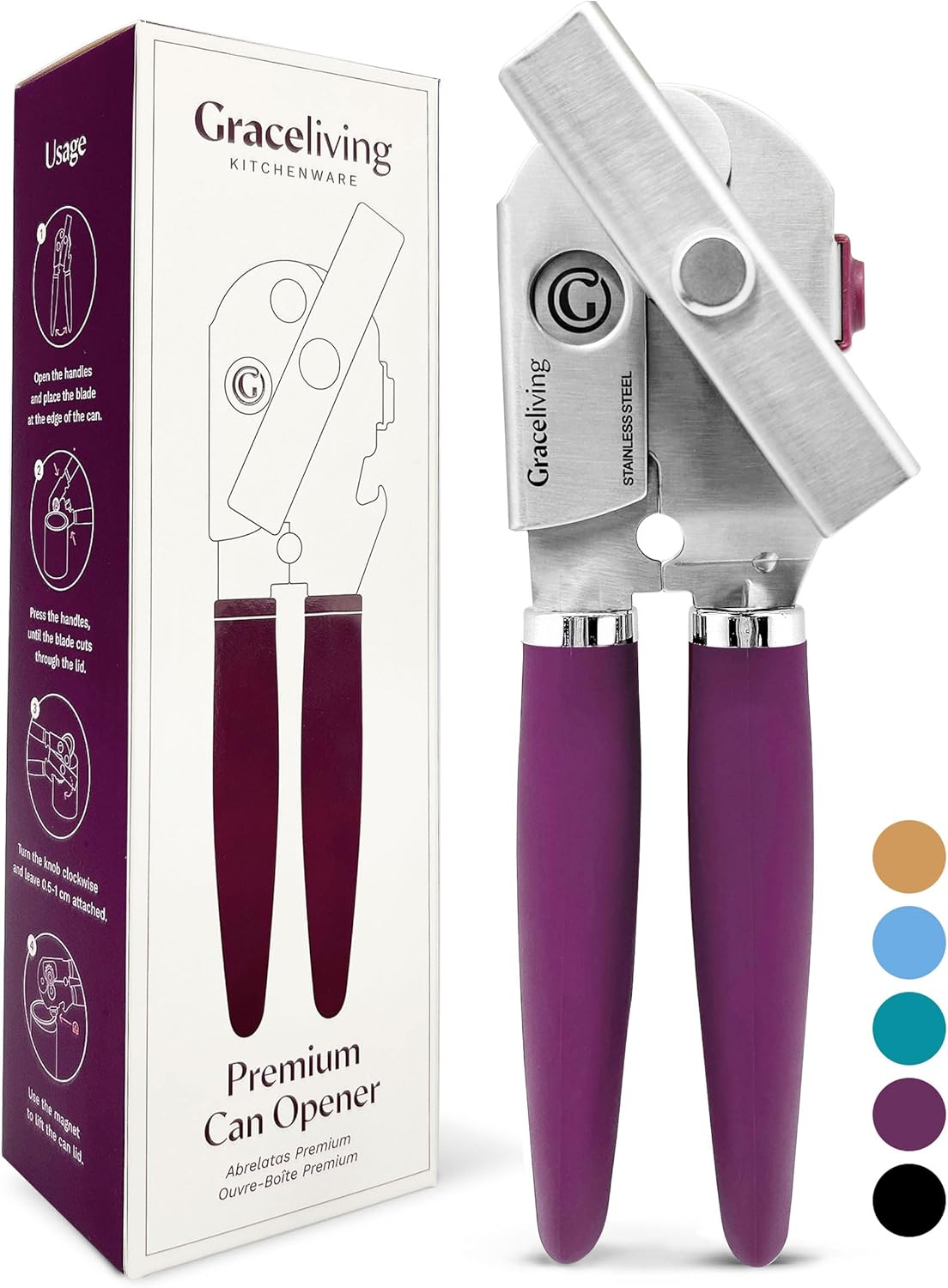
Graceliving Premium Can Opener GR001
| Material Type | Stainless Steel |
|---|---|
| Blade Material Type | Stainless Steel |
| Operation Mode | Manual |
| Unit Count | 1 Count |
This Graceliving manual can opener is built around reinforced stainless steel components and precision-aligned gears intended for long-term kitchen use. It cuts cans with a razor-sharp blade and a weighted, steady head to produce clean, jag-free lids while a strong built-in magnet lifts the lid away for touch-free disposal. The oversized, unbreakable knob and soft-touch, non-slip handle make turning easier and more comfortable, which helps if you open many cans or have reduced grip strength. The tool also includes a bottle opener for added utility. The product is positioned as more durable than typical openers and claims lab-tested longevity; that durability plus the smooth rotation mean fewer replacements and steadier performance over time. On the downside it is manual so opening very large commercial cans still requires effort, and the stainless finish and heavier build add modest weight to the hand tool compared with lightweight plastic models.
Best for: Buyers who prioritize long-term reliability and a sturdy, comfortable handheld tool for regular home can-opening tasks will appreciate this opener.
Less Ideal for: People who need hands-free powered opening or those seeking the lightest, most compact travel tool should consider alternative options.
- Reinforced stainless steel construction and precision gears for long-lasting performance
- Razor-sharp blade and weighted head produce clean, jag-free cuts
- Strong magnetic lid lifter enables touch-free, safe lid removal
- Oversized smooth-turn knob and soft-touch non-slip handle for comfortable operation
- Includes built-in bottle opener for extra functionality
- Manual operation requires hand strength for larger or many cans
- Heavier stainless construction is less pocketable than lightweight models
Verdict: Choose this can opener if you want a durable, well-made stainless steel tool that prioritizes reliable, comfortable performance over time.
KitchenAid Classic Can Opener

| Material Type | Stainless Steel |
|---|---|
| Operation Mode | Manual |
| Included Components | 1 can opener |
| Unit Count | 1 Count |
The KitchenAid Classic Can Opener is a straightforward manual can opener built around a razor-sharp stainless steel cutting wheel and oversized ergonomic handles. You use it like any rotary opener: clamp the wheel to the can edge, turn the large knob to rotate the cutting wheel, and the handle pair gives a secure, comfortable grip while slicing the lid. The design includes a built-in bottle opener so it doubles as a simple 2-in-1 kitchen tool. In practice the sharp blade makes smooth, clean cuts and the large knob reduces effort, which helps when you open many cans or have reduced hand strength. The unit is hand-wash only and small parts mean it is simple to store but not dishwasher-safe. There are no electric features or fancy attachments, so if you want an automatic opener or magnetized lid lifter you will need a different model. For a reliable, no-frills stainless steel opener that emphasizes ergonomics and cutting performance, this is a solid choice.
Best for: Buyers who prioritize reliable manual performance and comfortable handling, and who value proven customer satisfaction over specialty features.
Less Ideal for: Anyone who needs an electric or hands-free opener, or who prefers models with magnetic lid catchers or dishwasher-safe cleaning.
- Razor-sharp stainless steel cutting wheel for clean, smooth cuts
- Oversized ergonomic handles that improve grip and reduce hand strain
- Large turning knob for easier operation, helpful for users with limited hand strength
- Integrated bottle opener adds simple multifunction utility
- Hand-wash only and not designed for dishwasher cleaning
- No lid lifter or magnetic feature to prevent dropped lids
Verdict: A dependable, ergonomically designed stainless steel manual opener that delivers clean cuts and ease of use for everyday kitchens.
Cuisinart Electric Can Opener CCO-50BKN

| Material Type | Stainless Steel |
|---|---|
| Operation Mode | Automatic |
| Wattage | 60 watts |
| Included Components | Can Opener |
The Cuisinart Electric Can Opener is a simple, no-fuss countertop appliance that opens cans automatically with a single button press. It uses a stainless steel blade and cutting mechanism to slice lids cleanly while a magnetic lid holder keeps opened lids in place for safe disposal. The wide nonslip base adds stability during use and the detachable activation lever makes the unit easier to wipe clean. With a 60-watt motor the opener handles a variety of common can sizes and sits compactly on a kitchen counter without taking much space. Built-in simplicity and a limited three-year warranty make it a dependable option for everyday meal prep, especially for those who prefer hands-free operation. The design focuses on reliability rather than extra features, so you will not get programmable settings or cordless convenience, but you do get a durable stainless cutting system and straightforward performance ideal for routine kitchen tasks.
Best for: Buyers who prioritize a reliable, easy-to-use stainless steel can opener for everyday kitchen tasks and want a product with a simple, durable design and good manufacturer support.
Less Ideal for: People seeking a cordless or travel-friendly can opener, or those who want extra electronic features and programmability should look elsewhere.
- One-touch automatic operation for hands-free can opening
- Stainless steel blade and cutting mechanism for clean, consistent cuts
- Wide nonslip base provides stability during use
- Magnetic lid holder secures lids for safer disposal
- Detachable activation lever simplifies cleaning
- Requires a countertop power outlet since it is corded
- No advanced features like rechargeable battery or variable settings
Verdict: A straightforward, stainless-steel automatic can opener that delivers reliable, hands-free performance for risk-averse buyers who want a durable countertop solution.
Choosing the Right Stainless Steel Can Opener: Key Factors to Consider
Blade and Gear Materials
Blades and gears do the actual cutting and bearing loads. Stainless steel blades resist rust and hold a sharp edge longer than plated or alloyed parts. The gear material and fit determine whether the opener feeds smoothly or slips, so look for hardened stainless or steel gears with tight tolerances.
Higher-quality materials prolong service life and maintain consistent cuts. Inferior metals warp, pit, or corrode, which increases effort and the likelihood of jagged lid edges. For household use, durable stainless parts reduce maintenance and the need to replace the tool frequently.
Cutting Mechanism Type
Can openers come in different cutting styles such as top-cutting, side-cutting, and electric rotary systems. Top-cutting openers remove the entire lid and tend to leave sharper edges but are compact. Side-cutting models often produce smoother, safer edges and can be easier to operate for some users.
The mechanism affects safety, residual lid shape, and ease of alignment. Consider which cut style aligns with how you store opened cans or whether you prefer lids that detach completely versus those left attached by a seam.
Ergonomics and Force Required
Operation comfort matters when opening many cans or assisting users with reduced hand strength. Long, padded handles and larger turning knobs reduce wrist torque and make repeated use easier. A well-balanced opener that clamps securely needs less manual force and lowers the chance of slipping.
Poor ergonomics cause hand fatigue and increase the risk of accidents. If multiple household members will use the opener, prioritize comfortable grips and designs that minimize squeezing and twisting effort.
Ease of Cleaning and Maintenance
Food residue and moisture accelerate corrosion and bacterial growth. Openers with removable cutting assemblies or sealed components are simpler to rinse and dry. Dishwasher-safe stainless designs can save time, but verify which parts are dishwasher-safe to avoid trapped moisture that causes rust.
Regular cleaning prevents sticky buildup that degrades gear action and keeps the tool hygienic. Consider how easy it will be to access and dry all surfaces after each use.
Size, Storage, and Mounting
Physical size affects where you store the opener and how it fits in drawers or on countertops. Compact handheld openers save space but may demand more manual force. Larger, bench-mounted or electric openers offer convenience but need dedicated counter or wall space.
Think about how frequently you open cans and the kitchen layout. If storage is tight, choose a slim stainless model that still offers solid leverage and a secure clamp.
Safety Features
Safety features include smooth-cut mechanisms that reduce jagged edges, non-slip grips, and locking or clamp designs that keep the opener steady. Some designs reduce contact between the blade and the user while cutting, lowering the chance of accidental cuts when removing lids.
Prioritizing safety matters especially in homes with children or when older adults use the tool. Features that mitigate sharp edges and accidental slips improve everyday usability and peace of mind.
Top Styles and Which Is Best For You
Stainless steel can openers fall into several practical styles. Manual handheld openers are the most common, offering portability and low storage impact. Side-cutting and top-cutting manual options differ in lid behavior and edge smoothness, so choose based on whether you want a fully removable lid or a safer, smoother rim.
If you open cans frequently, consider an electric countertop opener for hands-off operation and consistent cuts. Bench or wall-mounted openers suit busy kitchens but require installation space. Evaluate your typical can size and frequency to match the opener style to your routine.
- Handheld top-cutting: compact and simple, removable lids, may create sharper edges
- Handheld side-cutting: smoother rim, often safer for food storage
- Electric/bench-mounted: low effort, consistent result, needs counter space
Maintaining Stainless Steel Parts
Stainless resists rust but is not immune to pitting if left wet or soiled. Rinse and dry the opener after use to prevent mineral spots and trapped food from accelerating wear. For moving parts, a quick brush under running water removes residue from gears and blades.
Periodically inspect for signs of wear or play in the gears. If the cutter area is removable, clean and dry those components separately. Store in a dry drawer or hang on a wall hook to keep moisture away and preserve the finish.
- Rinse immediately after use and fully dry
- Use a small brush to clear gear teeth
- Avoid prolonged dishwasher exposure unless explicitly labeled safe
Ergonomic Tips for Easier Opening
Positioning and technique make a big difference. Secure the can on a flat surface and align the opener before turning the knob to avoid slips. Apply steady, even pressure while cranking rather than jerking motions.
If hand strength is a concern, choose an opener with a larger handle or knob to reduce required torque. Turning with your whole hand and forearm instead of just fingers will minimize fatigue and improve control.
- Use a flat, stable surface to prevent wobble
- Turn with the whole hand or forearm for better leverage
- Let the opener clamp and feed rather than forcing it
When to Replace Your Can Opener
Replace the opener if it shows persistent slipping, jagged cuts, or visible corrosion that cannot be cleaned. Worn gear teeth or a dull cutter increase effort and can create unsafe lid edges. Frequent repairs or repeated performance loss indicate the tool has reached end of service.
Also consider replacement if cleaning no longer restores smooth action or if components are fused by residue. Regular inspection helps you catch problems early and prevents frustrating or unsafe openings.
- Signs to replace: slipping, jagged lids, rust, or stuck gears
- Regular cleaning can extend life but not fix mechanical wear
- Upgrading ergonomics can be a reason to replace before failure
Choosing the Right Opener for Special Needs
If mobility, arthritis, or limited hand strength is a factor, prioritize low-effort designs. Larger knobs, padded handles, or electric models reduce strain. Some manual models feature geared reductions that cut with less force and are still compact for storage.
Consider how often the opener will be used by the person with special needs. For occasional use, an ergonomic manual opener may suffice. For daily or frequent use, an electric solution may provide the most consistent, comfortable experience.
- Look for large turning knobs and non-slip grips
- Electric openers minimize hand effort but need space
- Geared manual options reduce torque while staying compact
How We Chose the Best Stainless Steel Can Opener
We selected products that meet real-world needs for longevity and safe, consistent cutting. Our evaluation focused on durability of stainless parts and corrosion resistance, smoothness and precision of the cutting mechanism, ergonomic comfort for repeated use, and how easy the opener is to clean and maintain. We favored designs with robust gears, sealed or removable components for cleaning, and handles or levers that reduce wrist strain. We tested reported specs and user-oriented performance descriptions to judge cutting reliability and long-term wear potential. Exclusions included open-frame tools with exposed, non-stainless components or gadgets lacking clear maintenance guidance. We also excluded novelty designs that sacrifice grip or cutting safety for aesthetics. Ultimately, selections are those that balance corrosion resistance, cutting quality, and everyday usability for home kitchens.
Our full evaluation process is outlined in our review methodology.
FAQ
Are stainless steel can openers dishwasher safe?
Some stainless steel can openers are labeled dishwasher safe, but repeated dishwasher exposure can trap moisture in gear junctions and accelerate wear. Hand washing and thorough drying is usually the safest maintenance method.
Which cutting style leaves safer edges, top-cut or side-cut?
Side-cut designs typically leave smoother, less sharp edges because they cut along the can wall rather than removing the lid entirely. Top-cutting openers remove the lid completely, which can sometimes create sharper edges.
How often should I clean my can opener?
Clean the opener after each use to remove food residue and moisture. A quick rinse and dry prevents buildup; deeper cleaning of removable parts should be done weekly if you use the opener frequently.
What causes a can opener to start slipping?
Slipping is usually caused by worn or dirty gears, a dull cutter, or improper alignment. Regular cleaning and drying can prevent residue-related slips, but worn gears or blades typically require replacement of the tool.
Can I sharpen a can opener blade?
Sharpening small can opener cutters is difficult and rarely practical for household tools. When cutting performance degrades due to a dull cutter, replacing the opener is often the most effective solution.
Final Verdict
Prioritize stainless durability, cutting smoothness, and ergonomics when choosing a can opener. Durable stainless parts and reliable gear engagement reduce effort and extend service life, while good ergonomics and safety-minded cutting styles improve daily use. Balance the need for low effort, easy cleaning, and storage footprint to match your kitchen routine. With those priorities in mind, you can confidently choose a stainless steel can opener that delivers safe, consistent performance for years.