
Note: This article contains affiliate links. If you click on these links and make a purchase, we may earn a small commission at no extra cost to you. This helps support our research and content. Read our full affiliate disclosure here.
If arthritis makes opening cans painful or awkward, the right manual can opener can restore independence in the kitchen. You want a tool that minimizes hand torque, limits wrist rotation, and provides a secure, comfortable grip so you can open cans with minimal discomfort. This guide covers seven shortlisted manual can openers chosen for their ease of use, grip design, cutting smoothness, and durability. Below you will find practical notes on what matters when shopping, how we evaluated candidates, and answers to common questions about using manual can openers if you have limited hand mobility.
Top Picks at a Glance
| Best Overall The best all-around choice for most situations | Graceliving Premium Can Opener GR001 |  |
| Best Quality Built to a higher standard if you want something more solid | OXO SteeL Can Opener 58081 |  |
| Best Value The sweet spot between price and what you get | GoodCook Safe-Cut Can Opener |  |
| Best Budget The cheapest option that still gets the job done reliably | Ultrean Manual Can Opener |  |
| Top Rated A top-rated pick with lots of positive feedback | Zulay Kitchen Can Opener Z-3150 |  |
| Most Popular A crowd favorite that many people choose with confidence | OXO Good Grips Manual Can Opener |  |
| Best Seller A high-volume bestseller chosen again and again | KitchenAid Classic Can Opener |  |
Graceliving Premium Can Opener GR001
| Material Type | Stainless Steel |
|---|---|
| Blade Material Type | Stainless Steel |
| Operation Mode | Manual |
| Unit Count | 1 Count |
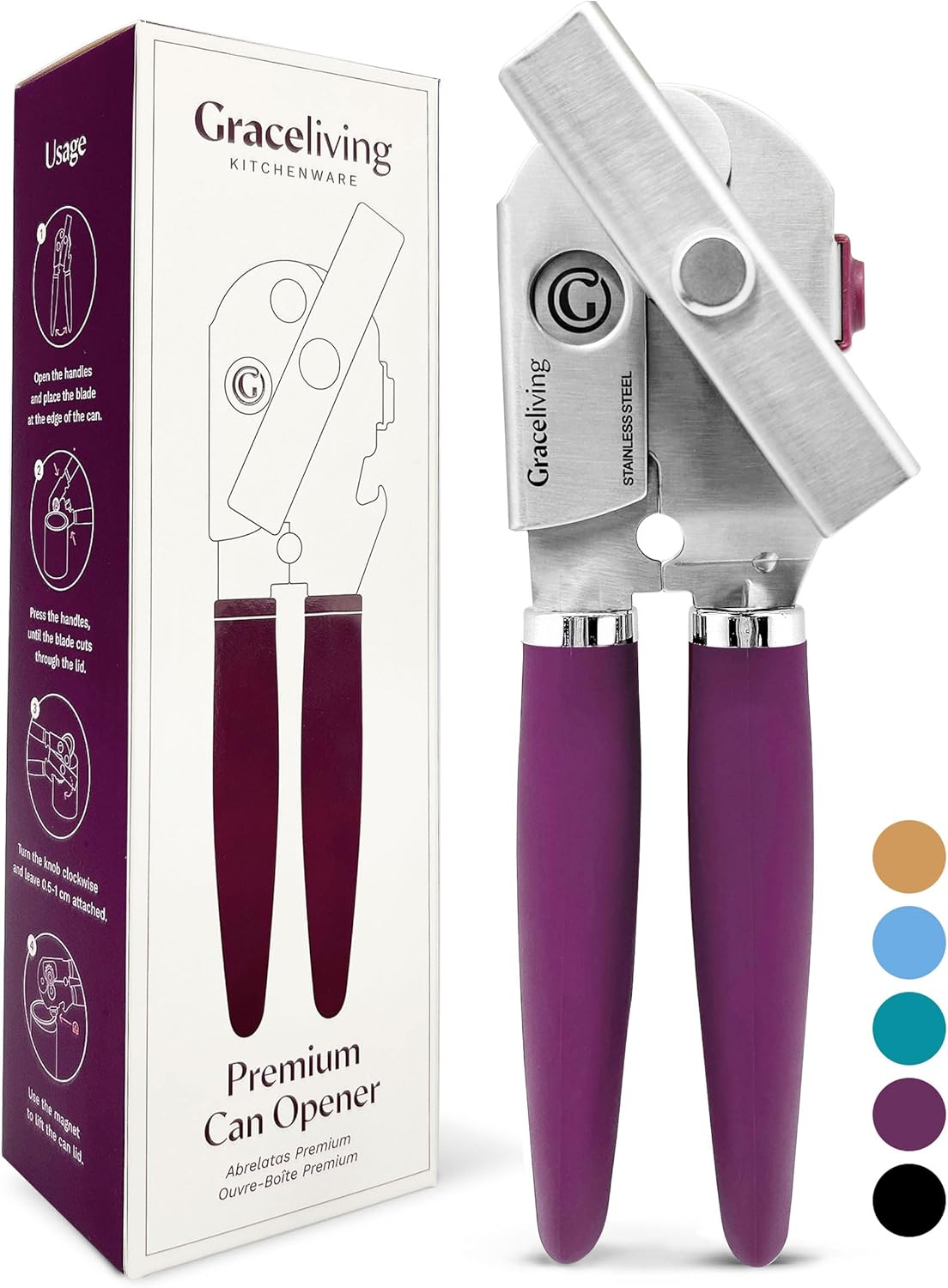
This Graceliving manual can opener is built for repeated kitchen use and designed to make opening cans easier for hands that need extra leverage. Its stainless steel gears and razor-sharp blade cut cleanly to reduce jagged edges, while a solid, weighted head helps keep the opener stable during use. The oversized, unbreakable knob turns smoothly through 360 degrees and the soft-touch non-slip handle provides comfortable grip for people with limited hand strength or stiffness. A strong magnet lifts lids away so you avoid touching sharp edges, and the integrated bottle opener adds a small convenience. The unit is promoted as lab-tested for 300+ uses and feels more durable than typical bargain openers, though it is still a manual tool and requires wrist rotation and some force on very tight or large cans. It is a practical, well-made option for home cooks who want a long-lasting, ergonomic manual opener rather than an electric model.
Best for: Buyers looking for a durable, ergonomic manual opener that prioritizes comfortable turning and a firm grip for everyday kitchen use and easier opening with arthritic or weak hands.
Less Ideal for: People who cannot rotate their wrist or need a fully hands-free solution should consider an electric or automatic opener instead.
- Stainless steel construction and precision gears for cleaner, more durable cutting
- Oversized smooth-turn knob reduces wrist strain during operation
- Soft-touch non-slip handle offers better grip and comfort for weak or arthritic hands
- Strong magnetic lid lifter keeps sharp lids off countertops and fingers
- Built-in bottle opener adds multifunction convenience
- Still requires manual wrist rotation and some force on stubborn cans
- Heavier, weighted head may be less convenient for travel or compact storage
Verdict: A sturdy, ergonomically designed manual can opener that eases turning and lid handling for buyers who want a long-lasting, comfortable non-electric solution.
OXO SteeL Can Opener 58081

| Material Type | Stainless Steel |
|---|---|
| Blade Material Type | Stainless Steel |
| Operation Mode | Manual |
| Included Components | Can Opener |
The OXO SteeL Can Opener is a straightforward manual opener built for comfortable, repeated use in the kitchen. It cuts cans with sharp stainless steel blades while the oversized turning knob and large handles with cushioned touch points reduce the hand effort and pressure required, which makes long or frequent opening tasks easier. The unit is ambidextrous for left- and right-handed use and includes a built-in bottle opener for occasional convenience. Because it is all-metal construction with a simple manual gearbox, it is durable and easy to rinse clean by hand, though it is not dishwasher safe. Compared with electric openers, it requires manual turning and some wrist motion, but the ergonomic knob and soft-grip handles noticeably lower strain for people with reduced grip strength. It is best for cooks who prefer a compact, durable tool that balances leverage and control without relying on power.
Best for: Buyers who prioritize reduced-hand-strain manual tools and want an ergonomic, durable can opener for regular kitchen use without electricity.
Less Ideal for: People seeking a fully hands-free or electric solution for severe arthritis or very limited wrist mobility should consider powered openers instead.
- Oversized knob reduces the torque needed to turn the opener
- Large cushioned handles absorb pressure and improve grip comfort
- Sharp stainless steel cutting blade for clean, reliable cuts
- Ambidextrous design usable by left- and right-handed cooks
- Built-in bottle opener adds a small convenience feature
- Requires manual turning and some wrist motion, so it is not fully hands-free
- Hand wash only; not dishwasher safe
Verdict: This OXO SteeL opener is a durable, ergonomically designed manual can opener that lowers hand strain for people who still prefer a nonpowered tool.
GoodCook Safe-Cut Can Opener

| Material Type | Stainless Steel |
|---|---|
| Blade Material Type | Stainless Steel |
| Operation Mode | Manual |
| Included Components | can opener |
The GoodCook Safe-Cut is a handheld manual can opener built around safety and simple everyday use. It uses a hardened stainless steel cutting blade and a thick guide wire to cut cans along the side so the lid is left smooth and can be reused as a temporary cover, and the guide wire holds the lid until you pivot the handle to release it into the trash. The ergonomic plastic handle and non-slip turn knob give a secure grip, which makes it easier to operate for people with limited hand strength or coordination. Because the cutting wheel never contacts the food, there is less risk of cross-contamination when opening messy cans. It is simple to clean and feels durable thanks to chrome construction, but as a manual opener it still requires wrist rotation and some force compared with electric or lever-style models. Overall it is a durable, safety-focused option for routine kitchen tasks where tidy lids and minimal contact matter.
Best for: Buyers seeking a safe, no-frills manual opener that minimizes sharp edges and contamination and who prioritize a secure grip and durable construction for everyday kitchen use.
Less Ideal for: People who cannot comfortably rotate a knob or who need a fully hands-free electric solution should consider powered can openers instead.
- Cuts cans to leave smooth edges so lids are safe to handle and can be reused
- Guide wire lifts and holds the lid for hands-free disposal
- Ergonomic handle and non-slip turn knob improve grip during use
- Stainless steel blade and chrome construction offer durability
- Cutting wheel does not contact food, reducing cross-contamination risk
- Requires manual wrist rotation and some hand strength compared with powered openers
- Plastic handle may feel less premium than all-metal lever designs
Verdict: A safety-focused manual can opener that keeps lids smooth and lifts them for hygienic, easier disposal, ideal for buyers who want a durable, easy-grip tool.
Ultrean Manual Can Opener

| Blade Material Type | Stainless Steel |
|---|---|
| Operation Mode | Manual |
| Unit Count | 1 Count |
The Ultrean Manual Can Opener is a simple, budget-friendly handheld opener that cuts smooth edges and doubles as a bottle opener. It uses a stainless steel cutting wheel and an oversized easy-turn knob so you can rotate the cutter around a lid with modest effort, and the soft-touch handle improves grip comfort during repeated use. Typical use is ripping open canned goods at the stove or campsite and popping bottle caps; its compact size makes it easy to store or carry. The smooth-edge cutting design reduces sharp lid burrs compared with older puncture-only openers, and the corrosion-resistant stainless parts help longevity. It is not an electric or geared assisted model, so users with very limited hand strength or severe arthritis may still find the turning action tiring, and the compact form offers less mechanical leverage than larger, crank-style openers. For the price it delivers reliable manual performance and a comfortable handhold for everyday kitchen tasks.
Best for: Buyers looking for a low-cost, durable manual opener with a comfortable handle who want a compact tool for everyday kitchen or travel use and prefer a smooth-edge cut.
Less Ideal for: People with severe arthritis or very limited hand strength who need an electric or geared-assist opener for near-effortless operation should consider assisted models instead.
- Stainless steel cutting wheel for cleaner, smooth-edge cuts
- Soft-touch ergonomic handle improves grip comfort
- Compact, lightweight design easy to store or pack for travel
- Includes oversized easy-turn knob for simpler manual operation
- Manual-only operation means it still requires moderate hand strength
- Smaller handheld form provides less mechanical leverage than larger crank openers
Verdict: A no-frills, budget-friendly manual can opener with an ergonomic handle and smooth-edge cutting that suits buyers who want a compact, reliable kitchen tool.
Zulay Kitchen Can Opener Z-3150

| Material Type | Stainless Steel |
|---|---|
| Blade Material Type | Stainless Steel |
| Operation Mode | Manual |
| Included Components | Can Opener |
This Zulay Kitchen manual can opener uses stainless steel cutting components and a large turn knob to open cans manually while the soft, slip-resistant handles reduce hand strain and improve grip. It is used like a traditional rotary can opener: position the blade, clamp the handles, and rotate the knob to cut around the lid, with the top doubling as a bottle opener for added convenience. The stainless steel construction promises durability and rust resistance for long-term use, and the comfortable handles make it easier to hold steady, which helps users who have reduced hand strength. The opener is best cared for by hand washing to maintain performance. It does not automate the cutting action, so people expecting an electric solution or zero-effort operation will need a different product, and repetitive use still requires some wrist rotation. For someone prioritizing a reliable, well-built manual opener that minimizes slipping and wears well over time, this performs very capably.
Best for: Buyers who want a durable, no-frills manual opener that emphasizes secure grip and long-lasting performance for frequent kitchen use and easier handling.
Less Ideal for: People who need a fully hands-free or electric solution for limited wrist mobility should choose an automatic can opener instead.
- Stainless steel blade and body for rust resistance and durability
- Soft, slip-resistant handles that improve grip and reduce hand strain
- Large turn knob provides mechanical advantage for easier rotation
- Built-in bottle opener adds extra functionality
- Manual operation still requires wrist rotation and some hand strength
- Recommend hand washing which may add a small care burden
Verdict: A sturdy, well-made manual can opener that prioritizes a comfortable, non-slip grip and durable stainless steel construction for reliable everyday use.
OXO Good Grips Manual Can Opener

| Material Type | Stainless Steel |
|---|---|
| Blade Material Type | Stainless Steel |
| Operation Mode | Manual |
| Unit Count | 1 Count |
The OXO Good Grips Manual Can Opener is designed to reduce hand strain while opening cans, using large cushioned handles that absorb pressure and a roomy turning knob that requires less grip force than basic openers. In everyday use you clamp the opener to the can, turn the oversized knob and the stainless steel cutting wheel slices the lid smoothly; the nonslip handles make it easier to keep control when hands are weak or sweaty. Notable features include the soft, ergonomically shaped handles that fit the palm, a sturdy stainless-steel blade for reliable cutting, and a built-in bottle opener for added utility. It is hand-wash recommended but the handle material is durable and provides a secure grip in wet conditions. The main limitation is that it is still a manual tool so users lacking almost any wrist rotation may prefer an electric option, and heavy use can eventually dull the cutting wheel though replacement or long-term durability is consistent with quality kitchen utensils.
Best for: Someone prioritizing a low-effort, well-reviewed manual opener that minimizes hand pressure and improves grip for arthritis or weak hands.
Less Ideal for: People with almost no wrist mobility or those who need fully hands-free operation should choose an electric or push-button opener instead.
- Large cushioned handles reduce pressure on the hands and improve grip
- Oversized turning knob makes cranking easier for users with limited strength
- Stainless steel cutting wheel provides smooth, reliable lid cutting
- Built-in bottle opener adds a simple extra function
- Nonslip handle material performs well when wet
- Still requires wrist rotation and manual force, so not suitable for very limited mobility
- Cutting wheel may dull over long-term heavy use
Verdict: If you want a proven, ergonomically designed manual can opener that greatly reduces hand strain for arthritis-prone hands, this OXO Good Grips model is an excellent choice.
KitchenAid Classic Can Opener

| Material Type | Stainless Steel |
|---|---|
| Blade Material Type | Stainless Steel |
| Operation Mode | Manual |
| Unit Count | 1 Count |
| Included Components | 1 can opener |
The KitchenAid Classic Can Opener is a straightforward manual opener built for everyday kitchen use and easier handling. It uses a razor-sharp stainless steel cutting wheel to pierce and slice cans cleanly while the oversized ergonomic handles give a broad, comfortable grip that reduces hand strain. The large turning knob provides positive purchase for steady, low-effort rotation, which helps users with limited hand strength. A built-in bottle opener adds simple multifunction convenience without taking extra space. The opener is hand-wash recommended and feels solid and durable thanks to stainless steel construction, though it requires manual effort and does not offer electric assistance. It is best for those who want a reliable, no-frills tool that emphasizes comfort and longevity rather than fancy mechanisms.
Best for: Buyers who prioritize an easy-grip, durable manual opener and want a tool designed to reduce hand strain during regular kitchen use.
Less Ideal for: People who need a fully motorized or automatic solution for opening cans without any manual force should consider electric can openers instead.
- Razor-sharp stainless steel cutting wheel for smooth, clean cuts
- Oversized ergonomic handles that reduce hand fatigue
- Large turning knob offers secure grip and easier rotation
- Built-in bottle opener adds useful multifunctionality
- Durable stainless steel construction for long-lasting use
- Manual operation still requires physical turning effort
- Hand-wash recommended rather than dishwasher safe
Verdict: Choose this KitchenAid can opener if you want a simple, durable manual tool with oversized handles and a large knob that make opening cans noticeably easier for sensitive or weak hands.
Choosing the Right Manual Can Opener for Arthritis: Key Factors to Consider
Grip Design and Padding
How the handle feels in your hand directly affects comfort during repeated use. Look for wide, contoured handles with a soft, non-slip coating that reduce pressure points and distribute force across the palm rather than concentrating it on the fingers.
Padding helps cushion tender joints and can prevent slippage when your hands are damp. Textured or rubberized surfaces improve purchase without requiring a tight pinch grip, which is important when grip strength is limited. Consider handle diameter as well; too thin a handle forces the fingers into an awkward curl, while too thick a handle can be hard to wrap around for smaller hands.
Mechanical Advantage and Required Force
The gearing and leverage determine how much effort you must apply to cut through a can. Look for gear ratios or elongated handles that provide a mechanical advantage, reducing the torque your wrist and fingers must supply.
Lever-based designs, crank handles with long reach, or compound gearing can substantially lower the force needed. However, very long handles may be awkward to position in tight spaces, so balance leverage with practical size for your typical kitchen environment. Models that require minimal repeated turns are preferable for users with fatigue or limited endurance.
Cut Quality and Edge Safety
A clean cut that leaves a smooth lid edge minimizes the risk of accidental cuts when handling the removed lid. Some openers work by cutting the side of the can, producing a safer, less jagged lid; others leave a sharp rim that requires extra caution.
Consistent, burr-free performance is important because catching on a rough edge can result in reflexive gripping or shaking that aggravates arthritis pain. Also consider whether the design allows removal of the lid without manually touching the cut edge, such as models that leave the lid attached or lift it out.
Stability and Ease of Positioning
Keeping the opener aligned with the can without needing fine motor adjustments reduces frustration and the number of corrective motions. Features like non-slip feet on tabletop models, magnetic catches, or wide clamp surfaces help maintain contact without repeated repositioning.
Stability also affects perceived effort. If an opener shifts mid-turn, you must apply more force and make corrective movements that stress joints. Prioritize designs that lock or anchor to the can securely with minimal hand pressure required to set them up.
Maintenance, Cleaning, and Corrosion Resistance
Tools that are easy to clean and resist rust maintain smooth operation and require less effort over time. Food debris and corrosion increase friction and can demand higher force to operate the mechanism.
Look for stainless steel cutting wheels, sealed gearing, or detachable parts that allow rinsing. If an opener cannot be cleaned thoroughly, gummed-up mechanisms will accelerate wear and make each use harder, which is especially problematic for people who already strain to open cans.
Size, Storage, and Kitchen Compatibility
Practical size and storage affect daily usability. A compact opener stores easily and may be simpler to maneuver in small kitchens, while a larger, tabletop unit can provide better leverage but needs a dedicated spot.
Consider how you prepare food and the typical cans you open. Heavy-duty models handle large cans with fewer turns, but they take up more counter space. Balance storage constraints against the ergonomic benefits you need for comfortable, repeatable use.
How Different Manual Designs Reduce Hand Strain
Manual can openers come in several mechanical layouts, and each reduces strain in different ways. Traditional wheel-and-crank units concentrate force in the fingers and wrist, while models with larger, padded handles spread load across the palm and allow for a gentler grip.
Lever-style openers or those with compound gearing reduce the number of turns needed and the peak torque per turn. Tabletop openers fix the can and use a larger arm to do the cutting, removing the need to pinch or twist entirely. Choose the design that matches the type of movement you can perform comfortably.
- Crank openers: familiar motion but may need more wrist rotation.
- Long-handle openers: more leverage, fewer turns, larger grip area.
- Tabletop or mounted units: minimal wrist movement, highest stability.
- Side-cutting designs: often produce safer, smoother edges.
Preparing to Use a Manual Can Opener Safely
Set up on a flat, non-slip surface so the can does not shift mid-turn. Wiping the can edge and the opener contact points can reduce initial slippage and make the first rotation easier. Position your body so you do not have to reach awkwardly; bringing the can closer to your torso reduces shoulder strain.
If your hands tire quickly, open cans in stages. Give your hand a short rest between turns or rotate the unit with your stronger hand while stabilizing with the other. Use any available support such as a table edge, counter lip, or non-slip mat to steady the can.
- Anchor the can on a non-slip mat.
- Use the stronger hand for turning when possible.
- Rest briefly between sequences of turns to avoid fatigue.
Cleaning and Caring for a Manual Can Opener
Regular cleaning preserves smooth operation and keeps required force low. Rinse away food residue after each use and dry thoroughly to prevent rust. If the design allows, detach cutting parts or clean with a small brush to remove trapped food particles.
Lubricating pivot points sparingly with a food-safe oil can reduce friction and improve longevity. Replace units that show worn or bent cutting wheels, as these increase the number of turns and the effort you must apply.
- Rinse and dry after use to avoid corrosion.
- Use a small brush to remove trapped debris.
- Apply a food-safe oil to pivots if operation becomes stiff.
Adapting Your Kitchen Routine
If manual opening remains difficult despite an ergonomic tool, adjust meal prep to reduce frequent can opening. Pre-open multiple cans while your hands are rested or prepare meals that use fewer canned ingredients when joint pain flares. Consider transferring contents to easy-pour containers that limit repeated handling.
Small environmental changes help too. Keep frequently used openers in an easy-to-reach spot, and store them vertically or in a drawer with padding so you can grab them without fiddling. These habits reduce extra motion that can aggravate arthritis.
- Open cans in batches when your hands feel strongest.
- Store your opener close to where you cook to avoid awkward reaches.
- Switch to containers with pull-tabs or pre-portioned options when possible.
When to Consider Alternative Opening Methods
Manual openers work well for many people with arthritis, but there are situations where alternatives may be more appropriate. If you cannot safely grip or rotate any manual device, or if repeated use causes significant pain, look into non-manual solutions built to remove wrist motion entirely.
Assess the balance between independence and comfort. Tools that require minimal setup but eliminate manual torque can be worthwhile if they reduce pain and lower the risk of dropping the can or device during use.
- Consider alternatives when manual force remains painful despite ergonomic features.
- Use alternatives as a temporary aid during flares or recovery periods.
- Evaluate space and storage before introducing a larger, non-manual device.
How We Chose the Best Manual Can Opener for Arthritis
We focused on features that directly affect comfort and effort for people with arthritis. Primary evaluation criteria included grip ergonomics and padding, the amount of hand force required to operate the cutting mechanism, and whether the design minimizes wrist movement. We also assessed cutting action and safety, including how cleanly the lid separates and whether the opener produces sharp edges. Durability and build quality were examined because a unit that wears out quickly can increase required effort over time. Finally, we considered mounting and stabilization features, such as extra leverage arms or rotating handles that reduce torque. Products were excluded if they relied primarily on strong pinch grips, required excessive wrist rotation, or used fragile plastic gearing that accelerates wear. We prioritized simple mechanical designs that make practical tradeoffs for lower operating force while still providing reliable, repeatable cutting performance. Our selection aligns with scoring metrics that reflect real-world use for people with limited hand strength or joint pain.
Our full evaluation process is outlined in our review methodology.
FAQ
Can a manual can opener really reduce arthritis pain?
Often it can. Devices with larger, padded handles and better mechanical advantage reduce the force and wrist rotation required, which can lower pain during use. Individual results vary depending on the location and severity of joint symptoms.
Are tabletop openers a good option for limited hand strength?
Usually yes. Tabletop openers anchor the can and use a larger arm to perform the cut, removing most wrist and finger torque. They require some counter space but often provide the lowest hand force of manual designs.
How do I clean a manual can opener to keep it working smoothly?
Rinse the cutting wheel and handle after each use to remove food debris, dry thoroughly to avoid rust, and brush out trapped particles. If the opener allows, detach parts for a more thorough clean and apply a small amount of food-safe oil to pivot points if operation becomes stiff.
Will a bigger handle always be easier to use?
Not always. A larger handle spreads pressure and can be easier to hold, but if it is too large for your hand it may be hard to close around. Aim for a comfortably thick, contoured handle with a soft, non-slip surface rather than simply the largest size available.
Should I avoid openers that cut from the top rim?
It depends. Top-cutters that remove the lid entirely can be faster but sometimes produce sharper edges that must be handled carefully. Side-cutting designs often leave a smoother lid edge and are safer to handle, so they may be preferable for users concerned about sharpness.
Final Verdict
When choosing a manual can opener for arthritis, prioritize ergonomics and mechanical advantage over looks. Focus on a well-padded, contoured grip, a design that reduces required hand force, and stable contact with the can to minimize corrective movements. Expect tradeoffs: the most comfortable devices may be larger or require a bit more storage space, while compact options can be easier to store but may demand more wrist motion. Pick the style that matches your typical cooking habits and available space, and maintain the tool to preserve smooth operation. With the right balance of grip, leverage, and durability, most people with joint pain can find a manual can opener that restores independence and reduces daily discomfort.