
Note: This article contains affiliate links. If you click on these links and make a purchase, we may earn a small commission at no extra cost to you. This helps support our research and content. Read our full affiliate disclosure here.
If you bake cookies regularly, the right stand mixer makes mixing stiff dough faster and less tiring. A mixer built for cookie dough must deliver steady mixing power, a durable paddle and planetary action that handle thick, sticky batters without overheating. This guide covers seven shortlisted stand mixers chosen for home bakers who need reliable performance for cookie recipes of varying batch sizes. We evaluate motor strength, bowl capacity, durability and ease of cleanup to help you pick a model that fits your typical batch size and schedule. Read on for practical buying guidance and the criteria we used to select these top picks.
Top Picks at a Glance
| Best Overall The best all-around choice for most situations | Cuisinart Stand Mixer SM-50BC |  |
| Best Quality Built to a higher standard if you want something more solid | KitchenAid Artisan 5-Quart Mixer |  |
| Best Value The sweet spot between price and what you get | CUSIMAX Stand Mixer 5-Qt |  |
| Best Budget The cheapest option that still gets the job done reliably | OLIXIS 4.2 Qt Stand Mixer |  |
| Top Rated A top-rated pick with lots of positive feedback | KitchenAid Classic Series K45SS |  |
| Most Popular A crowd favorite that many people choose with confidence | Aucma Stand Mixer 6.5QT |  |
| Best Seller A high-volume bestseller chosen again and again | Kitchen in the box 3.2QT Stand Mixer | 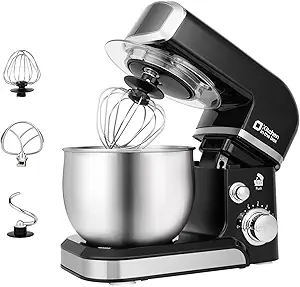 |
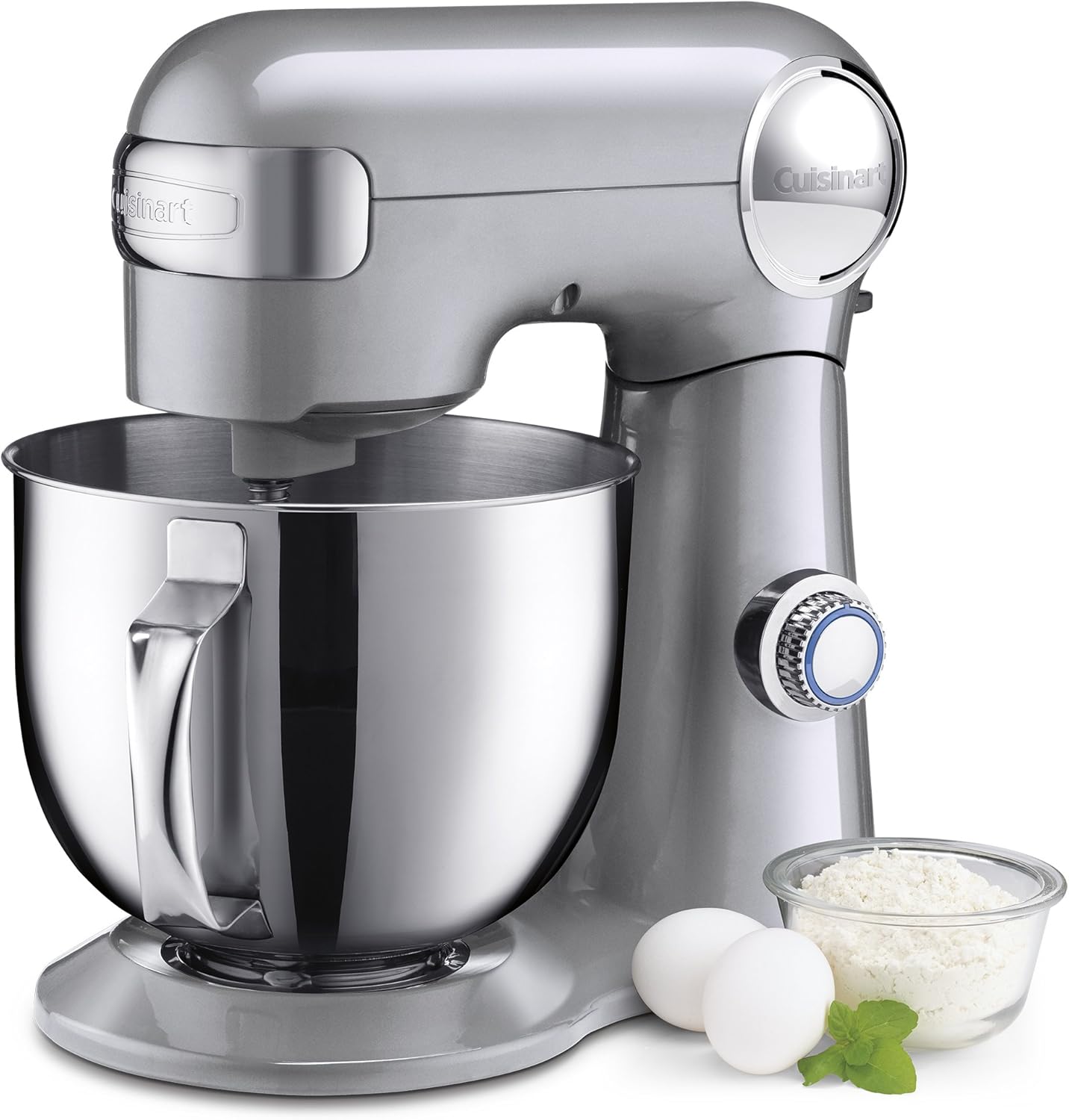
Cuisinart Stand Mixer SM-50BC
| Capacity | 5.5 quarts |
|---|---|
| Wattage | 500 watts |
| Number of Speeds | 12 |
| Controls Type | Knob |
| Voltage | 110 volts |
The Cuisinart SM-50BC is a straightforward, metal-bodied tilt-head stand mixer built for everyday home baking. It pairs a 500-watt motor with a 5.5-quart stainless steel bowl and three basic tools — whisk, flat paddle, and dough hook — so it handles whipping, creaming, and mixing cookie dough, batters, and heavier mixes without extra complexity. The 12-speed knob gives fine control from slow stir to high whip, and the included splash guard with pour spout keeps counters cleaner when adding ingredients. Metal construction and a dishwasher-safe bowl and attachments make cleanup and durability practical for regular use. The unit accepts Cuisinart optional attachments such as a pasta roller and meat grinder if you later want to expand its capabilities. Limitations are its tilt-head design, which can be slightly less stable for very large or heavy batches compared with some bowl-lift commercial-style mixers, and it lacks the very highest horsepower of premium pro models, so extremely dense, large-volume doughs may push it near capacity.
Best for: Home bakers who want a capable, no-frills mixer that handles cookie dough, batters, and regular baking tasks with reliable performance and easy cleanup.
Less Ideal for: Commercial bakers or home cooks who regularly make very large or extremely dense doughs and need a heavier-duty, bowl-lift or higher-horsepower machine.
- 500-watt motor that handles typical home baking tasks reliably
- 5.5-quart stainless steel bowl suitable for family-sized cookie batches
- Twelve speeds provide precise control from gentle mixing to high whipping
- Includes whisk, dough hook, paddle, and splash guard with pour spout
- Die-cast metal construction and dishwasher-safe accessories improve durability and cleanup
- Tilt-head design is less ideal for very large or heavy batches compared with bowl-lift mixers
- Not as powerful as high-end professional mixers for continuous heavy kneading
Verdict: A solid, versatile home stand mixer that gives balanced power, a roomy 5.5-quart bowl, and easy-to-use controls ideal for cookie dough and everyday baking.
KitchenAid Artisan 5-Quart Mixer

| Capacity | 5 quarts |
|---|---|
| Wattage | 325 watts |
| Number of Speeds | 10 |
| Included Components | Bowl, flat beater, dough hook, 6-wire whip, pouring shield |
| Voltage | 120 volts |
The KitchenAid Artisan 5-Quart Tilt-Head Stand Mixer is a heavy-duty countertop mixer designed for frequent baking tasks like cookie dough and bread prep. Its metal construction and powerful 325-watt motor deliver steady mixing across 10 speeds, and the tilt-head design makes it easy to add ingredients or swap the included flat beater, coated dough hook, and 6-wire whip. The 5-quart stainless steel bowl handles large batches—KitchenAid quotes up to nine dozen cookies with the flat beater—so it can knead and mix dense cookie dough without constant babysitting. The pouring shield helps reduce mess when adding dry ingredients. The mixer also accepts hub-powered attachments for grinders, pasta makers, and more, extending utility beyond mixing. Trade-offs are that the tilt-head layout can limit access when using very large bowls or heavy dough compared with bowl-lift models, and the unit is substantial on the counter, so it needs a stable spot during use.
Best for: Bakers who prioritize consistent performance and durability for frequent large-batch cookie and dough work and want a mixer that accepts a wide range of optional attachments.
Less Ideal for: People with very limited counter space or those who regularly mix extremely heavy commercial-scale doughs that benefit from a bowl-lift design should consider other options.
- Durable metal construction built for frequent, heavy use
- 325-watt motor with 10 speeds covers stirring to whipping
- 5-quart stainless steel bowl handles large cookie batches
- Includes flat beater, dough hook, 6-wire whip, and pouring shield
- Tilt-head design makes adding ingredients and swapping attachments easy
- Tilt-head design offers less clearance than bowl-lift models for very large or heavy batches
- Relatively heavy and takes significant counter space
Verdict: Choose this KitchenAid Artisan if you need a durable, high-performance 5-quart mixer that handles large cookie batches reliably and accepts a wide range of attachments.
CUSIMAX Stand Mixer 5-Qt

| Wattage | 650 watts |
|---|---|
| Number of Speeds | 8 |
| Capacity | 5 liters |
| Controls Type | Touch |
The CUSIMAX stand mixer is designed for everyday home baking, handling tasks from whipping egg whites to kneading cookie and bread dough. Its 650W motor and metal gear system provide steady power, and the tilt-head with a grip handle makes fitting the 5-quart stainless steel bowl and attachments straightforward. The mixer includes a dough hook, flat beater, and wire whip, and the splash guard with an access port keeps counters cleaner when adding ingredients. Users can set one of eight speeds and a 15-minute timer on the digital touch panel for more precise mixing without constant supervision. Non-slip feet improve stability during heavy-duty mixing. Limitations include a plastic exterior that may feel less durable than metal-bodied mixers and a 5-quart capacity that, while ample for most cookie dough batches, may be tight for very large batches or heavy, high-hydration doughs.
Best for: Home bakers who want a capable, easy-to-use mixer for regular cookie and bread baking and who value digital controls and convenient features for consistent results.
Less Ideal for: Commercial bakers or users who routinely make very large batches or need a heavier all-metal build for continuous daily use.
- 650W motor and metal gear system for steady mixing power
- Digital touch controls with 8 speeds and 15-minute timer for precise, repeatable mixing
- Includes dough hook, flat beater, and wire whip for common baking tasks
- 5-quart stainless steel bowl and splash guard with access port reduce mess
- Tilt-head with grip handle and non-slip feet make attachment changes and operation easier
- Plastic housing instead of all-metal construction may feel less heavy-duty
- 5-quart capacity can be limiting for very large or commercial-scale batches
Verdict: A practical, feature-focused 5-quart mixer that delivers reliable power and digital controls for home bakers making cookie dough.
OLIXIS 4.2 Qt Stand Mixer

| Capacity | 4.2 quarts |
|---|---|
| Wattage | 300 watts |
| Number of Speeds | 10 |
| Noise Level | 60 db |
| Voltage | 120 volts |
The OLIXIS 4.2 Qt Stand Mixer is a compact tilt-head mixer aimed at home bakers who need a capable machine for everyday mixing and dough work. Its 300W motor and ten speed settings let you handle tasks from whipping meringue to kneading small batches of cookie or pizza dough, and the included dough hook, whisk, and flat beater cover standard baking needs. The removable stainless steel bowl and anti-skid base make it stable during mixing, and the splash lid reduces mess. Noise is rated around 60 dB, so it is reasonably quiet for countertop use. Practical extras include a multi-function bowl cover that folds in measuring and egg-separating tools to save counter space. The mixer is modestly sized and light enough to store when not in use, but the 4.2-quart capacity limits very large batches and heavy commercial kneading. Controls are by knob, which is simple but not digital. For home cookie dough use this mixer balances useful power and basic features at a budget-oriented level.
Best for: Bakers on a budget who want a compact, ready-to-use stand mixer for small to medium cookie dough batches and everyday home baking tasks.
Less Ideal for: People who make large one-batch cookie or bread loaves regularly or need commercial-grade heavy-kneading power should consider larger-capacity or higher-torque models.
- 300W motor with 10 speeds covers whipping, mixing, and light-to-moderate dough kneading.
- Includes dough hook, whisk, and flat beater so you can start baking right away.
- Removable stainless steel bowl and anti-skid base improve stability and cleanup.
- Compact, tilt-head design and multi-function bowl cover save counter space and add practical tools.
- 4.2-quart capacity may be small for large batches or frequent heavy doughs.
- Knob controls lack presets or digital timers for precise repeatability.
Verdict: A budget-friendly, compact stand mixer that gives home bakers the power and accessories needed to make small to medium cookie dough batches reliably.
KitchenAid Classic Series K45SS

| Capacity | 4.5 quarts |
|---|---|
| Wattage | 275 watts |
| Number of Speeds | 10 |
| Included Components | Flat beater, dough hook, 6-wire whip |
The KitchenAid Classic Series K45SS is a straightforward, no-frills stand mixer built around a sturdy all-metal frame and a 4.5-quart stainless steel bowl. It is designed for mixing, whipping, and kneading typical home-baking batches such as cookie dough, batters, and whipped cream using the included coated flat beater, dough hook, and wire whip. The tilt-head makes adding ingredients and swapping attachments simple, while the 10-speed control covers everything from gentle stirring to faster whipping. The motor and direct-drive transmission are engineered for reliable, consistent performance in frequent home use, and the mixer accepts KitchenAid hub-powered attachments for added versatility. Practical limitations are its mid-size 4.5-quart capacity, which is ideal for home batches but smaller than some commercial or larger-capacity models, and the tilt-head design can limit access when working with very tall bowls or large doughs. For cookie dough the mixer offers excellent beater-to-bowl coverage and steady kneading power, making it a dependable choice for home bakers focused on long-term reliability.
Best for: Home bakers who prioritize a reliable, long-lasting mixer that handles everyday cookie dough and batch baking without unnecessary extras.
Less Ideal for: Users who regularly mix very large commercial-size batches or need the extra clearance and capacity of a bowl-lift or professional-grade mixer.
- Durable all-metal construction designed for long-term use
- Good beater-to-bowl coverage for efficient mixing and kneading
- 10-speed control for a wide range of mixing tasks
- Includes flat beater, dough hook, and wire whip for common baking jobs
- Tilt-head design makes adding ingredients and swapping tools simple
- 4.5-quart bowl may be small for very large batches
- Tilt-head design offers less clearance than bowl-lift mixers for very tall attachments
Verdict: A dependable, metal‑built 4.5‑quart mixer that reliably handles home cookie dough and everyday baking tasks.
Aucma Stand Mixer 6.5QT

| Wattage | 660 watts |
|---|---|
| Voltage | 120 volts |
| Number of Speeds | 6 |
| Capacity | 6.5 quarts |
The Aucma 6.5QT stand mixer is built for hands-free mixing of everything from whipped egg whites to stiff cookie and bread dough. Its 660W pure-copper motor and six speed settings plus pulse give enough torque for heavy cookie dough batches, while the tilt-head design and dual-handled stainless bowl make loading and removing dough straightforward. The package includes a whisk, beater, and dough hook, and the splash guard with an access hatch helps keep additions tidy during mixing. Controls are simple knob-based settings and a blue LED power indicator shows when it is on. Practical benefits include dishwasher-safe attachments and non-slip feet to keep the mixer steady while kneading. Limits to note are basic plastic exterior construction compared with higher-end metal housings and a noise level listed around 76 dB which can be noticeable during long kneading cycles, but not atypical for this power class.
Best for: Bakers who value reliable mixing power and want a larger-capacity mixer that handles frequent cookie dough batches without needing a pro-grade machine.
Less Ideal for: Those seeking a premium all-metal commercial build or a whisper-quiet appliance for open-plan living should consider higher-end alternatives.
- Powerful 660W pure-copper motor suitable for thick cookie and bread dough
- Large 6.5 quart stainless steel bowl with dual handles for bigger batches
- Includes whisk, beater, and dough hook so you can mix, whip, and knead out of the box
- Dishwasher-safe attachments and splash guard make cleanup and ingredient additions easier
- ABS plastic housing is less durable-feeling than metal-bodied mixers
- Noise around 76 dB during operation can be noticeable in small kitchens
Verdict: Aucma’s 6.5QT mixer delivers the motor strength and bowl capacity most home bakers need to mix large cookie dough batches reliably.
Kitchen in the box 3.2QT Stand Mixer

| Capacity | 3.2QT |
|---|---|
| Power | 300 watts |
| Number of Speeds | 6 |
| Included Components | Whisk, Beater, Dough Hook |
This Kitchen in the box stand mixer is a lightweight, space-saving unit built around a 3.2QT stainless steel bowl and a 300W motor with six speed settings. It uses a tilt-head design for easy access to the bowl and attachments, and includes an aluminum dough hook, flat beater, and stainless steel whisk; a transparent anti-splash lid and four suction feet help reduce mess and movement during mixing. In practice it handles cookie dough, batters, whipped cream, and small bread dough batches well for one- to two-person households, and the planetary rotation improves ingredient incorporation. The small bowl and modest power mean it is not suited for very large or heavy doughs — expect longer kneading times and potential strain if overloaded. Attachments are removable and labeled dishwasher-safe for easier cleanup. For buyers who need a compact mixer for everyday cookie and dessert prep, it offers sensible features and simple controls, but those baking large batches or heavy artisan loaves should consider a larger-capacity, higher-power model instead.
Best for: Home bakers who prioritize a compact, easy-to-store mixer for everyday cookie batches and small dough jobs and want a straightforward, low-risk appliance.
Less Ideal for: Serious bakers who routinely mix large batches or heavy, high-hydration artisan doughs should choose a higher-capacity, more powerful stand mixer.
- Compact, lightweight design saves counter and storage space
- Includes three common attachments: dough hook, flat beater, and whisk
- Transparent anti-splash lid and tilt-head for easier access and less mess
- Four suction feet keep the mixer steady during mixing
- Dishwasher-safe accessories simplify cleanup
- 3.2QT bowl and 300W motor limit capacity and heavy-duty dough performance
- Not intended for large batches or professional baking use
Verdict: A compact, user-friendly 3.2QT mixer that reliably handles everyday cookie dough and small baking tasks for space-conscious home bakers.
Choosing the Right Stand Mixer for Cookie Dough: Key Factors to Consider
Motor Power and Torque
Strong, sustained motor power matters because cookie dough is dense and can stall weaker motors. Look for mixers rated for kneading or heavy dough rather than only light batters. Higher torque helps the paddle drive through sticky ingredients without slowing, which shortens mix time and reduces strain on internal gears.
Motor cooling and ventilation also affect real-world performance. A mixer with better heat dissipation is less likely to need cool-down breaks during multiple batches. If you bake several dozen cookies in one session, motor durability and continuous power are critical to avoid interruptions and premature wear.
Bowl Capacity and Shape
Bowl size determines how many cookies you can mix at once and how much room ingredients have to move. Smaller bowls are fine for singles or small households, but larger bowls accommodate family-sized batches or dough that expands during mixing. The bowl shape influences how well ingredients fold in; rounded bottoms and proper clearance keep dough from clinging to the rim and ensure even mixing.
Consider both capacity and ergonomics. A very large bowl is useful for bulk baking but adds weight and may be harder to maneuver when adding mix-ins. Choose a capacity that matches your typical recipe yield to minimize wasted space and improve mixing consistency.
Mixing Action and Attachment Fit
How the mixer moves and how attachments contact the bowl affect dough texture and uniformity. Planetary mixing action that sweeps the bowl surface offers more consistent incorporation than single-point mixing. Attachment geometry, especially the paddle or dough hook design, matters for preventing overmixing and for scraping sticky dough off the sides.
Also check how securely attachments lock in place and whether the tilt or lift head provides enough clearance for easy attachment changes. A paddle that mimics hand-mixing action will produce better cookie texture and make it easier to fold in chips or nuts without deflating dough.
Durability and Construction
Durable construction extends a mixer's useful life, especially under the stress of heavy cookie dough. Metal gears, reinforced housings and robust attachment points handle long-term torque better than plastic components. The quality of the hinge, locking mechanisms and motor mount also influences how well a mixer stands up to repeated use.
Consider warranty length and serviceability. Mixers designed for repair or with replaceable parts reduce long-term ownership costs. Durable finishes and corrosion-resistant bowls are practical for kitchen environments where frequent cleaning and occasional spills occur.
Speed Controls and Usability
A clear, responsive speed control lets you start slow to combine ingredients without splatter, then increase speed to fully develop dough. A wide, well-spaced range of speeds is helpful for moving between gentle folding and more aggressive mixing operations like creaming butter and sugar.
Ergonomic controls, easy-to-read markings and smooth transitions between speeds reduce mistakes. Features such as a soft-start function or pulse mode can prevent ingredient launch and give you more control when adding mix-ins.
Ease of Cleaning and Maintenance
Cookie dough can be sticky and messy, so attachment and bowl cleanup is a frequent task. Removable bowls and dishwasher-safe attachments save time. Smooth, rounded surfaces in the mixer head and base prevent dough buildup in crevices.
Consider how easy it is to access and clean vents or underside areas that might collect flour. Simple, tool-free disassembly for routine maintenance and clear manufacturer cleaning guidance make regular upkeep straightforward and reduce the risk of food residue affecting performance.
Batch Size Strategies for Cookie Baking
Match mixer capacity to how many cookies you typically make in a session. If you bake for a small household, a medium bowl is usually the most efficient. For holiday baking or large batches, prioritize a larger capacity so you can mix full recipes without dividing them.
When working with large batches, staggered mixing can protect the motor. Mixing in two smaller, evenly measured batches reduces strain and can improve uniformity if your mixer is not rated for continuous heavy loads.
- Small batches: faster cleanup, less storage space
- Medium batches: best balance for most home bakers
- Large batches: choose higher torque and ventilation
Attachment Choices That Matter
For cookie dough, a flat paddle and a sturdy dough hook are the most useful attachments. The flat paddle excels at creaming butter and sugar and folding in chips, while the dough hook handles very stiff dough when recipes call for heavier kneading.
Look for attachments with good scrape geometry or an included scraper paddle. These reduce the need to stop and hand-scrape the bowl, keeping mixing continuous and consistent.
- Flat paddle: creaming and folding
- Dough hook: dense dough and kneading
- Whisk: for lighter batters and aeration
Noise and Heat Management
Mixers vary widely in noise output and heat buildup. If you bake in an open-plan kitchen or during early mornings, noise level can be an important comfort factor. High-power motors often run louder but can finish jobs faster, reducing overall runtime.
Heat buildup affects performance on long runs. Look for mixers with adequate ventilation and thermal protection to prevent automatic shutdowns during extended mixing. Breaks between batches help but a well-cooled motor improves workflow and reliability.
- Higher torque often means more noise but shorter run times
- Good ventilation prevents frequent cool-down breaks
- Thermal protection safeguards motor longevity
Counterfootprint and Storage
Stand mixers occupy permanent counter space or require convenient storage. Consider where the mixer will live when not in use. Heavier, larger mixers offer stability during heavy dough mixing but are harder to move and store.
If counter space is limited, prioritize a compact footprint or a model that is easy to lift into a cabinet. Balance stability needs against how often you will actually use the mixer; frequent bakers benefit from keeping it accessible.
- Larger base = more stability, less portability
- Compact models save storage space but may trade capacity
- Consider clearances for tilt or lift head styles
Simple Maintenance to Extend Lifespan
Routine cleaning and basic maintenance keep a mixer running smoothly. Wipe down exterior surfaces after each use, clean attachments promptly to prevent residue buildup and periodically check fasteners and attachment seals for wear.
Follow any recommended break-in or usage guidance to avoid excess strain early in the life of the mixer. Replacing worn gaskets or seals when needed and keeping vents clear of flour will extend service life and protect motor performance.
- Clean attachments immediately after use
- Inspect moving parts periodically for wear
- Keep vents and motor housing free of flour and dust
How We Chose the Best Stand Mixer for Cookie Dough
We focused on attributes that directly affect cookie dough performance and day-to-day baking reliability. Core evaluation criteria included motor torque and sustained power to handle dense dough without bogging down; bowl capacity and shape to match typical cookie batch sizes; mixing action and attachment design to ensure even incorporation with minimal overworking; and build quality plus ventilation to resist overheating during extended use. We also considered usability factors such as speed control range and intuitive settings, accessory interchangeability for common cookie tasks, and straightforward cleaning and maintenance. Long-term durability indicators like metal gear housings or reinforced attachment points were weighted more heavily than cosmetic features. We excluded specialty countertop appliances not designed for heavy dough and any models lacking standard safety features or reliable ventilation. The end result is a selection tailored to home bakers seeking dependable mixers for cookie dough, emphasizing practical performance metrics and everyday usability.
Our full evaluation process is outlined in our review methodology.
FAQ
What mixer power is enough for cookie dough?
For most home cookie recipes, a mixer with moderate to high torque is preferable. Look for motors specified for heavy-duty or dough-capable tasks rather than only light mixing. Higher wattage and torque ratings generally correlate with better handling of dense dough.
Can I use a paddle attachment for all cookie doughs?
The paddle is ideal for most cookie tasks, including creaming and folding in mix-ins. Very stiff doughs that require kneading benefit from a dough hook, while light batters use a whisk. Choosing the right attachment prevents overworking or under-mixing.
How much bowl capacity do I need for holiday batches?
If you regularly bake large holiday batches, pick a mixer with a larger bowl so you can mix full recipes without splitting them. A larger bowl reduces splatter and allows for thorough mixing of higher-volume doughs.
Is a metal gear housing important for cookie mixing?
Metal gear housings and reinforced attachment points increase durability when mixing heavy dough. They resist wear from repeated torque and are a good indicator of long-term reliability for frequent bakers.
How should I clean sticky dough from attachments?
Remove attachments promptly and soak them briefly in warm, soapy water to loosen residue, then scrub with a nonabrasive brush. If attachments are dishwasher-safe, use the dishwasher for convenience, but check manufacturer guidance for high-temperature cycles.
Final Verdict
Choosing the right stand mixer for cookie dough means balancing motor strength, bowl size and mixing action against your typical batch size and kitchen habits. Prioritize sustained torque and a bowl that fits your recipe yields to avoid repeated small batches or motor strain. Durable construction and easy-to-clean attachments make regular baking less work and extend the mixer's lifespan. Ultimately, pick a mixer that matches how often and how much you bake. If you bake large quantities or dense doughs often, favor torque and ventilation. For occasional baking, a well-balanced mid-size model with helpful attachments will deliver consistent cookie results without excess bulk.