
Note: This article contains affiliate links. If you click on these links and make a purchase, we may earn a small commission at no extra cost to you. This helps support our research and content. Read our full affiliate disclosure here.
If you bake bread, pizza, or enriched doughs regularly, the right stand mixer makes kneading faster, gentler, and more consistent than handwork alone. You want a machine that develops gluten without overheating the dough, runs reliably under heavy loads, and has the bowl space and attachments for the recipes you use most. This guide lists seven shortlisted stand mixers that excel at kneading dough and explains the practical tradeoffs to consider. Below are our top picks chosen for dough handling, durability, and ease of use, followed by detailed buying factors and answers to common questions to help you pick the best fit for your baking routine.
Top Picks at a Glance
| Best Overall The best all-around choice for most situations | Cuisinart Stand Mixer SM-50 | 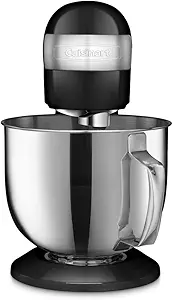 |
| Best Quality Built to a higher standard if you want something more solid | Bosch Universal Plus 6.5-Qt Mixer |  |
| Best Value The sweet spot between price and what you get | Hamilton Beach 4-Quart Stand Mixer |  |
| Best Budget The cheapest option that still gets the job done reliably | Dash Everyday Stand Mixer |  |
| Top Rated A top-rated pick with lots of positive feedback | KitchenAid Classic Series K45SS 4.5-Qt |  |
| Most Popular A crowd favorite that many people choose with confidence | KitchenAid Artisan 5-Qt Stand Mixer |  |
| Best Seller A high-volume bestseller chosen again and again | Kitchen in the box 3.2QT Stand Mixer | 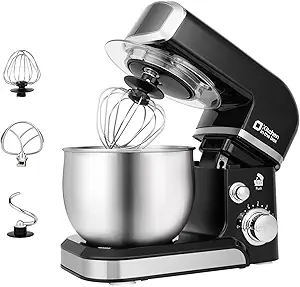 |
Cuisinart Stand Mixer SM-50

| Capacity | 5.5 liters |
|---|---|
| Wattage | 500 watts |
| Number of Speeds | 12 |
| Controls Type | Knob |
The Cuisinart SM-50 is a solid mid-size stand mixer aimed at everyday home bakers who need reliable kneading and mixing without commercial heft. Its 500-watt motor and 12-speed knob let you go from slow dough development to higher-speed whipping, while the tilt-back head and included stainless steel 5.5-quart bowl make loading and unloading dough straightforward. The kit includes a dough hook, flat paddle, chef's whisk, and a splash guard with pour spout, and the bowl and accessories are dishwasher-safe for easy cleanup. Die-cast metal construction gives the mixer a stable feel while handling typical bread and pastry doughs, though very heavy or very large batches may push the motor harder than heavier-duty, professional models. The SM-50 also accepts optional attachments like a pasta roller and meat grinder for added versatility. For bakers who want a dependable machine for regular kneading, mixing, and whipping, this mixer balances power, capacity, and useful accessories in a compact footprint.
Best for: Home bakers who want a dependable, all-purpose mixer for regular dough kneading, batters, and whipped recipes without needing a commercial-grade machine.
Less Ideal for: People who regularly make very large or very dense bread batches or need a commercial-capacity mixer should consider heavier-duty models.
- 500-watt motor with 12 speeds handles a wide range of mixing and kneading tasks
- 5.5-quart stainless steel bowl suitable for small to medium bread batches
- Die-cast metal construction provides stability during kneading
- Includes dough hook, flat paddle, whisk, and splash guard for immediate use
- Bowl and accessories are dishwasher-safe for easy cleanup
- Motor and capacity are modest compared with heavy-duty or commercial mixers
- Tilt-head design can limit access when working with very large bowls or attachments
Verdict: A well-rounded mid-size mixer that delivers enough power and capacity for most home kneading and baking needs.
Bosch Universal Plus 6.5-Qt Mixer

| Wattage | 500 watts |
|---|---|
| Capacity | 6.5 quarts |
| Number of Speeds | 4 |
| Voltage | 230 volts |
The Bosch Universal Plus is built around a powerful 500 W bottom-drive motor that delivers high torque directly into the bowl, making it especially capable for heavy doughs and frequent baking. Its 6.5-quart plastic bowl and robust belt-driven transmission let you knead very large batches—manufacturer specs cite up to about 14 loaves or 34 dozen cookies—while the dual wire whips and dough hook (plus a dough hook extender) handle whipping and kneading efficiently. Four suction feet add stability during intensive mixing and the mixer offers four speeds plus pulse for controlled starts and short bursts. The unit is compact for counter storage, and many dishwasher-safe parts simplify cleanup. Trade-offs include a primarily plastic exterior and bowl rather than metal, and a modest four-speed control instead of a wider speed range, so precise low-speed folding or ultra-slow kneading requires attention. The bottom-drive design excels where torque matters, making this a strong choice for bakers who routinely work with dense, whole-grain doughs and large batches.
Best for: Bakers who prioritize raw kneading performance and plan to make frequent large or heavy loaves will appreciate this mixer's torque-first design and durable transmission.
Less Ideal for: If you need a mostly metal construction, very fine speed control, or a multifunction countertop mixer focused on aesthetics over raw torque, consider other options.
- High-torque bottom-drive motor suited for dense doughs and long kneading cycles
- Large 6.5-quart bowl supports big batches for bread or cookie production
- Included dough hook extender and wire whips increase versatility for kneading and whipping
- Suction feet provide strong stability during heavy mixing
- Dishwasher-safe removable parts and splash ring simplify cleanup
- Bowl and many external parts are plastic rather than stainless steel
- Only four fixed speeds plus pulse limits fine-grain speed control
Verdict: Choose this mixer when maximum kneading torque and the ability to handle very large or dense dough batches are your top priorities.
Hamilton Beach 4-Quart Stand Mixer

| Capacity | 4 quarts |
|---|---|
| Wattage | 300 watts |
| Number of Speeds | 7 |
| Material | Stainless Steel |
The Hamilton Beach 4-quart stand mixer delivers reliable, no-frills performance for home bakers who need a machine that handles mixing, whipping, and kneading without fuss. Its 300-watt motor and planetary mixing action keep the bowl covered as attachments rotate for even mixing, and the included dough hook, flat beater, and whisk cover common baking tasks from pizza dough to whipped cream. Seven speed settings let you gently fold or aggressively beat, and the stainless steel bowl with a removable splatter shield is dishwasher-safe for easier cleanup. At 4 quarts it is roomy enough for most family recipes but not oversized for smaller kitchens, and the knob controls are straightforward. The mixer is built to be practical rather than premium, so you should not expect the quietest operation or commercial-grade horsepower for very large or heavy batches. For routine home kneading and baking it is a solid, budget-conscious choice that emphasizes dependable results and simple maintenance.
Best for: Home bakers who want a straightforward, reliable mixer for regular doughs and everyday baking without paying for premium or commercial features.
Less Ideal for: Those who routinely make very large batches, work with extremely heavy doughs, or need a mixer with commercial-level power and noise reduction.
- Planetary mixing action provides thorough, full-bowl coverage
- 300-watt motor maintains consistent speed for thick doughs
- Includes dough hook, flat beater, and whisk for common baking tasks
- Stainless steel 4-quart bowl with removable splatter shield is dishwasher-safe
- Not as powerful or quiet as higher-end, commercial-style mixers
- 4-quart capacity may be limiting for very large batches
Verdict: A practical, budget-friendly mixer that reliably handles home kneading and everyday baking tasks.
Dash Everyday Stand Mixer

| Wattage | 250 |
|---|---|
| Number of Speeds | 6 |
| Capacity | 3 liters |
| Controls Type | Knob |
| Voltage | 110 |
The Dash Everyday Stand Mixer is a lightweight, space‑saving tilt‑head mixer aimed at everyday home baking and dough work. It pairs a 250W motor with six speed settings to handle tasks from gentle stirring to whipping and kneading, and ships with two dough hooks and two beaters plus a 3‑quart stainless steel bowl. The tilt‑head design makes adding ingredients and swapping attachments straightforward, and the included metal bowl and dishwasher‑safe accessories simplify cleanup. Because it is compact and weighs under 5 pounds, it is easy to move and stores neatly under cabinets or on small counters. For kneading, the dough hooks will handle small to medium batches like pizza or sandwich dough, though the modest motor and bowl capacity mean very heavy or very large bread doughs may require shorter mixing times or manual finishing. Controls are simple with a knob and preset speeds, but there are no advanced features like planetary mixing or heavy‑duty construction found on larger appliances. For casual bakers and budget shoppers who need an everyday mixer for small doughs and batters, it delivers good value and usability.
Best for: A budget-minded home baker who needs a compact, easy‑to‑store mixer for small to medium doughs, everyday batters, and occasional bread kneading.
Less Ideal for: Serious home bakers or frequent bread makers who routinely mix large or very dense doughs should choose a heavier‑duty, higher‑capacity mixer instead.
- Compact, lightweight design that stores easily and suits small kitchens
- Includes dough hooks and a 3‑quart stainless steel bowl for kneading and mixing
- Six speed settings provide control from gentle stirring to whipping
- Dishwasher‑safe beaters and hooks simplify cleanup
- 250W motor and 3‑quart capacity limit performance on very large or heavy bread doughs
- Plastic body construction is less durable than heavier, professional mixers
Verdict: A compact, affordable stand mixer that handles everyday mixing and small‑to‑medium doughs well, making it a solid budget pick for casual bakers.
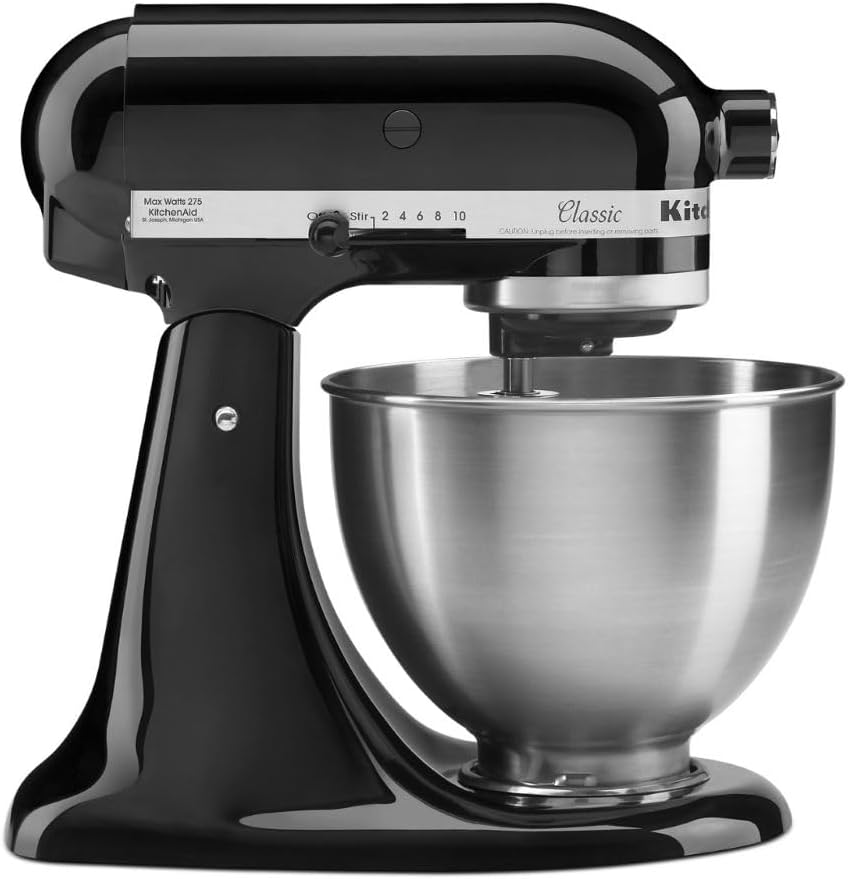
KitchenAid Classic Series K45SS 4.5-Qt
| Capacity | 4.5 quarts |
|---|---|
| Wattage | 275 watts |
| Number of Speeds | 10 |
| Included Components | Flat beater, dough hook, 6‑wire whip |
| Voltage | 120 volts |
The KitchenAid Classic Series K45SS is a straightforward tilt-head stand mixer built for everyday baking and dough work. Its 4.5‑quart stainless steel bowl and 275‑watt motor run through 10 speeds, so it handles mixing, whipping, and kneading small to medium dough batches without fuss. The metal construction and 59 touchpoints around the bowl promote consistent mixing, and the included flat beater, dough hook, and wire whip cover the basic tasks you need for breads, cookies, and batters. The tilt-head design makes adding ingredients and swapping attachments easy, and the power hub accepts optional attachments like pasta makers or grinders for extra versatility. It is not the highest-capacity or most powerful mixer for very large or dense commercial doughs, but for home bakers who prioritize durable, simple operation on regular kneading jobs it offers reliable performance and years of dependable use.
Best for: Home bakers who need a dependable, no‑fuss mixer for regular doughs and everyday baking and who value long-term durability over maximum capacity.
Less Ideal for: Those who regularly make very large batches or heavy, high-hydration doughs that require a more powerful or commercial-grade mixer should consider a higher-capacity model.
- Durable metal construction built for long-term use
- 4.5‑quart stainless steel bowl suitable for small to medium batches
- 10 speed settings for flexible mixing, whipping, and kneading
- Includes coated flat beater, dough hook, and 6‑wire whip for common tasks
- Power hub enables optional attachments for expanded functionality
- 275‑watt motor may struggle with very large or heavy doughs
- Tilt‑head design limits bowl size compared with some bowl‑lift models
Verdict: A reliable, metal-built stand mixer that delivers consistent, everyday kneading performance for home bakers.
KitchenAid Artisan 5-Qt Stand Mixer

| Capacity | 5 quarts |
|---|---|
| Wattage | 325 watts |
| Voltage | 120 volts |
| Included components | Bowl, flat beater, dough hook, 6-wire whip, pouring shield |
The KitchenAid Artisan 5-Qt Tilt-Head Stand Mixer is a full-featured countertop mixer built for regular home baking and dough work. It uses a metal body and a 5-quart stainless steel bowl to handle batch baking from cookies to bread dough, and the tilt-head lets you add ingredients and change attachments easily. Ten speed settings cover slow stirring through high-speed whipping, and included coated flat beater, dough hook, and wire whip give the tools you need for kneading, mixing, and whipping. The mixer accepts hub-powered attachments (sold separately) for tasks like grinding or pasta making, which makes it versatile beyond dough. At 325 watts it has enough power for typical home doughs, though very heavy high-hydration or commercial-scale batches may push its limits. The durable metal construction and dishwasher-safe bowl make cleanup straightforward, but the tilt-head design can require more forward clearance than bowl-lift designs and the unit is relatively heavy to move. For home bakers who want dependable kneading performance and long-term service, this is a practical, well-rounded choice.
Best for: Home bakers who value a durable, proven machine for regular dough-kneading and multi-recipe mixing and who look for social proof and reliability when choosing gear.
Less Ideal for: Bakeries or users who regularly mix very large or industrial dough batches should consider a commercial or higher-capacity bowl-lift machine instead.
- Robust metal construction built for regular home use
- 5-quart stainless steel bowl handles medium to large batches
- 10 speeds provide control from gentle mixing to high-speed whipping
- Includes flat beater, dough hook, wire whip, and pouring shield for common baking tasks
- Compatibility with hub-powered attachments expands functionality
- Tilt-head design requires forward clearance and may be less stable for very heavy batches
- 325 watt motor may struggle with very large or heavy commercial doughs
Verdict: A durable, versatile 5-quart stand mixer that delivers reliable kneading performance for serious home bakers.
Kitchen in the box 3.2QT Stand Mixer

| Capacity | 3.2QT |
|---|---|
| Power | 300 watts |
| Number of Speeds | 6 |
| Included Components | Whisk, Beater, Dough Hook, Mixing Bowl |
The Kitchen in the box 3.2QT stand mixer is a lightweight, space-saving machine built for everyday small-batch baking. It handles tasks like whipping cream, beating cake batter, and mixing dough for 1–2 people using a 3.2 quart stainless steel bowl, a stainless whisk, aluminum dough hook, and flat beater. The tilt-head design and transparent anti-splash lid make loading and monitoring ingredients easy, while four suction feet help keep the unit steady during mixing. With a 300 watt motor and six speed settings it provides a range of mixing power for gentle folding up to denser mixes, though its small bowl limits the volume of dough you can knead at once. Accessories are dishwasher-safe, and the unit is light enough to move or store in a cabinet. If you need to mix larger batches or want a heavy-duty commercial-style dough kneader, this model will feel underpowered and cramped, but for daily home baking in small kitchens it is a practical, affordable option.
Best for: Buyers who prioritize a compact, easy-to-store mixer for everyday small-batch baking and want a simple, reliable machine for occasional dough kneading.
Less Ideal for: People who regularly bake large loaves, make big batches of dough, or need a high-torque, heavy-duty mixer for frequent professional-style kneading should choose a larger, more powerful model.
- Compact footprint saves counter and storage space
- Includes standard attachments (whisk, dough hook, flat beater) for common baking tasks
- Transparent splash guard and tilt-head make loading and cleaning straightforward
- Dishwasher-safe accessories for easier cleanup
- 3.2QT bowl is too small for large batches or frequent heavy dough kneading
- 300W motor may struggle with very stiff or high-hydration doughs
Verdict: A compact, budget-friendly stand mixer designed for small households that need a capable everyday machine for light dough kneading and baking.
Choosing the Right Stand Mixer for Kneading Dough: Key Factors to Consider
Motor Torque and Heat Management
High torque is essential for kneading dense doughs and larger batches. A powerful motor reduces the chance of stalling when the dough becomes heavy and helps develop gluten more efficiently. Torque delivered at low speeds matters more than raw wattage because kneading often requires sustained low-speed power. Heat management is equally important because prolonged kneading can raise dough temperature and affect fermentation. Look for mixers with cooling designs, thermal cutoffs, or gearboxes that dissipate heat to protect motor life and dough integrity.
Bowl Capacity and Shape
Bowl capacity determines how large a batch you can mix without overflow and whether you can comfortably work with high-hydration recipes. Capacity should match your typical loaf size or number of rolls. The bowl shape also matters: a narrower, taller bowl can concentrate ingredients and make kneading tighter, while a wider, shallower bowl gives dough room to move and develop. Consider the clearance between the hook and bowl sides to avoid scraping or trapping ingredients, and account for added space needed when using attachments.
Durability and Mechanical Design
Stand mixers are a long-term kitchen investment, so metal gears, sturdy motor mounts, and robust housing translate to fewer service issues under heavy use. Plastic gears or flimsy coupling points are more likely to wear when frequently kneading dense doughs. Inspect construction details such as die-cast heads or reinforced attachment hubs when evaluating longevity. Durable machines often have serviceable parts and a straightforward way to access moving components for maintenance.
Attachment Compatibility and Versatility
While a dough hook is the core attachment for kneading, the ability to swap in other tools extends the mixer's usefulness. Some mixers accept a wide range of proprietary and third-party attachments, enabling tasks like shredding, slicing, or pasta making. For kneading, the shape and reach of the dough hook affect how thoroughly ingredients are incorporated and how the dough develops. Check that extra attachments mount securely and do not compromise torque or balance during heavy kneading cycles.
Speed Controls and User Ergonomics
Precise speed settings help you control dough development and prevent overworking. Look for mixers with a useful low-speed range and smooth transitions between settings rather than abrupt jumps. Ergonomic considerations include how the head tilts or lifts for removing the bowl, the weight of the head, and whether the controls are intuitive for repeated use. Comfortable handling reduces fatigue during longer sessions and makes tasks like adding flour or scraping the bowl easier.
Cleaning and Maintenance
Frequent baking means frequent cleaning, so removable, dishwasher-safe bowls and attachments save time. The mixer's exterior finish and seams affect how easily flour and dough residue can be wiped away. Consider whether attachments trap dough in crevices and how simple it is to access and clean the planetary mechanism. Machines designed for easy maintenance reduce downtime and make regular use more enjoyable.
Why Torque Beats Raw Wattage for Dough
When evaluating mixers for kneading, torque is the practical measure of performance. Two mixers with similar wattage can behave very differently if one delivers stronger low-speed torque. Dough demands steady force rather than high-speed power, so a design that preserves torque at slow settings will knead large or dense batches without laboring.
Consider drive mechanisms such as direct-drive motors and planetary gear ratios that maintain consistent rotation under load. Features that protect the motor from overheating during long kneading cycles also contribute to reliable torque delivery.
- Look for manufacturers that publish torque or mention heavy-duty gearing.
- Avoid relying on wattage alone as an indicator of kneading capability.
Choosing the Right Bowl Size for Your Recipes
Match bowl capacity to the recipes you make most often. If you bake multiple loaves or make family-sized batches, choose a larger bowl to prevent overfilling and ensure proper mixing. For occasional single loaves or small dessert doughs, a medium bowl can be more efficient and easier to store.
Also think about bowl material. Stainless steel is durable and easy to clean, while glass or ceramic bowls add weight and can be harder to handle when full. Some bowl shapes encourage better ingredient circulation during kneading.
- Reserve larger bowls for high-hydration or multi-loaf batches.
- Consider whether you need multiple bowls or a pouring shield to reduce mess.
Attachment Types That Improve Dough Handling
The dough hook is the primary tool for kneading, but not all hooks are the same. Spiral hooks often compress and fold dough efficiently, while C-shaped hooks may suit lighter doughs. Assess how a hook interacts with the bowl and whether it reaches the bottom and sides consistently.
Beyond the hook, secondary attachments like flex-edge beaters or scraper tools can help incorporate add-ins and reduce manual scraping. Secure, well-designed attachment hubs prevent slippage during heavy loads.
- Prefer hooks that maintain contact with dough without excessive scraping.
- Check whether attachments are dishwasher-safe for easy cleanup.
Noise, Vibration, and Countertop Stability
Kneading can put significant vibration through a mixer. Machines with balanced motors and solid bases produce less movement and noise, making them more pleasant to use, especially in small kitchens. Excessive vibration can cause the mixer to 'walk' across the counter or wear components faster.
Anti-slip feet and a low center of gravity help maintain stability. If your countertop is lightweight or prone to vibration, prioritize models designed for steady operation during heavy cycles.
- Test stability by running a mix cycle at low speed in your head when evaluating.
- Look for rubber feet and heavy base construction as stability indicators.
Routine Maintenance Tips to Extend Lifespan
Regular cleaning and occasional inspection keep a stand mixer performing well. Wipe the exterior and attachment hub after each use, and disassemble attachments for thorough cleaning. Periodically check for wear on gears and replace seals or couplings if they show play.
If your mixer has grease ports or serviceable gearboxes, follow the recommended maintenance schedule to preserve torque and reduce noise. Keeping ventilation areas clear helps prevent overheating during extended kneading sessions.
- Clean immediately after use to avoid hardened dough in crevices.
- Keep spare attachments and service parts available if you use your mixer frequently.
How We Chose the Best Stand Mixer for Kneading Dough
We focused on attributes that directly affect dough handling and long-term reliability. Core evaluation criteria included motor torque and heat management to ensure mixers can knead dense or high-hydration doughs without stalling or overheating. We also assessed bowl capacity and shape because adequate volume and clearance prevent overfilling and improve ingredient development. Durability and gear design were considered to predict service life under frequent heavy use. Attachment versatility and accessory fit mattered when adapting machines to different dough types. Finally, user ergonomics such as headweight, tilt or lift stability, and control precision influence repetitive tasks and cleanup. We excluded models intended primarily for light mixing, handheld units, and those with very small bowls unsuitable for typical bread batches. We did not consider single-use novelty features that do not affect dough performance. The resulting shortlist emphasizes machines optimized for consistent kneading power, usable capacity, and durable construction.
Our full evaluation process is outlined in our review methodology.
FAQ
What mixer capacity do I need for a standard loaf of bread?
For a single standard loaf, a 4.5 to 5.5 quart bowl is usually sufficient. If you bake multiple loaves or make larger artisan loaves, choose a 6-quart or larger bowl to avoid crowding the dough.
Can I use a stand mixer for very wet high-hydration doughs?
Often yes, but success depends on motor torque and bowl geometry. High-hydration doughs require steady low-speed power and enough bowl surface area to let the dough fold and develop without flying up the hook.
How long should I knead dough with a stand mixer?
Kneading time usually ranges from 5 to 12 minutes depending on recipe and dough hydration. Watch dough texture and windowpane development rather than relying solely on time to determine readiness.
Is a spiral hook better than a C-shaped hook for bread dough?
Spiral hooks are generally better at compressing and stretching dough, which speeds development, especially for denser doughs. C-shaped hooks can still work well for lighter or smaller batches.
How do I prevent my mixer from overheating during long kneads?
Use lower speeds when possible, allow short rests during extended kneading, and avoid continuous high-load cycles. Ensure ventilation around the motor and let the machine cool between long sessions if it feels hot to the touch.
Final Verdict
Prioritize mixers with strong low-speed torque, a bowl size that matches your typical batch, and durable mechanical design if you plan to knead dough frequently. Consider attachment fit and user ergonomics to reduce manual work and cleanup time. Balance capacity and stability against countertop space and maintenance needs. Choose a machine that aligns with the types of dough you make most often and accept that heavier-duty models usually trade added weight for better performance. With the right priorities, you can pick a stand mixer that reliably produces consistent dough and lasts through many baking sessions.