
Note: This article contains affiliate links. If you click on these links and make a purchase, we may earn a small commission at no extra cost to you. This helps support our research and content. Read our full affiliate disclosure here.
If you make rotis, chapatis, or other flatbreads regularly, the right stand mixer can cut hands-on time and improve dough consistency. Roti dough is simple but demands steady kneading and the right dough temperature to produce soft, pliable breads. Choosing a mixer that handles low-hydration wheat dough without overworking it makes a practical difference in everyday cooking. This guide shortlists the top stand mixers suited for roti dough and explains the features that matter most for home cooks. We evaluated each pick across kneading performance, durability, and ease of use to help you find a reliable kitchen workhorse. Read on to see which models match your needs and cooking routine.
Top Picks at a Glance
| Best Overall The best all-around choice for most situations | Cuisinart Stand Mixer SM-50BC |  |
| Best Quality Built to a higher standard if you want something more solid | Ooni Halo Pro Spiral Mixer |  |
| Best Value The sweet spot between price and what you get | Aucma Stand Mixer 6.5QT |  |
| Best Budget The cheapest option that still gets the job done reliably | Max Life ML-6638 Stand Mixer |  |
| Top Rated A top-rated pick with lots of positive feedback | KitchenAid Classic Series K45SS 4.5-Qt |  |
| Most Popular A crowd favorite that many people choose with confidence | DASH Everyday Stand Mixer DCSM250PB |  |
| Best Seller A high-volume bestseller chosen again and again | KitchenAid Artisan 5-Qt Mixer |  |
Cuisinart Stand Mixer SM-50BC
| Wattage | 500 watts |
|---|---|
| Number of Speeds | 12 |
| Capacity | 5.5 quarts |
| Voltage | 110 volts |
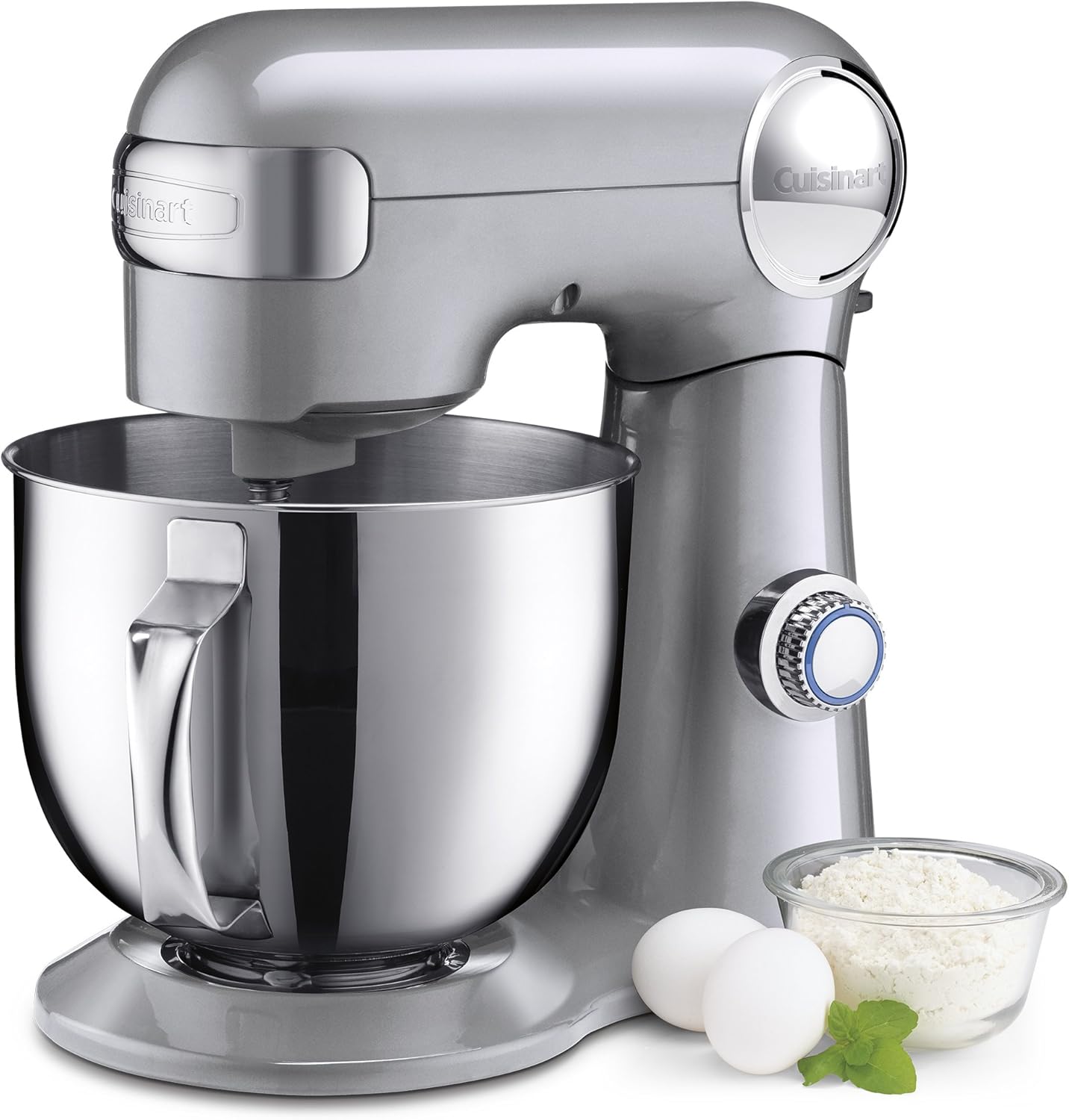
The Cuisinart SM-50BC is a metal-bodied stand mixer aimed at everyday home bakers who need steady power and a roomy bowl for mixing doughs, batters, and whipped ingredients. Its 500-watt motor and 12-speed knob give fine control from slow kneading to faster whipping, and the 5.5-quart stainless steel bowl and included dough hook make it practical for preparing roti dough and medium batches of dough. Tilt-back head access plus a splash guard with pour spout simplify ingredient loading and cleanup, and the mixing bowl and accessories are dishwasher safe. The mixer accepts optional attachments for tasks like pasta, grinding, and ice cream, which expands versatility beyond basic mixing. Trade-offs are that it is a manual, straightforward design without built-in timers or electronic presets, and while 500 watts is adequate for household doughs it is not as heavy-duty as larger commercial models. For balanced home cooks who want a reliable, mid-capacity mixer for everyday flatbreads and other doughs, it covers the essentials without extra complexity.
Best for: Home cooks who want a straightforward, dependable mixer that handles everyday doughs and baking tasks with good control and mid-size capacity.
Less Ideal for: Those who regularly mix very large or heavy dough batches or need commercial-grade power and professional features should consider higher-capacity, heavier-duty models.
- 500-watt motor with 12 speeds for controlled kneading and whipping
- 5.5-quart stainless steel bowl fits medium dough batches used for roti
- Includes dough hook, whisk, and flat paddle for common mixing tasks
- Tilt-back head and splash guard with pour spout make loading and mess control easier
- Mixing bowl and accessories are dishwasher safe for easier cleanup
- No electronic presets or digital controls for repetitive timed mixing
- Not intended for very large or heavy commercial-scale doughs
Verdict: A dependable mid-capacity mixer that gives balanced power and control for making roti dough and everyday baking without unnecessary complexity.
Ooni Halo Pro Spiral Mixer

| Capacity | 7.3 quarts |
|---|---|
| Wattage | 650 watts |
| Number of Speeds | 58 |
| Controls Type | Touch |
| Noise Level | 65 db |
The Ooni Halo Pro is a spiral-style stand mixer designed to produce bakery- and pizzeria-quality dough at home by using a rotating bowl and dual-kneading spiral hook rather than a traditional planetary action. It is typically used for heavy doughs like pizza and roti, and includes four attachments—spiral dough hook, flexible beater, geared whisk and breaker bar—so you can also whisk, beat and mix batters and creams. The mixer offers fine-grained control through 58 speed settings and a touch control panel, which helps dial in slower kneading for stronger gluten development or faster whipping for aerated mixes. At 650 watts and a 7.3-quart stainless bowl, it handles large batches and long kneading cycles without needing frequent refills. Practical limits include a heavier footprint and a higher noise level compared with some home mixers, and spiral mixers favor dough performance over certain multiuse tasks that benefit from planetary mixing action. For bakers focused on high-performance dough—especially pizza and flatbreads—the Halo Pro brings near-professional dough handling to a home kitchen.
Best for: Home bakers and performance-focused cooks who prioritize professional-level dough development for pizza, roti and other bread-style recipes and want precise speed control for repeatable results.
Less Ideal for: Casual bakers who need a very compact, quiet all-purpose mixer or users who prefer planetary-action mixers for certain delicate folding or multi-bowl tasks.
- Spiral dual-kneading system optimized for strong gluten development and consistent dough.
- Wide precision control with 58 speed settings for slow kneading to high-speed whisking.
- Includes four versatile attachments for kneading, mixing and whisking tasks.
- Large 7.3 quart stainless steel bowl suitable for sizable batches.
- Spiral mixer design and heavier build make it bulkier than compact home mixers.
- Noise level around 65 db may be noticeable during long kneading cycles.
Verdict: If your priority is pro-grade dough performance for roti and pizza, the Halo Pro delivers precision spiral kneading and large-batch capacity to take your dough from home to bakery quality.
Aucma Stand Mixer 6.5QT

| Wattage | 660 watts |
|---|---|
| Capacity | 6.5 quarts |
| Number of Speeds | 6 |
| Voltage | 120 volts |
This Aucma stand mixer is built for everyday baking and heavier dough tasks thanks to a 660W motor, a large 6.5 quart stainless steel bowl, and a dedicated dough hook. The tilt‑head design and included splash guard make loading and ingredient additions simple, while the six speed settings plus pulse let you move from whipping egg whites to kneading dough without switching machines. Accessories are dishwasher safe for easier cleanup and non‑slip feet help keep the mixer steady during long kneads. Noise is reasonably controlled for the power level, and the ABS housing keeps the unit affordable and lightweight to move. Expect good performance for home roti and bread doughs, though serious commercial bakers may prefer a heavier-duty planetary mixer for very large or frequent batches. The mixer balances capacity, power, and practical features at a value-oriented price point.
Best for: Home cooks who want a capable, value-oriented stand mixer that can handle roti and other dense doughs for family-size batches without the cost of a pro mixer.
Less Ideal for: Commercial kitchens or bakers who make very large daily batches or need heavy industrial-duty mixers with advanced speed control and factory-grade metal gearing.
- 660W pure copper motor provides enough torque for dense doughs like roti and cookie dough
- 6.5 quart stainless steel bowl holds large single or double batches
- Tilt‑head design and splash guard make adding ingredients and changing attachments easy
- Dishwasher safe whisk, beater, and dough hook simplify cleanup
- ABS housing and consumer-grade drivetrain may feel less durable under heavy daily commercial use
- Limited to six speeds with a knob control that lacks precise digital timing or presets
Verdict: Aucma's 6.5QT 660W mixer is a practical, budget-friendly choice for home bakers who need reliable power and capacity to mix roti and other dense doughs.
Max Life ML-6638 Stand Mixer

| Capacity | 3.2 quarts |
|---|---|
| Wattage | 150 watts |
| Number of Speeds | 5 |
| Voltage | 120 |
| Material | Stainless Steel |
The Max Life ML-6638 is an entry-level stand mixer that handles basic baking tasks and small-batch doughs. Its 150W motor and five speed settings let you mix batters, whip cream, and knead lighter doughs; the 3.2-quart stainless steel bowl gives enough capacity for family-sized recipes. Attachments include beaters and dough hooks with a beater ejection button for easier removal, and the unit lists overheat protection and an efficient cooling system to help with repeated use. Controls are simple push-button operation, and the stainless steel components are dishwasher-safe for straightforward cleanup. Expect limits when tackling very stiff, heavy roti or large high-hydration doughs where a more powerful motor and heavier-duty gearing are preferable; for heavier kneading you may need to work in smaller batches or finish by hand. For buyers who want a compact, affordable mixer for routine home baking, this model delivers useful features without complexity.
Best for: Home cooks on a budget who need a simple, reliable mixer for everyday baking and occasional dough making, especially for small to medium batches.
Less Ideal for: Those who regularly make large batches of heavy or very stiff doughs—including frequent roti kneading at scale—or who require commercial-grade power and durability.
- Compact 3.2-quart stainless steel bowl suitable for family recipes
- Five adjustable speeds for mixing, beating, and light kneading
- Beater ejection button and dishwasher-safe components for easier cleaning
- ETL safety certification and overheat protection for safer repeated use
- 150W motor may struggle with very stiff or large-volume doughs
- Not designed for heavy commercial use or continuous large-batch kneading
Verdict: A compact, affordable stand mixer that covers everyday mixing and light dough work for budget-minded home bakers.
KitchenAid Classic Series K45SS 4.5-Qt
| Capacity | 4.5 quarts |
|---|---|
| Wattage | 275 watts |
| Number of Speeds | 10 |
| Included Components | Stainless steel bowl, flat beater, dough hook, 6-wire whip |
| Voltage | 120 volts |
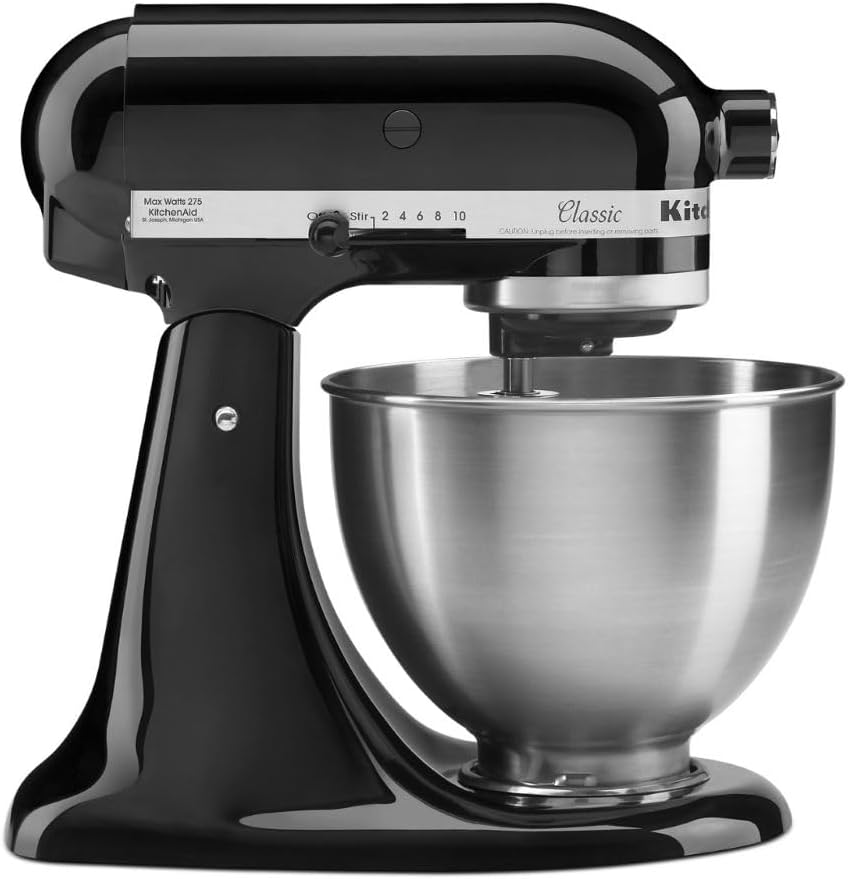
The KitchenAid Classic Series K45SS is a straightforward, durable tilt-head stand mixer built for routine home baking and dough work. Its 4.5-quart stainless steel bowl and 275-watt motor handle mixing, whipping, and light-to-medium kneading tasks using the included flat beater, dough hook, and wire whip. The tilt-head design makes it easy to add ingredients and swap attachments, and the metal construction plus 59 contact points around the bowl help deliver consistent incorporation across speeds. Practical benefits include a compact footprint for smaller kitchens and a power hub that accepts KitchenAid attachments to expand functions like grinding or pasta making. Limitations are that the 275-watt motor and 4.5-quart capacity are sized for typical home batches rather than very large or heavy commercial doughs, and the tilt-head layout can be slightly less secure than bowl-lift designs for extremely heavy loads. For everyday roti dough and most household recipes it provides reliable mixing and long-term durability.
Best for: Buyers who prioritize a reliable, built-to-last mixer for regular home baking and making standard doughs, including roti, will appreciate its simple operation and serviceable design.
Less Ideal for: People who routinely mix very large batches or heavy commercial-style doughs should consider higher-capacity, higher-power bowl-lift machines instead.
- Durable metal construction designed for long-term use
- Includes the common set of attachments: flat beater, dough hook, and 6-wire whip
- Tilt-head design for easy access when adding ingredients and changing tools
- 4.5-quart stainless steel bowl suitable for typical home baking and dough batches
- Power hub allows optional attachments to expand functionality
- 275-watt motor and 4.5-qt capacity may struggle with very large or extremely heavy doughs
- Tilt-head style is less robust than bowl-lift mixers for high-torque kneading
Verdict: A dependable, compact mixer with metal construction and essential attachments that reliably handles everyday roti dough and home baking tasks.
DASH Everyday Stand Mixer DCSM250PB

| Capacity | 3 liters |
|---|---|
| Wattage | 250 |
| Number of Speeds | 6 |
| Controls Type | Knob |
| Voltage | 110 |
The Dash Everyday Stand Mixer is a compact, lightweight tilt-head mixer intended for everyday baking and light dough work. It ships with a 3-quart stainless steel bowl, two dough hooks and two beaters, and the 6-speed knob control covers everything from gentle stirring to higher-speed whipping. The 250W motor and included dough hooks can handle small batches of dough such as roti or pizza dough for one to two people, and the tilt-head design makes adding ingredients and swapping attachments straightforward. Cleanup is easier than many budget machines because the bowl and attachments are dishwasher safe. Trade-offs are its consumer-grade motor and compact 3-quart capacity, which means heavy or very large dough batches will strain the mixer and extend mixing times. Build materials are mostly plastic, so it is best treated as a light-duty countertop tool rather than a heavy commercial machine. For kitchens with limited counter space this mixer offers useful everyday performance at a small footprint.
Best for: Buyers who want a reliable, compact stand mixer for small-batch dough like roti and everyday baking and who value proven customer feedback when choosing a budget-friendly kitchen tool.
Less Ideal for: People who regularly prepare large volumes of dough, need commercial-level durability, or want a heavy-duty mixer for frequent high-volume bread making should look at higher-capacity, more powerful machines.
- Compact, space-saving tilt-head design that fits small countertops
- Includes 3-qt stainless steel bowl and both dough hooks and beaters for basic dough and baking tasks
- Six speed settings provide good control from slow kneading to high-speed whipping
- Dishwasher-safe removable parts simplify cleanup
- 250W motor and 3-quart capacity limit performance on heavy or large dough batches
- Mostly plastic housing reduces long-term durability compared with heavier-duty metal mixers
Verdict: A compact, budget-friendly stand mixer that is well suited for small-batch roti dough and everyday mixing when you want a proven, space-saving option.
KitchenAid Artisan 5-Qt Mixer

| Capacity | 5 quarts |
|---|---|
| Wattage | 325 watts |
| Number of Speeds | 10 |
| Included Components | Flat beater, Dough hook, 6-wire whip, Pouring shield |
| Voltage | 120 volts |
The KitchenAid Artisan 5-Quart Tilt-Head Stand Mixer is a durable home stand mixer built for frequent use in baking and everyday cooking. It mixes, whips, and kneads using a 325-watt motor and ten speed settings that let you start slow for dough and ramp up for whipping; the tilt-head design makes it easy to add ingredients and change attachments. The included coated flat beater, dough hook, and 6-wire whisk cover most recipes, and the 5-quart stainless steel bowl handles batches up to nine dozen cookies or large doughs for roti and other flatbreads. Metal construction and multiple touchpoints around the bowl give a solid, stable feel during kneading, and the pouring shield helps reduce flour clouds. Downsides are its tilt-head layout, which can limit very heavy, wet dough capacity compared with bowl-lift models, and the unit is fairly heavy to move. For making roti dough at home it provides consistent kneading and speed control that reduces manual effort.
Best for: Home cooks who want a reliable, long-lasting stand mixer that handles regular dough-kneading and baking tasks with minimal fuss and predictable results.
Less Ideal for: People who regularly mix very large or extremely heavy wet doughs and need a bowl-lift mixer designed for industrial-style loads.
- Sturdy metal construction for long-term durability
- Five-quart stainless steel bowl handles large batches
- Ten speed settings offer precise control from stir to whip
- Includes flat beater, dough hook, and wire whip for common tasks
- Tilt-head design makes adding ingredients and changing tools simple
- Tilt-head design is less stable than bowl-lift under very heavy loads
- Relatively heavy unit makes it less convenient to move or store
Verdict: A reliable, heavy-duty 5-quart tilt-head mixer that delivers consistent kneading and precise speed control ideal for home roti dough and everyday baking.
Choosing the Right Stand Mixer for Roti Dough: Key Factors to Consider
Motor Torque and Thermal Management
Roti dough is relatively dense and places sustained load on a mixer's motor. Higher torque at low speeds helps the machine knead without stalling or overheating. Thermal protection or automatic shutoff features are valuable because they prevent damage during extended or repeated dough cycles. When a motor is appropriately ventilated and rated for heavy loads, it maintains consistent speed under resistance, which directly affects dough texture and gluten development.
Consider how the mixer handles prolonged operation. A motor that runs hot or cuts out mid-knead can leave dough uneven or underworked. Look for specifications that list continuous torque or duty cycle and for user-focused design elements such as heat-dissipating housings or slower starting speeds that reduce stress on components.
Mixing Action and Attachment Design
The way a mixer moves the dough—planetary rotation, orbital action, or a combination—affects how uniformly the flour and water integrate. Dough hooks designed for dense wheat dough should fold and stretch the mixture rather than simply whipping air into it. The hook shape, length, and reach relative to the bowl determine how much scraping is needed to eliminate dry pockets.
Choose mixers whose included dough hook geometry is optimized for low-hydration dough. If the manufacturer offers optional heavy-duty attachments or different hook profiles, those can improve kneading efficiency. Attachment fit and secure coupling are also important to avoid wobble or slippage during high-resistance cycles.
Bowl Capacity, Material, and Shape
Bowl size determines how much dough you can prepare in one batch. For households that make rotis daily, a bowl that comfortably holds the desired batch size without crowding the dough hook helps create even mixing. Bowl shape matters: a deeper bowl with tapered sides encourages better circulation of ingredients, while flat, wide bowls can leave pockets of unmixed flour.
Stainless steel bowls are durable and easy to clean, while glass or ceramic options may be heavier and more fragile. Consider whether you need a smaller bowl for single batches or a larger one for family-sized quantities. Also check that the bowl locks securely and is easy to remove and reseat while managing wet, sticky dough.
Durability of Drive Train and Build Quality
Kneading dense dough repeatedly stresses gears, bearings, and couplings. Mixers with metal gears or robust direct-drive systems are generally more resilient to the torque demands of roti dough than units with mostly plastic gear trains. Long-term reliability depends on material choices, the quality of internal lubrication, and build tolerances.
Examine reported maintenance needs and whether the mixer design allows access for cleaning around the attachment hub and bowl mount. A solid, well-balanced machine with minimal vibration will both last longer and perform more consistently over time.
Speed Control and Low-Speed Performance
Low-speed control is critical for developing gluten in roti dough without overheating or incorporating excess air. Mixers that offer precise, stable low-speed settings let you knead gently while still creating the necessary shear and stretch in the dough. Variable-speed dials or electronic speed control is preferable to simple high/low switches because they let you fine-tune the action for different flour types and hydration levels.
Some mixers include a slow-start feature to reduce splatter and initial strain. Also look for machines that maintain torque at lower RPMs so the hook continues to work the dough effectively even under heavy loads.
Maintenance and Ease of Cleaning
Roti dough is sticky and can cling to the bowl rim, hinge areas, and attachment hub. Easy-to-remove attachments and dishwasher-safe bowls simplify cleanup and reduce the time between uses. Sealed or recessed attachment hubs that are difficult to wipe out will accumulate dough and require more frequent deep cleaning.
Consider whether the mixer has smooth, accessible surfaces and whether parts that contact dough are stainless or otherwise corrosion-resistant. Regular maintenance such as occasional lubrication of moving parts and wiping flour from vents will extend the machine's service life, so choose models designed for straightforward upkeep.
Batch Size Strategy for Rotis
Decide how many rotis you usually make in one session and match your bowl capacity to that batch. Small families or solo cooks can usually get by with smaller bowls and will benefit from faster turnarounds, while larger households often need larger capacity to avoid multiple mixing cycles.
If you frequently double recipes, a single larger batch is more efficient but requires a mixer with enough torque and a bowl shape that prevents dough from clumping. Conversely, making smaller batches keeps dough fresher and reduces motor strain because each cycle is shorter.
- Plan bowl capacity for the typical number of rotis per meal
- Avoid overfilling the bowl to ensure even kneading
- Smaller batches can reduce motor heat buildup
Using Flour Types and Hydration Levels
Whole-wheat or atta flour absorbs more water and creates denser dough than refined flour. Adjust water ratios and kneading time accordingly. Mixers with strong low-speed torque handle whole-wheat blends more reliably, while weaker units may require stop-and-scrape steps to fully hydrate the flour.
Hydration is key to roti texture. Slightly higher hydration can yield softer rotis but also increases stickiness. Choose a mixer whose attachments and bowl finish allow easy release and cleanup when working with wetter doughs.
- Expect longer kneading for whole-grain flours
- Manage hydration to balance softness with workability
- Use scraper accessories if sticky dough accumulates on bowl sides
Practical Tips to Reduce Wear
Protect the motor and gears by avoiding prolonged continuous runs. Use short knead-rest cycles when making very large or heavy batches. If a mixer has recommended duty cycles in the manual, follow them to avoid premature motor fatigue.
Regularly clean the attachment hub and check for dough buildup in vents. Replace worn hooks or seals rather than pushing a degraded part through repeated heavy use. These small practices can markedly extend the life of a stand mixer used for daily roti preparation.
- Use intermittent kneading for large batches
- Keep vents and hubs free of dough residue
- Replace worn attachments promptly
Attachment Options Beyond Dough Hooks
Some mixers include additional accessories like flat beaters or paddle attachments that are useful for other kitchen tasks. While the dough hook is the primary tool for roti dough, having versatile attachments increases the utility of the machine for other preparations such as batters, fillings, or even small grinding tasks if the manufacturer provides appropriate tools.
Ensure that any extra attachments are easy to swap and clean. A machine that can multi-task reduces the need for separate appliances and keeps your countertop uncluttered.
- Check included and optional accessories for everyday versatility
- Verify attachment interchangeability and cleaning ease
Workspace and Ergonomics
Consider the mixer footprint and how it fits into your kitchen workflow. A heavy-duty mixer can be bulky, so plan for dedicated counter or storage space. The ease of lifting the head or removing the bowl influences how quickly you can move from mixing to shaping rotis.
Controls should be reachable and intuitive even when your hands are flour-dusted. Tilt-head designs offer easy access to the bowl, while lift-head or bowl-lift mechanisms provide a stable platform for heavy doughs. Choose the mechanism that fits your preferred working style.
- Measure counter space before choosing a model
- Decide between tilt-head and bowl-lift based on access needs
- Look for easy-to-operate speed controls
How We Chose the Best Stand Mixer for Roti Dough
We focused on attributes that directly affect how well a stand mixer handles dense, low-hydration wheat dough typical for roti. Primary evaluation criteria included dough-kneading performance, motor torque and thermal management, bowl capacity and ergonomics, durability of drive components and attachments, and user-focused factors like ease of cleaning and controls. We selected options that consistently produced smooth, cohesive dough without overheating or requiring frequent manual intervention. We tested specification sheets and user reports for reported torque under load and thermal protection features that prevent motor strain during extended kneading. We prioritized mixers with robust gear or direct-drive designs to ensure long-term reliability and steady kneading motion. Ease-of-use factors included bowl access, tilt or lift mechanisms, and attachment compatibility for routine cleaning and maintenance. Exclusions: we excluded units designed only for batter or light mixing and any low-torque hobby mixers unlikely to handle dense flatbread dough. We also excluded single-purpose dough machines that do not offer standard mixing attachments. The result is a curated list of stand mixers best suited to producing consistent roti dough in a home kitchen.
Our full evaluation process is outlined in our review methodology.
FAQ
Can a standard stand mixer handle daily roti dough?
Often, yes. Many stand mixers with adequate low-speed torque and a robust drive train can handle regular roti dough batches. It depends on the motor rating and build quality. Frequent large batches may require models designed for heavier duty to avoid overheating.
What speed should I use to knead roti dough?
Use a low to medium-low speed setting to develop gluten gradually without introducing excess air. Exact settings vary by machine, so start slow and increase slightly if the dough is not coalescing. Shorter rest intervals can also help for denser flours.
Is a specific dough hook shape better for roti dough?
Hook shapes that fold and stretch the dough typically work better for low-hydration wheat dough than simple spiral hooks that may compress rather than stretch. The ideal shape reaches the bowl sides to minimize dry spots and encourages uniform mixing.
How often should I clean the mixer when making sticky doughs?
Wipe the bowl and attachment hub after each use to prevent buildup. Deep-clean removable parts regularly and check vents for flour accumulation. Frequent cleaning prevents dough residue from hardening and affecting performance.
Will using a mixer change the texture of traditional rotis?
It can. A mixer provides consistent kneading that often produces more uniform gluten development, which may yield slightly different crumb and pliability compared with hand-kneaded dough. Many cooks prefer the consistency but can adjust hydration and knead time to match personal texture preferences.
Final Verdict
When choosing a stand mixer for roti dough, prioritize strong low-speed torque, a durable drive train, and a bowl size that matches your typical batch. Balance the need for power against ease of cleaning and everyday ergonomics to ensure the machine fits your kitchen routine. Remember that tradeoffs exist: very compact mixers may be convenient but could lack the torque for heavy daily use, while heavier-duty models demand more counter space. Focus on reliable kneading action and maintain the machine with regular cleaning and sensible duty cycles. With those priorities in mind, you can confidently pick a stand mixer that makes roti preparation faster and more consistent for your household.