
Note: This article contains affiliate links. If you click on these links and make a purchase, we may earn a small commission at no extra cost to you. This helps support our research and content. Read our full affiliate disclosure here.
If you need extra frozen storage without blowing your budget, choosing the right upright freezer matters. Small differences in interior layout, capacity, and energy use affect how much you can store, how quickly you can organize food, and how much electricity the unit consumes over a year. This guide shortlists the top upright freezers under $300 that balance storage, efficiency, and everyday convenience. Each pick was evaluated for usable capacity, temperature stability, ease of organizing, and expected operating cost. Read on for the features that matter most and a straightforward breakdown to help you pick the best unit for your space.
Top Picks at a Glance
| Best Overall The best all-around choice for most situations | EUHOMY Upright Freezer 3.0 Cu Ft |  |
| Best Quality Built to a higher standard if you want something more solid | Whynter CUF-210SS Upright Freezer |  |
| Best Budget The cheapest option that still gets the job done reliably | LHRIVER 1.1 Cu.ft Upright Freezer |  |
| Most Popular A crowd favorite that many people choose with confidence | Whynter CUF-301SS 3.0 cu ft Upright Freezer |  |
| Best Seller A high-volume bestseller chosen again and again | Frostorm 3.2 Cu Ft Mini Fridge | 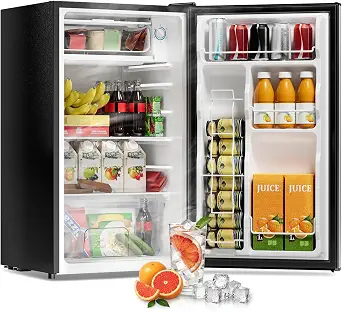 |
EUHOMY Upright Freezer 3.0 Cu Ft

| Capacity | 3 cubic feet |
|---|---|
| Door Orientation | Reversible |
| Number Of Shelves | 2 |
| Installation Type | Freestanding |
| Specification Met | UL |
This compact upright freezer provides straightforward frozen storage in a small footprint for apartments, dorms, or secondary kitchen use. It uses a compressor-based cooling system and an internal 7-level thermostat to reach temperatures from about -7.6°F to 6.8°F, and the upright layout with two removable shelves makes it easy to organize packaged foods, frozen meals, and ice cream. Practical extras include a reversible stainless steel door and adjustable feet so you can flip the hinge or level the cabinet on uneven floors. The unit is designed to be freestanding and shipped ready to use after an upright settling period, and EUHOMY emphasizes relatively quiet operation and energy-conscious compressor performance. Trade-offs are the limited 3.0 cu ft capacity if you need bulk food storage and the basic mechanical thermostat rather than precise digital controls, but for compact spaces this model balances usable interior layout, a durable door, and simple temperature control.
Best for: Buyers who want an affordable, compact upright freezer for apartments, dorms, or as a secondary freezer and value a durable door and simple, reliable cooling.
Less Ideal for: People who need large-volume or long-term bulk storage or who require precise digital temperature control should consider larger or more advanced freezers instead.
- Compressor cooling for reliable, fast freezing.
- Reversible stainless steel door adds installation flexibility and a durable finish.
- 7-level internal thermostat offers simple temperature adjustment across a useful range.
- Removable shelves allow basic organization and easier cleaning.
- Freestanding design with adjustable feet for leveling on uneven floors.
- Limited 3.0 cu ft capacity compared with larger chest or full-size freezers.
- Uses a mechanical knob thermostat rather than a digital temperature readout.
Verdict: A compact, budget-friendly upright freezer that delivers reliable compressor cooling and practical features for small spaces.
Whynter CUF-210SS Upright Freezer

| Wattage | 75 watts |
|---|---|
| Door Orientation | Reversible |
| Voltage | 115 volts |
| Number Of Shelves | 1 |
| Capacity | 2.1 cubic feet |
The Whynter CUF-210SS is a small upright freezer meant to add dedicated frozen storage where space is tight. It cools via a 75W compressor and offers a mechanical temperature control that ranges roughly from -10 to 2°F, so it can handle everything from ice cream to long-term frozen food storage. The unit's vertical layout and removable slide-out wire shelf make it straightforward to organize packages and maximize usable space, and the reversible door plus recessed handle let you fit it into different room layouts. A cylinder lock with two keys adds security for shared spaces like dorms, offices, or garages. Expect modest power draw given the low wattage, but also typical mini-freezer limitations: it is compact so large bulk items need planning, and the simple mechanical controls mean no precise digital readout or smart features. For buyers prioritizing efficient freezing in a small footprint and a secure door, the CUF-210SS is a practical choice under $300.
Best for: Buyers who need a reliable, low-power upright freezer to add secure frozen storage in tight spaces like small kitchens, dorms, or offices and who value straightforward, performance-focused cooling over smart features.
Less Ideal for: Users who need large-capacity or precision temperature control for specialized freezing tasks should look at larger or feature-rich freezers instead.
- Compact 2.1 cu ft upright layout maximizes vertical storage in small spaces
- Adjustable mechanical thermostat for reliable freezing down to about -10°F
- Reversible door and recessed handle allow flexible placement
- Cylinder lock with keys secures contents in shared or public settings
- Limited internal volume restricts large or bulk items
- No digital temperature display or advanced controls
Verdict: A compact, performance-focused mini upright freezer that delivers efficient freezing and a lockable door for secure small-space storage under $300.
LHRIVER 1.1 Cu.ft Upright Freezer

| Capacity | 1.1 cubic feet |
|---|---|
| Door Orientation | Reversible |
| Number Of Shelves | 1 |
| Voltage | 115 volts |
| Installation Type | Freestanding |
This compact LHRIVER upright freezer is built for tight spaces where you still need usable frozen storage. It offers 1.1 cubic feet of interior space with a removable shelf and adjustable feet so you can rearrange items and fit the unit into small kitchens, dorms, or offices. The reversible door and 7-step temperature control (about -22°C to -14°C) make it flexible for placement and for keeping different types of food frozen. The manufacturer highlights a thicker door gasket and an all-metal compressor intended for faster cooling and longer life, and the unit is claimed to run quietly at around 40 decibels while using roughly 0.45 kWh per day. Practical limits are obvious: capacity is small so it suits supplemental use rather than whole-home needs, and the simple mechanical controls mean you will not get precise digital monitoring. Still, for buyers seeking an inexpensive, space-saving freezer that performs basic freezing tasks with a reversible door and removable shelf, this is a straightforward option.
Best for: Buyers on a tight budget who need a small, no-frills secondary freezer for occasional frozen storage in apartments, dorms, offices, or garages.
Less Ideal for: Households that need large-capacity freezing, precise temperature control for long-term storage, or a full-size replacement for a kitchen freezer should look elsewhere.
- Compact footprint fits apartments, dorms, and small kitchens
- Reversible door and adjustable feet for flexible placement
- Removable shelf lets you customize storage layout
- Low claimed noise around 40 dB for quiet operation
- Energy-efficient use at about 0.45 kWh per day
- Very limited 1.1 cu ft capacity not suitable as a primary freezer
- Basic mechanical thermostat lacks precise digital temperature readout
Verdict: A cheap, space-saving upright freezer that delivers basic, quiet freezing for budget-focused buyers who need supplemental frozen storage.
Whynter CUF-301SS 3.0 cu ft Upright Freezer

| Capacity | 3 cubic feet |
|---|---|
| Temperature range | -14° to 50° F |
| Wattage | 100 |
| Door orientation | Reversible |
| Number of shelves | 3 |
The Whynter CUF-301SS is a small upright freezer designed for tight spaces such as garages, offices, dorms, or kitchens and can be switched to refrigerator mode when you need chilled storage. It uses a compressor-based cooling system with a mechanical dial that sets refrigerator temperatures from 32 to 50°F or freezer temperatures from -14 to -11°F, and includes two wire shelves plus a removable slide-out basket for basic organization. The reversible-swing stainless steel door and recessed handle make placement flexible while the included cylinder lock and keys let you secure contents in shared spaces. Rated to use relatively little energy, this unit is quiet enough for nearby rooms and runs on standard 115V household power. Limitations for garage use include modest capacity—only 3 cubic feet—and basic mechanical controls rather than precise digital settings, so it is best for regular food and beverage storage rather than long-term bulk freezing or temperature-critical items.
Best for: Practical buyers who need a compact, energy-conscious cold storage unit for a garage, office, or small household space and value flexibility between fridge and freezer modes.
Less Ideal for: Users who need large capacity or precise temperature control for long-term freezing, or those who store large frozen loads regularly.
- Convertible freezer/refrigerator mode for flexible cold storage needs
- Reversible stainless steel door and recessed handle for flexible placement
- Integrated lock with two keys for secure shared-space storage
- Quiet compressor operation suitable for near-room placement
- Includes removable shelf and slide-out basket for basic organization
- Only 3.0 cu ft capacity, limiting bulk storage
- Mechanical thermostat lacks precise digital control
- Not designed for heavy-duty or large-volume freezing tasks
Verdict: A compact, energy-conscious convertible freezer that fits garages and small spaces when you need a reliable, secure solution for everyday frozen or chilled storage.
Frostorm 3.2 Cu Ft Mini Fridge
| Capacity | 3.2 cubic feet |
|---|---|
| Freezer Capacity | 0.3 cubic feet |
| Defrost System Type | Manual |
| Cooling Method | Compressor |
| Voltage | 115 volts |
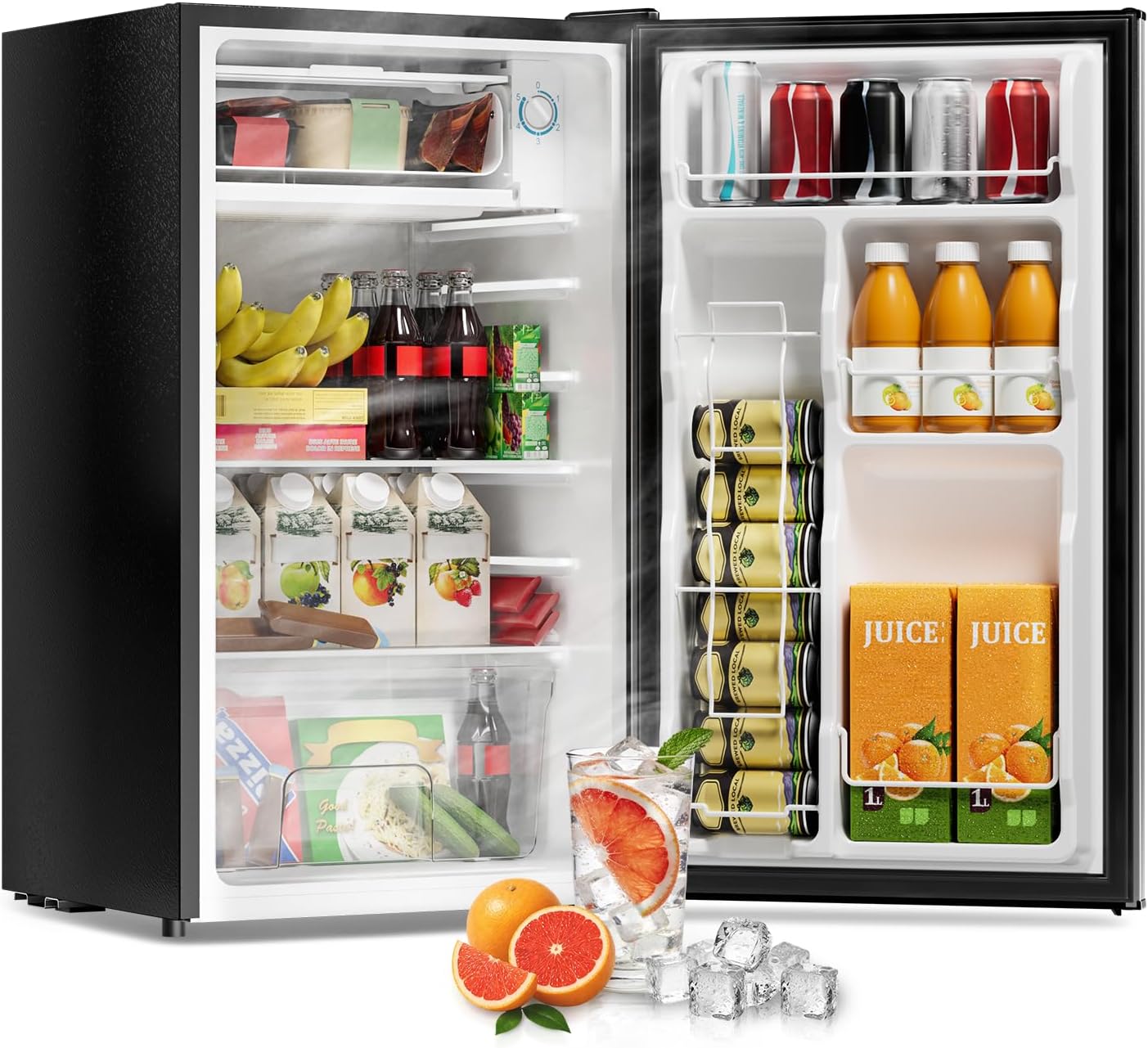
The Frostorm 3.2 Cu Ft Mini Fridge packs a full-top freezer and usable refrigerator space into a compact freestanding cabinet meant for small rooms and offices. It uses a compressor cooling system with a mechanical 1–5 thermostat so you can dial in temperature easily; the separate 0.35 cu ft upright freezer reaches typical ice-making temperatures while the main compartment stores drinks, groceries, and meal prep. Adjustable shelves, door bins, and included accessories like a beverage rack and ice mold help organize contents, and the reversible door lets you fit the unit into tight layouts. Energy use is modest at about 0.6 kWh per day and the unit is ETL certified, which should reassure buyers prioritizing safe, economical operation. Expect manual defrosting and the usual noise and temperature swings associated with compact compressors, and the freezer is best for short-term frozen storage rather than long-term preservation.
Best for: Buyers who want a reliable, energy-conscious compact fridge for a bedroom, dorm, or office and prefer a straightforward, safety-certified appliance with easy temperature control.
Less Ideal for: Those needing large frozen storage, precise long-term freezing, or an ultra-quiet, silent cooler should consider larger freezers or different cooling technologies.
- Compact 3.2 cu ft capacity with a dedicated top freezer for ice and quick-freeze items
- Compressor cooling for reliable cold performance in varying room temperatures
- Reversible door improves placement flexibility in small spaces
- Adjustable shelves, door bins, and included accessories help organize food and beverages
- Relatively low energy use (~0.6 kWh/day) and ETL safety certification
- Freezer is small and suited to short-term storage and ice only
- Manual defrost requires occasional maintenance
- Compressor models can be louder than thermoelectric mini fridges
Verdict: A compact, ETL-certified mini fridge that balances usable fridge space with low daily energy use, making it a sensible pick for safety- and cost-conscious small-space buyers.
Choosing the Right Upright Freezer: Key Factors to Consider
Usable Capacity and Interior Layout
Capacity numbers can be misleading because they often list gross volume rather than the space you can actually use. Look for measurements and interior photos when available. Shelves, baskets, and compartment shapes influence whether you can store tall items, flat packages, or bulk bags efficiently.
A well-organized interior reduces food waste and makes rotation easier. Consider whether the unit has adjustable shelving or removable baskets so you can adapt the space for seasonal items like bulk meat or long boxes of frozen foods.
Energy Efficiency and Annual Operating Cost
A lower purchase price may be tempting, but energy use determines ongoing cost. Compare published energy consumption figures or energy ratings to estimate yearly electricity use. An energy-efficient model can pay back its difference over several years through lower utility bills.
Also note the unit's expected standby draw and how well it recovers temperature after door openings. Models with better insulation and efficient compressors keep food frozen with fewer compressor cycles, reducing runtime and energy use.
Temperature Stability and Cooling Speed
Consistent temperatures are essential for food safety and quality. Check specification sheets for temperature range and information on rapid-freeze or fast-cool features if you plan to freeze fresh food often. Units that struggle to hold a steady low temperature are more likely to produce freezer burn and shorten storage life.
Consider how quickly the freezer recovers after the door has been open. Faster recovery is especially important in high-use settings or if you store perishable items that need to be re-frozen quickly.
Defrost Method and Maintenance Needs
Manual defrost freezers are common at lower price points and are typically more energy efficient when new, but they require periodic thawing to remove frost buildup. Automatic or frost-free systems reduce the need for manual maintenance but may cost more and sometimes run slightly warmer.
Evaluate how easy it is to access interior surfaces for cleaning, whether baskets are removable, and how the drain or defrost water is routed. Simpler maintenance reduces the time and effort needed to keep the unit running well.
Physical Footprint and Installation Requirements
Measure the installation location carefully. Allow for adequate clearance around the unit for ventilation and door swing. Some upright freezers have reversible doors or narrower profiles for tight spaces, while others require more clearance for service access.
Also consider floor strength if placing the freezer on a raised platform or an attic space. Heavier models may need a firm, level surface to operate quietly and efficiently.
Controls and Usability Features
Simple, reliable controls are better than complex interfaces on budget models. Look for clearly marked thermostats, accessible controls, and feedback such as indicator lights or audible alarms for high temperature.
Other useful features include interior lighting, door locks if needed for shared spaces, and an easy-to-read temperature display. These details affect daily convenience and whether the unit suits the intended use case.
Sizing the Freezer for Your Household
Estimate how much frozen food you typically store by counting weekly bulk purchases and long-term items like meat or prepared meals. A small household that occasionally freezes leftovers needs far less capacity than someone who buys in bulk or preserves harvests.
Think about how long you plan to store items. Short-term storage benefits from fast-access baskets and adjustable shelves. For long-term bulk storage, prioritize maximum usable volume and stable low temperatures.
- Measure external dimensions and door swing before buying.
- Plan for at least 20 percent extra usable space to avoid overpacking.
- Consider stacking organized containers or bins to maximize vertical space.
Installation Tips and Ventilation
Proper placement affects performance. Leave recommended clearances at the sides and back for heat dissipation so the compressor does not run harder than necessary. Tight placement against walls or inside cabinets can reduce lifespan and increase energy use.
Avoid placing the freezer in direct sunlight or near heat sources such as ovens, dryers, or uninsulated exterior walls. In colder garages or unconditioned spaces, check the unit's ambient operating range so it continues to cycle properly.
- Allow level, firm support to prevent vibration and noise.
- Keep the area around vents free from dust and debris.
- Plan an electrical outlet that is dedicated and easily accessible.
Organizing Inside an Upright Freezer
Use removable baskets and labeled bins to separate types of food for faster access. Flat items like pizza boxes should be stored on dedicated shelves to avoid wasted space. Stacking identical containers or vacuum-sealed bags improves airflow and visibility.
Rotate stock using a first-in, first-out approach. Keep frequently used items at eye level or in the top baskets to minimize door-open time and temperature fluctuation.
- Label packages with dates and contents.
- Group similar items together to reduce time spent searching.
- Avoid overpacking to maintain airflow and consistent cooling.
Noise, Vibration, and Long-Term Reliability
Budget upright freezers can vary in noise and vibration. Look for units with stable compressors and solid internal shelving to minimize rattle. If the freezer will live near living areas, choose a model reported to run quietly.
Long-term reliability is influenced by build quality and ease of service. Simple mechanical controls and easily accessible coils make routine upkeep easier and reduce the likelihood of minor failures becoming major problems.
- Place the freezer on a level surface to reduce vibration.
- Inspect seals regularly to prevent air leaks that force longer compressor runtimes.
Using an Upright Freezer in Unconditioned Spaces
If you plan to install the unit in a garage, porch, or other unconditioned space, confirm the manufacturer's specified ambient temperature range. Some freezers struggle to cycle correctly in very cold or very hot environments, which can affect performance and food safety.
For spaces that have seasonal temperature swings, consider adding passive insulation around the area or choosing a location more protected from extremes to maintain consistent operation.
- Avoid placing the freezer where temperatures regularly drop near freezing.
- Check seals after winter to ensure they remain pliable and effective.
How We Chose the Best Upright Freezer
We focused on measurable, buyer-relevant attributes that matter for budget upright freezers. Primary evaluation criteria included usable interior capacity and layout, because actual storage volume and shelf/basket options determine whether the unit meets a household's needs. Energy efficiency and estimated annual operating cost were assessed using published energy consumption metrics and stated energy ratings to reflect long-term ownership expense. Temperature consistency and cooling performance were judged based on available specifications and customer-reported behavior for maintaining safe frozen temperatures. Build quality and maintenance considerations covered door seal design, defrost method, and ease of cleaning. Usability factors such as control simplicity, door swing options, and interior lighting were also included. We excluded units with unclear or missing published specifications and models intended for commercial use. We did not consider add-on warranties or bundled services as part of the core evaluation. The resulting shortlist favors units that deliver reliable freezing, accessible storage, reasonable energy use, and straightforward maintenance within the under $300 budget constraint.
Our full evaluation process is outlined in our review methodology.
FAQ
How much usable space do I really get in a budget upright freezer?
Usable space is usually less than the listed gross volume because insulation and compressor housings occupy interior volume. Look for detailed interior dimensions or photos and consider how shelving and baskets reduce usable height and width.
Are frost-free upright freezers worth it under $300?
Frost-free models reduce maintenance but can be rarer at this price point. When available, they offer convenience but may have slightly higher energy use. Whether they are worth it depends on how often you want to defrost manually.
Can I store large items like turkeys or pizza boxes upright?
Many uprights accommodate tall items if they have adjustable shelves or removable baskets. Check interior height and shelf adjustability to ensure you can fit large or unusually shaped packages.
How often should I defrost a manual-defrost unit?
Defrost frequency depends on use and humidity, but a common guideline is to defrost when frost buildup reaches about a quarter-inch. Regularly removing frost helps maintain efficient cooling and usable capacity.
Does location affect freezer energy use?
Yes. Placing the unit in a hot, poorly ventilated area or near heat sources forces the compressor to run longer, increasing energy use. A cool, ventilated spot helps the freezer run efficiently.
Final Verdict
Prioritize usable capacity and reliable temperature control when choosing an upright freezer under $300. Balance initial cost against energy efficiency and maintenance needs to find a unit that fits your storage habits and installation constraints. If you need frequent access and minimal upkeep, favor models with easy organization and convenient controls; if long-term storage and low operating cost matter more, focus on insulation and energy ratings. With attention to these tradeoffs, you can pick an affordable upright freezer that performs well for your household.