
Note: This article contains affiliate links. If you click on these links and make a purchase, we may earn a small commission at no extra cost to you. This helps support our research and content. Read our full affiliate disclosure here.
If you use cloth diapers, your washing machine becomes part of the routine that keeps baby healthy and fabrics long-lasting. A machine that can handle heavy, soiled loads, maintain high-temperature or sanitizing cycles, and still treat delicate fibers gently will simplify laundry and reduce odor and staining problems. This guide covers seven shortlisted washing machines chosen for their cleaning power, sanitation options, capacity, and cycle versatility specifically for cloth-diaper routines. Read on to understand the features that matter most and how each type of washer fits different household needs before you pick the right machine.
Top Picks at a Glance
| Best Overall The best all-around choice for most situations | Auertech Portable Washing Machine 14 lbs | 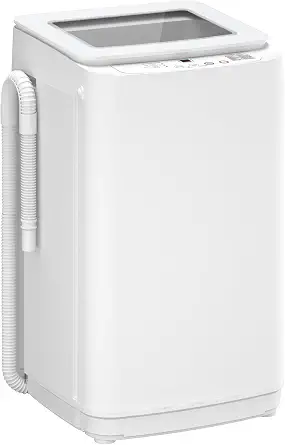 |
| Best Quality Built to a higher standard if you want something more solid | COMFEE' Portable Washer CLV09N1AMG |  |
| Best Value The sweet spot between price and what you get | SUPER DEAL Twin Tub Washer 13L |  |
| Best Budget The cheapest option that still gets the job done reliably | scbestuygo Mini Washing Machine U8 |  |
| Top Rated A top-rated pick with lots of positive feedback | BLACK+DECKER BPWM09W Portable Washer |  |
| Most Popular A crowd favorite that many people choose with confidence | Giantex Twin Tub Washing Machine |  |
| Best Seller A high-volume bestseller chosen again and again | Auertech Portable Twin Tub Washer |  |
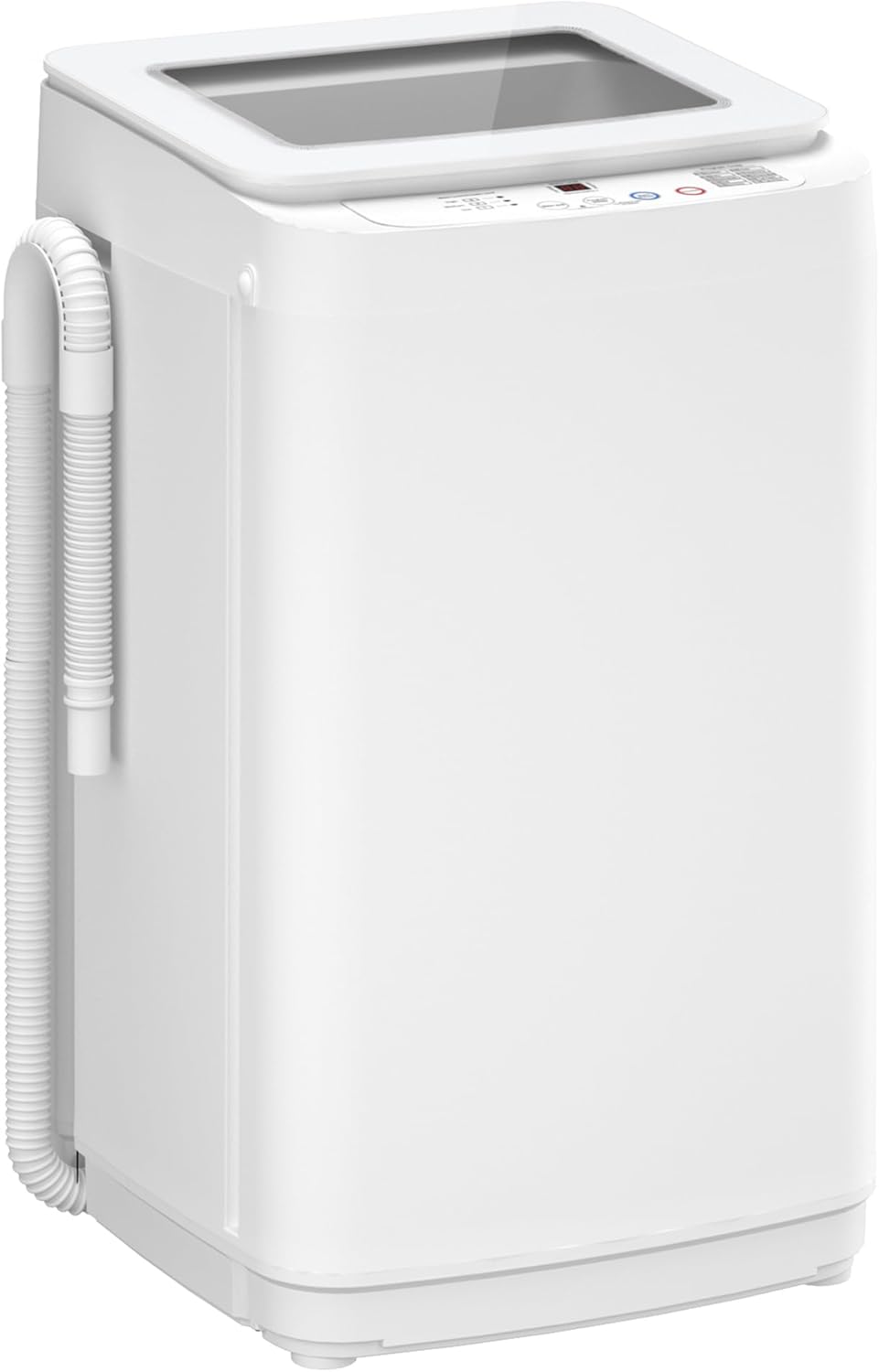
Auertech Portable Washing Machine 14 lbs
| Capacity | 14 pounds |
|---|---|
| Operation Mode | Fully Automatic |
| Number of Standard Cycles | 10 |
| Max Rotational Speed | 1300 rpm |
| Installation Type | Freestanding |
This compact 14 pound-capacity washer is aimed at small households, apartments, dorms, and RVs that need a full automatic machine without a fixed hookup. It offers 10 wash programs (Standard, Bulky, Quick Wash, Soft, Soak, Wash Only, Spin Only, Rinse & Spin, Tub Clean, and Tub Air Dry) plus three water levels so you can tailor cycles to fabric type and soil level. A 360W motor and a 1300 rpm max spin deliver strong cleaning and high spin extraction that the listing claims leaves laundry up to 95% dry, which shortens drying time for heavy items like diaper covers. Practical features include a built-in 4.1 ft drain pump with faucet adapter for easy setup, a transparent tempered glass lid with soft-close, tub self-clean, child lock, and a 24-hour delay start for flexible scheduling. Limitations are the modest 14 lb capacity and compact footprint, which means multiple diaper loads for larger families, and the unit is freestanding so it requires a stable surface and accessible drain routing. Expect efficient cleaning for cloth diapers in small households but plan for more frequent washes than a full-size machine.
Best for: Buyers who need a compact, easy-to-install washer that cleans heavily soiled items efficiently and saves drying time in small living spaces.
Less Ideal for: Families who want one-load washing for multiple children or expect full-size capacity and built-in dryer performance should consider larger machines instead.
- Compact fully automatic top-load design fits apartments, dorms, and RVs
- Ten wash programs plus three water levels let you customize cycles
- Built-in drain pump and faucet adapter for easy freestanding setup
- High-speed spin (up to 1300 rpm) for strong water extraction and shorter dry times
- Tub self-clean and child lock improve hygiene and safety
- 14 lb capacity may require multiple loads for cloth-diaper households with several children
- Freestanding setup requires accessible faucet/drain placement and a stable surface
Verdict: Auertech's 14 lb portable washer is a practical small-space choice for reliably cleaning and quickly spin-drying cloth diapers when you need a compact, easy-to-install machine.
COMFEE' Portable Washer CLV09N1AMG

| Capacity | 0.9 cubic feet |
|---|---|
| Number of Programs | 5 |
| Max Rotational Speed | 840 rpm |
| Noise | 62 db |
| Display | LED |
The COMFEE' CLV09N1AMG is a fully automatic top-load portable washer aimed at small households, dorms, RVs, and bathroom setups. It offers five wash cycles (Gentle, Heavy Duty, Normal, Rapid, Soak) plus three water levels and adjustable wash/rinse/spin times, so you can tailor cycles for different soil levels. A stainless steel inner tub and a max 840 rpm spin speed help remove more water from loads, and the transparent lid and LED display make it easy to monitor a cycle. Wheels and handles make relocating or storing the unit straightforward. Practical features include a lint filter, dispenser options for detergent/bleach/softener, and Auto Unbalance Detection to reduce vibration and protect hookups. Limitations are its small 0.9 cu ft capacity, which means multiple diaper loads for families using cloth diapers, and a reported noise level around 62 dB that is louder than some home washers. For heavy or frequent diaper washing you may need a larger-capacity or dedicated machine, but for performance-focused users in tight spaces this unit gives strong wash control and a decent spin to speed drying.
Best for: Buyers who need a performance-minded compact washer for small spaces and want cycle control and strong spin extraction rather than a large-capacity machine.
Less Ideal for: Families who need to wash large volumes or frequent heavy loads such as many cloth diapers per day should consider a larger-capacity or full-size washer instead.
- Multiple wash programs and adjustable times for customized cleaning.
- Stainless steel drum and 840 rpm spin to improve water extraction.
- Auto Unbalance Detection helps reduce vibration and protect plumbing.
- Portable design with wheels and handles for easy placement and storage.
- Dispenser options for bleach, detergent, and fabric softener.
- Small 0.9 cu ft capacity limits load size and increases number of cycles for bulky items.
- Noise level around 62 dB is relatively loud compared with quiet home washers.
Verdict: If you want a compact washer that delivers configurable cycles and strong spin performance for tight spaces, this COMFEE' portable model is a capable, performance-focused choice.
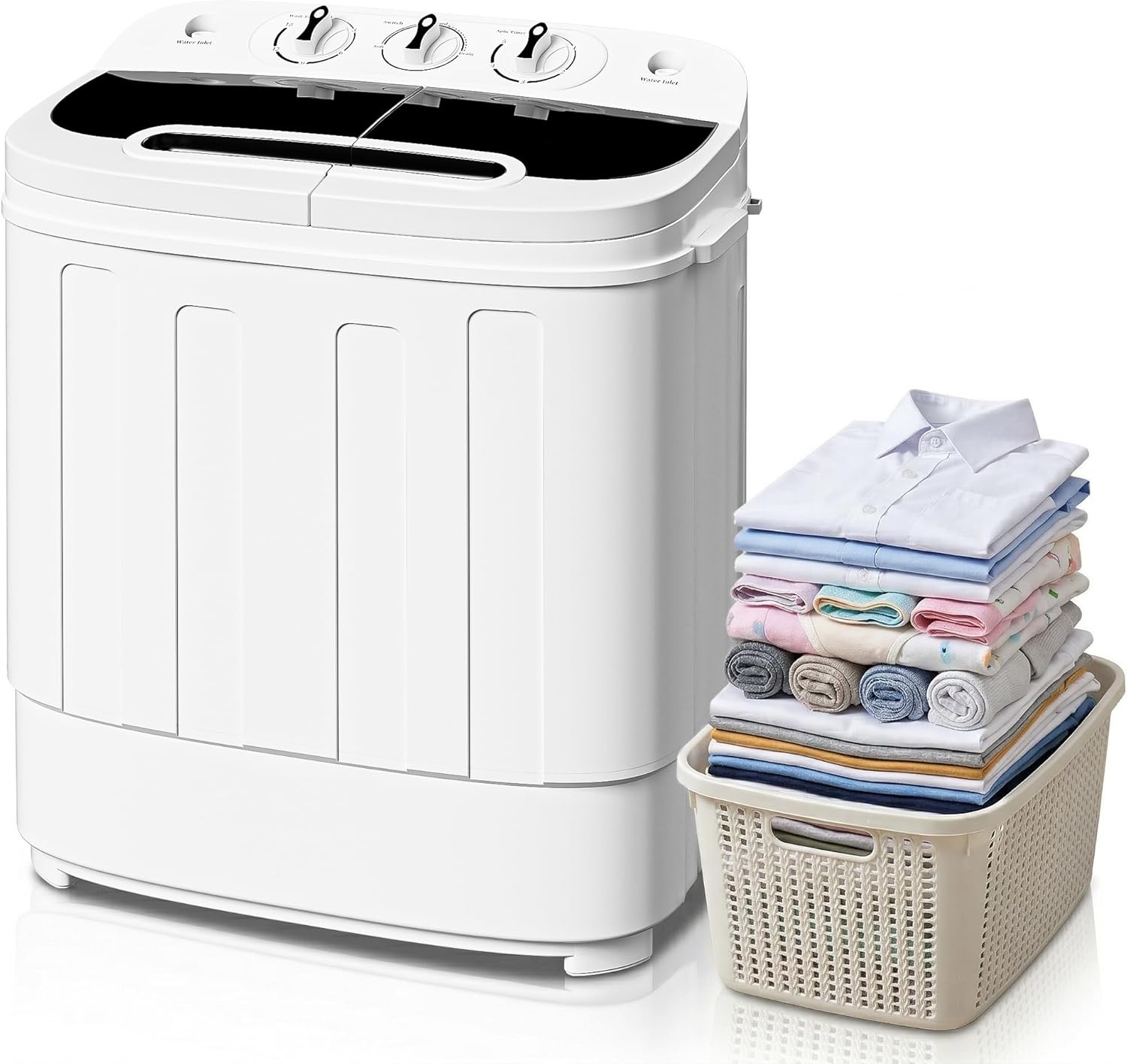
SUPER DEAL Twin Tub Washer 13L
| Capacity | 13 liters |
|---|---|
| Operation Mode | Semi Automatic |
| Max Rotational Speed | 1300 rpm |
| Voltage | 115 volts |
| Number of Standard Cycles | 2 |
This compact twin-tub washer combines a wash tub and separate spinner so you can wash and spin-dry small loads without a full-size machine. It is intended for top-load, semi-automatic use with simple knob controls, a 15-minute wash timer and a 5-minute spin timer, and a powerful 1300 RPM motor for effective water extraction. The twin-tub layout and built-in drain pipe make it easy to run frequent short cycles and move laundry between tubs, which is handy when you need to treat heavily soiled items separately or pre-rinse before a longer cycle. The plastic drum and lightweight body keep the unit rust-free and portable for bathroom, dorm, RV, or camping use. Limitations include the modest 13-liter capacity (split between washer and spinner) and basic programing, so it is not suited to full household loads or fully automatic hands-off operation. Noise and vibration are typical of compact spin units, and you will need to manage water temperature and detergent manually for sanitizing needs.
Best for: Budget-conscious parents or caregivers who need a portable machine to handle small, frequent loads and who prioritize speed, portability, and simple operation over full automation.
Less Ideal for: Families who need to launder large volumes of cloth diapers at once, require precise temperature control for sanitizing, or want a fully automatic plug-and-play washer.
- Twin-tub design allows simultaneous washing and spinning to speed through small loads
- Powerful 1300 RPM spin helps remove excess water for quicker drying
- Lightweight plastic body and compact footprint make it easy to move and store
- Built-in drain pipe and simple controls simplify frequent quick cycles
- Small 13-liter capacity is limiting for larger or numerous cloth diaper loads
- Semi-automatic operation requires manual water management and transfers between tubs
- Basic controls and plastic drum offer fewer sanitizing or temperature options
Verdict: A compact, portable twin-tub washer that delivers fast, small-load cleaning and strong spin performance for caregivers needing a low-cost, space-saving solution.
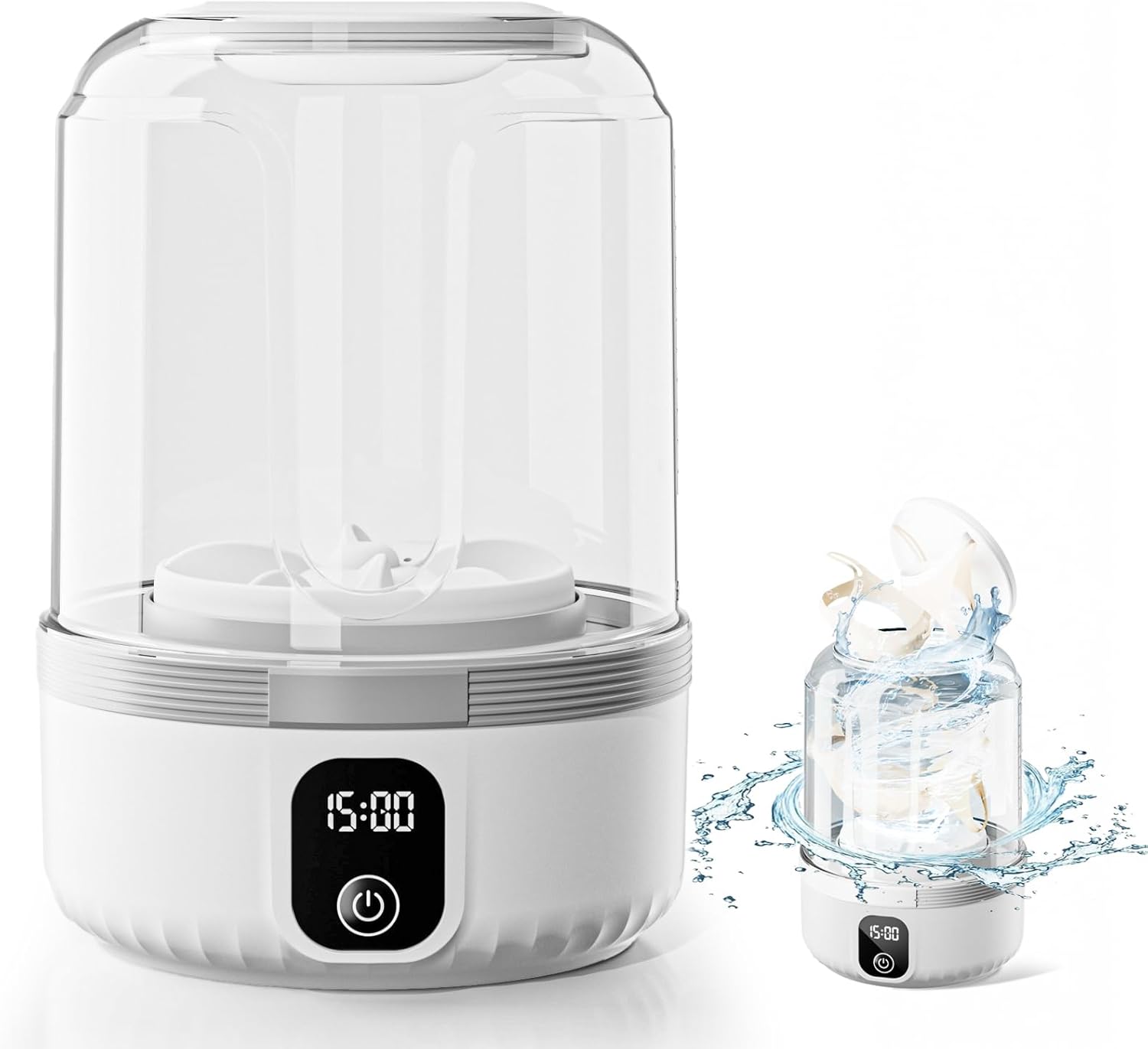
scbestuygo Mini Washing Machine U8
| Capacity | 1.6 liters |
|---|---|
| Cycle Options | Eco (5 min, 15 min) |
| Controls Type | Touch |
| Operation Mode | Manual |
This rechargeable mini washing machine is a small, freestanding unit intended for washing very small items like underwear, socks, and delicate baby garments. It holds about 1.6 liters and runs on a built-in 4000mAh battery with a touch LED display that shows remaining power and chosen mode. Two timed wash cycles (5 and 15 minutes) driven by a 2000 rpm motor promise quick, gentle cleaning, and the unit adds blue-light sterilization to help with hygienic care. Its IP67 splashproof body and adjustable leveling legs make it portable and usable in travel, dorm, RV, or hotel situations where a full washer is not available. Important limitations are the tiny capacity and manual operation, so it cannot replace a full-size machine for heavy or bulky diaper loads and requires careful filling to the recommended 2/3 water level. Expect slower throughput for multiple diaper changes and plan to finish with an additional rinse or spin step for thorough cleaning.
Best for: Buyers who need an inexpensive, portable way to clean a few small diapers or liners while traveling or between full washes and who prioritize portability and low upfront cost.
Less Ideal for: Households that need to wash full diaper loads, heavy soiled items, or who prefer an automated full-size washer for regular daily diaper laundering.
- Rechargeable 4000mAh battery for use without direct power
- Compact, truly portable form factor with IP67 splashproof rating
- Two quick timed wash modes for delicate items and fast refreshes
- Blue-light sterilization and gentle hand-scrub imitation for hygienic care
- Touch LED display that shows remaining battery and mode selection
- Very small 1.6 liter capacity unsuitable for whole-diaper loads
- Manual operation and short timed cycles may require multiple batches and extra rinses
- Not designed to handle bulky items or heavy soil like a full-size washer
Verdict: If you want a very low-cost, battery-powered mini washer for quick, portable cleaning of a few diaper items, this unit delivers practical hygiene and mobility.
BLACK+DECKER BPWM09W Portable Washer

| Capacity | 0.9 cubic feet |
|---|---|
| Wash Capacity | 6.6 lb |
| Number of Programs | 5 |
| Max Rotational Speed | 983 rpm |
| Noise | 64 db |
The BLACK+DECKER BPWM09W is a compact, fully automatic portable washer designed for small homes and apartments. It connects to a standard faucet or sink with a quick-connect adapter and sits on rollers for easy movement and storage. The machine offers five cycles — Heavy, Gentle, Normal, Rapid, and Soak — and three cold-water level choices to handle light loads up to about 6.6 pounds, with a stainless steel drum and LED display for simple operation. Practical features include child lock, auto unbalance detection, and a transparent quiet-close lid so you can monitor loads. Noise is noticeable during wash and spin (brand notes up to high 60s to upper 70s dB), and the unit is limited to cold-water only, so stain removal may require pre‑treating. For cloth diaper care, the washer's small capacity and cold-only washes mean you will run more frequent cycles but can use the gentle and heavy settings for contaminated or bulky items. Installation requires a nearby faucet within four feet or a permanent water connection for steady use.
Best for: Buyers who need a reliable, easy-to-install washer for small spaces and prefer straightforward controls and safety features over large capacity.
Less Ideal for: Households that need to wash large volumes at once, require hot-water sanitation cycles, or want a quieter, full-size machine for frequent heavy loads.
- Compact footprint fits small homes and apartments
- Stainless steel wash tub resists rust and corrosion
- Five wash cycles including Heavy and Gentle for different soils
- Quick-connect sink adapter and rollers make it easy to move and store
- Safety features like child lock and auto unbalance detection
- Cold-water wash only, which can limit sanitation and stain removal
- Small 6.6 lb capacity requires frequent loads for bulky items like cloth diapers
- Notably noisy during spin cycles compared with full-size washers
Verdict: A dependable compact washer for small-space owners who need simple, moveable laundry capable of handling occasional cloth diaper loads when hot-water sanitation is not required.
Giantex Twin Tub Washing Machine
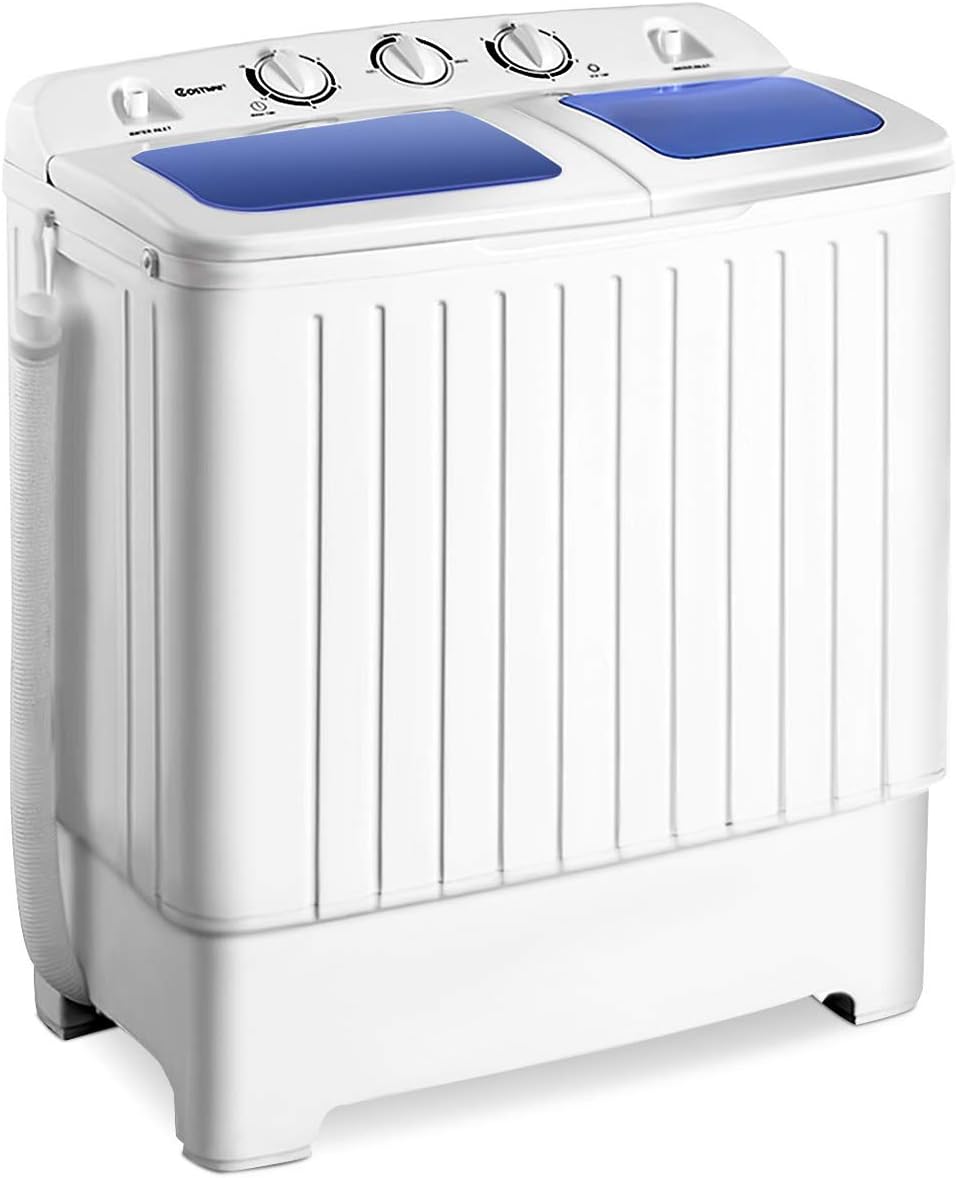
| Capacity | 20 pounds (12 lb wash, 8 lb spin) |
|---|---|
| Operation Mode | Semi Automatic |
| Wash Power | 300W |
| Spin Power | 110W |
| Voltage | 120 volts |
The Giantex Twin Tub is a compact semi-automatic washer and spinner combo designed for small loads in apartments, dorms, RVs, or anywhere you need a portable laundry solution. It separates washing (12 lb rated capacity) and spin-drying (8 lb capacity) so you can wash and then move garments to the spinner to reduce drying time. Controls are simple knobs with a 15-minute washer timer and a 5-minute spin timer and the unit runs on standard 120V power with a 300W wash motor and 110W spin motor. Practical touches include two inlet hose locations for flexible faucet hookup, a removable lint filter, and a top lid that keeps the spinner covered during high-speed cycles. Because it is semi-automatic and relies on gravity drainage, expect to do some manual steps like moving clothes between tubs and hanging the drain hose; spin drying leaves clothes only 80 to 90 percent dry so line or machine drying is still needed. For cloth diaper users, the separate spinner helps extract water before drying but the limited washer capacity means you will need multiple small loads rather than large bulk washes.
Best for: Buyers who prioritize a compact, low-effort solution for small, frequent loads and who value peer-reviewed reliability when choosing a budget portable washer for tight spaces.
Less Ideal for: Households that need to wash large batches like full loads of cloth diapers at once or who want a fully automatic, hands-off laundry experience.
- Separate wash and spin tubs let you extract more water before drying
- Two inlet hose positions for flexible faucet placement
- Removable lint filter simplifies cleaning
- Top lid and knob controls make operation straightforward
- Semi-automatic operation requires manual transferring of clothes between tubs
- Spin dryer only removes about 80–90% of moisture so items often need additional drying
Verdict: A compact, semi-automatic twin-tub washer that is practical for small, frequent loads and useful for removing excess water from cloth diapers before drying.
Auertech Portable Twin Tub Washer

| Capacity | 28 pounds |
|---|---|
| Operation Mode | Semi Automatic |
| Max Rotational Speed | 1300 rpm |
| Installation Type | Portable |
| Number of Programs | 2 |
This twin-tub portable washer separates washing and spinning into two tubs so you can wash and spin at the same time, which speeds small loads and helps manage delicates. It is semi-automatic: you connect the inlet to a faucet, add water manually or via hose, set the timed wash and spin cycles with knobs, then move between modes. Notable features include an 18 lb wash tub and 10 lb spin tub, a 1300 rpm motor, a transparent lid for monitoring, a built-in drain pump with adjustable hose, and a lint filter. For practical use it fits dorms, apartments, and RVs where full-size machines are impractical and it reduces water use for smaller loads. Limitations to consider are the semi-automatic workflow that requires manual water handling and cycle switching, the modest spin capacity that may need careful balancing, and motor overheat protection that can pause long or overloaded cycles. It is a straightforward, space-saving machine for frequent small loads but not a substitute for full-size automatic washers when large, heavily soiled loads are common.
Best for: Buyers who prioritize reliable, compact laundry for small frequent loads and value simple, proven controls over advanced automation will appreciate this machine for apartments, dorms, or RVs.
Less Ideal for: Households that need to wash large family loads, heavy cloth-diaper batches, or want a fully automatic hands-off cycle should consider a full-size automatic washer instead.
- Separate wash and spin tubs let you wash and spin concurrently to save time
- Built-in drain pump and adjustable inlet hose simplify draining and filling without plumbing changes
- 1300 rpm motor delivers strong spin performance for a portable unit
- Transparent lid and simple knobs make operation and monitoring easy
- Includes lint filter to catch fibers during wash cycles
- Requires manual water fill/drain and switching between wash and spin cycles
- Spin tub capacity is smaller than the wash tub so large items must be split or dried separately
- Semi-automatic design needs occasional attention to avoid overloading and motor overheat
Verdict: A compact, easy-to-use twin-tub washer that delivers reliable, space-saving washing and spinning for frequent small loads.
Choosing the Right Washing Machine for Cloth Diapers: Key Factors to Consider
Cleaning & Sanitation Options
Cloth diapers need more than a standard wash to remove solids, oils, and bacteria. Machines that offer true high-temperature cycles, steam sanitation, or dedicated sanitation settings give you the thermal action required to break down organic material and reduce microbial load.
Beyond temperature, look for options such as extra-agitation settings, prewash or soak stages, and the ability to run extended wash times without overheating fabrics. These features affect how completely soils are lifted from fibers and how effectively odors are eliminated.
Rinse Quality and Extra Rinse
Residue from detergents or residual ammonia from urine can cause odors and skin irritation. A washer that provides multiple rinse cycles, adjustable rinse volumes, or specialized rinse modes helps remove detergent and waste residues thoroughly.
Consider machines with strong rinse flow patterns and programmable extra-rinse options. High rinse effectiveness also reduces the chance of needing repeat cycles, saving time and water in the long run.
Capacity and Drum Design
Cloth diapers are bulky, especially when using inserts and waterproof covers. A machine with adequate drum volume and an appropriate tub shape lets you wash a useful number of diapers per cycle without overpacking, which would compromise cleaning and rinsing.
Also examine the drum design: smooth drums, gentle paddles, or specific wash motions can minimize wear on elastic and waterproof layers while still providing mechanical action for soil removal.
Spin Speed and Drying Considerations
Higher spin speeds extract more water, reducing drying time whether you use a dryer or line-dry. That shortens turnaround time between loads and reduces the chance of musty smells from prolonged dampness.
Balance spin speed with fabric care. Excessive centrifugal force can stress elastics and closures, so look for adjustable spin settings or programs that optimize moisture removal while protecting diaper components.
Detergent Compatibility and Dispensing
Not all detergents and dispensing systems work well with cloth diapers. Machines with flexible dispensing for prewash, main wash, and liquid or powder detergents let you use gentle, low-residue detergents and add boosters when needed.
Clear access to the detergent drawer and easy-to-clean dispensers prevent buildup of residues that could transfer to diapers. Some washers also support dosing aids or bulk-dosing systems that improve consistency across loads.
Maintenance and Ease of Cleaning
A washing machine used for diapers will need periodic internal cleaning to prevent odors and lint buildup. Look for accessible seals, removable dispensers, and self-clean or tub-clean cycles that help maintain hygiene.
Easy-to-clean external surfaces and clear maintenance instructions reduce the time you spend on upkeep, and robust seals or gasket designs lower the chance of trapped soil causing persistent odors.
Top Wash Cycles and How to Use Them
Understanding which cycles to use for cloth diapers makes a big difference in results. A typical diaper routine starts with a cold or warm prewash to remove solids and prevent proteins from setting, followed by a hot or sanitized main wash to disinfect and strip soils. Finish with one or two extra rinses to ensure detergent and waste residues are fully removed.
Adjust cycle duration based on soil level. Heavily soiled loads benefit from longer agitation and an extended wash phase, while lightly soiled loads can be handled with shorter programs. If your machine has a customizable wash program, create a preset that combines prewash, hot main wash, and multiple rinses for consistent outcomes.
- Use prewash or soak for heavily soiled diapers.
- Select a sanitation or high-temperature option when needed.
- Always run an extra rinse cycle to remove residues.
Stackable, Top-Load, or Front-Load: Which Works Best?
Each configuration has strengths for cloth-diaper laundering. Front-loaders generally use less water and offer gentle drum motion that is kinder to elastics. Top-loaders with impellers can provide aggressive mechanical action that helps dislodge stuck soils but may be tougher on fabric over time. Stackable units save floor space but can limit load size.
Think about how many diapers you wash per week and where you will run longer sanitation cycles. If space is tight, a high-capacity compact or stackable model with robust cycles may be the right compromise. If fabric longevity is the priority, a gentle front-loader with good rinse performance is often preferable.
- Front-loaders: gentle, efficient, good rinse control.
- Top-loaders: strong agitation, faster cycle times in some cases.
- Stackable: space-saving but watch capacity limits.
Water Use and Environmental Tradeoffs
Low-water machines reduce consumption but can make rinsing bulky diaper loads more difficult. Efficient washers compensate with longer rinse cycles or higher spin speeds. If water availability or utility costs are a concern, choose a machine with adjustable water levels or proven extra-rinse efficiency.
Consider laundering frequency. Washing smaller loads more often may increase water use, while larger, full loads are more efficient but require sufficient capacity and rinsing power to be effective.
- Look for adjustable water levels or fabric-sensing features.
- Higher spin speeds save drying energy but inspect care recommendations for diaper components.
- Balance load size with effective rinses to avoid rewash cycles.
Cycle Length and Daily Practicality
Parents often juggle frequent loads, so cycle length matters. Shorter cycles with effective cleaning are ideal for busy households, but for sanitizing you may need longer high-temperature washes. Machines that let you shorten or extend selected phases give flexibility without sacrificing hygiene.
Also check for delay-start and load-completion alerts. These features let you coordinate washes around nap and bedtime schedules, so diapers are ready when you need them without being left damp in the drum.
- Programmable cycles let you balance speed and sanitation.
- Delay start and end-of-cycle signals add scheduling flexibility.
- Custom presets reduce setup time for routine diaper loads.
Handling Stains, Boosters, and Add-Ons
Tough stains and persistent odors sometimes require a targeted approach. Machines that support pre-soak, enzyme-friendly detergents, or safe booster additives let you tackle particularly stubborn soils. Use boosters sparingly and follow diaper care guidance to avoid damaging waterproof membranes or elastics.
Accessory tools such as mesh bags for inserts, dedicated detergent dosing cups, and easy-to-access prewash compartments simplify the process and keep small pieces like fasteners or inserts under control during the wash.
- Use pre-soak for protein-based stains before the main wash.
- Check compatibility of boosters with diaper fabrics.
- Organize inserts and covers with mesh bags to protect them.
How We Chose the Best Washing Machine for Cloth Diapers
We focused on features that directly affect cloth-diaper care and everyday usability. Key evaluation dimensions included cleaning effectiveness at removing solid soils and residues, availability and performance of high-temperature or sanitizing cycles, and rinse quality to minimize detergent and ammonia buildup. We also prioritized capacity and cycle flexibility so parents can efficiently handle diaper-heavy loads without overfilling, plus drum and agitator designs that reduce fabric wear. Water usage and spin-speed options were reviewed for how they influence drying time and remaining moisture. Finally, practical concerns like cycle length, ease of loading and unloading, and machine maintenance were considered. We excluded machines that lack clear sanitation options or offer only superficial cycle labels without adjustable temperatures or extra-rinse features. Models with known difficulties reaching effective rinse performance or with limited capacity for bulky loads were removed. The resulting list highlights machines that balance deep-clean features with gentler handling, reliable rinse performance, and practical household efficiency.
Our full evaluation process is outlined in our review methodology.
FAQ
How hot should the wash be to sanitize cloth diapers?
Sanitizing needs depend on fabric and care labels, but a hot cycle between 60 to 90 degrees Celsius is commonly used where fabrics allow. If you cannot run high-heat cycles, choose longer wash times and reliable detergents plus extra rinses to improve sanitation.
Can I use a gentle detergent and still get diapers clean?
Yes. Low-residue, enzyme detergents designed for cloth diapers can clean effectively when paired with proper wash routines like a prewash, a hot main wash if permitted, and multiple rinses to remove residues. Avoid fabric softeners and optical brighteners.
How many diapers should I wash per load?
Load size depends on machine capacity and drum type; aim to leave space for water and movement so diapers are agitated and rinsed properly. Overfilling reduces cleaning and rinse effectiveness, while very small loads waste water and energy.
Do I need an extra rinse for every diaper load?
Extra rinses are recommended frequently because they help remove detergent and urine residues that cause odor and skin irritation. Many parents run at least one extra rinse, and more if you see suds or smell ammonia after the cycle.
Will high spin speeds damage diaper elastics?
Very high spin speeds can place stress on elastics and fastening systems over time. Use adjustable spin settings and choose moderate speeds when concerned about wear, balancing moisture removal with fabric longevity.
Final Verdict
Choosing the right washing machine for cloth diapers means prioritizing cleaning power, reliable rinsing, and cycle flexibility. Focus on machines that offer sanitation or high-temperature options, strong rinse performance, and a drum capacity that matches your typical load size. Expect tradeoffs between water efficiency and rinse effectiveness, and use adjustable spin and cycle settings to protect elastics while minimizing drying time. Ultimately, pick a machine that fits your household rhythm: one that produces consistently clean, residue-free diapers without excessive maintenance. Prioritize rinse quality and sanitation features, and you will reduce odors, rewash cycles, and fabric wear over time.