
Note: This article contains affiliate links. If you click on these links and make a purchase, we may earn a small commission at no extra cost to you. This helps support our research and content. Read our full affiliate disclosure here.
Buying a washing machine on a budget forces practical tradeoffs between cleaning power, efficiency, and long-term reliability. If you need a dependable machine for weekly loads without overspending, choosing the right model matters for fabric care, utility costs, and household convenience. This guide shortlists seven washing machines under $600 that meet common homeowner needs and apartment constraints. We evaluated machines on real-world laundry outcomes and operating costs to help you pick a machine that handles your fabrics and fits your routine. Read on to see which designs and features matched our editorial criteria.
Top Picks at a Glance
| Best Overall The best all-around choice for most situations | Giantex Portable Full-Automatic Washer | 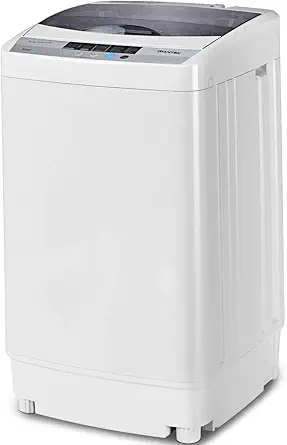 |
| Best Quality Built to a higher standard if you want something more solid | Panda Portable Washing Machine PAN638MH1 |  |
| Best Value The sweet spot between price and what you get | COMFEE' Portable Washer CLV09N1AMG |  |
| Best Budget The cheapest option that still gets the job done reliably | SUPER DEAL Mini Twin Tub Washer |  |
| Top Rated A top-rated pick with lots of positive feedback | BLACK+DECKER Portable Washer BPWM16W |  |
| Most Popular A crowd favorite that many people choose with confidence | Giantex Twin Tub Portable Washer |  |
| Best Seller A high-volume bestseller chosen again and again | Auertech Portable Twin Tub Washer |  |
Giantex Portable Full-Automatic Washer
| Capacity | 1.34 cubic feet |
|---|---|
| Number of Programs | 10 |
| Noise | 55 db |
| Display | LED |
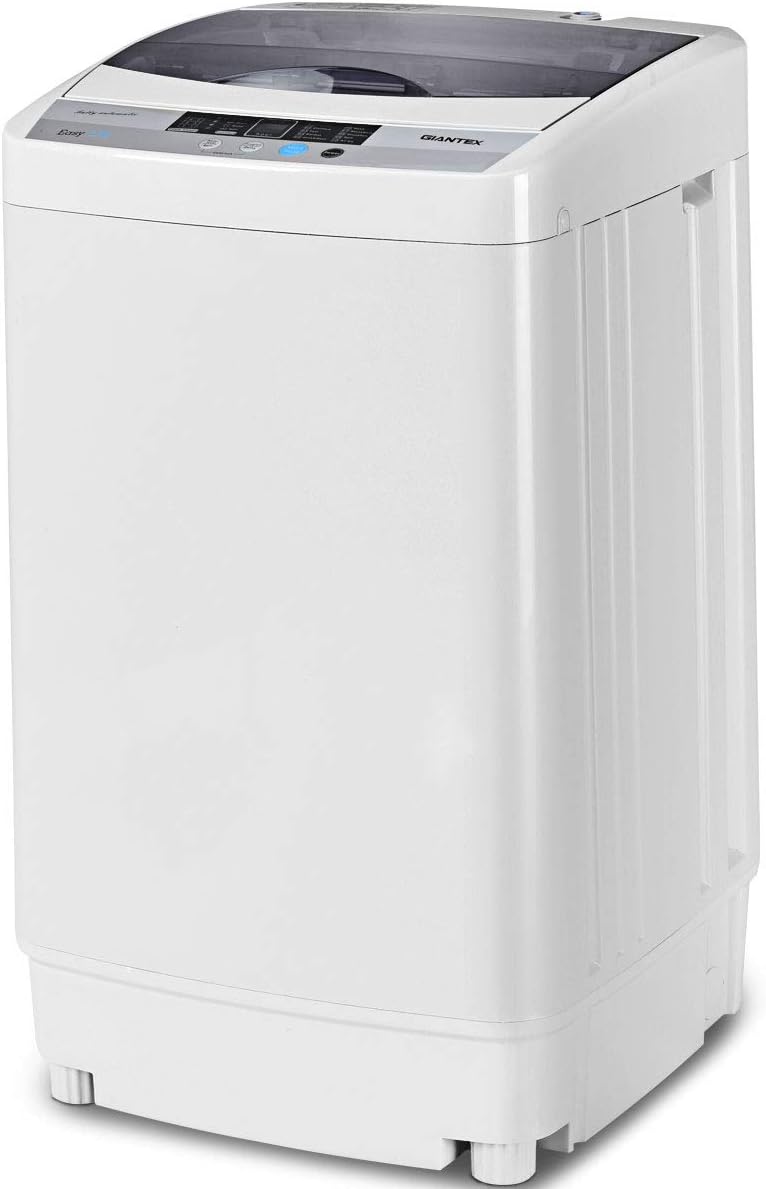
The Giantex portable full-automatic washer is a small top-load machine designed for apartments, dorms, and RVs where space is limited but you still need a full wash cycle. It offers 10 programs, 8 water level selections, a digital timer, and a child lock so you can set specific cycles and monitor remaining time on the LED display. The stainless steel honeycomb drum and automatic imbalance adjustment help protect garments and reduce vibration during spin cycles, while the included drain hose and built-in pump simplify emptying. Typical use is straightforward: load a small to medium batch, pick a program and water level, and let the machine complete wash and spin without manual transfers. Practical benefits include compact footprint, built-in safety features, and flexible cycle options for mixed laundry. Important limitations are its modest 12 lb load capacity and noticeable noise level around 55 dB, so it is best for smaller households or occasional use rather than heavy weekly family loads.
Best for: Buyers who want a compact, fully automatic washer that handles regular small loads with flexible program and water-level control in apartments or RVs.
Less Ideal for: Large families, heavy laundry users, or anyone needing full-size capacity and the quietest operation should consider a larger or more powerful machine.
- Full-automatic operation with 10 programs for a variety of fabrics and soils
- Compact, portable top-load design fits small spaces and is easy to move
- Stainless steel drum and automatic imbalance adjustment reduce wear and vibration
- LED display with timer, child lock, and multiple water level options for precise control
- Includes drain hose and built-in pump for convenient draining without manual effort
- 12 lb capacity limits load size for larger households
- Noise level listed at 55 dB can be noticeable in small living areas
Verdict: A compact, feature-rich portable washer that delivers full-automatic convenience for small households and tight spaces.
Panda Portable Washing Machine PAN638MH1

| Capacity | 1.38 cubic feet |
|---|---|
| Operation Mode | Fully Automatic |
| Number of Standard Cycles | 8 |
| Voltage | 110 volts |
The Panda PAN638MH1 is a compact, fully automatic top-load washer designed for apartments, RVs, dorms, or as a second household machine. It handles small loads with a 1.38 cubic foot drum and offers eight standard cycles including bulky, delicates, heavy duty, normal, and spin, plus three water level settings to match load size. Controls are simple push-button operation and useful extras include delay start and a child lock for safety. Installation is flexible: the unit is freestanding and includes cold and hot inlet hoses plus a faucet adapter and built-in drain pump so you can use it with a sink or permanent hookups. The stainless steel drum improves durability and reduces rust risk compared with plastic tubs. Expect modest throughput appropriate for one- to two-person households; the smaller capacity means you will run more frequent cycles for larger families and bulky items may need separate attention. Noise and vibration are generally acceptable for the size, but this is not a full-size replacement if you regularly wash large loads or heavy bedding.
Best for: Buyers who need a performance-minded compact washer that fits tight spaces and delivers a range of cycles and hookup options for regular small-load use.
Less Ideal for: Homes that routinely wash large family loads, oversized bedding, or need a high-capacity full-size washer should look elsewhere.
- Compact footprint suitable for tight spaces
- Stainless steel drum for better durability and rust resistance
- Includes both inlet hoses, faucet adapter, and built-in drain pump for flexible hookups
- Eight wash cycles and three water levels give practical program control
- Push-button controls with delay start and child lock for convenience and safety
- 1.38 cu ft capacity limits load size and requires more cycles for larger households
- Not intended as a replacement for a full-size washer when washing bulky bedding or large loads
Verdict: Choose the Panda PAN638MH1 when you want a durable, fully automatic portable washer that fits small spaces and handles varied small-load laundry reliably.
COMFEE' Portable Washer CLV09N1AMG

| Capacity | 0.9 cubic feet |
|---|---|
| Number of Programs | 5 |
| Max Rotational Speed | 840 rpm |
| Noise | 62 db |
| Operation Mode | Fully Automatic |
The COMFEE' CLV09N1AMG is a small, freestanding top-load washer aimed at tight spaces like apartments, dorms, or RVs. It provides five preset programs (Gentle, Heavy Duty, Normal, Rapid, Soak) plus three water levels and adjustable wash/rinse/spin times for basic customization. The stainless steel drum and LED display feel durable for its class, and the included inlet hose and converter make hookup straightforward for temporary or mobile setups. At up to 840 RPM the spin cycle helps reduce drying time, and Auto Unbalance Detection improves stability during loads. Noise is listed at 62 dB, so it is noticeable but not unusually loud for a compact washer. Because the capacity is modest, the unit works best for small loads, delicates, and everyday light laundry rather than full family washes. Buyers should also plan for manual draining and occasional rebalancing with larger items. For someone prioritizing space savings and straightforward operation, this model covers the essentials without extra smart features or a large capacity.
Best for: Buyers who need a space-saving, easy-to-use washer for small households, apartments, RVs, or dorms and who prioritize reliable basic washing over large capacity or smart features.
Less Ideal for: Families that need to wash large loads, bulky bedding, or frequently launder high-volume loads should consider a larger-capacity washer instead.
- Compact footprint fits small apartments, dorms, RVs and bathrooms
- Five preset programs plus adjustable times let you tailor cycles for different fabrics
- Stainless steel inner drum and LED display offer durable, easy-to-read controls
- 840 RPM spin reduces drying time compared with non-spin portable units
- Auto Unbalance Detection helps stabilize loads and prevents excessive vibration
- Small 0.9 cu ft capacity limits load size and requires more frequent cycles for larger households
- No advanced connectivity or smart controls for remote monitoring
- Listed noise level around 62 dB can be noticeable in very quiet rooms
Verdict: A compact, no-frills portable washer that delivers reliable, customizable washes for small living spaces and buyers focused on practicality.
SUPER DEAL Mini Twin Tub Washer
| Capacity | 13 liters |
|---|---|
| Operation Mode | Semi Automatic |
| Max Rotational Speed | 1300 rpm |
| Access Location | Top Load |
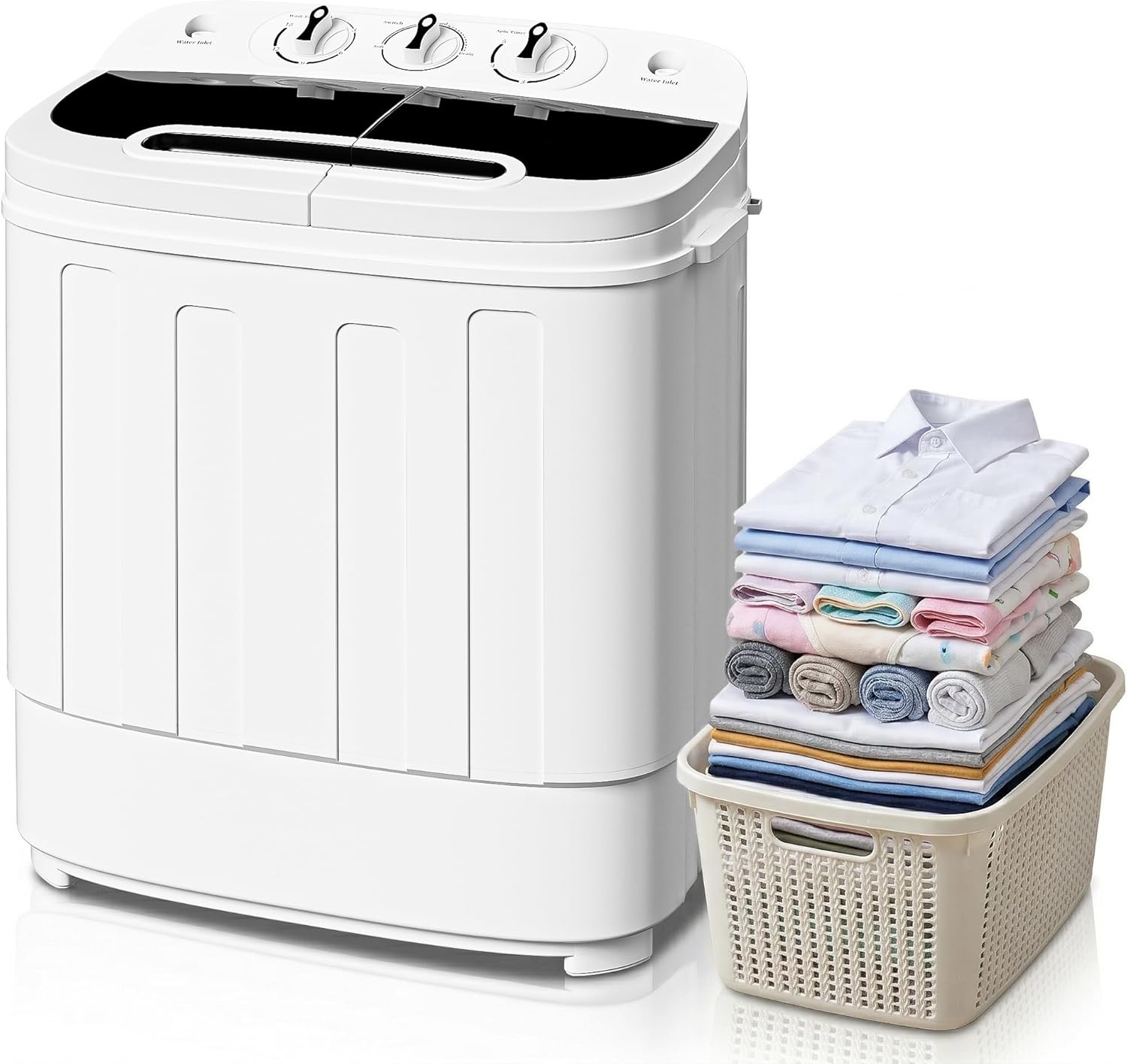
This compact twin-tub washer is a budget-friendly portable unit designed to handle small laundry loads with separate wash and spin compartments. You load the wash side, set the knob timer (up to 15 minutes), and either move items to the spinner or run both at once to finish faster; the spinner runs up to 5 minutes and reaches a 1300 RPM peak for effective water extraction. Practical touches include a translucent lid so you can monitor the cycle, a lint filter to catch fibers, a simple gravity drain hose for easy emptying, and basic LED indicators and knob controls that keep operation straightforward. The plastic tub and lightweight construction make it easy to move for dorms, RVs, camping, or tight apartments, and the semi-automatic design uses low power compared with full-size machines. Expect limits in capacity—it handles small loads only—and fewer program options or automation than a full washer-dryer, so you will need to transfer clothes between tubs and manage water manually. For everyday small-batch washing where space and cost matter, it does the job without complexity.
Best for: Buyers seeking the cheapest practical solution for regular small-load laundry in tight spaces who prioritize low cost, portability, and simple controls.
Less Ideal for: Households that need to wash full-size loads, want a fully automatic or high-capacity machine, or prefer integrated dryers should look elsewhere.
- Twin-tub design allows simultaneous washing and spinning to save time.
- 1300 RPM spin offers strong water extraction for quicker drying.
- Lightweight, compact body is easy to move and fits small spaces.
- Simple knobs and LED make operation intuitive for first-time users.
- Small 13-liter capacity limits load size to very small batches.
- Semi-automatic operation requires manual transfer and water handling.
Verdict: A very affordable, portable twin-tub washer that delivers straightforward small-load cleaning and fast spin drying for budget-minded users in tight spaces.
BLACK+DECKER Portable Washer BPWM16W

| Capacity | 1.7 cubic feet |
|---|---|
| Number of Programs | 6 |
| Max Rotational Speed | 850 rpm |
| Noise | 72 db |
| Operation Mode | Fully Automatic |
The BLACK+DECKER BPWM16W is a compact, fully automatic portable washer meant for apartments, RVs, or homes that need a small-footprint machine. It handles up to about 11 lb per load in a 1.7 cu ft stainless-steel tub and offers six program choices including Normal, Heavy, Delicate, Quick, Bulky, and Spin Only. Controls are push-button with an LED display and useful features include hot/warm/cold water settings, three water level choices, 24-hour delay start, child lock, auto unbalance detection, and an included drain hose plus quick-connect sink adapter for easy setup. The impeller-style wash action is gentler on delicates and avoids agitator tangling, while the stainless tub resists rust. Noise is listed at 72 dB, so it is noticeable but typical for portable units. Limitations are inherent to the size and weight: it is not suitable for full-family laundry loads and requires manual hookup to a sink or faucet rather than permanent plumbing. For buyers who need reliable, compact washing for small loads, this unit provides sensible features and robust construction for regular use.
Best for: Buyers who prioritize a dependable, no-frills machine for regular small loads in tight spaces and want features that make portable installation and safe operation easy.
Less Ideal for: People who need to wash large or frequent family-sized loads or who require a permanently plumbed washer in a utility closet.
- Compact 1.7 cu ft capacity fits small spaces while washing up to ~11 lb per load.
- Stainless-steel tub resists rust and is gentler on garments than plastic tubs.
- Six cycles including Delicate and Bulky plus hot/warm/cold water options for flexible cleaning.
- Includes drain hose and quick-connect sink adapter for tool-free temporary installation.
- Features like delay start, child lock, and auto unbalance detection add safety and convenience.
- Noise level around 72 dB can be noticeable in quiet rooms.
- Requires sink hookup rather than permanent plumbing which limits placement.
- Not appropriate for large households or heavy weekly laundry loads due to small capacity.
Verdict: A reliable, feature-rich portable washer that delivers sensible performance and durability for small households and tight spaces.
Giantex Twin Tub Portable Washer
| Capacity | 20 pounds (12 lb wash, 8 lb spin) |
|---|---|
| Operation Mode | Semi Automatic |
| Wash Power | 300W |
| Spinner RPM | 1350 rpm |
| Voltage | 120 volts |
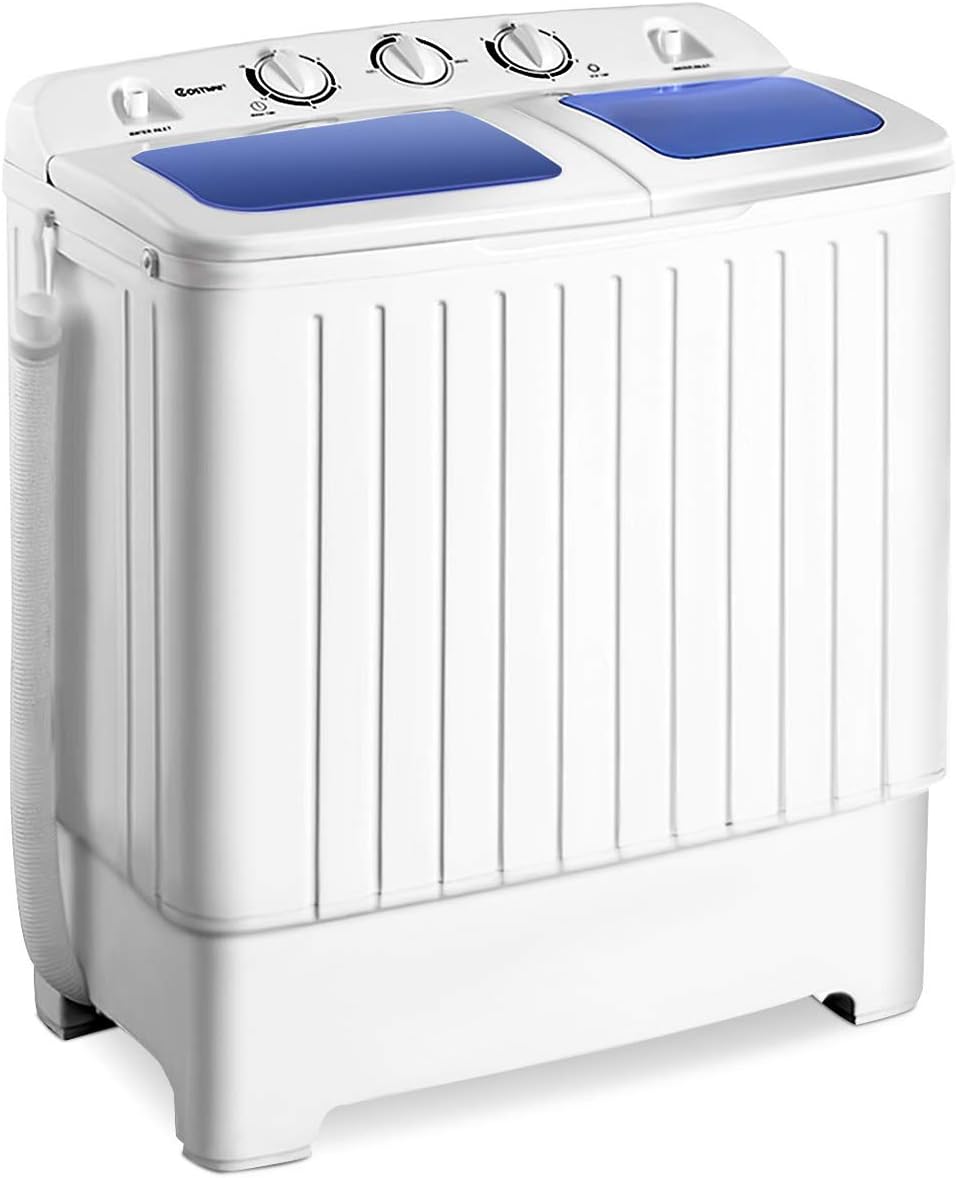
The Giantex Twin Tub is a compact semi-automatic washer that handles small loads by splitting washing and spinning into two tubs. You load up to about 12 lbs into the wash tub, set the washer timer (up to 15 minutes) and later move garments to the spinner for a short high-speed spin (up to 5 minutes) that removes most but not all moisture. It runs on 120V with a 300W wash motor and 1350 rpm spinner so it is useful for apartments, dorms, RVs, or occasional use where a full-size machine is impractical. Controls are simple knobs and the unit uses a gravity drain hose; the spinner has a safety lid and a removable lint filter for easier cleaning. Expect manual involvement: you have to move clothes between tubs and provide a faucet or hose hookup for water inlet, and spin-drying leaves clothes damp enough to need air drying. For buyers who need compact, moveable laundry capability rather than hands-off automation, this delivers straightforward performance in a small footprint.
Best for: Buyers who want a low-cost, space-saving laundry solution for small loads and are comfortable with hands-on operation and simple controls.
Less Ideal for: Anyone seeking a fully automatic, push-button laundry experience or users who need full-size capacity and completely dry clothes straight from the machine.
- Separate washer and spin tubs allow washing and spinning at the same time for faster throughput
- Compact, lightweight design suitable for apartments, dorms, and RVs
- Removable lint filter and safety lid simplify maintenance and safer spinning
- Multiple water inlet positions and a hangable drain hose make hookup flexible
- Requires manual transfer of clothes between wash and spin tubs rather than a single automatic cycle
- Spinner reduces moisture but does not fully dry clothes so line-drying is still needed
- Relies on gravity drain and a faucet connection rather than a built-in pump
Verdict: Choose this if you need an affordable, portable twin-tub washer that handles small loads efficiently in tight spaces.
Auertech Portable Twin Tub Washer

| Capacity | 28 pounds (18 lb wash / 10 lb spin) |
|---|---|
| Operation Mode | Semi Automatic |
| Max Rotational Speed | 1300 rpm |
| Voltage | 120 volts_of_alternating_current |
This twin-tub portable washer pairs an 18 lb washing tub with a 10 lb spinning tub so you can wash and spin in parallel, which speeds up small loads for dorms, apartments, and RVs. It is semi-automatic: you hook the inlet to a faucet, add water manually or to the desired level, then use the dial controls to time wash and spin cycles and switch between them. The unit includes a drain pump and adjustable hose so you can drain to a higher outlet, and a transparent lid and lint filter make basic monitoring and maintenance straightforward. A 1300 rpm motor gives solid spin performance but the motor has thermal cutout, so avoid overloading or long continuous runs. Expect simple, reliable cleaning for delicates, daily wear, and small batches, but you will need to manage water filling, cycle switching, and load balancing yourself since there is no automatic program logic or display. The plastic body keeps weight and cost down, while the stainless drum resists rust. For buyers who want a compact, energy-saving option under $600, this delivers practical utility with a few user-managed steps.
Best for: Buyers who prioritize a compact, dependable washer for small loads and want to minimize upfront cost while accepting manual operation and simple controls.
Less Ideal for: Households that need large-capacity, fully automatic washers with advanced cycles or users wanting a hands-off, push-button experience should consider a different machine.
- Separate wash and spin tubs allow washing and spinning at the same time
- Drain pump and adjustable inlet/drain hose for flexible water routing
- Transparent lid and lint filter for easy monitoring and maintenance
- 1300 rpm motor provides strong spin extraction to reduce drying time
- Semi-automatic operation requires manual filling and switching between wash and spin cycles
- No digital display or advanced programmed cycles for hands-off operation
Verdict: Choose this twin-tub portable washer if you want a compact, practical machine that handles small loads efficiently while keeping purchase and operating simplicity top priority.
Choosing the Right Washing Machine: Key Factors to Consider
Wash and Rinse Performance
A machine's primary job is to remove soil and rinse detergent effectively. Look for models with proven agitation or drum action and multiple cycle options that target different soil levels and fabric types. Better rinse performance reduces the need for rewashing, which saves time, water, and energy.
For budget machines, pay attention to cycle times and recommended load sizes. Overloading a smaller machine reduces mechanical action and can leave detergent residues. Consider how well the machine handles common stains and whether it offers specialized cycles for delicates or heavy soiling.
Energy and Water Efficiency
Operating costs add up over the machine's lifetime, so efficiency matters for budget buyers. Machines with lower water usage and good spin extraction reduce drying time and energy consumption for subsequent drying. Check stated water use per cycle and spin speeds when available.
Higher-efficiency cycles may be longer, so balance the desire for savings with how much time you can invest in laundry. In many cases, modestly better efficiency offsets the initial compromise in spin speed or cycle length by lowering utility bills over several years.
Capacity and Space Fit
Capacity affects how often you run loads and how well bulky items like towels and bedding wash. Smaller households may be fine with compact drums, while families often need larger capacities. Also consider physical dimensions and whether the machine will fit in a closet, tight laundry room, or stacked arrangement.
A slightly larger drum can improve cleaning by allowing garments to tumble more freely. But oversized units may waste water on small loads, so check if the machine offers sensible load-sizing or quick cycles for lower-volume use.
Durability and Build Quality
Budget machines vary in materials and assembly quality. Look for durable tubs and reliable suspension systems that resist vibration and premature wear. Robust door seals and corrosion-resistant components extend useful life and reduce the chance of leaks or noisy operation.
Consider the ease of servicing common wear parts like belts, pumps, and seals. Machines with accessible service panels and widely available replacement parts usually cost less to maintain over time and tend to retain functional performance longer.
User Controls and Cycle Selection
Controls and cycle variety determine how easily you can tailor a wash to fabric needs. Clear, intuitive controls reduce mistakes and make daily laundry less frustrating. Useful features in budget machines include quick or express cycles, temperature selection, and adjustable spin speeds.
Digital displays and voice prompts are rare at this price point, so prioritize tactile controls that are easy to understand. Machines that let you fine-tune wash parameters can improve cleaning outcomes on mixed loads and delicate items.
Noise, Vibration, and Installation
Noise and vibration affect placement choices, especially in apartments or near living areas. Machines with better suspension and balanced drums are quieter during spin cycles and less likely to shift over time. Think about where the unit will sit and whether sound-dampening or anti-vibration feet are needed.
Installation requirements such as water inlet types, drain height, and electrical capacity should match your space. Simpler installation reduces up-front hassle and potential additional costs. If stacking or counter placement is planned, verify clearances and access for routine maintenance.
Top Features to Prioritize on a Budget
When shopping under $600, focus on features that give the most real-world benefit. Core priorities are reliable wash action, sensible cycle selection, and a balance of capacity and efficiency that matches your household.
Additional convenience features like quick cycles, a delayed start, and straightforward maintenance access are valuable even if high-end extras are absent. A good balance of those items often beats flashy but impractical additions.
- Quick or express cycles for small loads
- Adjustable spin speeds to reduce drying time
- Simple, durable controls that are easy to replace if needed
- Accessible lint trap and drain pump access for maintenance
Sizing the Machine to Your Household
Match drum capacity to your weekly laundry habits. Singles and couples usually manage with compact or mid-size drums, while families benefit from larger-capacity machines that reduce the number of weekly cycles.
Also consider load types. If you frequently wash bulky bedding or heavy towels, prioritize machines with higher drum volume and strong spin extraction. For mostly small loads, look for efficient cycles that scale down water use.
- Estimate weekly laundry volume to pick capacity
- Consider occasional bulky items when choosing drum size
- Check opening dimensions for loading and unloading ease
Maintenance and Longevity Tips
Routine maintenance keeps budget machines performing well. Run a monthly maintenance cycle, keep the door seal dry between uses, and clean lint traps and inlet filters regularly. These small habits reduce odor, buildup, and wear.
When troubleshooting, consult service documentation before attempting repairs. Many common issues have straightforward fixes, but proper diagnosis prevents unnecessary parts replacements and extends machine life.
- Run a cleaning cycle every few months
- Leave the door ajar after cycles to prevent mildew
- Inspect hoses and seals annually for wear
Installation and Space Planning
Measure installation space carefully, including clearance for the door swing and hose runs. Verify water inlet and drain locations and ensure the floor can support the machine's weight during operation.
Consider vibration mitigation if the machine will sit on a lightweight floor or near living spaces. Anti-vibration pads or a solid platform can reduce noise and movement during spin cycles.
- Measure width, depth, and height including clearances
- Check drain height and plumbing compatibility
- Plan for a stable, level surface to minimize vibration
When to Choose a Front-Load Style Versus Top-Load
Front-load designs generally extract more water and can be more energy-efficient, which shortens drying time. They also allow stacking in some setups, saving floor space. However, they may require occasional care of the door seal to prevent odors.
Top-load machines are often simpler to use and may be less expensive to repair. They can be more convenient for small, frequent loads since you do not need to bend to load and unload. Choose the orientation that fits your space and ergonomic preferences.
- Front-load: better extraction, stackable, watch for seal maintenance
- Top-load: easier access, simpler mechanics, often quicker cycles
How We Chose the Best Washing Machine
We focused on machines that deliver consistent cleaning, durable construction, and reasonable running costs while staying under the $600 cap. Our evaluation prioritized measurable performance dimensions relevant to budget buyers: wash and rinse effectiveness across common soil levels, water and energy efficiency, build quality and expected longevity, and ease of use including cycle variety and maintenance. We also considered capacity and space fit so buyers can match a machine to household size and laundry frequency. Excluded from consideration were specialty commercial units, machines that required extensive aftermarket repairs to be usable, and models with unclear efficiency ratings. We vetted available specifications, user service documentation, and standardized efficiency metrics where provided. The result is a set of seven machines that balance cleaning performance, operating cost, and straightforward ownership for buyers who need value without sacrificing essentials.
Our full evaluation process is outlined in our review methodology.
FAQ
How much capacity do I need for a two-person household?
For two people, a mid-size drum is usually sufficient. Aim for a capacity that allows full but not overpacked loads so garments can tumble freely. This reduces wear and improves cleaning efficiency.
Will a cheaper machine cost more to run over time?
Not necessarily. Some budget machines have efficient cycles and strong spin extraction that cut drying energy. Compare water use and spin speed to estimate operating costs rather than assuming higher purchase price equals lower running costs.
How often should I run maintenance cycles?
Running a maintenance or cleaning cycle every one to three months helps prevent buildup and odors. Frequency depends on use intensity and whether you run many low-temperature loads that can leave residues.
Can I install a new machine on existing plumbing?
Often yes, but confirm that inlet connections, drain height, and electrical supply match the new machine's requirements. Minor adapter parts or a short plumbing update may be needed to ensure a proper fit.
What causes excessive vibration during spin cycles?
Vibration is usually due to an unlevel machine, uneven load distribution, or worn suspension components. First check leveling feet and redistribute the load. If problems persist, inspect suspension parts or consult service guidance.
Final Verdict
When shopping for a washing machine under $600, prioritize cleaning effectiveness, efficiency, and a capacity that matches your routine. Expect tradeoffs in advanced features, but choose units with solid build quality and sensible cycle options to get the most reliable service over time. Focus on machines with good spin extraction and accessible maintenance points to lower long-term costs. With those priorities in mind, you can confidently pick a budget model that balances day-to-day performance and operating expenses.