
Note: This article contains affiliate links. If you click on these links and make a purchase, we may earn a small commission at no extra cost to you. This helps support our research and content. Read our full affiliate disclosure here.
Picking the right washing machine under $1,000 matters because that price band must balance long-term reliability with useful features. You want dependable cleaning, reasonable energy and water use, and cycles that handle everything from delicates to heavy bedding without costing a fortune to run or maintain. This guide shortlists seven top washing machines under $1,000 that meet those expectations. Below we summarize how each entry performs across cleaning effectiveness, energy use, build durability, and convenience features so you can quickly match priorities to a practical, budget-conscious model.
Top Picks at a Glance
| Best Overall The best all-around choice for most situations | Kenmore Top Load Washer 4.5 cu ft |  |
| Best Quality Built to a higher standard if you want something more solid | COMFEE' 2.4 Cu.ft Portable Washer |  |
| Best Value The sweet spot between price and what you get | Auertech Portable Twin Tub Washer |  |
| Best Budget The cheapest option that still gets the job done reliably | SUPER DEAL Compact Twin Tub Washer |  |
| Top Rated A top-rated pick with lots of positive feedback | BLACK+DECKER Portable Washer BPWM16W |  |
| Most Popular A crowd favorite that many people choose with confidence | Giantex Portable Twin Tub Washer |  |
| Best Seller A high-volume bestseller chosen again and again | BLACK+DECKER Portable Washer BPW30MW |  |
Kenmore Top Load Washer 4.5 cu ft

| Capacity | 4.5 cubic feet |
|---|---|
| Additional Features | Triple Action Impeller |
| Access Location | Top Load |
| Controls Type | Knob & Touch |
| Operation Mode | Fully Automatic |
This Kenmore top-load washer is built for everyday household laundry and larger loads like bedding thanks to its 4.5 cu. ft. drum and stainless-steel tub. The Triple Action Impeller combines spraying, basket motion, and impeller movement to loosen soil, while Accela Wash and an Express cycle shorten full and small-load wash times respectively. Controls are a mix of knobs and touch with an LED that shows cycle status, and there are about 10 cycle choices including Heavy Duty, Whites, Delicates, Towels and Cold Clean to reduce energy use. Practical extras include a soft-close tempered-glass lid, dispenser for detergent and fabric softener, and options like extra rinse and temperature selection. Expect straightforward top-load operation and faster cycles when you need them, but note it is not an ENERGY STAR certified model and lacks high spin speeds found on some front-loaders, so drying time may be longer for heavy items. Installation requires freestanding placement and the unit is designed for typical residential hookups.
Best for: Buyers who want a roomy, easy-to-use top-load washer that speeds through varied household loads and prioritizes straightforward performance over the highest energy efficiency.
Less Ideal for: Those who need an ultra-efficient, ENERGY STAR rated machine or who prefer the fastest spin speeds and smallest remaining moisture levels found in many front-load washers should consider other options.
- Large 4.5 cu. ft. stainless-steel drum handles bedding and bulky loads
- Triple Action Impeller targets stains with three complementary motions
- Accela Wash and Express cycle reduce wash time for full and small loads
- Intuitive knob and touch controls with LED display make cycle selection simple
- Multiple cycles and temperature options including Cold Clean for energy savings
- Not ENERGY STAR certified which may affect long-term energy costs
- Top-load design typically has lower spin speeds than many front-load washers so loads can be wetter after the wash
Verdict: A spacious, no-nonsense top-load washer that cleans large household loads faster with Accela and Express cycles, making it a strong all-around value under $1,000.
COMFEE' 2.4 Cu.ft Portable Washer

| Capacity | 2.4 cubic feet |
|---|---|
| Operation Mode | Fully Automatic |
| Number of Programs | 8 |
| Max Rotational Speed | 780 rpm |
| Noise | 62 db |
This COMFEE' portable washer is a compact, performance-oriented machine that handles everyday laundry with features usually found on larger units. It offers a 2.4 cubic foot stainless steel drum, eight programs and a Turbo Wash mode that increases water flow and agitation for faster, deeper cleaning, plus a Hygiene+ rinse option that runs extra rinses for better decontamination. The top-load design, LED display and soft-close glass lid make loading and monitoring simple, and built-in wheels help move the freestanding unit when needed. At 780 rpm the spin speed helps remove more water before drying, and a child lock adds safety for family use. Noise is listed at 62 dB, so it is noticeable but not overly loud for apartment or dorm settings. The unit is heavier than some compact washers, which may affect portability, and it lacks integrated dryer functionality so you will still need a drying solution. For buyers who want efficient washing performance in a small footprint, this model packs solid cleaning features into a portable package.
Best for: Buyers who prioritize wash performance and hygiene in a small-space washer and want faster, deeper cleaning cycles without a full-size machine.
Less Ideal for: People who need an all-in-one washer-dryer solution or who must move their machine frequently for storage or travel.
- Turbo Wash and Water Magic Flow technologies for stronger water circulation and improved cleaning
- Stainless steel inner drum for durability and gentler agitation
- Hygiene+ mode provides triple rinsing for more thorough decontamination
- 780 rpm spin speed reduces moisture left in clothes before drying
- LED display, soft-close lid and child lock improve usability and safety
- No built-in dryer function so drying requires a separate appliance or line-drying
- Relatively heavy for a portable unit, which limits frequent relocations
- Noise level around 62 dB is noticeable during operation
Verdict: If you want a compact washer that emphasizes faster, deeper washing and extra rinsing for cleaner clothes, this COMFEE' model delivers strong performance in a small footprint.
Auertech Portable Twin Tub Washer

| Capacity | 28 pounds (18 lb washer, 10 lb spinner) |
|---|---|
| Operation Mode | Semi Automatic |
| Max Rotational Speed | 1300 rpm |
| Installation Type | Portable |
| Voltage | 120 volts |
This twin-tub portable washer separates washing and spinning into two tubs so you can wash and spin-dry different loads at the same time, which is handy in tight living spaces. Intended for semi-automatic use, you connect the inlet hose to a faucet, add water manually, set the timed wash and spin using the knob controls, and gravity- or pump-drain the machine when finished. Notable features include an 18 lb wash tub and 10 lb spin tub, a 1300 rpm motor, a transparent lid to monitor cycles, and a built-in drain pump with an adjustable hose. In practice it is effective for small loads, delicates, and apartment or RV laundry where a full-size machine is impractical, and the separate timers let you control cycle lengths to save water and energy. Limitations are the need for manual water filling and switching between wash and spin cycles, plus attention to load balance to avoid spinner imbalance and possible motor overheat protection during long or overloaded runs.
Best for: Buyers who prioritize compact, efficient laundry for small households, apartments, dorms, or RVs and who prefer a straightforward, low-tech machine that saves space and water.
Less Ideal for: Households needing fully automatic, hands-off laundry or those who regularly wash large or bulky loads should look at full-size or higher-capacity machines instead.
- Twin-tub design lets you wash and spin separate loads simultaneously
- 1300 rpm motor provides strong spin performance for faster drying
- Built-in drain pump and adjustable inlet hose simplify water removal
- Simple knob controls and transparent lid make operation straightforward
- Semi-automatic operation requires manual water fill and cycle switching
- Spinner can become unbalanced if loads are not evenly distributed
- Not suitable for large households due to limited per-load capacity
Verdict: If you need a compact, space-saving washer that handles small loads and lets you control wash and spin cycles manually, this twin-tub Auertech is a practical, efficient choice.
SUPER DEAL Compact Twin Tub Washer
| Capacity | 13 liters |
|---|---|
| Operation Mode | Semi Automatic |
| Max Rotational Speed | 1300 rpm |
| Voltage | 115 volts |
| Number of Standard Cycles | 2 |
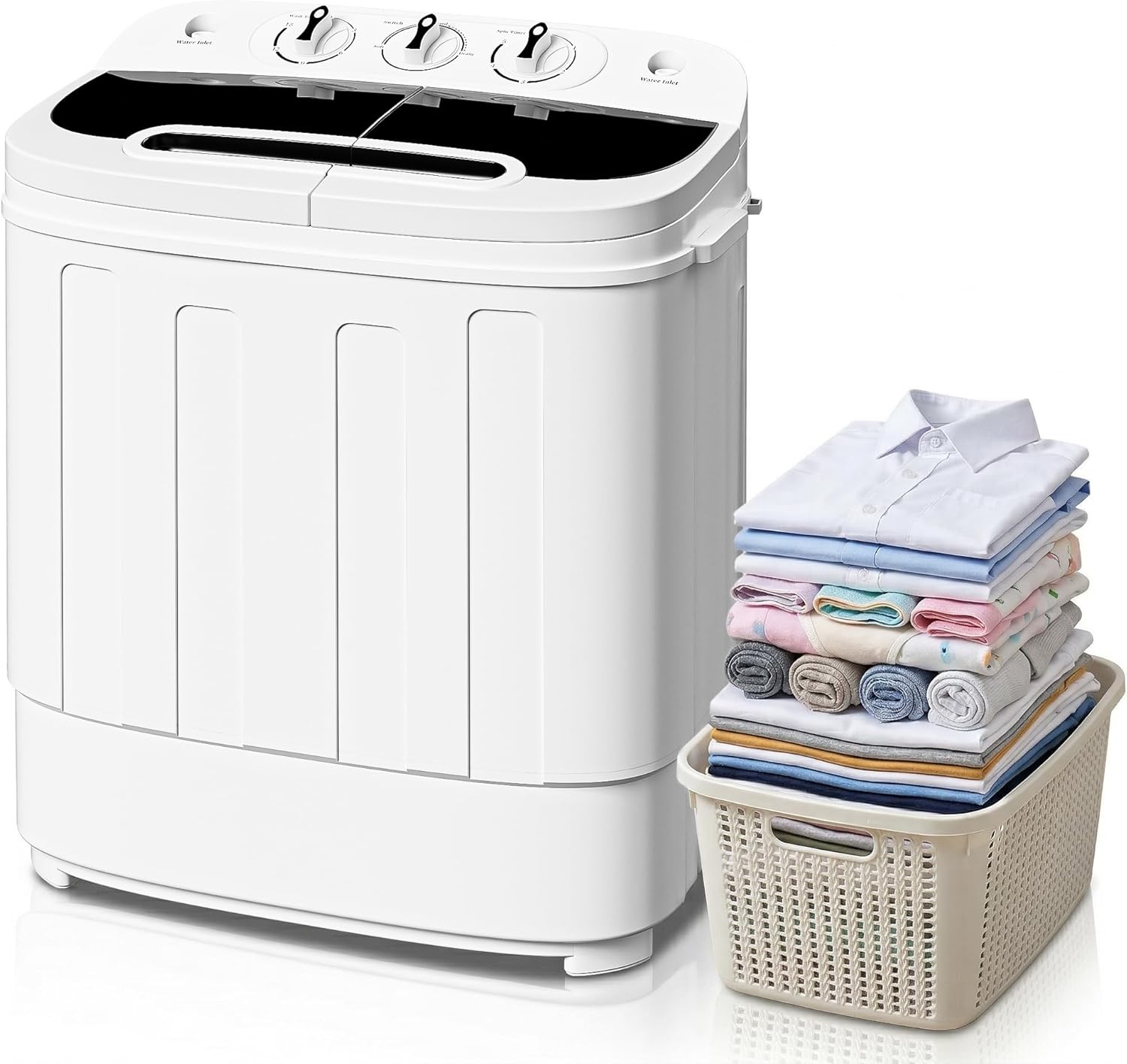
This twin-tub portable washer pairs an 8 lb wash tub with a 5 lb spinner to let you wash and spin-dry small loads separately or at the same time, which speeds up chores in apartments, dorms, or RVs. Controls are simple rotary knobs for a wash timer up to 15 minutes and a spin timer up to 5 minutes, and the 1300 RPM motor produces strong agitation for effective cleaning. A see-through washing tub, built-in lint filter, water inlet and drain hose make filling and emptying straightforward, and the plastic housing resists rust and keeps weight down for easier transport. Because it is semi-automatic you will need to move items between tubs and manage water manually, and capacity is limited to single small loads rather than full-family washing. Expect basic mechanical controls rather than advanced cycles or digital features, but for tight spaces this unit delivers a compact, energy-efficient way to do frequent small loads without a full-size machine.
Best for: Buyers on a tight budget who need a compact, portable solution for frequent small loads in places without room for a full-size washer.
Less Ideal for: Households that run large or frequent full-size loads or who want fully automatic, hands-free washing should consider a larger automatic washer.
- Twin-tub design lets you wash and spin simultaneously to save time
- 1300 RPM motor provides strong spin performance for faster drying
- Lightweight plastic body resists rust and is easy to move
- Simple rotary controls and LED display make operation straightforward
- Includes lint filter and drain hose for cleaner water management
- Small overall capacity suitable only for single or very small loads
- Semi-automatic operation requires manual water handling and transferring between tubs
Verdict: A budget-friendly, space-saving twin-tub washer that delivers fast cleaning and spinning for small households and mobile living situations.
BLACK+DECKER Portable Washer BPWM16W

| Capacity | 1.7 cubic feet |
|---|---|
| Max Rotational Speed | 850 rpm |
| Number of Standard Cycles | 6 |
| Noise | 72 db |
| Voltage | 120 volts |
The BLACK+DECKER BPWM16W is a fully automatic portable washer intended for small to medium household loads, offering a stainless steel impeller tub and six program options including Normal, Heavy, Delicate, Quick, Bulky, and Spin Only. It accepts hot, warm, and cold water and has three water-level settings, a 24-hour delay start, child lock, and auto shutoff for convenience and safety. The unit ships with a drain hose and a quick-connect sink adapter, and its built-in rollers and side handles make it easier to move than a full-size machine. Practical benefits include gentle impeller washing for delicates and baby items, a rust-resistant tub, and an LED display with push-button controls that keep operation simple. Important limitations are its modest 11 lb. per-load capacity and relatively loud reported noise level, so it is best suited for apartments, seasonal living spaces, or as a secondary machine rather than primary laundry for large households. Installation is straightforward but requires a compatible sink or drain hookup.
Best for: Buyers who prioritize a reliable, easy-to-use secondary or primary washer for small households, apartments, or seasonal living and want a durable, factory-quality portable machine that handles delicates safely.
Less Ideal for: Large families or anyone who needs to wash full loads regularly should look at full-size washers with larger capacity and quieter operation.
- Stainless steel impeller tub resists rust and is gentle on delicates
- Six cycle options plus hot/warm/cold settings cover a range of fabrics
- Includes drain hose and quick-connect sink adapter for easy setup
- Portable design with rollers and handles for moving between rooms
- Features like 24-hour delay start, child lock, and auto shutoff add convenience and safety
- 11 lb capacity is small compared with full-size machines
- Noise level reported at about 72 dB which can be noticeable in small spaces
Verdict: A dependable, portable stainless-steel washer that reliably handles small loads and delicates, making it a solid choice for apartments or as a secondary machine under $1,000.
Giantex Portable Twin Tub Washer
| Capacity | 20 pounds (12 lb wash, 8 lb spin) |
|---|---|
| Wash Power | 300W |
| Spin Power | 110W |
| Spinner RPM | 1350 |
| Voltage | 120 volts |
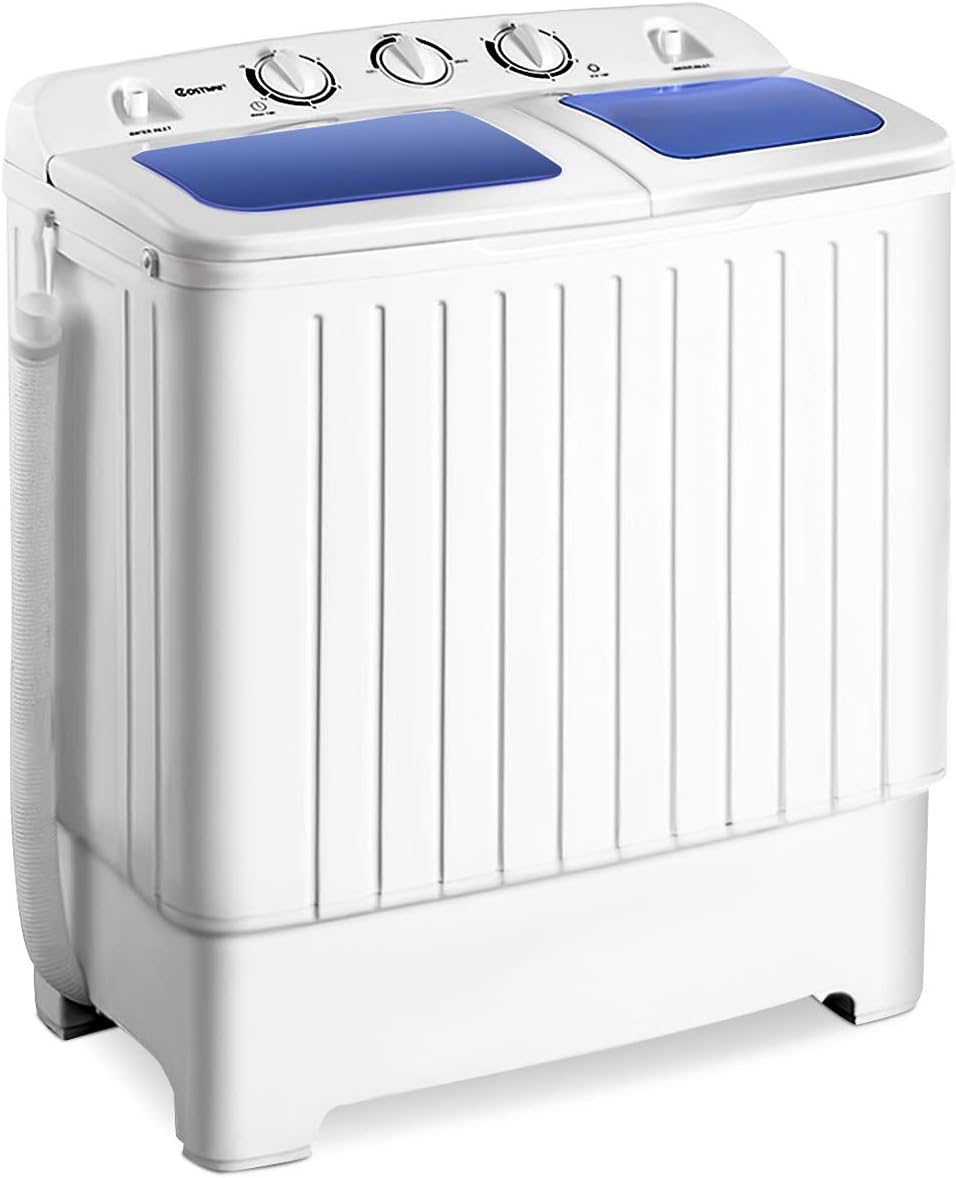
The Giantex Portable Twin Tub Washer is a compact semi-automatic unit that handles small household loads by combining a 12 lb wash tub with an 8 lb spin dryer. It uses simple knob controls and separate timers (up to 15 minutes for wash, 5 minutes for spin) so you set cycle lengths based on fabric care, and the spinner runs up to 1350 RPM to remove most moisture before line drying. The twin-tub layout and two water inlet holes let you place hoses on either side and run wash and spin operations together or separately, which is handy in apartments, dorms, or RVs. Practical touches include a removable lint filter, a top lid for safe spinning, and a gravity drain hose that can be hung to discharge water. Expect basic analog operation without automatic plumbing hookups or heavy-duty capacity, and the spinner leaves clothes damp enough to need finishing by air or sun drying. This model is best when you prioritize portability and low-cost laundry for small loads rather than full-size automatic convenience.
Best for: Buyers who need an inexpensive, portable washer to handle frequent small loads and value simplicity and mobility over full-size automatic convenience.
Less Ideal for: Those who want a fully automatic, high-capacity machine or who need a dryer that leaves clothes ready-to-wear without additional drying time.
- Clear twin-tub design lets you wash and spin separately or simultaneously.
- Portable and compact for apartments, dorms, RVs or small homes.
- Removable lint filter and top lid improve usability and safety during spin cycles.
- Dual water inlet options make faucet placement flexible.
- Semi-automatic operation requires manual filling, draining, and cycle monitoring.
- Spin drying is partial, so clothes usually need additional air drying.
- Gravity drain limits where you can place the unit relative to a drain.
Verdict: A compact, low-cost twin-tub washer ideal for small households and portable use when you need a simple solution for frequent small laundry loads.
BLACK+DECKER Portable Washer BPW30MW

| Capacity | 3 cubic feet |
|---|---|
| Rated Load | 26.5 lb. capacity |
| Number of Cycles | 6 |
| Operation Mode | Fully Automatic |
| Display | LED |
The BLACK+DECKER BPW30MW is a freestanding portable washer intended for apartments, condos, or homeowners who need a flexible laundry option. It uses an impeller-style stainless steel tub and offers six cycles—Normal, Heavy, Delicate, Quick, Bulky, and Spin Only—plus hot/warm/cold water choices and three water-level settings to handle small to medium loads up to about 26.5 pounds. Practical touches include an LED display with cycle indicators, auto unbalance detection, auto shutoff, child lock, delayed start up to 24 hours, and a quick-connect sink adapter with drain hose for temporary hookup. The unit rolls on two casters and has side handles for repositioning. Because it is an impeller washer it is gentler on delicates and easier to load than agitator machines, but the manufacturer notes that overloading can cause internal overflow and the listed noise figure is relatively high. For shoppers focused on reliable, simple operation and easy setup without plumbing work, this model provides full automatic cycles and safety features in a compact footprint.
Best for: Buyers who want a straightforward, factory-quality portable washer that is easy to install temporarily and prioritizes reliable, safe operation over advanced smart features.
Less Ideal for: People who need built-in or permanently plumbed laundry solutions or those who require ultra-quiet, lightweight travel-friendly machines.
- 3.0 cu. ft. stainless steel tub that resists rust and handles mixed household loads
- Six cycle options with hot, warm, and cold water and three water-level settings for flexible washing
- Includes quick-connect sink adapter and drain hose for easy temporary installation
- Safety features like auto unbalance detection, auto shutoff, delayed start, and child lock
- Wheels and side handles make it movable for small-space living
- Relatively heavy unit at nearly 100 pounds which can make permanent repositioning difficult
- Manufacturer warns that overloading may cause internal overflow
- Noise specification is listed high compared with quiet home washers
Verdict: A dependable, easy-to-install portable washer that delivers full automatic cycles and safety features for buyers who want low-risk, practical laundry performance.
Choosing the Right Washing Machine: Key Factors to Consider
Cleaning Performance
How well a washing machine removes stains and soil determines whether you need extra pretreatment or repeat cycles. Machines that offer strong mechanical action, good detergent distribution, and reliable spin extraction will typically finish loads cleaner and reduce the need for rewashing.
Consider the types of laundry you do most often. Heavy-duty loads like bedding and work clothes demand robust agitation and higher spin speeds, while delicate wardrobes need gentler action. A machine that balances these modes will save time and utility costs over the long run.
Energy and Water Efficiency
Energy and water use directly affect running costs, especially for frequent laundry. Look for models with efficient rinse cycles, variable fill levels, and technologies that optimize wash action to reduce both electricity and water consumption.
Lower consumption often correlates with higher upfront engineering quality, and even modest efficiency gains add up across months of use. For buyers under a $1,000 cap, prioritize machines that demonstrate measured savings without sacrificing cleaning performance.
Capacity and Cycle Times
Capacity impacts how often you run the washer and whether items fit comfortably without overcrowding. Choose a capacity that matches household size: small households can favor compact tubs while families usually need larger drums to handle bulky bedding and multiple garments.
Cycle time matters when you need laundry done fast. Short cycles are convenient but can compromise cleaning on very soiled items. Look for machines that offer both express options and full, thorough cycles so you can adapt to different schedules and soil levels.
Noise, Vibration and Placement
Where you install the washer affects what noise and vibration you can tolerate. Machines with better suspension systems and balanced drums reduce vibration transfer to floors and walls, letting you place the unit near living space without disruptive noise.
Pay attention to spin speed versus noise tradeoffs. Higher RPMs extract more water but can generate more vibration. If the washer will sit on upper floors or next to bedrooms, prioritize low-vibration designs and clear isolation feet.
Controls and Cycle Flexibility
Intuitive controls and a useful set of cycles make daily laundry less fussy. Essential cycle options include cottons, synthetics, delicates, and a quick wash or rinse-and-spin. Additional modifiers like temperature selection, soil-level adjustment, and delay start increase versatility.
For budget-conscious purchases, simpler digital or good-quality mechanical controls are preferable to overly complex interfaces that add cost without meaningful benefit.
Maintenance and Reliability
Routine upkeep affects long-term ownership cost and machine lifespan. Consider how easy it is to access the drum, clean dispensers, and clear filters or pump traps. Materials like stainless steel drums tend to resist corrosion and wear better than cheaper alternatives.
Warranty coverage, availability of replacement parts, and documented serviceability should all factor into purchase decisions, especially when working within a price limit where build compromises are more common.
Top Capacity Choices for Different Households
Matching drum size to household needs reduces wash frequency and prevents overloading, which can shorten a machine's life. Small households and singles often benefit from compact tubs that spin faster and use less water, while families should prioritize larger capacities to accommodate bulky items.
If you do a lot of bedding or laundry for multiple people, choose a machine with a larger drum and higher recommended load size. For occasional loads or tight laundry spaces, a mid-size washer with efficient cycles will be more economical.
- Small households: prioritize compact models with quick cycles.
- Couples: choose mid-size capacity for weekly loads.
- Families: favor larger drums and high spin-extraction ratings.
How Noise and Placement Affect Selection
Noise ratings and vibration damping become critical when the laundry area is near living spaces. Look for features such as reinforced mounting, anti-vibration pads, and lower RPM options for quieter spins.
Installation surface matters. Placing the washer on a concrete floor will usually reduce vibration compared with a lightweight subfloor. If you cannot change the location, select a model with proven low-noise operation for the kind of loads you run most often.
- Check published noise levels if you need quiet operation.
- Balance high spin speeds with potential vibration on your floor type.
- Consider anti-vibration pads if the chosen model still transmits noise.
Energy Savings That Add Up Over Time
Even within a tighter budget, you can find machines that reduce utility bills through efficient wash mechanics and reduced water use. Look for variable fill, load-sensing features, and efficient motor designs that cut electricity consumption.
Think beyond single-cycle savings. Features that shorten dry times by better spin extraction or reduce the need for repeat washes will lower total energy usage across a year.
- Load sensing minimizes wasted water on small loads.
- Higher spin extraction lowers dryer energy needs.
- Shorter, effective cycles save both time and power.
Practical Controls and Useful Cycle Sets
A clear control layout and a handful of dependable cycles beat a confusing menu of rarely used options. Essential cycles should include quick wash, delicate, heavy soil, and a temperature selection. Additional useful features are delay start and timed end so laundry finishes when convenient.
Avoid models that lock you into a single wash profile for every load. Flexibility to tweak soil level and temperature ensures better results across fabric types.
- Prioritize core cycles over flashy extras.
- Manual soil and temperature adjustments increase usefulness.
- Delay start can help run cycles during off-peak utility hours.
Installation and Space Considerations
Measure the installation area carefully, including door clearance and space for hoses. Top-loaders and front-loaders have different service needs and clearances, so ensure the model fits both physically and functionally in the intended spot.
Think about water inlet and drain accessibility and whether you need elevated stands or stacking options. Adequate ventilation and a level surface are essential for reliable operation and to minimize noise.
- Measure width, depth, and door swing before purchasing.
- Confirm inlet/drain locations and hose lengths.
- Ensure the floor can support the machine and reduce vibration.
How We Chose the Best Washing Machine
We focused on objective, buyer-relevant filters to narrow the market to washing machines that deliver real-world value under $1,000. Key criteria included cleaning effectiveness measured by stain removal and soil-lift capability across common fabrics; energy and water efficiency tracked via rated cycles and technologies that reduce utility consumption; build quality and durability indicators such as drum material, drive system type, and warranty terms; and usability factors including cycle variety, noise levels, and controls. We also weighed capacity and cycle times to ensure practicality for different household sizes, plus maintenance considerations like ease of drum access and lint management. Excluded were units with poor reliability reports, missing key safety features, or designs that required expensive mandatory accessories. The result is a shortlist that balances everyday performance, operating cost, and expected longevity for buyers constrained to the under $1,000 budget.
Our full evaluation process is outlined in our review methodology.
FAQ
How do I choose the right drum capacity for my household?
Match capacity to typical load size. Singles or couples can often manage with compact tubs, while families should choose larger drums to fit bedding and multiple garments. Overloading reduces cleaning effectiveness and increases wear.
Are front-loaders or top-loaders better under $1,000?
Both can be suitable in this price range. Front-loaders generally use less water and offer higher spin extraction, while modern top-loaders may be simpler to maintain. Choose based on space, noise tolerance, and preferred cycle types.
What maintenance will keep a washer running longer?
Regularly clean dispensers and seals, run an occasional tub-clean cycle, and clear any accessible filters or pump traps. Keeping detergent use within recommended amounts and avoiding overloading also reduces strain on components.
How important is spin speed when comparing machines?
Spin speed affects water extraction and subsequent dry time. Higher RPMs generally reduce drying energy but can increase vibration. Balance spin performance with noise and the kind of loads you wash most often.
Can efficient washers really lower my utility bills?
Yes, models with load sensing, efficient wash mechanics, and good spin extraction typically use less water and electricity over time. Savings accumulate with frequent use, especially for households that run many loads per week.
Final Verdict
When shopping for a washing machine under $1,000, prioritize dependable cleaning performance, solid build materials, and reasonable energy and water efficiency. Balance capacity and cycle options against your typical laundry habits to avoid overpaying for features you will not use. Accepting small tradeoffs in cosmetic bells and whistles can free budget for better core components and quieter operation. Focus on the evaluation criteria outlined above to pick a model that offers the best mix of reliability, efficiency, and everyday convenience for your home.