
Note: This article contains affiliate links. If you click on these links and make a purchase, we may earn a small commission at no extra cost to you. This helps support our research and content. Read our full affiliate disclosure here.
If you need a compact laundry setup that still handles full household loads, a washing machine with dryer on top can be a smart choice. These stacked-style units free floor space while keeping laundry flow efficient, which matters if your home has limited room for separate washer and dryer appliances. This guide covers the top shortlisted options in this category and explains the practical tradeoffs buyers face, from load capacity and drying power to installation needs and energy use. Read on for a clear overview of the features that make some stacked washer-dryer combos better fits for specific homes and routines.
Top Picks at a Glance
| Best Overall The best all-around choice for most situations | LG WashTower WKGX301HBA |  |
| Best Quality Built to a higher standard if you want something more solid | Samsung Bespoke AI Laundry Hub |  |
| Best Value The sweet spot between price and what you get | RecPro RV Washer & Dryer Combo |  |
| Best Budget The cheapest option that still gets the job done reliably | GE Spacemaker 24" Laundry Center |  |
| Top Rated A top-rated pick with lots of positive feedback | LG WashTower WKEX200HBA |  |
| Most Popular A crowd favorite that many people choose with confidence | GE Spacemaker GUD27ESSMWW | 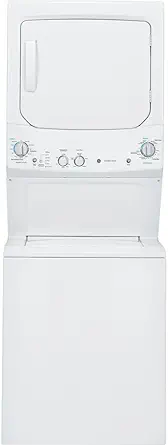 |
| Best Seller A high-volume bestseller chosen again and again | Frigidaire Laundry Center FLCE7522AW |  |
LG WashTower WKGX301HBA

| Washer capacity | 5 cubic feet |
|---|---|
| Dryer capacity | 7.4 cubic feet |
| Cycle options (washer) | Normal, Heavy Duty, Delicates, Quick Wash, Rinse |
| Washer dispenser | Intelligent, Auto-dosing Dispenser System |
| Controls type | Knob |
The LG WashTower WKGX301HBA pairs a full-size front-load washer with a gas dryer in a single, space-saving vertical cabinet intended to replace side-by-side laundry stacks. The washer offers a 5.0 cu ft drum and five cycle options while the 7.4 cu ft dryer has three drying cycles, letting you handle bulky items like bedding in fewer loads. TurboWash 360 shortens wash time and TurboSteam helps reduce wrinkles and allergens, and the ezDispense auto-dosing system meters detergent for consistent results. An ergonomic center control panel puts both washer and dryer controls at chest height, and ThinQ WiFi with AI assistance lets you start and monitor cycles remotely and get recommended settings. The main compromises are that this is a tall, single-unit installation that requires appropriate gas hookup and clearance, and repairs may involve combined-unit service rather than separate appliance swaps. For buyers seeking full-size capacity in a smaller footprint, it streamlines laundry without sacrificing most performance features expected in modern machines.
Best for: Buyers who want the performance of full-size washer and dryer machines but need to save floor space and prefer a connected, hands-off laundry experience.
Less Ideal for: Homes without a gas dryer hookup or where separate washer and dryer access for service and replacement is a priority should consider traditional side-by-side units instead.
- Full-size washer and dryer capacities in a single vertical unit for space savings
- TurboWash 360 and TurboSteam technologies reduce cycle time and help remove wrinkles and allergens
- ezDispense auto-dosing simplifies detergent use and reduces waste
- Center Control panel places controls within easy reach
- ThinQ WiFi and AI smart features allow remote monitoring and automatic cycle selection
- Requires gas hookup and appropriate vertical clearance for installation
- Single-unit design may increase complexity and cost for certain repairs
Verdict: If you need full-size washer and dryer performance in a single space-saving package with smart features, the LG WashTower delivers that balance.
Samsung Bespoke AI Laundry Hub

| Capacity (washer) | 4.6 cubic feet |
|---|---|
| Capacity (dryer) | 7.6 cubic feet |
| Controls Type | Dial, Touch |
| Cycle Options | Quick Wash |
| Access Location | Front Load |
The Samsung Bespoke AI Laundry Hub combines a 4.6 cu. ft. front-load washer and a 7.6 cu. ft. electric dryer in a single stacked unit designed to save floor space while handling sizable loads. It uses an Easy Reach control panel with an AI Smart Dial that learns common cycles and recommends or customizes settings, and the washer offers Steam Wash to help loosen stains without pre-treating. The intelligent dispenser automates detergent delivery options and the dryer includes a vent sensor to monitor duct condition for safer, more efficient runs. Wi‑Fi and SmartThings connectivity let you receive cycle alerts and remotely start or stop cycles. The practical benefits are fewer trips to the laundry room thanks to larger drums and simplified cycle selection for repeat loads; steam and automated dispensing improve cleaning with less fiddling. Trade-offs are typical for integrated combo units: servicing may be more complex than separate machines and the single-unit layout can be heavy and awkward to move or install in tight stair or corridor situations.
Best for: Buyers who prioritize strong cleaning performance and streamlined operation in a space-saving setup, and who want smart controls that learn and speed routine laundry tasks.
Less Ideal for: People who need easily serviceable or modular setups or who plan frequent moves where a single heavy appliance would be difficult to transport.
- Large combined capacity reduces number of loads (4.6 cu. ft. washer, 7.6 cu. ft. dryer).
- AI Smart Dial simplifies cycle selection and learns frequently used settings.
- Steam Wash improves stain removal without manual pre-treatment.
- Intelligent dispenser automates detergent options to simplify use.
- Wi‑Fi and SmartThings remote control and cycle notifications.
- Single integrated unit is heavy and may be difficult to install or move.
- Fewer service options and potentially higher repair complexity than separate washer and dryer.
Verdict: Choose this all-in-one if you want large-capacity cleaning with smart, AI-driven controls and steam stain care in a single space-saving tower.
RecPro RV Washer & Dryer Combo

| Capacity | 2.5 cubic feet |
|---|---|
| Power | 120V RV-Compatible |
| Washer load capacity | 26 pound |
| Dryer capacity | 13.2 pound |
| Access location | Front Load |
This RecPro RV washer and dryer combo brings full laundry capability to tight spaces by combining a 2.5 cubic foot front-load washer with a matching dryer and a stackable mounting kit. Designed for RV use, both units run on 120V power and offer touch controls with a digital display, a selection of cycles from quick to heavy duty, and a reload function for mid-cycle additions. The washer uses a steel drum and has leveling legs to reduce noise and movement, while the dryer provides easy-access filters and simple controls for consistent drying. Practical benefits include sizable load capacity for an RV (26 lb wash, 13.2 lb dry), space savings from stacking, and straightforward controls that make operation simple for nontechnical users. Limitations to consider are the modest dryer capacity relative to the washer, which may require smaller drying loads or multiple cycles, and the unit weight and dimensions that demand a secure installation in a vehicle. For campsite or small-home use where space is at a premium, this pair delivers most of the expected laundry functions in a compact package.
Best for: Buyers who need a practical, space-saving laundry solution for an RV or other small footprint living where having both washer and dryer on-site is a priority.
Less Ideal for: Users who routinely need to dry very large or bulky loads in one cycle or who prefer separate full-size home machines should consider larger-capacity alternatives.
- Stackable design and included mounting kit saves floor space in tight RV installations
- 120V RV-compatible power makes installation straightforward in most recreational vehicles
- Touch controls with digital display and multiple cycle options simplify operation
- Steel drum washer with adjustable leveling legs reduces vibration and noise during operation
- Dryer capacity (13.2 lb) is notably smaller than the washer capacity, which can require multiple drying cycles
- Unit weight and fixed dimensions require careful planning and secure mounting in mobile installations
Verdict: A compact, stackable RV-ready washer and dryer pair that brings near-home laundry capability to small spaces without complex installation.
GE Spacemaker 24" Laundry Center

| Washer capacity | 2.3 cubic feet |
|---|---|
| Dryer capacity | 4.4 cubic feet |
| Voltage | 240 volts |
| Number of washing cycles | 11 |
| Number of drying cycles | 4 |
The GE Spacemaker 24" Laundry Center pairs a 2.3 cu ft top-load washer above a 4.4 cu ft electric dryer in a single 24-inch cabinet to save floor space in apartments, closets, or condos. Controls are simple knob dials, and the washer offers 11 cycles including Bulky, Delicates, and Quick Wash while the dryer has auto and timed drying across four cycles. A stainless steel washer drum and a bleach and fabric softener dispenser make routine loads straightforward, and the unit is designed for efficient, even drying. Its compact capacity is best for small households or regular everyday loads rather than large family laundry, and the 240V electrical requirement means installation must match a compatible circuit. Expect straightforward operation and reliable basic performance but limited load size and fewer high-end features compared with larger separate machines.
Best for: Buyers needing a compact, no-frills laundry solution for small homes or rental units who prioritize saving floor space and straightforward operation on a budget.
Less Ideal for: Households that regularly do large loads, families needing high-capacity or feature-rich machines, or users who cannot supply a 240V dryer circuit should consider other options.
- Space-saving unitized design fits a 24-inch footprint for tight laundry areas
- Simple, clearly labeled knob controls that are easy to use
- Stainless steel washer drum and dispenser for bleach and fabric softener
- Multiple wash and dry cycles including Quick Wash and Bulky for versatile care
- Smaller washer capacity limits large or heavyweight loads
- Requires a 240V electric connection for dryer operation
Verdict: If you need a compact, budget-friendly stacked washer-dryer that fits a 24-inch space and delivers dependable basic laundry performance, this GE Spacemaker is a solid pick.
LG WashTower WKEX200HBA

| Capacity (Dryer) | 7.4 cubic feet |
|---|---|
| Controls | Full Touch Electronic Control Panel |
| Maximum Rotational Speed | 5500 rpm |
| Number of Washing Cycles | 6 |
| Fuel Type | electric |
The LG WashTower WKEX200HBA pairs a full-size front-load washer with an electric dryer in a single vertical cabinet to save floor space while keeping both machines full-featured. The center-mounted full touch control panel places washer and dryer settings within easy reach and the stainless-steel drum and direct drive motor design aim for long life and quiet operation. Practical features include six wash and six dry cycles, a tub clean option, four dispenser choices, and built-in intelligence that adapts cycles to load needs. Energy usage is estimated at about 607 kWh/year, so it balances performance with reasonable efficiency for an electric dryer. Installation requires 240V, 30A service and the unit is deep enough to allow full door swing in normal laundry rooms. Trade-offs are its large footprint in height and the need for proper electrical hookup and space for door clearance, which make it better suited to full laundry rooms than tiny closets. For buyers prioritizing a durable, integrated stacked solution, this WashTower delivers familiar LG reliability and convenience.
Best for: Buyers who want a reliable, full-size stacked washer and dryer in a single cabinet and value long-term durability and convenient, center-access controls.
Less Ideal for: Those needing a compact laundry solution for very small closets or customers who cannot provide a dedicated 240V circuit and professional installation.
- Integrated stacked design saves floor space while keeping full-size washer and dryer capacities
- Center-mounted full touch control panel makes both washer and dryer easy to reach and operate
- Stainless-steel drum and direct drive motor architecture designed for durability and quieter operation
- Includes multiple wash and dry cycles plus tub clean and dispenser options for flexible cleaning
- Requires 240V, 30A electrical hookup which may need professional installation
- Tall unit needs sufficient vertical clearance and door swing space, limiting placement options
Verdict: Choose this WashTower when you need a durable, full-size stacked washer and electric dryer with convenient center controls and proven LG engineering.
GE Spacemaker GUD27ESSMWW
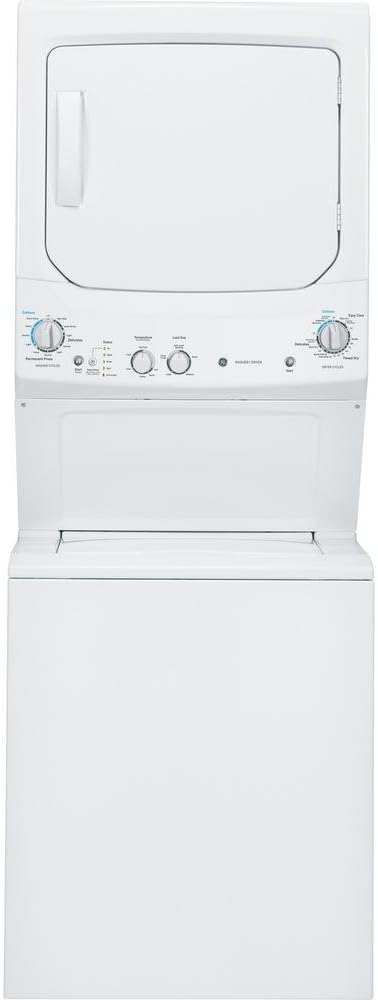
| Capacity | 5.9 cubic feet |
|---|---|
| Cycle Options | Eco |
| Voltage | 240 volts |
| Number of Washing Cycles | 11 |
| Annual Energy Consumption | 188 kilowatt hours per year |
This GE Spacemaker stacks a 3.8 cu ft washer under a 5.9 cu ft electric dryer in a single vertical cabinet designed for tight spaces. The washer uses a deep-clean agitator with 11 wash cycles and automatic load sensing to dial in water use, while the dryer offers a stainless steel drum and four drying cycles including an Eco option. Controls are push-button and cycle status lights make it easy to monitor progress. In real use it handles typical household loads and mixed fabrics reliably, and the front-load access plus dual-compartment dispenser for bleach and fabric softener add convenience. Energy consumption is moderate at 188 kWh per year and the 240V electric dryer needs a compatible outlet. Trade-offs are the unitized footprint and weight, which make installation and moving more challenging, and the washer capacity is smaller than many standalone models so very large loads may require splitting. The unit is best when space is limited and you want an all-in-one factory replacement that covers everyday laundry without extra hookups or a separate dryer.
Best for: Buyers who need a compact, factory-quality washer-dryer combo for apartments or small homes and value proven, commonly used features backed by customer feedback.
Less Ideal for: Households that regularly wash very large or bulky loads or that prefer separate, higher-capacity washer and dryer units.
- Space-saving all-in-one vertical design combines washer and electric dryer
- Stainless steel dryer drum for durability and even drying
- 11 washer cycles and automatic load sensing for tailored cleaning
- Dual-compartment dispenser for bleach and fabric softener
- Push-button controls and cycle status lights for simple operation
- Large, heavy unit can be difficult to move and requires planning for installation
- Washer capacity is modest compared with many standalone washers
Verdict: Choose this GE Spacemaker when you need a reliable, space-saving washer-and-dryer combo that offers standard cycles and a durable stainless steel dryer drum.
Frigidaire Laundry Center FLCE7522AW

| Washer capacity | 3.9 cubic feet |
|---|---|
| Dryer capacity | 5.6 cubic feet |
| Maximum spin speed | 850 rpm |
| Power | 240 volts |
| Number of wash cycles | 10 |
The Frigidaire FLCE7522AW is a space-saving stacked laundry center that pairs a 3.9 cu ft front-load washer with a 5.6 cu ft electric dryer to handle everyday loads in tight laundry areas. Controls are a mix of push buttons and turn knobs, and the washer reaches up to 850 rpm for faster spin drying while the stainless steel dryer drum helps protect fabrics. It offers a selection of wash and dry cycles—10 wash cycles and 10 dry cycles per the spec sheet—plus quick cycles and a MaxFill option to increase water level for deeper cleaning. Installation requires a 240V hookup and the unit includes the power cord, drain hose, and water intake hoses. Practical benefits are the compact 27-inch width that fits closets or alcoves and the straightforward mechanical controls that are familiar to most users. Important limitations are the relatively high annual energy consumption listed and the need for a 240V circuit, which may require electrical work in some homes, and the unit's mixed user feedback suggests checking service access and local support before purchase.
Best for: Buyers who prioritize a familiar, straightforward stacked washer-dryer that fits in small spaces and who prefer tried-and-true mechanical controls over smart or niche features.
Less Ideal for: People who need the most energy-efficient machine available, those without access to a 240V circuit, or buyers who want advanced connectivity and app controls.
- Stacked design saves floor space for closets and small laundry rooms
- Front-load washer with up to 850 rpm spin speed shortens drying time
- Stainless-steel dryer drum is durable and gentler on fabrics
- Includes power cord, drain hose, and water intake hoses for installation
- Requires a 240V electrical hookup which may need professional installation
- Listed annual energy consumption is relatively high compared with more efficient models
Verdict: Choose this compact Frigidaire stack if you need a simple, space-saving washer-dryer with solid cleaning and drying capacity for everyday household use.
Choosing the Right Washing Machine with Dryer on Top: Key Factors to Consider
Load Capacity and Drum Size
Capacity determines how many items you can wash and dry in a single cycle. Larger drums let you handle bulky items like comforters and reduce the number of cycles for families, while smaller drums suit singles or couples and save water. For stacked units, check both the washer and dryer rated capacities because dryer capacity is often slightly smaller than the washer, which can affect how dry heavy loads come out.
Drum size also affects fabric movement during the cycle. A well-sized drum allows adequate tumbling without overfilling, which improves cleaning and reduces wear. Consider your typical weekly laundry volume and any special items you wash to choose a capacity that minimizes extra loads.
Drying System and Moisture Control
Drying performance hinges on the heat source, airflow design, and whether the unit uses moisture sensors. Sensor-driven dryers stop when items reach a target dryness, preventing over-drying and saving energy. Units that rely on fixed-timers can leave fabrics damp or overdry them depending on load size and fabric type.
Also consider vented versus condenser or heat-pump designs when applicable. Venting affects installation options and may not be feasible in all stacked locations. Efficient moisture control reduces wrinkle set-in and shortens overall laundry time, which is especially valuable when the dryer is stacked above the washer and access can be more awkward.
Energy, Water Use, and Operating Cost
A machine's labeled energy and water consumption predict long-term running costs. Wash cycles with higher spin speeds extract more water, shortening drying time and saving energy. Look at cycle options that offer eco modes or lower-temperature washes for delicate fabrics.
For the dryer portion, sensor-based cycles and efficient heating systems consume less electricity over time. If you do many loads per week, small differences in energy or water use add up. Also check for certifications or efficiency ratings when available, because they provide a standardized comparison between models.
Installation Requirements and Fit
Stacked washer-dryer setups require vertical clearance and stable, level flooring. Measure the installation space carefully, accounting for door swing, top-dryer access, and any closet or alcove depth limits. Some stacked designs route venting through the wall or floor, while others use condenser systems that avoid external venting.
Installation complexity affects cost and ease of moving the unit later. Consider whether the stacked configuration allows service access to common maintenance points like water inlets, pumps, or lint traps. If you live in an apartment, verify any building venting rules or restrictions before choosing a stackable unit.
Cycle Variety and Fabric Care Features
A useful range of cycles helps you handle different textiles without manual intervention. Look for dedicated cycles for delicates, heavy-duty items, quick washes, and sanitizing options if hygiene is a priority. For the dryer, wrinkle-reduce and low-heat tumble options help protect sensitive fabrics.
Additional features like steam refresh, soil-level sensors, or adjustable spin speeds improve cleaning while protecting garments. The more relevant cycles a machine offers for your laundry habits, the less often you will need special handling or visits to external laundry services.
Noise, Vibration Control, and Durability
Because stacked units are often placed near living spaces, quiet operation and low vibration are important. Modern machines use better suspension systems, balanced drum designs, and quieter motors to minimize disruption. Check stated noise levels and look for features like anti-vibration technology.
Durability features, such as reinforced tubs and corrosion-resistant materials, reduce service needs over time. If the unit will be used daily, prioritize build elements that support longevity and reliable performance.
Space Planning and Measurements
Before choosing a stacked washer-dryer solution, take precise measurements of the installation area. Include the floor footprint, vertical clearance, and any obstructions like shelving, doors, or overhead cabinets. Remember to leave clearance for utility connections and for opening the washer door fully.
Also plan for airflow and venting needs if the dryer requires an external vent. If venting is not possible, look for condenser-style dryers or models designed for ventless installation. Finally, consider how the stacked unit will be moved into place and whether stair or hallway dimensions allow delivery without disassembly.
- Measure height, width, and depth with doors open
- Account for hookup access and maintenance clearance
- Plan venting or condensate drainage route
Installation Tips and Common Pitfalls
Professional installation is recommended for stacked setups to ensure stability and proper utility connections. Installers can secure stack kits, level the unit, and confirm vent routing or condensate lines are correctly fitted. Improper leveling increases noise and wear.
Common mistakes include underestimating the dryer door reach, neglecting to secure the stack, or not checking that the floor can support both appliances. Addressing these issues upfront avoids service calls and premature failures.
- Use a certified stack kit or manufacturer-recommended mounting method
- Verify that floor is level and can support combined weight
- Test for leaks and proper vent airflow after installation
Maintenance and Routine Care
Regular upkeep keeps a stacked washer-dryer running efficiently. Clean lint filters and condensation traps after each dryer use, and periodically inspect vents or condensers for blockages. For the washer, run maintenance washes per the manufacturer schedule to clear residue and keep seals fresh.
Address minor issues early, such as unusual noises or longer drying times, which often indicate vent blockages, imbalanced loads, or worn components. Scheduled maintenance reduces the likelihood of major repairs and preserves efficiency.
- Clean lint and condenser traps regularly
- Run an empty hot cycle with cleaner designed for washers occasionally
- Inspect hoses and vents annually for wear or blockages
How Cycle Selection Affects Results
Choosing the right cycle for the fabric mix improves cleaning and drying outcomes. Heavy fabrics and bedding generally need higher-temperature washes and longer dry times, while synthetics and delicates do better on cooler, gentler settings. Use sensor-based drying when available to avoid over-drying.
Spin speed selection matters because a faster spin extracts more water and reduces drying time, but it can be rougher on delicates. Match spin speed and dryer settings to fabric labels for best results and longer garment life.
- Match wash cycle to soil level and fabric type
- Use high spin for towels and bedding to shorten drying
- Choose sensor dry to prevent overdrying
Small-Space Design Ideas
Stacked washer-dryer configurations free floor space but still benefit from smart design choices. Install shelving that provides easy access to detergents at waist height or use a counter above the washer if depth allows. Folding shelves that clear the door swing keep the area functional without clutter.
Consider vibration-dampening mats and soundproofing panels if the stack sits next to living areas. Good lighting and reachable storage improve daily workflow and make laundry less of a chore.
- Add accessible shelving for detergents and laundry tools
- Use a folding shelf or pull-out countertop for folding clothes
- Install vibration pads to reduce noise transfer
How We Chose the Best Washing Machine with Dryer on Top
We shortlisted machines that deliver consistent wash performance and reliable dryer results in a stacked or integrated top-dryer layout. Our selection focused on objective specifications and real-world usability rather than brand popularity. Key evaluation criteria included wash tub capacity and spin speed, since they determine the volume and dryness of each load; dryer heat system and moisture sensing, because those affect drying time and fabric care; energy and water efficiency to reflect running costs and environmental impact; installation and serviceability, covering how easily the unit fits stacked spaces and how accessible components are for maintenance; and noise and vibration levels, which matter in open-plan homes or apartments. We excluded units that require major cabinet modifications or that do not support standard stacked installation methods. We did not consider single-function washers or standalone dryers. Our filters removed poorly documented models and products lacking basic performance specs. The resulting list emphasizes balanced machines that are practical for everyday use and that match the common spatial constraints buyers face when choosing a washer with a dryer mounted on top.
Our full evaluation process is outlined in our review methodology.
FAQ
Can I stack any washer with a dryer on top?
Not every washer is designed for stacking. You should use models intended for stacked installation and follow the manufacturer guidelines for stack kits and mounting. Stacking incompatible units can create safety and stability issues.
Do stacked washer-dryer units require special venting?
Some stacked dryers require external venting while others use condenser or ventless systems. Venting needs affect installation options, so confirm the dryer type before planning the location.
Will a stacked configuration reduce washing or drying performance?
Performance depends on the unit specifications rather than stacking itself. Proper installation, correct cycle selection, and matching load sizes will maintain performance similar to side-by-side setups.
How often should I clean lint and filters on a stacked dryer?
Clean the lint filter after every dry cycle and check condensers or secondary filters monthly. Regular cleaning preserves airflow, improves drying times, and reduces fire risk.
Can I install a stacked unit in a closet or cabinet?
You can install stacked units in closets if there is adequate clearance and proper venting or condensate management. Ensure doors and shelving do not obstruct access for loading or servicing the machines.
What should I do if the dryer leaves clothes damp?
Damp clothes can indicate overloaded loads, blocked venting, or insufficient heat settings. Try smaller loads, clean the lint trap and vent path, and use sensor-based dry cycles if available.
Final Verdict
When choosing a washing machine with a dryer on top, prioritize capacity and drying efficiency first. Those two factors most directly affect how quickly loads finish and whether bulky items will come out dry. Next, confirm installation requirements and energy or water use to align the unit with your space and operating-cost expectations. Accept tradeoffs between footprint and capacity: more compact stacks save space but may have smaller dryer drums or fewer advanced features. Focus on models that match your weekly laundry volume, offer sensor-driven drying, and fit your installation constraints to make a confident, practical choice.