
Note: This article contains affiliate links. If you click on these links and make a purchase, we may earn a small commission at no extra cost to you. This helps support our research and content. Read our full affiliate disclosure here.
Choosing a water dispenser for home use affects daily convenience, drinking water quality, and kitchen setup. The right unit delivers consistent, filtered water without constant refilling, complicated maintenance, or noisy operation. This guide covers seven shortlisted water dispensers that suit typical homes, from compact countertop units to freestanding models, and explains the practical differences buyers should expect. You will find clear evaluation criteria around filtration, ease of maintenance, flow and temperature options, and installation needs to help you pick the best model for your living situation. Read on for a concise overview of what each type delivers and why it made the list.
Top Picks at a Glance
| Best Overall The best all-around choice for most situations | Avalon A5 Bottleless Water Cooler |  |
| Best Quality Built to a higher standard if you want something more solid | Brio Bottom Load Water Cooler |  |
| Best Value The sweet spot between price and what you get | Brita UltraMax 27-Cup Dispenser |  |
| Best Budget The cheapest option that still gets the job done reliably | Beyio 5 Gallon Water Dispenser |  |
| Top Rated A top-rated pick with lots of positive feedback | Avalon A4 Bottom Loading Water Cooler |  |
| Most Popular A crowd favorite that many people choose with confidence | Brio Bottom Load Water Cooler | 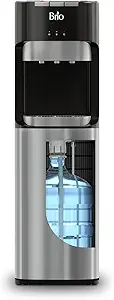 |
| Best Seller A high-volume bestseller chosen again and again | CozyCharm Water Jug Pump Z02 |  |
Avalon A5 Bottleless Water Cooler

| Wattage | 420 watts |
|---|---|
| Number of settings | 3 |
| Upper Temperature Rating | 185 °F |
| Power Source | Corded Electric |
| Included Components | water cooler, filter, installation kit |
The Avalon A5 is a freestanding bottleless water dispenser designed to connect to a cold-water line and deliver cold, room, or hot water on demand. It uses a two-stage filter set (sediment plus carbon block) and includes an installation kit for under-sink hookup, making it practical for homes that want to avoid bottled water. Notable features include a UV self-cleaning cycle to reduce bacterial buildup, push-button dispensing with a child safety lock on the hot spout, and a built-in nightlight and filter-change indicator for convenience. In daily use it provides straightforward touch dispensing and steady temperature performance suitable for beverages and hot drinks. Expect routine filter replacements roughly every six months or 1500 gallons and occasional maintenance to keep the UV and filters functioning. The unit is moderately sized and aimed at serving kitchens, break rooms, or small households that prefer a low-fuss, continuous filtered source rather than jugs or pitchers.
Best for: Buyers who want a low-maintenance, continuous filtered water supply for a household or small office and prefer a plumbed, bottle-free solution over juggling bottled jugs.
Less Ideal for: People who need a portable or countertop dispenser, have no access to a cold-water line, or want advanced filtration beyond sediment and carbon block stages.
- Bottleless direct-connection design eliminates frequent jug replacements
- Included dual filtration (sediment + carbon block) for basic contaminant and taste reduction
- UV self-cleaning feature helps limit microbial buildup inside the dispenser
- Child safety lock and nightlight increase household safety and usability
- Full installation kit included for under-sink hookup
- Filters require scheduled replacement roughly every six months
- Not a countertop unit so needs floor space and a water line connection
Verdict: A practical bottleless cooler that delivers continuous hot, cold, and room-temperature filtered water with UV self-cleaning for households wanting a plumbed, low-fuss solution.
Brio Bottom Load Water Cooler

| Wattage | 500 watts |
|---|---|
| Installation Type | Freestanding |
| Access Location | Bottom |
| Number of settings | 3 |
| Power Source | Corded Electric |
The Brio bottom-load water cooler provides convenient three-temperature dispensing — hot, cold, and ambient — while eliminating heavy lifting with its bottom-load bottle cabinet. It uses food-grade 304 stainless steel reservoirs and a UV self-cleaning cycle to help keep water tasting fresh and reduce maintenance, and the bright LED display and nightlight make operation simple in dim spaces. Practical safety features include a two-step child lock for the hot spout and a removable drip tray for easy cleaning. Installation is straightforward because it is freestanding and corded electric, and the unit is sized for standard 5-gallon bottles tucked into the lower compartment. On the performance side the 500-watt heater reaches high temperatures up to the listed rating and the cooler is built for steady daily use in kitchens, small offices, or common areas. Trade-offs are that it is a substantial freestanding appliance that requires floor space and periodic filter or sanitation upkeep to maintain peak water quality.
Best for: Buyers who prioritize reliable, ready-to-drink hot and cold performance and want a no-lift bottom-load cooler for kitchens, small offices, or shared spaces.
Less Ideal for: People who need a compact countertop solution or those unwilling to allocate floor space for a freestanding dispenser should consider smaller or countertop alternatives.
- Bottom-load design removes heavy lifting and hides the bottle for a cleaner look
- UV self-cleaning cycle helps reduce biofilm and lowers maintenance effort
- Three temperature settings (hot, cold, room) cover everyday beverage needs
- Stainless steel reservoirs preserve water taste and resist corrosion
- Child-safety two-step lock on hot spout prevents accidental dispensing
- Large freestanding footprint requires dedicated floor space
- Requires periodic sanitation and possible filter upkeep to maintain water quality
Verdict: Choose this Brio bottom-load cooler if you want a performance-focused freestanding dispenser that delivers hot, cold, and ambient water with easy bottle changes and built-in UV self-cleaning.
Brita UltraMax 27-Cup Dispenser
| Capacity | 27 cups |
|---|---|
| Filter life cycle | 6 months / 120 gallons |
| Purification method | Activated Carbon |
| Supported water TDS level maximum (PPM) | 600 |
| Included components | Water Dispenser with Filter |
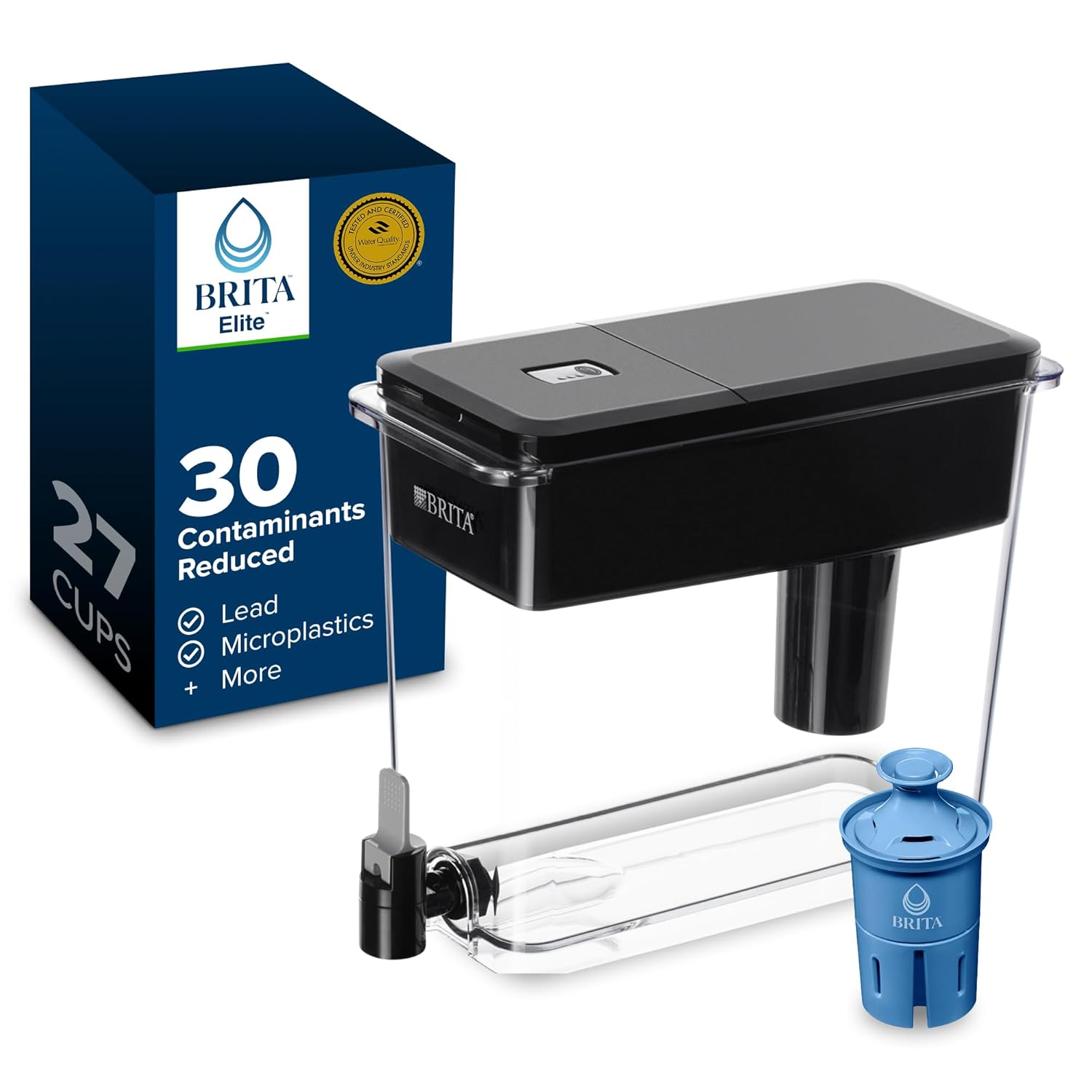
The Brita UltraMax is a 27-cup countertop water dispenser designed for families who want a simple, pour-through filtration solution. It uses the Brita Elite filter with Advanced Carbon Core Technology to reduce 99% of lead and more than 30 other contaminants including chlorine and microplastics, and the filter is certified to NSF/ANSI standards. You fill the top reservoir, water passes through the cartridge and is dispensed from the front spigot, which makes it convenient for filling glasses, pitchers, or a fridge. The Elite filter lasts about 120 gallons or roughly six months under average use, so replacements are infrequent compared with many pitchers. The dispenser is BPA-free and freestanding, with a change-filter indicator to help you track maintenance. Limitations are that it is a pour-through system rather than a plumbed-in or under-sink unit, so it requires manual refilling and countertop space, and contaminant reduction depends on what is present in your tap water and on timely filter changes.
Best for: Buyers who prioritize reliable contaminant reduction and low ongoing maintenance costs for family or shared household water use and want a simple countertop dispenser rather than a plumbed system.
Less Ideal for: People seeking a hard‑plumbed, hands‑free under-sink filtration solution or those with very limited countertop or fridge space should consider other options.
- Large 27-cup capacity suitable for families or frequent use
- WQA NSF/ANSI certified filter that reduces 99% of lead and 30+ contaminants
- Long filter life (about 120 gallons/6 months) reduces replacement frequency
- BPA-free construction with a convenient front spigot and change-filter indicator
- Requires manual refilling since it is not plumbed into household water
- Takes countertop or fridge space and may be bulky for small kitchens
Verdict: Choose the Brita UltraMax if you want a certified, high-capacity countertop dispenser that delivers long-lasting filtration with minimal filter changes.
Beyio 5 Gallon Water Dispenser

| Wattage | 4 watts |
|---|---|
| Installation Type | Freestanding |
| Access Location | Bottom |
| Power Source | Battery Powered |
| Capacity | 5 gallons |
This compact Beyio pump turns a 5-gallon jug into a portable, freestanding water dispenser using a rechargeable 1200mAh battery and USB charging. You install the silicone intake tube into the bottle and press the top button to pump water through a stainless outlet; a single press gives flow and the unit auto-stops after 60 seconds while a 3-second hold keeps water flowing continuously. It is lightweight and easy to carry, so it works well on counters, in offices, or at campsites, and the manufacturer claims about 30 days of use per full charge under typical cycles. The pump is simple to clean and the polypropylene body resists wear, but it only supports 5V/2A chargers and the modest 4-watt motor is not designed for fast high-volume dispensing. This model is best when you want an inexpensive, no-fuss way to serve bottled water without lifting heavy jugs, but expect basic functionality rather than heavy-duty performance.
Best for: Buyers who want an inexpensive, portable solution to dispense bottled water without lifting jugs and prioritize ease of use and long battery life over heavy-duty throughput.
Less Ideal for: Households that need fast, high-volume dispensing for large families or frequent entertaining should consider a larger electric or plumbed dispenser instead.
- Rechargeable 1200mAh battery offers long run time between charges
- One-button operation with auto-stop and 3-second hold for continuous flow
- Compatible with standard 2.16-inch screw cap 5-gallon bottles and other common bottle sizes
- Lightweight, freestanding design that is easy to carry for travel or camping
- Stainless steel outlet and silicone hose reduce taste and odor transfer
- Limited to USB 5V/2A charging so it cannot use higher-power chargers
- 4-watt motor provides moderate flow, not rapid dispensing for large groups
- Small plastic body may not be as durable as heavier, appliance-style dispensers
Verdict: A simple, budget-friendly rechargeable pump that converts 5-gallon jugs into an easy, portable dispenser for everyday home and travel use.
Avalon A4 Bottom Loading Water Cooler

| Wattage | 400 watts |
|---|---|
| Access Location | Bottom |
| Number of settings | 3 |
| Power Source | Corded Electric |
| Capacity | 5 gallons |
The Avalon A4 is a bottom-loading freestanding water cooler designed for home and small office use that delivers hot, cold, and room-temperature water with manual push-button controls. It fits standard 3–5 gallon bottles and hides the jug in a lower compartment to avoid lifting strain and spills, while a nightlight and empty-bottle indicator make it convenient after dark. The stainless steel cabinet and BioGuard antimicrobial treatment on high-contact areas improve durability and hygiene, and separate heating and cooling elements provide reliable temperature outputs for everyday use. Setup is straightforward since it is corded electric and requires only a bottle and power; routine maintenance is limited to occasional cleaning and bottle changes. Limitations include its manual controls rather than digital presets and a modest cooling power compared with larger compressors, so cold recovery after heavy use can be slower; it also occupies a full-height footprint typical of bottom-load coolers. For buyers prioritizing a no-fuss, sturdy dispenser that keeps hot and cold water available, the Avalon A4 is a practical choice.
Best for: Home buyers who want a dependable, low-maintenance dispenser that prioritizes ease of use, durability, and hygienic surfaces for everyday drinking and hot beverage needs.
Less Ideal for: Large families or high-traffic shared spaces that need rapid cold recovery or advanced programmable features should consider higher-capacity compressor-style units.
- Bottom-loading design reduces lifting and spills and hides the bottle for a cleaner look
- Three temperature settings (hot, cold, room) cover common household needs
- Stainless steel cabinet with BioGuard treatment for improved hygiene and durability
- Nightlight and empty-bottle indicator add convenience for low-light use
- Cooling power is modest so very frequent dispensing may reduce cold recovery speed
- Controls are manual push-buttons rather than digital or programmable controls
Verdict: A sturdy, hygienic bottom-loading cooler that delivers reliable hot, cold, and room water with minimal fuss, ideal for buyers who value dependable everyday performance.
Brio Bottom Load Water Cooler

| Wattage | 500 watts |
|---|---|
| Installation Type | Freestanding |
| Access Location | Bottom |
| Number of settings | 3 |
| Capacity | 5 gallons |
The Brio Bottom Load Water Cooler is a freestanding dispenser designed to eliminate lifting heavy jugs while giving instant access to hot, cold, and room-temperature water. It accepts 3- or 5-gallon bottles in a concealed bottom cabinet, and the stainless steel reservoirs help keep water tasting clean. Typical use is in kitchens, small offices, or lounges where people want on-demand cold drinks and piping-hot water for beverages or instant meals. The unit includes a child-safety lock on the hot spout and an LED display that alerts when the bottle is empty, which reduces guesswork on refills. Practical benefits include easier bottle changes, the convenience of three temperature settings, and a polished stainless-accent design that fits home decor. Limitations to consider are its footprint and weight compared with tabletop dispensers, and it lacks built-in advanced filtration or touchless dispensing found on higher-end models. For buyers weighing reliability and user feedback, the Brio model offers familiar features and a straightforward experience without complex extras.
Best for: Buyers who prioritize easy bottle changes, straightforward hot and cold dispensing, and a proven product with visible customer feedback for home or small office hydration.
Less Ideal for: People who need integrated water filtration, a compact countertop unit, or touchless dispensing features should consider alternative models.
- Bottom-load cabinet removes heavy lifting and simplifies bottle changes
- Three temperature settings provide hot, cold, and room-temperature water on demand
- Stainless steel reservoirs maintain taste and are food-grade 304
- LED empty-bottle alert and hot-spout child-safety lock add practical safety and convenience
- No built-in advanced filtration system included
- Larger and heavier than countertop or bottleless units which can limit placement
Verdict: Choose this Brio bottom-load cooler if you want a reliable, easy-to-refill home dispenser that delivers hot, cold, and room-temperature water without heavy lifting.
CozyCharm Water Jug Pump Z02
| Capacity | 18.93 liters |
|---|---|
| Installation Type | bottled |
| Power Source | Battery Powered |
| Material Type | Plastic, Silicone |
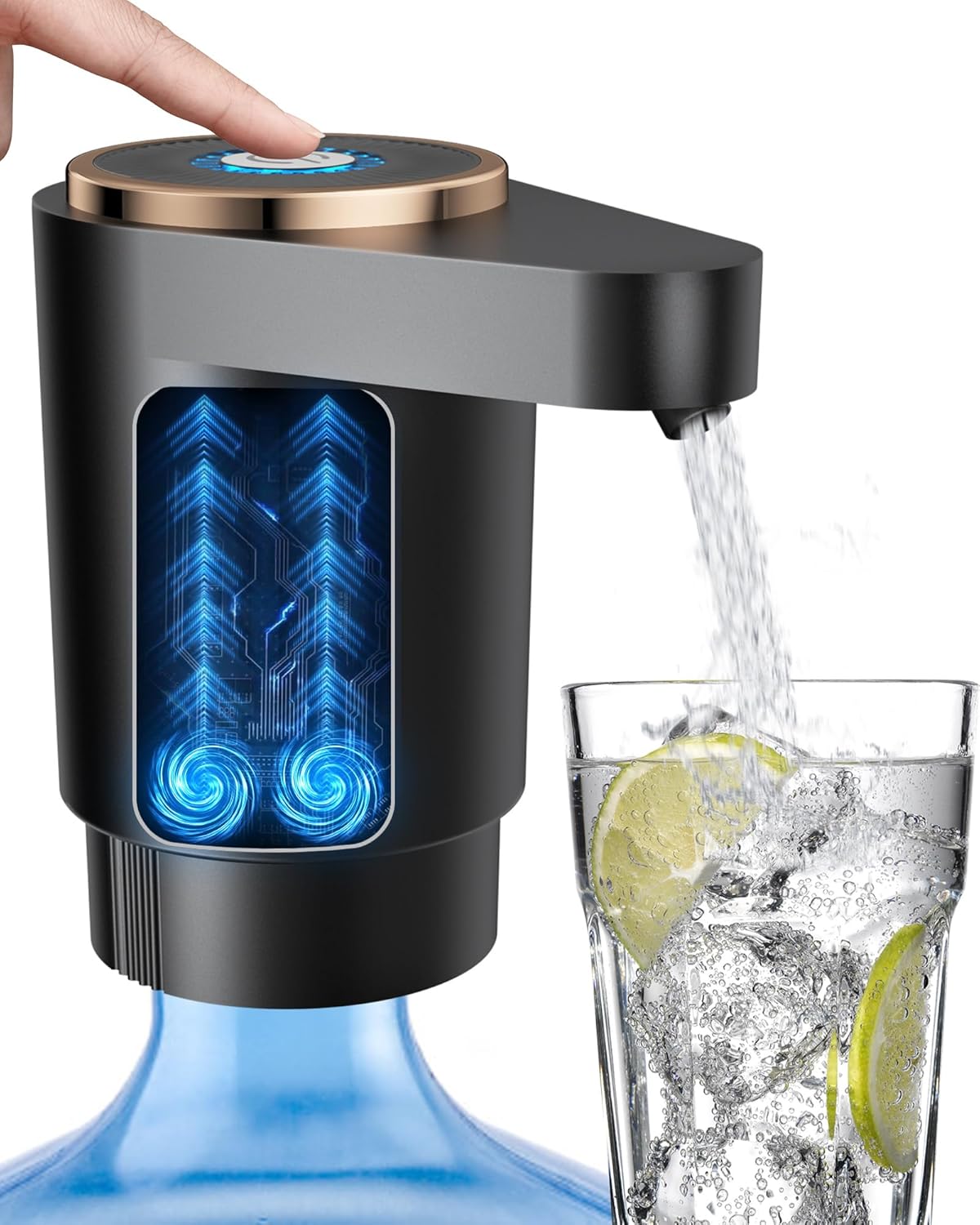
This compact water jug pump turns a standard bottled water jug into a no-lift dispenser by sitting on the bottle and using two motors to push water through a silicone hose. It is typically used on 2, 3, and 5 gallon bottles at home, office, or while camping to fill cups and bottles without lifting heavy jugs. Notable features include dual high-performance motors for a noticeably faster flow, USB-C rechargeable battery power so it runs cord-free, and food-grade silicone components for hygiene. In everyday use the pump delivers a steady stream quickly—CozyCharm claims about a 16 oz cup in roughly 9 seconds on a 5-gallon jug—so it saves time versus slow single-motor pumps and is easier for people with limited mobility. The unit is lightweight and very portable, but because it is a small battery-powered pump it lacks a built-in cooling or heating function and relies on correct cap fitment for a leak-free seal. For buyers prioritizing simplicity, portability, and faster dispensing from standard bottled jugs, this is a practical choice.
Best for: Buyers who want a simple, low-effort way to dispense water from large bottled jugs at home or on the go and who value portability and ease of use over extra features.
Less Ideal for: People who need hot or chilled water on demand, or who prefer a freestanding cooler with a countertop footprint and built-in temperature control.
- Dual motors provide noticeably faster and more consistent flow than typical single-motor pumps
- USB-C rechargeable battery enables cordless use and easy recharging
- Fits standard 2, 3, and 5 gallon jugs for wide compatibility
- Silicone hose and food-grade plastic body designed for durability and sanitary water contact
- No hot or cold temperature control or heating feature
- Requires a compatible cap seal and correct installation to avoid leaks
Verdict: A compact, rechargeable pump that makes dispensing water from 2–5 gallon jugs quick and effortless, ideal for buyers who prioritize portability and straightforward operation.
Choosing the Right Water Dispenser for Home Use: Key Factors to Consider
Filtration System and Water Quality
Filtration determines the taste and safety of dispensed water. Look for dispensers that specify the type and stages of filtration, such as sediment prefilters, activated carbon, and reverse osmosis or mineral-enhancing post-filters. A clearer spec helps you know what contaminants are reduced and how often parts need replacement.
Higher-grade filtration reduces odors, chlorine taste, and particulates, but it can require more frequent cartridge changes and occasional system flushing. Consider whether the unit uses off-the-shelf filter cartridges or proprietary modules, and factor in replacement costs and availability when estimating long-term upkeep.
Maintenance Access and Filter Replacement
Regular upkeep keeps performance consistent and prevents bacterial growth. Choose dispensers with easy access panels or top-loading cartridges that you can swap without tools. Clear indicators for filter life or simple timers help you stay on schedule for replacements and cleaning.
Also evaluate how the unit handles internal cleaning. Removable drip trays, accessible reservoirs, and straightforward sanitization steps make routine maintenance less of a chore. If a model needs periodic professional servicing, that increases total ownership complexity.
Dispensing Options and Performance
Think about the water temperatures and flow you need. Many home units offer cold, room-temperature, and hot dispensing; confirm the temperature ranges and whether hot water has child-safety controls. Dispensing speed matters for day-to-day use: slow flows can frustrate when filling large pitchers, while very fast flows may splash or overflow small cups.
Also consider whether the dispenser provides continuous flow or only timed pours. For households that use a lot of hot water for drinks or cooking, check heater recovery time and reserve capacity to avoid long waits during peak use.
Size, Placement, and Installation
Dispenser footprint and installation type affect where you can put the unit. Countertop and small freestanding models are easiest to place, while plumbed-in or direct-connect units need a nearby cold-water line and possibly a drain. Confirm clearances for door swing and access to filter compartments.
If you plan to place the dispenser in a high-traffic area, consider noise levels and ventilation needs. Also account for how water delivery will be refilled or connected—bottle-fed designs require storage for spare bottles while plumbed models need a reliable water source.
Energy Use and Operating Costs
Heating and cooling elements add to operating costs and influence the environmental footprint. Look for energy-saving modes or efficient compressor systems in units with active cooling. Standby power draw is important for units kept on 24/7 to provide instant hot or cold water.
Also compare expected filter replacement intervals and typical cartridge costs to estimate recurring expenses. Some features that improve convenience, such as instant hot water or UV sterilization, will increase energy consumption and potentially maintenance complexity.
Countertop Vs Freestanding Dispensers
Countertop dispensers save floor space and are simple to install since many are just plug-and-play or bottle-fed. They work well in small kitchens, home offices, and dorm-style living where space is limited. Freestanding dispensers sit on the floor and typically have larger reservoirs, built-in refrigeration or heating systems, and are a better fit for households with higher daily water demand.
When choosing between the two, weigh daily volume needs against available floor and counter space. Countertop units often require more frequent refills unless plumbed in, while freestanding models may need more upfront space but reduce refill frequency and offer larger temperature reservoirs.
- Countertop: compact, easy to move, ideal for light daily use
- Freestanding: larger capacity, better for families, may include stronger cooling/heating
- Consider refill method: bottle-fed, direct-plumb, or internal reservoir
Plumbed-In Vs Bottle-Fed Systems
Plumbed-in dispensers connect directly to your water supply for continuous access without manual refills. They are convenient but require planning for installation and may need a nearby cold-water line and occasional access to a drain. Bottle-fed systems use replaceable jugs and are simple to set up without plumbing changes, but they require storage space for bottles and periodic lifting to refill.
Assess your tolerance for hands-on refills versus the need for a constant feed. Plumbed systems are ideal if you want set-and-forget operation and steady supply. Bottle-fed units remain a great option when installation is impractical or you want mobility.
- Plumbed-in: continuous supply, lower manual intervention, needs installation
- Bottle-fed: portable, no plumbing required, needs bottle storage and handling
- Check whether a model supports both modes for flexible use
Temperature Control and Safety Features
Temperature range and control options influence how you use the dispenser for beverages and cooking. Cold dispensing should reach reliably cool temps, and hot dispensing should be hot enough for tea or instant meals while including safety locks to prevent accidental dispensing. Some units offer adjustable temperature setpoints or quick-heat functions for faster recovery.
Safety features such as child locks, insulated hot water spouts, and spill containment are important for homes with children or pets. Evaluate whether controls are intuitive and whether any lockouts are easy for adults to bypass in daily use.
- Look for child locks on hot water taps
- Adjustable temp setpoints add versatility
- Insulation reduces surface heat and energy loss
Noise and Daily Use Considerations
If the dispenser will live in a kitchen or shared living area, noise level matters. Compressors, pumps, and fans can create background noise, especially in freestanding units with active cooling. Some models also emit brief sounds during heating cycles or when recharging chilled reservoirs.
Think about how often and when you will use the dispenser. For late-night or early-morning use, quieter operation is desirable. Also consider whether the unit needs ventilation clearance that could limit placement options in tight spaces.
- Check manufacturer noise specs if quiet operation is important
- Pulsing sounds during temperature cycles are normal for active units
- Allow clearance for ventilation to avoid overheating and excess noise
Design, Aesthetics, and Kitchen Integration
A dispenser is a visible appliance in many kitchens, so finish, color, and overall design matter. Slim profiles and neutral finishes help appliances blend into modern kitchen aesthetics. Some models offer reversible panels or modular tops to better match cabinetry or counter surfaces.
Also consider user interface placement and ergonomics. Controls should be reachable and visible from the usual standing position. Removable trays and accessible reservoirs simplify cleaning and reduce the chance of spills during use.
- Choose finishes that coordinate with other kitchen appliances
- Ergonomic tap height and control placement improve daily usability
- Removable parts streamline cleaning and reduce countertop mess
How We Chose the Best Water Dispenser for Home Use
We shortlisted water dispensers that meet typical home needs and then applied a consistent editorial filter to identify models that deliver reliable performance and low friction for daily use. Primary evaluation criteria focused on filtration effectiveness, including multi-stage filters and NSF-equivalent performance where available. We also prioritized ease of maintenance, covering filter access, replacement frequency, and whether routine cleaning is straightforward for an average homeowner. Flow and temperature control were assessed to ensure practical dispensing speeds and useful hot/cold options without long wait times. Installation and footprint were considered so units fit common kitchen and living spaces with clear guidance on water source requirements. Energy use and standby efficiency were factored in for models with active cooling or heating components. We excluded units that required specialized commercial plumbing or professional-only installation, models lacking documented filtration specs, and designs clearly intended for continuous high-volume commercial use. The resulting picks reflect a balance of water quality, user upkeep, space fit, and operational convenience.
Our full evaluation process is outlined in our review methodology.
FAQ
How often should I replace filters in a home water dispenser?
Filter replacement depends on the cartridge type and household usage. Typical intervals range from three to twelve months. High-use homes or units with finer filtration often need more frequent changes. Watch for flow reduction, taste changes, or manufacturer life indicators as replacement cues.
Can a water dispenser be installed without professional plumbing?
Many bottle-fed and countertop dispensers require no professional plumbing and simply plug into a standard outlet. Plumbed-in models usually need a cold-water line connection and sometimes a drain, which may require a plumber if you are not comfortable with basic DIY plumbing.
Are hot water taps on dispensers safe for homes with children?
Many home dispensers include child-safety locks or two-step controls for hot water to reduce burn risk. Even with these features, supervise young children around hot taps and consider placing the unit out of reach if burns are a concern.
Do plumbed water dispensers improve water quality compared with bottled systems?
Plumbed dispensers can offer consistent filtration if fitted with appropriate cartridges, but water quality depends on the filter type and maintenance schedule. Bottled systems rely on the bottled water source and eliminate some plumbing-related tastes, but both types need proper upkeep to maintain water quality.
How much space should I allow around a freestanding dispenser?
Allow a few inches of clearance on each side and behind the unit for ventilation, especially if it has active cooling. Also ensure door swings and access panels can open fully for filter changes and reservoir access. Consult the unit's installation guidance for exact clearances.
Final Verdict
Prioritize filtration effectiveness, ease of maintenance, and how you will supply the unit when choosing a water dispenser for home use. If you need continuous access with minimal refilling, a plumbed or larger freestanding appliance will likely serve better. For compact spaces or occasional use, a countertop or bottle-fed model may be the most practical. Balance tradeoffs between filtration level, operating complexity, and energy use to find the best match for your household. Focus on models with straightforward filter access, clear maintenance indicators, and temperature options that meet your daily routines to choose confidently.