
Note: This article contains affiliate links. If you click on these links and make a purchase, we may earn a small commission at no extra cost to you. This helps support our research and content. Read our full affiliate disclosure here.
If you rely on a water dispenser for everyday drinking and cooking, choosing a unit with an effective integrated filter makes a real difference in taste and household convenience. The right water dispenser with a filter reduces contaminants, cuts down on bottled-water waste, and simplifies refills so you spend less time maintaining your kitchen or office hydration setup. This guide shortlists seven top options that balanced filtration efficiency, ease of use, and upkeep demands. We evaluated each unit on the most important practical factors so you can pick the best fit for your space and water quality needs. Read on for a quick primer on what matters and our top picks.
Top Picks at a Glance
| Best Overall The best all-around choice for most situations | Avalon B8WHT Countertop Water Cooler |  |
| Best Quality Built to a higher standard if you want something more solid | PUR Plus 30-Cup Water Dispenser | 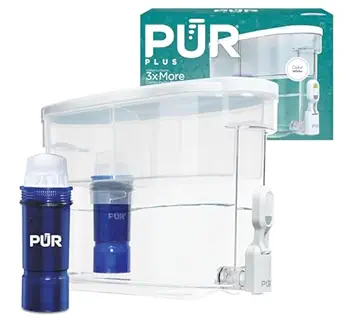 |
| Best Value The sweet spot between price and what you get | Waterdrop WFD-40L Water Filter Dispenser |  |
| Best Budget The cheapest option that still gets the job done reliably | Waterdrop Lucid Pitcher WD-PT-07B |  |
| Top Rated A top-rated pick with lots of positive feedback | Berkey Big Gravity-Fed Water Filter |  |
| Most Popular A crowd favorite that many people choose with confidence | Brita UltraMax 27-Cup Dispenser |  |
| Best Seller A high-volume bestseller chosen again and again | BRITA Metro 6-Cup Pitcher |  |
Avalon B8WHT Countertop Water Cooler

| Wattage | 520 watts |
|---|---|
| Installation Type | Under Sink |
| Number of settings | 2 |
| Upper Temperature Rating | 185 °F |
| Capacity | 1500 gallons |
The Avalon B8WHT is a countertop, bottleless water cooler designed to connect to a tap and deliver both hot and cold filtered water on demand. It ships with a full installation kit and two-stage filtration—a sediment prefilter plus a carbon block filter—so it reduces bottled water purchases and treats tap water for clearer taste and fewer particles. The unit includes separate hot and cold spouts, a child safety lock on the hot side, a nightlight for easy access in low light, and a replace-filter indicator to simplify maintenance. Practical benefits include steady access to hot water for beverages and fast cold water for drinks without handling heavy jugs, plus the six-month or 1500-gallon filter life between changes. Trade-offs are that it requires an under-sink style hookup and a dedicated countertop spot, and the listed power draw and heating capability mean it consumes electricity for hot water; users should also plan for periodic filter purchases and the 1-year manufacturer warranty for coverage limits.
Best for: Home or small-office buyers who want a bottleless filtered dispenser that gives ready hot and cold water and prefer an included installation kit and simple maintenance.
Less Ideal for: People without an accessible cold-water tap under the sink or those who need a portable, no-plumbing solution should consider alternatives.
- Included full installation kit simplifies hookup to a tap without separate plumbing work
- Dual-stage filtration (sediment + carbon block) improves taste and removes particles
- Provides both hot and cold water with a child-safe hot spout and nightlight for convenience
- Filter life rated to 6 months or 1500 gallons reduces replacement frequency
- Requires under-sink connection and countertop space which may not fit all kitchens
- Uses electricity to heat water so it draws power continuously when in use
Verdict: Choose the Avalon B8WHT if you want an easy-to-install countertop bottleless cooler that delivers filtered hot and cold water with included dual-stage filters.
PUR Plus 30-Cup Water Dispenser

| Purification Method | Activated Carbon, Ion Exchange |
|---|---|
| Capacity | 1.88 gallons |
| Filter Life Cycle | 2 months |
| Included Components | 1 Dispenser, 1 Filter |
The PUR Plus 30-Cup Water Dispenser is a counter-top and fridge-friendly dispenser that turns tap water into filtered drinking water using a PUR Plus lead-reducing filter. It is used like a large pitcher with a pull-down spout for easy pouring and a sturdy handle for refilling, and the smart indicator light notifies when the filter should be changed. The filter uses activated carbon and ion exchange media to reduce chlorine taste and odor plus lead, microplastics, and a range of other chemical and physical contaminants; each filter is rated for about 40 gallons or two months of typical use. Practical benefits include the large 30-cup capacity for households, a slim profile that fits in most refrigerators, dishwasher-safe components for simple cleaning, and a LockFit design that keeps filtered water isolated from unfiltered water. Limitations are a relatively short filter life between replacements and dependence on replacement filters to maintain lead reduction performance, so ongoing maintenance is required for peak performance.
Best for: Buyers who prioritize proven contaminant reduction and need a high-capacity, fridge-ready dispenser for everyday household drinking water.
Less Ideal for: People who want a maintenance-free solution or very long filter intervals should consider alternatives with longer-lasting filters or whole-home systems.
- Certified lead reduction and microplastic filtration backed by PUR Plus media
- Large 30-cup capacity suitable for family use or fridge storage
- Smart filter indicator light reminds when to replace the filter
- Slim, dishwasher-safe design with a convenient pull-down spout and carry handle
- Filter life is limited to about 40 gallons or two months, requiring regular replacements
- Performance depends on using genuine replacement filters to maintain advertised contaminant reductions
Verdict: Choose this dispenser if you want a high-capacity, fridge-friendly system with certified lead and microplastic reduction for everyday household use.
Waterdrop WFD-40L Water Filter Dispenser

| Capacity | 8.2 liters |
|---|---|
| Filtration method | Activated Carbon |
| Filter life cycle | 200 gallons / 2 months |
| Supported water TDS level maximum (PPM) | 600 |
The Waterdrop WFD-40L is a tall, slim water filter dispenser meant to sit in a refrigerator or on a counter and provide filtered water on demand. It uses a gravity-fed activated carbon filter (NSF 42 and 372 certified) to reduce chlorine, some metals and common taste and odor issues, and the included filter is rated for roughly 200 gallons or two months of use. Practical touches include a push-pull top handle and a sliding lid for easy refills, a bottom-arc shape to clear fridge door contours, and an electronic filter-life indicator so you know when to swap cartridges. Filtration flow is relatively fast for this class, with the manufacturer claiming a few minutes per fill, and the pitcher is made from lead-free, food-grade materials. The main limitations are the typical lifespan of pitcher-style filters and that it does not lower TDS significantly, so it is best for improving taste and removing specific contaminants rather than heavy mineral reduction.
Best for: Buyers who want a space-saving, fridge-friendly dispenser that improves tap water taste and removes chlorine and common contaminants with easy maintenance and clear filter reminders.
Less Ideal for: Users who need substantial TDS reduction, mineral-free water, or a long-term low-maintenance filtration system should consider alternative technologies.
- NSF 42 and 372 certified activated carbon filter reduces chlorine and improves taste
- Slim, fridge-friendly design with a push-pull handle and sliding lid for easy refilling
- Fast flow rate compared with typical pitchers and an electronic filter-life indicator
- Made from lead-free, food-grade, BPA-free materials
- Filter life is limited to about 200 gallons or two months, requiring regular replacements
- Does not significantly lower total dissolved solids, so not for buyers wanting low TDS water
Verdict: A slim, fridge-ready dispenser that delivers faster-flowing, NSF-certified carbon filtration to improve taste and reduce chlorine for practical everyday use.
Waterdrop Lucid Pitcher WD-PT-07B

| Capacity | 2.4 liters |
|---|---|
| Filter Life Cycle | 200 gallons / 3 months |
| Purification Method | Activated Carbon |
| Maximum Flow Rate | 0.5 gpm |
The Waterdrop Lucid WD-PT-07B is a compact 10-cup pitcher-style water filter intended for everyday countertop or fridge use. It uses an activated carbon multi-stage filter certified to NSF/ANSI 42 and 372 to reduce chlorine, PFOA/PFOS, some heavy metals, and odors while leaving TDS unchanged. The pitcher is designed for easy handling with a slim profile to fit most refrigerator doors and a hands-free lid that lets you pour without opening the top, which helps keep the reservoir cleaner. Its filter lasts up to 200 gallons or about three months and the LED indicator tracks when a change is due. Setup is simple: soak the filter briefly, press it into the reservoir, discard the first two pitchers of water, and use the indicator to monitor life. The pitcher is non-electric and straightforward to maintain, but it cannot lower total dissolved solids and requires replacement filters (search PF-01A) on the same cadence as similar budget pitchers. For everyday drinking, coffee, and tea this pitcher delivers better taste and a longer filter life than many basic models.
Best for: Budget-minded buyers who want an affordable, easy-to-use pitcher that improves taste for daily drinking, coffee, and tea without needing a plumbed system.
Less Ideal for: Households that need significant TDS reduction, mineral removal, or whole-home filtration should choose a different system.
- NSF/ANSI 42 and 372 certified filtration for chlorine, PFOA/PFOS, and some metals
- Long filter life rated to 200 gallons or about three months
- Slim, fridge-friendly design with hands-free lid to reduce dust
- LED indicator that signals when to replace the filter
- Does not reduce total dissolved solids (TDS)
- Requires periodic replacement filters sold separately
Verdict: A cost-conscious, fridge-friendly pitcher that delivers certified reduction of common contaminants with a longer-than-average filter life for everyday filtered water.
Berkey Big Gravity-Fed Water Filter

| Capacity | 2.25 gallons |
|---|---|
| Filter Elements Included | 2 Black Berkey Elements (BB9-2) |
| Chamber Construction | AISI 304 Stainless Steel |
| Maximum Flow Rate | 0.03 gpm |
| Supported Water TDS Level Maximum (PPM) | 1000 |
The Big Berkey gravity-fed system is a countertop water filter made from polished AISI 304 stainless steel that uses two Black Berkey BB9-2 filter elements to reduce over 200 common contaminants without electricity or plumbing. You fill the upper chamber, gravity draws water through the proprietary filter media into the lower chamber, and water is dispensed from the included spigot—making it useful for everyday drinking, cooking, and beverage prep. Notable features include a compact footprint for a 2.25-gallon system, independently tested filter media, and the option to expand to four elements for higher throughput or tougher source water. Practical benefits are long element life rated up to 6,000 gallons per pair and simple maintenance with no tools required. Limitations are the slow maximum flow rate of about 0.03 gpm compared with pressurized systems and a lack of built-in fluoride/arsenic specialty elements unless you buy additional PF-2 cartridges separately, so it is not ideal when you need instant high-volume dispensing or integrated specialty reduction out of the box.
Best for: Buyers who prioritize a reliable, low-maintenance countertop purifier that consistently delivers long-lasting contaminant reduction without electricity or installation.
Less Ideal for: People who need high-speed dispensing for large households or built-in specialty contaminant cartridges included from the start should consider other options.
- Gravity-fed design needs no electricity or plumbing
- Polished AISI 304 stainless steel construction for durability and countertop use
- Black Berkey BB9-2 elements are independently tested and rated for up to 6,000 gallons per pair
- Expandable to four filter elements for increased flow and contaminant reduction
- Compact 2.25 gallon capacity works for small to medium households
- Low maximum flow rate compared with pressurized dispenser systems
- Does not include specialty fluoride/arsenic reduction elements by default
Verdict: Choose the Big Berkey when you want a proven, low-maintenance countertop filter that delivers long-lasting contaminant reduction without electricity.
Brita UltraMax 27-Cup Dispenser

| Capacity | 27 cups |
|---|---|
| Included components | Water Dispenser with Filter |
| Material Type | Plastic |
The Brita UltraMax 27-Cup Dispenser is a large-capacity, BPA-free water dispenser designed for families and shared kitchens that want filtered tap water without bottled water waste. It holds 27 cups, fits in most refrigerators and ships with a Brita Standard filter that reduces chlorine taste and select heavy metals; the product supports both Standard and Elite Brita filters and includes a sticker indicator for filter changes. Setup is simple: fill the top reservoir, let water pass through the filter, and use the precision-pour spigot for serving. The dispenser is space-efficient compared with standalone coolers and helps cut single-use plastic by offering ready-to-serve filtered water. Limitations include the need to replace filters regularly (Standard ~40 gallons/~2 months, Elite longer) and the dispenser relies on gravity filtration so it is slower than plumbed systems or electric purifiers, but it is an inexpensive, low-maintenance option for households wanting reliable basic contaminant reduction.
Best for: Buyers who prioritize proven contaminant reduction and social validation and want an easy, fridge-friendly way to provide filtered water for a household without plumbing changes.
Less Ideal for: People who need instant flow or high-throughput filtered water for large events or those who prefer a plumbed, electric, or certified point-of-use system with faster filtration.
- Large 27-cup capacity suitable for families and gatherings
- Compatible with Brita Standard and Elite filters for flexible filter life and performance
- Fridge-friendly shape and easy-locking lid to save counter space and keep water cold
- Included sticker filter indicator simplifies knowing when to replace the filter
- Gravity-fed filtration is slower than plumbed or electric systems
- Requires regular filter replacements to maintain performance
Verdict: A simple, fridge-friendly 27-cup dispenser that delivers trusted Brita filtration for households wanting an affordable, low-effort way to replace bottled water.
BRITA Metro 6-Cup Pitcher

| Filter Life Cycle | 2 months |
|---|---|
| Maximum Flow Rate | 9.7 milliliters_per_second |
| Supported Water TDS Level Maximum (PPM) | 500 |
| Upper Temperature Rating | 85 °F |
The Brita Metro 6-cup pitcher is a compact, fridge-friendly water filter pitcher meant for everyday tap water improvement. It uses a Standard Brita filter that the company says reduces chlorine taste and odor, copper, mercury and cadmium, and the SmartLight filter-change indicator tracks the 40-gallon / roughly two-month filter life so you know when to replace it. The pitcher is BPA-free, has an easy-fill lid that fits most refrigerator doors and works with Brita Standard and Elite filters for longer life or fresher taste. In practice it delivers noticeably better tasting water compared with unfiltered tap water and removes sediment and some heavy metals where present. Limitations are its small 6-cup capacity, which means more frequent refills for larger households, and that certified reductions depend on the contaminants actually present in your local water. For a cautious buyer who wants a simple, proven filtration step without plumbing changes, this pitcher is a low-risk way to cut bottled-water use and improve daily drinking water.
Best for: Buyers who want a simple, nonplumbed way to improve tap water taste and reduce select contaminants with a familiar, certified brand and minimal maintenance worry.
Less Ideal for: Large households, heavy beverage makers, or anyone who prefers whole-home or under-sink filtration that treats a wider range of contaminants should look at higher-capacity or plumbed systems.
- WQA and NSF/ANSI certified reductions for chlorine taste and odor, copper, mercury and cadmium
- SmartLight indicator reminds you when the 40-gallon (about 2 months) Standard filter needs replacing
- Space-saving 6-cup design fits most fridge doors and mini-fridges
- BPA-free construction and easy-fill lid for convenient daily use
- Only a 6-cup capacity, requiring frequent refills for multiple users
- Filter performance depends on which substances are present in your local tap water
Verdict: A compact, certified pitcher filter that gives risk-averse buyers an easy, low-cost way to improve tap water taste and reduce select contaminants without plumbing changes.
Choosing the Right Water Dispenser with a Filter: Key Factors to Consider
Filter Technology and Contaminant Reduction
Different dispensers use different filter media and configurations, from activated carbon to multi-stage cartridges that include sediment prefilters. The technology determines which contaminants are reduced, how well taste and odor are improved, and how long the cartridge lasts.
When evaluating filter technology, look for specifications that list reductions for chlorine, volatile organic compounds, and common particulates. If your water source has specific issues such as heavy metals or microbial concerns, confirm whether the filter is rated for those contaminants or if you need a complementary treatment. Filter lifespan is tied to both technology and local water quality, so expect replacement intervals to vary.
Filter Accessibility and Replacement Cost
A great filtration system is only useful if you can keep the filter changed on schedule. Choose dispensers with tool-free access, clearly marked cartridge orientation, and straightforward sealing mechanisms to avoid spills or improper installation.
Also consider long-term cost and availability of replacement cartridges. Some systems use proprietary cartridges that are expensive or hard to source, while others use common sizes with multiple suppliers. Factor replacement frequency into your ownership costs, and check whether cartridges have clear end-of-life indicators to prevent degraded performance.
Dispensing Capacity and Flow Rate
Flow rate determines how quickly you can fill glasses, pitchers, or a kettle. For family kitchens or small offices, faster flow and generous cold or ambient reservoirs reduce waiting time during peak use. Conversely, compact units with slower flow might suffice for light use and save counter space.
Look at both instantaneous dispense rate and reservoir capacity. Some dispensers include separate hot and cold taps, which affect filling speed and safety considerations. Make sure the unit's throughput matches your daily consumption patterns to avoid frustration.
Installation, Footprint, and Placement
Consider where the dispenser will live. Countertop units need enough clearance for bottle changes or cartridge access, while freestanding floor models require a stable footprint and possibly a nearby power outlet for heated models. Weight and water connections matter if you plan to attach to a plumbed line versus using refillable tanks.
Also plan for routine maintenance: accessible drip trays, removable reservoirs, and clear service panels make cleaning and filter changes easier. If space is tight, measure carefully so the dispenser does not obstruct cabinets or walkways.
Safety Features and Energy Use
Dispensers that offer hot water should include child-safety locks and reliable thermostat control to prevent scalding. Energy efficiency is relevant for models that heat or chill water continuously; look for units that use insulated reservoirs or efficient compressors to reduce standby power consumption.
Consider the tradeoff between instant hot water convenience and energy draw. If you rarely need heated water, a model that heats on demand or has an energy-saving mode may be a better long-term choice.
Materials, Build Quality, and Cleanability
Materials in contact with drinking water should be durable and nonreactive. Stainless steel, BPA-free plastics, and food-safe seals help preserve water quality and reduce off-flavors. Avoid finishes that trap residue or are hard to clean.
Routine cleaning access is important to prevent biofilm buildup. Removable drip trays, detachable faucets, and user-accessible reservoirs simplify sanitation. Evaluate how easy it is to disassemble and reassemble components without tools.
Plumbed Vs. Tank-Based Filtered Dispensers
Filtered water dispensers typically come in two plumbing styles: plumbed models connect directly to your water line for continuous supply, while tank-based units use refillable reservoirs that you fill manually. Plumbed units remove the chore of refilling and can support higher throughput, but they require a compatible water connection and potentially basic plumbing work.
Tank-based dispensers are more portable and simpler to install since they do not need a direct feed. They are a good option for renters or areas without convenient plumbing access, though you must be willing to refill and manage the reservoir. Consider your installation constraints and daily water usage when deciding between these two approaches.
- Plumbed: steady supply, higher flow, requires connection
- Tank-based: portable, easier install, requires manual refills
- Plumbed models can be better for offices or busy kitchens
Maintaining Sanitation and Filter Hygiene
Keeping the dispenser sanitary preserves filter performance and prevents off-tastes. Regularly clean exterior surfaces, drip trays, and any removable reservoir components per the manufacturer's maintenance schedule. Use mild dish soap and rinse thoroughly to avoid residues.
Filters themselves should be replaced on schedule. Skipping replacements can lead to diminished contaminant removal and can strain the dispenser. If you notice off-odors or reduced flow, inspect seals and the filter housing for wear or mineral buildup.
- Clean drip trays weekly in heavy-use settings
- Sanitize reservoirs monthly if accessible
- Replace filters at recommended intervals or sooner with heavy sediment loads
Hot Water Safety and Child-Proofing
If the dispenser offers hot water, assess the safety mechanisms. A child safety lock or two-step dispense control prevents accidental burns. Confirm that indicator lights and temperature settings are clear and reliable so you and others can use the hot tap confidently.
Additionally, check for insulated surfaces and clear warning labels. Some units include thermostatic control to limit maximum temperature, which is useful in family environments. Plan placement so children cannot reach hot controls or the dispensing area unsupervised.
- Look for mechanical locks or push-and-turn controls on hot taps
- Clear labeling and indicator lights improve safe operation
- Consider models with temperature limiters for family use
Space Optimization and Countertop Considerations
Match the dispenser size to your available counter or floor area. Tall or deep units can conflict with upper cabinets, while wide bases may crowd other appliances. Measure before you buy and allow clearance for filter access and dispensing height to accommodate pitchers and reusable bottles.
Also consider the visual fit: a streamlined silhouette blends in, while bulkier units may dominate the space. If the dispenser will be in a communal area, choose an arrangement that allows convenient approach from multiple sides to avoid bottlenecks.
- Measure height, depth, and front clearance for refills
- Allow extra space for filter replacement access
- Consider removable drip trays for easier cleaning in tight spots
Understanding Filter Lifespan and Indicators
Cartridge life varies widely depending on local water conditions and daily use. Filters are often rated by gallons or months; translate both into your household usage to estimate replacement cadence. Units with electronic indicators or pressure drop warnings give better cues for timely changes.
If a dispenser lacks an indicator, keep a maintenance log based on the rated lifespan and your usage. Ordering replacement cartridges in advance prevents gaps in filtration and maintains water quality over time.
- Look for both gallon ratings and month-based guidance
- Electronic life indicators reduce guesswork
- Track replacements to avoid lapsed filtration performance
How We Chose the Best Water Dispenser with a Filter
We focused on criteria that matter to people who use a water dispenser regularly and want reliable filtered drinking water. Filtration effectiveness was the primary filter: we prioritized systems that use multi-stage carbon or sediment media and that list common contaminant reductions, because real-world improvement in taste and safety is essential. Maintenance burden was next: we looked for designs with easy, tool-free cartridge changes and widely available replacement filters so upkeep stays simple. Flow rate and dispensing options were assessed to ensure units can supply a household or small office without long waits. Build quality and leak management were factors, including drip-tray design, stable footprints, and clear plumbing paths to reduce spills. Lastly, energy use and hot-water safety were considered for models that include heating features, since ongoing costs and scald risk influence daily use. We excluded any units that rely solely on external pitchers or single-use bottles without a sealed internal filtration path. We also filtered out devices with unclear serviceability or impossible-to-find replacement parts. The final selections reflect those filters and represent a range of form factors and capacity choices that match common home and small-office needs.
Our full evaluation process is outlined in our review methodology.
FAQ
How often should I change the filter in a water dispenser with a filter?
Most cartridges are rated by gallons or months. Typical change intervals are every 3 to 6 months for average household use, but heavy use or poor source water can shorten that. Follow the manufacturer's recommended schedule and watch for reduced flow or taste changes as a cue to replace early.
Can I install a filtered water dispenser myself?
Many tank-based and countertop dispensers are plug-and-play and require no plumbing. Plumbed models usually need a cold-water line connection and may require basic DIY skills or a plumber for secure installation. Check installation requirements before purchase.
Will a dispenser filter remove hard water minerals?
Most common dispenser filters reduce chlorine, sediment, and organic tastes and odors but do not remove dissolved minerals that cause hardness. If your primary concern is scale or hard water, consider complementary treatments such as a dedicated water-softening system.
Are replacement filters interchangeable between dispensers?
Filter compatibility depends on cartridge dimensions and sealing design. Some manufacturers use standard-sized cartridges that fit multiple units, while others use proprietary designs. Verify compatibility before ordering replacements to ensure a proper seal and correct performance.
How do I know if my dispenser filter is failing?
Signs of a failing filter include slower flow, unpleasant taste or odor, or visible discoloration in dispensed water. Some units have electronic indicators or pressure warnings; otherwise, maintain a routine replacement schedule and inspect the filter housing during changes.
Final Verdict
Choose a water dispenser with a filter by prioritizing filtration effectiveness and the practicalities of maintenance. If you need steady, high-volume service and minimal refills, a plumbed model with robust flow is usually best. If portability and ease of setup matter more, a tank-based unit with straightforward filter access will suit apartment or occasional use. Balance filter performance, replacement ease, and safety features when making a selection. Keep realistic expectations about cartridge lifespan and ongoing costs, and favor units with clear serviceability and reliable leak management to ensure long-term satisfaction.