
Note: This article contains affiliate links. If you click on these links and make a purchase, we may earn a small commission at no extra cost to you. This helps support our research and content. Read our full affiliate disclosure here.
If you want safer, better-tasting tap water without installing a whole-house system, a faucet-mounted water filter is a practical solution. These filters remove common contaminants, improve flavor and odor, and provide filtered water on demand right at the kitchen sink. Choosing the right unit matters because filter performance, cartridge life, and impact on flow can vary widely. This guide shortlists the top faucet water filters and explains how we evaluated them so you can pick the best match for your routine. We focus on filtration effectiveness, flow and convenience, and maintenance needs to help you narrow options quickly.
Top Picks at a Glance
| Best Overall The best all-around choice for most situations | CuZn UC-200 Under Sink Filter |  |
| Best Quality Built to a higher standard if you want something more solid | Waterdrop WD-10UA Under-Sink Filter | 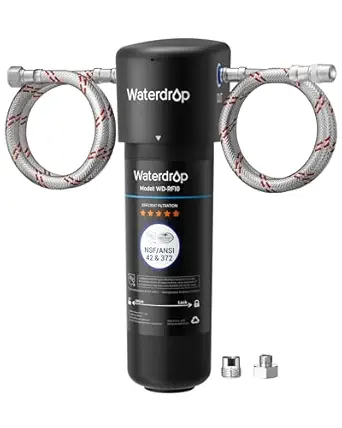 |
| Best Value The sweet spot between price and what you get | AQUA CREST Faucet Filter Replacement |  |
| Best Budget The cheapest option that still gets the job done reliably | CaoXiong 360° Rotating Faucet Filter | 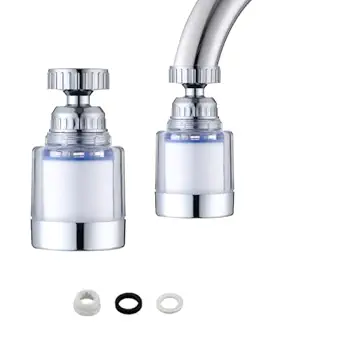 |
| Top Rated A top-rated pick with lots of positive feedback | Waterdrop WD-10UB Under-Sink Filter |  |
| Most Popular A crowd favorite that many people choose with confidence | Brita On Tap Faucet Filter |  |
| Best Seller A high-volume bestseller chosen again and again | PUR PLUS Faucet Replacement Filter |  |
CuZn UC-200 Under Sink Filter

| Model Number | UC-200 |
|---|---|
| Included Components | Stainless Steel Connection Hose |
| Material Type | NSF Approved Material Components |
| Product Benefits | Removes Lead |
The CuZn UC-200 is an under-sink inline filter designed for simple DIY connection to a cold water faucet line and offers a very long service life compared with typical cartridge filters. It uses a three-stage combination of micro sediment membrane, KDF-55 media, and coconut shell carbon to cut chlorine, lead, PFAS/PFOA, sediment and bad tastes while leaving healthy minerals intact. Installation is straightforward and intended to fit under a kitchen or bathroom sink with the included stainless steel connection hose and basic fittings, and most households can expect up to five years or roughly 50,000 gallons depending on water quality. The unit does not lower total dissolved solids so it will not act like a reverse osmosis system, and its capacity means you will replace it far less frequently but also need to monitor flow if your supply water is very dirty. For buyers who want clear, better-tasting tap water without removing minerals and prefer low-maintenance, long-lived filtration, the UC-200 is a practical choice.
Best for: Buyers who want a low-maintenance under-sink filter that improves faucet water taste and removes common contaminants while keeping beneficial minerals and minimizing replacement frequency.
Less Ideal for: People who need removal of dissolved solids, desalination, or RO-level purity for highly contaminated water should choose a reverse osmosis system instead.
- Very long filter life up to 5 years or ~50,000 gallons
- Reduces chlorine, lead, PFAS/PFOA, sediment and improves taste
- Three-stage media blend (micro sediment membrane, KDF-55, coconut shell carbon)
- Includes stainless steel connection hose for straightforward under-sink installation
- Does not reduce total dissolved solids so it will not provide RO-level purification
Verdict: Choose the UC-200 if you want a simple under-sink faucet filter that delivers noticeably better-tasting water and very long, low-maintenance service life.
Waterdrop WD-10UA Under-Sink Filter

| Purification Method | Activated Carbon |
|---|---|
| Maximum Flow Rate | 2.5 gpm |
| Filter Life Cycle | 1 years |
| Supported Water TDS Level Maximum (PPM) | 700 |
| Additional Special Features | NSF/ANSI 42&372; PFAS, PFOA/PFOS reduction |
The Waterdrop WD-10UA is an under-sink activated carbon filter built for straightforward, performance-focused drinking water improvement. It connects to standard 3/8" or 1/2" cold-water feeds and uses a twist-and-lock cartridge plus push-to-connect fittings for tool-light installation and fast filter swaps. The cartridge is NSF/ANSI 42 and 372 compliant and is rated to reduce PFAS/PFOA/PFOS, lead, chlorine, and taste and odor, making tap water taste cleaner for drinking and cooking. Waterdrop claims an extended dirt adhesion area to resist clogging and an advertised service life of about 12 months under municipal water conditions, with tested flow rates up to 1.33 gpm from the upgraded outlet so you do not lose too much flow at the tap. It is intended for cold municipal water only and will not treat well water or hot lines, and replacement filters are required annually to maintain performance. The system is compact enough for tight cabinets and includes hoses and fittings for common sink hookups, but buyers should confirm faucet threading compatibility before purchase.
Best for: Buyers wanting a compact, certified under-sink filter that prioritizes contaminant reduction and steady flow for everyday drinking and cooking water.
Less Ideal for: Homes using well water, users needing hot-water filtration, or those who prefer whole-house or multi-stage heavy-duty filtration systems.
- NSF/ANSI 42 and 372 listed filtration for chlorine, taste/odor, lead and PFAS reduction
- Twist-and-lock cartridge and push-to-connect fittings for tool-light installation and quick replacement
- Long claimed service life of up to 12 months on municipal water with high advertised capacity
- Compact footprint fits under most sinks and includes hoses and convertor fittings for 3/8" and 1/2" lines
- Upgraded outlet delivering relatively high flow (tested up to 1.33 gpm) to reduce faucet slowdowns
- Not designed for well water or hot water use
- Replacement filter required annually to retain certified contaminant reduction
Verdict: Choose the WD-10UA when you want a compact, certified under-sink filter that reliably reduces PFAS, lead, chlorine and taste while keeping usable faucet flow.
AQUA CREST Faucet Filter Replacement

| Purification Method | Carbon Block |
|---|---|
| Maximum Flow Rate | 0.5 gpm |
| Filter Life Cycle | 9 months |
| Capacity | 900 gallons |
This three-pack of AQUA CREST replacement cartridges is a straightforward swap-in option for PUR faucet-mount filtration systems. Each cartridge uses a coconut-shell activated carbon block certified to NSF/ANSI 42 for chlorine, taste, and odor reduction and is rated to treat about 900 gallons or roughly nine months under typical use. Installation is manual and follows the same countertop faucet-mount steps as PUR replacements, so you can expect familiar fit and function on compatible mounts. The filter noticeably cuts chlorine smell and improves tap water flavor while also trapping larger particles and sediment, though it does not reduce total dissolved solids. Flow is modest at 0.5 gpm, which keeps water steady for drinking but can feel slower if you run larger volumes for cooking. The pack is a practical value for routine maintenance and keeps replacement frequency low, but buyers should soak filters briefly before first use and verify compatibility with their specific faucet mount.
Best for: Buyers who prioritize consistent, low-maintenance improvement in tap water taste and chlorine removal and want an affordable replacement compatible with PUR faucet mounts.
Less Ideal for: Households needing high flow rates for filling pots quickly or users who require reduction of dissolved minerals and TDS should look at other solutions.
- NSF/ANSI 42 certified for chlorine, taste, and odor reduction
- Uses coconut-shell activated carbon block for effective chlorine reduction
- Long rated life of about 900 gallons or 9 months per cartridge
- Sold as a 3-pack for convenient scheduled replacements
- Maximum flow rate of 0.5 gpm may be slower than unfiltered tap flow
- Does not reduce total dissolved solids (TDS)
Verdict: AQUA CREST offers an affordable, NSF-certified replacement that reliably improves taste and removes chlorine for PUR-style faucet filters.
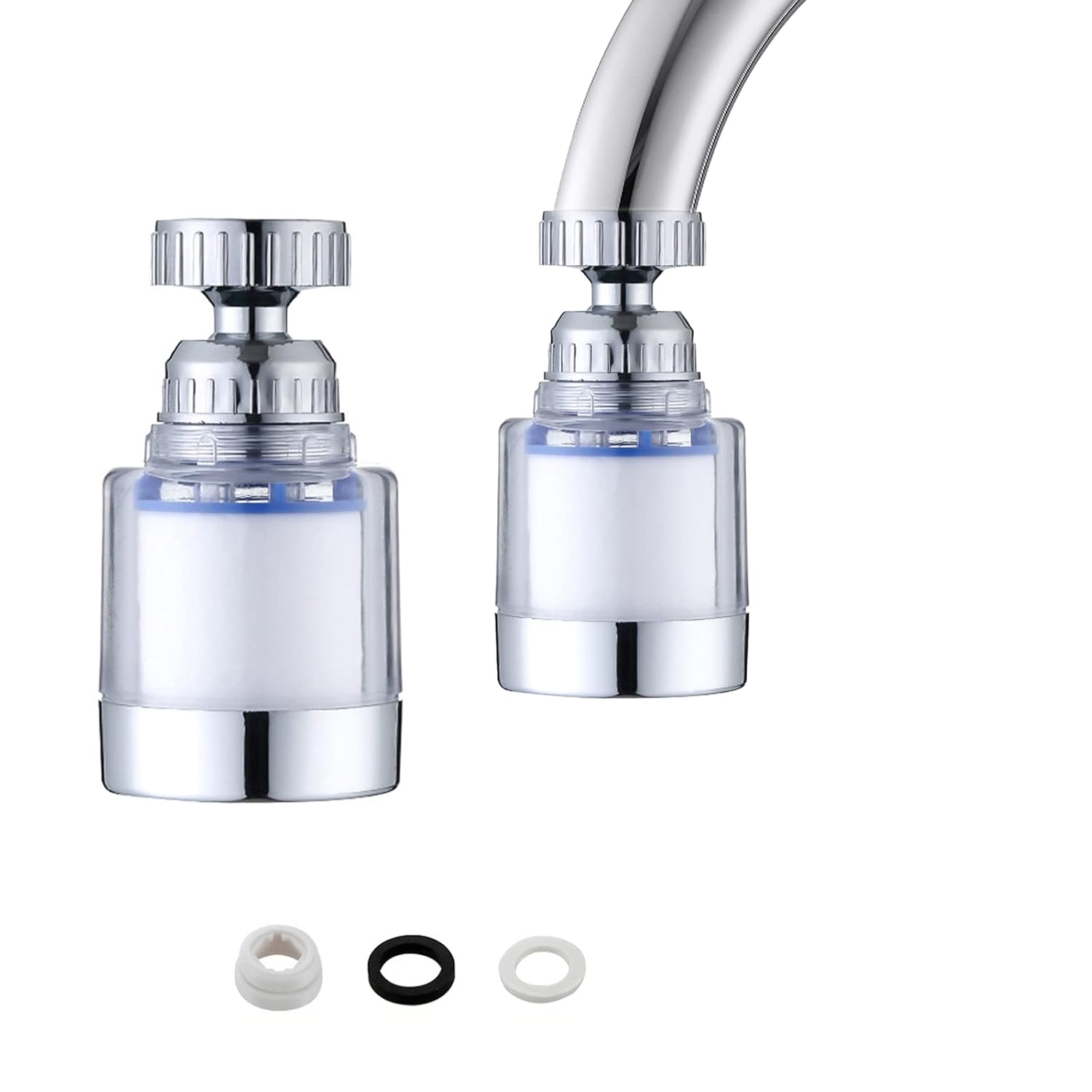
CaoXiong 360° Rotating Faucet Filter
| Purification Method | Activated Carbon, Ion Exchange |
|---|---|
| Installation Type | Faucet Mount |
| Upper Temperature Rating | 120 °F |
| Supported Water TDS Level Maximum (PPM) | 300 |
This small, rotating faucet filter installs directly onto most round faucet outlets and uses a combination of PP cotton, activated carbon, mineralized balls, and ion-exchange media to reduce lead, iron, rust, chlorine, and scale in tap water. Typical use is simple: remove the existing aerator, attach the filter or adapter, and rotate the head for spray direction. The transparent body makes it easy to see when the cartridge is fouled and the manufacturer notes the element is replaceable. It is lightweight and plastic-bodied, so it is inexpensive and easy to handle, but that also means it is not as durable as metal alternatives and may wear faster under heavy daily use. Flow can drop as the cartridge loads and the filter is rated for faucets with outlet diameters around 0.86 in and water TDS up to 300 ppm, so it is best for basic sediment and chemical reduction rather than full-scale purification. For buyers who want an affordable, quick upgrade to drinking and washing water at a single sink, this provides visible filtration and straightforward installation.
Best for: Buyers who want an inexpensive, no-fuss way to reduce chlorine, sediment, and some heavy metals at a single sink and value visible, replaceable cartridges.
Less Ideal for: People seeking whole-house treatment, high-capacity filtration for very hard or heavily contaminated water, or a long-lasting metal fixture replacement should consider larger or more robust systems instead.
- Easy tool-free installation on most round faucets using included adapter ring
- Transparent housing lets you see cartridge condition and know when to replace it
- Multiple media (PP cotton, activated carbon, mineralized balls, ion exchange) address sediment, chlorine, and some heavy metals
- 360-degree rotating head for flexible spray direction and convenience
- Plastic construction is less robust than metal-bodied filters and may age faster
- Not designed for very high TDS or heavy commercial use, flow can decrease as cartridge clogs
Verdict: A budget-friendly, easy-to-install faucet filter that visibly reduces chlorine, sediment, and some heavy metals for everyday sink use.
Waterdrop WD-10UB Under-Sink Filter

| Installation Type | Under Sink |
|---|---|
| Purification Method | Activated Carbon |
| Filter Life Cycle | 1 years |
| Maximum Flow Rate | 0.75 gpm |
| Supported Water TDS Level Maximum (PPM) | 700 |
The Waterdrop WD-10UB is an under-sink filter system designed to supply a separate drinking faucet with improved-tasting, chemically reduced cold water. It installs inline on a cold water feed and uses a multistage activated carbon block to cut chlorine, PFAS/PFOA/PFOS, lead and other contaminants while retaining beneficial minerals. The unit ships with a brushed stainless steel dedicated faucet and push-to-connect fittings for tool-free hookup; the replaceable WD-RF10 cartridge twists out in seconds when the time comes. Waterdrop claims a long service life and a tested flow around 0.75 gpm at 60 psi with higher outlet options, so it provides steady faucet flow for drinking and cooking without noticeable slowdown. Certification to NSF/ANSI 42 and 372 plus third-party testing against NSF/ANSI 53 for lead gives extra confidence in performance. Limitations: it is for cold municipal water only, not suitable for well water or hot lines, and replacement filters are required on a regular schedule to maintain contaminant reduction.
Best for: Buyers who prioritize a dependable, certified under-sink filter that reliably reduces chemical contaminants and heavy metals for daily drinking and cooking water.
Less Ideal for: Those needing treatment for well water, microbiological contamination, or hot-water filtration should look at systems designed for those specific needs.
- Reduces PFAS, PFOA/PFOS, lead, chlorine, bad taste and odor using multistage activated carbon.
- NSF/ANSI 42 and 372 certifications and third-party testing for lead provide verified contaminant reduction.
- Includes a dedicated lead-free stainless steel faucet for separate drinking water.
- Push-to-connect fittings and twist-and-lock cartridge make installation and filter changes quick and tool-free.
- Designed for steady flow with tested 0.75 gpm at 60 psi and an upgraded 3/8" outlet for higher flow.
- Only for cold municipal water and not suitable for well water or hot water applications.
- Requires periodic cartridge replacements to maintain filtration performance.
Verdict: A reliable, certified under-sink filter with an included dedicated faucet that focuses on chemical and heavy-metal reduction for everyday drinking water.
Brita On Tap Faucet Filter

| Filter Life Cycle | 4 months |
|---|---|
| Capacity | 100 gallons |
| Maximum Flow Rate | 0.5 gpm |
| Purification Method | Sedimentation |
The Brita On Tap Faucet Filter mounts directly to most standard kitchen faucets to deliver filtered water without the need for pitchers or a separate dispenser. It uses Brita carbon-block technology and a replaceable cartridge to cut chlorine taste and odor, reduce sediment and lower lead and dozens of other contaminants, while offering a simple lever to switch between filtered and unfiltered flow. Installation is tool-free for faucets with compatible threads and the unit includes adapters and a filter indicator to alert you when the cartridge needs replacement. The system is compact enough for small sinks and provides roughly 100 gallons of filtration per cartridge, about three to four months for an average household. Limitations are that it will not fit pull-out or spray-style faucets and the listed maximum flow rate is modest, which can reduce faucet pressure when filtering. Filter life and contaminant reduction depend on local water quality and proper cartridge replacement.
Best for: Buyers who prioritize proven contaminant reduction and want a straightforward, low-effort way to get better-tasting tap water with visible usage indicators and broad social proof.
Less Ideal for: People with pull-out or spray-style faucets or households that need high flow rates from the tap should consider an under-sink or whole-home solution instead.
- Certified carbon-block filtration that reduces chlorine taste and odor and lowers lead and other contaminants
- Tool-free installation with included adapters for common faucet thread types
- Integrated filter indicator to remind when cartridge replacement is needed
- Compact, space-saving design that preserves counter and sink space
- Does not fit pull-out or spray-style faucets
- Maximum flow rate is limited and may reduce water pressure when filtering
Verdict: A simple, proven faucet-mounted filter that delivers noticeable chlorine and lead reduction with easy installation and visible filter reminders.
PUR PLUS Faucet Replacement Filter

| Model Number | RF-9999-2 |
|---|---|
| Unit Count | 2 Count |
| Included Components | 2 replacement filters |
| External Testing Certification | NSF, WQA |
These two-pack PUR PLUS faucet replacement filters are designed to snap onto compatible PUR faucet-mount systems and deliver on-demand filtered water for drinking and cooking. Each cartridge uses a 14-layer, 3-in-1 filtration design and an internal mineral core to reduce a wide range of chemical and physical contaminants including lead, PFAS, VOCs, chlorine, microplastics, and more, and is certified by NSF and WQA for performance. PUR recommends replacing each filter every three months or after about 100 gallons; the easy pull-tab installation makes swaps quick and tool-free. In day-to-day use the filters noticeably improve taste and reduce chlorine odor, and the two-pack provides a six-month supply for average households. The product is a factory genuine part made for PUR faucet systems, so it avoids the uncertainty of off-brand cartridges but is limited to compatible PUR models and requires regular replacement to maintain performance.
Best for: Buyers who prioritize proven, certified contaminant reduction and want a simple faucet-mounted system with predictable maintenance and factory-quality replacement parts.
Less Ideal for: People who need a whole-house system, point-of-use pitchers, or a filter that treats microbes; also not for users with non-PUR faucet filtration hardware.
- Genuine PUR filter certified by NSF and WQA for contaminant reduction
- 14-layer, 3-in-1 filtration targets lead, PFAS, VOCs, chlorine, microplastics and other substances
- Easy tool-free installation with pull-tab replacement
- Two-pack provides approximately six months of filters at the recommended three-month change interval
- Works only with compatible PUR faucet-mount systems
- Requires replacement every three months or after filtering ~100 gallons
Verdict: Choose these genuine PUR PLUS faucet filters if you want a vetted, easy-to-install faucet cartridge that reliably reduces a long list of common tap-water contaminants.
Choosing the Right Water Filter for Faucet: Key Factors to Consider
Filtration Effectiveness
A faucet-mounted filter should reliably reduce the contaminants that matter in your water supply. Look for third-party test data or certifications that list reduction rates for chlorine, volatile organic compounds, lead, and protozoan cysts. Higher removal rates improve taste and reduce health risks, but keep in mind that different filters target different contaminant groups. Choosing a filter whose listed reductions match the issues reported by your local water quality report will give you the best results.
Filter media type affects what is removed. Activated carbon is common for taste and odor, while specialty media or multiple stages are needed for metals or cysts. Understand what a cartridge targets before assuming it solves every water problem.
Flow Rate and Pressure Impact
Because faucet filters sit directly on the tap, they can reduce flow and alter water pressure. A good unit preserves usable flow for rinsing and filling, while still providing effective filtration. Pay attention to published flow rates under typical household pressure, and read setup notes about aerators or adapters that can further restrict flow.
If you frequently use the sink for filling pots or washing produce, choose a filter designed to minimize flow loss. Some designs offer a bypass or dual-mode lever so you can switch to unfiltered water for tasks where filtration is unnecessary, preserving convenience.
Cartridge Life and Replacement Frequency
Replacement frequency determines both convenience and long-term cost. Cartridges rated for higher volumes last longer but may cost more upfront. Consider how many gallons the cartridge is rated for and how much water your household uses daily to estimate replacement intervals. A longer-life cartridge reduces the hassle of frequent changes, but check that performance is sustained toward the end of the rated life.
Also verify cartridge availability and how easy it is to purchase and install replacements. Proprietary cartridges can be convenient but may limit options and raise ongoing costs.
Installation and Faucet Compatibility
Most faucet-mounted filters are designed for standard, threaded kitchen faucets, but not all sinks use that configuration. Confirm the filter's compatibility with your faucet type and whether it includes adapters for common nonstandard fittings. Installation should require minimal tools and be reversible without plumber intervention.
If you rent or want a no-permanent-change solution, pick a model that installs without altering plumbing. Also consider how easy it is to switch from filtered to unfiltered flow; a smooth, durable selector reduces wear and prevents accidental leaks.
Materials, Build Quality, and Leak Resistance
Durable materials and tight tolerances matter because a faucet filter sits in a wet environment and experiences repeated handling. Look for corrosion-resistant fittings, sturdy housings, and well-sealed cartridge interfaces. Poorly made units can drip, seize on the faucet, or fail at attachment points.
Pay attention to user-serviceable parts and warranty terms. A filter with replaceable seals and clear instructions for troubleshooting minor leaks will reduce downtime and extend useful life.
Types of Faucet Filters and How They Work
Faucet filters use a few common media types. Solid activated carbon removes chlorine and many organic taste-and-odor compounds. Composite cartridges combine carbon with other media to target lead, heavy metals, or cysts. Some multi-stage units add sediment prefilters to protect the main media and prolong cartridge life.
Understanding the media helps you match a filter to your water concerns. For example, if taste and chlorine are your main problem, an activated-carbon-focused cartridge will usually suffice. If you face lead or microbial risk, choose a cartridge explicitly rated for those contaminants.
- Single-stage carbon: good for taste and chlorine
- Multi-stage: targets a broader contaminant range
- Sediment prefilter: protects main media and extends life
Installation Checklist Before You Buy
Measure your faucet and note whether it has an aerator, pull-down sprayer, or integrated soap dispenser. Check the filter's adapter list to ensure it fits your faucet style. Confirm whether a plumber is needed or if the model supports a tool-free install.
Also consider clearance around the spout and how the filter will affect sink access. Some units add bulk that can make filling tall pitchers awkward, while others sit compactly and preserve reach.
- Check faucet thread size and type
- Confirm adapter inclusions
- Allow clearance for tall items and sprayers
Maintenance Tips to Keep Performance High
Follow the manufacturer's replacement schedule but also watch for changes in taste, odor, or flow that indicate sooner replacement is needed. Flush new cartridges per instructions to remove loose carbon fines and prime the media. Keep spare cartridges on hand if your household uses a lot of water.
Periodically inspect seals and adapters for wear. If the unit shows small drips, tighten connections carefully rather than over-torquing, which can damage fittings. For long absences, remove and dry the cartridge and housing to discourage microbial growth.
- Flush new cartridges before first use
- Replace cartridges based on gallons used and water quality
- Inspect seals and adapters periodically
When a Faucet Filter Is Not Enough
Faucet-mounted filters are excellent for point-of-use taste and basic contaminant reduction, but they are not a substitute for more robust treatment when water has serious contamination or needs desalination. If your water quality report shows widespread heavy metals, high nitrate levels, or biological contamination, a more advanced under-sink system or municipal treatment may be appropriate.
Also, faucet filters typically do not remove dissolved minerals that cause hardness. If scale or mineral buildup is your main concern, consider complementary water-softening solutions rather than relying solely on a faucet-mounted filter.
- Not suitable for desalination or high dissolved solids
- Consider under-sink or whole-house options for severe contaminants
- Faucet filters do not address water hardness
Eco Considerations and Cartridge Disposal
Regular cartridge replacement generates waste, so factor recyclability into your selection. Some manufacturers offer take-back or recycling programs; verify whether cartridges are accepted and what parts can be recycled. Choosing longer-life cartridges reduces waste and the frequency of shipments or trips to obtain replacements.
Also weigh the environmental cost of materials versus the benefits of improved water quality. Reducing single-use bottled water by using a faucet filter can be a substantial net environmental gain, but minimizing replacement frequency and choosing recyclable cartridges further improves sustainability.
- Look for recyclable cartridge programs
- Favor higher-capacity cartridges to reduce waste
- Balance reduced bottled water use against cartridge disposal
How We Chose the Best Water Filter for Faucet
We prioritized filter performance, measured by certified reduction of common contaminants such as chlorine, lead, and cysts, since removal rates directly affect water safety and taste. Flow and pressure retention were core filters because a unit that severely reduces flow is impractical for everyday kitchen use. Cartridge life and ongoing maintenance cost were included to reflect real ownership expenses and frequency of service. We also considered installation and compatibility with standard faucet fittings to ensure a straightforward setup for most sinks. Build quality and materials were assessed to determine durability and the likelihood of leaks or premature failure. Ease of use, including switch-over mechanisms between filtered and unfiltered water and visibility of filter condition, influenced selections because convenience drives continued use. Excluded were whole-house systems, under-sink reverse-osmosis setups, and countertop gravity filters since the focus is specifically on faucet-mounted solutions. We filtered out units without verifiable contaminant reduction data or those that required nonstandard plumbing changes. The result is a group of practical faucet-mounted water filters that balance contaminant removal, sustained flow, and reasonable upkeep.
Our full evaluation process is outlined in our review methodology.
FAQ
How often should I change a faucet filter cartridge?
Change intervals vary by rated gallons and household usage but typically range from two to six months. Monitor flow reduction and taste changes, which often indicate it is time to replace the cartridge sooner than the calendar interval.
Will a faucet-mounted filter remove lead from my water?
Some faucet filters are rated to reduce lead, but you must choose a cartridge with explicit lead reduction data. Check third-party test results or certification listings to confirm lead removal performance before assuming protection.
Can a faucet filter cause leaks or damage to my faucet?
Poorly matched adapters or overtightening can cause drips or stress on the faucet. Choose a model with compatible fittings and follow installation instructions carefully. If you have a nonstandard faucet, verify compatibility to avoid leaks or fitment issues.
Does a faucet filter affect water pressure for other taps?
No. Faucet-mounted filters only affect the tap they are installed on and do not change water pressure elsewhere in the house. If you need whole-house pressure improvements, that requires separate plumbing solutions.
Are faucet filters easy to install without tools?
Many models offer tool-free installation and include common adapters. However, some faucets require a specific adapter or minor tools. Check the product's installation notes to confirm whether you can install it without tools.
Final Verdict
For most households looking to improve tap taste and reduce common contaminants, a faucet-mounted water filter is an effective, low-effort option. Prioritize filtration effectiveness for the contaminants of concern, then weigh flow impact and cartridge life to match how you use the sink. Also check installation compatibility so the unit fits your faucet without plumbing changes. Balancing removal performance, sustained flow, and reasonable maintenance will yield the best overall experience. Choose a filter that aligns with your water report and daily routines, and you will have cleaner-tasting water with minimal hassle.