
Note: This article contains affiliate links. If you click on these links and make a purchase, we may earn a small commission at no extra cost to you. This helps support our research and content. Read our full affiliate disclosure here.
Installing the right water filter for sink can make a noticeable difference in taste, odor, and contaminant levels for everyday tap water. You want dependable reduction of common impurities without a difficult install or constant maintenance. This guide shortlists the top options designed specifically for sink use, focusing on real-world factors like filtration effectiveness, plumbing compatibility, and ongoing filter costs. Below are the best sink-mounted and under-sink filters we vetted for home kitchens. The selections are accompanied by the evaluation criteria used to compare them so you can pick the model that fits your household needs. Read on to find a filter that matches your water quality goals and installation comfort level.
Top Picks at a Glance
| Best Overall The best all-around choice for most situations | iSpring CU-A4 Under-Sink Filter |  |
| Best Quality Built to a higher standard if you want something more solid | iSpring RCC7AK-BN RO System |  |
| Best Value The sweet spot between price and what you get | Waterdrop WD-15UA Under Sink Filter |  |
| Best Budget The cheapest option that still gets the job done reliably | Vortopt T1 Faucet Filter |  |
| Top Rated A top-rated pick with lots of positive feedback | Waterdrop WD-10UA Under Sink Filter | 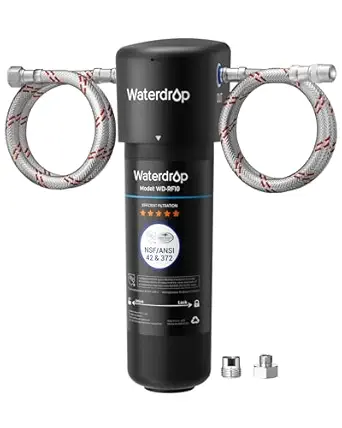 |
| Most Popular A crowd favorite that many people choose with confidence | Brita On Tap Faucet Filter |  |
| Best Seller A high-volume bestseller chosen again and again | PUR PLUS Faucet Replacement Filter |  |
iSpring CU-A4 Under-Sink Filter

| Purification Method | Mechanical Filtration, Chemical Absorption, Redox, Ultrafiltration |
|---|---|
| Filter Life Cycle | 6 months |
| Capacity | 8000 gallons |
| Installation Type | Under Sink |
| Other Special Features | 4-Stage 0.01 micron ultrafiltration |
The iSpring CU-A4 is a compact, tankless under-sink filtration system built around a 0.01 micron ultrafiltration membrane plus KDF and granular activated carbon stages. It installs under the sink and supplies filtered drinking water through the included brushed nickel faucet, and because it is mechanical and chemical filtration based it does not require electricity or produce wastewater. Typical uses include filling pitchers, supplying an ice maker or refrigerator, and improving taste and chlorine smell for cooking and beverages. The push-to-connect fittings and twist-on/twist-off cartridges simplify installation and filter changes, and the system keeps minerals in the water since it is not reverse osmosis. Practical limits are that it does not lower total dissolved solids and filter life depends on water quality, generally listed between 6 and 12 months, so busy households should budget for periodic replacements. Capacity is rated for up to 8,000 gallons which suits long-term use without a storage tank but means flow is direct through the unit rather than from stored water.
Best for: Buyers who want a high-performance under-sink filter that removes bacteria, chlorine and many chemical contaminants while keeping installation simple and maintaining minerals in the water.
Less Ideal for: People who need reduction of dissolved solids, desalination, or the absolute lowest TDS for specialty applications should consider a reverse osmosis system instead.
- Very fine 0.01 micron ultrafiltration membrane removes bacteria and many particulates
- Multi-stage KDF and GAC polishing reduces chlorine, odor, heavy metals and other chemical contaminants
- Tankless design with no wastewater and no electricity required
- Included brushed nickel faucet and push-to-connect fittings simplify installation
- Does not lower TDS or act as a reverse osmosis system
- Filter replacement interval varies with water quality and may require more frequent changes in hard or heavily contaminated water
Verdict: Choose the iSpring CU-A4 if you want a tankless, high-capacity under-sink filter that removes bacteria, chlorine and heavy metals while preserving minerals and avoiding wastewater.
iSpring RCC7AK-BN RO System

| Purification Method | Reverse Osmosis, Alkaline, Activated Carbon, Carbon block |
|---|---|
| Power Source | No Power Needed |
| Maximum Flow Rate | 284 liters_per_day |
| Operating Pressure Range | 70 psi |
| Filter Life Cycle | 6 months |
The iSpring RCC7AK-BN is a six-stage under-sink reverse osmosis system that delivers highly purified, remineralized drinking water without needing electricity. It uses sediment and carbon pre-filters, a high-rejection RO membrane, and an alkaline mineral stage to restore balanced pH and trace minerals after filtration. Installation is DIY-friendly thanks to push-to-connect fittings, color-coded tubing, and a patented top-mounted faucet fastener that lets you tighten the faucet from above the counter. The clear first-stage housing helps you visually check sediment loading, and the included storage tank and brushed-nickel faucet make it a complete under-sink setup. Its NSF/ANSI 58 certification and stated removal rates for TDS, lead, PFAS, chlorine, and many other contaminants make it a strong performer for homes with significant water quality concerns. Maintenance requires periodic filter changes (standard 6-month and longer-life options available), and like most RO systems it produces wastewater during purification and needs under-sink space for the components and tank.
Best for: Buyers who prioritize maximum contaminant removal and verified, factory-certified performance and want a complete under-sink system that improves taste and pH.
Less Ideal for: Those who lack space under the sink, want zero water waste systems, or prefer a countertop/portable filter rather than a permanent under-sink installation.
- NSF/ANSI 58 full-system certification for verified contaminant reduction
- Six-stage filtration with alkaline remineralization for balanced taste and pH
- Clear first-stage housing for easy visual inspection of sediment
- DIY-friendly fittings and top-mounted faucet design that simplify installation
- Includes storage tank and brushed-nickel faucet for a complete under-sink solution
- Produces wastewater as part of the RO process
- Requires regular filter replacements and under-sink space for the tank and components
Verdict: Choose the RCC7AK-BN if you want a verified, high-performance under-sink RO system that restores minerals and delivers very low contaminant levels.
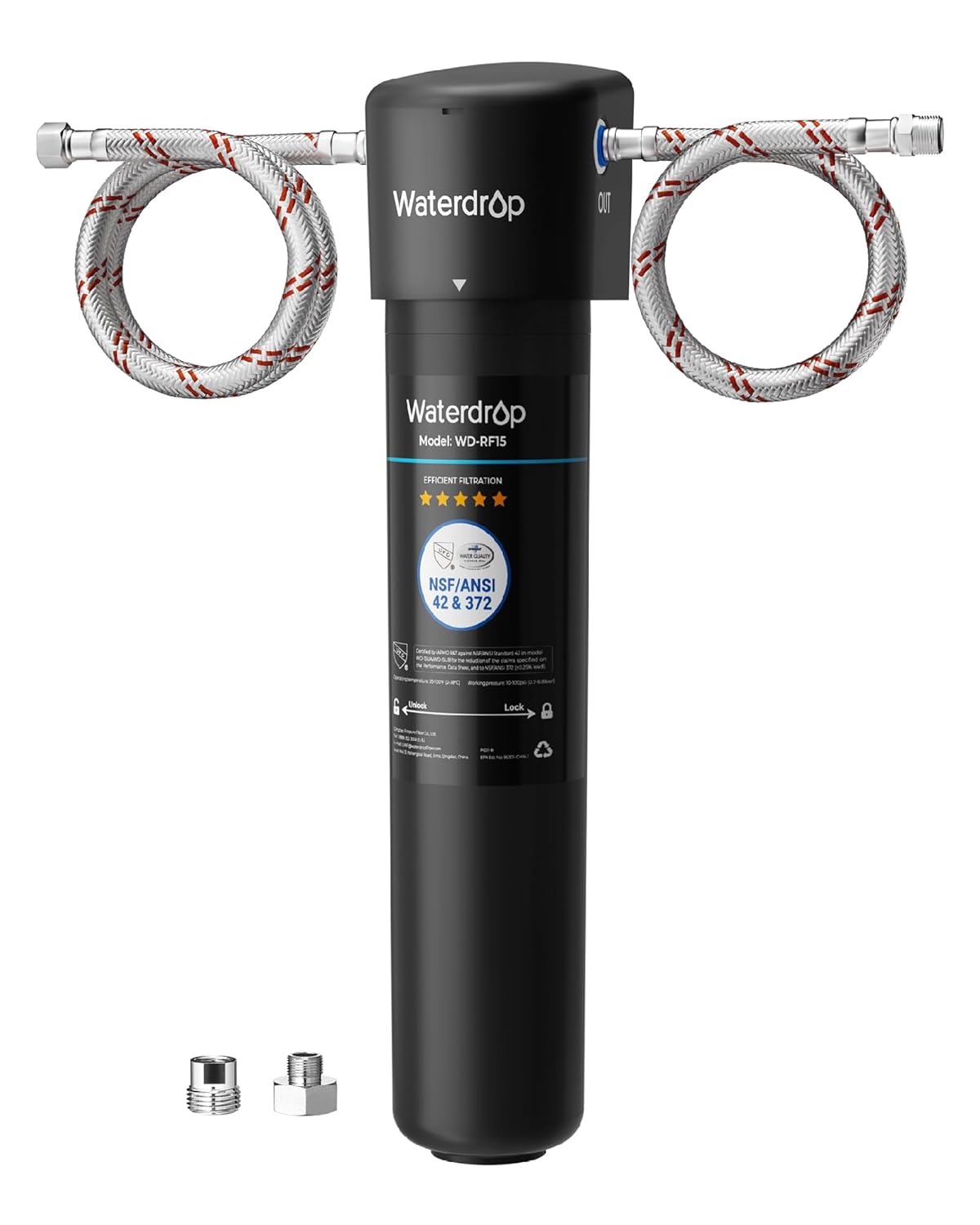
Waterdrop WD-15UA Under Sink Filter
| Purification Method | Activated Carbon |
|---|---|
| Capacity | 19000 gallons |
| Filter Life Cycle | 2 years |
| Maximum Flow Rate | 0.75 gpm |
| Installation Type | Under Sink |
The Waterdrop WD-15UA is a direct-connect under-sink carbon filter designed to give household tap water a cleaner taste without a separate faucet. It installs with push-to-connect fittings to the existing cold water line and supplies filtered water at up to 0.75 gallons per minute, so it works for drinking, cooking, ice makers and small commercial uses. The multistage activated carbon cartridge is certified to NSF/IAPMO standards for chlorine, taste and lead reduction and is sized for a long service life — Waterdrop specifies up to 24 months or about 19,000 gallons on municipal water. Because the filter retains beneficial minerals and uses mechanical water pressure, there is no power needed and replacements are straightforward with the included hoses and converter fitting. Limitations: it is intended for cold municipal water only (not well water or hot lines), and its extended media life increases the physical size so check under-sink clearance before buying. The system is practical for buyers who want low-maintenance, factory-quality filtration without extra hardware or frequent cartridge swaps.
Best for: Buyers who prioritize a low-maintenance, long-life under-sink filter that installs quickly and delivers improved drinking and cooking water without extra fixtures or power.
Less Ideal for: People on well water, those needing microbial/ultra-filtration for bacteria removal, or anyone with extremely constrained under-sink clearance should consider other options.
- Long rated service life (up to 24 months or ~19,000 gallons) reduces frequency of replacements
- NSF/IAPMO-certified carbon filtration for chlorine, taste/odor and lead reduction
- Push-to-connect direct hose fittings and included converter make installation quick without a plumber
- Maintains beneficial minerals while removing contaminants and requires no electricity
- Not suitable for well water or hot water lines
- Larger cartridge size may not fit in very tight under-sink spaces
Verdict: Choose this model if you want a certified, easy-to-install under-sink filter with very long service life and minimal maintenance.
Vortopt T1 Faucet Filter

| Installation Type | Faucet Mount |
|---|---|
| Purification Method | Activated Carbon |
| Capacity | 400 gallons |
| Maximum Flow Rate | 1.78 gpm |
| Filter Life Cycle | 3 months |
The Vortopt T1 is a compact faucet-mount filter designed to give immediate taste and odor improvement at the kitchen sink. It installs onto most standard faucets using the included adapters and offers two water modes so you can switch between raw and filtered flow. Filtration is a multi-stage activated carbon fiber system certified to NSF/ANSI 42 for chlorine reduction, and the manufacturer rates each cartridge for about 400 gallons or roughly 3 to 6 months of use. The unit emphasizes a fast flow rate (about 1.78 gpm) so you can fill bottles and rinse produce without a long wait. Plastic construction keeps weight and cost down, and replacement cartridges are available under the listed replacement ASINs. Limitations to note are that it will not reduce TDS or remove dissolved minerals, and it does not fit pull‑out or spray‑style faucets without an adapter or different mounting approach. For buyers focused on straightforward chlorine and taste reduction, it balances performance and affordability, but it is not a substitute for reverse osmosis systems when you need mineral or heavy contaminant removal.
Best for: Buyers on a tight budget who want an easy, inexpensive way to cut chlorine taste and odors at the kitchen tap and prefer a quick install they can do themselves.
Less Ideal for: Households seeking full dissolved solids reduction, heavy contaminant removal, or a solution for nonstandard pull‑out/spray faucets should consider under-sink RO or alternative systems instead.
- NSF/ANSI 42 certified for chlorine, taste, and odor reduction
- Fast average flow around 1.78 gallons per minute for everyday use
- Simple faucet-mount installation with multiple adapters included
- Multi-stage activated carbon fiber filtration for improved taste
- Does not reduce TDS or remove dissolved minerals or salts
- Not compatible with pull-out or spray-style faucets without modification
Verdict: A low-cost, easy-to-install faucet filter that gives fast flow and reliable chlorine/taste reduction for budget-minded sink users.
Waterdrop WD-10UA Under Sink Filter

| Purification Method | Activated Carbon |
|---|---|
| Filter Life Cycle | 1 years |
| Maximum Flow Rate | 2.5 gpm |
| Supported Water TDS Level Maximum (PPM) | 700 |
| Power Source | Mechanical Water Pressure |
The Waterdrop WD-10UA is an under-sink activated carbon filter engineered for straightforward household use and reliable contaminant reduction. It connects directly to standard 3/8" or 1/2" cold water lines with included fittings, installs with twist-and-lock and push-to-connect hardware, and is intended for municipal cold water only. The cartridge is NSF/ANSI 42 and 372 certified for chlorine, taste and odor reduction and the product claims reduction of PFAS, PFOA/PFOS and lead, while retaining beneficial minerals. Users get a claimed service life of about 12 months and a tested flow around 0.75 gpm (with a 3/8" outlet option up to 1.33 gpm) so it supports regular drinking and cooking needs without a separate faucet. Maintenance is simple: the replacement filter (WD-RF10) swaps quickly and is sold separately. Limitations include unsuitability for well water or hot water and the system's performance depends on municipal water quality and pressure; buyers who need finer microbiological protection or very high flow rates should consider different technologies.
Best for: Buyers who prioritize a simple, low-maintenance under-sink filter that reliably improves tap water taste and reduces common chemical contaminants in municipal supplies.
Less Ideal for: Homes relying on well water, people needing microbiological or ultra-filtration protection, or households that require very high flow rates throughout the sink.
- NSF/ANSI 42 and 372 certified for chlorine, taste and odor reduction
- Twist-and-lock plus push-to-connect fittings enable quick installation and cartridge changes
- Claims reduction for PFAS, PFOA/PFOS and lead while retaining beneficial minerals
- Compact design fits under sinks and works with standard 3/8" and 1/2" feed lines
- Designed only for cold, municipal water so not suitable for well water or hot water applications
- Filter life limited to about 12 months and requires purchasing replacement WD-RF10 cartridges
Verdict: Choose the Waterdrop WD-10UA if you want a compact, easy-to-install under-sink filter that reliably improves municipal tap water taste and reduces lead and PFAS with minimal upkeep.
Brita On Tap Faucet Filter

| Filter Life Cycle | 4 months |
|---|---|
| Capacity | 100 gallons |
| Maximum Flow Rate | 0.5 gpm |
| Purification Method | Sedimentation |
The Brita On Tap Faucet Filter installs directly on a standard faucet to provide easier access to filtered water without a pitcher. It uses a carbon-block filter designed to reduce chlorine taste and odor, sediment, lead, asbestos, benzene and other listed contaminants, and offers three spray settings plus a switch between filtered and unfiltered flow. Installation is tool-free for compatible faucets and the cartridge has an indicator and a rated life of about 100 gallons or roughly four months under average household use. Practical benefits include cutting down single-use plastic bottles, conserving counter space compared with pitchers, and quick filtered water for drinking and cooking. Important limitations are that it only fits standard fixed faucets (not pull-out or spray-style faucets) and flow rate is modest at about 0.5 gpm, so it is not built for fast filling tasks. Expect occasional cartridge changes and to verify thread compatibility before buying.
Best for: Buyers who want an easy, countertop-free way to get consistently better-tasting tap water and who prioritize independent confirmation from other users that the system works reliably.
Less Ideal for: Households with pull-out or spray-style kitchen faucets or anyone who needs high flow for frequent large-volume filling tasks.
- Reduces chlorine taste and odor plus a broad list of contaminants including lead and asbestos
- Tool-free installation on most standard faucets
- Filter indicator notifies when cartridge replacement is due
- Three spray options and a filtered/unfiltered switch for flexible use
- Does not fit pull-out or spray-style faucets
- Flow rate is limited to about 0.5 gallons per minute
Verdict: A simple, space-saving faucet filter that reliably improves tap water taste and reduces many contaminants for users with standard fixed faucets.
PUR PLUS Faucet Replacement Filter

| Model Number | RF-9999-2 |
|---|---|
| Unit Count | 2 Count |
| Included Components | 2 replacement filters |
| External Testing Certification | NSF, WQA |
| Compatible Water Purifier Models | PUR FM-2000B, FM-2100B, FM-2500V, FM-2700G, FM-2800N, FM-3333B, FM-3400B, FM-3700, FM-3700B, FM-3800, FM-3800B, FM-4000B, FM-4100B, FM-9000B, FM-9100B, FM-9400B, FM-9500, FM-9600B, Pur-0A1 |
The PUR PLUS Faucet Replacement Filter 2-pack provides a straightforward way to get filtered tap water without changing your plumbing. Each cartridge installs into compatible PUR faucet-mount housings with a simple pull-tab and is rated for about 100 gallons or roughly three months of regular use, so households can use them for drinking and cooking. The filters use a 14-layer, 3-in-1 design and larger surface area to capture contaminants; certifications from NSF and WQA back up claims about reducing lead, PFAS, chlorine, VOCs, microplastics, and other common chemical and physical substances. Practical benefits include noticeably improved taste and on-demand filtered water at the sink plus the convenience of a two-pack for staggered replacement. Limitations are typical for faucet cartridges: they do not filter microbes, and they only fit the listed PUR faucet systems, so you need a compatible PUR mount to use them.
Best for: Buyers who want a proven, certified faucet-mounted filter that delivers better-tasting tap water with minimal fuss and predictable replacement intervals.
Less Ideal for: People who need removal of biological contaminants or who do not have a compatible PUR faucet-mount system should consider other filtration approaches.
- Certified reduction of many contaminants including lead, PFAS, VOCs, chlorine, and microplastics
- 14-layer design with increased surface area for finer particle capture
- Simple pull-tab installation for faucet-mount PUR systems
- Two-pack provides a six-month value when replacing per recommended intervals
- Compatible only with specified PUR faucet-mount models
- Does not remove microbes
Verdict: Choose these genuine PUR faucet cartridges if you want a certified, easy-to-install faucet filter that reliably improves tap water taste and reduces a broad list of chemical contaminants.
Choosing the Right Water Filter for Sink: Key Factors to Consider
Contaminant Reduction and Certifications
Knowing what a sink water filter actually removes is the most important factor. Different filter technologies target different contaminants. Carbon-based filters excel at improving taste and reducing chlorine, while reverse osmosis and specialty media handle dissolved solids, lead, and other heavy metals.
Look for independent certifications or test reports from recognized labs that show removal rates for the contaminants you care about. Certifications, when present, provide objective evidence beyond marketing claims and can help you match a filter to your local water quality concerns.
Flow Rate and Daily Capacity
A filter that significantly restricts flow can be frustrating at the kitchen sink. Consider both peak flow rate and daily gallon capacity. Systems with higher flow rates are better for households that frequently fill pots or use the tap for multiple tasks at once.
Also factor in cartridge capacity, usually expressed as gallons per filter. A larger capacity reduces how often you need to change cartridges, which is especially useful for busy households or for users who want lower ongoing maintenance.
Installation Type and Plumbing Compatibility
Sink water filters come in several installation styles, including faucet-mounted, countertop, and under-sink. Faucet-mounted options install quickly with minimal tools but may not fit every faucet. Countertop and under-sink systems often require more space and basic plumbing connections but keep the faucet appearance unchanged.
Confirm the filter's compatibility with your faucet and under-sink layout. Some installs require an extra dedicated faucet or a diverter valve, and others need a nearby power outlet for pumps. Choosing the right installation type reduces the need for professional help and makes long-term upkeep simpler.
Filter Replacement Frequency and Cost
Regular cartridge changes are the ongoing cost of owning a sink water filter. Replacement frequency varies by filter capacity and your household water use. Short-lived cartridges may be cheaper per unit but increase the frequency of replacements, adding time and potential supply hassles.
Estimate annual replacement costs and factor them into your decision. Also check how easy it is to obtain replacements and whether the manufacturer uses standard sizes or proprietary cartridges that could affect long-term availability.
Materials, Build Quality, and Safety
Materials that contact water should be food-safe and corrosion-resistant to avoid introducing new contaminants. Look for systems with BPA-free plastics and corrosion-resistant metal fittings. Better-built housings and connectors reduce the chance of leaks and premature failures.
Build quality also affects ease of servicing. Robust housings and clear access to cartridges make routine maintenance faster and reduce the chance of damaging seals or threads during filter changes.
Space Requirements and Aesthetic Impact
Where you plan to install the filter matters. Countertop filters occupy surface area that might be limited in small kitchens. Under-sink systems trade visible clutter for under-sink space usage and possible interference with other plumbing or storage.
Consider whether you want a dedicated faucet, which can change your sink's look, or prefer a discreet under-sink installation. Measure available space before choosing to avoid returns or rework.
Types of Sink Water Filters
Sink water filters use different technologies to address specific concerns. Carbon block and activated carbon filters are common for removing chlorine, improving taste and odor, and reducing some organic compounds. Reverse osmosis systems provide broader contaminant reduction by forcing water through a semi-permeable membrane, lowering dissolved solids and many inorganic contaminants.
There are also ceramic filters, which can remove particulates and some microorganisms, and systems that combine several media to broaden the contaminant profile they address. Understanding the strengths and limitations of each technology helps you match a system to your household's water quality needs.
- Faucet-mounted: quick install, minimal tools, sits on or replaces the faucet aerator
- Countertop: larger cartridges, higher capacity, occupies counter space
- Under-sink: hidden installation, often higher capacity and flow, requires plumbing work
- Reverse osmosis: extensive contaminant removal, may require storage tank and drain line
Assessing Your Water Quality
Before choosing a filter, check your local water utility report or test your tap water for the contaminants of concern. Municipal water reports list common measured contaminants and provide baseline figures for parameters like lead, chlorine, and hardness. If you are on private well water, testing is essential because contaminants vary widely.
Targeting filters to your specific contaminant profile avoids overpaying for capabilities you do not need and ensures the selected system actually addresses documented issues rather than assumed ones.
- Review the annual water quality report from your supplier
- Consider a professional or at-home water test for private wells or unusual taste and odor
- Match filter capabilities to detected contaminants for meaningful reductions
Installation Tips and Common Pitfalls
Read installation instructions fully before starting and confirm you have the necessary tools. For faucet-mounted units, check whether an adapter is included for nonstandard aerators. For under-sink installs, locate shutoff valves and allow room for filter housings and future cartridge changes.
Watch for common pitfalls like incompatible faucet threads, tight cabinet spaces that impede access, or routing lines that interfere with garbage disposals. If you are not comfortable with basic plumbing, plan for a professional install to avoid leaks and ensure proper sealing.
- Measure faucet threads and under-sink space before purchase
- Turn off water and depressurize lines before disconnecting fittings
- Keep replacement cartridges and seals on hand for timely maintenance
Maintaining Your Sink Filter
Set a calendar reminder for cartridge changes based on the rated capacity and your household water use. Regular replacement preserves filtration performance and prevents flow reduction caused by clogged media. Inspect fittings and housings for leaks when you change cartridges.
Flush new cartridges as recommended to clear manufacturing residues and to condition the media. Store spare cartridges in a dry, cool place and use genuine or properly specified replacements to maintain claimed performance and avoid fitting issues.
- Follow manufacturer flushing and break-in procedures for new cartridges
- Inspect O-rings and seals during each change and replace if worn
- Track gallons filtered or time elapsed to stay on schedule
Environmental and Cost Considerations
Consider the environmental impact of disposable cartridges and choose systems with longer-lasting media or recyclable components if that aligns with your values. Larger-capacity cartridges and systems that use fewer replacements per year typically generate less waste.
Balance upfront costs with ongoing replacement expenses to estimate total ownership cost. Systems that require infrequent cartridge changes may cost more initially but lower annual maintenance spend.
- Look for recyclable cartridges or manufacturer take-back programs
- Estimate annual replacement frequency to compare long-term costs
- Consider water waste for systems like reverse osmosis when planning household water use
How We Chose the Best Water Filter for Sink
We evaluated candidate water filters for sink using measurable, buyer-relevant criteria that reflect everyday use and maintenance. Filtration performance was judged by stated contaminant reduction capabilities and the range of certified reductions for particulates, chlorine taste and odor, lead, and common chemical contaminants. Flow rate and capacity were considered to ensure a unit can supply typical kitchen needs without excessive wait times. Installation complexity and plumbing compatibility were assessed to reflect common homeowner and renter situations, including faucet-mounted, countertop, and under-sink options and whether basic tools or professional help are likely required. Durability and maintenance burden were reviewed by looking at filter lifespan, replacement frequency, and accessibility for changing cartridges. Materials and build quality were considered for longevity and for avoiding corrosion or leaching. We excluded units without transparent performance claims, lacking clear filter replacement specifications, or missing standard safety certifications. The final list favors products that strike a balance between demonstrable contaminant reduction, practical flow and capacity, straightforward installation, and reasonable upkeep requirements.
Our full evaluation process is outlined in our review methodology.
FAQ
How often should I change the sink water filter cartridge?
It usually depends on the cartridge capacity and household water use. Many cartridges last between three and twelve months under normal use. Track filtered gallons or follow the manufacturer's time recommendation and replace sooner if you notice reduced flow or a return of taste or odor issues.
Will a sink water filter soften hard water?
Most standard sink filters do not significantly soften water. They typically reduce chlorine, particulates, and some contaminants, but hardness minerals generally pass through unless the system includes a specific water-softening stage or you install a separate softener.
Can I install a sink water filter myself?
Many faucet-mounted and countertop filters are designed for DIY installation with minimal tools. Under-sink systems may require basic plumbing skills to attach fittings and route lines. If you are unsure about sealing fittings or working with plumbing, hiring a professional avoids leaks and installation errors.
Do sink filters remove lead?
Some sink filters are designed to reduce lead, but removal depends on the filter media and certification. Look for filters that specify lead reduction and have independent test data or certification for that contaminant to ensure effective removal.
Will a filter affect my water pressure?
A properly sized filter should have minimal effect on normal water pressure. However, clogged or end-of-life cartridges can reduce flow. Choose a system with an adequate flow rate rating for your household and replace cartridges on schedule to avoid pressure loss.
Final Verdict
Choosing the right water filter for sink comes down to matching filtration capabilities to your actual water concerns, selecting an installation style that fits your kitchen, and accounting for ongoing maintenance. Prioritize verified contaminant reduction for the compounds you care about, then check flow rates, cartridge life, and plumbing compatibility. Balance the upfront convenience of easy-install faucet units against the higher capacity and cleaner appearance of under-sink systems. With the criteria covered above, you can confidently select a sink water filter that delivers safer, better-tasting tap water without undue hassle.