
Note: This article contains affiliate links. If you click on these links and make a purchase, we may earn a small commission at no extra cost to you. This helps support our research and content. Read our full affiliate disclosure here.
If you regularly seal marinated proteins, soups, or other moist foods, a wet vacuum sealer changes how you store and prep ingredients. The right model prevents messy liquid draw, forms dependable seals on damp bags, and saves freezer space while extending shelf life. This guide highlights seven shortlisted wet vacuum sealers that excel at handling moisture, offer sensible control over sealing cycles, and simplify cleanup. Below we summarize what to expect from the best options and which features matter most when you need consistent results with wet or marinated foods.
Top Picks at a Glance
| Best Overall The best all-around choice for most situations | FoodSaver V4400 Vacuum Sealer |  |
| Best Quality Built to a higher standard if you want something more solid | Avid Armor USV20 Chamber Vacuum Sealer |  |
| Best Value The sweet spot between price and what you get | FRESKO Automatic Vacuum Sealer AutoMax V8-100 |  |
| Best Budget The cheapest option that still gets the job done reliably | MEGAWISE Vacuum Sealer VS6611 |  |
| Top Rated A top-rated pick with lots of positive feedback | Beelicious Pro CVS101 Chamber Vacuum Sealer |  |
| Most Popular A crowd favorite that many people choose with confidence | FoodSaver PowerVac VS0150 |  |
| Best Seller A high-volume bestseller chosen again and again | Gasbye VS5166 Vacuum Sealer |  |
FoodSaver V4400 Vacuum Sealer
| Operation Mode | Automatic |
|---|---|
| Wattage | 800 watts |
| Included Components | 11"x10' roll; quart and gallon vacuum bags; zipper bags |
| Material | Plastic |
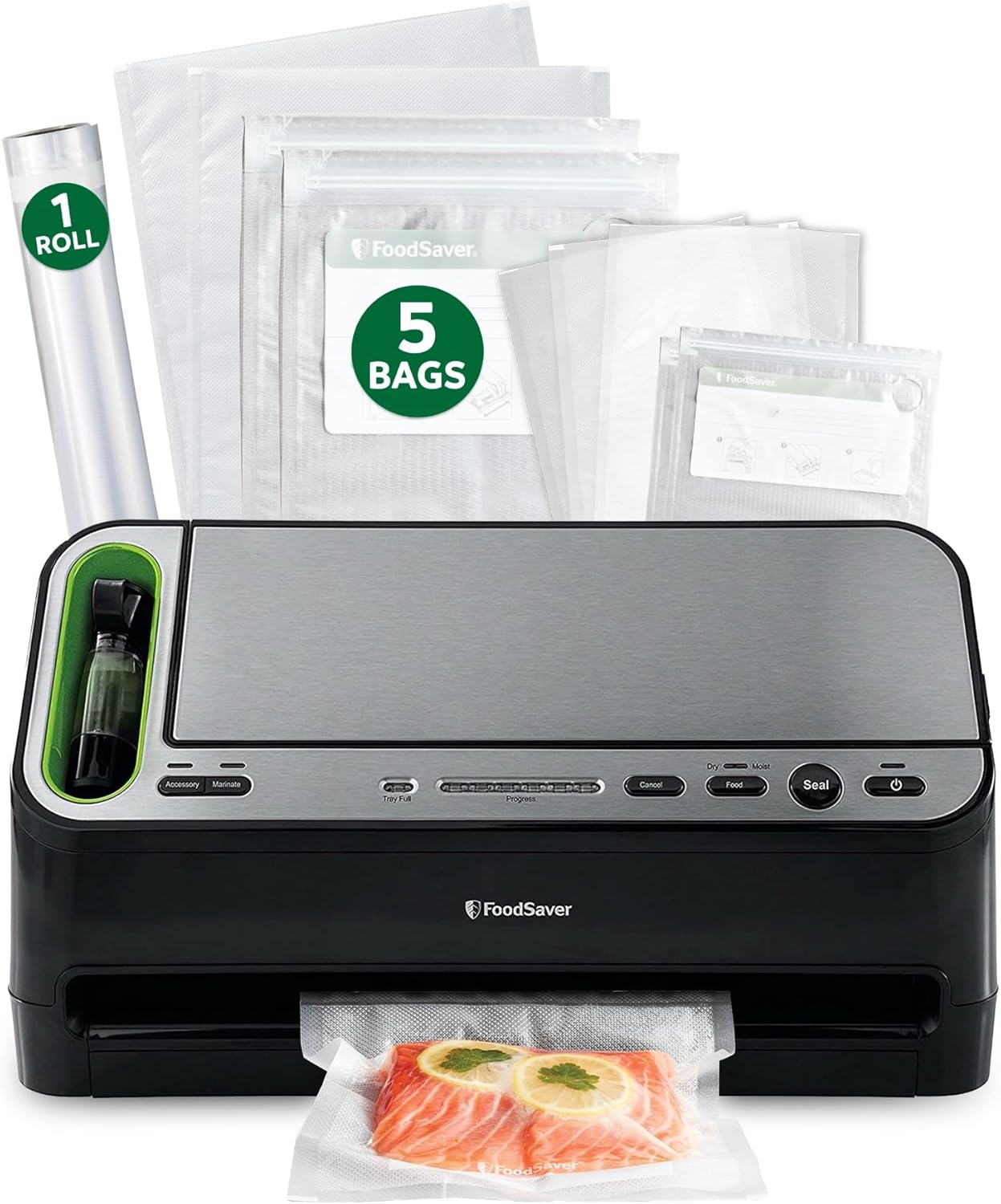
The FoodSaver V4400 is a countertop 2-in-1 vacuum sealer that combines an automatic chamber sealer with a retractable handheld unit for zipper bags and accessories. It is designed for everyday kitchen use: place a bag in the sealing channel and the machine automatically detects the bag, removes air, and heat-seals it, while the handheld sealer handles canisters, zipper bags, and jar accessories. Notable features include automatic bag detection, moisture sensing that adjusts sealing mode, built-in roll storage and cutter for custom bag lengths, and a removable dishwasher-safe drip tray to catch liquids. In practice the unit simplifies prep-ahead meals, marinating, and long-term freezer storage, and it supports both 8-inch and 11-inch rolls plus premade bags and containers. Trade-offs are its countertop footprint and plastic construction, and heavier users may need to replace rolls and bags frequently; it also does not double as a commercial-grade vacuum system. For home cooks who want consistent wet sealing and an integrated handheld option, the V4400 handles a wide range of kitchen sealing tasks reliably.
Best for: Buyers who want a single home vacuum sealer that handles both wet foods and zipper bags with easy automatic operation and a built-in handheld sealer.
Less Ideal for: Users needing a compact, travel-friendly unit or a heavy-duty commercial sealer should consider other models built specifically for portability or high-volume workloads.
- Automatic bag detection and fully automatic operation for straightforward one-step vacuum sealing.
- Built-in handheld retractable sealer lets you seal zipper bags, containers, and canisters without extra attachments.
- Moisture detection and multiple sealing modes improve success with wet or juicy foods.
- Integrated roll storage and cutter produce custom-sized bags and reduce accessory clutter.
- Removable dishwasher-safe drip tray simplifies cleanup after sealing messy items.
- Relatively large countertop footprint and plastic body make it less compact or premium-feeling than some alternatives.
- Consumables like rolls and bags are ongoing costs and must match the supported roll widths.
Verdict: Buy this if you want a reliable, user-friendly home vacuum sealer that automatically handles wet foods and includes a retractable handheld sealer for versatile kitchen use.
Avid Armor USV20 Chamber Vacuum Sealer

| Power Source | AC |
|---|---|
| Operation Mode | Automatic |
| Wattage | 300 watts |
| Voltage | 110 volts |
| Material | Stainless Steel |
The USV20 is a chamber-style vacuum sealer built for wet foods, sous-vide prep, and high-volume home use. It uses full-chamber pressure to pull liquids and marinades safely into a sealed pouch without messy suction, and an 11.5-inch seal bar handles family-size portions and prepped cuts. Controls let you adjust vacuum time (15 to 60 seconds) and sealing strength so you can protect delicate items or pull a deeper vacuum for long-term preservation. The stainless steel chamber and clear lid make it easy to monitor runs, and an accessory port supports canisters and jar sealing for added versatility. At about 300 watts and a compact footprint, it fits on a counter or stows away between uses, and the replaceable seal bar reduces long-term maintenance costs. Expect a heavier unit than small external vacuumers and a learning curve dialing in times for different foods, but for anyone sealing liquids, marinades, or frequent bulk batches the USV20 delivers predictable, repeatable results.
Best for: Buyers who prioritize reliable wet-food and sous-vide sealing and need a machine that handles frequent bulk batches or liquid-rich items with consistent, controllable results.
Less Ideal for: Casual users who only seal dry goods or small portions and want a lightweight, ultra-compact machine for occasional use should consider simpler external models instead.
- True chamber vacuum design handles liquids and marinades without spilling or suction issues
- Adjustable vacuum time and seal controls for repeatable results across delicate and dense foods
- 11.5-inch seal bar accommodates family-size portions and larger pouches
- Stainless steel chamber and clear lid for durable construction and easy monitoring
- Accessory port for sealing canisters and jars expands use cases beyond pouches
- Heavier and bulkier than handheld or external vacuum sealers
- Requires learning to set optimal vacuum/seal times for different foods
Verdict: Choose the USV20 when you need a chamber sealer that reliably handles liquids, marinades, and bulk sous-vide prep with precise vacuum and seal control.
FRESKO Automatic Vacuum Sealer AutoMax V8-100

| Power Source | Corded Electric |
|---|---|
| Operation Mode | Automatic |
| Wattage | 140 watts |
| Voltage | 120 volts |
The FRESKO AutoMax V8-100 is a countertop automatic vacuum sealer designed for everyday kitchen use and wet-food sealing. You place a bag under the appropriate baffle and close the lid for automatic vacuum-and-seal or use the pulse setting to control vacuum level for delicate or easily deformed foods; an external port and hose let you service jars, containers, or sous-vide bags. It includes built-in roll storage and a cutter so you can make custom bag lengths, and the wider heating strip and double heat seal help produce durable seals suitable for wet and marinated items. The unit is relatively quiet for the class and claims the capacity to seal up to 50 bags in 20 minutes, making it useful for batch prepping and meal prep. Practical buyers will appreciate the comprehensive starter kit of precut bags, two rolls and accessories, plus the 3-year quality commitment. The machine is compact and sturdy, but as with most compact sealers it is optimized for home volumes rather than continuous commercial use and the vacuum strength and cycle speed reflect that consumer focus.
Best for: Buyers who want a practical, full-featured home vacuum sealer that reliably handles wet and marinated foods and includes bags and rolls so they can start prepping and preserving right away.
Less Ideal for: People who need industrial throughput or a commercial-grade continuous sealer for high-volume restaurant use should look at heavier duty equipment.
- Automatic dry/wet detection and dedicated baffles for simple hands-free vacuum-and-seal operation
- Built-in roll storage and cutter for custom bag lengths and fewer extra supplies
- Includes a large starter kit (100 precut bags plus two rolls and accessories) to begin sealing immediately
- Wider heating strip and double heat seal for reliable seals on wet or marinated foods
- External vacuum port and hose for jars, containers, and sous-vide preparation
- Designed for home use so not intended for heavy continuous commercial sealing
- Item dimensions and weight make it less portable than very compact handheld sealers
Verdict: A user-friendly automatic sealer built to simplify wet-food and batch home preservation with roll storage and a full starter kit.
MEGAWISE Vacuum Sealer VS6611

| Operation Mode | Semi-Automatic |
|---|---|
| Wattage | 80 watts |
| Voltage | 220 |
| Material | Acrylonitrile Butadiene Styrene (ABS) |
The MEGAWISE VS6611 is a compact countertop vacuum sealer designed for everyday kitchen use and basic wet-food sealing tasks. It offers one-touch operation with separate Dry and Moist modes so you can seal solid items or damp foods like poached meats and steamed vegetables without a lot of fuss. The unit includes a built-in sliding cutter, an accessory hose for external containers, and ten BPA-free vacuum bags to get started. With an 80 kPa suction rating and an 11 to 12 inch sealing wire, most bags vacuum and seal in roughly 10 to 20 seconds, making it convenient for batch prepping and freezer storage. Practical strengths are its small footprint and simple controls, which make it easy to store and use in a modest kitchen. Limitations are predictable for an entry-level machine: it runs on 220V, is semi-automatic rather than fully automatic, and does not list advanced features like adjustable vacuum levels or a dedicated soft-vac mode for fragile foods. For buyers prioritizing straightforward wet sealing on a budget, it covers the essentials without complexity.
Best for: Buyers who want an affordable, no-frills vacuum sealer for routine wet and moist food preservation and occasional batch sealing.
Less Ideal for: If you need commercial speeds, fine control over vacuum strength, or a machine that runs on 110V household power, look at higher-end models.
- Separate Dry and Moist modes for handling wet or juicy foods
- Built-in sliding cutter for custom bag lengths
- Includes accessory hose to seal compatible containers
- Compact, easy-to-store design with simple one-touch controls
- Includes 10 BPA-free vacuum bags to start using immediately
- Operates at 220V which may not match all household outlets
- Semi-automatic operation lacks fine vacuum control for delicate items
- No listed adjustable vacuum levels or soft-vac setting
Verdict: A compact, budget-friendly sealer with wet/dry modes and a built-in cutter that reliably handles basic wet-food preservation needs.
Beelicious Pro CVS101 Chamber Vacuum Sealer

| Power Source | Corded Electric |
|---|---|
| Operation Mode | Automatic |
| Wattage | 220 watts |
| Voltage | 120 volts |
| Material | Stainless Steel |
The CVS101 is a heavy-duty chamber vacuum sealer aimed at home cooks who want commercial-style performance for liquids, sous-vide prep, and batch freezing. It uses a roomy upper chamber (about 6 L) plus a separate lower work area for out-of-chamber rolls, so it can handle soups, brines, and larger bags without messy pump contamination. The machine pairs a removable 12-inch dual-seal bar with a 230W dual-core system and four oil-free dry pumps to deliver strong vacuum levels (advertised to -100 kPa) and fast cycle times, and the wide clamp and front bag cutter make continuous sealing easier. Practical extras include adjustable vacuum and seal timers, an external port for jars and canisters, a soft-close hinge for smoother operation, and an app for scanning and tracking food. At roughly 25.7 pounds and built from stainless steel, it is a substantial counter appliance that suits frequent batch work, but its size and power footprint may be more than casual users need and it requires counter space and familiarization to get the most from the controls.
Best for: Buyers who prioritize dependable, near-commercial vacuum performance for frequent wet and dry sealing, batch meal prep, or sous-vide preparation and want a machine built to handle liquids without pump contamination.
Less Ideal for: If you need a compact, lightweight sealer for occasional use or very tight counters, a simpler external vacuum sealer would be a better fit.
- Handles liquids cleanly with a dedicated chamber and external port for jars or containers
- Powerful dual-core pump system with four oil-free dry pumps for fast, deep vacuuming
- 12-inch dual-seal bar and wide bag clamp for reliable, large-bag seals
- Adjustable vacuum and seal time plus external control options for consistent results
- Includes starter bag kit and app features for scanning, date logging, and organization
- Large and heavy for casual kitchens, requiring significant counter space
- More complex controls and app features add a learning curve for occasional users
Verdict: Choose the CVS101 when you want a robust, wet-capable chamber sealer that delivers commercial-strength vacuums and reliable large-bag seals for heavy home or light commercial use.
FoodSaver PowerVac VS0150

| Operation Mode | Automatic |
|---|---|
| Wattage | 110 watts |
| Voltage | 230 volts |
| Included Components | 11" x 8' roll, 3 quart bags, 2 gallon bags |
The FoodSaver PowerVac VS0150 is a countertop vacuum sealer built to save freezer space and reduce food waste by creating airtight seals for wet and dry foods. It stores vertically when not in use and includes an 11" x 8' roll plus several pre-cut bags so you can start sealing right away. Operation is simple: align the bag in the channel, lock the lid, choose Dry or Moist, and press Vacuum to remove air and heat-seal the bag. The machine promises 35% less bag waste compared with previous FoodSaver models and is compatible with the brand's rolls, bags, and accessories for pantry and fridge storage or marinating. Practical benefits include a small footprint for tight kitchens and consistent seals for freezer protection and sous-vide prep. Limitations to note are modest power specifications and reliance on FoodSaver-format bags for accessory functions, so heavy commercial use or very large-volume sealing may exceed its compact design and duty cycle.
Best for: Home cooks who want a compact, easy-to-use sealer that reduces bag waste and reliably preserves wet or dry foods for freezer storage and sous-vide prep with proven brand accessories.
Less Ideal for: People needing a heavy-duty or commercial-grade sealer for frequent large-batch use or those who require a unit tailored to nonstandard power systems.
- Stores vertically to save counter and cabinet space
- Two sealing modes (Dry and Moist) for different food types
- Includes starter roll and bags so it is ready to use out of the box
- Compatible with FoodSaver bags, rolls, and accessories for expanded functionality
- Compact design is not intended for high-volume or commercial sealing
- Voltage listed at 230V which may not match all household power standards
Verdict: Choose the FoodSaver PowerVac if you want a compact, vertical-storage sealer that reliably handles wet and dry foods while cutting bag waste and fitting small kitchens.
Gasbye VS5166 Vacuum Sealer
| Power Source | 95kPa Dual Pump |
|---|---|
| Operation Mode | Automatic |
| Wattage | 130 watts |
| Voltage | 120 volts |
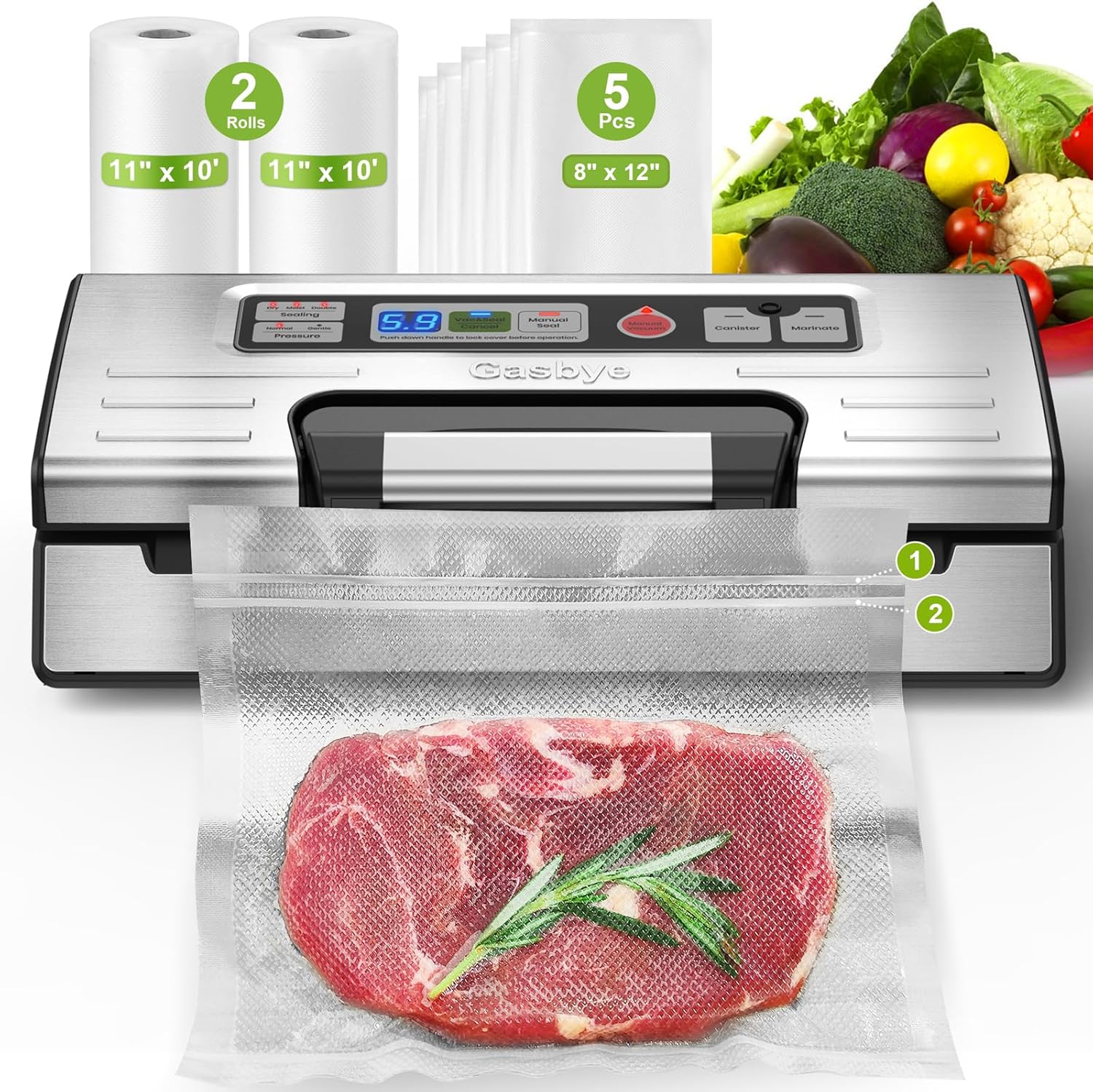
The Gasbye VS5166 is a countertop vacuum sealer designed for everyday food storage and sous-vide prep. It uses a powerful 95kPa dual-pump system for fast vacuuming plus a pulse mode that gives step-by-step control for delicate or moist foods, and dual heat strips produce a double seal aimed at reducing leaks during long sous-vide cooks. The unit includes integrated roll storage and a cutter so you can size bags on demand, and the removable drip tray helps keep liquids from fouling the machine. Gasbye bundles starter bags, replacement gaskets, and an external suction hose, and the design supports compatible vacuum food containers for sealing marinated or saucy foods without pulling liquid into the sealer. Practical benefits include strong suction for tighter seals, a gentle mode for fragile items, and easy maintenance thanks to replaceable parts and a removable tray. Limitations to note are the unit's countertop footprint and that specialty containers are sold separately if you plan to seal liquids often.
Best for: Buyers who prioritize reliable, repeatable seals and want a durable countertop sealer with serviceable parts and straightforward controls for everyday and sous-vide use.
Less Ideal for: If you need an ultra-compact, travel-friendly sealer or expect to seal liquids frequently without buying add-on containers, this model may be more than you need.
- High 95kPa dual-pump suction for consistent, tight vacuums
- Pulse mode for controlled sealing of delicate or moist foods
- Double heat-seal strips suitable for sous-vide and long cooks
- Built-in roll storage and cutter reduce bag waste and speed prep
- Removable drip tray and replaceable gaskets make cleaning and maintenance easier
- Dedicated vacuum food container is sold separately for sealing liquids without mess
- Larger countertop footprint than compact handheld sealers
Verdict: Choose the VS5166 if you want a robust, serviceable countertop sealer that delivers strong vacuum power and double seals for reliable wet and sous-vide performance.
Choosing the Right Wet Vacuum Sealer: Key Factors to Consider
Wet-Seal Reliability
A vacuum sealer's ability to form consistent seals on moist bags is central for wet-food use. Reliable sealing prevents leaks during freezing, storing, or cooking sous-vide and reduces bacteria exposure. Look for machines with dedicated wet modes, pulse vacuum options, or adjustable sealing time that let you limit vacuum strength and avoid drawing liquids into the seal. Models that deliver uniform heat across the sealing strip reduce the chance of incomplete bonds when moisture is present.
Wet-seal reliability also affects food safety. A compromised seal can let air and contaminants in, shortening shelf life and risking freezer burn. Prioritize machines that offer repeatable results across multiple bag types and that include clear indicators when a seal completes successfully.
Liquid Handling and Drainage
How a machine copes with liquid during vacuuming determines how mess-free and effective it will be. Some units include removable drip trays or channels that collect expelled moisture, while others use internal traps to protect the pump. Effective drainage keeps pumps and valves from clogging and simplifies cleanup after sealing soups, stews, or marinated meats.
Consider whether the sealer allows partial vacuuming or pulse control so you can stop before liquids cross the sealing edge. Also evaluate access to internal parts for cleaning; easy-to-remove trays and accessible seals reduce the time and effort required after wetter jobs.
Control Modes and Precision
Precision control is crucial when working with wet foods. Adjustable vacuum levels, a pulse or manual vacuum option, and separate sealing time settings let you tune the process for thin bags, thick marinades, or delicate produce. Machines with clear, tactile buttons or intuitive digital displays reduce user error and make it easier to repeat settings.
A unit that remembers custom settings or provides mode presets for wet versus dry items speeds routine use. Precision also limits how much liquid gets drawn toward the seal, lowering the risk of failed seals and simplifying post-seal cleanup.
Compatibility with Different Bag Types
Wet vacuum sealing often requires using thicker or textured bags that resist puncture and prevent liquids from migrating to the sealing area. Check whether a sealer supports standard roll bags, pre-cut bags, and heavier-duty pouches. Some machines have built-in cutter tools or groove trays sized for common bag widths, which simplifies preparing custom-length bags for large cuts or deep marinades.
Bag compatibility affects long-term cost and flexibility. Using bags that are too thin increases the chance of bursts or seal failures with liquid. Choose machines that explicitly list compatible bag types and sizes or that include adapters for commercial-grade pouches.
Ease of Cleaning and Maintenance
Frequent wet sealing means more cleanup. Machines designed for straightforward maintenance reduce downtime and prolong life. Look for removable drip trays, washable sealing gaskets, and accessible heating strips that can be inspected or replaced without special tools. Smooth surfaces and straightforward internal layouts minimize trapped residues that can harbor odors or bacteria.
Maintenance also includes the availability of replacement parts for wear items like gaskets and sealing elements. A design that makes routine tasks simple lowers the risk of long-term failures and keeps performance consistent even after heavy wet-food use.
Durability and Serviceability
Durability matters when you subject a sealer to repeated wet cycles and potentially heavy use. Pay attention to the build quality of the pump, the robustness of the sealing bar, and whether commonly worn parts are user-replaceable. Metal chassis or reinforced housings typically stand up better to frequent use than thin plastic shells.
Serviceability means you can replace or service critical components without sending the unit away. Machines with modular parts, clear user guides for simple repairs, and accessible customer support channels reduce downtime and extend the useful life of your sealer.
How Wet Mode Works
Wet mode changes vacuum timing and sealing heat to avoid pulling liquids into the seal area. Instead of a single, full-strength vacuum cycle, wet-capable machines often use pulsed vacuuming or lower vacuum levels so air is removed gradually. That gives suspended liquids time to settle away from the bag edge before the sealing strip engages.
Understanding the mechanism helps you use manual techniques, like folding bag edges or using paper towels to wick nearby moisture, to improve outcomes. When the machine finishes a wet cycle, inspect the seal and let the bag rest briefly before moving it to freezing or sous-vide to ensure the bond fully sets.
- Pulse vacuum reduces liquid migration
- Lower seal heat settings prevent seal failure
- Allow brief rest time for seals to set before handling
Best Practices for Sealing Marinated Foods
Prepare bags so liquids are kept away from the open edge. Use a wider margin around the seal line, fold or roll the top of the bag, or place a paper towel at the seam to absorb stray juices during vacuuming. For very wet marinades, consider freezing the item briefly to stiffen the liquid so it does not flow toward the sealing bar.
Operate the machine in pulse or wet mode and stop as soon as most air is removed but before liquids begin to move. If your sealer has a continuous vacuum with adjustable strength, choose a lower setting for marinated or highly aromatic foods to preserve seal integrity and reduce mess.
- Leave extra seam margin for wet items
- Use pulse mode to control vacuum draw
- Pre-freeze liquids slightly for cleaner seals
Cleaning and Storing After Wet Use
After sealing wet items, promptly remove and empty any drip trays. Wipe down the sealing bar and surrounding surfaces with warm soapy water or a mild food-safe cleaner, then dry thoroughly. If liquids reached the vacuum channel or pump area, follow the manufacturer's instructions for safe cleaning to prevent corrosion or bacterial buildup.
Store the sealer with the lid slightly ajar if recommended to avoid trapped moisture and odors. Regularly inspect gaskets and replace them when they show wear to maintain consistent vacuum pressure and sealing performance.
- Empty and wash drip trays after each wet session
- Dry sealing surfaces completely to prevent corrosion
- Store with accessible ventilation to avoid odors
Accessories That Help with Wet Sealing
A few accessories make wet sealing easier. Extra roll bags of thicker gauge resist puncture and reduce liquid migration. Paper towel strips or disposable filters placed at the seam can be a low-cost way to protect the sealing strip during particularly juicy jobs.
Replaceable gaskets and spare sealing strips are useful for long-term reliability. If you plan to do heavy sous-vide or freezing of wet foods, having a selection of compatible bag widths and a good cutter for roll bags speeds preparation and reduces waste.
- Use thicker roll bags for wet foods
- Keep replacement gaskets and sealing strips on hand
- Paper towel or filter strips can protect seals
When to Avoid Vacuum Sealing Wet Items
Some high-liquid dishes are better frozen in rigid containers than vacuum sealed in bags. Extremely thin broths or emulsions that easily flow can enter the vacuum pump or create weak seals. If you cannot reliably keep liquids away from the bag edge, choose alternative storage methods like rigid, freezer-safe jars or sealed plastic containers.
Also avoid vacuum sealing hot items. Let foods cool to room temperature before sealing to prevent steam from driving moisture into the seal and to limit thermal stress on bags and sealing elements.
- Use containers for very thin, watery liquids
- Never seal very hot foods; cool first
- If seals repeatedly fail, switch to rigid storage
How We Chose the Best Wet Vacuum Sealer
We focused on real-world performance with wet and marinated foods, choosing models that manage moisture while making reliable, repeatable seals. Our primary filters were wet-sealing reliability, liquid management features, ease of use when switching between dry and wet modes, and long-term durability of sealing elements. We also prioritized units with clear controls for pulse or manual vacuum steps, accessible gaskets and sealing strips for routine maintenance, and straightforward bag compatibility. Excluded were models designed solely for dry storage or vacuuming non-food items, and units that lack explicit wet-mode capability or pulse control. We tested selection criteria across typical household use: how quickly a model senses and adapts to liquid, whether seals remained intact after freezing or sous-vide, the availability of replaceable parts, and how easy the machine is to clean after sealing wet bags. Safety features and clear user feedback were additional deciding factors.
Our full evaluation process is outlined in our review methodology.
FAQ
Can I vacuum seal soups and stews with a wet vacuum sealer?
Often yes. Wet vacuum sealers or models with pulse control can handle thicker soups and stews if you use low vacuum settings or pulse to limit liquid migration. It helps to chill or partially freeze very liquid items first.
How do I stop liquids from getting into the seal area?
Leave a wider margin at the bag edge, use a paper towel to absorb stray juices, employ pulse vacuuming, or partially freeze liquids so they are less likely to flow toward the sealing strip during vacuuming.
Do wet vacuum sealers require special bags?
Not always, but thicker, textured, or embossed bags are more forgiving with wet foods and resist punctures. Check that the machine supports the bag types you plan to use and consider heavier-gauge rolls for frequent wet sealing.
How often should I clean the sealer after wet use?
Clean drip trays and accessible surfaces after every wet sealing session. Inspect and clean internal channels if liquids reached them, following the manufacturer's guidance. Regular maintenance prevents odors and extends pump life.
Will vacuum sealing marinades improve flavor?
Vacuum sealing can speed marinade penetration by forcing liquid closer to food surfaces, which often shortens required marinating time. Results depend on the food, marinade composition, and how uniformly the seal holds during storage.
Final Verdict
Choose a wet vacuum sealer based on how often you seal liquids and how much control you need over vacuum strength and sealing time. Prioritize machines with a dedicated wet mode or pulse control, easy-to-clean drip management, and compatible bag support to minimize mess and failed seals. Balance precision controls and durable sealing elements against ease of maintenance to get reliable performance for marinated and moist foods. If you mostly seal wet items, lean toward models designed for liquid handling and serviceability. For occasional wet jobs, focus on machines that offer good wet-mode controls and accessible cleanup features so you can seal confidently without extra hassle.