
Note: This article contains affiliate links. If you click on these links and make a purchase, we may earn a small commission at no extra cost to you. This helps support our research and content. Read our full affiliate disclosure here.
Picking the right Wi-Fi smart lock for home changes how you secure and access your front door. The right lock must deliver reliable wireless connectivity, solid physical security, and an installation process you can complete without specialized tools. For many homeowners, factors like integration with home networks, ease of setup, and backup entry methods matter as much as the lock's hardware. This guide covers our top shortlisted Wi-Fi smart locks for home use and explains why they made the cut. We evaluated connectivity stability, installation complexity, security features, and daily usability to help you quickly narrow choices and pick a lock that fits your door and routine.
Top Picks at a Glance
| Best Overall The best all-around choice for most situations | ULTRALOQ Bolt SE Smart Deadbolt | 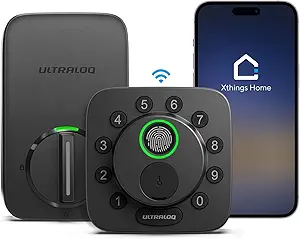 |
| Best Quality Built to a higher standard if you want something more solid | Lockly Visage Zeno Smart Lock |  |
| Best Value The sweet spot between price and what you get | eufy Security Smart Lock C210 |  |
| Top Rated A top-rated pick with lots of positive feedback | Wyze Lock Bolt v2 |  |
| Most Popular A crowd favorite that many people choose with confidence | Schlage Encode Wi‑Fi Deadbolt |  |
| Best Seller A high-volume bestseller chosen again and again | PHILIPS 4200 Series WiFi Smart Lock |  |
ULTRALOQ Bolt SE Smart Deadbolt
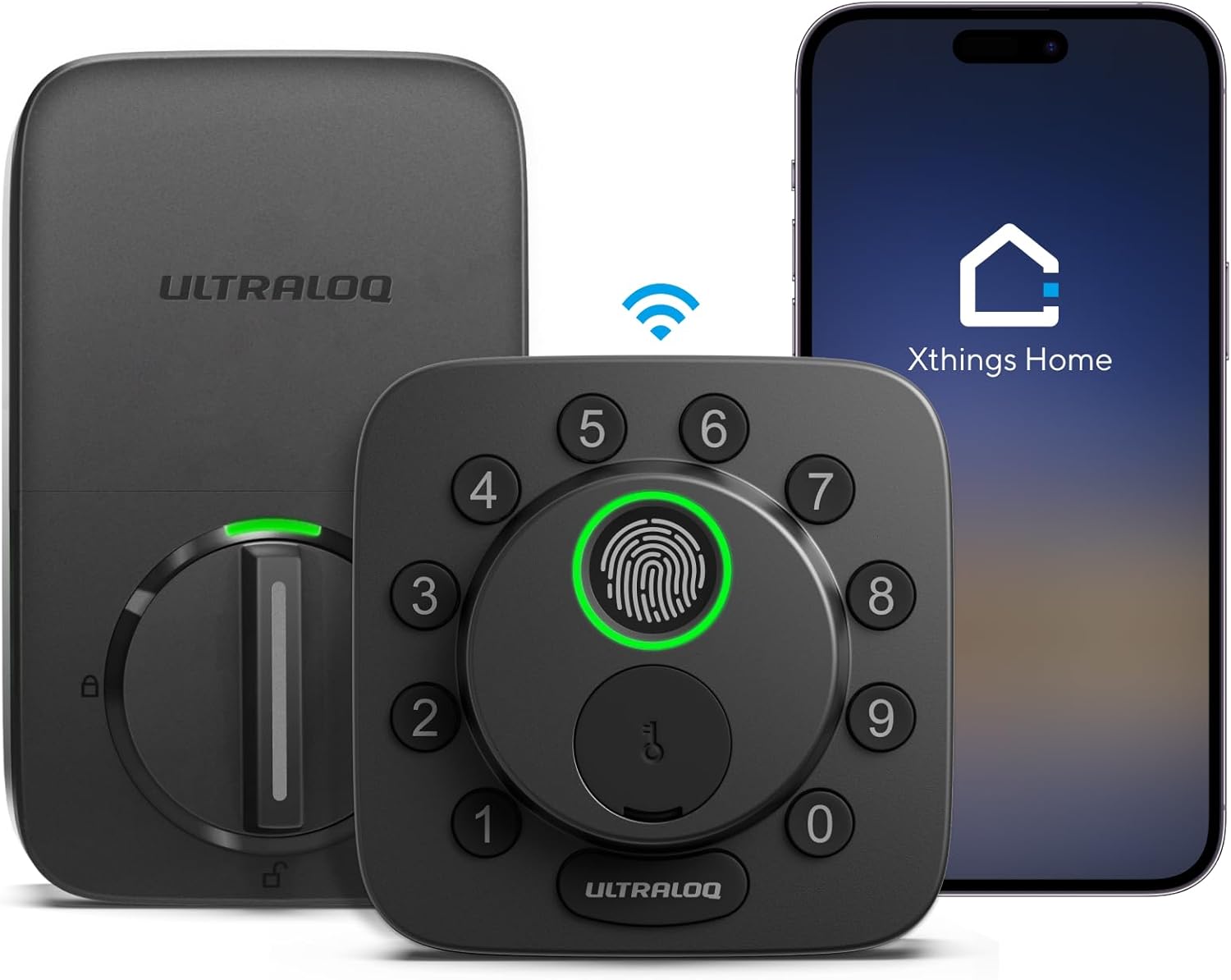
| Connectivity Protocol | Bluetooth, Matter, Wi‑Fi |
|---|---|
| Lock Type | Biometric, Deadbolt, Keypad |
| Controller Type | Amazon Alexa, Android, Apple HomeKit, Google Assistant, SmartThings |
| Additional Features | Auto Lock, AI Fingerprint, App Remote Control |
| IP Rating | IP65 |
The ULTRALOQ Bolt SE is a versatile smart deadbolt that blends biometric access with modern smart‑home connectivity. It unlocks by fingerprint, passcode, app, voice, or mechanical key and supports remote control over built‑in Wi‑Fi as well as Matter over Thread for tighter integration with Apple Home and other ecosystems. The lock stores up to 50 fingerprints and 50 passcodes, offers auto‑lock scheduling, and reports activity and low battery alerts to your phone. Thread-powered efficiency extends battery life up to about 18 months using four AA batteries, and the IP65 rating plus BHMA certification make it suitable for exterior doors. Setup is designed for DIY installation without drilling or wiring and the package includes two emergency keys. Limitations to note: Matter features require a compatible Thread border router, and optimal Wi‑Fi remote control needs a 2.4 GHz network within range of the lock, so connectivity depends on your home network and hub setup.
Best for: Buyers who want a balance of convenience, security, and smart‑home compatibility for a primary exterior door and value biometric access plus app control.
Less Ideal for: Users without a 2.4 GHz Wi‑Fi network or those unwilling to add a Thread border router should consider simpler Wi‑Fi locks or hub‑free options.
- Multiple unlock methods including fingerprint, keypad, app, voice, and mechanical key for flexible access.
- Built‑in Wi‑Fi and Matter over Thread support for remote control and seamless smart‑home integration.
- AI‑driven fingerprint reader with fast unlock times and capacity for many users.
- Thread-powered efficiency and up to 18 months battery life using four AA batteries.
- IP65 waterproofing and BHMA certification for durable exterior use.
- Matter features require a compatible Thread border router, adding setup complexity for some users.
- Remote Wi‑Fi control requires a nearby 2.4 GHz router for reliable connectivity.
Verdict: A well‑rounded smart deadbolt that pairs fast biometric access with Wi‑Fi and Matter support for homeowners wanting strong smart‑home integration and dependable exterior performance.
Lockly Visage Zeno Smart Lock

| Lock Type | Deadbolt |
|---|---|
| Connectivity Protocol | Wi‑Fi |
| Controller Type | Amazon Alexa, Apple HomeKit, Google Assistant |
| Additional Features | Facial Recognition, 0.2s AI Fingerprint, PIN Genie, Type‑C Backup Power |
The Lockly Visage Zeno is a performance‑focused smart deadbolt that emphasizes fast, frictionless access and always‑on connectivity. It uses dual‑infrared facial recognition to detect and unlock as you approach, a 3D biometric fingerprint sensor with 0.2 second recognition, and a PIN Genie keypad that shuffles digits to guard against code guessing. Built‑in 2.4 GHz Wi‑Fi lets you control and monitor the lock remotely through the Lockly Home app without a separate hub, and it integrates with Apple Home Key, Siri, Google Assistant, and Alexa. Two rechargeable 10,000 mAh batteries are included and Lockly claims up to six months per charge under normal use, while IP65 weatherproofing protects the exterior assembly. Installation is DIY friendly for common US doors, and the lock supports guest codes, time‑limited access, and instant alerts. The hardware is solid zinc with a brushed finish, but advanced biometric features add complexity that may require occasional app updates and calibration to keep recognition accurate in different lighting and for changing faces or fingerprints.
Best for: Buyers who prioritize speed, multiple biometric unlock methods, and direct Wi‑Fi remote control for front‑door security and smart home integration.
Less Ideal for: People who want a very simple, low‑cost replacement deadbolt or who prefer mechanical keys only and minimal app dependence.
- Fast biometric access via facial recognition and a 0.2s AI‑assisted fingerprint sensor
- Built‑in Wi‑Fi enables remote control and notifications without an external hub
- Supports Apple Home Key and major voice assistants for convenient unlock methods
- Rechargeable batteries included with long run time and USB‑C backup power
- IP65 weatherproofing suitable for exterior door exposure
- Advanced biometrics and app features add setup and maintenance complexity
- High feature set increases initial cost compared with basic smart deadbolts
Verdict: Choose the Visage Zeno when you want the fastest biometric access and full built‑in Wi‑Fi smart lock integration for a front door.
eufy Security Smart Lock C210

| Connectivity Protocol | Wi‑Fi |
|---|---|
| Lock Type | Keypad WiFi smart lock |
| Controller Type | Google Assistant, Amazon Alexa |
| Battery | 4 AA (included) |
The eufy Security Smart Lock C210 is a keyless deadbolt designed to replace a standard US deadbolt and provide remote control without a separate bridge. Installation is advertised as straightforward and typically takes about 15 minutes using the included screws and deadbolt, and the lock runs on four AA batteries that are included. It connects directly to your home Wi‑Fi so you can lock and unlock from the eufy Security app, receive real‑time notifications and view an event history, and grant or revoke up to 100 passcodes for family, guests or service people. You can also use voice assistants or an Apple Watch, and there are physical keys and an emergency power port if the batteries die. The C210 is BHMA tested for durability and includes anti‑peek keypad features. Limitations to note are that it is not compatible with HomeKit, Matter, IFTTT, or eufy HomeBase, and some door latch styles (rounded holes) are not supported, so fitment must be checked before buying.
Best for: Buyers who want a straightforward, app‑controlled smart deadbolt that emphasizes easy remote access, simple user management, and a bridge‑free Wi‑Fi setup for everyday home security.
Less Ideal for: People who need ecosystem interoperability with HomeKit, Matter, or advanced home automation platforms, or those with nonstandard rounded latch holes should look elsewhere.
- Built‑in Wi‑Fi for remote control without an external bridge
- Supports up to 100 unique passcodes and user management
- Multiple unlock methods: keypad, app, voice, Apple Watch and physical key
- BHMA tested for durability and includes real‑time notifications and event history
- Not compatible with Apple HomeKit, Matter, or IFTTT integrations
- May not fit doors with rounded latch holes so compatibility check required
Verdict: Choose the C210 if you want a durable, bridge‑free Wi‑Fi deadbolt that makes remote access and managing many user codes quick and simple.
Wyze Lock Bolt v2

| Lock Type | Biometric, Deadbolt, Keypad |
|---|---|
| Connectivity Protocol | Wi-Fi |
| Additional Features | Auto-Lock |
| Material Type | Aluminum, Glass |
The Wyze Lock Bolt v2 is a biometric smart deadbolt designed for daily front‑door use, combining fingerprint unlocking, keypad codes, app control, and physical keys for redundancy. Its AI learning fingerprint scanner adapts to your touch over time, promising faster and more reliable reads, and the tempered glass sensor is built to resist scratches and smudges. Built‑in Wi‑Fi lets you lock and unlock remotely from the Wyze app and pair with Wyze doorbells for visual verification, while auto‑lock and tamper alarms add basic security automation. The lock is rated IP53 for light weather resistance and meets BHMA2 durability standards, and it runs on included AA batteries for up to eight months with a USB‑C emergency power option if batteries die. Expect straightforward installation on compatible doors and solid day‑to‑day convenience, though advanced enterprise features and multi‑user admin controls are limited compared with higher‑end commercial locks.
Best for: Homeowners who prioritize dependable, everyday convenience and want a biometric smart lock with remote control and multiple backup entry options for a primary exterior door.
Less Ideal for: Property managers or buyers needing advanced multi‑user enterprise controls, large scale provisioning, or higher-grade commercial security features.
- Fast fingerprint unlocking with AI learning for improved recognition over time
- Built‑in Wi‑Fi enables remote control and integration with Wyze devices
- Multiple access methods: fingerprints, keypad codes, app control, and backup keys
- IP53 weather resistance and BHMA2 durability rating for reliable outdoor use
- Limited advanced admin or enterprise access management compared with premium smart locks
- Relies on AA batteries that need replacement every several months under typical use
Verdict: A practical, reliability-focused Wi‑Fi deadbolt that delivers fast fingerprint access, remote control, and multiple backups for a secure everyday front‑door experience.
Schlage Encode Wi‑Fi Deadbolt
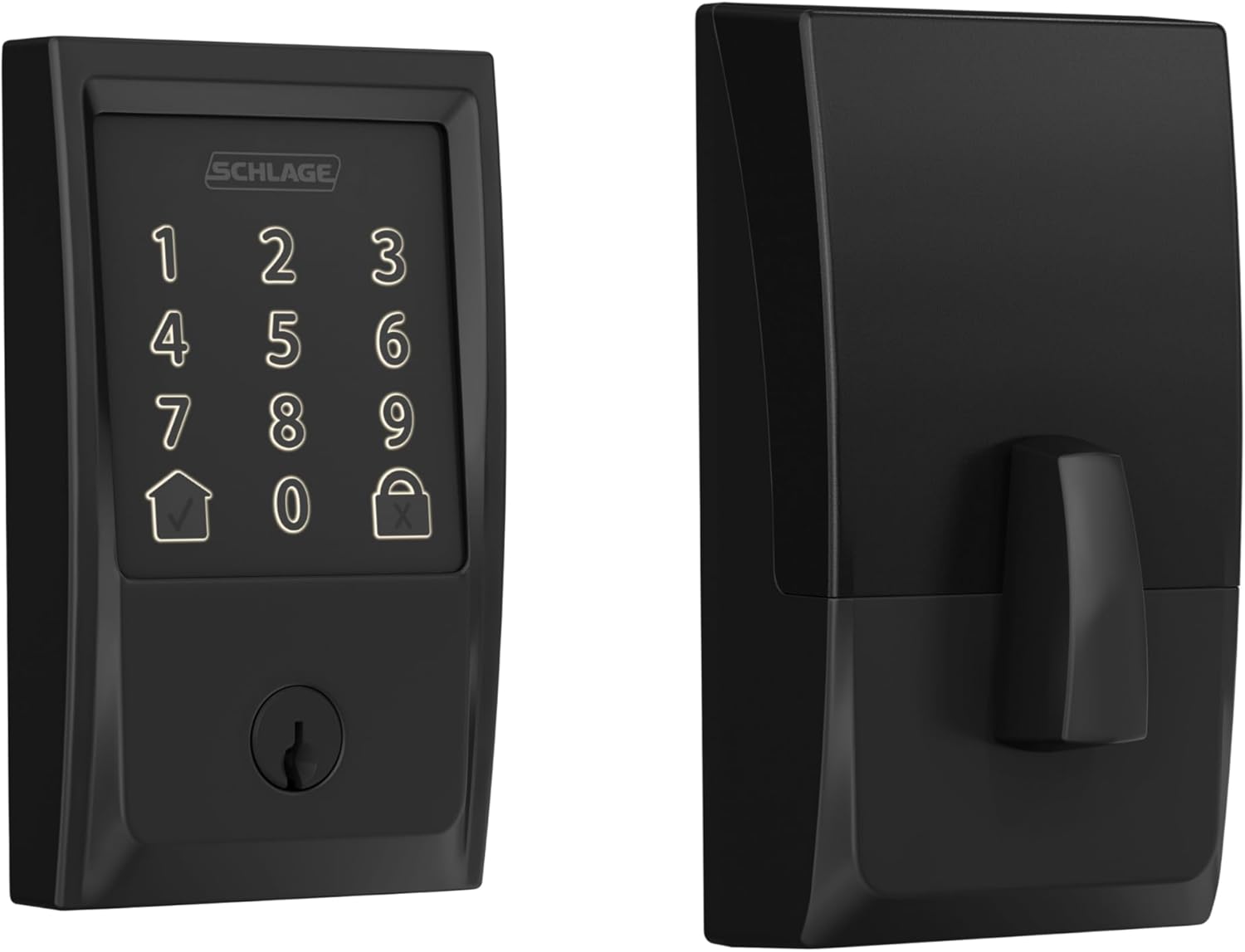
| Connectivity Protocol | Bluetooth, Wi‑Fi |
|---|---|
| Lock Type | Keypad |
| Controller Type | Amazon Alexa, Google Assistant, Vera |
| Power | 4 AA batteries (included) |
The Schlage Encode is a full‑featured Wi‑Fi smart deadbolt designed for everyday front‑door use. It installs with just a screwdriver and uses built‑in Wi‑Fi so you can control and monitor the lock from the Schlage Home app without an extra hub. The touchscreen keypad supports up to 100 unique access codes, one‑touch locking, and auto‑lock scheduling for easy hands‑free entry and guest access management. Security features include secure encrypted connectivity, a built‑in alarm that detects forced entry attempts, and a fingerprint‑resistant touchscreen. The lock runs on four AA batteries with an on‑device and app low‑battery warning and includes a physical backup key. Practical strengths are simple DIY installation, broad voice assistant support, and strong industry ratings for security and durability, while users who want biometric unlocking or integrated door sensors will need additional products because those features are not included.
Best for: Buyers who prioritize proven security and reliable remote access control and who want a straightforward DIY smart‑lock that integrates with voice assistants and rental workflows.
Less Ideal for: People who need built‑in biometrics, hardwired power, or an integrated door sensor as part of their smart‑home security setup should look elsewhere.
- Built‑in Wi‑Fi lets you lock/unlock and manage access remotely without buying a hub
- Supports up to 100 unique access codes for easy guest and rental management
- BHMA‑rated security, durability, and finish with a built‑in alarm for forced‑entry detection
- Simple DIY installation with included hardware and four AA batteries
- Does not include biometric (fingerprint) unlocking
- Relies on battery power rather than a hardwired power source
Verdict: Choose the Schlage Encode if you want a DIY, Wi‑Fi smart deadbolt with strong security credentials and easy remote access without needing a separate hub.
PHILIPS 4200 Series WiFi Smart Lock

| Connectivity Protocol | Bluetooth, Wi‑Fi |
|---|---|
| Control Method | App, Push Button, Remote, Voice |
| Lock Type | Biometric, Deadbolt, Keypad, WiFi Smart Lock |
| Additional Features | Anti-Drill, Auto-Lock, Back-Lit Keypad, Anti-Peeping Password, Fingerprint |
The PHILIPS 4200 Series is a full-featured Wi‑Fi smart deadbolt designed to replace a front door lock with keyless convenience and remote control. It connects directly to 2.4 GHz Wi‑Fi (no hub required) so you can lock or unlock, manage user codes and fingerprints, and view access history from the Philips Home Access app. The lock offers multiple entry methods—touch fingerprint (claimed 0.3 s), backlit keypad with anti-peeping PIN entry, voice control via Alexa or Google Assistant, and two mechanical backup keys—making it flexible for families, guests, and short‑term rentals. Notable practical features include configurable auto‑lock timing, one‑time and recurring PINs for scheduled access, a silent mode, anti‑drill protection, and smart notifications for every event. Installation is user‑friendly for common door thicknesses and the handle set is included for an integrated look. Limitations to note: it requires a stable 2.4 GHz Wi‑Fi signal within about 33 ft of the router and uses standard alkaline batteries (up to six months runtime) so you must monitor battery alerts and replace cells when prompted. For buyers who want simple remote control, biometric access, and clear audit logs, this is a capable option.
Best for: Buyers who prioritize simple remote access, clear access logs, and multiple backup entry options for family or rental use and who want a ready‑to‑install front door upgrade with app control.
Less Ideal for: People with weak or only 5 GHz home Wi‑Fi coverage at the door or those who prefer a lock that runs on hardwired power or rechargeable batteries.
- Built-in 2.4 GHz Wi‑Fi lets you control and monitor the lock remotely without a separate bridge
- Multiple entry methods: fingerprint, keypad PINs, voice control, app, and mechanical keys for backup
- Comprehensive access management with permanent, one‑time, recurring and scheduled PINs plus activity history
- Included handle set provides a finished front‑door replacement without buying extra hardware
- Requires a reliable 2.4 GHz Wi‑Fi signal near the door (recommendation ~33 ft max) which may need router placement adjustments
- Uses standard alkaline batteries (batteries not included) so you must replace cells periodically despite long estimated runtime
Verdict: Choose this lock if you want a ready‑to‑install front door smart deadbolt with built‑in Wi‑Fi, fast fingerprint access, and robust app-based user and schedule controls.
Choosing the Right Wi-Fi Smart Lock for Home: Key Factors to Consider
Connectivity and Network Stability
A Wi-Fi smart lock's usefulness depends on consistent network access. Intermittent connectivity can prevent remote locking, unlock notifications, or integration with other home automations. Evaluate how the lock handles weak signals, whether it supports both 2.4 GHz and 5 GHz bands, and if it provides local control fallback when the router is offline.
Network stability also affects security. Locks that rely on cloud authentication during each interaction introduce dependence on external services. Prefer locks that allow local authentication or have secure cached credentials so you retain access during short outages.
Installation and Door Compatibility
Installation complexity can make or break a purchase for DIY homeowners. Check whether the smart lock replaces only the interior thumbturn or requires replacing the entire deadbolt assembly. Look for compatibility with standard door thicknesses, backset measurements, and whether the lock fits existing holes or needs drilling.
Clear, tool-minimal installation reduces the chance of errors that can compromise security or void warranties. If your door has unusual geometry, plan for extra steps or professional help and verify return or support policies before committing.
Mechanical Security and Durability
Smart features are valuable only if the lock's mechanical components are robust. Bolt material, bolt throw length, and resistance to forced entry are critical. Also consider corrosion resistance and the lock's performance in your local climate if the lock is exposed to weather.
Durability affects long-term ownership costs. A well-built deadbolt and reinforced strike plate will reduce wear and maintain alignment, preventing jamming that could lock you out. Look for locks with documented standards or third-party security testing when available.
User Access Options and Guest Management
How you grant and manage access matters for households with regular visitors, service workers, or short-term guests. Consider whether the lock supports temporary PIN codes, time-limited virtual keys, or remote unlocking via an app. Ease of sharing and revoking access should be straightforward without exposing your primary credentials.
Also verify whether the lock logs entries and provides notifications so you can audit access events. Granular permissions and simple guest workflows reduce friction for family members and trusted visitors.
Power, Battery Life, and Emergency Entry
Battery life determines maintenance rhythm and the risk of lockouts. Understand typical battery longevity under your usage pattern and whether the lock provides low-battery alerts. Check the battery type and whether standard, easy-to-find cells are used.
Emergency entry options are essential. Many Wi-Fi smart locks include a physical key cylinder, a backup PIN pad, or a temporary mechanical override. Ensure you are comfortable with the chosen backup method and have a plan for replacement power or emergency access.
Privacy, Firmware Updates, and Vendor Support
Smart locks handle sensitive access data, so privacy policies and update practices matter. Confirm that the vendor provides regular firmware updates and a clear process for security patches. Look for transparent data handling and whether access logs are stored locally or in the cloud.
Responsive support matters when installation issues arise or when you need firmware assistance. Prioritize vendors that document update procedures and provide clear customer support channels.
Preparing Your Door for a Wi-Fi Smart Lock
Before buying, measure your door thickness, backset, and existing deadbolt hole to confirm compatibility. Note whether your door has reinforced trim or an odd backset that could require adapters.
If your door has security plates or metal trim, confirm that the new lock's latch and strike plate will align. Consider reinforcing the strike area with longer screws and a strike plate designed for deadbolt use to maximize security.
- Measure door thickness and backset
- Confirm single- or double-cylinder deadbolt compatibility
- Inspect strike plate alignment and reinforcement needs
Network Setup Tips to Improve Reliability
Place your Wi-Fi router or a mesh node near the entryway when possible to improve signal strength. If your home has known dead zones, consider a mesh extender rather than relying on the lock to bridge weak coverage.
Use a dedicated IoT network or guest SSID when supported to isolate smart locks from high-traffic devices. Keep firmware on your router and the lock updated, and use WPA2 or WPA3 encryption on your wireless network for stronger protection.
- Prefer 2.4 GHz for longer range if lock does not support 5 GHz
- Use stable SSID names and avoid frequent network renaming
- Enable strong encryption and change default router passwords
Managing Guest Access and Temporary Codes
Set up time-limited codes for cleaners, contractors, or short-term guests to avoid sharing permanent credentials. Choose locks that make code creation and expiration simple from the mobile app.
Regularly audit active codes and revoke any that are no longer needed. If multiple household members need frequent access, use individual codes so you can track who entered and when.
- Create one-time or scheduled PINs for temporary access
- Use per-person credentials for accountability
- Enable entry logs and notifications for peace of mind
Maintaining Battery Health and Avoiding Lockouts
Replace batteries before they reach low warning levels and keep a set of spare batteries in a known location. Consider battery types that perform well in your climate and are easy to procure.
Enable low-battery notifications and test emergency entry methods after installation. If a lock supports an external power boost contact, learn how to use it safely during a dead battery event.
- Keep spare batteries on hand
- Verify low-battery alerts in the app
- Practice using backup physical key or PIN pad
Security Hygiene and Regular Firmware Updates
Treat your smart lock like any other networked device. Use strong, unique passwords for associated accounts and change them if access may have been compromised. Enable two-factor authentication where available.
Check for firmware updates quarterly and apply them promptly to benefit from security patches and feature fixes. Record update dates and keep a simple maintenance log to track warranty or support interactions.
- Use unique account passwords and enable 2FA
- Schedule periodic firmware checks
- Keep an access audit for household accountability
How We Chose the Best Wi-Fi Smart Lock for Home
We focused on practical, measurable attributes that matter for home Wi-Fi smart locks. Key evaluation criteria included wireless connectivity reliability, which measures how consistently a lock stays reachable over typical home Wi-Fi networks and how it handles drops or interference. Installation simplicity was judged by required tools, whether standard deadbolts or door preparations are needed, and how clear the instructions are for an average homeowner. Physical security features considered bolt strength, tamper resistance, and compliance with common residential security standards. Smart features and ecosystem integration covered supported protocols, mobile app capabilities, guest access options, and compatibility with common home automation platforms. Power and backup options assessed battery life under normal use and emergency entry methods such as physical keys or local PIN pads. We excluded products that require professional installation only or that rely solely on proprietary hubs with no standard Wi-Fi connectivity. We also filtered out locks with minimal security documentation or known firmware update issues. The final slate represents devices that meet baseline mechanical security expectations while offering practical smart features and manageable installation for typical homeowners.
Our full evaluation process is outlined in our review methodology.
FAQ
Will a Wi-Fi smart lock work with my existing deadbolt?
Many Wi-Fi smart locks are designed to retrofit typical single-cylinder deadbolts by replacing the interior thumbturn while keeping the exterior hardware. Measure your door and deadbolt dimensions to confirm compatibility. If your deadbolt is nonstandard, you may need an adapter or a different installation approach.
What happens if the Wi-Fi goes out or the vendor's cloud service is down?
Dependable locks offer local fallback options such as physical keys, stored PINs, or local pairing so you can still lock and unlock the door. Some locks cache credentials for short outages, but you should verify the specific fallback behavior before relying on remote-only access.
How secure are Wi-Fi smart locks compared with traditional locks?
Mechanical security depends on the lock's deadbolt strength and installation quality, while digital security depends on encryption and firmware practices. A properly installed smart lock with solid mechanical parts and updated firmware can be as secure as a quality traditional lock, provided you follow good network and password hygiene.
How often will I need to change batteries?
Battery life varies by lock and usage but typically ranges from several months to more than a year under normal residential use. Frequent remote access, active integrations, or colder climates can reduce battery life. Choose locks with clear low-battery alerts and simple battery replacement procedures.
Can multiple household members use the same Wi-Fi smart lock?
Yes. Most smart locks support multiple user profiles with individual credentials or app access. Set per-person permissions and use unique codes when possible to track activity and simplify revocation if needed.
Final Verdict
A Wi-Fi smart lock for home should balance strong mechanical security with reliable wireless connectivity and easy installation. Prioritize locks that fit your door without major modification, provide clear backup entry methods, and offer straightforward guest management so daily use is seamless. Regular maintenance, firmware updates, and basic network hygiene will keep the lock secure and dependable. Focus on connectivity reliability, installation simplicity, and proven battery or backup options when choosing. That approach will help you pick a lock that protects your home while simplifying access for family and frequent visitors.