
Note: This article contains affiliate links. If you click on these links and make a purchase, we may earn a small commission at no extra cost to you. This helps support our research and content. Read our full affiliate disclosure here.
If you want reliable perimeter monitoring without running power or worrying about frequent battery swaps, a wireless solar outdoor security camera can be a practical choice. These cameras combine rechargeable batteries with onboard solar panels so you get extended uptime and reduced maintenance compared with battery-only models. Choosing the right unit matters because field conditions such as sunlight, placement, and connectivity directly affect how long the system stays powered and how clear footage will be when you need it. This guide covers six shortlisted wireless solar outdoor security cameras across common home-use needs. We evaluated them on installation flexibility, power autonomy, image quality, and night performance so you can pick a setup that meets your property and monitoring expectations.
Top Picks at a Glance
| Best Overall The best all-around choice for most situations | eufy SoloCam S220 | 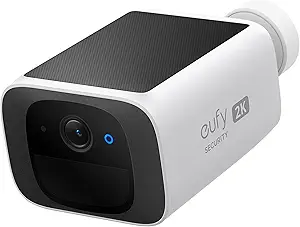 |
| Best Quality Built to a higher standard if you want something more solid | REOLINK Argus PT Solar Kit |  |
| Best Value The sweet spot between price and what you get | Hiseeu 4MP Solar Security Camera 2-Pack |  |
| Top Rated A top-rated pick with lots of positive feedback | Gianteye 2K Solar Wi‑Fi Camera |  |
| Most Popular A crowd favorite that many people choose with confidence | Tapo SolarCam C402 KIT |  |
| Best Seller A high-volume bestseller chosen again and again | SEHMUA Solar Security Camera RBX-S73 |  |
eufy SoloCam S220

| Video Capture Resolution | 2k |
|---|---|
| Field Of View | 135 degrees |
| Power Source | Solar Powered |
| Flash Memory Installed Size | 8 GB |
| Waterproof Rating | IP67 |
The eufy SoloCam S220 is a wire-free outdoor bullet camera designed for simple, low-maintenance surveillance. It mounts with a single screw and uses an integrated solar panel to keep the internal battery topped up so you can avoid frequent recharging. The camera records in 2K and uses an f/1.6 aperture plus infrared LEDs to deliver usable color-night and low-light footage, and the 135° field of view captures broad scenes. Built-in AI filters reduce false alerts by distinguishing humans from moving foliage, and on-board 8GB storage means recordings are kept locally without a subscription. Two-way audio and Alexa/Google voice compatibility let you interact remotely, and the app supports motion zones and alerts. Limitations include no HomeKit support, no cloud or NAS options, and it does not support continuous 24/7 recording, so very high-duty surveillance setups will need a different solution or a HomeBase 3 for advanced features like face recognition. The S220 is best where straightforward, mostly autonomous outdoor monitoring is desired and wiring is impractical.
Best for: Buyers who want a set-and-forget, wire-free outdoor camera that minimizes maintenance and subscription costs while delivering clearer footage and smart motion filtering.
Less Ideal for: Users who need HomeKit integration, cloud/NAS storage, or continuous 24/7 recording for professional-grade monitoring should look elsewhere.
- Integrated solar panel for extended, low-maintenance outdoor operation
- 2K resolution with f/1.6 aperture and infrared LEDs for clearer day and night images
- Built-in AI human detection to cut down on false motion alerts
- On-board 8GB storage so no cloud subscription is required
- Simple DIY installation and app control with voice assistant compatibility
- No cloud or NAS storage options and no continuous 24/7 recording support
- Not compatible with Apple HomeKit
Verdict: Choose the SoloCam S220 if you want an easy-to-install, solar-powered outdoor camera that delivers 2K footage and smart, subscription-free local storage.
REOLINK Argus PT Solar Kit

| Video Capture Resolution | 5MP |
|---|---|
| Frame Rate | 15 frames per second |
| Power Source | Solar Powered |
| Flash Memory Supported Size Maximum | 1 TB |
| Night Vision Range | 33 feet |
This REOLINK kit pairs four 5MP Argus PT solar cameras with a Home Hub Mini to deliver continuous outdoor monitoring without a subscription. Each camera pans and tilts for 360 degree coverage, uses auto‑tracking to follow people, vehicles, or animals, and provides color night vision via a built‑in spotlight. The system records locally to the Home Hub Mini or a microSD card (up to 1TB) and supports AES128 encryption and multi‑user access, so footage stays private and accessible to designated accounts. Setup requires an internet connection initially and the cameras run off solar power to reduce battery servicing, though solar performance will depend on placement and sunlight. Video is captured at 5MP/15fps over Wi‑Fi and saved in MP4 format; advanced features like AI event summaries and role-based access simplify reviewing alerts. The product is strong for buyers who need wide area coverage and automated tracking, but installers should plan mounts and solar exposure carefully to maintain reliable operation.
Best for: Buyers who prioritize wide, performance‑driven outdoor coverage and automated tracking without monthly fees, and who are willing to plan camera placement for good solar exposure.
Less Ideal for: People who need very high frame rates or professional 24/7 wired recording, or those who cannot install panels where they receive consistent sunlight.
- 360° pan and tilt with auto‑tracking locks onto moving people, vehicles, and animals
- 5MP (2K+) color video and spotlight-enhanced night vision for clearer low‑light footage
- Solar power removes frequent battery swaps when panels get adequate sun
- Local storage to microSD/Home Hub Mini up to 1TB with AES128 encryption and no subscription required
- Home Hub Mini centralizes multiple camera feeds and supports multi‑user access with role permissions
- Frame rate is limited to 15 fps which may show motion blur during fast movement
- Performance depends on solar panel placement and sunlight exposure for continuous operation
- Some advanced integrations require initial internet setup and firmware updates
Verdict: A performance‑focused, subscription‑free solar camera kit that delivers 360° auto‑tracking and 5MP color night vision for reliable wide‑area outdoor security when sited for good sunlight.
Hiseeu 4MP Solar Security Camera 2-Pack

| Video Capture Resolution | 4 MP |
|---|---|
| Night Vision Range | 33 feet |
| Power Source | Solar Powered |
| Battery Power | 5200 milliampere_hour |
| Waterproof Rating | IP65 |
These Hiseeu cameras are a battery-first, solar-rechargeable outdoor surveillance kit designed for easy, mostly wireless installation. Each bullet camera records 4MP video with a 135 degree field of view and uses an LED spotlight for full-color night vision, making daytime and nighttime footage more useful for identifying people and details. The built-in 5200 mAh battery plus included solar panel aim to keep the cameras charged long-term and Hiseeu quotes hundreds to thousands of triggers per charge depending on sunlight. Detection is handled by PIR plus AI human detection to reduce false alerts, and the system supports two-way audio plus a siren and flashing light to deter intruders. Connectivity is Wi‑Fi with mobile app control and optional cloud or local SD storage (SD not included). Important limitations are a 15 fps frame rate and IP66 rating that is durable but not submersible, and the cameras require decent sun exposure for reliable solar charging and a 2.4 GHz Wi‑Fi network for connection. Setup is straightforward for typical home exterior mounting but advanced users may want an NVR or continuous power for 24/7 recording.
Best for: Buyers who want a low-maintenance outdoor camera setup that minimizes wiring and electricity use while still delivering clear daytime and color-night footage for routine home monitoring.
Less Ideal for: Those who need 24/7 high-frame-rate recording or have limited direct sunlight where solar charging would be unreliable should consider wired or continuously powered alternatives.
- Solar panel plus 5200 mAh rechargeable battery reduces need for mains power or frequent manual charging
- 4MP resolution and 135° field of view deliver clear daytime images and broader coverage
- Full-color night vision with LED spotlight improves nighttime identification versus IR-only systems
- PIR and AI human detection cut down on false motion alerts and support customizable activity zones
- Two-way audio, siren, and flashing light provide active deterrence and remote communication
- Requires reliable sunlight for sustained solar charging in low-sun areas
- Connects only to 2.4 GHz Wi‑Fi which can limit placement options in some networks
- 15 fps video and H.264/H.265 encoding are adequate but not best-in-class for very smooth motion capture
Verdict: A practical solar-powered 2‑camera kit for owners who want clear 4MP daytime and color-night monitoring with minimal wiring and low ongoing power needs.
Gianteye 2K Solar Wi‑Fi Camera

| Video Capture Resolution | 2k |
|---|---|
| Night Vision Range | 328 feet |
| Power Source | Solar Powered |
| Connectivity Protocol | Wi-Fi |
This Gianteye camera is built for wire-free outdoor monitoring: a detachable solar panel keeps the internal battery topped up for continuous operation while the camera connects to either 2.4GHz or 5GHz Wi‑Fi. It records 2K video and uses a built-in spotlight to deliver color night vision so you can make out faces and packages after dark, and the PTZ (pan/tilt/zoom) controls let you sweep a wide area from the app. AI-enhanced PIR human detection reduces nuisance alerts and the two-way audio lets you speak to visitors in real time. Recordings save to a microSD card locally or to optional cloud storage without a forced subscription. The unit is IP65 rated for outdoor use and works with Alexa for hands-free viewing. Expect setup to require mounting and Wi‑Fi configuration, and solar reliance means placement matters to maintain charge; users in very low-sunlight areas should plan for supplementary charging or shorter runtime between sunny days.
Best for: Buyers who prioritize continuous, low-maintenance outdoor surveillance and want a weatherproof, wire-free camera they can rely on with remote PTZ control and reduced false alerts.
Less Ideal for: People with limited sun exposure where solar charging is impractical or anyone who prefers hardwired power and professional monitoring services.
- True wireless operation with detachable solar panel and internal backup battery for continuous outdoor monitoring
- 2K resolution plus spotlight-enabled color night vision for clearer low-light identification
- 360° pan and tilt with remote control to cover large outdoor areas from the app
- AI human detection to cut down false alerts and built-in two-way audio for remote interaction
- Dual-band Wi‑Fi support and flexible storage: local microSD or optional cloud without mandatory subscription
- Solar charging performance depends on placement and sunlight availability
- No microSD card included and cloud storage is optional which may add cost if chosen
Verdict: A dependable wire‑free solar camera that delivers 2K color night video and AI human detection for hands‑off, weatherproof outdoor security.
Tapo SolarCam C402 KIT

| Video Capture Resolution | 1080p |
|---|---|
| Frame Rate | 30 fps |
| Viewing Angle | 125 degrees |
| Night Vision Range | 30 feet |
| Power Source | Battery Powered |
The Tapo SolarCam C402 KIT is a wireless outdoor security camera that combines a 1080p camera with a dedicated solar panel and rechargeable battery for long runtime without frequent maintenance. You mount the camera outdoors and position the separate solar panel up to 13 feet away for optimal sun exposure, then use the Tapo app to set activity zones, enable person detection, and connect to Alexa or Google Assistant. Key features include color night vision with a built-in spotlight, two-way audio, IP65 weather resistance, and support for local microSD storage up to 512 GB or optional cloud backups. In practice the camera delivers clear daytime and nighttime footage within its 125 degree field of view and sends targeted alerts that reduce false triggers. Expect straightforward app setup and flexible placement thanks to the 2.4 GHz Wi-Fi connection and included mounting hardware. Limitations to note are reliance on your Wi-Fi for remote viewing and the quoted up-to-180-day battery life that can vary significantly with usage, settings, and local sun exposure.
Best for: Buyers who want a low-maintenance outdoor camera that prioritizes reliable, easy-to-verify motion alerts and long battery runtime with solar charging for hands-off security.
Less Ideal for: People who need 4K resolution, multi-band Wi-Fi support, or guaranteed factory-grade runtimes regardless of local weather should consider other options.
- Solar panel and built-in battery enable long runtime and reduce need for manual charging
- 1080p live view with color night vision and 30 ft night range for usable day/night footage
- Free AI person detection and configurable activity zones cut down on false alerts
- Supports large local storage (microSD up to 512 GB) plus optional cloud backup
- Includes mounting hardware and a 13 ft panel cable for flexible installation locations
- Uses 2.4 GHz Wi-Fi only, which may limit placement in areas with poor signal
- Actual battery life and solar charging performance depend heavily on local sunlight and usage patterns
Verdict: Choose the Tapo SolarCam C402 KIT if you want a solar-charged, app-driven outdoor camera that delivers clear 1080p day/night footage and focused person detection for low-maintenance home security.
SEHMUA Solar Security Camera RBX-S73

| Power Source | Solar Powered |
|---|---|
| Video Capture Resolution | 2k |
| Effective Video Resolution | 1080 pixels |
| Connectivity Technology | 2.4GHz Wi-Fi Only |
| Night Vision Range | 98 feet |
The SEHMUA RBX-S73 is a solar-powered outdoor camera designed for continuous perimeter monitoring without frequent battery swaps. It offers pan/tilt control for near 360 degree coverage, records in 2K capture with effective 1080p video, and uses a bright white spotlight plus infrared LEDs to produce color night vision at long range. Setup is app-driven over 2.4 GHz Wi‑Fi and the unit accepts a microSD card up to 128 GB for local storage while also offering optional cloud backup. Practical features include a PIR motion sensor to cut down false alerts, two-way audio for remote communication, IP65 weather resistance for year-round outdoor use, and a removable solar panel for trickle charging. Expect simple screw-in mounting on walls or ceilings and digital zoom for closer inspection of events. Trade-offs are the 2.4 GHz‑only Wi‑Fi requirement and reliance on solar charging conditions for continuous operation, so fully shaded placements may need supplemental power.
Best for: Buyers who want a low-maintenance outdoor camera that minimizes battery or wiring work and prefer a full-coverage, app-controlled security option backed by local storage and weather resistance.
Less Ideal for: People who need 5 GHz Wi‑Fi compatibility or who plan to install the camera in heavily shaded locations without an alternative power source.
- Solar-powered with removable panel for extended runtime without wired power
- Pan/tilt mechanism plus near 360 degree field of view for wide coverage
- 2K capture and color night vision with a built-in spotlight for clearer low-light footage
- Onboard microSD storage up to 128 GB and optional cloud backup
- PIR motion sensing and two-way audio for practical, actionable alerts
- Supports only 2.4 GHz Wi‑Fi, so it will not connect to 5 GHz networks
- Performance depends on good solar exposure; shading can reduce reliability
Verdict: A good choice for buyers who want a weatherproof, solar-powered pan/tilt camera that delivers wide coverage and clear day/night video with local storage.
Choosing the Right Wireless Solar Outdoor Security Camera: Key Factors to Consider
Solar Panel Placement and Orientation
Proper placement and tilt of the solar panel determine how much energy a camera harvests each day. Panels that get full sun for several hours will keep the battery topped up, while shaded or north-facing locations may yield poor charging. Consider whether the camera's panel is adjustable or removable so you can mount the panel in the best-lit spot while positioning the camera for the desired field of view.
Also think about seasonal changes. Sun angle and foliage density change over the year and can reduce midday sun in summer or limit charging in winter. Choose a system whose charging performance is sufficient for your local sunlight profile or that includes larger battery capacity to buffer low-sun periods.
Battery Capacity and Runtime
Battery capacity dictates how long the camera can record and send alerts between charges. A larger battery provides longer runtime during stretches of cloudy weather or when the camera records many motion events. Runtime estimates in product specs are useful but depend heavily on recording settings, motion frequency, and whether the camera uploads continuous video or clips.
Look for cameras that provide realistic runtime figures and support low-power modes or adjustable recording schedules. Removable batteries can be convenient if you plan to swap and recharge units manually, while integrated batteries paired with efficient solar charging reduce maintenance.
Image Quality and Night Performance
Resolution, sensor quality, and night-vision method determine how useful captured footage is for identifying people and incidents. Higher-resolution sensors produce clearer stills and crops but increase power draw and data usage. Infrared LEDs offer reliable black-and-white night images without causing disturbance, while color night modes use supplementary illumination or low-light sensors to retain color at night but may reduce battery life.
Consider the balance you need between clarity and power consumption. For long unattended operation, favor cameras with efficient night modes or configurable illumination so you can prioritize battery life when necessary.
Wireless Connectivity and Range
A solar camera's wireless connection quality affects live view responsiveness and whether clips upload reliably. Strong signal and good router placement reduce missed events and laggy streams. Check the supported Wi-Fi bands and whether the camera supports reconnection features after dropouts. Some systems also provide local storage options to avoid losing footage when connectivity is poor.
If your mounting location is far from the router, consider solutions that include Wi-Fi extenders, mesh-compatible designs, or cameras with good antenna placement. Keep in mind that interference from other devices and building materials can further reduce effective range.
Weather Resistance and Durability
Outdoor cameras must withstand rain, wind, temperature swings, and dust. An IP weatherproof rating indicates resistance to moisture and particles, and a higher rating generally means greater protection. Durable housings and corrosion-resistant mounts extend service life, particularly in coastal or harsh climates.
Also evaluate operating temperature ranges. Batteries and electronics can struggle in extreme heat or cold, which reduces runtime and charging efficiency. Choose systems rated for conditions similar to your location to avoid premature failures.
Placement Tips for Reliable Solar Charging
Locate the solar panel where it receives the most direct sunlight during the day, usually a south-facing spot in northern latitudes and a north-facing spot in southern latitudes. Avoid placing panels under eaves, behind trees, or in the narrow sun windows created by tall buildings.
If the camera's panel is small or fixed, consider mounting the panel separately on a pole or roof to optimize exposure. Use adjustable mounts to fine-tune tilt and orientation seasonally. Even a short daily window of unobstructed sun can substantially extend runtime compared with a shaded installation.
- Aim for at least 4 to 6 hours of direct sun where possible.
- Check for new shade sources throughout the year such as tree growth.
- Mount panels higher to reduce obstruction from landscaping.
Optimizing Settings to Conserve Power
Adjust motion sensitivity and detection zones to limit false triggers from trees, animals, or passing traffic. Fewer false recordings reduce uploads and power consumption. Use activity-based scheduling to limit recording during predictable quiet hours.
Lower resolution or enable event-based recording rather than continuous capture to preserve battery life. If the camera supports adjustable night illumination, set it to activate only when necessary or choose a lower-intensity setting for longer runtime.
- Use zone-based detection to focus only on relevant areas.
- Enable scheduled arming to avoid recording when not needed.
- Prefer clip-based uploads to continuous streaming when battery is constrained.
Connectivity Solutions for Remote Mounts
When cameras are mounted far from the home network, Wi-Fi range can be the limiting factor. Consider moving the router or adding a mesh node closer to the camera area. Directional antennas or upgraded access points can also improve signal to isolated spots.
If network uptime is critical, prioritize cameras that offer local storage or a hybrid option to ensure footage is retained during outages. Some systems can batch-upload clips when connectivity is restored, which helps preserve evidence even with intermittent service.
- Test signal strength at the exact camera spot before finalizing mount location.
- Consider a dedicated outdoor-rated Wi-Fi extender for extended range.
- Verify that the camera reconnects automatically after temporary dropouts.
Maintenance and Seasonal Care
Periodic checks will keep a solar security camera working optimally. Wipe dust and bird droppings from the solar panel to maintain charging efficiency. Inspect mounts and seals to catch corrosion or loosening hardware before they cause failures.
Prepare for seasonal changes by checking that panels are clear of snow and trimming back foliage in spring and summer. If your area has prolonged periods of low sunlight, plan for occasional manual charging or repositioning panels to maximize output.
- Clean panels every few months or after storms.
- Tighten mounts annually to prevent sag or misalignment.
- Store spare batteries if you plan temporary winter removal.
Privacy and Legal Considerations
Be mindful of camera placement relative to neighbors and public spaces. Point cameras to cover your property and avoid filming areas where people expect privacy. Many local ordinances restrict audio recording or persistent surveillance of public right-of-way.
Use privacy masks and configurable recording zones when available to limit capture of sidewalks or adjacent properties. Check local rules on signage and disclosure if you have cameras monitoring areas accessible to visitors or customers.
- Use in-app privacy masking to block neighbor-facing view.
- Disable audio recording where prohibited.
- Post a notice if legal guidance or local ordinance requires disclosure.
How We Chose the Best Wireless Solar Outdoor Security Camera
We focused on features that directly affect real-world performance and ownership experience for wireless solar outdoor security cameras. Key evaluation dimensions included solar charging efficiency and battery runtime to gauge how long a camera can operate with typical daytime sunlight. We also assessed image quality and night-vision performance because clear, usable footage is essential for identification and incident review. Connectivity reliability and supported wireless bands were evaluated to ensure consistent live view and cloud or local uploads. Installation versatility covered mounting options, weatherproofing ratings, and field-adjustable solar panel orientation. Finally, software features such as motion detection accuracy, alert configurability, and local storage options were considered to measure day-to-day usability. We excluded systems that require permanent AC wiring or external power sources because the scope is strictly wireless solar setups. Products lacking basic weatherproofing or without a rechargeable battery were also removed. Our process prioritized measurable specs and common deployment scenarios over brand or price, so the final list favors systems likely to perform well across different yards and sunlight conditions.
Our full evaluation process is outlined in our review methodology.
FAQ
How much sun does a solar security camera need to stay charged?
It depends on the panel size and battery, but generally aim for 4 to 6 hours of direct sunlight daily. Less sun may still work with larger batteries or lower recording activity, while shaded sites will often require supplemental charging or repositioning.
Can a solar camera operate year-round in cloudy climates?
Often yes with the right setup. Systems with larger battery capacity and efficient power management can bridge cloudy stretches, but very prolonged low-light periods may require manual charging or repositioning the panel to optimize exposure.
Will frequent motion alerts drain the battery quickly?
Yes. High activity levels increase recordings and wireless uploads, which consume more power. Reducing sensitivity, narrowing detection zones, or using schedule-based monitoring will reduce alert frequency and extend runtime.
Is wireless security camera footage safe if connectivity drops?
Many cameras offer onboard local storage to retain footage during outages and upload clips when the connection returns. Check that the model supports local recording and automatic reupload to avoid losing important events.
Do I need weatherproof housing for a solar outdoor camera?
Yes. Choose cameras with an appropriate IP rating for your climate to ensure resistance to rain, dust, and humidity. A robust housing and corrosion-resistant mounts increase reliability and reduce maintenance in harsh environments.
Final Verdict
When choosing a wireless solar outdoor security camera, prioritize realistic solar charging performance and battery capacity that suit your local sunlight and activity levels. Balance image resolution and night-vision settings against expected power consumption, and plan cable-free mounts that still allow access to strong Wi-Fi or local storage. Focus on systems with flexible solar placement, reliable connectivity features, and durable outdoor construction. By matching charging capability, runtime, and recording settings to your site conditions, you can achieve low-maintenance, effective surveillance that requires minimal ongoing attention.