
Note: This article contains affiliate links. If you click on these links and make a purchase, we may earn a small commission at no extra cost to you. This helps support our research and content. Read our full affiliate disclosure here.
If you make plant-based yogurt at home, the right yogurt maker can be the difference between thin, grainy results and a rich, creamy batch you actually want to eat. Non-dairy bases like soy, almond, coconut, and oat react differently to cultures and heat than dairy, so temperature stability and gentle incubation matter more than raw power. This guide covers seven top yogurt makers chosen for home non-dairy yogurt production, with a focus on temperature control, vessel options, and ease of cleanup. We shortlisted models that simplify the culturing process and addressed common non-dairy challenges. Below you will find how we evaluated each option and practical factors to consider before you buy.
Top Picks at a Glance
| Best Overall The best all-around choice for most situations | Mueller Ultra Yogurt Maker YL 470 |  |
| Best Quality Built to a higher standard if you want something more solid | TANICA YOGURTiA YS02GW-U |  |
| Best Value The sweet spot between price and what you get | GDOR Yogurt Maker SNJ159 |  |
| Best Budget The cheapest option that still gets the job done reliably | JoyMech Yogurt Maker |  |
| Top Rated A top-rated pick with lots of positive feedback | Euro Cuisine GY50 Greek Yogurt Maker |  |
| Most Popular A crowd favorite that many people choose with confidence | Ultimate Probiotic Yogurt Maker |  |
| Best Seller A high-volume bestseller chosen again and again | Euro Cuisine YM80 Yogurt Maker |  |
Mueller Ultra Yogurt Maker YL 470
| Jar capacity | 6 oz each |
|---|---|
| Number of jars | 8 jars |
| Material | Glass jars with stainless steel housing |
| Typical incubation time | 8–12 hours |
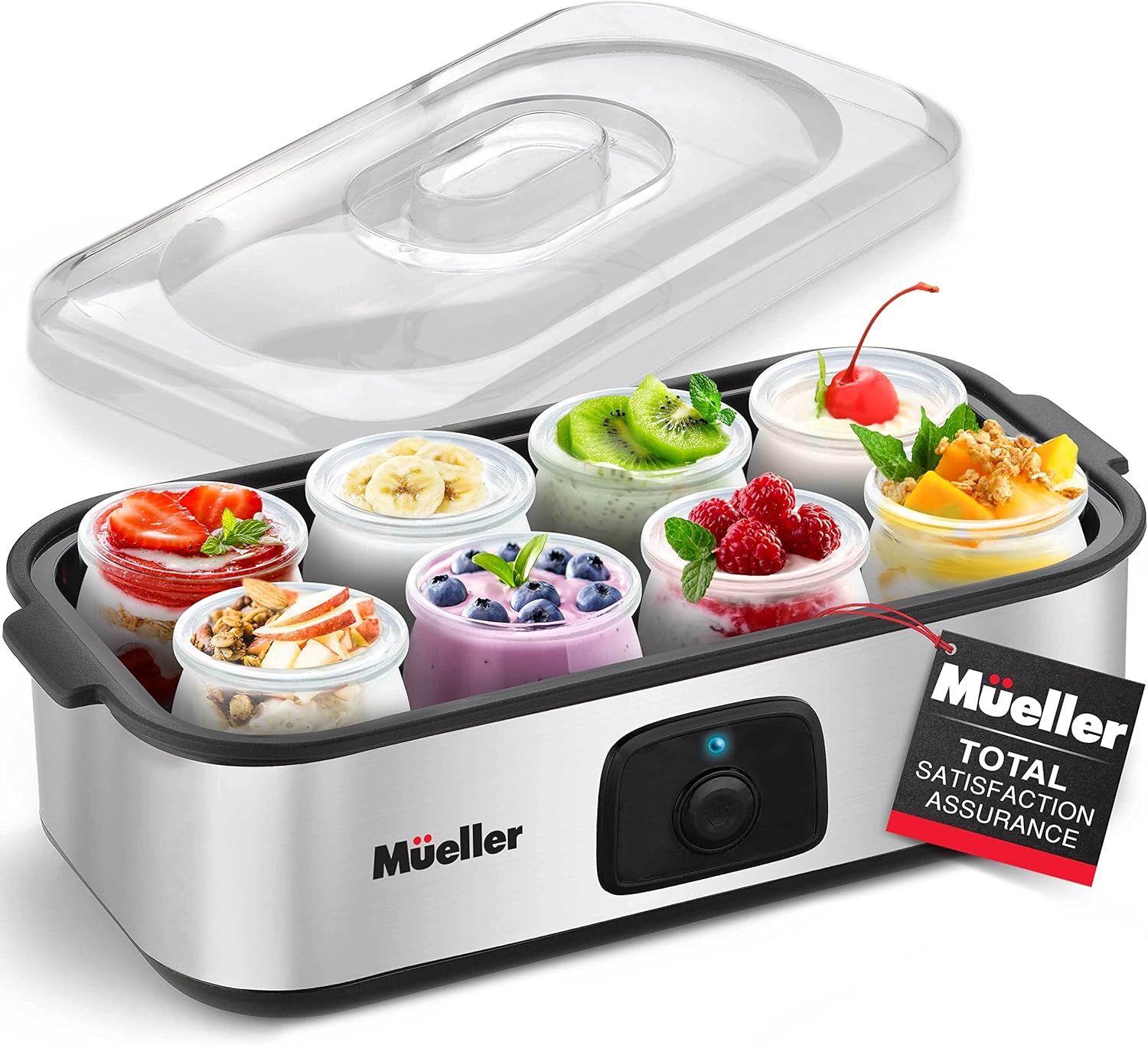
The Mueller Ultra Yogurt Maker is a straightforward electric incubator that converts milk and a starter into individual servings of yogurt using eight 6 oz glass jars. You add milk and starter to the jars, set the unit with its one-touch control, and let it run for roughly 8–12 hours depending on milk type and desired thickness; jars and lids are top-rack dishwasher safe for cleanup. The stainless steel housing and transparent lid keep the unit compact and durable while the fermenting pot and heating base aim to deliver steady, even warmth so cultures develop consistently. Because the machine uses individual jars, it is convenient for portion control, flavoring each jar differently, and serving babies or kids. Limitations include the lack of adjustable temperature or multiple preset programs, so achieving very specific textures or advanced non-dairy recipes may require experimentation with incubation times and starters. The unit is best for home cooks who want simple, repeatable homemade yogurt without a steep learning curve.
Best for: Home cooks who want an easy, low-effort way to make individual servings of yogurt and experiment with flavors, especially those who value convenience and portion control.
Less Ideal for: People seeking precise temperature control or dedicated non-dairy presets for alternate milks should consider a unit with programmable temperature and timing options.
- Eight individual 6 oz glass jars for portioning and flavor variety
- One-touch operation for simple set-and-forget incubation
- Stainless steel housing with transparent lid for durable, compact design
- Jars and lids are top-rack dishwasher safe for easy cleaning
- No adjustable temperature control or multiple program presets
- Not specifically optimized for non-dairy milks so timing may need trial-and-error
Verdict: Buy this if you want a simple, reliable machine for making multiple individual yogurt servings with minimal fuss.
TANICA YOGURTiA YS02GW-U

| Capacity | 1100 ml |
|---|---|
| Temperature range | 25–70°C (77–158°F) |
| Timer | 10 minutes–48 hours |
| Power supply | AC100V–240V (50/60Hz) |
| Power consumption | 36W |
The TANICA YOGURTiA is a compact, microcomputer‑controlled fermenter designed for reliable yogurt and low‑temperature ferments. You set temperature in 1°C/1°F increments across 25–70°C (77–158°F), program a timer from 10 minutes up to 48 hours, and the unit runs automatically with an optional buzzer and memory of the last three settings. It ships with two glass pots, a perforated lid for steaming eggs, a spoon, a recipe book, and a worldwide voltage adapter so it can be used on different power systems. The glass containers are scratch and odor resistant and can be thermally disinfected, which is useful for non‑dairy batches that need sterile conditions. Practical benefits include very fine temperature control for delicate cultures like non‑dairy probiotic yogurts and the ability to make other ferments such as natto, amazake, and koji projects. The tradeoffs are its single small footprint—this unit is built for small batches up to about 1.1 L per pot—and the glass parts may arrive fragile in shipping, so handle carefully on receipt.
Best for: Home fermenters focused on consistent, repeatable results who prioritize precise temperature control for delicate non‑dairy cultures and small batch experimentation.
Less Ideal for: People who need large‑volume production or a more rugged, travel‑friendly unit should consider larger or metal‑based commercial fermenters instead.
- Precise 1°C/1°F temperature control for consistent fermentation.
- Includes two 1100 ml glass pots that are odor and scratch resistant.
- Wide temperature range (25–70°C) and long timer (10 minutes–48 hours) for many ferment types.
- Microcomputer memory stores last three settings for repeatable batches.
- Worldwide voltage (100–240V) included so no converter is needed in different regions.
- Small total batch size—designed for countertop single‑unit batches, not bulk production.
- Glass pots are fragile and can be damaged in shipping.
- No built‑in refrigeration; finished ferments require chilling separately.
Verdict: Choose the YOGURTiA if you want laboratory‑style temperature precision for small, highly consistent non‑dairy yogurt and fermented food batches.
GDOR Yogurt Maker SNJ159

| Temperature range | 68–131°F |
|---|---|
| Timer | Up to 48 hours |
| Jar capacity | 8 × 6 oz |
| Material | BPA-free glass jars |
The GDOR Yogurt Maker SNJ159 is a compact countertop unit that gives you control over fermentation by letting you set temperature from 68 to 131°F and a timer up to 48 hours, so you can dial in thickness and tanginess for dairy-free batches. It comes with eight 6 oz BPA-free glass jars so you can make multiple flavors or individual portions in one cycle, and the stainless steel body and digital display make it straightforward to program and monitor runs. The unit is designed for steady, even heating to support consistent fermentation results, which helps when experimenting with non-dairy milks that need precise time and temperature control. Practical features include auto shut-off and a clear display for repeatable setups, though the small jar size means you will need more batches for larger households and glass jars require gentle handling. For someone optimizing routines and flavor testing, this maker simplifies repeated trials while keeping cleanup and storage manageable.
Best for: Buyers who want repeatable, small-batch yogurt experiments and need precise temperature and time control to refine non-dairy recipes.
Less Ideal for: People who need to produce large quantities of yogurt at once or who prefer lightweight, shatterproof containers for frequent travel or daycare use.
- Adjustable temperature range (68–131°F) for precise fermentation control
- 48-hour digital timer for long or short fermentation profiles
- Includes eight 6 oz BPA-free glass jars for multiple single-serve batches
- Stainless steel exterior with clear digital display for easy programming
- Small 6 oz jars require more batches to produce larger quantities
- Glass jars need careful handling compared with plastic alternatives
Verdict: A precise, small-batch yogurt maker that lets you fine-tune time and temperature for consistent non-dairy results.
JoyMech Yogurt Maker

| Capacity | 25-30 fl oz per batch |
|---|---|
| Container material | Food grade stainless steel |
| Control type | Constant temperature control |
| Power | Low energy consumption |
The JoyMech Yogurt Maker is a small countertop unit that holds roughly a quart and keeps cultures at a steady temperature for homemade yogurt. You add milk and probiotic powder to the stainless steel container, set the machine, and the 3D constant temperature control runs for the fermentation period—typically around 12 hours—to produce classic, Greek, or other styles depending on your process. Its transparent lid and simple on/off air switch make operation straightforward, and the stainless interior and BPA-free exterior are easy to clean by hand. The compact size and low energy draw mean it is convenient for occasional batches or for small households, and the milder, evenly fermented results appeal to people who prefer a less tangy yogurt. Limitations are its single small container (no multiple jars) and the fixed basic control—there is no timer programming or refrigeration built in—so you must plan fermentation time and cool the yogurt separately. It is best as an inexpensive, no-frills way to make consistent small batches at home.
Best for: People who want an affordable, straightforward way to make small, consistent batches of homemade yogurt at home without advanced controls.
Less Ideal for: Users who want large or multiple simultaneous batches, programmable timing, or an appliance that handles cooling and storage automatically should look elsewhere.
- Compact footprint fits small kitchens or countertops
- Stainless steel food-grade container for easy cleaning and neutral flavor
- Constant temperature control for even fermentation and milder taste
- Simple operation with transparent lid and single on/off control
- Low energy consumption and quiet operation
- Single 1-quart container limits batch size and variety
- No programmable timer or multiple jars for staggered batches
Verdict: A simple, budget-friendly yogurt maker that reliably ferments small, mild-flavored batches for home cooks who want a no-frills solution.
Euro Cuisine GY50 Greek Yogurt Maker

| Included Components | Bowl, strainer, lid |
|---|---|
| Material Type | Plastic |
| Model Number | GY50 |
| Capacity | Up to 2 quarts |
The Euro Cuisine GY50 is a simple, refrigerator-based strainer kit designed to thicken homemade or store-bought yogurt into Greek-style yogurt. You pour up to 2 quarts into the included bowl, set the strainer basket in place, cover and refrigerate until the whey drains away through the ultra-fine mesh, leaving a thicker, creamier product. The BPA-free plastic construction and stackable flat-top design make it easy to store and safe for everyday use, and the included recipe book gives ideas for dips and desserts. Cleaning is straightforward — rinse the mesh with hot water and air dry — but because it is a passive strainer rather than an automated appliance there is no timer or heating element; expect to plan ahead for several hours of refrigeration. For non-dairy yogurts, the fine mesh will still separate whey-like liquid from the solids, but results depend on the starting yogurt texture and cultures. The GY50 is a low-tech, durable option for anyone who values predictable, hands-off thickening without extra electronics or moving parts.
Best for: Buyers who prioritize a reliable, low-maintenance way to thicken yogurt without electronics and want a straightforward tool that fits in the refrigerator for regular home use.
Less Ideal for: Consumers seeking a fully automatic yogurt maker with timers, heating elements, or those wanting a metal durable finish should consider electric or stainless alternatives.
- Transforms up to 2 quarts of yogurt into thicker Greek-style yogurt in the refrigerator
- Ultra-fine mesh strainer yields smooth, consistent thickening
- BPA-free plastic and stackable flat-top design for safe, compact storage
- Includes bowl, strainer, lid and recipe book for immediate use
- Passive, refrigerated straining requires several hours and no active temperature control
- Made of plastic rather than stainless steel which may feel less durable to some buyers
Verdict: A dependable, no-frills refrigerator strainer that reliably turns regular yogurt into Greek-style yogurt for home cooks who want simple, low-maintenance results.
Ultimate Probiotic Yogurt Maker

| Capacity | Up to 2 quarts (64 oz) with containers |
|---|---|
| Temperature range | 68–131°F |
| Maximum run time | Up to 48 hours |
| Container material | Glass with BPA-free lids |
This yogurt maker is built around precise temperature control and longer run times to culture high-probiotic yogurt at home. It uses two 1-quart glass containers and a stainless steel shell with BPA-free lids, and the digital controls let you set temperatures from 68 to 131°F and timers up to 48 hours so you can make everything from mild yogurt to long-culture high-probiotic batches. In practice the even heat distribution and adjustable settings make it suitable for experimenting with non-dairy milks and different starter strains, and the glass vessels simplify cooling and storage. The unit is fairly compact and arrives fully assembled with recipe guidance and videos, which helps reduce setup friction. Limitations include needing to monitor recipes for non-dairy thickeners since plant milks behave differently, and the device is a single-appliance solution so you will need separate tools for heating or straining if making Greek-style or thickened non-dairy yogurts.
Best for: Buyers who want a reliable, easy-to-run appliance for experimenting with high-probiotic or non-dairy yogurt at home and who value reproducible temperature control and clear setup guidance.
Less Ideal for: People who need one-step production for thick Greek-style or high-protein non-dairy yogurts without extra accessories, or those who prefer appliances that also heat or strain.
- Adjustable temperature (68–131°F) and timer up to 48 hours for precise culturing
- Includes two 1-quart glass containers with BPA-free lids for safe storage
- Stainless-steel casing and even heat distribution for consistent results
- Comes ready to use with recipe ebook and instructional videos to shorten learning curve
- Does not include tools for preheating or straining non-dairy milks, which may be needed for thicker yogurt
- Long culture times require planning and occasional monitoring for best non-dairy results
Verdict: Choose this unit if you want precise temperature and long-timer control to reliably culture higher-probiotic and non-dairy yogurt batches at home.
Euro Cuisine YM80 Yogurt Maker

| Unit Count | 7 Count |
|---|---|
| Capacity | 2 pounds |
| Material | Glass |
| Operation Mode | Automatic |
| Other Special Features of the Product | Built-In Timer |
The Euro Cuisine YM80 is a straightforward electric yogurt maker designed for small-batch homemade yogurt using seven 6-ounce glass jars. You fill each jar with milk and starter, close the BPA-free lids, set the unit running with the on/off switch and built-in timer, and the incubator holds a steady environment until cultures develop. The included glass jars are dishwasher safe, which simplifies cleanup, and the transparent lid and indicator light let you check progress without opening the unit. Practical for experimenting with multiple flavors or making non-dairy batches, the YM80 keeps processes simple rather than offering temperature programming or advanced controls, so timing and starter choice determine texture. Its automatic operation and clear controls make it easy to use for everyday yogurt, but users wanting precise temperature control for very specific vegan cultures or large single containers may find it limited. For home cooks who want reliable, low-complexity yogurt making and easy cleanup, it delivers consistent, creamy results in small portions.
Best for: Home cooks who want a low-risk, easy-to-use way to make small batches of non-dairy or dairy yogurt with predictable results and minimal setup.
Less Ideal for: People who need precise temperature programming, larger single-container batches, or professional-level control over fermentation times and temperatures.
- Comes with seven 6-ounce dishwasher-safe glass jars for making multiple flavors at once
- Built-in timer, indicator light, and simple on/off control for easy operation
- Transparent lid lets you monitor progress without disturbing incubation
- BPA-free lids for safe storage in the refrigerator
- No adjustable temperature control for fine-tuning fermentation
- Small jar sizes limit single-batch volume and require multiple jars for larger families
Verdict: A simple, dependable yogurt maker that makes multiple small non-dairy batches easily for buyers who prioritize low complexity and consistent results.
Choosing the Right Yogurt Maker for Non-Dairy Yogurt: Key Factors to Consider
Temperature Accuracy and Stability
Precise heat is central to making non-dairy yogurt. Many plant milks need a narrow temperature window to allow cultures to acidify without denaturing proteins or separating. A unit that drifts several degrees over a multi-hour incubation can turn a promising batch into a thin or curdled outcome.
Look for models with reliable thermostats, clear temperature readouts, or the ability to use an external probe. Even heat distribution across jars or the bulk container reduces spots that over- or under-incubate. If you intend to experiment with different cultures or milks, choose a maker with proven stability rather than one that merely advertises long run times.
Control Flexibility and Timer Options
Non-dairy yogurt recipes vary widely in required incubation time and temperature. Some cultures need lower temps for longer periods, while others need a short, warmer environment. A yogurt maker with adjustable temperature and a programmable timer lets you tailor settings to the base and culture you are using.
Controls that allow incremental adjustments, clear numbers, and the option to extend or repeat cycles reduce guesswork when you tweak recipes. Digital controls are often easier to read and set precisely, but simple mechanical timers can work if the temperature is stable and repeatable.
Jar and Container Types
How the maker holds yogurt—individual jars versus a single bulk container—affects convenience and texture. Single-jar setups let you flavor or sweeten individual servings before incubation and reduce waste when testing new recipes. Bulk containers can produce more consistent texture across the whole batch and are often easier to strain for thick styles like labneh or Greek-style yogurt.
Consider capacity per jar, whether lids are included, and whether jars are dishwasher-safe. Glass jars are preferred for neutrality and heat tolerance, while plastic jars may be lighter but can retain odors from strongly flavored plant milks.
Ease of Cleaning and Maintenance
Residues from plant milks can cling to lids and insides, so units that disassemble easily and accept dishwasher-safe parts save time and reduce odors. Smooth interior surfaces, removable trays, and a design that avoids tight crevices are practical for frequent use.
Also think about gasket and sealing materials. Removable, replaceable parts extend the life of the maker and simplify sanitation between batches. If you plan to use thicker bases that require straining, check that the maker's parts are compatible with that extra step without complicating cleanup.
Capacity and Batch Size
Decide whether you want single servings for sampling and variety or larger batches for meal prep. A model that handles multiple jars is great for variety, while a bulk container can produce consistent texture and may be easier to strain for very thick styles.
Consider kitchen storage and countertop footprint as well. Large capacity units are convenient when you use yogurt regularly, but smaller makers are fine if you only make yogurt occasionally or have limited space.
Build Quality and Safety Features
Durable materials and secure lids reduce the risk of spills and contamination. Look for food-safe glass or BPA-free plastics and a stable base that resists tipping. Built-in overheat protection and clear manufacturer guidance on safe operating durations help avoid overheating and preserve cultures.
Quality construction also affects heat distribution and longevity. A sturdily built heater and thermostat assembly will maintain consistent conditions across many batches, making it a better long-term choice for someone serious about non-dairy yogurt making.
Why Non-Dairy Yogurt Needs Different Settings
Plant milks vary in protein, fat, and sugar content, which changes how they react to bacterial cultures and heat. Unlike dairy, many non-dairy bases do not contain the same casein and whey proteins that naturally thicken under fermentation. That means creating thickness and body often relies on specific temperatures, longer incubation, or the addition of stabilizers.
A yogurt maker that allows you to slow-cook at lower temperatures or extend incubation time helps cultures develop flavor without causing separation. Understanding this difference explains why adjustable controls and consistent heat matter more for non-dairy yogurt than for standard dairy batches.
- Soy and higher-protein bases often culture more like dairy and may need moderate temperatures.
- Coconut and nut milks can separate if overheated and may require lower, longer incubations.
- Oat milks are variable and sometimes need thickeners or straining after culturing.
Starter Cultures and Additives to Improve Texture
The right starter culture can significantly influence tang and texture. Look for cultures marketed for plant-based use or those that are thermotolerant and produce good acidity without excessive whey separation. If you want thick, spoonable yogurt, you can combine cultures with plant-friendly thickeners.
Common additives include agar, tapioca starch, arrowroot, or small amounts of powdered milk alternatives designed to boost protein. Another option is to strain cultured yogurt through a cloth or fine mesh to concentrate solids and achieve a firmer consistency.
- Use cultures known to perform in plant-based milks when possible.
- Thickeners should be used sparingly and tested in small batches.
- Straining produces the most natural thickening without additives.
Cleaning Tips to Prevent Off-Flavors
Non-dairy milks can leave lingering smells if parts are not cleaned promptly. Rinse jars and lids immediately after emptying to avoid crusted residues. If odors persist, soak parts in a mild baking soda solution or use a vinegar rinse before washing with dish soap.
For units with non-removable heating elements, wipe interiors with a damp cloth and avoid abrasive cleaners that could damage finishes. Regular, thorough cleaning preserves flavor neutrality and prevents cross-flavor contamination between batches.
- Rinse components right away to prevent buildup.
- Soak stubborn residues in warm, soapy water or a baking soda solution.
- Air-dry jars and lids completely before storage to avoid musty smells.
Creative Uses Beyond Yogurt
Many yogurt makers can be used for other kitchen tasks that require gentle, consistent heat. Popular secondary uses include fermenting nut cheeses, culturing sour cream alternatives, or proofing breads and sourdough starters at a controlled temperature.
Using the maker for multiple purposes increases its value in a plant-based kitchen, but be mindful of thorough cleaning between different uses to avoid cross-contamination of cultures and flavors.
- Ferment nut-based chevre or cultured spreads.
- Proof breads or keep dough at a steady temperature.
- Use for slow, low-heat tasks like infusing oils or making homemade yogurt-based dressings.
Troubleshooting Common Non-Dairy Yogurt Problems
If your yogurt is too thin, try a longer incubation, a higher-protein base, or straining after culturing. If separation or graininess occurs, reduce the temperature slightly and ensure the maker maintains steady heat without hot spots.
If you detect off-flavors, check starter freshness and sanitation practices. Overly sour results can come from extended incubation at higher-than-intended temperatures. Keeping a batch log with temperature, time, and culture used helps refine recipes faster.
- Thin texture: extend time, use thickeners, or strain.
- Separation: lower temperature and ensure even heat.
- Off-flavors: verify culture viability and clean equipment thoroughly.
How We Chose the Best Yogurt Maker for Non-Dairy Yogurt
We focused on traits that directly affect home non-dairy yogurt success. First, temperature accuracy and stability were prioritized because plant-based milks often need precise incubation to develop texture without overheating. Second, we looked for versatile timing and temperature controls so makers can be tuned to different cultures and bases. Third, vessel design and size options were considered since using single jars versus bulk containers changes fermentation behavior and convenience. Fourth, ease of cleaning and removable components matter because non-dairy bases can leave residues and odors that require thorough washing. Finally, user feedback on consistent results and straightforward operation helped identify designs that reduce the trial-and-error typical with non-dairy recipes. We excluded devices that only offer a single fixed temperature with no ability to adjust time or heat, since those are rarely suitable for varying plant milks. Small countertop incubators intended for laboratory use were also excluded. The products selected met practical home-use filters and emphasized reproducible texture, simple maintenance, and adaptable controls.
Our full evaluation process is outlined in our review methodology.
FAQ
What temperature is best for culturing non-dairy yogurt?
It depends on the base and culture, but many plant-based yogurts incubate between 110 and 115 degrees Fahrenheit for thermotolerant cultures, while some bases do better at slightly lower temperatures. Start with the culture maker's recommendation and adjust in small increments.
Can I use any yogurt starter for plant-based milk?
Some dairy starters work, but results vary. Starters labeled for plant-based or vegan yogurt are formulated to perform better in non-dairy milks. If using a dairy-derived starter, expect more trial-and-error and consider combining it with stabilizers or higher-protein bases.
How long should I incubate non-dairy yogurt?
Typical times range from 6 to 12 hours depending on desired tang and the culture used. Shorter times yield milder flavor and thinner texture, while longer incubations increase acidity and thickness. Keep records to replicate successful batches.
Is it better to culture in individual jars or a single container?
Individual jars are convenient for customizing flavors and testing recipes, while a single bulk container often produces more uniform texture and is easier to strain for thick yogurt. Choose based on whether you prioritize variety or consistency.
How do I thicken non-dairy yogurt without thickeners?
Straining through a fine cloth or coffee filter concentrates solids and yields a thicker product without additives. Using higher-protein bases like soy or blending in a small amount of cultured, thickened base can also help increase body naturally.
Final Verdict
When choosing a yogurt maker for non-dairy yogurt, prioritize temperature accuracy, control flexibility, and vessel options that match how you plan to use the product. Accept that some trial-and-error is part of dialing in recipes for different plant milks, and favor designs that are easy to clean and maintain. Focus on steady heat and simple controls rather than bells and whistles, and choose capacity and jar styles that suit whether you want variety or bulk batches. With the right maker and a consistent routine, you can produce reliably good plant-based yogurt at home.