
Note: This article contains affiliate links. If you click on these links and make a purchase, we may earn a small commission at no extra cost to you. This helps support our research and content. Read our full affiliate disclosure here.
If you need long-lasting protection for documents, photos, or signs, a 10-Mil laminator is a practical upgrade over thin pouches. You get a sturdier finished piece that stands up to handling, light moisture, and repeated use. This guide walks through five shortlisted options that cover a range of needs from occasional home use to light-duty office tasks. We evaluated each unit on the features that matter for everyday lamination: pouch handling and alignment, warm-up and cycle speed, temperature control and consistency, and ease of use and maintenance. Read on to see which features matter most for your workspace and how the top picks compare across those criteria.
Top Picks at a Glance
| Best Overall The best all-around choice for most situations | SINCHI 13" Laminator LM350 |  |
| Best Quality Built to a higher standard if you want something more solid | Akiles ProLam Plus 330 |  |
| Best Value The sweet spot between price and what you get | Crenova 13" Laminator DL368 |  |
| Best Budget The cheapest option that still gets the job done reliably | Apache 13-Inch 10 Mil Laminator |  |
| Top Rated A top-rated pick with lots of positive feedback | SINCHI 13-Inch 6-Roller Laminator |  |
SINCHI 13" Laminator LM350

| Warm up time | 48 second |
|---|---|
| Number of rollers | 4 |
| Pouch thickness range | 3 – 10 mil per side |
| Designed For | Business / Office / School |
The SINCHI 13" laminator is a production-oriented machine designed to handle a wide range of pouch thicknesses from 3 to 10 mil per side and larger formats up to 13 inches. It uses a 4-roller system and a patented anti-jamming design to keep mixed jobs moving, and a 48-second warm-up plus up to 40 inches per minute laminating speed makes it practical for batch work like signage, certificates, and classroom handouts. The unit is explicitly tuned to handle heavy cardstock, dark prints, and the thicker 10-mil pouches that often cause trouble on lighter machines, and it even supports a built-in foil applicator for decorative finishes. Durability is a focus here, with an industrial metal gearbox that sacrifices quiet operation for reliability and steady throughput. Safety features like auto-shutdown and sensors for voltage and temperature add protection during frequent use. The machine ships with ten 3-mil pouches and cleaning paper to help maintain rollers, though it is not intended for specialty materials like sublimation films or DTF transfers.
Best for: Buyers who need a reliable, production-capable laminator that handles mixed-thickness jobs and thicker 10-mil pouches for frequent office, school, or small-business use.
Less Ideal for: Hobbyists or home users seeking a very quiet, lightweight machine or anyone needing support for specialty transfer films should consider different models.
- Handles 3–10 mil pouches including 10-mil for sturdy, professional finishes
- Fast 48-second warm-up and up to 40 inches per minute for efficient batch laminating
- Patented anti-jamming 4-roller system reduces misfeeds and keeps jobs moving
- Built-in foil applicator expands decorative options without extra tools
- Safety sensors and auto-shutdown protect the machine and reduce overheating risk
- Industrial metal gearbox makes the unit louder than consumer-grade laminators
- Not suitable for specialty transfer materials like DTF, sublimation film, or vinyl rolls
Verdict: Choose this laminator when you need a durable, fast machine that reliably handles thick 10-mil pouches and high-volume mixed jobs.
Akiles ProLam Plus 330

| Throat Capacity | 13" (330 mm) |
|---|---|
| Max Laminating Speed | 23" / min |
| Max Pouch Thickness | 10 mil |
| Warm Up Time | 5 minutes |
| Number of Rollers | 4 |
The Akiles ProLam Plus 330 is a mid‑size office laminator built for steady, professional results and heavier pouch work. It uses a dual-heat system—heated rollers plus a heat plate—and four silicone rollers to produce consistent, bubble‑free laminations and supports cold lamination when needed. Controls include forward/reverse for clearing jams, a gradual temperature control circuit for fine tuning across pouch thicknesses, and variable speed with a warmup time around five minutes. With a maximum pouch thickness of 10 mil and a maximum laminating thickness of 1 mm it can handle thicker IDs, signage, and photo work that lighter machines cannot. The metal cover, metal gears, and silicon rollers point to a robust build for frequent use, while the 23 in/min top speed keeps throughput reasonable for small shop or office runs. It is heavier and larger than consumer desktop units and lacks advanced digital presets, so quick single‑button cycles are limited compared with high‑end commercial laminators.
Best for: Buyers who prioritize consistent, professional lamination results and need a machine that can handle thicker pouches and frequent use in a small office or print shop.
Less Ideal for: If you need a lightweight, countertop consumer laminator for occasional home use or want simple one‑button digital presets, this heavier, more manual model is not the best choice.
- Dual-heat system (heated rollers plus heat plate) for reliable, bubble-free laminations
- Supports up to 10 mil pouches and 1 mm finished thickness for heavier-duty jobs
- Forward/reverse switch helps clear jams without damaging documents
- Silicone rollers allow laminating with or without a carrier and improve feed consistency
- Metal cover and metal gears for durable, long-lasting operation
- No digital presets or touchscreen controls for quick repeat jobs
- Relatively bulky and heavy compared with consumer desktop laminators
Verdict: Choose the ProLam Plus 330 when you need a durable, performance‑focused laminator that reliably handles up to 10 mil pouches for professional, heavy‑duty lamination.
Crenova 13" Laminator DL368
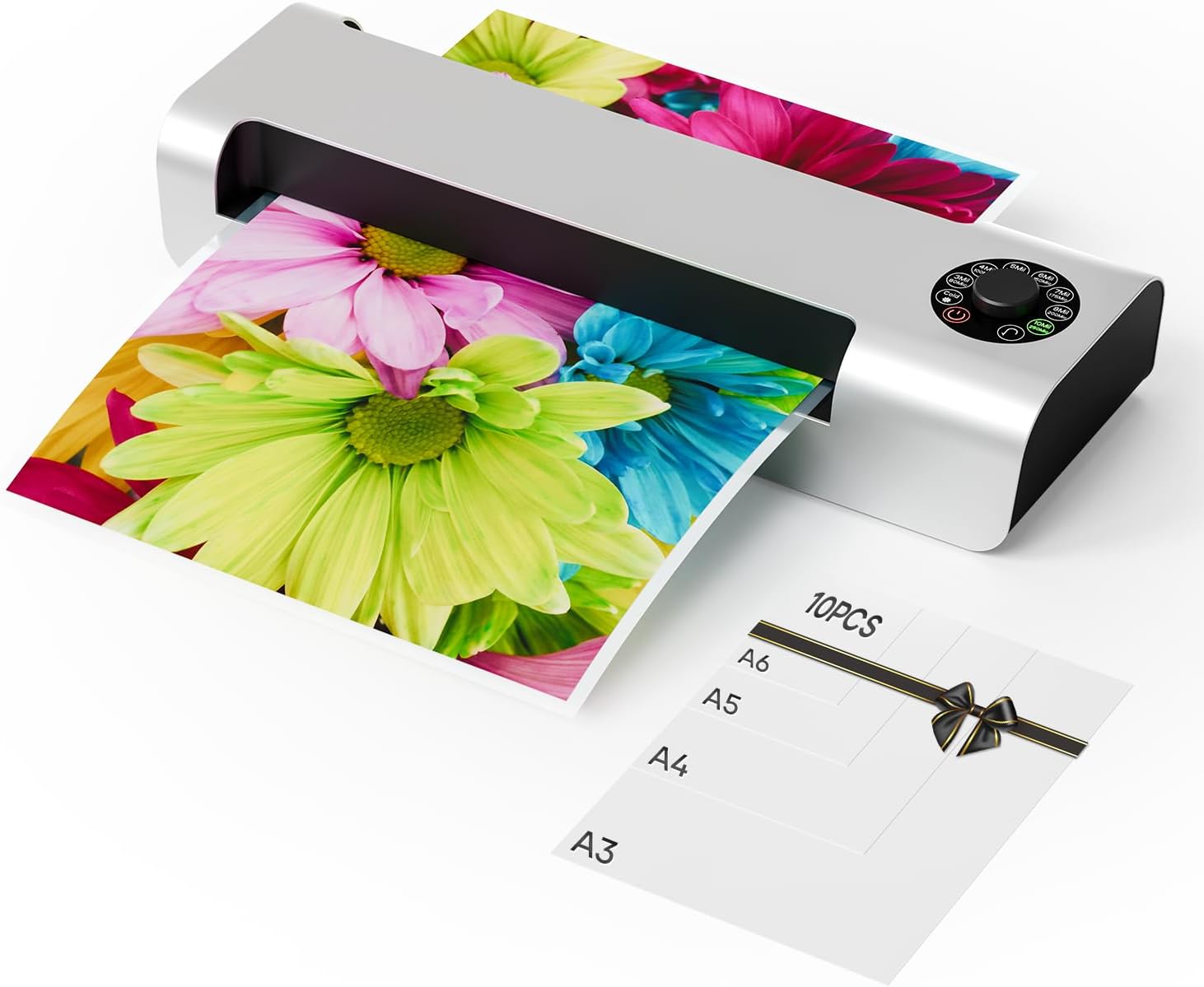
| Pouch thickness | 3–10 mil (80–250 mic) |
|---|---|
| Rollers | 4 rollers |
| Warm up time | Approximately 3–5 minutes (60s for 3mil noted) |
| Modes | Hot and Cold |
The Crenova 13" DL368 is a compact A3-capable pouch laminator that handles 3–10 mil pouches and offers both thermal and cold lamination. It heats quickly thanks to NTC temperature control and the four-roller system, so short jobs and thicker pouches feed smoothly and produce flat, bubble-free results. The machine includes seven thickness settings, a reverse/anti-jam function for clearing stuck pouches without powering down, and an auto shutoff for safety. It is supplied with a starter set of ten pouches to get you going and is sized for everything from menus and classroom materials to photos and awards. Expect reliable protection against moisture, dirt, and tears, though you will need to supply thicker 10-mil pouches separately for demanding preservation tasks. Its desktop footprint and 60-second warm-up make it practical for routine lamination but less suitable if you need continuous high-volume industrial throughput.
Best for: Buyers who want a versatile, desktop laminator that quickly produces professional-feeling, durable results for crafts, classroom materials, menus, and occasional preservation tasks.
Less Ideal for: Users needing an industrial continuous-run laminator for high-volume commercial production should look at heavier-duty models designed for nonstop operation.
- Handles a wide pouch range (3–10 mil) for flexible projects
- Four-roller system yields smoother, flatter lamination with fewer wrinkles
- Dual hot and cold modes allow heat-sensitive materials to be laminated safely
- Anti-jam reverse function clears stuck pouches without powering down
- Not intended for continuous industrial heavy-duty use
Verdict: Choose this 13-inch Crenova laminator if you want a fast-warming, four-roller machine that reliably handles up to 10-mil pouches for versatile home, school, or small-office lamination.
Apache 13-Inch 10 Mil Laminator

| Speed | 3 feet_per_minute |
|---|---|
| Number of Rollers | 2 |
| Maximum Pouch Thickness | True 10 mil (supports up to 16 mil specialty) |
| Working Width | 13 inches |
This Apache 13-inch laminator is a straightforward, heavy-duty desktop unit designed to seal pouches from 3 mil through true 10 mil and can even accept the brand's specialty 13 and 16 mil materials. It uses dual silicone rollers, a quality motor and heating element, and simple Power and Ready LEDs so operation is quick to learn; an ABS jam release button helps clear misfeeds without tools. Because it reliably seals thicker items like badges, business cards, and multi-sheet jobs, it is useful for schools, small offices, or hobbyists who need a tougher seal than typical consumer laminators. It reaches about 3 feet per minute when laminating lighter pouches and can laminate up to three 3 mil sheets at once for higher throughput. The machine is compact and light for a 13-inch, but it lacks temperature presets or digital controls, so delicate thin pouches benefit from using a carrier and some trial-and-error. If you prioritize a simple, durable laminator that can handle 10 mil work on a budget, this model delivers solid performance without extra bells and whistles.
Best for: Buyers who need a rugged, no-frills laminator that reliably handles true 10 mil jobs for occasional to moderate volume work on a budget.
Less Ideal for: Users who need precise temperature control, high-volume commercial throughput, or automated preset management should consider a more advanced model.
- True 10 mil capability for thick projects and better seals on 5 mil pouches
- 13-inch width fits larger sheets like 11×17 and menu-size documents
- Dual silicone rollers and quality motor produce consistent, reliable seals
- Compact, lightweight design with simple indicators and an anti-jam release
- No digital temperature controls or presets for fine tuning thin versus thick pouches
- Moderate speed (about 3 ft/min) compared with higher-end commercial laminators
Verdict: Choose this Apache if you want an affordable, compact laminator that reliably seals true 10 mil and larger sheets without complicated controls.
SINCHI 13-Inch 6-Roller Laminator

| Warm Up Time | 2 minutes |
|---|---|
| Number of Rollers | 6 |
| Pouch Thickness Range | 3-10 mil |
| Laminating Speed | Max. 81 inches/min |
| Max Pouch Size | Up to 13×19 inches |
The SINCHI 13-inch 6-roller laminator is built for heavy use in offices, schools, and small print shops where consistent, high-quality lamination matters. Its six-roller system and commercial metal gearbox produce even pressure and heat, which reduces bubbling, warping, and curling across thin and thick pouches. With a two-minute warm-up and up to 81 in/min laminating speed, it can process standard letter sheets very quickly, making it suited for batch jobs and busy workflows. The unit supports pouches from 3 to 10 mil and accepts materials up to 13 by 19 inches, and it includes starter pouches plus cleaning paper to keep rollers maintained. Safety and longevity are addressed with auto-shutdown, multiple built-in thermal and motor protections, and a sturdy aluminum housing. Important limits to note: it is designed for standard laminating pouches only (not DTF, sublimation, vinyl rolls, or industrial transfer films), and its commercial build and speed are best justified in frequent-use environments rather than occasional home projects.
Best for: Buyers who prioritize dependable, repeatable lamination quality and need a machine that performs reliably under frequent use in offices, schools, or small print shops.
Less Ideal for: If you only laminate occasionally at home or need to work with specialty transfer films and rolls, this commercial laminator is more machine than you need and not suitable for those materials.
- Commercial 6-roller system for consistent, bubble-free seals
- Fast warm-up (about 2 minutes) and high laminating speed (up to 81 in/min) for efficient batch processing
- Handles a wide pouch thickness range (3–10 mil) and up to 13×19-inch media
- Sturdy aluminum housing and metal gearbox designed for heavy-duty, repeated use
- Includes starter pouches and cleaning paper to help maintain roller performance
- Not compatible with DTF, sublimation films, vinyl rolls, or industrial transfer materials
- Better suited to high-volume or professional settings than occasional home use
Verdict: Choose this unit when you need a rugged, fast 13-inch laminator that reliably produces professional, bubble-free results on 3–10 mil pouches.
Choosing the Right 10-Mil Laminator: Key Factors to Consider
Pouch Thickness Compatibility
A true 10-mil laminator must handle pouches rated at 10 mil without compressing or causing poor seals. Pouch thickness dictates how much pressure and heat the rollers need to apply. If a machine is marginal for 10-mil pouches, you will see incomplete bonding at the edges or increased bubbling, which undermines the point of using a heavier pouch.
When choosing, check that the unit explicitly supports 10-mil pouches and has adjustable temperature settings. Machines with clearer pouch guides and wider entry slots reduce misfeeds when you insert thicker material, and that reduces wasted pouches and frustration.
Temperature Control And Stability
Even heat distribution is essential for a consistent seal across the full surface of the pouch. Fluctuating temperature or hotspots will produce uneven gloss, cloudy areas, or weak seals at the corners. Precise temperature control lets you match the heat to the pouch and document thickness, which is especially important with 10-mil laminates because they require more sustained heat than thin film.
Look for machines with multiple heat settings, clear indicator lights, or thermostatic control. Units that maintain a steady temperature during longer runs also reduce the incidence of rework and turbocharge reliability for occasional batch jobs.
Feed Mechanism And Jam Recovery
A robust feed mechanism keeps the pouch straight through the rollers and prevents skewing. Because 10-mil pouches are thicker, the feed system needs sufficient bite and synchronized roller action. If rollers slip or guides are poorly aligned, pouches will catch or crumple, and you may need to discard them.
Good models include features that ease jam recovery, such as a reverse function or removable access panels. These allow you to clear misfeeds without damaging the laminator or the document. Consider whether the machine exposes rollers for cleaning; dust and adhesive buildup affect feed reliability over time.
Throughput And Warm-Up Time
Warm-up time and cycle speed determine how practical the machine is for your workflow. A short warm-up and consistent cycle speed help when you are laminating multiple items. However, faster via high-speed rollers is only useful if heat consistency is maintained; you do not want to sacrifice seal quality for speed.
Think about how many items you laminate per session. For occasional home use, a moderate warm-up and single-sheet throughput is acceptable. For light office tasks, prioritize machines that sustain speed across a run and do not overheat or require frequent cooldowns.
Size, Feed Capacity, And Work Area
The maximum pouch width and length determine what projects you can complete. Larger work areas let you laminate posters or multiple items at once, while compact units are easier to store in a small home office. Also consider the machine's feed tray and output space; a stable output prevents curled edges or surface marks.
If you plan to laminate odd-sized items, check for gasketed or adjustable guides that keep the media centered. Portability and footprint matter when storage space is limited, but do not sacrifice necessary width or build stability for a smaller chassis.
Maintenance, Warranty, And Serviceability
Routine maintenance affects long-term performance. Rollers should be accessible for cleaning, and the machine should tolerate periodic removal of adhesive residue without special tools. Units designed with removable trays, accessible rollers, or clear maintenance instructions reduce downtime and prolong service life.
Warranty coverage and availability of replacement parts are also practical considerations. A longer warranty or clearly documented service process can offer peace of mind, especially if you rely on the laminator for business use and need steady uptime.
When To Choose 10-Mil Over Thinner Pouches
Ten-mil pouches are best when you need durability and a rigid finish that resists bending, moisture, and frequent handling. They are common for menu cards, instructional charts, ID badges, and frequently handled signs where a flimsy laminate would fail quickly.
For archival photos or delicate items, the extra stiffness reduces edge wear and helps protect against spills. Keep in mind that 10-mil laminated pieces will be stiffer and may require different mounting approaches compared with thinly laminated items.
- Better tear and crease resistance
- Improved protection from moisture and dirt
- More rigid finished pieces for display or repeated handling
Setting Up Your Workspace
Create a flat, dust-free area with enough clearance at the feed and exit to accommodate larger sheets. A stable table prevents the laminator from shifting during operation, which helps maintain alignment.
Keep a small kit nearby with a lint-free cloth, isopropyl alcohol for cleaning roller residue if recommended by the manufacturer, and a pair of soft gloves to handle finished pieces. Adequate lighting helps you align documents precisely before feeding them into the machine.
- Allow 6 to 12 inches of exit space for larger items
- Store pouches flat in a cool, dry place to avoid warping
- Run a scrap pouch through after lengthy idle periods to condition rollers
Common Lamination Problems And Fixes
Wrinkling, bubbles, and misalignment are the most frequent issues. Wrinkles often come from improper feeding or uneven roller pressure. Using a carrier sleeve or reinforcing pouch alignment before insertion often resolves this.
Bubbles may indicate insufficient heat or trapped dust. Try increasing temperature slightly for thicker pouches and ensure the document surface is clean. If a jam occurs, stop immediately and follow the machine's reversal or manual-clear steps to avoid heat-damaged rollers.
- Use carriers for thin or oddly shaped items to ensure even pressure
- Clean rollers periodically to prevent adhesive buildup
- Let the machine cool between long runs if instructed to avoid overheating
Care For Finished Laminated Pieces
Allow pieces to rest flat for a few minutes after exit to ensure the seal fully sets and to avoid curling. Place heavier pieces under a flat board if you need perfectly flat results for display or framing.
Avoid folding laminated 10-mil pieces; the film will resist creasing but could delaminate under sharp bends. For cleaning, use a soft, damp cloth and mild detergent if necessary. Do not use abrasive cleaners or solvents on the laminate surface.
- Store finished items flat to preserve shape
- Wipe with a damp cloth for routine cleaning
- Avoid sharp folds or extreme heat exposure to prevent delamination
Accessories That Make Lamination Easier
Consider using pouch cutters or trimmers to get neat, square edges after lamination. A corner rounder reduces risk of peeling at sharp corners and produces a cleaner finished look. Carriers are useful when switching between pouch thicknesses to protect rollers and maintain consistent pressure.
A small roll of release film helps prevent adhesive transfer during tricky jobs, and a digital thermometer is useful for verifying surface temperature in older equipment where indicator lights are less accurate.
- Corner rounders reduce edge stress and peeling
- Carriers protect rollers when using mixed pouch thicknesses
- Trimmers or guillotines yield precise, professional edges
How We Chose the Best 10-Mil Laminator
We focused on machines that reliably handle 10-mil pouches and produce consistent, bubble-free seals. Our shortlist process prioritized build quality and feed mechanics first, because sturdier rollers and precise pouch guides reduce wrinkling and jams. Temperature control and consistency were next, since even heat distribution directly affects seal strength and clarity. We also weighed throughput and warm-up time for users who laminate multiple sheets in a session, and tactile controls or indicator lights for straightforward operation. Ease of maintenance and access to serviceable parts was included to favor units that stay dependable over time. We excluded tabletop hobby laminators that are limited to low-mil foils and compact pouch sizes, machines without explicit 10-mil support, and industrial presses intended for high-volume production. The final picks balance reliable 10-mil performance with practical features like adjustable temperature, reverse/auto-jam function, and stable feed trays. Our evaluation criteria center on what buyers actually experience during setup, routine use, and occasional troubleshooting.
Our full evaluation process is outlined in our review methodology.
FAQ
Can I laminate photographs with 10-mil pouches?
Yes, 10-mil pouches protect photographs well because they provide a rigid, protective barrier. Use a clean, dust-free surface and allow the piece to cool flat after lamination to avoid trapping particles or creating surface imperfections.
Do I always need to use a carrier with 10-mil pouches?
Not always. Many 10-mil machines handle these pouches without a carrier, but carriers can help prevent adhesive transfer and protect rollers, especially when you switch between pouch thicknesses or work with thin substrates.
How often should I clean the laminator rollers?
Clean rollers whenever you notice adhesive buildup, visible residue on finished pieces, or after extended runs. Frequency depends on usage, but a quick wipe after several heavy sessions helps maintain consistent feed performance.
Will 10-mil lamination make documents too stiff to use?
Ten-mil increases stiffness compared with thinner films, which is beneficial for display and durability. For items that need frequent folding or flexibility, choose a thinner pouch instead of 10-mil.
What causes bubbling under the film?
Bubbling usually comes from trapped dust or insufficient heat. Clean both the document and pouch interior, increase temperature incrementally if the machine supports it, and allow proper warm-up before feeding.
Final Verdict
A good 10-mil laminator gives you durable, professional-looking results for frequently handled items and display pieces. Prioritize machines that explicitly support 10-mil pouches, offer steady temperature control, and provide a reliable feed mechanism with easy jam recovery. Consider throughput and maintenance needs based on how often you will laminate, and choose features that match your workspace and project sizes. With the right balance of heat control, feed stability, and build quality, you can confidently pick a 10-mil laminator that meets both occasional home tasks and light office demands.